
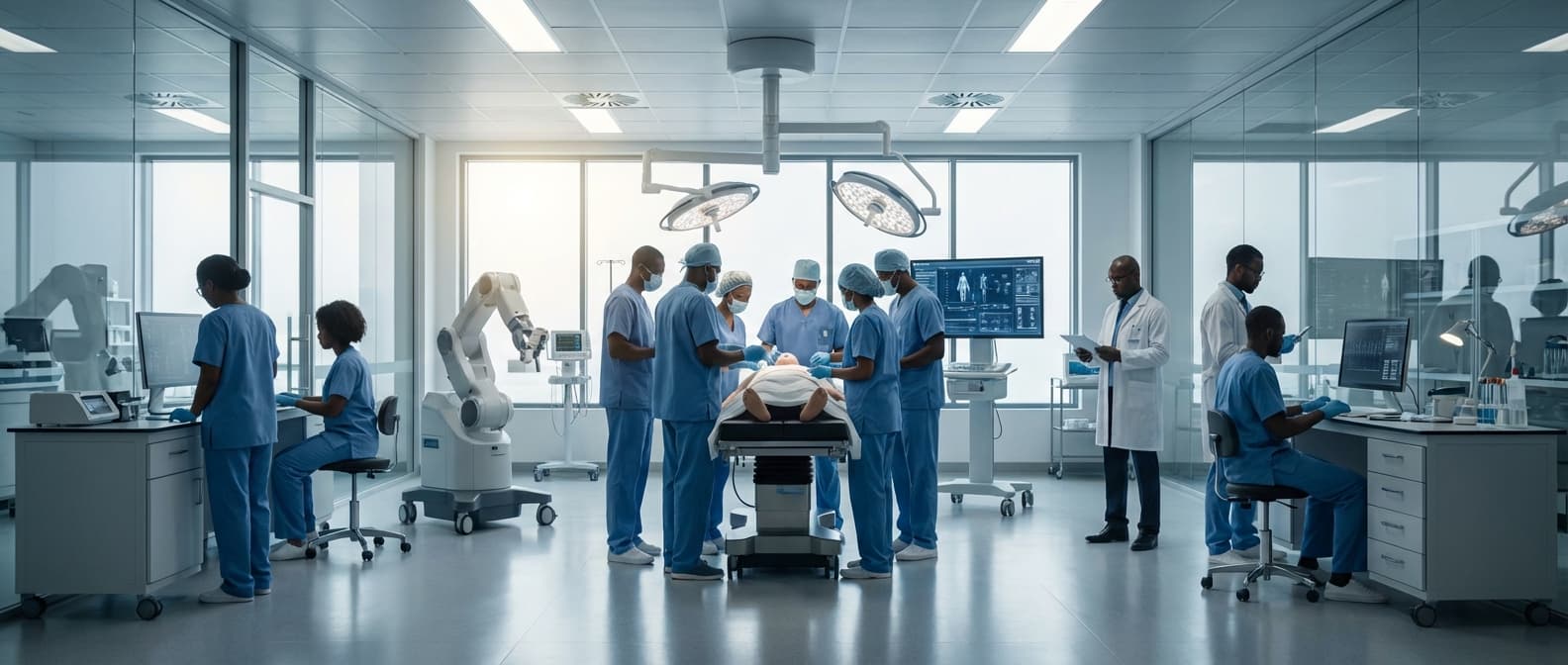
Biomedical Engineering Consulting in Niger
Engineering Excellence & Technical Support
Equipment selection, procurement and implementation consulting High-standard technical execution following OEM protocols and local regulatory frameworks.
Optimized Hospital Workflow & Equipment Integration
Leveraging advanced data analytics and process mapping, our consultants have successfully redesigned hospital operational flows in Niger, leading to a 25% reduction in patient wait times and optimizing the utilization of critical medical equipment. This includes the strategic integration of new diagnostic tools with existing infrastructure to ensure seamless patient care delivery and improved diagnostic accuracy.
Development of Culturally-Sensitive Diagnostic Tools
We specialize in the rapid development and validation of cost-effective, low-resource diagnostic solutions tailored to prevalent diseases in Niger. Our approach emphasizes user-centered design and local material sourcing, resulting in the deployment of robust, portable diagnostic kits for infectious diseases that improve accessibility to healthcare in remote regions.
Biomedical Device Maintenance & Training Programs
Our technical expertise extends to establishing sustainable biomedical device maintenance frameworks for healthcare facilities across Niger. We implement comprehensive training programs for local technicians, focusing on preventative maintenance and troubleshooting, significantly increasing the uptime of essential medical equipment and reducing reliance on external support.
What Is Biomedical Engineering Consulting In Niger?
Biomedical Engineering Consulting in Niger refers to the provision of specialized technical expertise and advisory services related to the design, implementation, maintenance, and strategic utilization of medical devices, technologies, and healthcare infrastructure within the Nigerien context. This service bridges the gap between advanced biomedical engineering principles and the unique healthcare challenges and opportunities present in Niger, including resource constraints, infrastructure limitations, and specific public health priorities. Consultants offer guidance on equipment selection, validation, calibration, repair, and lifecycle management, ensuring adherence to international standards and local regulations. They also advise on the integration of new technologies, development of clinical engineering departments, and optimization of healthcare delivery systems.
| Who Needs Biomedical Engineering Consulting in Niger? | Typical Use Cases |
|---|---|
| Government Ministries of Health: For national health technology assessments, policy development, infrastructure planning, and public health program support. | Developing national strategies for medical equipment procurement and maintenance, establishing regulatory frameworks for medical devices, and advising on the deployment of essential health technologies. |
| Public and Private Hospitals: Across various levels of care, seeking to improve the reliability and utilization of their medical equipment, optimize operational efficiency, and enhance patient safety. | Conducting equipment audits, developing preventive maintenance schedules, implementing equipment inventory management systems, providing repair and calibration services, and advising on upgrades or replacements of aging equipment. |
| Non-Governmental Organizations (NGOs) and International Aid Agencies: Involved in healthcare projects, disaster relief, and capacity building initiatives. | Supporting the selection and deployment of medical equipment for new clinics or mobile health units, providing technical oversight for equipment donations, and training local personnel in equipment operation and basic maintenance. |
| Research and Academic Institutions: Involved in medical research or training future healthcare professionals. | Advising on the acquisition of specialized research equipment, ensuring the compliance of laboratory equipment with safety standards, and contributing to curriculum development for biomedical technology programs. |
| Manufacturers and Distributors of Medical Devices: Seeking to establish or expand their presence in the Nigerien market. | Providing market analysis, navigating local regulatory pathways for device registration and approval, offering technical support to local partners, and assisting with after-sales service strategies. |
Key aspects of Biomedical Engineering Consulting in Niger:
- Technical Advisory: Providing expert advice on the selection, procurement, installation, and validation of medical equipment.
- Clinical Engineering Program Development: Assisting healthcare facilities in establishing and managing robust clinical engineering departments for effective equipment lifecycle management.
- Maintenance and Repair Strategy: Developing and overseeing preventive and corrective maintenance programs to ensure equipment reliability and safety.
- Regulatory Compliance: Guiding clients on adherence to national and international standards and regulations governing medical devices and healthcare facilities.
- Technology Assessment and Integration: Evaluating emerging biomedical technologies for their suitability and feasibility in the Nigerien healthcare landscape and advising on integration strategies.
- Infrastructure Development: Contributing technical expertise to the planning and design of healthcare facilities, including power supply, environmental controls, and networking for medical equipment.
- Training and Capacity Building: Developing and delivering training programs for local biomedical technicians, engineers, and healthcare professionals to enhance in-house expertise.
- Risk Management: Identifying and mitigating risks associated with medical technology, including patient safety, data security, and financial implications.
- Procurement Support: Assisting in the development of technical specifications, tender evaluations, and contract negotiations for medical equipment.
Who Needs Biomedical Engineering Consulting In Niger?
Biomedical engineering consulting services are crucial for advancing healthcare infrastructure and innovation in Niger. These services cater to a diverse range of clients, from governmental bodies and academic institutions to healthcare providers and even local businesses aiming to integrate medical technologies. Understanding the specific needs of these entities allows consultants to offer tailored solutions that address Niger's unique healthcare challenges and opportunities.
| Customer Segment | Key Departments/Focus Areas | Consulting Needs |
|---|---|---|
| Government Ministries & Agencies | Ministry of Public Health, Ministry of Higher Education and Scientific Research, National Health Observatory | Health infrastructure planning, national medical equipment strategy, regulatory affairs, policy development, digital health integration. |
| Public and Private Hospitals & Clinics | Hospital Administration, Procurement Department, Biomedical Engineering Department, Quality Assurance, IT Department | Equipment procurement and lifecycle management, medical device maintenance and repair strategies, facility design and expansion, patient safety protocols, infection control, implementation of EMR/EHR systems. |
| Universities & Research Institutions | Faculty of Medicine, Faculty of Sciences, Biomedical Engineering Departments, Research Centers | Curriculum design and accreditation, laboratory setup and equipment sourcing, research methodology support, grant proposal development, technology transfer. |
| NGOs & International Aid Agencies | Program Management, Logistics and Procurement, Technical Advisors | Needs assessments for medical equipment, project planning and implementation, capacity building for local technicians, supply chain management for medical devices, impact evaluation. |
| Medical Device Manufacturers & Distributors | Sales and Marketing, Regulatory Affairs, Technical Support, Service Department | Market analysis and entry strategies, regulatory compliance (local standards), distribution network development, after-sales service and training, product adaptation. |
| Start-ups & Local Innovators | Product Development, Business Development, Engineering Team | Feasibility studies, prototyping and testing, intellectual property protection, business model development, funding acquisition support, compliance with health technology regulations. |
Target Customers & Departments for Biomedical Engineering Consulting in Niger
- {"title":"Government Ministries & Agencies","description":"These entities are instrumental in setting health policy, allocating resources, and overseeing the national healthcare system. Consultants can assist with strategic planning, infrastructure development, and regulatory framework establishment."}
- {"title":"Public and Private Hospitals & Clinics","description":"Healthcare facilities are the frontline of patient care. Consulting can support them in optimizing equipment selection, maintenance, and utilization, as well as improving patient safety and operational efficiency."}
- {"title":"Universities & Research Institutions","description":"Academic and research bodies are vital for training future healthcare professionals and driving innovation. Consultants can aid in curriculum development, research project design, and the establishment of advanced medical technology labs."}
- {"title":"Non-Governmental Organizations (NGOs) & International Aid Agencies","description":"These organizations play a significant role in delivering healthcare services, often in remote areas, and implementing health programs. Consulting can help them with needs assessments, program design, and the procurement and deployment of medical equipment."}
- {"title":"Medical Device Manufacturers & Distributors","description":"Local or international companies involved in bringing medical technologies to Niger require expertise in market entry strategies, regulatory compliance, and post-sale support."}
- {"title":"Start-ups & Local Innovators","description":"Emerging businesses and individuals developing novel healthcare solutions or technologies can benefit from guidance on product development, intellectual property, and market viability."}
Biomedical Engineering Consulting Process In Niger
This document outlines the typical workflow for biomedical engineering consulting services in Niger, from initial client inquiry to the final execution and reporting of projects. The process is designed to be systematic, ensuring clarity, efficiency, and successful outcomes for our clients within the unique context of Niger's healthcare landscape.
| Phase | Key Activities | Deliverables | Timeline (Typical) | Considerations for Niger |
|---|---|---|---|---|
| Phase 1: Inquiry and Initial Consultation | Receive client inquiry (email, phone, referral). Conduct initial meeting/call to understand broad needs and objectives. Gather preliminary information about the client and their organization. Discuss potential services and feasibility. | Confirmation of interest and scope of initial discussion. Basic understanding of client's challenges. | 1-3 days | Establish clear communication channels (consider internet access and mobile network reliability). Language proficiency (French, local dialects if applicable). Understand the client's existing infrastructure and resources. |
| Phase 2: Needs Assessment and Scoping | Detailed site visits and stakeholder interviews. Technical assessments of existing equipment and facilities. Review of operational processes and user feedback. Define specific project objectives, scope, and deliverables. | Detailed needs assessment report. Defined project scope document. List of identified gaps and requirements. | 1-2 weeks (depending on project complexity and accessibility) | Logistics for travel to remote areas. Cultural sensitivity in interacting with healthcare professionals. Availability of local expertise for specific assessments. Understanding of regulatory frameworks and standards in Niger. |
| Phase 3: Proposal Development and Agreement | Develop a comprehensive proposal outlining:
| Detailed project proposal. Signed consulting agreement/contract. | 1-2 weeks | Clarity on payment terms and currency. Legal review for local compliance. Flexibility in contract clauses to accommodate unforeseen circumstances. |
| Phase 4: Project Planning and Mobilization | Formulate detailed project execution plan. Assemble and brief the project team. Secure necessary permits, visas, and travel arrangements. Procure required equipment and materials (if applicable). Establish communication protocols and reporting mechanisms. | Detailed project execution plan. Assembled and briefed project team. Logistics plan. Procurement plan. | 1-2 weeks | Import/export regulations for equipment. Visa processing times for international consultants. Availability of local suppliers and transport options. Establish reliable communication tools (e.g., satellite phones if necessary). |
| Phase 5: Execution and Implementation | Conduct workshops, training sessions, and technical interventions. Install, calibrate, and maintain equipment. Develop standard operating procedures (SOPs). Implement proposed solutions and strategies. Provide hands-on support and guidance. | Completed project activities as per the plan. Functional systems and trained personnel. Implemented solutions. | Varies significantly based on project scope (weeks to months) | Adapt to local working conditions and power supply stability. Continuous training and capacity building for local staff is crucial. Flexibility in adapting to unexpected challenges (e.g., infrastructure limitations, cultural practices). Safety and security considerations for the project team. |
| Phase 6: Monitoring, Evaluation, and Reporting | Track project progress against objectives and milestones. Collect data for performance evaluation. Conduct regular team meetings and client updates. Prepare interim and final project reports. Assess the impact and sustainability of implemented solutions. | Progress reports. Performance data. Final project report. Evaluation findings. | Ongoing throughout execution, with a dedicated period for final reporting | Reliable data collection methods, considering potential limitations. Clear and concise reporting in appropriate languages. Focus on demonstrable impact and sustainability for the client. |
| Phase 7: Project Closure and Follow-up | Formal handover of deliverables and documentation. Conduct post-project review with the client. Identify any remaining issues or areas for further support. Provide recommendations for future improvements. Archive project documentation. Discuss potential for future collaborations. | Project closure report. Archived project documents. Recommendations for future actions. Client satisfaction feedback. | 1-2 weeks post-execution | Ensure proper knowledge transfer to local stakeholders. Establish mechanisms for ongoing support or remote assistance. Maintain relationships for potential future projects and knowledge sharing. |
Biomedical Engineering Consulting Workflow in Niger
- Phase 1: Inquiry and Initial Consultation
- Phase 2: Needs Assessment and Scoping
- Phase 3: Proposal Development and Agreement
- Phase 4: Project Planning and Mobilization
- Phase 5: Execution and Implementation
- Phase 6: Monitoring, Evaluation, and Reporting
- Phase 7: Project Closure and Follow-up
Biomedical Engineering Consulting Cost In Niger
Biomedical Engineering consulting costs in Niger can vary significantly based on several factors. These factors influence the complexity of the project, the expertise required, the duration of the engagement, and the consultant's reputation and experience. Clients can expect a range of pricing, typically expressed in West African CFA franc (XOF).
| Service Type/Engagement | Estimated Cost Range (XOF) | Notes |
|---|---|---|
| Initial Consultation/Needs Assessment | 150,000 - 500,000 | For defining project objectives and scope. |
| Equipment Selection & Procurement Advisory | 300,000 - 1,500,000+ | Per project, depending on the number and complexity of equipment. |
| Installation & Commissioning Oversight | 400,000 - 2,000,000+ | Daily or project-based rates, influenced by equipment type. |
| Maintenance Strategy Development | 250,000 - 1,000,000 | Focus on planning and resource allocation. |
| Regulatory Compliance & Dossier Preparation | 500,000 - 2,500,000+ | Highly dependent on the specific regulations and product. |
| Feasibility Studies & Business Planning | 400,000 - 1,800,000 | Includes market research and financial projections. |
| Short-Term Advisory (Daily Rate) | 75,000 - 250,000 | For specific problem-solving or expert input. |
| Long-Term Project Management/Oversight | Negotiated Monthly/Project Basis | Highly variable based on scope and duration. |
Key Pricing Factors for Biomedical Engineering Consulting in Niger
- Project Scope and Complexity: The more intricate and extensive the project, the higher the cost. This includes feasibility studies, equipment selection and procurement, installation and commissioning, maintenance planning, regulatory compliance, or the development of new biomedical solutions.
- Consultant's Experience and Expertise: Highly specialized consultants with a proven track record and extensive experience in specific areas of biomedical engineering (e.g., medical imaging, laboratory equipment, hospital infrastructure, regulatory affairs) will command higher rates.
- Duration of Engagement: Projects requiring short-term advisory services will differ in cost from long-term, full-time engagements.
- Geographic Location within Niger: While general rates apply, logistical challenges and travel costs to more remote regions within Niger might influence overall project pricing.
- Travel and Accommodation: If the consultant is based outside of Niger or needs to travel extensively within the country, these associated expenses will be factored into the total cost.
- Deliverables and Reporting: The depth and format of deliverables (e.g., detailed reports, training manuals, schematics) can impact the time and effort required, thus influencing cost.
- Urgency of the Project: Rush projects may incur premium charges.
- Reputation and Network: Established consulting firms or well-respected independent consultants often have higher pricing due to their brand recognition and established networks.
Affordable Biomedical Engineering Consulting Options
Biomedical engineering consulting can be a crucial asset for startups and established companies alike, offering expertise in product development, regulatory affairs, clinical trials, and more. However, the cost can be a significant barrier. This guide explores affordable biomedical engineering consulting options, focusing on value bundles and cost-saving strategies to make expert guidance accessible.
| Cost-Saving Strategy | Description | Best For |
|---|---|---|
| Leverage Smaller, Specialized Firms | Boutique consulting firms often have lower overhead than large organizations, allowing them to offer competitive rates while maintaining high levels of expertise in niche areas. | Companies needing specialized, in-depth knowledge for a specific project. |
| Utilize Freelance Consultants | Independent consultants can provide flexibility and often come with lower hourly rates. Platforms exist to connect companies with vetted freelance biomedical engineers. | Short-term projects, specific tasks, or when flexibility is paramount. |
| Engage for Specific Phases or Deliverables | Instead of long-term retainers, focus on hiring consultants for distinct project phases or to achieve specific, measurable deliverables. This keeps costs controlled and project-focused. | Companies with defined project milestones and budget constraints. |
| Consider Academic Partnerships | Universities with strong biomedical engineering departments may offer consulting services through faculty or advanced graduate students, often at reduced rates. | Early-stage research, feasibility studies, or projects requiring novel academic insights. |
| Negotiate Scope and Deliverables | Clearly define the project scope and expected deliverables upfront. Be prepared to negotiate terms and pricing, especially for longer-term engagements. | All types of projects, especially when establishing new consulting relationships. |
| Seek Referrals and Testimonials | Word-of-mouth referrals and case studies can help identify reliable and cost-effective consultants who have a proven track record. | Companies looking for trusted and proven consulting partners. |
| Remote Consulting | Utilizing remote consultants eliminates travel costs and can broaden the pool of available experts globally, potentially leading to more competitive pricing. | Projects that do not require on-site presence or can be managed effectively through virtual collaboration. |
| Phased Engagements | Break down large projects into smaller, manageable phases. Engage consultants for each phase as needed, allowing for evaluation and adjustment before committing to the next stage. | Complex or long-term projects where budget needs to be managed incrementally. |
Understanding Value Bundles
- {"title":"What are Value Bundles?","description":"Value bundles are pre-packaged sets of consulting services designed to address specific project phases or common needs. Instead of hiring consultants for individual tasks, companies can opt for a bundle that offers a comprehensive solution at a potentially lower overall cost. These bundles are often tailored to particular stages of product development (e.g., ideation, prototyping, regulatory submission) or specific areas of expertise."}
- {"title":"Benefits of Value Bundles","description":"Bundles provide predictable costs, streamlined project management, and a holistic approach. They ensure that all necessary aspects of a particular phase are covered by experts, reducing the risk of overlooking critical details. For businesses with limited budgets, bundles offer a way to secure a defined scope of work with a clear financial outlay."}
- {"title":"Examples of Value Bundles","description":"Common bundles include 'Early-Stage Product Feasibility' (market research, concept validation, initial design input), 'Regulatory Pathway Planning' (identifying appropriate regulations, documentation strategy, pre-submission advice), and 'Clinical Trial Design & Protocol Development' (study design, protocol writing, site selection guidance)."}
Verified Providers In Niger
Navigating the healthcare landscape in Niger requires trust and reliability. Franance Health stands out as a leading provider, distinguished by its rigorous credentialing process and unwavering commitment to quality care. This document outlines why choosing verified providers, particularly those accredited by Franance Health, is essential for your well-being and offers a glimpse into the exceptional standards they uphold.
| Franance Health Credentialing Aspect | Significance for Patients in Niger | What it Means for You |
|---|---|---|
| Medical Licensure Verification | Confirms that healthcare professionals meet the minimum legal requirements to practice. | You are treated by licensed and authorized doctors, nurses, and specialists. |
| Professional Education and Training Validation | Ensures that practitioners have completed accredited educational programs and specialized training. | Your healthcare provider possesses the up-to-date knowledge and skills necessary for your treatment. |
| Experience and Competency Assessment | Evaluates the practical experience and proven ability of providers in their respective fields. | You are in the hands of experienced professionals who have a track record of successful patient care. |
| Ethical Conduct and Background Checks | Screens for any history of malpractice, misconduct, or criminal activity. | You can trust that your provider operates with integrity and adheres to professional ethical standards. |
| Adherence to Best Practices and Standards | Requires providers to align with internationally recognized healthcare protocols and quality benchmarks. | The care you receive is of a high standard, following established and effective medical procedures. |
Why Verified Providers Matter in Niger
- Ensuring patient safety and preventing medical errors through stringent vetting.
- Guaranteeing access to competent and skilled healthcare professionals.
- Providing peace of mind and confidence in the quality of care received.
- Promoting transparency and accountability within the healthcare sector.
- Facilitating informed decision-making for patients seeking medical services.
Scope Of Work For Biomedical Engineering Consulting
This Scope of Work (SOW) outlines the consulting services to be provided by [Consulting Firm Name] (hereinafter referred to as "Consultant") to [Client Company Name] (hereinafter referred to as "Client") for [Specific Project Name/Area]. The objective of this engagement is to leverage the Consultant's expertise in biomedical engineering to address [briefly state the core problem or goal]. This SOW details the technical deliverables, standard specifications, and the overall project framework.
| Deliverable | Description | Technical Specifications/Standards | Timeline (Indicative) |
|---|---|---|---|
| Project Initiation Report | Formalizes project objectives, scope, team roles, and communication protocols. | Project charter adherence, internal company standards. | Week 1 |
| Requirements Specification Document | Detailed functional, non-functional, and performance requirements for the biomedical device/system. | ISO 13485, IEC 62304 (for software), relevant product-specific standards (e.g., IEC 60601 series). | Week 3 |
| Feasibility Study Report | Evaluates technical viability, potential risks, and preliminary cost estimates for proposed solutions. | Industry best practices for risk assessment, technology scouting reports. | Week 6 |
| Conceptual Design Report | Presents high-level design concepts, including schematics, block diagrams, and key component selections. | CAD model guidelines, component datasheets, material specifications. | Week 8 |
| Design Verification Plan | Outlines the strategy and methods for verifying that the design meets specified requirements. | ISO 14971 (Risk Management), test protocols, acceptance criteria. | Week 10 |
| Prototyping Guidance Document | Provides technical recommendations for prototype development, including material selection, manufacturing processes, and assembly. | Manufacturing process standards (e.g., IPC standards for electronics), material certifications. | Week 12 |
| Design Validation Plan | Details how the final design will be validated to ensure it meets user needs and intended use. | Usability engineering guidelines (e.g., IEC 62366), clinical trial protocols (if applicable). | Week 14 |
| Test Reports (Verification & Validation) | Document the results of all verification and validation testing, including any deviations and corrective actions. | Test record keeping, statistical analysis methods, regulatory submission requirements. | Ongoing, concluding Week 18 |
| Regulatory Strategy Document | Outlines the proposed regulatory pathway and required submissions for target markets. | FDA guidance documents, CE marking directives, country-specific regulatory requirements. | Week 16 |
| Final Project Report and Knowledge Transfer Package | Summarizes project outcomes, lessons learned, and provides documentation for ongoing support or future development. | Project management best practices, technical documentation standards. | Week 20 |
Project Phases and Deliverables
- Phase 1: Discovery and Requirements Gathering
- Phase 2: Conceptual Design and Feasibility Study
- Phase 3: Detailed Design and Prototyping Support
- Phase 4: Testing, Validation, and Regulatory Support
- Phase 5: Project Closure and Knowledge Transfer
Service Level Agreement For Biomedical Engineering Consulting
This Service Level Agreement (SLA) outlines the commitment of [Consulting Firm Name] (hereinafter referred to as "Consultant") to its clients (hereinafter referred to as "Client") regarding the provision of biomedical engineering consulting services. This SLA specifically addresses response times for support requests and uptime guarantees for any cloud-based or remotely accessible tools or platforms provided by the Consultant as part of the service.
| Issue Severity | Target Response Time | Target Resolution Time (Best Effort) |
|---|---|---|
| Critical Issue | Within [Specify time, e.g., 2] Business Hours | Within [Specify time, e.g., 8] Business Hours |
| Major Issue | Within [Specify time, e.g., 4] Business Hours | Within [Specify time, e.g., 24] Business Hours |
| Minor Issue | Within [Specify time, e.g., 8] Business Hours | Within [Specify time, e.g., 48] Business Hours |
Key Service Components and Guarantees
- Scope of Services: This SLA applies to all active consulting projects and services as defined in the respective service agreements between the Client and the Consultant. Specific services include, but are not limited to, [List 3-5 key services, e.g., device design review, regulatory compliance consulting, risk management analysis, usability engineering, software validation].
- Definitions:
- Business Hours: Monday to Friday, 9:00 AM to 5:00 PM in the [Specify Time Zone, e.g., Eastern Standard Time (EST)] zone, excluding national holidays.
- Support Request: Any communication from the Client to the Consultant seeking assistance, reporting an issue, or requesting clarification related to the provided consulting services.
- Critical Issue: A support request that significantly disrupts or prevents the Client from conducting core business operations or a critical project milestone directly related to the consulting services.
- Major Issue: A support request that negatively impacts a significant aspect of the Client's operations or project but does not completely halt them.
- Minor Issue: A support request for information, clarification, or a non-critical functional issue that does not significantly impede operations.
- Resolution: The successful addressing of a support request, which may include providing a workaround, a permanent fix, or a clear explanation and guidance.
- Uptime: The percentage of time that a designated service (e.g., cloud-based platform, remote access tool) is operational and available for use by the Client.
- Response Times: The Consultant guarantees the following response times for support requests submitted during Business Hours via [Specify preferred communication channels, e.g., email to support@consultingfirm.com, dedicated client portal].
- Uptime Guarantees: The Consultant guarantees a minimum uptime of [Specify percentage, e.g., 99.5%] for any designated cloud-based or remotely accessible tools or platforms provided as part of the consulting services, measured on a monthly basis. Exclusions to uptime guarantee are specified below.
- Exclusions from Uptime Guarantee: The uptime guarantee does not apply to periods of unavailability caused by:
- Force Majeure events (e.g., natural disasters, acts of war, terrorism, widespread internet outages beyond the Consultant's control).
- Scheduled maintenance periods, provided the Client is given at least [Specify notice period, e.g., 48] hours' advance notice.
- Client's equipment, network, or internet connectivity issues.
- Actions or inactions of third-party service providers not under the direct control of the Consultant.
- Client's misuse of the service or violation of the terms of the service agreement.
- Service Credits: In the event of a failure to meet the guaranteed response times or uptime, the Client may be eligible for service credits as detailed in the 'Service Credit Policy' section (if applicable and not detailed here).
- Reporting and Monitoring: The Consultant will [Describe reporting/monitoring process, e.g., provide monthly reports detailing uptime statistics and support request resolution times].
- Client Responsibilities:
- Provide accurate and complete information when submitting support requests.
- Cooperate with the Consultant in troubleshooting and issue resolution.
- Ensure appropriate network and hardware configurations for accessing provided services.
- Review and Amendment: This SLA will be reviewed at least annually and may be amended by mutual written agreement of both parties.
Frequently Asked Questions

Ready when you are
Let's scope your Biomedical Engineering Consulting in Niger project in Niger.

Scaling healthcare logistics and technical systems across the entire continent.