
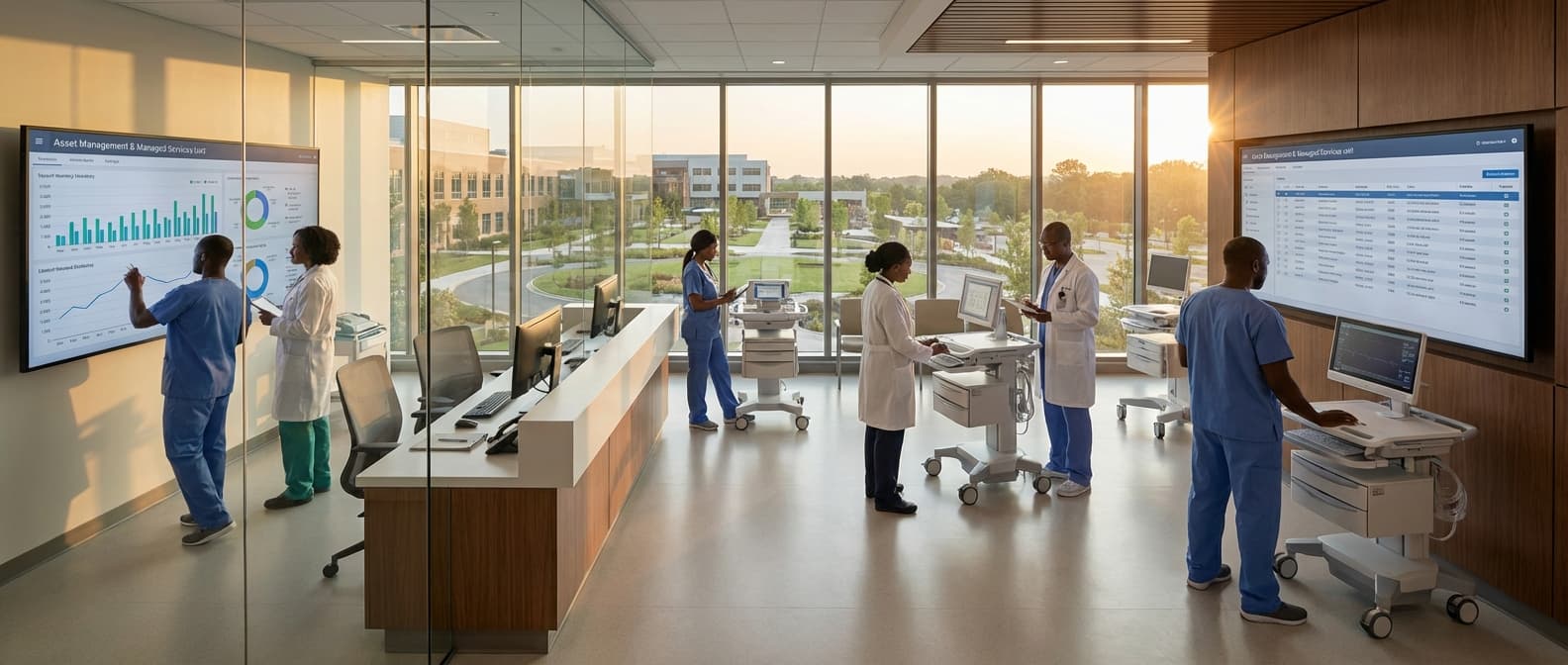
CMMS Setup & Configuration Service in Niger
Engineering Excellence & Technical Support
CMMS Setup & Configuration Service High-standard technical execution following OEM protocols and local regulatory frameworks.
Optimized CMMS Deployment
Leverage our expert CMMS setup and configuration services in Niger to streamline your maintenance operations. We tailor workflows, asset hierarchies, and preventive maintenance schedules to maximize efficiency and minimize downtime for your specific assets and industry needs.
Secure Data Migration & Integration
Ensure a seamless transition to your new CMMS in Niger. Our team specializes in secure data migration from legacy systems and integrates your CMMS with existing enterprise software (ERP, SCADA) for a unified and intelligent asset management ecosystem.
Role-Based Access & Customization
Empower your Niger-based teams with a CMMS configured for their specific roles. We implement granular, role-based access controls and custom reporting dashboards, ensuring users have the right information and tools to perform their jobs effectively and safely.
What Is Cmms Setup & Configuration Service In Niger?
CMMS Setup & Configuration Service in Niger refers to the specialized professional services offered to organizations in Niger for the installation, customization, and initial operationalization of a Computerized Maintenance Management System (CMMS). This service aims to ensure the CMMS is precisely tailored to the specific operational requirements, existing workflows, and strategic objectives of the client, thereby maximizing its efficiency and return on investment. The scope typically encompasses data migration, user training, integration with existing systems, and establishing best practices for maintenance management within the CMMS framework. It is a critical undertaking for any organization seeking to transition from manual or disparate maintenance processes to a structured, digitized, and data-driven approach.
| Who Needs CMMS Setup & Configuration Service? | Typical Use Cases |
|---|---|
| Manufacturing and Industrial Facilities: Organizations with complex machinery, production lines, and a need for high asset uptime. | Optimizing production line maintenance schedules to minimize downtime and maximize output. Managing spare parts inventory for critical machinery. Tracking maintenance costs associated with specific production assets. |
| Oil and Gas Sector: Companies involved in exploration, production, refining, and transportation, often with remote or hazardous assets. | Ensuring the reliability and safety of drilling equipment, pipelines, and processing plants. Implementing predictive maintenance for critical upstream and downstream assets. Managing maintenance for remote offshore platforms. |
| Utilities (Power Generation, Water Treatment): Entities responsible for maintaining essential infrastructure with high reliability demands. | Scheduling and tracking routine maintenance for power turbines, generators, and water treatment plants. Managing compliance-related maintenance activities. Optimizing the maintenance of distribution networks (e.g., power lines, water pipes). |
| Mining Operations: Companies managing heavy machinery, processing plants, and extensive infrastructure in demanding environments. | Scheduling and tracking maintenance for excavators, haul trucks, crushers, and conveyors. Managing the lifecycle and maintenance needs of large-scale processing equipment. Ensuring compliance with safety regulations through documented maintenance procedures. |
| Commercial Real Estate and Facilities Management: Building owners and operators responsible for maintaining multiple properties and their associated systems. | Managing preventive maintenance for HVAC, electrical, plumbing, and fire safety systems across a portfolio of buildings. Tracking work orders for tenant requests and common area maintenance. Optimizing energy efficiency through proactive maintenance. |
| Transportation and Logistics: Companies managing fleets of vehicles, aircraft, or other transportation assets. | Scheduling and tracking routine inspections and repairs for trucks, buses, trains, or aircraft. Managing tire maintenance, engine overhauls, and other critical component replacements. Optimizing fleet availability and reducing operational costs through proactive maintenance. |
| Government and Public Sector Entities: Municipalities, ministries, or agencies managing public infrastructure and assets. | Maintaining public works infrastructure such as roads, bridges, and public buildings. Managing the maintenance of public fleet vehicles. Ensuring the operational readiness of essential public services. |
Key Components of CMMS Setup & Configuration Service
- System Installation and Deployment: Installing the chosen CMMS software on the client's infrastructure (on-premises) or provisioning and configuring it within a cloud environment.
- Data Migration and Cleansing: Importing existing asset data, maintenance history, parts inventory, vendor information, and labor details into the CMMS. This often involves data validation and cleansing to ensure accuracy and consistency.
- Asset Hierarchy and Tagging: Defining and structuring the asset registry within the CMMS, including creating parent-child relationships and implementing asset tagging strategies for easy identification and tracking.
- Work Order Management Configuration: Establishing workflows for preventive, reactive, and predictive maintenance requests. This includes defining work order types, priority levels, approval processes, and required information fields.
- Preventive Maintenance (PM) Scheduling: Configuring recurring maintenance tasks based on time, usage (meter readings), or condition. This involves setting up PM schedules, defining task lists, and assigning resources.
- Inventory and Spare Parts Management: Setting up the spare parts catalog, defining reorder points, managing stock levels, and linking parts to specific assets and work orders.
- User Role and Permission Configuration: Defining user roles and assigning specific permissions to control access to different modules and functionalities within the CMMS.
- Reporting and Dashboard Customization: Configuring standard reports and designing custom dashboards to provide key performance indicators (KPIs) related to maintenance operations, asset reliability, and cost.
- Integration with Existing Systems: Establishing interfaces with other enterprise systems, such as Enterprise Resource Planning (ERP), SCADA, or IoT platforms, to enable seamless data exchange.
- Training and Knowledge Transfer: Providing comprehensive training to end-users, supervisors, and administrators on how to effectively utilize the CMMS, including best practices for data entry and system navigation.
- System Validation and Testing: Conducting thorough testing to ensure the CMMS functions as intended, meets all configured requirements, and data integrity is maintained.
- Go-Live Support and Post-Implementation Review: Providing on-site or remote support during the initial rollout phase and conducting reviews to identify areas for further optimization.
Who Needs Cmms Setup & Configuration Service In Niger?
In Niger, businesses across various sectors are increasingly recognizing the need for efficient and reliable maintenance operations. This is where CMMS Setup & Configuration Services play a crucial role. A well-implemented Computerized Maintenance Management System (CMMS) can significantly improve asset lifespan, reduce downtime, optimize resource allocation, and enhance overall operational efficiency. Identifying the right targets for these services is key to unlocking their full potential. Our services are designed to assist organizations in Niger that are facing challenges with manual maintenance processes, outdated systems, or a lack of visibility into their maintenance activities. We cater to businesses that understand the strategic importance of proactive maintenance and are seeking a robust digital solution to manage their assets and workflows.
| Target Customer Segment | Typical Departments Benefiting from CMMS Setup & Configuration | Key Challenges Addressed by CMMS |
|---|---|---|
| Manufacturing | Production, Maintenance, Engineering, Quality Control | Equipment breakdowns, unplanned downtime, inefficient work order management, lack of spare parts inventory control. |
| Oil & Gas | Operations, Maintenance, Engineering, Safety | High-value asset management, predictive maintenance requirements, regulatory compliance, safety incident tracking. |
| Mining | Operations, Maintenance, Asset Management, Safety | Heavy machinery upkeep, remote site maintenance, wear and tear analysis, managing large fleets of equipment. |
| Agriculture & Food Processing | Operations, Maintenance, Quality Assurance, Production | Ensuring equipment reliability for seasonal operations, hygiene and sanitation compliance, managing perishable goods logistics. |
| Energy & Utilities | Operations, Maintenance, Asset Management, Network Operations | Critical infrastructure reliability (power grids, water systems), planned outages, managing vast networks of assets, safety protocols. |
| Transportation & Logistics | Fleet Management, Maintenance, Operations, Dispatch | Vehicle maintenance scheduling, fuel management, tracking repair history, ensuring fleet availability for deliveries. |
| Healthcare Facilities | Facilities Management, Biomedical Engineering, Maintenance | Medical equipment calibration and maintenance, patient safety, regulatory compliance (e.g., medical device standards), ensuring facility operational readiness. |
| Hospitality & Tourism | Facilities Management, Engineering, Housekeeping, Operations | Maintaining building systems (HVAC, plumbing, electrical), guest comfort and safety, proactive upkeep of amenities, managing event setups. |
| Government & Public Infrastructure | Public Works, Maintenance, Asset Management, City Planning | Managing public assets (roads, bridges, public buildings, streetlights), efficient response to repair requests, long-term infrastructure planning, budget optimization. |
| Telecommunications | Network Operations, Field Maintenance, Asset Management | Managing network infrastructure (towers, equipment), scheduling field technician visits, ensuring service uptime, tracking component lifecycles. |
Target Customers & Departments in Niger Requiring CMMS Setup & Configuration Services
- Manufacturing Plants
- Oil and Gas Exploration & Production Companies
- Mining Operations
- Agriculture & Food Processing Businesses
- Energy & Utilities Providers
- Transportation & Logistics Companies
- Healthcare Facilities
- Large-Scale Hospitality & Tourism Venues
- Government & Public Infrastructure Management
- Telecommunications Companies
Cmms Setup & Configuration Service Process In Niger
This document outlines the standard workflow for CMMS (Computerized Maintenance Management System) setup and configuration services offered in Niger, from initial client inquiry to successful execution and handover. The process is designed to ensure a smooth and efficient implementation tailored to the specific needs of each client.
| Phase | Step | Description | Key Activities | Deliverables | Responsible Party | Timeline (Indicative) |
|---|---|---|---|---|---|---|
| Phase 1: Inquiry & Initial Consultation | 1.1 Client Inquiry | Client expresses interest in CMMS setup and configuration services. | Initial contact via phone, email, or website form. | Acknowledgement of inquiry. | Service Provider | 1-2 business days |
| Phase 1: Inquiry & Initial Consultation | 1.2 Initial Consultation | A preliminary discussion to understand the client's basic requirements and introduce the service offering. | Virtual or in-person meeting, discussion of client's industry, maintenance challenges, and desired outcomes. | Understanding of client's general needs. | Service Provider & Client | 1-3 business days |
| Phase 2: Needs Assessment & Solution Design | 2.1 Detailed Needs Assessment | In-depth analysis of the client's current maintenance processes, existing systems, and specific CMMS requirements. | Site visits, interviews with key stakeholders (maintenance managers, technicians, IT), review of current documentation. | Comprehensive needs assessment report, identified pain points, and functional requirements. | Service Provider | 1-2 weeks |
| Phase 2: Needs Assessment & Solution Design | 2.2 Solution Design | Development of a tailored CMMS solution based on the needs assessment, including software selection (if applicable) and configuration plan. | Defining system architecture, module selection, customization requirements, workflow mapping, user roles and permissions. | CMMS solution design document, technical specifications. | Service Provider | 1-2 weeks |
| Phase 3: Proposal & Contract Negotiation | 3.1 Proposal Preparation | Creation of a detailed proposal outlining the proposed CMMS solution, scope of work, timeline, and pricing. | Inclusion of system features, implementation methodology, training plan, support options, and cost breakdown. | Formal proposal document. | Service Provider | 3-5 business days |
| Phase 3: Proposal & Contract Negotiation | 3.2 Proposal Review & Negotiation | Client reviews the proposal, and negotiations are conducted to finalize terms and conditions. | Discussions on scope, budget, timeline adjustments, and contractual obligations. | Agreed-upon terms and conditions. | Service Provider & Client | 1-2 weeks |
| Phase 3: Proposal & Contract Negotiation | 3.3 Contract Signing | Formalization of the agreement between the service provider and the client. | Signing of the service contract. | Signed service contract. | Service Provider & Client | 1-2 business days |
| Phase 4: System Setup & Configuration | 4.1 System Installation/Provisioning | Installation of the CMMS software on the client's infrastructure or provisioning of cloud-based access. | Server setup, database configuration, user account creation. | Functional CMMS environment ready for configuration. | Service Provider | 1-3 business days |
| Phase 4: System Setup & Configuration | 4.2 Core Configuration | Configuration of essential CMMS modules and settings according to the design document. | Setting up asset hierarchies, work order types, preventive maintenance schedules, user roles, and permissions. | Basic CMMS functionality configured. | Service Provider | 1-3 weeks |
| Phase 4: System Setup & Configuration | 4.3 Customization & Workflow Configuration | Tailoring the CMMS to specific client workflows, reporting needs, and business rules. | Developing custom fields, forms, approval workflows, and reports. | CMMS configured to match client's operational needs. | Service Provider | 2-4 weeks |
| Phase 5: Data Migration & Integration | 5.1 Data Preparation | Extraction, cleaning, and formatting of existing maintenance data (assets, work history, spare parts). | Data validation, de-duplication, standardization. | Clean and structured data for migration. | Client & Service Provider | 1-2 weeks |
| Phase 5: Data Migration & Integration | 5.2 Data Migration | Importing the prepared data into the newly configured CMMS. | Performing the data import, verifying data integrity post-migration. | Populated CMMS with client's historical data. | Service Provider | 1-2 weeks |
| Phase 5: Data Migration & Integration | 5.3 System Integration (if applicable) | Integrating the CMMS with other existing business systems (e.g., ERP, SCADA). | Developing and testing integration interfaces. | Seamless data flow between systems. | Service Provider | 2-4 weeks (highly variable) |
| Phase 6: Training & User Adoption | 6.1 Training Material Development | Creation of user-specific training materials and guides. | Developing manuals, cheat sheets, and presentations. | Comprehensive training documentation. | Service Provider | 1-2 weeks |
| Phase 6: Training & User Adoption | 6.2 User Training | Conducting training sessions for different user groups (administrators, technicians, managers). | Hands-on training, Q&A sessions, practical exercises. | Trained users proficient in CMMS operation. | Service Provider | 1-2 weeks |
| Phase 6: Training & User Adoption | 6.3 User Acceptance Testing (UAT) | Client users test the configured system to ensure it meets their requirements. | Executing test cases, providing feedback on system functionality and usability. | Signed UAT acceptance. | Client | 1-2 weeks |
| Phase 7: Go-Live & Post-Implementation Support | 7.1 Go-Live | The official launch of the CMMS into the client's daily operations. | Transitioning from old systems to the new CMMS. | Live CMMS system. | Client & Service Provider | 1 day |
| Phase 7: Go-Live & Post-Implementation Support | 7.2 Post-Implementation Support | Providing ongoing support and troubleshooting to ensure smooth operation. | Bug fixing, answering user queries, system performance monitoring. | Resolved issues, continued system stability. | Service Provider | 4-8 weeks (or as per contract) |
| Phase 8: Project Closure & Review | 8.1 Project Review Meeting | A meeting to review the project's success, lessons learned, and client satisfaction. | Discussion of project outcomes, performance against objectives, and areas for improvement. | Project review report. | Service Provider & Client | 1-2 business days |
| Phase 8: Project Closure & Review | 8.2 Final Handover & Documentation | Formal handover of the fully configured CMMS and all project documentation. | Delivery of final system documentation, training records, and project closure report. | Completed project documentation and satisfied client. | Service Provider | 1-2 business days |
CMMS Setup & Configuration Service Process in Niger
- Phase 1: Inquiry & Initial Consultation
- Phase 2: Needs Assessment & Solution Design
- Phase 3: Proposal & Contract Negotiation
- Phase 4: System Setup & Configuration
- Phase 5: Data Migration & Integration
- Phase 6: Training & User Adoption
- Phase 7: Go-Live & Post-Implementation Support
- Phase 8: Project Closure & Review
Cmms Setup & Configuration Service Cost In Niger
Setting up and configuring a Computerized Maintenance Management System (CMMS) in Niger involves several cost considerations. The price is not fixed and depends on a variety of factors, making it crucial for businesses to understand these elements to budget effectively. The overall cost will be influenced by the complexity of the chosen CMMS software, the extent of customization required, the amount of data migration, user training needs, and the ongoing support and maintenance agreements. Local economic conditions and the availability of skilled IT professionals also play a role in determining the final price. Companies looking for CMMS solutions in Niger should expect a range of investment, typically varying from small business packages to more comprehensive enterprise-level implementations.
| Service Component | Estimated Cost Range (XOF) | Notes |
|---|---|---|
| Basic CMMS Software Licensing (Cloud-based, per user/month) | 15,000 - 50,000 | Varies significantly by vendor and features. Suitable for small businesses. |
| Advanced CMMS Software Licensing (Cloud-based, per user/month) | 50,000 - 150,000+ | For larger organizations with more complex needs and additional modules. |
| On-Premise CMMS Software Licensing (Perpetual) | 1,000,000 - 10,000,000+ | One-time purchase, but usually higher upfront. May involve annual maintenance fees. |
| Setup & Configuration (Basic) | 200,000 - 1,000,000 | Standard setup, minimal customization, and basic data import for small to medium deployments. |
| Setup & Configuration (Standard/Advanced) | 1,000,000 - 5,000,000+ | Includes significant customization, complex data migration, and integration for larger or more specialized requirements. |
| Data Migration Services | 100,000 - 1,500,000+ | Dependent on data volume, complexity, and cleaning requirements. |
| User Training (per session/group) | 50,000 - 300,000 | Can be onsite or remote. The number of sessions and participants impacts cost. |
| Integration with Existing Systems | 250,000 - 2,000,000+ | Highly variable based on the systems being integrated and the complexity of the interface. |
| Ongoing Support & Maintenance (Annual Fee, often a % of license) | 10% - 25% of annual software cost | Covers technical support, updates, and bug fixes. |
Key Pricing Factors for CMMS Setup & Configuration in Niger
- Software Licensing Model: Whether the CMMS is cloud-based (SaaS) with recurring subscription fees or on-premise with a perpetual license, impacting upfront and ongoing costs.
- Number of Users and Modules: The total number of users accessing the system and the specific modules (e.g., asset management, work order management, inventory, preventive maintenance) required will directly affect the licensing cost.
- Customization and Integration: The need for tailoring the CMMS to specific business processes or integrating it with existing systems (e.g., ERP, accounting software) will add to the setup cost.
- Data Migration Complexity: The volume and format of existing maintenance data that needs to be imported into the new CMMS. Complex or messy data will require more effort and cost for cleaning and migration.
- Implementation Partner Expertise: The experience and reputation of the chosen CMMS implementation partner or IT service provider in Niger.
- Training Requirements: The number of staff needing training and the depth of training required for effective system utilization.
- Hardware and Infrastructure (for on-premise): If opting for an on-premise solution, costs associated with servers, networking equipment, and IT infrastructure.
- Ongoing Support and Maintenance: Post-implementation support, software updates, and technical assistance agreements.
- Project Management: The complexity of the project and the need for dedicated project management resources.
Affordable Cmms Setup & Configuration Service Options
Implementing a Computerized Maintenance Management System (CMMS) can significantly streamline your operations, reduce downtime, and optimize maintenance costs. We offer affordable CMMS setup and configuration services designed to fit various business needs and budgets. Our approach focuses on delivering maximum value through flexible service bundles and intelligent cost-saving strategies.
| Value Bundle | Includes | Ideal For | Estimated Price Range |
|---|---|---|---|
| Basic Setup | Core module setup, user roles, asset data import (limited quantity), basic PM scheduling. | Small businesses, initial CMMS adoption. | $X,XXX - $Y,XXX |
| Standard Value | All Basic features + advanced asset hierarchy, comprehensive PM planning, custom work order fields, standard reports. | Growing businesses, organizations seeking improved efficiency. | $Y,XXX - $Z,XXX |
| Premium Enterprise | All Standard features + complex asset modeling, advanced inventory management, spare parts optimization, custom dashboards, API integrations, training. | Large enterprises, complex operational environments, seeking full CMMS integration. | $Z,XXX+ |
Our Affordable CMMS Setup & Configuration Service Options
- {"price":"Starts at $X,XXX","title":"Basic Setup & Configuration","description":"Ideal for smaller organizations or those new to CMMS. This package includes essential setup, user onboarding, and core module configuration."}
- {"price":"Starts at $Y,XXX","title":"Standard Value Bundle","description":"A comprehensive package offering more advanced configuration, including asset hierarchy, preventive maintenance schedules, and basic reporting."}
- {"price":"Starts at $Z,XXX","title":"Premium Enterprise Bundle","description":"Tailored for larger organizations with complex needs. This includes full system customization, advanced reporting & analytics, integrations, and dedicated support."}
- {"price":"Custom Quote","title":"Module-Specific Configuration","description":"If you only need assistance with specific CMMS modules (e.g., work order management, inventory control, asset tracking), we offer focused configuration services."}
Verified Providers In Niger
Finding reliable and trustworthy healthcare providers is paramount, especially when seeking specialized services like those offered by Franance Health. In Niger, the landscape of medical professionals can be diverse, and it's crucial to identify those who meet the highest standards of expertise, ethics, and patient care. Franance Health distinguishes itself through its rigorous credentialing process, ensuring that every provider associated with them has undergone thorough verification. This commitment to vetting is not just a formality; it's the bedrock of their promise to deliver superior healthcare solutions.
| Credential Category | Franance Health Verification Process | Benefit to Patients in Niger |
|---|---|---|
| Medical Licenses and Certifications | Verified for authenticity and current standing with relevant regulatory bodies. | Ensures providers are legally qualified and authorized to practice medicine in Niger. |
| Educational Background | All medical degrees and specialized training are thoroughly reviewed and authenticated. | Confirms that providers have received comprehensive and accredited medical education. |
| Professional Experience | Extensive verification of previous roles, responsibilities, and duration of practice. | Indicates a level of practical skill and experience in their chosen specialties. |
| Reputation and References | Where applicable, a review of professional references and ethical standing is conducted. | Provides insight into the provider's integrity and collegial relationships within the medical community. |
| Specialty-Specific Competencies | Assessment of advanced training, fellowships, and experience in specific medical areas. | Guarantees access to specialists with the highest level of expertise for your specific health needs. |
Why Franance Health Credentials Matter in Niger
- Rigorous Verification: Franance Health goes beyond basic checks, meticulously verifying educational backgrounds, licensing, certifications, and professional experience of all their affiliated providers.
- Specialized Expertise: The credentialing process specifically assesses a provider's expertise in their respective medical fields, ensuring they possess the advanced knowledge and skills necessary for complex treatments and procedures.
- Commitment to Ethics and Professionalism: Franance Health prioritizes providers with a proven track record of ethical conduct, patient-centered care, and a commitment to maintaining the highest professional standards.
- Continuous Monitoring: Verification isn't a one-time event. Franance Health engages in ongoing monitoring of their providers to ensure they continue to meet evolving standards and maintain their excellence.
- Patient Safety and Trust: By choosing a Franance Health-credentialed provider, patients in Niger gain the assurance of receiving care from highly qualified and trustworthy medical professionals, prioritizing their safety and well-being.
Scope Of Work For Cmms Setup & Configuration Service
This Scope of Work (SOW) outlines the services to be provided for the setup and configuration of a Computerized Maintenance Management System (CMMS). The objective is to implement a robust CMMS solution that streamlines maintenance operations, improves asset management, and enhances reporting capabilities. This SOW details the technical deliverables and standard specifications required for a successful implementation.
| Deliverable | Description | Standard Specifications |
|---|---|---|
| CMMS System Access & Installation | Provision of secure access to the CMMS platform, including installation of any necessary client-side software or plugins. | Cloud-based access with SSO integration preferred. On-premise installation requires adherence to client IT security policies. Minimum system requirements documented and met. |
| Asset Register Configuration | Setup and population of the asset register with all relevant equipment, facilities, and infrastructure details. | Hierarchical asset structure (e.g., Site > Building > Floor > Asset). Inclusion of critical data fields: Asset ID, Name, Description, Manufacturer, Model, Serial Number, Location, Criticality, Acquisition Date, Warranty Expiry, Maintenance Schedules (PMs). |
| Preventive Maintenance (PM) Program Setup | Configuration of recurring preventive maintenance tasks, schedules, and associated work orders. | Definition of PM task templates, frequency (e.g., daily, weekly, monthly, annually, meter-based), trigger conditions, assigned technicians/teams, and required parts/materials. Generation of PM work orders based on defined schedules. |
| Work Order Management Configuration | Setup of the work order lifecycle, including initiation, assignment, execution, completion, and closure. | Configurable work order types (e.g., PM, Reactive, Inspection, Project). Status workflows, priority levels, requestor roles, authorization levels, and cost tracking mechanisms. |
| Parts and Inventory Management Setup | Configuration of the parts inventory module, including stock levels, reorder points, and vendor information. | Item master data (Part Number, Description, Unit of Measure, Cost). Stock locations, minimum/maximum stock levels, safety stock. Vendor management with contact details and lead times. |
| User Roles and Permissions Configuration | Definition and assignment of user roles with specific access privileges and permissions within the CMMS. | Role-based access control (RBAC). Standard roles: Administrator, Maintenance Manager, Technician, Requester, Supervisor. Custom roles to be defined collaboratively. |
| Reporting and Dashboard Configuration | Setup of standard and custom reports, and interactive dashboards for performance monitoring. | Key performance indicators (KPIs) such as Mean Time Between Failures (MTBF), Mean Time To Repair (MTTR), PM Compliance Rate, Work Order Backlog, Maintenance Costs. Customizable dashboards with drill-down capabilities. |
| Integration Specifications (if applicable) | Definition and implementation of integrations with other business systems. | API documentation for integration points. Data mapping and transformation rules. Security protocols for data exchange (e.g., OAuth, REST APIs). |
| Data Migration Plan and Execution | Development and execution of a plan to migrate existing maintenance data into the new CMMS. | Data cleansing and validation procedures. Data import templates. Phased migration strategy if required. Post-migration data verification. |
| User Training Materials and Sessions | Development of training documentation and delivery of training sessions to end-users. | Role-specific training modules. User manuals, quick reference guides, video tutorials. Hands-on training exercises. Train-the-trainer approach for large organizations. |
| System Testing and UAT Support | Facilitation of system testing and User Acceptance Testing (UAT) to ensure the CMMS meets business requirements. | Test case development and execution. Defect tracking and resolution process. UAT sign-off process and criteria. |
| Post-Implementation Support Plan | Outline of the support services to be provided after the CMMS go-live. | Defined support channels (e.g., email, phone, ticketing system). Service Level Agreements (SLAs) for issue resolution. Knowledge base for common issues. |
Key Project Stages
- Project Kick-off and Discovery
- System Design and Configuration
- Data Migration
- User Training
- Testing and User Acceptance Testing (UAT)
- Go-Live and Post-Implementation Support
Service Level Agreement For Cmms Setup & Configuration Service
This Service Level Agreement (SLA) outlines the response times and uptime guarantees for the CMMS Setup & Configuration Service provided by [Your Company Name] to [Client Company Name]. This SLA is an appendix to the Master Service Agreement (MSA) dated [MSA Date].
| Service Component | Response Time Guarantee | Resolution Time Target | Uptime Guarantee |
|---|---|---|---|
| Initial Setup & Deployment | 48 business hours from confirmed receipt of all required client information and access credentials. | Target: 5 business days for basic setup (excluding data import complexity). Actual resolution depends on client feedback and data readiness. | N/A (Service is project-based, not ongoing uptime) |
| Core Module Configuration | 24 business hours per module, after initial setup is complete and client requirements are finalized. | Target: 2 business days per module. Actual resolution depends on complexity and client input. | N/A |
| User Role & Permission Setup | 24 business hours from receipt of finalized user list and role definitions. | Target: 1 business day. | N/A |
| Data Import Assistance | 48 business hours for initial review of provided data format and identification of potential issues. Subsequent support for import errors based on agreed escalation. | Target: Varies based on data volume and complexity. A separate data import plan may be required. | N/A |
| Administrator/Key User Training | Scheduled within 7 business days of configuration completion, as per mutually agreed schedule. | N/A (Training session completion) | N/A |
| Post-Configuration Support (during warranty period) | 4 business hours for critical issues (system inoperable for core functions), 8 business hours for high-priority issues (significant functionality impaired). | Target: Critical: 8 business hours. High Priority: 24 business hours. (Excludes client-side configuration changes or external system dependencies). | N/A (This SLA is for setup and configuration, not ongoing CMMS uptime. Client is responsible for their own CMMS hosting environment if applicable.) |
Service Scope
- Initial CMMS software installation and deployment.
- Configuration of core CMMS modules (e.g., Assets, Work Orders, Preventive Maintenance, Inventory).
- User role and permission setup.
- Data import of initial asset and inventory information (as per agreed-upon data format and volume).
- Basic training for administrators and key users.
- Post-configuration support for a defined period.
Frequently Asked Questions

Ready when you are
Let's scope your CMMS Setup & Configuration Service in Niger project in Niger.

Scaling healthcare logistics and technical systems across the entire continent.