
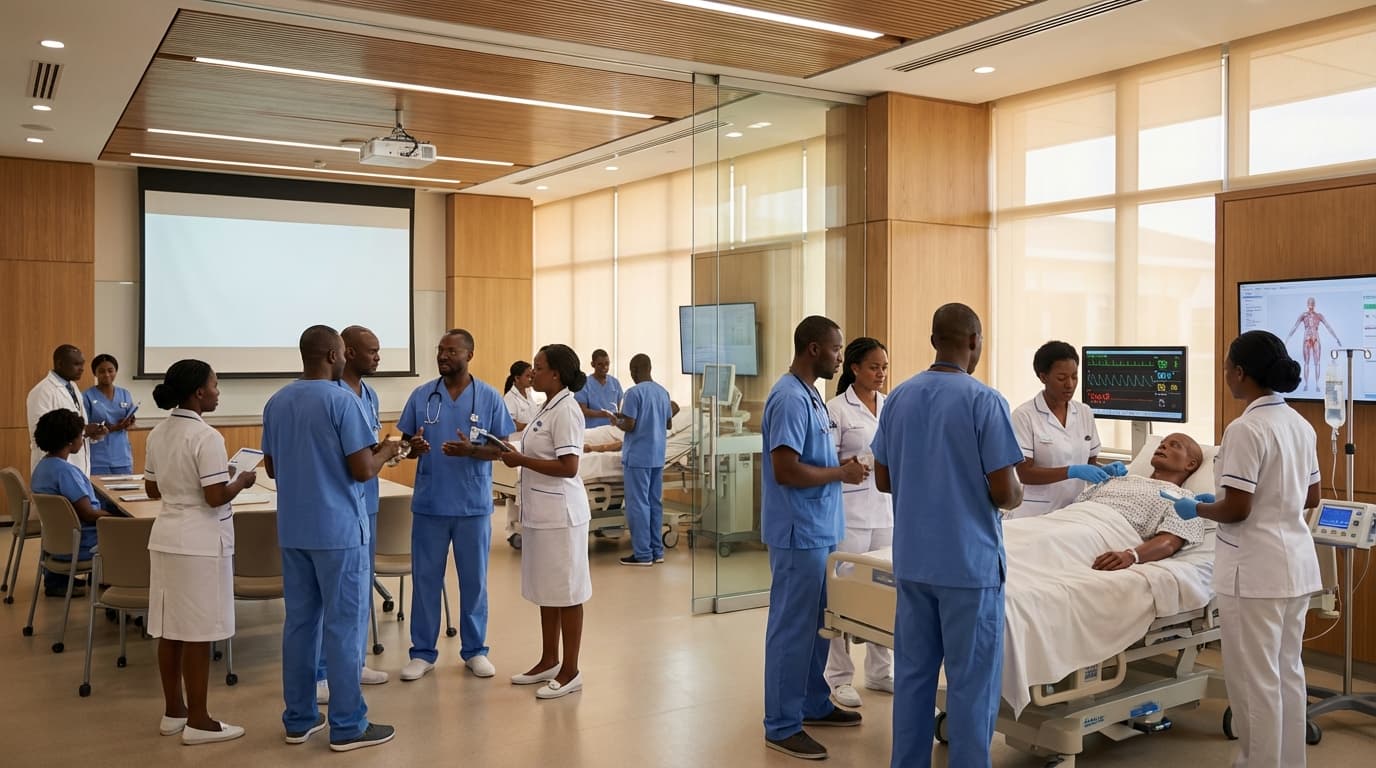
Equipment Training & Education in Namibia
Engineering Excellence & Technical Support
Comprehensive equipment training and certification programs High-standard technical execution following OEM protocols and local regulatory frameworks.
Advanced Operator Certification Program
This program offers comprehensive, hands-on training for operating heavy machinery used in mining and construction sectors. It covers advanced safety protocols, efficient operation techniques, and routine maintenance, ensuring Namibian workforce proficiency and compliance with international standards.
Renewable Energy Equipment Installation & Maintenance Workshops
Tailored workshops focusing on the installation, troubleshooting, and preventative maintenance of solar photovoltaic (PV) and wind turbine systems. This initiative aims to build a skilled local workforce capable of supporting Namibia's growing renewable energy infrastructure.
Digital Diagnostic Tools for Agricultural Machinery
Empowering Namibian farmers and technicians with training on using modern digital diagnostic tools for agricultural equipment. This includes understanding sensor data, performing predictive maintenance, and optimizing machinery performance for increased agricultural productivity and reduced downtime.
What Is Equipment Training & Education In Namibia?
Equipment training and education in Namibia refers to the structured process of imparting knowledge and practical skills necessary for the safe, efficient, and compliant operation, maintenance, and management of various types of equipment. This encompasses a broad spectrum of machinery, tools, and systems utilized across diverse industrial, commercial, and public sectors within the Namibian context. The objective is to enhance user competency, minimize operational risks, optimize equipment longevity, and ensure adherence to national and international safety standards and regulations.
| Who Needs Equipment Training & Education? | Typical Use Cases | ||||||
|---|---|---|---|---|---|---|---|
| Industrial Workers: Machine operators, technicians, maintenance personnel in sectors like mining, manufacturing, and construction. | Construction Professionals: Operators of heavy machinery (excavators, bulldozers, cranes), power tools, and scaffolding. | Agricultural Workers: Operators of tractors, harvesters, irrigation systems, and other farm machinery. | Healthcare Professionals: Users of medical equipment (diagnostic machines, surgical instruments, life support systems). | Transportation and Logistics Personnel: Drivers and operators of forklifts, cranes, and other material handling equipment. | Energy Sector Employees: Technicians involved in the operation and maintenance of power generation and distribution equipment. | IT and Telecommunications Staff: Personnel managing and maintaining network infrastructure and data center equipment. | Mining Sector Personnel: Operators of drilling rigs, haul trucks, conveyor systems, and processing machinery. |
| Onboarding New Employees: To ensure immediate competency and safety from the outset of employment. | Introduction of New Equipment: When a company acquires new machinery or technology requiring specialized operational knowledge. | Compliance with Regulations: To meet statutory requirements for equipment operation and operator certification (e.g., OSHA-equivalent standards). | Accident Prevention and Risk Mitigation: Training individuals to identify and manage potential hazards associated with equipment use. | Improving Operational Efficiency: Equipping personnel with skills to maximize productivity and minimize downtime. | Maintenance and Longevity: Educating staff on proper maintenance procedures to extend equipment lifespan and reduce repair costs. | Emergency Response Preparedness: Training on protocols for dealing with equipment malfunctions or accidents. |
Key Components of Equipment Training & Education in Namibia
- Needs Assessment: Identifying specific training requirements based on equipment type, user experience, and operational demands.
- Curriculum Development: Designing training programs tailored to the Namibian operational environment, considering local language nuances, regulatory frameworks, and common equipment models.
- Theoretical Instruction: Delivering classroom-based learning covering principles of operation, safety protocols, hazard identification, and regulatory compliance.
- Practical Demonstration and Hands-on Training: Providing supervised opportunities for trainees to operate, maintain, and troubleshoot equipment under realistic conditions.
- Assessment and Certification: Evaluating trainee competency through written examinations, practical assessments, and issuing recognized certifications upon successful completion.
- Refresher and Advanced Training: Offering ongoing education to maintain skill proficiency and introduce new operational techniques or equipment upgrades.
- Safety and Compliance Focus: Emphasizing safe work practices, emergency procedures, and adherence to Namibian occupational health and safety legislation.
Who Needs Equipment Training & Education In Namibia?
In Namibia, a wide range of individuals and organizations require equipment training and education to ensure safe, efficient, and productive operations. This training is crucial across various sectors, from heavy industry and agriculture to healthcare and education. Investing in proper training not only enhances individual skills and career prospects but also contributes to overall economic growth and development by reducing accidents, minimizing downtime, and improving output quality.
| Industry/Sector | Target Customers/Departments | Examples of Equipment Requiring Training |
|---|---|---|
| Mining and Resources | Mine Operators, Plant Technicians, Maintenance Teams, Safety Officers | Excavators, Loaders, Drills, Crushers, Conveyors, Haul Trucks, Processing Plant Machinery |
| Agriculture | Farmers, Farm Managers, Agricultural Technicians, Cooperative Members | Tractors, Harvesters, Planters, Sprayers, Irrigation Systems, Farm Machinery Maintenance |
| Construction | Machine Operators, Site Supervisors, Foremen, Maintenance Crews | Cranes, Excavators, Bulldozers, Graders, Compactors, Concrete Mixers, Power Tools |
| Manufacturing and Industrial | Production Line Operators, Machine Operators, Maintenance Engineers, Quality Control Staff | Assembly Line Machinery, CNC Machines, Welding Equipment, Packaging Machines, Forklifts |
| Transportation and Logistics | Drivers, Warehouse Staff, Fleet Managers, Mechanics | Forklifts, Reach Trucks, Cranes (port/warehouse), Trucks (specialized), Loading Equipment |
| Healthcare | Medical Technicians, Nurses, Biomedical Engineers, Laboratory Staff | MRI Machines, CT Scanners, X-ray Machines, Laboratory Analyzers, Sterilizers |
| Energy (Renewable & Traditional) | Technicians, Engineers, Maintenance Staff, Site Supervisors | Solar Panel Installation Equipment, Wind Turbine Maintenance Tools, Generator Maintenance Equipment |
| Public Works and Municipalities | Road Maintenance Crews, Water Treatment Plant Operators, Waste Management Staff | Road Rollers, Excavators, Water Pumps, Filtration Systems, Waste Compactors |
| Education and Vocational Training | Instructors, Students (vocational courses) | All equipment relevant to the specific vocational trade being taught (e.g., welding, automotive, carpentry, electrical) |
Target Customers and Departments for Equipment Training & Education in Namibia
- Individuals: Operators, technicians, mechanics, supervisors, and managers across all industries.
- Businesses: Small, medium, and large enterprises that utilize various types of equipment.
- Government Agencies: Departments responsible for infrastructure, public works, and emergency services.
- Educational Institutions: Vocational training centers, colleges, and universities offering technical programs.
- NGOs and Non-profits: Organizations involved in development projects requiring specialized equipment operation.
Equipment Training & Education Process In Namibia
The equipment training and education process in Namibia is designed to equip individuals and organizations with the necessary knowledge and skills to operate, maintain, and safely utilize various types of equipment. This process typically begins with an inquiry from a potential client and concludes with the successful execution of the training program, followed by evaluation and ongoing support. The workflow is structured to ensure clarity, efficiency, and effectiveness at each stage.
| Stage | Description | Key Activities | Responsible Parties | Deliverables |
|---|---|---|---|---|
| Inquiry & Needs Assessment | Initial contact from a client expressing interest in equipment training and identifying specific training needs. | Receive inquiry, understand client's background, specific equipment, skill gaps, target audience, and desired outcomes. | Prospective Client, Training Provider Sales/Consultant | Clear understanding of training requirements, initial client profile. |
| Proposal Development & Quotation | Developing a tailored training solution based on the assessed needs and providing a cost estimate. | Designing training modules, outlining curriculum, defining methodology, specifying duration, trainers, and resources. Calculating costs and preparing a formal quotation. | Training Provider Technical/Curriculum Team, Sales/Quotation Department | Detailed training proposal, comprehensive quotation/budget. |
| Agreement & Scheduling | Formalizing the training engagement and agreeing on the logistics and timeline. | Client reviews and accepts the proposal and quotation. Contract/agreement signing. Negotiation of payment terms. Establishing training dates, venue, and participant numbers. | Client Management, Training Provider Administration | Signed training agreement/contract, confirmed training schedule, payment arrangements. |
| Preparation & Material Development | Gathering and preparing all necessary resources and materials for the training. | Developing or customizing training manuals, presentations, practical exercises, assessments, and instructor guides. Arranging equipment for practical sessions, confirming venue logistics. | Training Provider Instructors, Curriculum Developers, Logistics Team | Completed training materials (digital/print), pre-session logistical arrangements. |
| Training Delivery & Execution | Conducting the actual training sessions as per the agreed schedule and curriculum. | Facilitating theoretical sessions (lectures, presentations, discussions), conducting practical demonstrations, hands-on exercises, and simulations. Ensuring participant engagement and safety. | Assigned Trainers/Instructors | Delivered training sessions, active participant engagement. |
| Assessment & Evaluation | Measuring the participants' understanding and skill acquisition, and evaluating the effectiveness of the training. | Administering theoretical tests, practical skill assessments, and observation. Collecting feedback from participants through surveys. Evaluating trainer performance and overall training effectiveness. | Assigned Trainers/Assessors, Training Provider Quality Assurance | Assessment results, participant feedback reports, evaluation summaries. |
| Certification & Post-Training Support | Issuing credentials to successful participants and providing ongoing assistance. | Awarding certificates of completion/competency to participants who meet the required standards. Offering post-training support, such as answering queries, providing additional resources, or scheduling refresher courses. | Training Provider Administration, Quality Assurance | Certificates of achievement, record of attendance, post-training support documentation. |
| Feedback & Continuous Improvement | Analyzing feedback and evaluation data to enhance future training programs. | Reviewing all collected feedback and assessment data. Identifying areas for improvement in curriculum, delivery methods, materials, and trainer performance. Updating training programs based on lessons learned and industry best practices. | Training Provider Management, Quality Assurance Team, Curriculum Developers | Action plans for improvement, updated training materials and processes. |
Key Stages in the Equipment Training & Education Workflow
- Inquiry & Needs Assessment
- Proposal Development & Quotation
- Agreement & Scheduling
- Preparation & Material Development
- Training Delivery & Execution
- Assessment & Evaluation
- Certification & Post-Training Support
- Feedback & Continuous Improvement
Equipment Training & Education Cost In Namibia
The cost of equipment training and education in Namibia is a crucial consideration for businesses aiming to ensure their workforce is proficient in operating and maintaining various machinery and technical systems. This training is vital for safety, efficiency, productivity, and compliance with industry standards. Several factors influence the pricing, making it highly variable across different training providers, equipment types, and locations within Namibia.
Key Pricing Factors:
- Type and Complexity of Equipment: Training for highly specialized, complex, or dangerous equipment (e.g., heavy construction machinery, industrial processing units, specialized medical equipment) will naturally be more expensive than training for simpler tools or common office equipment. The depth of knowledge and practical skills required directly impacts the cost.
- Duration and Intensity of Training: A short, introductory course will cost less than an in-depth, multi-day or week-long program. Intensive, hands-on training requiring significant practical application and supervision will also command higher prices.
- Training Provider Reputation and Accreditation: Established training institutions with a proven track record, certified instructors, and recognized accreditations often charge more due to their expertise, resources, and the perceived value of their certifications.
- Location of Training: Training conducted at the provider's facility might differ in cost from on-site training at the client's location. On-site training often incurs additional costs for instructor travel, accommodation, and potential logistical arrangements.
- Customization and Specificity: Tailored training programs designed to meet a company's unique operational needs or specific equipment models will generally be more expensive than standardized, off-the-shelf courses.
- Materials and Resources: The cost of training manuals, practical simulation equipment, access to specialized software, and assessment tools contributes to the overall price.
- Instructor Fees and Expertise: Highly experienced and qualified instructors, especially those with specialized industry knowledge, command higher fees.
- Number of Participants: While some courses have a fixed price per participant, bulk bookings for larger groups might offer discounts, but extremely small groups might face higher per-person costs to cover fixed expenses.
- Certification and Assessment: The inclusion of formal assessments, examinations, and the issuance of recognized certifications will add to the cost, as these processes require resources and quality assurance.
Pricing Ranges in Namibian Dollars (NAD):
It's important to note that these are indicative ranges and can fluctuate significantly. For precise quotes, direct contact with training providers is essential.
- Basic Equipment Operation (e.g., forklifts, basic construction tools): NAD 2,000 - NAD 7,000 per participant for a 1-3 day course.
- Intermediate Technical Skills (e.g., welding, basic electrical, specific machinery operation): NAD 5,000 - NAD 15,000 per participant for a 3-5 day course.
- Advanced/Specialized Equipment (e.g., heavy mining machinery, industrial automation, complex IT systems): NAD 10,000 - NAD 30,000+ per participant for multi-day or specialized programs. These can sometimes be project-based quotes for entire teams.
- On-site Training: An additional NAD 1,000 - NAD 5,000 per day for instructor travel and expenses, on top of the per-participant course fee.
- Customized Corporate Training Packages: Can range from NAD 20,000 upwards for bespoke programs, depending on scope and duration.
Businesses in Namibia should conduct thorough research, obtain multiple quotes, and clearly define their training objectives to secure the most cost-effective and beneficial equipment training solutions.
| Training Category | Indicative Price Range (NAD per Participant) | Typical Duration |
|---|---|---|
| Basic Equipment Operation (e.g., forklifts, basic tools) | 2,000 - 7,000 | 1-3 days |
| Intermediate Technical Skills (e.g., welding, basic electrical) | 5,000 - 15,000 | 3-5 days |
| Advanced/Specialized Equipment (e.g., heavy machinery, industrial automation) | 10,000 - 30,000+ | Multi-day / Specialized |
| On-site Training (additional daily cost) | 1,000 - 5,000 | Per day |
| Customized Corporate Packages | 20,000+ | Variable |
Factors Influencing Equipment Training & Education Costs in Namibia
- Type and complexity of equipment
- Duration and intensity of training
- Training provider reputation and accreditation
- Location of training (on-site vs. provider facility)
- Customization and specificity of the program
- Inclusion of training materials and resources
- Instructor qualifications and experience
- Number of participants
- Certification and assessment processes
Affordable Equipment Training & Education Options
Acquiring necessary equipment for your business or personal needs can be a significant investment. However, comprehensive training and education on its use are equally crucial for maximizing its value and ensuring safety. Fortunately, there are numerous affordable options available. This guide explores value bundles and cost-saving strategies to help you access quality equipment training without breaking the bank.
| Strategy | Description | Benefits | Considerations |
|---|---|---|---|
| Value Bundles | Packaging equipment purchase with training programs at a bundled price, often offering a discount compared to purchasing separately. | Cost savings, integrated learning experience, ensures immediate proficiency. | Availability depends on the vendor; ensure the training is comprehensive and relevant to your needs. |
| Bulk Discounts on Training | Negotiating lower per-person costs when multiple employees from the same organization enroll in a training program. | Significant cost reduction for teams, consistent skill development across the workforce. | Requires a minimum number of participants; compare pricing across different providers. |
| Off-Peak or Group Training Sessions | Scheduling training during less busy times or organizing a group session to share costs. | Lower overall cost per participant, flexibility in scheduling. | May require coordination with training providers and internal staff availability. |
| Leveraging Free Trial Periods | Utilizing free trials of online learning platforms or software to gain introductory knowledge before committing to a paid subscription. | No initial cost, allows for evaluation of content quality. | Time-limited; may not cover advanced features or in-depth practical application. |
| Cross-Training & Skill Sharing | Training employees on multiple pieces of equipment or encouraging internal knowledge sharing. | Increased workforce versatility, reduced reliance on external trainers, cost-effective. | Requires dedicated time for training and a culture of knowledge sharing. |
| Certification Programs with Study Materials | Opting for certification programs that include comprehensive study guides or online modules, allowing for self-paced learning. | Cost-effective self-study, recognized credentials, builds expertise. | Requires self-discipline and motivation; practical application may need to be sought separately. |
Affordable Equipment Training & Education Options
- Manufacturer-Provided Training: Many equipment manufacturers offer basic training as part of the purchase agreement or at a reduced cost for a limited time. This is often the most in-depth and relevant training for a specific piece of equipment.
- Online Courses & Webinars: A vast array of online platforms and educational institutions offer courses, webinars, and certifications related to various equipment. These are often more flexible and cost-effective than in-person sessions.
- Community Colleges & Vocational Schools: These institutions frequently offer vocational training programs and individual courses on operating specific types of equipment, often at a fraction of the cost of specialized private training.
- Industry Associations & Trade Groups: Membership in relevant industry associations can provide access to exclusive training resources, workshops, and discounted educational programs for their members.
- Apprenticeship Programs: For hands-on trades, apprenticeship programs offer on-the-job training alongside theoretical education, allowing you to learn while earning, effectively reducing the cost of skill acquisition.
- Peer-to-Peer Learning & Mentorship: Connecting with experienced professionals in your field can provide invaluable practical guidance and training. This can be informal and cost nothing but your time and willingness to learn.
- Open-Source & Free Resources: For certain software or basic operational knowledge, free online resources, forums, and documentation can be a starting point for learning.
- Government & Non-Profit Grants/Subsidies: Explore if there are any government grants or non-profit initiatives that support training and education in your specific industry or for your business needs.
Verified Providers In Namibia
In Namibia's evolving healthcare landscape, identifying reliable and accredited healthcare providers is paramount for individuals and families seeking quality medical services. Franance Health stands out as a leading entity, distinguished by its rigorous credentialing process and unwavering commitment to patient well-being. This document outlines the significance of verified providers and details why Franance Health's credentials make them the optimal choice for your healthcare needs.
| Franance Health Credential | Significance for Patients | Why it Represents the Best Choice |
|---|---|---|
| Accreditation by Recognized Health Bodies (e.g., NAMAS, International Standards) | Demonstrates adherence to stringent quality, safety, and operational standards in healthcare delivery. | Guarantees that Franance Health facilities and services meet or exceed national and international benchmarks for excellence, ensuring a high level of care and patient safety. |
| Rigorous Medical Professional Verification | Confirms that all healthcare practitioners are licensed, qualified, and possess the necessary experience and expertise in their respective fields. | Ensures that you are treated by competent and ethical medical professionals, minimizing the risk of misdiagnosis or substandard treatment and promoting optimal health outcomes. |
| Commitment to Continuous Professional Development (CPD) | Indicates that Franance Health prioritizes ongoing learning and skill enhancement for its staff, keeping them updated with the latest medical advancements and best practices. | Provides access to cutting-edge treatments and technologies, ensuring that patients receive the most current and effective medical care available. |
| Adherence to Ethical Medical Practices and Patient Rights | Confirms a dedication to upholding the highest ethical standards, including patient confidentiality, informed consent, and respect for patient autonomy. | Offers a patient-centered experience where your well-being, privacy, and dignity are paramount, fostering a relationship built on trust and respect. |
| State-of-the-Art Facilities and Equipment | Signifies investment in modern medical infrastructure, diagnostic tools, and treatment technologies. | Enables accurate diagnoses and effective treatment, leading to better patient outcomes and a more comfortable and efficient healthcare experience. |
| Transparent and Accessible Patient Information | Demonstrates a commitment to clear communication regarding services, costs, and treatment plans. | Empowers you to understand your healthcare journey, make informed decisions, and feel confident in the care you receive. |
Why Verified Providers Matter in Namibia
- Patient Safety and Quality of Care: Verification ensures that providers meet established standards for medical expertise, ethical practice, and facility safety, directly impacting patient outcomes.
- Trust and Confidence: A verified provider assures patients that they are receiving care from qualified and legitimate medical professionals, fostering trust in the healthcare system.
- Accountability: Verified entities are typically subject to ongoing review and adherence to regulations, providing a mechanism for accountability and recourse if issues arise.
- Access to Specialized Services: Verification often signifies a provider's capability to offer specific treatments or procedures, guiding patients to the right resources.
- Informed Decision-Making: Knowing that a provider is verified empowers patients to make informed choices about their healthcare, reducing uncertainty and anxiety.
Scope Of Work For Equipment Training & Education
This Scope of Work (SOW) outlines the requirements for providing comprehensive equipment training and education services. The objective is to ensure that client personnel possess the necessary knowledge and skills to safely, efficiently, and effectively operate, maintain, and troubleshoot the specified equipment. This SOW covers the technical deliverables, standard specifications, and training methodologies to be employed.
| Deliverable | Description | Standard Specification/Format | Quantity/Frequency |
|---|---|---|---|
| Training Curriculum | Detailed outline of training modules, learning objectives, and content. | Document (PDF/Word), clearly structured with learning outcomes. | 1 per equipment type/module |
| Training Manuals | Comprehensive guide covering operation, maintenance, safety, and troubleshooting. | Printed and/or Digital (PDF), with clear diagrams and step-by-step instructions. | 1 per trainee |
| Presentation Slides | Visual aids used during theoretical training sessions. | Digital (PowerPoint/Google Slides), high-resolution images and concise text. | 1 set per training module |
| Hands-on Practical Exercises | Structured exercises designed to reinforce theoretical knowledge through practical application. | Document detailing exercise objectives, procedures, and expected outcomes. | Minimum 5 distinct exercises per equipment type |
| Competency Assessment Forms | Tools for evaluating trainee understanding and practical skills. | Standardized forms (e.g., checklists, questionnaires, practical skill evaluation sheets). | 1 per trainee per assessment point |
| Training Attendance Records | Documentation of trainee participation. | Digital/Paper logs with trainee names, dates, and signatures. | Maintained for each training session |
| Post-Training Support Plan | Outline of ongoing support mechanisms. | Document detailing contact methods, response times, and available resources. | 1 document |
| Final Training Report | Summary of training activities, participant feedback, and assessment results. | Document (PDF/Word), including executive summary, key findings, and recommendations. | 1 report per training program |
Key Training Objectives
- Develop and deliver comprehensive training materials tailored to the specific equipment.
- Conduct hands-on practical training sessions for all designated personnel.
- Provide troubleshooting and problem-solving guidance for common equipment issues.
- Ensure trainees understand and adhere to all safety protocols and operating procedures.
- Assess the competency of trainees through practical evaluations and knowledge checks.
- Provide post-training support and resources for ongoing learning and reference.
Service Level Agreement For Equipment Training & Education
This Service Level Agreement (SLA) outlines the guaranteed response times for support requests and uptime for equipment training and education services provided by [Your Company Name] (hereinafter referred to as 'Provider') to [Client Name] (hereinafter referred to as 'Client').
| Service Component | Response Time Target | Uptime Guarantee | Definition |
|---|---|---|---|
| Technical Support (Tier 1: General Inquiries & Access Issues) | 4 business hours | 99.5% | Resolution or escalation of basic user access, login, or general platform navigation issues. |
| Technical Support (Tier 2: Functional & Troubleshooting) | 8 business hours | 99.5% | Resolution or escalation of issues related to training module functionality, content delivery, or specific tool usage. |
| Scheduled Training Session Availability | N/A (Scheduled) | 100% (if scheduled, barring unforeseen emergency) | Ensuring pre-arranged training sessions commence on time and are delivered as planned. |
| Training Platform Availability | N/A (Continuous Monitoring) | 99.8% | Availability of the online training portal and its core functionalities for client access and use. |
Scope of Services
- On-demand technical support for training platform access and functionality.
- Proactive monitoring and maintenance of the training environment.
- Scheduled training sessions and on-site support as agreed upon.
- Access to updated training materials and educational resources.
Frequently Asked Questions

Ready when you are
Let's scope your Equipment Training & Education in Namibia project in Namibia.

Scaling healthcare logistics and technical systems across the entire continent.