
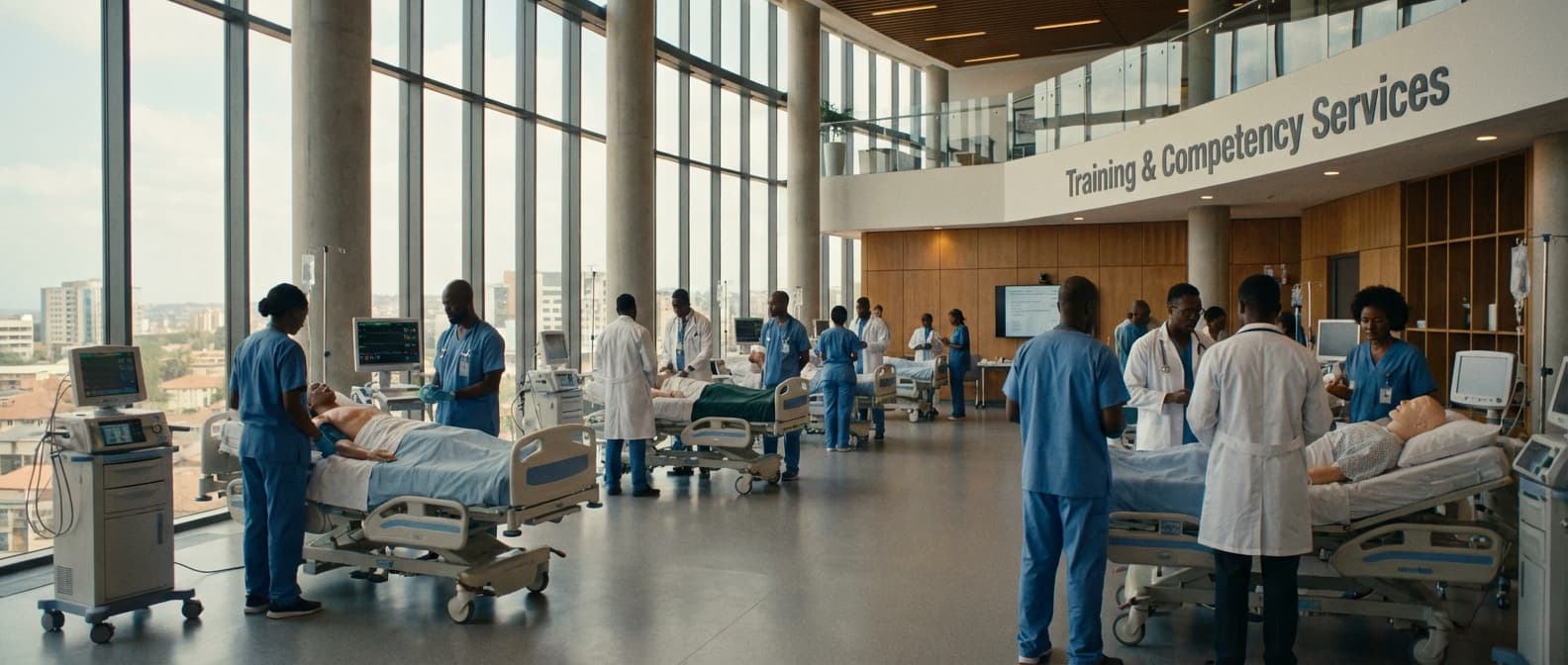
Ventilator User Training Service (Nurses) in Namibia
Engineering Excellence & Technical Support
Ventilator User Training Service (Nurses) High-standard technical execution following OEM protocols and local regulatory frameworks.
Advanced Ventilator Setup & Parameter Configuration
Mastering complex ventilator setups for diverse patient populations in Namibia. Learn to accurately configure essential parameters like Tidal Volume, PEEP, FiO2, and respiratory rate, ensuring optimal lung protection and gas exchange for critically ill patients.
Interpreting Ventilator Waveforms & Alarms
Develop expert skills in real-time waveform analysis (flow, pressure, volume). Understand the implications of different waveform patterns and effectively troubleshoot common ventilator alarms to quickly identify and address patient distress or equipment malfunctions.
Evidence-Based Weaning Strategies & Protocols
Implement evidence-based weaning protocols tailored to Namibian healthcare settings. Learn to assess patient readiness for liberation from mechanical ventilation, manage spontaneous breathing trials (SBTs), and identify potential barriers to successful weaning, promoting patient recovery and resource optimization.
What Is Ventilator User Training Service (Nurses) In Namibia?
Ventilator User Training Service (Nurses) in Namibia refers to a specialized educational program designed to equip registered nurses with the theoretical knowledge and practical skills necessary for the safe and effective operation, monitoring, and management of mechanical ventilators in clinical settings within Namibia. This service is crucial for ensuring patient safety, optimizing therapeutic outcomes, and adhering to established clinical protocols and healthcare standards.
| Who Needs Ventilator User Training (Nurses)? | Typical Use Cases in Namibia |
|---|---|
| Registered Nurses (RNs) working in critical care units (ICUs, HDUs). | Management of patients with acute respiratory failure (e.g., ARDS, pneumonia, COPD exacerbations, sepsis). |
| Registered Nurses (RNs) involved in emergency medicine and trauma care. | Provision of ventilatory support in pre-hospital and emergency department settings. |
| Registered Nurses (RNs) in operating theaters and post-anesthesia care units (PACUs). | Perioperative management of patients requiring mechanical ventilation. |
| Registered Nurses (RNs) working in specialized wards (e.g., neurosurgery, cardiology) where respiratory compromise is common. | Management of patients with specific medical conditions requiring ventilatory assistance. |
| Newly qualified Registered Nurses (RNs) entering critical care environments. | Onboarding and initial competency validation for new staff. |
| Registered Nurses (RNs) returning to practice or transitioning to critical care roles. | Refresher training and skills update to meet current standards. |
Key Components of Ventilator User Training Service (Nurses):
- Principles of Mechanical Ventilation: Understanding gas exchange, respiratory mechanics, ventilator modes (e.g., volume-controlled, pressure-controlled, assist-control, synchronized intermittent mandatory ventilation - SIMV), and patient-ventilator synchrony.
- Ventilator Hardware and Software Familiarization: Identifying components, understanding user interface navigation, setting initial parameters, and performing pre-use checks and system diagnostics.
- Patient Assessment and Monitoring: Techniques for assessing respiratory status, interpreting ventilator waveforms and alarms, monitoring physiological parameters (e.g., SpO2, EtCO2, arterial blood gases - ABGs), and recognizing signs of complications.
- Ventilator Management Strategies: Initiating and adjusting ventilator settings based on patient condition, weaning protocols, and troubleshooting common issues (e.g., leaks, high pressures, low volumes).
- Infection Prevention and Control: Implementing sterile techniques for circuit changes, suctioning, and equipment disinfection to prevent ventilator-associated pneumonia (VAP).
- Emergency Procedures: Responding to critical ventilator-related emergencies and managing acute decompensation.
- Documentation and Communication: Accurate recording of ventilator settings, patient responses, and communication of critical information to the multidisciplinary team.
Who Needs Ventilator User Training Service (Nurses) In Namibia?
This document outlines the critical need for Ventilator User Training Services specifically for nurses in Namibia. As the utilization of ventilators in healthcare settings across Namibia is essential for patient care, ensuring that nurses possess the necessary skills and knowledge to operate these complex machines safely and effectively is paramount. Inadequate training can lead to patient harm, increased operational risks, and inefficient resource utilization. This service aims to bridge that gap by providing comprehensive, hands-on training tailored to the Namibian healthcare context.
| Department | Specific Need for Ventilator Training | Examples of Healthcare Facilities | |
|---|---|---|---|
| Intensive Care Units (ICUs) | Management of critically ill patients requiring mechanical ventilation for respiratory failure, sepsis, trauma, etc. Requires advanced understanding of modes, settings, weaning protocols, and troubleshooting. | State Hospitals (e.g., Windhoek Central Hospital, Oshakati State Hospital, Katutura Intermediate Hospital) | Private Hospitals (e.g., Roman Catholic Hospital, Lady Pohamba Private Hospital, MediClinic Namibia) |
| High Dependency Units (HDUs) / Step-Down Units | Close monitoring and management of patients transitioning from ICU or requiring intermediate levels of respiratory support. Focus on recognizing deterioration and initiating/adjusting ventilation. | State Hospitals | Private Hospitals |
| Emergency Departments (EDs) / Casualty | Initial stabilization and management of patients with acute respiratory distress requiring immediate ventilatory support before transfer to higher levels of care. | State Hospitals | Private Hospitals |
| Operating Theatres (ORs) | Ventilator management during surgical procedures, particularly for general anesthesia and complex surgeries. | State Hospitals | Private Hospitals |
| Maternity Wards / Neonatal Intensive Care Units (NICUs) / Pediatric Wards | Ventilator management for neonates and pediatric patients with respiratory distress, prematurity complications, or congenital anomalies. | State Hospitals with dedicated NICUs/Pediatric Wards | Private Hospitals with Neonatal/Pediatric Services |
| Regional Hospitals / District Hospitals | Increasing capacity to manage patients requiring mechanical ventilation, especially in areas with limited access to tertiary care. Training to support basic and intermediate ventilation needs. | Larger Regional Hospitals (e.g., Swakopmund State Hospital, Walvis Bay State Hospital) | Select District Hospitals with critical care capabilities |
| Rehabilitation Centers (potentially) | Management of patients on long-term ventilation, requiring specific skills for weaning and patient care. | Limited, but potential for specialized units. |
Target Customers & Departments for Ventilator User Training Service (Nurses) in Namibia
- Registered Nurses
- Enrolled Nurses
- Enrolled Comprehensive Nurses
- Clinical Nurse Specialists
- Critical Care Nurses
- Midwives (in facilities with neonatal/pediatric ICUs)
- Nursing Supervisors and Ward Managers
Ventilator User Training Service (Nurses) Process In Namibia
This document outlines the workflow for the Ventilator User Training Service for Nurses in Namibia, detailing the process from initial inquiry to the successful execution of training.
| Step | Description | Responsible Party | Key Activities | Deliverables/Outcomes |
|---|---|---|---|---|
| Initial contact from a healthcare facility requesting ventilator user training for their nursing staff. | Healthcare Facility (Nurses/Supervisors), Training Provider | Contacting the training provider, expressing training needs, specifying the number of nurses, preferred dates/locations, and specific ventilator models to be covered. | Confirmation of interest, preliminary understanding of training scope and requirements. |
| The training provider responds to the inquiry with a detailed proposal and cost estimation. | Training Provider | Developing a training curriculum, identifying trainers, outlining training modules (theoretical and practical), specifying duration, venue requirements, and providing a detailed quotation. | Formal training proposal, detailed quotation, proposed training schedule. |
| Formalizing the training agreement and confirming the training dates and logistics. | Healthcare Facility, Training Provider | Reviewing and accepting the proposal, signing a training agreement, confirming participant numbers, booking venue (if applicable), and finalizing dates and times. | Signed training agreement, confirmed training schedule, confirmed participant list. |
| Activities undertaken by both parties before the training commences. | Training Provider, Healthcare Facility | Training Provider: Preparing training materials (manuals, presentations, case studies), ensuring trainer availability, and pre-configuring any simulation equipment. Healthcare Facility: Ensuring nominated nurses are available, informing participants about the training, and arranging for necessary logistical support at the venue. | Ready training materials, informed participants, prepared training environment. |
| Delivery of foundational knowledge regarding ventilator principles, settings, and modes. | Trainer(s) | Lectures, presentations, group discussions, case study analysis covering ventilator basics, physiology, indications for ventilation, common settings and parameters, alarms, and troubleshooting common issues. | Enhanced theoretical understanding of ventilator operation, safety protocols, and patient management principles. |
| Hands-on experience with actual ventilator equipment or simulators. | Trainer(s), Nurses (Participants) | Demonstration of ventilator setup and operation, practice sessions on setting up ventilators for different patient scenarios, adjusting settings, responding to alarms, and performing basic maintenance. This may involve mannequins or simulation equipment. | Competency in setting up, operating, and troubleshooting ventilators in a simulated environment. |
| Evaluating the participants' understanding and practical skills. | Trainer(s) | Conducting theoretical quizzes or written assessments, practical skills demonstrations, and observation of participant performance during hands-on sessions. Feedback forms for participants to evaluate the training. | Assessed competency levels of nurses, identification of areas for improvement, feedback on training effectiveness. |
| Issuance of certificates and documentation of training completion. | Training Provider | Issuing certificates of completion to nurses who have successfully met the training objectives and achieved the required competency levels. Maintaining training records, including participant lists, assessment results, and certificates issued. | Certificates of completion for trained nurses, comprehensive training records for the provider and facility. |
| Providing ongoing support and potentially further assessments. | Training Provider, Healthcare Facility | Answering follow-up queries from nurses, potentially offering refresher courses or advanced training if requested. Healthcare facility to integrate newly trained nurses into clinical practice and monitor their performance. | Sustained competency, improved patient care outcomes, identification of future training needs. |
Ventilator User Training Service (Nurses) Process in Namibia
- The service is designed to equip nurses with the necessary knowledge and practical skills to safely and effectively operate ventilators.
- The process emphasizes clear communication, standardized training delivery, and post-training support to ensure competency and patient safety.
- This workflow is crucial for maintaining high standards of critical care within Namibian healthcare facilities.
Ventilator User Training Service (Nurses) Cost In Namibia
Providing ventilator user training for nurses in Namibia is a crucial service to ensure competent care for patients requiring mechanical ventilation. The cost of such training can vary significantly based on several factors. These include the duration and intensity of the training program, the qualifications and experience of the trainers, the venue and facilities utilized, the number of participants, and any specific equipment or simulation resources required. Furthermore, the training provider's reputation and overhead costs will also influence the final price. It's important for healthcare facilities in Namibia to source quotes from multiple reputable training providers to compare offerings and secure the most cost-effective solution for their nursing staff.
| Training Component | Estimated Cost Range (N$) |
|---|---|
| Basic Ventilator Operation & Monitoring (e.g., 1-2 days) | 5,000 - 15,000 |
| Advanced Ventilator Management & Troubleshooting (e.g., 3-5 days) | 12,000 - 30,000 |
| Specialized Ventilator Modalities (e.g., Non-invasive, High-Frequency) (per module) | 3,000 - 8,000 |
| On-site Training (additional cost per day for travel & accommodation) | 2,000 - 5,000 |
| Group Discounts (per participant, for larger cohorts) | Negotiable (typically 10-20% reduction) |
| Certification Fees (if applicable) | 500 - 2,000 |
Factors Influencing Ventilator User Training Costs in Namibia (N$)
- Training Program Duration and Depth
- Trainer Qualifications and Experience
- Venue and Facility Costs
- Number of Participants
- Equipment and Simulation Needs
- Training Provider's Overhead and Reputation
- Customization of Training Content
Affordable Ventilator User Training Service (Nurses) Options
This document outlines affordable ventilator user training service options specifically designed for nurses. It focuses on providing high-quality, cost-effective training to ensure nurses are proficient in operating and managing mechanical ventilators, ultimately improving patient care and safety.
| Value Bundle Option | Included Services | Target Audience | Estimated Cost (per nurse) | Cost-Saving Strategies Explained |
|---|---|---|---|---|
| Foundational Essentials Bundle | Core online modules (self-paced), simulated case studies, downloadable quick-reference guides. | New graduates, nurses with limited ventilator experience. | $150 - $250 | Leverages scalable online content, reduces instructor-led time, allows for flexible learning schedules. |
| Comprehensive Proficiency Bundle | Foundational Essentials Bundle + live online Q&A sessions with experienced respiratory therapists/critical care nurses, hands-on simulation lab access (if available locally or through partnerships), competency assessments. | Nurses requiring refresher training or expanding their skills. | $300 - $500 | Combines cost-effective online learning with targeted live interaction, group discounts for facility-wide training, potential for 'train-the-trainer' models. |
| Advanced Critical Care Bundle | Comprehensive Proficiency Bundle + specialized modules on complex ventilation strategies (e.g., ARDSnet, NAVA), advanced troubleshooting scenarios, critical decision-making workshops, mentorship program access. | Experienced critical care nurses, charge nurses, nurse educators. | $500 - $800+ | Tiered pricing based on depth of content, bulk purchase discounts, integration with existing hospital education platforms for seamless delivery and tracking. |
Key Training Components
- Basic ventilator principles and mechanics
- Ventilator modes and settings
- Patient assessment and monitoring
- Troubleshooting common ventilator issues
- Weaning protocols and strategies
- Safety and infection control measures
- Documentation and communication
Verified Providers In Namibia
In Namibia's burgeoning healthcare landscape, identifying and trusting 'Verified Providers' is paramount for individuals seeking reliable and high-quality medical services. The term 'Verified Provider' signifies that a healthcare professional or institution has undergone a rigorous vetting process, ensuring they meet stringent standards of qualification, ethical practice, and patient safety. This verification is crucial for building confidence and making informed decisions about your health. Franance Health stands out as a leading entity in this regard, consistently demonstrating a commitment to excellence and patient well-being through its robust credentialing processes and dedication to superior healthcare delivery. This document explores the significance of verified providers in Namibia and illuminates why Franance Health's credentials position them as the premier choice for healthcare needs.
| Franance Health Credential Aspect | Description | Why it Matters for Patients |
|---|---|---|
| Rigorous Qualification Checks | Franance Health meticulously verifies the educational background, professional licenses, and specialized training of all its affiliated healthcare providers. | Ensures you are treated by doctors, nurses, and specialists who are not only academically qualified but also legally permitted and expertly trained to provide specific medical services. |
| Adherence to Ethical Standards | All Franance Health providers are held to a strict code of professional conduct and ethics, emphasizing patient-centered care, transparency, and confidentiality. | Guarantees a respectful and trustworthy healthcare experience where your rights and well-being are prioritized, fostering a strong patient-provider relationship. |
| Commitment to Continuous Professional Development (CPD) | Franance Health mandates and supports ongoing training and development for its medical staff to stay abreast of the latest medical advancements and best practices. | Ensures that you receive treatment informed by the most current and effective medical knowledge and techniques available, leading to better health outcomes. |
| Robust Patient Feedback Mechanisms | Franance Health actively collects and analyzes patient feedback to ensure consistently high levels of satisfaction and to identify areas for improvement. | Provides a clear indication of the positive experiences of other patients and demonstrates Franance Health's dedication to improving its services based on real-world patient input. |
| Accreditation and Partnerships | Franance Health collaborates with and is recognized by reputable national and international healthcare bodies and adheres to their standards. | Offers an additional layer of assurance, signifying that Franance Health's operational and clinical standards meet or exceed recognized industry benchmarks. |
Why 'Verified Providers' Matter in Namibia
- Ensured Quality of Care: Verification confirms that providers possess the necessary qualifications, licenses, and experience, leading to a higher standard of medical treatment.
- Patient Safety and Trust: A verified status provides reassurance that providers adhere to ethical guidelines and safety protocols, minimizing risks for patients.
- Access to Competent Professionals: In a market with varying levels of expertise, verification helps patients easily identify genuinely competent healthcare practitioners.
- Reduced Healthcare Scarcity Concerns: By highlighting accredited and capable providers, verification helps to address potential anxieties about accessing good healthcare.
- Facilitated Informed Decision-Making: Patients can make more confident choices when they know a provider has met established benchmarks of excellence.
Scope Of Work For Ventilator User Training Service (Nurses)
This Scope of Work (SOW) outlines the requirements for providing comprehensive ventilator user training services specifically for registered nurses. The objective is to ensure nurses possess the necessary knowledge and practical skills to safely and effectively operate, monitor, and manage patients requiring mechanical ventilation across various clinical settings. This training will cover fundamental principles of mechanical ventilation, common ventilator modes, patient assessment, troubleshooting, and emergency procedures. The training will be delivered through a combination of theoretical instruction and hands-on practical sessions using actual or simulated ventilator equipment.
| Deliverable | Description | Standard Specification | Format | Timeline/Frequency |
|---|---|---|---|---|
| Training Curriculum Document | Detailed outline of all training modules, learning objectives, and assessment methods. | Comprehensive, evidence-based, and aligned with current clinical guidelines (e.g., ACCP, SCCM). | One-time, prior to commencement of training | |
| Theoretical Training Sessions | Instructor-led lectures, presentations, and discussions covering the outlined curriculum. | Minimum 2 hours per module; delivered by certified and experienced respiratory therapists or critical care nurses. | Live virtual (e.g., Zoom, Teams) or In-person | As per agreed training schedule |
| Practical/Hands-on Training Sessions | Supervised practice using actual or simulated ventilators, including setup, parameter adjustment, alarm response, and disconnection. | Ratio of 1 trainer per 5 nurses; realistic scenarios; use of high-fidelity simulators or actual hospital-grade ventilators. | In-person | Minimum 4 hours per nurse, integrated with theoretical sessions |
| Competency Assessment Tool | Standardized checklist or evaluation form to assess practical skills and knowledge retention. | Objective, measurable criteria for each skill; validated assessment methods. | Digital (e.g., e-forms) or Printable PDF | Post-each practical session and at the end of the training program |
| Training Materials (Handouts) | Printed or digital copies of key slides, reference sheets, and case studies. | Clear, concise, and visually engaging content; reproducible for participants. | PDF (digital) or Printed | Provided prior to or during each relevant session |
| Post-Training Knowledge Assessment | Written or online quiz to evaluate theoretical understanding of ventilator management. | Multiple-choice, true/false, and short-answer questions; minimum passing score of 80%. | Online platform or Printable PDF | End of the training program |
| Certificate of Completion | Document verifying successful completion of the ventilator user training program. | Includes participant name, training dates, curriculum covered, and issuing organization's details; CE/CME credits where applicable. | Digital (PDF) and/or Printed | Upon successful completion of all training components and assessments |
| Trainer Qualifications Report | Documentation of the qualifications, certifications, and experience of all trainers involved. | Evidence of relevant clinical experience, teaching certifications, and knowledge of current best practices. | One-time, prior to commencement of training | |
| Post-Training Evaluation Survey | Feedback mechanism for participants to evaluate the training program, trainers, and materials. | Anonymous, structured survey covering content relevance, delivery effectiveness, and overall satisfaction. | Online platform (e.g., SurveyMonkey) or Printable PDF | End of the training program |
Key Training Modules and Topics
- Introduction to Mechanical Ventilation
- Basic Principles of Gas Exchange and Respiratory Physiology
- Ventilator Components and Functionality
- Types of Ventilators and their Applications
- Ventilator Settings and Parameters Explained
- Common Ventilator Modes (e.g., AC, SIMV, PSV, BiPAP, CPAP)
- Initiating Mechanical Ventilation: Patient Assessment and Preparation
- Monitoring Ventilated Patients: Hemodynamic and Respiratory Parameters
- Ventilator Waveforms and Alarms: Interpretation and Response
- Ventilator-Associated Pneumonia (VAP) Prevention Strategies
- Weaning from Mechanical Ventilation: Principles and Procedures
- Troubleshooting Common Ventilator Issues and Malfunctions
- Emergency Scenarios and Management of Ventilator-Related Complications
- Documentation and Communication Related to Ventilator Management
- Infection Control Practices for Ventilator Use
Service Level Agreement For Ventilator User Training Service (Nurses)
This Service Level Agreement (SLA) outlines the response times and uptime guarantees for the Ventilator User Training Service provided to nurses. The objective is to ensure timely and reliable access to training resources and support for proficient ventilator operation and patient care.
| Service Component | Response Time Target | Uptime Guarantee | |
|---|---|---|---|
| Technical Support (Platform Issues): For issues preventing access or use of the training platform (e.g., login errors, module loading failures). | Tier 1 (Initial Triage): 2 business hours | Tier 2 (Investigation/Resolution Start): 4 business hours | 99.5% |
| Content Inquiry (Training Material Clarification): For questions regarding the content of the training modules or specific ventilator protocols. | Response: 8 business hours | N/A (dependent on content availability, not platform uptime) | |
| Scheduling Assistance (Live/Virtual Sessions): For requests related to booking or rescheduling of instructor-led training sessions. | Response: 1 business day | N/A (dependent on instructor availability) | |
| Training Platform Availability: The core functionality of the online training portal, including access to all modules, progress tracking, and assessment tools. | N/A | 99.8% |
Key Performance Indicators (KPIs)
- Response Time: The time taken by the training support team to acknowledge and initiate action on a reported issue or request.
- Uptime Guarantee: The percentage of time the training platform and its associated resources are available and functional for users.
- Training Material Availability: The accessibility of all required training modules, guides, and simulations.
Frequently Asked Questions

Ready when you are
Let's scope your Ventilator User Training Service (Nurses) in Namibia project in Namibia.

Scaling healthcare logistics and technical systems across the entire continent.