
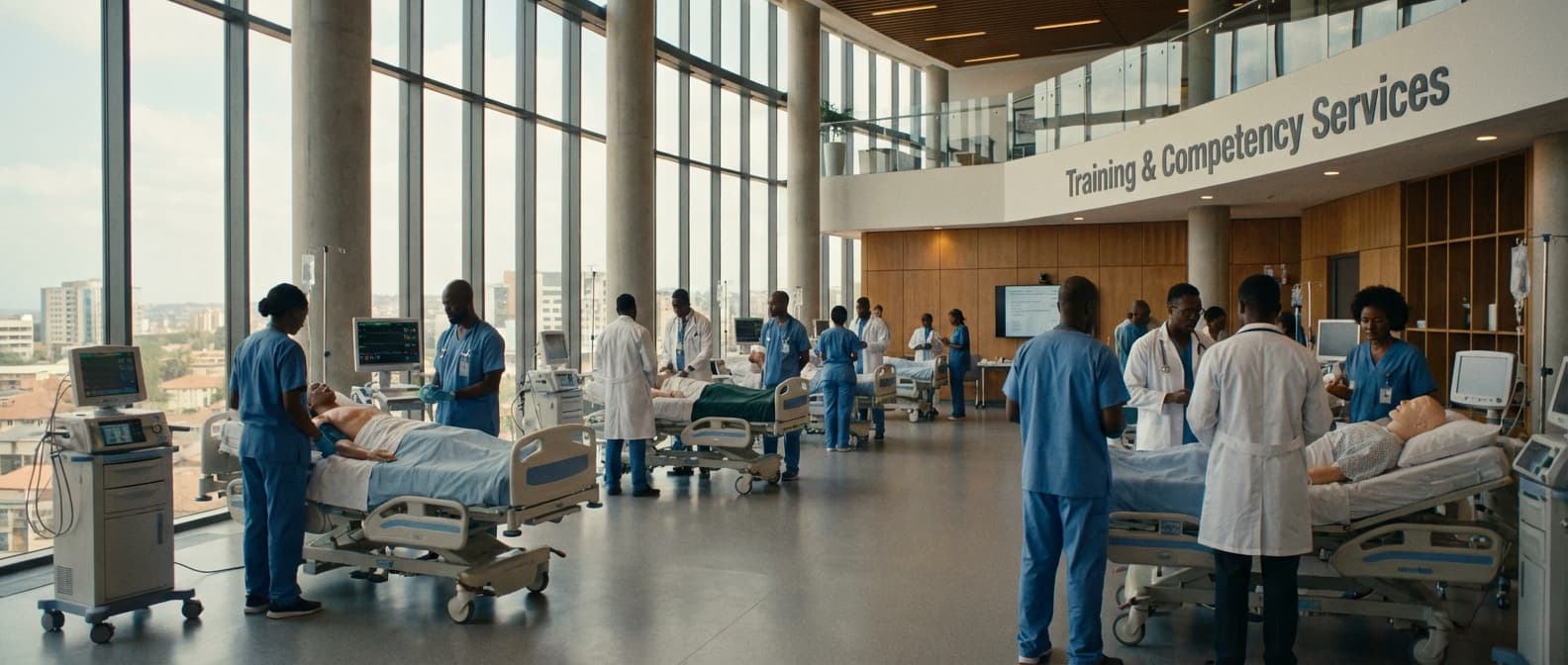
Ultrasound Application Training Service (Protocol-Based) in Namibia
Engineering Excellence & Technical Support
Ultrasound Application Training Service (Protocol-Based) High-standard technical execution following OEM protocols and local regulatory frameworks.
Standardized Protocol Mastery
Our training ensures Namibian healthcare professionals gain proficiency in globally recognized ultrasound protocols. This standardization enhances diagnostic accuracy, data comparability, and facilitates seamless knowledge transfer across institutions and with international experts, leading to improved patient outcomes and a stronger national healthcare infrastructure.
Hands-On Image Optimization & Interpretation
Beyond theoretical knowledge, our protocol-based training emphasizes practical skills in ultrasound machine operation, probe manipulation, and critical image optimization techniques. Trainees learn to meticulously identify anatomical landmarks and interpret subtle sonographic findings specific to Namibian health needs, fostering independent and confident diagnostic capabilities.
Capacity Building for Local Expertise
We empower Namibian healthcare providers to become local ultrasound champions. Our training is designed to build sustainable expertise within the country, reducing reliance on external specialists and ensuring consistent, high-quality ultrasound services are accessible even in remote regions, directly addressing the unique challenges of healthcare delivery in Namibia.
What Is Ultrasound Application Training Service (Protocol-based) In Namibia?
Ultrasound Application Training Service (Protocol-Based) in Namibia refers to a structured and standardized educational offering designed to equip healthcare professionals with the theoretical knowledge and practical skills necessary to perform and interpret ultrasound examinations according to established diagnostic protocols. This service emphasizes adherence to specific imaging sequences, standardized views, and established measurement techniques to ensure diagnostic accuracy, reproducibility, and comparability of results across different practitioners and institutions within Namibia. The 'protocol-based' aspect signifies a departure from ad-hoc or operator-dependent scanning methods, promoting a systematic and evidence-based approach.
| Target Audience | Needs Addressed | Typical Use Cases |
|---|---|---|
| Radiologists | Enhance diagnostic capabilities, standardize practice, introduce new ultrasound subspecialties. | Routine diagnostic ultrasound examinations (e.g., abdominal, pelvic, thyroid), specialized ultrasound procedures (e.g., interventional ultrasound). |
| Radiology Residents/Registrars | Foundation of ultrasound competency, acquisition of essential diagnostic skills, adherence to best practices. | Core diagnostic ultrasound modules as part of residency training programs. |
| Obstetricians and Gynecologists | Accurate fetal biometry and anomaly scanning, routine gynecological assessments, early pregnancy monitoring. | Antenatal scans (dating scans, anomaly scans, growth scans), transvaginal and transabdominal pelvic ultrasounds. |
| General Practitioners (with advanced training) | Point-of-care ultrasound (POCUS) for rapid initial assessment, screening, and guiding further management. | Bedside ultrasound for assessing fluid status, identifying gross abnormalities (e.g., pleural effusion, ascites), guiding procedures (e.g., paracentesis). |
| Sonographers/Ultrasound Technicians | Formal training for new entrants to the profession, upskilling for specialized areas, ensuring standardized service delivery. | Comprehensive training across various ultrasound modalities, specialization in specific areas like echocardiography or vascular ultrasound. |
| Emergency Medicine Physicians | Rapid bedside assessment for trauma, sepsis, and other acute conditions. | FAST (Focused Assessment with Sonography for Trauma) scans, eFAST, cardiac and lung ultrasound (LUS). |
| Physiotherapists and Sports Medicine Professionals | Assessment and guidance for musculoskeletal injuries, therapeutic ultrasound application. | Musculoskeletal (MSK) ultrasound for tendinopathies, ligamentous injuries, joint effusions, guided injections. |
Key Components of Ultrasound Application Training Service (Protocol-Based)
- Didactic Instruction: Comprehensive theoretical modules covering ultrasound physics, image acquisition principles, artifact recognition, and specific anatomical and pathological correlations relevant to the intended application.
- Protocol Standardization: In-depth training on established, evidence-based ultrasound protocols for various examinations (e.g., obstetric, gynecological, abdominal, vascular, musculoskeletal). This includes learning the specific transducer selections, patient positioning, scanning planes, and required image sequences.
- Image Optimization and Acquisition: Hands-on training focused on optimizing image quality, mastering transducer manipulation, and systematically acquiring all required views and measurements as dictated by the protocol.
- Pathology Recognition and Interpretation: Education on recognizing normal anatomical variations and common pathological findings associated with specific organ systems or clinical scenarios, and understanding how to document and report these findings accurately within the protocol framework.
- Case-Based Learning and Simulation: Utilization of real patient cases, phantom models, and potentially simulation software to reinforce learning and allow for practical application of learned protocols in a controlled environment.
- Competency Assessment: Formal evaluation of trainees' knowledge and practical skills through written examinations, practical scanning assessments against established protocols, and image review.
- Continuing Professional Development (CPD): Often offered as a CPD accredited program, allowing practitioners to maintain and enhance their skills and meet professional regulatory requirements.
Who Needs Ultrasound Application Training Service (Protocol-based) In Namibia?
This training service focuses on equipping healthcare professionals in Namibia with the practical skills and standardized protocols required for effective ultrasound application. It aims to address the growing demand for accessible and high-quality diagnostic imaging across the country, particularly in areas where specialized training might be limited.
| Target Customer Group | Specific Departments/Roles | Key Needs Addressed |
|---|---|---|
| Radiologists | Diagnostic Radiology Departments | Standardization of protocols, advanced techniques, new modality integration. |
| General Practitioners & Family Physicians | Primary Healthcare Clinics, District Hospitals | Point-of-care ultrasound (POCUS), basic diagnostic imaging, referral decision-making. |
| Obstetricians & Gynecologists | Maternity Wards, Gynecology Clinics, Prenatal Care Centers | Fetal assessment, obstetric scanning, gynecological imaging, early detection of complications. |
| Emergency Medicine Physicians | Emergency Departments, Trauma Units | FAST scans, eFAST scans, trauma assessment, life-saving interventions. |
| Internal Medicine Specialists | Internal Medicine Departments, General Wards | Abdominal and pelvic imaging, cardiac ultrasound, lung ultrasound. |
| Pediatricians | Pediatric Wards, Neonatal Intensive Care Units (NICUs) | Pediatric abdominal and cardiac imaging, neonatal head ultrasound. |
| Sonographers | Radiology Departments, Specialized Imaging Centers | Continuing professional development, specialized protocol training, quality assurance. |
| Nurses (with expanded scope of practice) | Various clinical settings, potentially in remote areas | Basic ultrasound assessments for triage and preliminary diagnosis under supervision. |
| Medical Students & Interns | Teaching Hospitals, Medical Schools | Foundational ultrasound principles and practical scanning techniques. |
| Public Health Organizations & NGOs | Health Program Implementation Teams | Training for personnel in mobile clinics and outreach programs to expand diagnostic reach. |
| Ministry of Health & Social Services (Namibia) | Public Health Infrastructure | Workforce development, standardization of imaging services, improving healthcare outcomes in underserved regions. |
Target Customers & Departments
- Medical Professionals requiring diagnostic imaging skills.
- Healthcare facilities seeking to enhance their imaging capabilities.
- Government health initiatives focused on improving healthcare access and quality.
Ultrasound Application Training Service (Protocol-based) Process In Namibia
This document outlines the Ultrasound Application Training Service (Protocol-Based) workflow in Namibia, detailing the process from initial inquiry to successful service execution. This protocol-based approach ensures standardized and comprehensive training for medical professionals.
| Stage | Description | Key Activities | Responsible Parties | Deliverables |
|---|---|---|---|---|
| The initial contact from a client (e.g., hospital, clinic, individual practitioner) seeking ultrasound training. | Client contacts training provider; initial discussion of training needs, target audience, specific ultrasound applications, desired outcomes, and preferred training dates/locations. Understanding of existing skill levels and available equipment. | Client (Inquirer), Training Provider (Sales/Consultation Team) | Initial Needs Assessment Report, List of potential training modules, Tentative training dates and costs. |
| Formalizing the training scope, costs, and terms. | Training provider develops a detailed proposal based on the needs assessment. Proposal includes training objectives, curriculum, duration, venue requirements, trainer profiles, pricing, payment schedule, and terms & conditions. Client reviews and accepts the proposal, leading to a formal training agreement or contract. | Training Provider (Proposal Development), Client (Review & Acceptance) | Detailed Training Proposal, Signed Training Agreement/Contract. |
| Setting the stage for effective learning. | Training provider finalizes the training curriculum and materials (lectures, protocols, case studies, practical guides). Scheduling of trainers and logistics (venue booking, equipment procurement/verification if applicable). Client provides necessary information about trainees (names, roles, prior experience) and confirms venue readiness. Communication of pre-reading materials or introductory modules to trainees. | Training Provider (Curriculum, Logistics, Trainer Assignment), Client (Trainee Information, Venue Confirmation) | Finalized Training Curriculum & Materials, Confirmed Trainer Schedule, Prepared Training Venue, Pre-reading materials (if any). |
| Delivery of the core ultrasound training. | Theoretical sessions covering ultrasound physics, instrumentation, and specific application protocols. Practical demonstrations and hands-on scanning sessions with mannequins or simulated patients. Case study reviews and interactive Q&A sessions. Adherence to the agreed-upon protocol-based curriculum. | Training Provider (Lead Trainer, Assistant Trainers), Trainees | Delivery of Theoretical & Practical Training Sessions, Trainee Participation & Engagement. |
| Assessing learning and ensuring knowledge retention. | Post-training assessment (e.g., written test, practical competency assessment, case review). Collection of trainee feedback via evaluation forms. Discussion of any challenges encountered or areas for further improvement. Trainer provides a summary of trainee performance and identifies potential areas for ongoing support. | Training Provider (Trainers, Training Coordinator), Trainees | Post-Training Assessment Results, Trainee Feedback Reports, Summary Performance Report. |
| Formal recognition and ongoing assistance. | Issuance of certificates of completion to successful trainees based on assessment results. Provision of access to supplementary resources or online forums for continued learning. Offering ongoing technical support or refresher training as per agreement. Follow-up consultations to address any implementation challenges in the clinical setting. | Training Provider (Certification Department, Technical Support Team), Client | Certificates of Completion, Access to Resources, Ongoing Support & Consultation. |
Ultrasound Application Training Service (Protocol-Based) Workflow in Namibia
- Inquiry & Needs Assessment
- Proposal & Agreement
- Pre-Training Preparation
- Training Execution
- Post-Training Follow-up & Evaluation
- Certification & Support
Ultrasound Application Training Service (Protocol-based) Cost In Namibia
This document outlines the typical cost factors and pricing ranges for Ultrasound Application Training Services (Protocol-Based) in Namibia, denominated in Namibian Dollars (NAD). The cost of such training is highly variable and depends on a multitude of factors, from the complexity of the ultrasound applications covered to the provider's reputation and the duration of the training program. Protocol-based training emphasizes hands-on proficiency and adherence to established diagnostic protocols, making it a specialized and often more intensive form of education.
| Training Type/Scope | Estimated Price Range (NAD) | Typical Duration (Days) |
|---|---|---|
| Introductory General Ultrasound Protocol Training (e.g., Abdomen, Pelvis) | NAD 5,000 - 15,000 | 2-3 |
| Intermediate Application-Specific Protocol Training (e.g., Basic OB/GYN, Basic Echocardiography) | NAD 10,000 - 25,000 | 3-5 |
| Advanced/Specialized Protocol Training (e.g., Advanced OB/GYN, Fetal Echocardiography, Vascular Ultrasound, MSK) | NAD 20,000 - 45,000+ | 5-10+ |
| Customized/On-Site Training (per day, excluding travel/accommodation) | NAD 3,000 - 8,000+ | Varies |
| Refresher/Hands-on Skills Workshop (Protocol-focused) | NAD 4,000 - 12,000 | 1-2 |
Key Pricing Factors for Ultrasound Application Training in Namibia
- Scope and Specialization of Ultrasound Applications: Training on general ultrasound will be less expensive than specialized modules like obstetrics and gynecology (OB/GYN), cardiology, musculoskeletal (MSK), or interventional ultrasound. The more niche and advanced the application, the higher the cost.
- Duration of the Training Program: Longer training programs, typically involving more modules, hands-on practice, and case studies, will naturally incur higher costs than shorter introductory courses.
- Provider's Reputation and Expertise: Established training institutions or highly experienced sonographers/radiologists as instructors often command higher fees due to their proven track record and quality of instruction.
- Training Format and Delivery Method: On-site training at the client's facility (hospital, clinic) may include travel and accommodation costs for the trainer, thus increasing the overall price. Remote or online components can sometimes reduce costs, but hands-on ultrasound training often necessitates in-person presence.
- Number of Participants: Group training sessions can offer a lower per-participant cost compared to individual or small-group training.
- Inclusion of Equipment and Materials: Whether the training fee includes the use of ultrasound machines, phantoms, learning materials (manuals, online resources), or if participants are expected to provide their own, will influence the cost.
- Level of Certification or Accreditation: Training that leads to recognized certification or accreditation by professional bodies might have a higher fee due to the rigorous assessment and quality assurance involved.
- Customization of the Training Program: Tailoring the training content to specific needs or protocols of a healthcare facility will often come with an additional charge.
- Post-Training Support and Mentorship: Some providers may offer limited post-training support or mentorship, which can be factored into the overall cost.
- Geographic Location within Namibia: While national averages are discussed, costs might see slight variations in major urban centers like Windhoek compared to more remote areas due to logistical considerations.
Affordable Ultrasound Application Training Service (Protocol-based) Options
Our Affordable Ultrasound Application Training Service provides comprehensive, protocol-based training to equip healthcare professionals with essential ultrasound skills. We understand the importance of cost-effectiveness and offer flexible value bundles and strategic cost-saving options designed to maximize your investment without compromising quality. Our focus is on delivering practical, hands-on learning experiences tailored to specific ultrasound applications and established protocols, ensuring competence and confidence in your practice.
| Training Package | Description | Key Features | Estimated Cost Savings |
|---|---|---|---|
| Essentials Bundle | Covers foundational ultrasound applications with core protocols. | Includes 2 core application modules, 4 hours of supervised practice. | 10-15% savings compared to individual module purchase. |
| Comprehensive Bundle | Expands on core applications with advanced techniques and broader protocol coverage. | Includes 4 core application modules, 8 hours of supervised practice, 2 online supplementary modules. | 15-20% savings compared to individual module purchase. |
| Specialty Proficiency Pack | Deep dive into a specific ultrasound specialty. | Includes 2 specialty modules, 6 hours of expert-led case review, 1 simulation session. | Up to 25% savings for focused, advanced training. |
| Team Training Program | Customizable training for groups of 5+ professionals. | Tailored curriculum, flexible scheduling, on-site or virtual options. | Tiered discounts based on group size, starting from 20%. |
| Modular Add-on | Purchase individual advanced protocols or niche application modules. | Flexible purchasing to supplement existing training. | A la carte pricing, allowing for precise budget allocation. |
Value Bundles & Cost-Saving Strategies
- Core Application Bundles: Focus on foundational ultrasound areas (e.g., Abdominal, OB/GYN, Cardiology) with tiered pricing. Higher tiers include more advanced modules and personalized feedback.
- Specialty Focus Packages: Targeted training for specific departments or specialties (e.g., Emergency Medicine, Vascular, Pediatric) allowing for deeper dives into relevant protocols.
- Group & Institutional Discounts: Significant savings for multiple participants from the same organization, encouraging team-wide skill development.
- Early Bird Registration Incentives: Reduced fees for early commitment to training sessions, allowing for better financial planning.
- Online Module Add-ons: Supplement in-person or virtual live sessions with self-paced online modules covering theoretical aspects, increasing learning retention at a lower cost.
- Simulation & Case Study Packs: Purchase additional simulation hours or extensive case study libraries for enhanced practice and application of learned protocols.
- Referral Programs: Earn discounts by referring new participants or organizations to our training services.
- Customizable Training Plans: Work with our team to design a training program that precisely meets your needs, avoiding unnecessary modules and optimizing cost.
Verified Providers In Namibia
Navigating the healthcare landscape in Namibia can be challenging. Finding truly verified providers who offer exceptional care and adhere to the highest professional standards is paramount. Franance Health has established itself as a leading accreditation and verification body, ensuring that the healthcare professionals and facilities they endorse meet rigorous criteria. This commitment to quality makes Franance Health-credentialed providers the best choice for your health and well-being in Namibia.
| Provider Type | Franance Health Verification Focus | Benefits for Patients |
|---|---|---|
| Doctors (Specialists & General Practitioners) | Medical degrees, specialist certifications, board registrations, clean disciplinary record. | Accurate diagnosis, effective treatment plans, up-to-date medical knowledge. |
| Nurses | Nursing degrees/diplomas, professional registration, competency assessments, specialized training. | Competent and compassionate care, patient advocacy, adherence to care protocols. |
| Hospitals & Clinics | Infrastructure, equipment, hygiene standards, emergency preparedness, patient feedback mechanisms, adherence to regulatory requirements. | Safe and clean environment, access to necessary medical technology, efficient service delivery. |
| Allied Health Professionals (e.g., Physiotherapists, Dentists) | Relevant degrees, professional body membership, practical experience, ethical practice. | Specialized therapeutic interventions, oral healthcare expertise, rehabilitative services. |
Why Franance Health Credentials Matter
- Rigorous Verification Process: Franance Health employs a multi-faceted approach to verify credentials, encompassing academic qualifications, professional licenses, ongoing training, and practical experience.
- Commitment to Patient Safety: Accreditation signifies adherence to strict safety protocols and quality management systems, minimizing risks and ensuring a secure healthcare environment.
- Ethical Practice Standards: Franance Health vets providers for their commitment to ethical conduct, patient rights, and professional integrity.
- Continuous Quality Improvement: Verified providers are often required to participate in ongoing professional development and undergo regular re-evaluations, ensuring they stay abreast of the latest medical advancements and best practices.
- Trust and Peace of Mind: Choosing a Franance Health-verified provider offers a significant level of assurance, allowing you to focus on your health rather than worrying about the quality of care you will receive.
Scope Of Work For Ultrasound Application Training Service (Protocol-based)
This Scope of Work (SOW) outlines the requirements for providing Ultrasound Application Training Services. The training will be protocol-based, focusing on standardized protocols to ensure consistent and accurate ultrasound examinations. This document details the technical deliverables and standard specifications for the training program.
| Deliverable | Description | Standard Specifications |
|---|---|---|
| Training Curriculum & Modules | Detailed breakdown of training content, organized into logical modules covering theoretical concepts, practical scanning techniques, and image interpretation. Modules will be tailored to specific ultrasound applications (e.g., Abdominal, Cardiac, Vascular, OB/GYN, MSK). | Curriculum must be protocol-driven, referencing established professional guidelines and standards (e.g., AIUM, ASE, SRU). Each module will have defined learning objectives, content outline, and duration. Content to be delivered in English. |
| Training Materials (Digital) | Comprehensive set of digital training resources including presentations, lecture notes, case studies, interactive quizzes, and reference guides. | Materials to be provided in editable digital formats (e.g., PDF, PPTX, DOCX). High-resolution images and diagrams. Content to be updated to reflect current best practices and technological advancements. |
| Hands-on Scanning Sessions | Supervised practical training sessions where trainees perform ultrasound examinations on phantoms and/or simulated patients under the guidance of experienced instructors. | Minimum of X hours of supervised scanning per trainee per application. Instructors must have a minimum of Y years of experience in the specified ultrasound application and hold relevant certifications. A structured checklist for scanning proficiency assessment will be utilized. |
| Image Acquisition & Interpretation Exercises | Structured exercises requiring trainees to acquire and label specific ultrasound images according to protocol and interpret simulated ultrasound findings. | Each exercise will have clear instructions and evaluation criteria. Feedback will be provided on image quality, protocol adherence, and interpretation accuracy. A minimum of Z image acquisition and interpretation exercises per module. |
| Post-Training Assessment | Formal evaluation of trainee knowledge and practical skills, including a written examination and a practical scanning assessment. | Written assessment to cover theoretical concepts and protocol knowledge. Practical assessment to evaluate scanning technique, image acquisition, and basic interpretation against defined protocols. Pass mark of W% for both assessments. Certificates of completion issued upon successful completion of all training components and assessments. |
| Instructor Qualifications & Experience | Documentation and confirmation of the qualifications and experience of all instructors delivering the training. | Instructors must possess a relevant degree (e.g., MD, PhD, RDMS, ARDMS) and have a minimum of Y years of clinical experience in the specific ultrasound application. Proof of current professional certifications and ongoing continuing education is required. |
| Training Schedule & Logistics | A detailed schedule for all training sessions, including dates, times, duration, and location (if applicable). Coordination of equipment and simulation resources. | Schedule to be agreed upon in advance. If on-site training is required, appropriate facilities, ultrasound machines (with appropriate probes for each application), and phantoms must be available and functional. Remote training via a robust virtual platform will be considered, ensuring adequate bandwidth and interactive capabilities. |
| Post-Training Support (Optional, specify duration) | Limited period of remote support for trainees to address follow-up questions or clarify concepts after the formal training concludes. | Defined contact method (e.g., email, dedicated forum) and response time for inquiries. Duration of support to be specified (e.g., 30 days post-completion). |
Key Objectives of the Training Program
- To equip trainees with a comprehensive understanding of ultrasound physics and instrumentation relevant to their specific applications.
- To develop proficiency in acquiring high-quality ultrasound images according to established protocols for various anatomical regions and clinical scenarios.
- To train trainees on interpreting ultrasound images and identifying normal and abnormal findings within the context of defined protocols.
- To ensure trainees can effectively operate ultrasound equipment, including probe selection, parameter optimization, and image manipulation.
- To foster an understanding of ultrasound safety principles and best practices.
- To enable trainees to document ultrasound findings accurately and efficiently.
Service Level Agreement For Ultrasound Application Training Service (Protocol-based)
This Service Level Agreement (SLA) outlines the performance standards for the Ultrasound Application Training Service, focusing on protocol-based training delivery. It defines response times for support inquiries and uptime guarantees for the training platform. This SLA is applicable to all clients utilizing the Ultrasound Application Training Service.
| Service Component | Metric | Target | Measurement Period | Remedy/Credit |
|---|---|---|---|---|
| Ultrasound Application Training Platform | Platform Uptime | 99.5% | Monthly | If monthly uptime falls below 99.5% but is above 99.0%, a credit of 5% of the monthly service fee will be applied. If monthly uptime falls below 99.0%, a credit of 10% of the monthly service fee will be applied. |
| Technical Support (Protocol-Based Queries) | Initial Response Time (Severity 1 - Critical Issue) | 2 Business Hours | Per Incident | N/A (focus on rapid resolution) |
| Technical Support (Protocol-Based Queries) | Initial Response Time (Severity 2 - Major Issue) | 4 Business Hours | Per Incident | N/A (focus on rapid resolution) |
| Technical Support (Protocol-Based Queries) | Initial Response Time (Severity 3 - Minor Issue) | 8 Business Hours | Per Incident | N/A (focus on rapid resolution) |
| Training Content Accessibility | Availability of Training Modules | 99.7% | Monthly | If monthly availability falls below 99.7% but is above 99.0%, a credit of 3% of the monthly service fee will be applied. If monthly availability falls below 99.0%, a credit of 7% of the monthly service fee will be applied. |
Key Performance Indicators (KPIs) and Guarantees
- This SLA ensures reliable access to training materials and timely support for users of the Ultrasound Application Training Service.
- Uptime is measured over a monthly calendar period.
- Response times are measured from the time of ticket submission through the designated support portal.
- All response times are in business hours (Monday - Friday, 9:00 AM - 5:00 PM, excluding public holidays in [Your Region/Country]).
Frequently Asked Questions

Ready when you are
Let's scope your Ultrasound Application Training Service (Protocol-Based) in Namibia project in Namibia.

Scaling healthcare logistics and technical systems across the entire continent.