
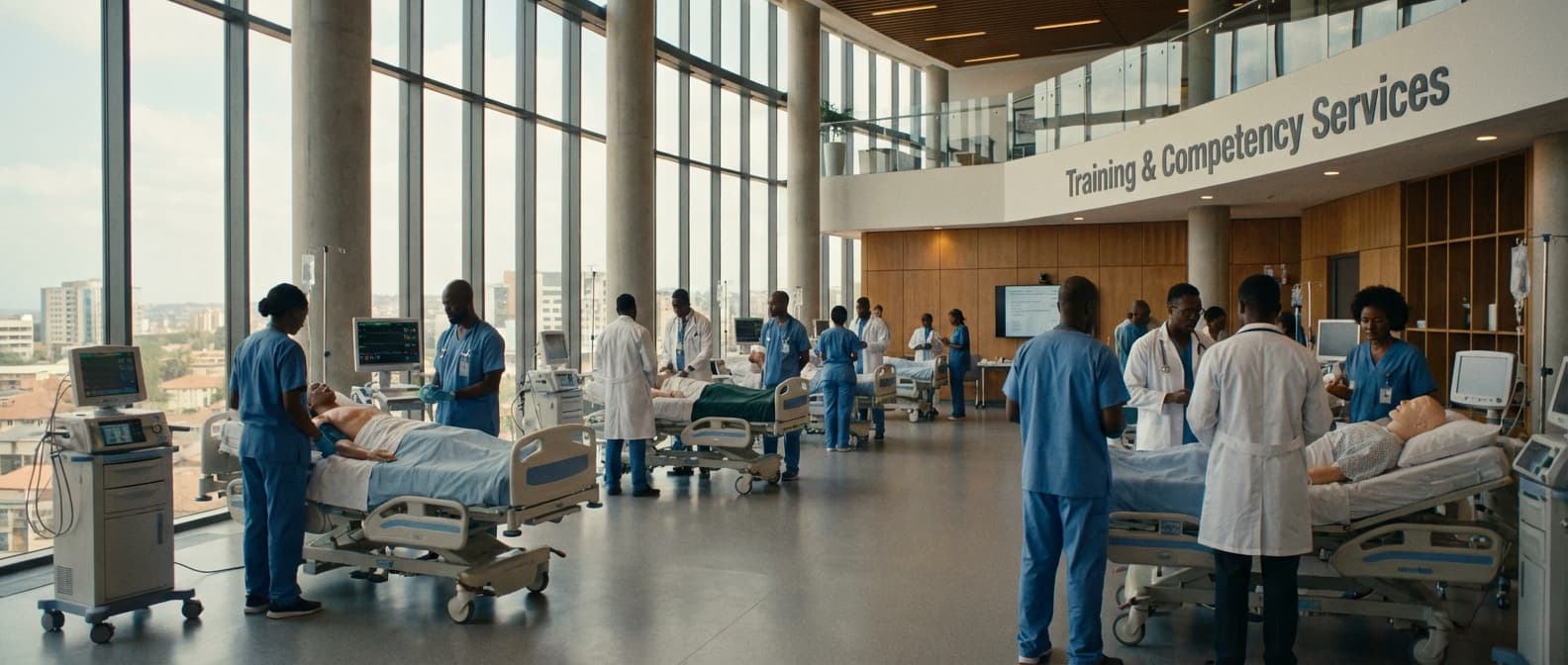
MRI Operator Training Service (Radiographers) in Namibia
Engineering Excellence & Technical Support
MRI Operator Training Service (Radiographers) High-standard technical execution following OEM protocols and local regulatory frameworks.
Advanced Neuroimaging Protocols
Master state-of-the-art MRI sequences for detailed neurological assessments, including diffusion tensor imaging (DTI), susceptibility-weighted imaging (SWI), and functional MRI (fMRI), crucial for diagnosing and managing complex neurological conditions prevalent in Namibia.
Thoracic & Abdominal Imaging Excellence
Gain proficiency in acquiring high-quality MR images of the thorax and abdomen, focusing on techniques for evaluating respiratory diseases, oncological staging, and gastrointestinal pathologies, adapting protocols to common conditions in the Namibian population.
Musculoskeletal MRI Specialization
Develop expertise in MRI protocols for musculoskeletal imaging, covering joints, soft tissues, and bone marrow, enabling accurate diagnosis of sports injuries, degenerative conditions, and trauma – vital for the active Namibian workforce and athletes.
What Is Mri Operator Training Service (Radiographers) In Namibia?
The MRI Operator Training Service (Radiographers) in Namibia refers to specialized educational programs designed to equip registered radiographers with the requisite knowledge and practical skills for the safe and effective operation of Magnetic Resonance Imaging (MRI) scanners. This service is critical for enhancing diagnostic imaging capabilities within Namibian healthcare institutions, ensuring adherence to international standards of patient care and radiation safety (though MRI is non-ionizing, safety protocols are paramount). The training encompasses theoretical understanding of MRI physics, pulse sequences, image acquisition parameters, patient preparation, contraindications, and emergency procedures, alongside hands-on experience with specific MRI system hardware and software platforms. It aims to foster competency in identifying anatomical structures, optimizing image quality, and troubleshooting common operational issues, thereby enabling radiographers to contribute effectively to the diagnostic workflow.
| Target Audience | Needs Addressed | Typical Use Cases |
|---|---|---|
| Registered Radiographers in Namibia | Development of specialized skills for MRI operation; enhancement of diagnostic imaging services; compliance with professional development requirements; expansion of career opportunities. | Deployment in public and private healthcare facilities with MRI capabilities; performance of diagnostic MRI examinations across various anatomical regions (neurology, musculoskeletal, abdominal, etc.); contributing to interdisciplinary patient management teams; training of junior radiographers. |
| Newly Qualified Radiographers | Acquisition of fundamental MRI operational competencies; foundational knowledge for advanced MRI techniques; preparation for entry-level MRI operator roles. | Entry into MRI departments; assisting senior radiographers; performing routine MRI protocols under supervision; developing proficiency in basic image acquisition. |
| Radiographers Transitioning to MRI Specialization | Bridging the knowledge gap from general radiography; learning specific MRI protocols and safety standards; adapting to advanced imaging technology. | Moving from X-ray, CT, or Ultrasound to an MRI setting; taking on increased responsibility in MRI departments; contributing to service expansion. |
| Healthcare Institutions in Namibia (Public & Private) | Ensuring qualified personnel for operational MRI scanners; improving diagnostic accuracy and patient outcomes; meeting accreditation standards; maximizing return on investment in MRI technology. | Establishing or expanding MRI services; replacing retiring or relocating experienced MRI radiographers; ensuring consistent and high-quality MRI examinations; supporting referral networks. |
Key Components of MRI Operator Training for Radiographers in Namibia:
- MRI Physics and Principles: Fundamental understanding of nuclear magnetic resonance, magnetic fields, radiofrequency pulses, and signal detection.
- Image Acquisition Techniques: Mastery of various pulse sequences (e.g., spin echo, gradient echo), contrast weighting, and spatial resolution optimization.
- Patient Management and Safety: Comprehensive protocols for patient screening (e.g., ferromagnetic detection), sedation management, and management of claustrophobia.
- Contrast Agent Administration and Monitoring: Understanding of MRI contrast agents, indications, contraindications, adverse reactions, and safe administration practices.
- Image Interpretation Fundamentals: Basic understanding of anatomical landmarks and common pathologies visualized with MRI to aid in image quality assessment.
- Quality Assurance and Control: Protocols for routine system checks, artifact identification, and image quality assessment.
- Equipment Operation and Maintenance: Hands-on training with specific MRI scanner models, including routine quality control procedures and basic troubleshooting.
- Legal and Ethical Considerations: Awareness of patient confidentiality, informed consent, and regulatory requirements specific to medical imaging in Namibia.
Who Needs Mri Operator Training Service (Radiographers) In Namibia?
MRI Operator Training Service (Radiographers) in Namibia caters to a specific and crucial segment of the healthcare industry. The demand for such specialized training is driven by the increasing adoption and utilization of MRI technology in diagnostic imaging. This service aims to equip radiographers with the advanced knowledge and practical skills necessary to operate MRI scanners safely and effectively, ensuring high-quality diagnostic images and patient care. The target customers are primarily institutions and individuals involved in medical imaging within Namibia.
| Department/Institution Type | Specific Departments/Roles Benefiting | Reasons for Training Need |
|---|---|---|
| Public Hospitals | Radiology Department, Medical Imaging Unit | To ensure sufficient trained personnel for operating existing or newly acquired MRI scanners, improving diagnostic capabilities, and reducing reliance on external services. |
| Private Hospitals | Radiology Department, Imaging Services | To maintain a competitive edge by offering advanced imaging services, enhance patient throughput, and ensure staff competency in a growing private healthcare sector. |
| Diagnostic Imaging Centers | MRI Unit, Radiography Team | As MRI is their core service, continuous training is vital for staying updated with technological advancements, improving image quality, and expanding service offerings. |
| Specialized Medical Clinics (e.g., Neurology, Orthopedics) | Radiology Technologists, Imaging Specialists | To facilitate in-house MRI diagnostics for specific patient populations, leading to faster diagnosis and treatment planning within the specialized clinic. |
| Tertiary Healthcare Institutions | Advanced Imaging Departments | To support complex diagnostic procedures and research activities that require highly skilled MRI operators. These institutions often have state-of-the-art equipment and require specialized training. |
| Government Health Agencies | National Health Laboratories, Ministry of Health (for public health initiatives) | To ensure equitable access to advanced diagnostic imaging by training radiographers in underserved public health facilities, strengthening the national healthcare infrastructure. |
| Educational/Training Institutions | Radiography Program Lecturers, Students (post-graduation) | To integrate advanced MRI training into their curriculum, producing well-qualified radiographers ready for the demands of the Namibian job market and to upskill existing faculty. |
Target Customers and Departments Requiring MRI Operator Training in Namibia
- Hospitals (Public and Private)
- Diagnostic Imaging Centers
- Specialized Medical Clinics
- Tertiary Healthcare Institutions
- Government Health Agencies
- Educational/Training Institutions (for their radiography programs)
Mri Operator Training Service (Radiographers) Process In Namibia
This document outlines the typical workflow for an MRI Operator Training Service specifically for Radiographers in Namibia, from initial inquiry to the successful execution and completion of the training. The process is designed to ensure a structured and efficient delivery of specialized training, catering to the unique needs of radiographers seeking to enhance their MRI skills and knowledge within the Namibian healthcare landscape.
| Stage | Key Activities | Responsible Parties | Deliverables/Outcomes | Timeline (Indicative) |
|---|---|---|---|---|
| 1. Inquiry and Consultation |
|
|
|
|
| 2. Needs Assessment and Proposal Development |
|
|
|
|
| 3. Agreement and Logistics |
|
|
|
|
| 4. Training Delivery |
|
|
|
|
| 5. Assessment and Certification |
|
|
|
|
| 6. Post-Training Support and Feedback |
|
|
|
|
MRI Operator Training Service (Radiographers) Workflow in Namibia
- Phase 1: Inquiry and Consultation
- Phase 2: Needs Assessment and Proposal Development
- Phase 3: Agreement and Logistics
- Phase 4: Training Delivery
- Phase 5: Assessment and Certification
- Phase 6: Post-Training Support and Feedback
Mri Operator Training Service (Radiographers) Cost In Namibia
The cost of MRI Operator Training for Radiographers in Namibia is influenced by several factors. These include the accreditation and reputation of the training institution, the duration and comprehensiveness of the course, the level of practical hands-on experience offered, and whether the training is conducted in-house at a facility or at a dedicated training center. The specific MRI modalities covered (e.g., general MRI, specific applications like neuro or cardiac MRI) and the inclusion of advanced imaging techniques can also impact the price. Furthermore, the cost may vary depending on whether the training is a standalone certification program or part of a broader radiographer qualification. Due to the specialized nature of MRI training, it is often more expensive than general radiography courses.
| Training Type/Duration | Estimated Price Range (NAD) | Notes |
|---|---|---|
| Introductory/Basic MRI Principles (e.g., 1-3 days) | 2,000 - 5,000 | Focus on fundamental concepts, often theoretical with limited practical demonstration. |
| Comprehensive MRI Operator Certification (e.g., 1-4 weeks) | 10,000 - 35,000 | Includes theoretical and practical training, covering a broad range of MRI techniques and safety protocols. May include initial hands-on scanning experience. |
| Advanced/Specialized MRI Training (e.g., 2-5 days per specialization) | 5,000 - 15,000 (per specialization) | Focuses on specific areas like neuroimaging, cardiac MRI, or interventional MRI. Often for experienced radiographers. |
| In-house/On-site Training (customized programs) | Varies widely based on duration, number of participants, and customization | Institutions may offer tailored programs for healthcare facilities. Costs can be per participant or a package deal. |
| Refresher Courses/Continuing Professional Development (CPD) | 1,500 - 4,000 | Shorter courses to update knowledge on new techniques or safety standards. |
Key Pricing Factors for MRI Operator Training in Namibia:
- Institution Accreditation & Reputation: Well-established and accredited institutions, particularly those with international affiliations, may command higher fees.
- Course Duration & Content: Longer, more in-depth courses covering a wider range of MRI principles and applications will generally be more expensive.
- Practical Experience: Training that includes significant hands-on time with MRI scanners, either on-site or through partnerships with healthcare facilities, will likely incur higher costs.
- Specialization: Training focused on specific MRI sub-specialties (e.g., musculoskeletal, abdominal, neurological) can be priced differently.
- Location of Training: Whether the training is delivered at a dedicated training facility, at the participant's workplace (in-house), or requires travel and accommodation can affect the overall cost.
- Certification & Examination Fees: The cost of formal certification exams and their associated fees will be factored in.
- Instructor Expertise: Highly experienced and specialized MRI trainers may lead to higher training fees.
- Included Materials: The provision of textbooks, online resources, and training software can influence the price.
Affordable Mri Operator Training Service (Radiographers) Options
Finding affordable MRI operator training for radiographers is crucial for healthcare facilities looking to expand their imaging capabilities without breaking the bank. This service focuses on providing high-quality, comprehensive training designed to equip radiographers with the necessary skills and knowledge to safely and effectively operate MRI scanners. We understand that cost is a significant factor, and our programs are structured to offer excellent value through flexible learning options and strategic cost-saving measures.
| Cost-Saving Strategy | Description | Benefit to Facilities |
|---|---|---|
| Group Discounts | Reduced per-participant fees for larger training cohorts. Can be applied to on-site or online programs. | Significant cost reduction for training multiple staff members simultaneously. |
| Online & Blended Learning | Leveraging online modules and virtual simulators minimizes travel, accommodation, and lost productivity costs associated with traditional classroom settings. | Lower overall training expenses and greater flexibility for participants' schedules. |
| Customizable Training Modules | Tailoring training content to specific equipment and needs avoids paying for unnecessary information, making the training more efficient and cost-effective. | Maximizes training ROI by focusing on relevant skills and knowledge. |
| Train-the-Trainer Programs | Empowering experienced staff members to train new hires internally, reducing reliance on external trainers for ongoing needs. | Long-term cost savings and development of internal expertise. |
| Off-Peak Training Scheduling | Scheduling training during slower periods for the facility can minimize disruption and potential overtime costs. | Reduced operational impact and potential for lower instructor fees. |
| Partnerships with Equipment Vendors | Exploring bundled training options offered by MRI scanner manufacturers can provide cost advantages. | Potentially integrated training at a reduced rate with new equipment purchases. |
Value Bundles for MRI Operator Training
- Basic Operator Certification Bundle: Includes core MRI physics, patient safety, basic protocol selection, and hands-on scanner operation. Ideal for entry-level MRI technologists.
- Advanced Protocol Development Bundle: Builds upon the basic certification, focusing on specialized imaging techniques, advanced pulse sequences, contrast administration guidelines, and troubleshooting common issues. Geared towards experienced radiographers seeking to enhance their skills.
- Comprehensive Facility Training Package: A customizable bundle designed for entire departments. Can include a mix of basic and advanced training, on-site instructor support, and tailored protocol development specific to the facility's equipment and patient population.
- Online Learning & Simulation Bundle: Combines flexible online modules with virtual reality or high-fidelity simulator training for cost-effective hands-on experience without the need for dedicated scanner time.
- Continuing Education Unit (CEU) Focused Bundle: Designed for radiographers needing to maintain their certifications. Offers specialized modules that fulfill CEU requirements while also providing valuable MRI knowledge.
Verified Providers In Namibia
In the evolving landscape of healthcare, identifying and engaging with verified providers is paramount. In Namibia, Franance Health stands out as a leading entity, offering a robust network of credentialed healthcare professionals and facilities. This commitment to verification not only ensures patient safety and quality of care but also fosters trust and transparency within the healthcare ecosystem. Franance Health's rigorous credentialing process involves thorough vetting of qualifications, experience, and adherence to ethical standards, making them the definitive choice for individuals and organizations seeking reliable healthcare services.
| Credentialing Aspect | Franance Health's Approach | Benefit to Patients |
|---|---|---|
| Professional Qualifications | Meticulous verification of academic degrees, medical licenses, and specialty certifications. | Ensures access to competent and appropriately trained medical professionals. |
| Clinical Experience | Thorough review of work history, practice patterns, and peer references. | Guarantees that providers have practical, hands-on experience in their respective fields. |
| Adherence to Standards | Assessment of compliance with national healthcare regulations, professional codes of conduct, and ethical principles. | Upholds the highest standards of medical care and patient-provider relationships. |
| Continuous Quality Improvement | Ongoing monitoring and evaluation of provider performance and patient feedback. | Promotes a culture of continuous learning and improvement within the network. |
Why Franance Health Represents the Best Choice:
- Uncompromising Commitment to Patient Safety: Through stringent verification, Franance Health ensures all providers meet the highest safety and quality standards.
- Access to Top-Tier Medical Professionals: Their network comprises highly qualified and experienced doctors, specialists, and healthcare facilities.
- Enhanced Trust and Transparency: The verification process eliminates ambiguity, providing patients with confidence in their chosen providers.
- Streamlined Healthcare Navigation: Franance Health simplifies the process of finding and accessing verified healthcare services.
- Focus on Ethical Practice: Providers are assessed for their adherence to ethical guidelines and professional conduct.
Scope Of Work For Mri Operator Training Service (Radiographers)
This Scope of Work (SOW) outlines the requirements for providing comprehensive MRI Operator Training services specifically tailored for radiographers. The training will equip participants with the necessary knowledge and practical skills to safely and effectively operate Magnetic Resonance Imaging (MRI) equipment. The technical deliverables will include standardized training modules, hands-on practical sessions, competency assessments, and documentation. Standard specifications will adhere to industry best practices and regulatory guidelines.
| Deliverable | Description | Standard Specification/Quality Metric | Format |
|---|---|---|---|
| Training Modules | Comprehensive curriculum covering theoretical and practical aspects of MRI operation. | Modules developed according to established MRI training curricula (e.g., ARRT, RANZCR guidelines). Content updated annually to reflect technological advancements. | Digital (PDF, Online Learning Platform) |
| Practical Training Sessions | Hands-on experience with MRI scanners, including patient positioning, protocol selection, and image acquisition. | Minimum 8 hours of supervised practical training per participant on a functional MRI scanner. Trainees must demonstrate proficiency in at least 5 common imaging protocols. | In-person / Simulated Environment |
| Competency Assessment | Evaluation of participant knowledge and skills through written examinations and practical demonstrations. | Pass mark of 80% for written assessment. Successful completion of practical scenarios demonstrating safe and effective operation. | Written Exam, Practical Observation Checklist |
| Training Materials | Participant handbooks, lecture slides, case studies, and reference materials. | High-quality, well-organized, and up-to-date materials. Content aligned with training modules. | Digital (PDF) and/or Printed |
| Trainer Qualifications | Experienced MRI technologists or radiographers with a minimum of 5 years of clinical MRI experience and proven training expertise. | Certified MRI Technologists, relevant professional body membership, documented training experience. | Curriculum Vitae (CV) of trainers |
| Post-Training Support | Limited post-training technical support for participants to clarify doubts and reinforce learning. | Availability via email or phone for 2 weeks post-training, with a response time of within 24 business hours. | Email/Phone |
| Training Report | Summary of training conducted, including participant attendance, assessment results, and feedback. | Report submitted within 5 business days of training completion. Includes anonymized aggregate assessment data. | Digital (PDF) |
Key Training Modules
- MRI Physics and Principles
- MRI Safety and Patient Care
- MRI Pulse Sequences and Image Acquisition Techniques
- Contrast Agent Administration and Management
- Artifact Identification and Reduction
- Quality Control and Assurance in MRI
- Basic MRI Equipment Operation and Maintenance
- Introduction to Advanced MRI Applications (e.g., fMRI, Spectroscopy)
Service Level Agreement For Mri Operator Training Service (Radiographers)
This Service Level Agreement (SLA) defines the performance standards and guarantees for the MRI Operator Training Service provided to radiographers. It outlines the response times for support requests and uptime guarantees for the online training platform.
| Service Component | Uptime Guarantee | Response Time (Initial Acknowledgement) | Support Channels | ||
|---|---|---|---|---|---|
| MRI Operator Training Platform (LMS) | 99.5% Monthly Uptime | N/A (Platform availability is the guarantee) | Automated monitoring and proactive maintenance. | ||
| Technical Support (Platform Access, Errors) | N/A | Critical Incident: 1 Hour | Email, Online Ticketing System | High Priority Incident: 4 Business Hours | Normal Priority Incident: 8 Business Hours |
| Content Support (Course Material Clarification) | N/A | 24 Business Hours | Email, Online Ticketing System |
Key Definitions
- SLA: Service Level Agreement
- MRI Operator Training Service: The online and/or blended learning program designed to train radiographers in the safe and effective operation of MRI scanners.
- Training Platform: The online learning management system (LMS) and associated resources used to deliver the MRI Operator Training Service.
- Incident: Any event that causes, or may cause, an interruption to or a reduction in the quality of the Training Platform or support services.
- Support Request: A request for assistance related to the Training Platform, course content, or technical issues.
- Critical Incident: An Incident that renders the Training Platform completely inaccessible or significantly impairs the ability to complete core training modules.
- High Priority Incident: An Incident that significantly impacts user experience or the ability to access specific functionalities, but does not render the entire platform inaccessible.
- Normal Priority Incident: An Incident that causes minor disruptions or requires clarification on course content.
- Uptime: The percentage of time the Training Platform is available and operational for users.
- Response Time: The maximum time allowed from the submission of a Support Request to the initial acknowledgement and commencement of troubleshooting by the service provider.
- Resolution Time: The target time within which a reported Incident is resolved. (Note: Resolution times are often targets and may vary based on incident complexity).
Frequently Asked Questions

Ready when you are
Let's scope your MRI Operator Training Service (Radiographers) in Namibia project in Namibia.

Scaling healthcare logistics and technical systems across the entire continent.