
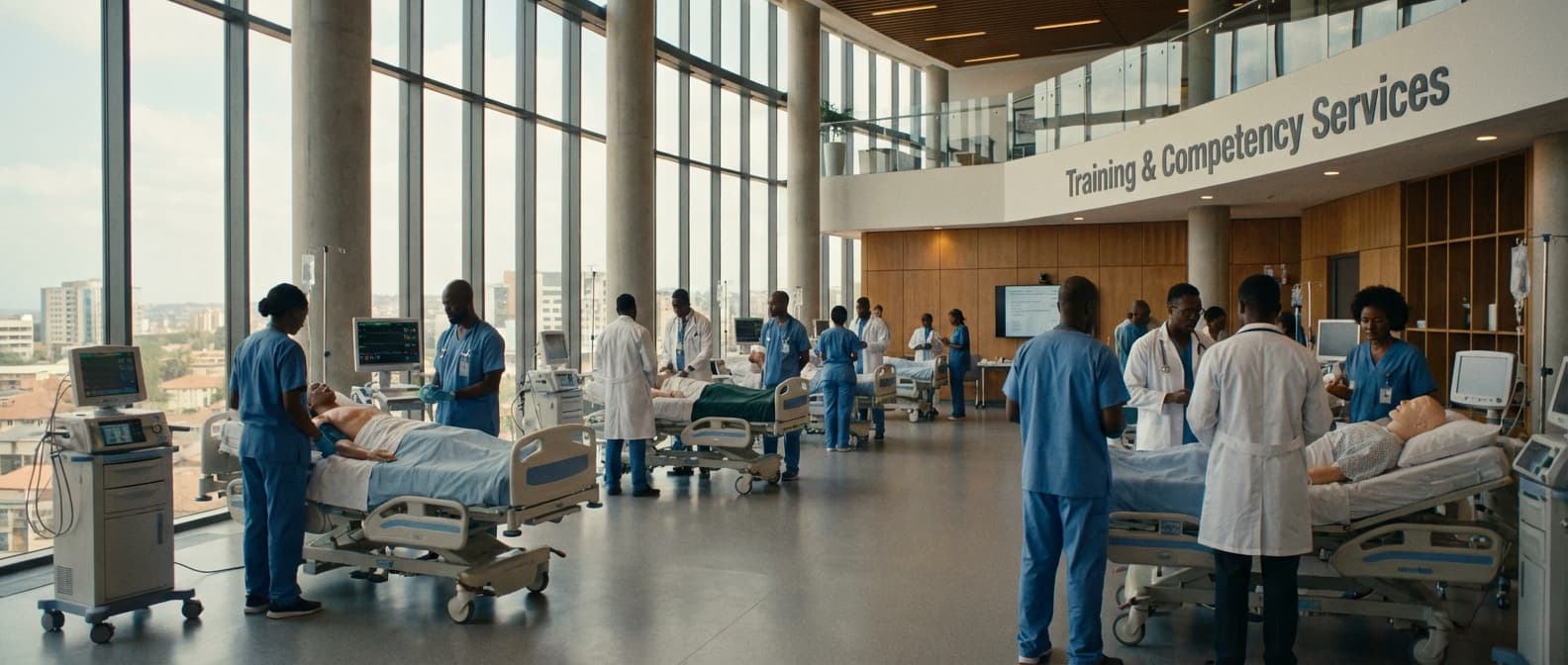
CT Operator Training Service (Radiographers) in Namibia
Engineering Excellence & Technical Support
CT Operator Training Service (Radiographers) High-standard technical execution following OEM protocols and local regulatory frameworks.
Advanced Imaging Techniques Mastery
Our CT Operator Training Service equips radiographers in Namibia with hands-on expertise in advanced imaging protocols. Trainees will master state-of-the-art CT scanning techniques, including high-resolution imaging, dual-energy CT, and cardiac CT, ensuring optimal diagnostic accuracy and patient care.
Radiation Safety & Dose Optimization
Prioritizing patient and staff well-being, our Namibian CT Operator Training focuses intensely on radiation safety and dose optimization. Participants will gain a comprehensive understanding of ALARA principles, advanced dose reduction strategies, and regulatory compliance, ensuring safe and effective CT examinations.
Streamlined CT Workflow & Quality Assurance
Enhance operational efficiency with our specialized CT Operator Training for Namibian radiographers. This module covers optimized patient positioning, protocol selection, image acquisition workflows, and robust quality assurance procedures, leading to reduced scan times, improved throughput, and consistently high-quality diagnostic images.
What Is Ct Operator Training Service (Radiographers) In Namibia?
CT Operator Training Service (Radiographers) in Namibia refers to a specialized educational and skill development program designed for radiographers and other qualified medical imaging professionals within Namibia. The primary objective is to equip these individuals with the theoretical knowledge and practical proficiency required to safely and effectively operate Computed Tomography (CT) scanners, acquire high-quality diagnostic images, and manage patient care during CT examinations. This service ensures compliance with national radiation safety regulations and international best practices in medical imaging.
| Who Needs CT Operator Training Service? | Typical Use Cases | ||||
|---|---|---|---|---|---|
| Registered Radiographers: The primary target audience, seeking to specialize in CT imaging or enhance their existing skills. | Medical Imaging Technologists: Professionals involved in diagnostic imaging who need to operate CT scanners. | Qualified Healthcare Professionals: Such as Radiologists, Physician Assistants, or Nurse Practitioners who require a foundational understanding of CT operation for specific clinical roles, albeit with a focus on interpretation rather than direct operation. | New Graduates in Radiography/Medical Imaging: To equip them with the necessary skills for entry-level CT operator positions. | Existing CT Operators: Requiring refresher courses, training on new equipment, or updates on evolving protocols and safety standards. | |
| Diagnostic Imaging Departments: In public and private hospitals and clinics for routine patient imaging across various specialties. | Emergency Departments: For rapid assessment of trauma, stroke, and other acute conditions. | Oncology Centers: For staging, treatment planning (radiotherapy), and monitoring treatment response. | Surgical Departments: For pre-operative assessment and post-operative evaluation. | Specialized Imaging Centers: Focusing on neuroimaging, cardiovascular imaging, or interventional radiology. | Research Institutions: Conducting clinical trials or research requiring CT data acquisition. |
Key Components of CT Operator Training Service:
- Theoretical Instruction: Covers principles of X-ray physics, CT imaging physics, scanner hardware and software operation, radiation biology and safety (ALARA principle), cross-sectional anatomy, contrast media administration protocols, image artifact recognition and mitigation, and quality assurance procedures.
- Practical Hands-on Training: Involves supervised operation of CT scanners, including patient positioning, scan parameter selection, protocol execution, image acquisition, and post-processing techniques.
- Radiation Safety Protocols: Emphasis on understanding and adhering to Namibian radiation protection legislation, dose monitoring, shielding, and emergency procedures.
- Patient Management: Training in patient preparation, communication, consent, contraindications, management of claustrophobia, and monitoring during the scan.
- Image Interpretation Fundamentals: Introduction to basic image review and the ability to identify gross abnormalities for reporting to a radiologist.
- Equipment Maintenance and Troubleshooting: Basic understanding of routine checks and identification of minor operational issues.
- Continuing Professional Development (CPD): Opportunities to update knowledge and skills on new technologies and evolving clinical applications.
- Certification/Accreditation: Upon successful completion, participants may receive a certificate or accreditation, often a prerequisite for independent CT operation.
Who Needs Ct Operator Training Service (Radiographers) In Namibia?
CT Operator Training Service for Radiographers in Namibia is essential for ensuring high-quality diagnostic imaging, patient safety, and adherence to international standards. This specialized training equips radiographers with the advanced knowledge and practical skills required to operate Computed Tomography (CT) scanners effectively and efficiently. It addresses the growing demand for advanced imaging techniques and the need for skilled professionals capable of interpreting complex anatomical structures and pathologies. The service aims to bridge the gap in specialized CT education within Namibia, empowering radiographers to perform a wider range of CT examinations with confidence and precision.
| Target Customer Group | Typical Department/Facility | Primary Need for CT Training |
|---|---|---|
| Public Hospital Radiographers | Radiology Departments, Diagnostic Imaging Units | Operating existing CT scanners, handling increased patient load, ensuring consistent diagnostic quality, staying updated with new protocols. |
| Private Radiology Practice Radiographers | Private Diagnostic Imaging Centers, Radiology Clinics | Mastering advanced CT techniques (e.g., CT angiography, cardiac CT), improving workflow efficiency, enhancing service offerings, competing with advanced technologies. |
| Radiographers in Specialized Centers | Cancer Treatment Centers, Cardiac Clinics, Neurological Diagnostic Units | Performing highly specialized CT scans related to their specific focus area, understanding advanced protocols and image reconstruction techniques. |
| Radiographers Seeking Upskilling/Specialization | Any Radiology Department/Facility | Career advancement, acquiring new skills in CT, transitioning into CT-specific roles, improving diagnostic interpretation capabilities. |
| New Radiography Graduates | Any Radiology Department/Facility (entry-level) | Gaining foundational practical skills and theoretical knowledge in CT operation, developing confidence in performing routine CT scans, meeting employer requirements for CT proficiency. |
| Radiographers in Remote/Underserved Areas | District Hospitals, Rural Health Centers (with CT facilities) | Accessing advanced training opportunities not readily available locally, improving diagnostic capabilities for a wider range of conditions, reducing the need for patient referrals to larger centers. |
| Medical Imaging Department Managers/Supervisors | Large Hospitals, Central Hospitals | Ensuring their team is proficient in CT operation, implementing standardized training protocols, maintaining compliance with regulatory standards, optimizing departmental efficiency. |
Target Customers and Departments Requiring CT Operator Training Service (Radiographers) in Namibia:
- Radiographers working in public hospitals.
- Radiographers employed in private radiology practices.
- Radiographers in specialized diagnostic imaging centers.
- Radiographers seeking to upskill or specialize in CT technology.
- New graduates in radiography looking to gain practical CT experience.
- Radiographers in remote or underserved areas requiring access to advanced training.
- Medical imaging departments within larger healthcare institutions.
Ct Operator Training Service (Radiographers) Process In Namibia
This document outlines the comprehensive workflow for CT Operator Training Services (Radiographers) in Namibia, from the initial client inquiry through to the successful execution of the training program. The process is designed to be clear, efficient, and tailored to meet the specific needs of the radiographers and their institutions.
| Stage | Description | Key Activities | Responsible Party | Deliverables |
|---|---|---|---|---|
| The process begins when a potential client (e.g., a hospital, clinic, or individual radiographer) expresses interest in CT operator training. | Client contacts the training provider, discusses their training requirements (e.g., number of participants, specific CT modalities, desired skill level, existing knowledge gaps), and seeks information on available courses and services. | Client, Training Provider | Initial client request, understanding of training needs. |
| Based on the needs assessment, the training provider develops a tailored proposal. | Training provider drafts a detailed proposal outlining the course curriculum, training methodology, duration, venue, equipment requirements, trainer qualifications, pricing, and terms. Negotiation may occur to finalize details. | Training Provider, Client | Formal training proposal, agreed-upon course structure and costs. |
| Once the proposal is accepted, a formal contract is established, and the training dates are confirmed. | Legal agreement (contract) is signed by both parties. Specific training dates, times, and logistics are confirmed and scheduled. | Client, Training Provider | Signed training contract, confirmed training schedule. |
| This stage involves all necessary preparations before the training commences. | Training provider prepares training materials (manuals, presentations, practical exercises). Participant registration and communication of pre-reading materials or requirements. Confirmation of venue, equipment availability, and any necessary software setup. | Training Provider, Client | Training materials, confirmed logistics, registered participants. |
| The core training program is delivered to the radiographers. | Theoretical sessions covering CT physics, anatomy, imaging protocols, radiation safety, patient positioning, and image acquisition techniques. Practical sessions involving hands-on experience with CT scanners, phantom studies, and image interpretation. Case study reviews and troubleshooting exercises. | Trainer, Participants | Delivered training sessions, participant engagement and learning. |
| The effectiveness of the training is assessed, and participants receive certification. | Assessment of participant learning through quizzes, practical exams, or case study evaluations. Feedback collection from participants on the training quality. Issuance of certificates of completion to successful participants. | Trainer, Participants | Assessment results, participant feedback, certificates of completion. |
| Ongoing support is provided to ensure continued skill development and address any post-training queries. | Providing access to additional resources or references. Addressing any emergent questions or challenges faced by the radiographers in their practice. Offering opportunities for advanced or refresher training as needed. | Training Provider, Client | Post-training support, continued professional development opportunities. |
Key Stages of CT Operator Training Service Workflow
- Inquiry & Needs Assessment
- Proposal Development & Negotiation
- Contracting & Scheduling
- Pre-Training Preparation
- Training Execution
- Post-Training Evaluation & Certification
- Follow-up & Support
Ct Operator Training Service (Radiographers) Cost In Namibia
Providing accurate cost estimates for CT Operator Training (Radiographers) in Namibia requires understanding several key factors that influence pricing. The training itself can be delivered through various avenues, each with its own cost structure. These include specialized training institutes, hospital-based programs, and potentially online or blended learning options. The duration and intensity of the course are primary drivers of cost, with longer, more comprehensive programs naturally being more expensive. The qualifications and experience of the instructors, the availability of advanced simulation equipment, and the inclusion of practical, hands-on clinical experience at accredited facilities also contribute to the overall price. Furthermore, the specific curriculum covered, whether it includes advanced CT techniques or focuses on foundational knowledge, will impact the cost. For radiographers in Namibia, accessing such specialized training is crucial for career advancement and adhering to evolving medical imaging standards. Costs can vary significantly based on these determinants, and it is advisable for individuals or institutions to obtain direct quotes from providers.
| Training Type/Level | Estimated Cost Range (NAD) | Typical Duration | Notes |
|---|---|---|---|
| Basic CT Principles & Operation (Short Course/Workshop) | 3,000 - 7,000 | 1-3 Days | Introductory, may not lead to full certification |
| Comprehensive CT Operator Certification Program | 15,000 - 40,000 | 2-6 Weeks (Full-time equivalent) | Includes theoretical and practical components, often leading to recognized certification |
| Advanced CT Techniques/Specializations (e.g., Cardiac CT, Interventional CT) | 10,000 - 25,000 | 1-2 Weeks | Requires foundational CT knowledge, may be modular |
| On-the-Job Training/Hospital-Sponsored Programs | Variable (often employer-covered or subsidized) | Varies based on program | Cost is often indirect, tied to salary and institutional resources |
Key Pricing Factors for CT Operator Training (Radiographers) in Namibia
- Training Provider Type (Institute, Hospital, Online)
- Course Duration and Intensity
- Instructor Qualifications and Experience
- Availability of Simulation Equipment
- Inclusion of Practical Clinical Experience
- Curriculum Scope and Specialization
- Accreditation and Certification Level
Affordable Ct Operator Training Service (Radiographers) Options
This document outlines affordable CT operator training service options for radiographers, focusing on value bundles and cost-saving strategies. We understand that high-quality training is crucial for patient safety and efficient workflow, but budget constraints are a significant factor for many facilities. Our aim is to provide accessible and effective CT operator training that maximizes value for your investment.
| Value Bundle Option | Description | Cost-Saving Elements | Ideal For |
|---|---|---|---|
| Basic Theory & Fundamentals Bundle | Comprehensive online modules covering CT physics, anatomy, image acquisition, artifact identification, and basic safety protocols. | Reduced instructor time, no travel costs, self-paced learning. | New CT operators, refresher training, foundational knowledge reinforcement. |
| Core Competency Practical Skills Bundle | Blended learning: Online theory followed by 1-2 day on-site practical sessions focusing on standard protocols, patient positioning, and basic troubleshooting. | Minimized on-site time, targeted practical application, group discounts for multiple attendees. | Radiographers transitioning to CT, those needing hands-on protocol development. |
| Advanced Protocol & Workflow Optimization Bundle | Online modules on advanced CT techniques (e.g., dual-energy, low-dose CT, cardiac CT), workflow efficiency, and image post-processing, potentially with simulated case studies. | Focus on specific needs, self-paced, scalable to departmental requirements. | Experienced CT operators, departments looking to expand services or improve efficiency. |
| Annual Subscription & Continuous Learning Bundle | Access to an entire library of CT training modules, webinars, and updates throughout the year. May include access to online communities or forums. | Predictable annual cost, unlimited access for continuous professional development, cost-effective for ongoing training needs. | Departments with high staff turnover, facilities committed to continuous learning and staying current with technology. |
| Customized Departmental Training Bundle | Tailored training programs developed in collaboration with your facility to address specific equipment, protocols, or departmental challenges. Can be fully online, blended, or in-person. | Addresses exact needs, maximizes relevance, potential for significant group discounts. | Facilities with unique equipment, specialized imaging needs, or specific operational challenges. |
Key Cost-Saving Strategies for CT Operator Training
- Leverage Online/Blended Learning: Utilizing online modules for foundational knowledge and theory significantly reduces the need for in-person instructor time and travel expenses. Blended approaches combine online learning with shorter, focused on-site practical sessions.
- Group Discounts & Cohort Training: Training multiple radiographers simultaneously from your facility or a consortium of facilities often unlocks substantial group discounts. Cohorts can foster peer learning and shared problem-solving.
- Train-the-Trainer Programs: Invest in training a select group of experienced radiographers within your facility to become internal CT trainers. This creates a sustainable, in-house training resource and reduces reliance on external providers for ongoing education.
- Subscription-Based Models: Some providers offer subscription services that grant access to a library of CT training materials and modules for a fixed annual fee, allowing for continuous learning and upskilling.
- Focus on Essential Competencies: Prioritize training on core CT principles and common procedures. Advanced or highly specialized modules can be pursued as needed, rather than a blanket approach for all staff.
- Government & Professional Grants/Rebates: Explore potential funding opportunities from government agencies, professional organizations, or manufacturers that may subsidize training costs.
- Partnerships with Educational Institutions: Collaborate with local community colleges or universities offering radiography programs. They may have existing CT training resources or be willing to partner for specialized training at reduced costs.
- In-Kind Contributions: If your facility has advanced CT equipment, consider partnerships where the manufacturer or a training provider utilizes your equipment for training sessions in exchange for a reduced training fee or other benefits.
Verified Providers In Namibia
In Namibia's dynamic healthcare landscape, identifying truly 'verified providers' is paramount for ensuring quality, safety, and trust. Franance Health stands out by adhering to rigorous credentialing processes, distinguishing them as a leading choice for medical services. This commitment to verification not only guarantees that their practitioners possess the necessary qualifications and experience but also demonstrates a deep-seated dedication to patient well-being and ethical practice. Choosing a verified provider like Franance Health means opting for transparency, accountability, and ultimately, superior healthcare outcomes.
| Aspect | Franance Health's Verification Process | Benefit to Patients |
|---|---|---|
| Professional Licenses & Certifications | Thoroughly checked and validated against relevant national and international bodies. | Ensures providers are legally authorized and hold recognized qualifications. |
| Education & Training | Verification of academic credentials and specialized training programs. | Guarantees a strong foundation of medical knowledge and expertise. |
| Work History & Experience | Detailed review of past employment and clinical experience. | Confirms practical application of skills and years of patient care. |
| Good Standing & Disciplinary Records | Checks for any adverse actions or disciplinary measures from regulatory bodies. | Provides assurance of ethical practice and a clean professional record. |
| Continuous Professional Development (CPD) | Requirement and tracking of ongoing learning and skill enhancement. | Ensures providers stay up-to-date with the latest medical advancements and practices. |
Why Franance Health is the Best Choice:
- Rigorous Credentialing: Franance Health's providers undergo a comprehensive verification process, ensuring they meet and exceed all professional and regulatory standards.
- Unwavering Commitment to Quality: This commitment translates to higher standards of care, patient safety protocols, and a focus on delivering effective medical treatments.
- Trust and Transparency: The verification process builds trust by providing patients with confidence in the qualifications and expertise of their healthcare providers.
- Experienced and Qualified Professionals: Franance Health partners with a network of highly skilled and experienced medical professionals.
- Patient-Centric Approach: Verification aligns with a patient-centric philosophy, prioritizing individual needs and ensuring competent care delivery.
Scope Of Work For Ct Operator Training Service (Radiographers)
This Scope of Work (SOW) outlines the requirements for a comprehensive training service for CT Operators (Radiographers). The objective is to equip radiographers with the necessary theoretical knowledge and practical skills to operate CT scanners safely and efficiently, adhering to best practices and regulatory standards. This SOW details the technical deliverables and standard specifications for the training program.
| Deliverable | Description | Standard Specification | Format |
|---|---|---|---|
| Training Curriculum | Detailed outline of all modules, learning objectives, content structure, and assessment methods. | Must align with current professional standards and accreditation requirements. Shall be modular and adaptable to different experience levels. | Digital Document (PDF) |
| Training Manuals/Workbooks | Comprehensive guides for each training module, including theoretical explanations, diagrams, case studies, and practical exercises. | Content must be accurate, up-to-date, and easy to understand. Shall include printable versions and interactive digital elements where applicable. | Digital Document (PDF), Interactive E-book |
| Practical Training Sessions | Hands-on sessions utilizing actual CT scanners or high-fidelity simulators. | Must cover all aspects of scanner operation, patient positioning, protocol selection, and image acquisition. Minimum number of hours per trainee to be specified. | In-person Sessions, Simulated Environment |
| Assessment Tools | Quizzes, written examinations, practical skill assessments, and case study analyses. | Must effectively measure trainee comprehension and skill proficiency. Pass/fail criteria to be clearly defined. | Digital Forms, Written Exams, Practical Checklists |
| Certification of Completion | Document issued to trainees who successfully complete the training program and pass all assessments. | Must include trainee name, training dates, modules covered, and issuing organization's details. Shall be verifiable. | Digital Certificate (PDF), Physical Certificate |
| Trainer Qualifications | Documentation of the credentials, experience, and certifications of all instructors. | Instructors must be certified radiographers or medical physicists with extensive experience in CT imaging and adult education. | Curriculum Vitae (CVs), Certifications |
| Training Schedule and Logistics | Detailed plan for the delivery of training, including dates, times, locations, and resource allocation. | Must be coordinated with the client to minimize disruption to clinical operations. Shall include provision for trainee registration and feedback. | Digital Document (Excel, Calendar) |
| Post-Training Support | Access to resources, Q&A sessions, or refresher courses for a defined period after the formal training. | To be determined based on the complexity of the training and client needs. May include online forums or dedicated support channels. | Online Portal, Scheduled Calls |
| Training Evaluation Report | Summary of trainee performance, feedback collected, and recommendations for future training improvements. | Must be anonymized where appropriate and presented objectively. Shall include quantitative and qualitative data. | Digital Document (PDF) |
Key Training Areas
- CT Physics and Principles
- CT Imaging Protocols and Optimization
- Patient Care and Safety in CT
- Image Quality Assessment and Artifact Management
- Radiation Safety and Dose Optimization
- CT Scanner Operation and Maintenance (Basic)
- Contrast Media Administration and Management
- Advanced CT Applications (e.g., CT Angiography, Cardiac CT, Dual-Energy CT)
- Quality Assurance and Quality Control in CT
- Legal and Ethical Considerations in CT Imaging
Service Level Agreement For Ct Operator Training Service (Radiographers)
This Service Level Agreement (SLA) outlines the response times and uptime guarantees for the CT Operator Training Service provided to Radiographers. This agreement aims to ensure timely support and consistent availability of the training platform.
| Service Component | Response Time (Business Hours) | Uptime Guarantee (Monthly) | Definition |
|---|---|---|---|
| Technical Support (Platform Access, Login Issues, Simulation Errors) | 2 Business Hours | 99.5% | Time taken to acknowledge and begin working on a reported technical issue. Uptime refers to the percentage of time the training platform is accessible and functional. |
| Content Inquiry Support (Clarification on Training Material) | 4 Business Hours | N/A | Time taken to acknowledge and provide an initial response to an inquiry regarding training content. Uptime is not applicable for content-specific inquiries as it pertains to the platform's availability. |
| Scheduled Maintenance | 24 Hours Notice | N/A | Planned periods for system updates, upgrades, or maintenance. These are communicated in advance to minimize disruption. Downtime during scheduled maintenance does not count against the uptime guarantee. |
| Emergency Incident Response (Platform Outage) | 1 Business Hour | N/A | Time taken to acknowledge and commence resolution efforts for critical platform outages impacting all users. Resolution time will be provided thereafter. |
Scope of Service
- Delivery of online CT operator training modules.
- Access to simulated CT scanning environments.
- Technical support for the training platform.
- Regular updates and maintenance of training content and platform.
Frequently Asked Questions

Ready when you are
Let's scope your CT Operator Training Service (Radiographers) in Namibia project in Namibia.

Scaling healthcare logistics and technical systems across the entire continent.