
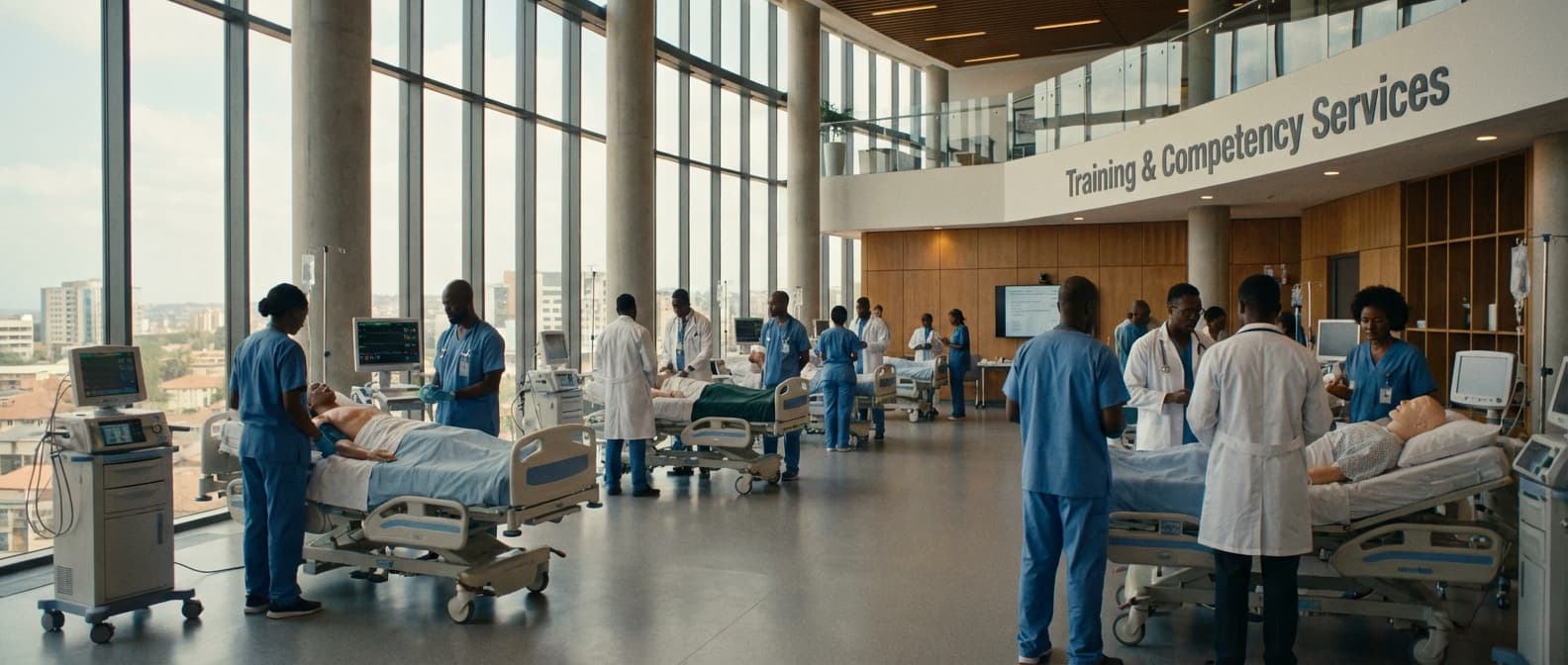
Biomedical Engineering First-Line Support Training Service in Namibia
Engineering Excellence & Technical Support
Biomedical Engineering First-Line Support Training Service High-standard technical execution following OEM protocols and local regulatory frameworks.
First-Time Fix Rate Optimization
Leverage advanced remote diagnostics and AI-powered troubleshooting to achieve a target first-time fix rate of 90% for common biomedical equipment issues, minimizing downtime and ensuring patient safety across Namibian healthcare facilities.
Proactive Preventative Maintenance
Implement a data-driven preventative maintenance schedule, utilizing predictive analytics to identify potential equipment failures before they occur, thereby reducing unscheduled maintenance calls by 30% and extending equipment lifespan.
On-Demand Technical Skill Enhancement
Provide targeted, on-demand virtual and in-person training modules for Namibian biomedical technicians, focusing on the latest medical device technologies and safety protocols, empowering them to handle complex repairs and reduce reliance on external specialists.
What Is Biomedical Engineering First-line Support Training Service In Namibia?
Biomedical Engineering First-Line Support Training Service in Namibia refers to the foundational technical education and skill development provided to individuals responsible for the initial diagnosis, basic maintenance, and troubleshooting of medical devices within healthcare facilities. This service aims to equip personnel with the fundamental knowledge and practical abilities required to address common equipment malfunctions, ensuring minimal disruption to patient care and optimizing the operational readiness of medical technology.
| Who Needs This Service? | Typical Use Cases | ||||||
|---|---|---|---|---|---|---|---|
| Healthcare Facility Technicians/Engineers: Individuals designated to handle immediate technical issues within hospitals, clinics, and health centers who may not possess advanced specialized training. | Clinical Staff (Nurses, Doctors): For very basic understanding of device operation, reporting issues, and performing simple user-level checks before escalating to technical support. | New Entrants into Biomedical Engineering Roles: Individuals entering the field of biomedical engineering who require foundational knowledge before specialization. | Rural and Remote Health Facilities: Where access to specialized biomedical engineers is limited, empowering local staff to manage common equipment problems. | Medical Equipment Distributors/Suppliers: To train their on-site personnel for initial customer support and basic troubleshooting before engaging specialized service teams. | Government Health Ministries and Agencies: For capacity building initiatives aimed at improving the maintenance of the national medical equipment inventory. | ||
| Immediate response to a vital signs monitor displaying erratic readings. | Troubleshooting an infusion pump that is not delivering medication at the set rate. | Performing routine cleaning and battery checks on portable diagnostic devices. | Identifying and rectifying simple user-interface errors on laboratory equipment. | Responding to a power supply issue with a diagnostic imaging accessory. | Documenting and reporting a recurring error code on a sterilization unit. | Educating clinical staff on proper device setup and initialisation to prevent user-induced problems. | Conducting basic functional tests on newly delivered medical equipment before clinical deployment. |
Components of Biomedical Engineering First-Line Support Training Service:
- Basic Equipment Familiarization: Understanding the principles of operation, intended use, and primary components of common medical devices (e.g., vital signs monitors, infusion pumps, ECG machines).
- Routine Preventive Maintenance (PM): Training on scheduled inspections, cleaning, calibration checks, and functional testing to identify and address potential issues before they lead to failure.
- Basic Troubleshooting Techniques: Developing systematic approaches to identify the root cause of common equipment problems, including power issues, connectivity errors, and user interface malfunctions.
- User Error Identification and Correction: Differentiating between equipment faults and operational errors made by clinical staff, and providing guidance for proper device usage.
- Safe Operation and Handling Procedures: Emphasis on electrical safety, infection control protocols, and proper handling of medical equipment to prevent damage and ensure patient and operator safety.
- Documentation and Reporting: Training on maintaining accurate records of maintenance activities, troubleshooting steps, and reporting procedures for equipment issues.
- Introduction to Biomedical Engineering Principles: Fundamental concepts of electronics, mechanics, and physiology as they relate to medical device functionality.
- Use of Basic Diagnostic Tools: Familiarization with simple diagnostic tools like multimeters and basic testing jigs, where applicable and safe.
Who Needs Biomedical Engineering First-line Support Training Service In Namibia?
Biomedical Engineering First-Line Support Training Service in Namibia is designed to empower healthcare professionals and institutions with the essential skills to maintain and troubleshoot medical equipment. This training is crucial for ensuring the continuous and safe operation of vital medical devices, thereby improving patient care and operational efficiency within the Namibian healthcare sector. The target audience comprises individuals and departments who are directly involved in the day-to-day management and utilization of biomedical equipment.
| Customer Type | Relevant Departments/Roles |
|---|---|
| Hospitals and Clinics | Biomedical Engineering Department, Clinical Engineering Department, Maintenance Technicians, Nurses (responsible for basic equipment checks), Biomedical Scientists, Laboratory Technicians. |
| Ministry of Health and Social Services (MoHSS) | Medical Equipment Unit, Procurement Department, Infrastructure Management, Regional Health Management Teams. |
| Tertiary and Referral Hospitals | Specialized Biomedical Engineering teams, Intensive Care Unit (ICU) staff, Operating Theatre (OT) technicians, Radiology Department technicians. |
| Rural and Remote Health Centers | Clinic Managers, Nurses-in-Charge, Healthcare Assistants with designated equipment responsibilities. |
| Medical Training Institutions | Biomedical Engineering/Technology Departments, Simulation Centers, Laboratory Staff. |
| NGOs | Project Managers overseeing health facilities, Logistics and Maintenance Officers. |
Target Customers and Departments:
- Hospitals and Clinics: Both public and private healthcare facilities across Namibia that operate medical equipment.
- Ministry of Health and Social Services (MoHSS): Departments responsible for national health infrastructure, procurement, and maintenance of medical equipment.
- District Health Offices: Regional health authorities overseeing the functionality of health facilities within their jurisdiction.
- Tertiary and Referral Hospitals: Facilities with complex and high-volume medical equipment requiring specialized first-line support.
- Rural and Remote Health Centers: Locations where immediate on-site technical support is critical due to logistical challenges in accessing external repair services.
- Medical Training Institutions: Universities and colleges offering healthcare programs, where students and faculty interact with medical equipment.
- Non-Governmental Organizations (NGOs) involved in healthcare: Organizations managing or supporting health facilities that utilize medical devices.
Biomedical Engineering First-line Support Training Service Process In Namibia
This document outlines the typical workflow for a Biomedical Engineering First-Line Support Training Service in Namibia, covering the process from the initial inquiry to the successful execution of the training.
| Stage | Description | Key Activities | Responsible Party |
|---|---|---|---|
| The process begins when a potential client (e.g., a hospital, clinic, or Ministry of Health department) expresses interest in first-line biomedical engineering support training. | Initial contact (email, phone, inquiry form), clarification of general training needs. | Client & Training Provider |
| A thorough understanding of the client's specific training requirements, existing infrastructure, and personnel capabilities is established. | Detailed discussion, site visit (if necessary), identification of target equipment, skill gaps, desired learning outcomes. | Training Provider & Client |
| A tailored training proposal is created, outlining the scope of work, curriculum, duration, cost, and expected outcomes. | Curriculum design, module breakdown, trainer selection, cost estimation, proposal document generation. | Training Provider |
| The client reviews and approves the proposal, leading to a formal agreement or contract. | Proposal review, negotiation (if needed), signing of contract/agreement, payment of deposit (if applicable). | Client & Training Provider |
| All necessary training resources, including manuals, presentations, practical exercises, and assessment tools, are developed or procured. | Content creation/adaptation, multimedia integration, printing/digital distribution of materials. | Training Provider |
| The practical arrangements for the training, including venue, dates, times, and participant registration, are finalized. | Booking training venue, confirming trainer availability, participant communication and registration, equipment and consumables arrangement. | Training Provider & Client |
| The actual training sessions are conducted, combining theoretical knowledge with hands-on practical sessions. | Lectures, demonstrations, practical exercises, case studies, troubleshooting simulations. | Training Provider (Trainers) |
| The effectiveness of the training is evaluated through assessments and feedback mechanisms. | Written/practical tests, skills observation, participant satisfaction surveys, trainer feedback. | Training Provider & Participants |
| Upon successful completion, participants receive certificates, and a comprehensive report is provided to the client. | Issuance of certificates, preparation of training report (attendance, performance, recommendations). | Training Provider |
| The relationship continues with potential follow-up support or advanced training opportunities. | Post-training support inquiries, refresher courses, advanced training proposals. | Training Provider & Client |
Biomedical Engineering First-Line Support Training Service Workflow
- Inquiry Received
- Needs Assessment & Consultation
- Proposal Development
- Client Acceptance & Agreement
- Training Material Preparation
- Logistics & Scheduling
- Training Delivery
- Post-Training Assessment & Feedback
- Certification & Reporting
- Follow-up & Ongoing Support
Biomedical Engineering First-line Support Training Service Cost In Namibia
Biomedical Engineering first-line support training services in Namibia are crucial for ensuring the proper functioning and maintenance of medical equipment, directly impacting patient care. The cost of such training can vary significantly due to several factors. These factors include the complexity and type of medical equipment covered in the training, the duration of the program, the qualifications and experience of the trainers, the location and facilities of the training provider, and the level of customization required for the training content. Namibian institutions offering these services often cater to hospitals, clinics, and medical equipment suppliers. Pricing is generally quoted in Namibian Dollars (NAD). While precise, up-to-the-minute figures are proprietary, we can outline typical cost ranges and influencing elements.
| Training Type/Scope | Estimated Cost Range (NAD) | Typical Duration |
|---|---|---|
| Basic Equipment (e.g., vital signs monitors, ECG machines - introductory) | NAD 4,000 - NAD 10,000 | 1-2 days |
| Intermediate Equipment (e.g., basic ultrasound, X-ray machine - troubleshooting focus) | NAD 8,000 - NAD 20,000 | 2-3 days |
| Advanced Equipment (e.g., complex lab analyzers, specific surgical equipment - in-depth) | NAD 15,000 - NAD 40,000+ | 3-5+ days |
| Customized Training / On-site Training | Varies significantly based on scope, location, and duration (often billed daily/hourly) | As required |
Key Pricing Factors for Biomedical Engineering First-Line Support Training in Namibia
- Scope of Equipment Covered: Training on basic diagnostic equipment (e.g., blood pressure monitors) will be less expensive than training on advanced imaging systems (e.g., MRI, CT scanners) or complex surgical devices.
- Training Duration and Depth: Shorter, introductory courses will have lower costs compared to comprehensive, multi-day programs covering in-depth troubleshooting and repair.
- Trainer Expertise and Credentials: Highly experienced biomedical engineers with specialized certifications or extensive practical experience will command higher fees.
- Training Location and Facilities: On-site training at the client's facility might incur additional travel and accommodation costs for trainers. Training at a dedicated training center might have a fixed fee that includes facility usage.
- Customization and Specialization: Tailoring the training to specific hospital protocols, unique equipment models, or advanced diagnostic procedures will generally increase the cost.
- Number of Participants: Group discounts are often available, making the per-person cost lower for larger training cohorts.
- Training Materials and Resources: The provision of detailed manuals, practical kits, and online resources can influence the overall price.
- Certification and Assessment: If formal certification or competency assessments are included, this will add to the cost.
Affordable Biomedical Engineering First-line Support Training Service Options
This document outlines affordable biomedical engineering first-line support training service options. We focus on delivering high-value training programs that equip technicians with essential skills to effectively manage and troubleshoot medical devices. Our approach emphasizes practical application, cost-effectiveness, and scalable solutions to meet the diverse needs of healthcare organizations.
| Strategy | Description | Benefits | Cost-Saving Impact |
|---|---|---|---|
| Value Bundles | Pre-packaged combinations of training modules, often tailored to specific roles (e.g., 'Entry-Level Technician Bundle', 'Advanced Troubleshooting Bundle') or device categories. Bundles typically offer a discount compared to purchasing individual modules. | Streamlined training planning, consistent skill development across teams, potential for deeper expertise in chosen areas, enhanced ROI through discounted pricing. | Reduced per-module cost, predictable training investment, simplified procurement. |
| Modular & Scalable Training | Breaking down training into smaller, self-contained modules that can be combined and scaled based on organizational needs and budget. This allows for gradual skill acquisition and targeted investment. | Flexibility in curriculum design, ability to address specific skill gaps, phased implementation, cost control by only paying for necessary modules. | Avoids overspending on unnecessary training, allows for incremental budget allocation, adaptable to changing organizational priorities. |
| E-Learning & Blended Learning | Utilizing online modules for theoretical knowledge and self-paced learning, complemented by in-person workshops or virtual instructor-led sessions for practical skills and hands-on practice. This optimizes instructor time and reduces travel costs. | Increased accessibility and flexibility for learners, reduced travel and accommodation expenses, efficient use of trainer resources, consistent delivery of content. | Lower trainer fees, minimized travel expenses, reduced facility rental costs, self-paced learning can improve knowledge retention, potentially reducing re-training needs. |
| Train-the-Trainer Programs | Investing in training internal subject matter experts to deliver training to their colleagues. This leverages internal knowledge and reduces external training costs over time. | Cultivates internal expertise, fosters a knowledge-sharing culture, reduces long-term reliance on external trainers, ensures training is tailored to the organization's specific equipment and protocols. | Significant reduction in ongoing external training fees, lower per-employee training cost, creates a sustainable internal training resource. |
| Subscription-Based Access | Offering ongoing access to a library of training materials, updates, and new modules for a recurring fee. This provides continuous learning and ensures technicians stay current with evolving technologies and regulations. | Always up-to-date training content, continuous professional development opportunities, predictable annual training budget, access to a broad range of topics. | Often more cost-effective for organizations with ongoing training needs, avoids per-course fees for frequent training, predictable budgeting. |
| Group Discounts & Volume Licensing | Providing discounted pricing for organizations that enroll multiple technicians or purchase training licenses in bulk. This incentivizes wider adoption of training programs. | Cost savings for larger teams, encourages a culture of continuous learning across the department, simplifies license management. | Reduced per-user cost, economies of scale, improved overall training investment efficiency. |
Key Training Service Options
- Core Biomedical Device Fundamentals: Comprehensive training covering essential principles of medical device operation, safety protocols, basic troubleshooting, and preventive maintenance across common device categories (e.g., vital signs monitors, infusion pumps, ECG machines).
- Specialized Device Training Modules: Focused training on specific high-risk or frequently encountered device types, allowing for targeted skill development and improved efficiency.
- Regulatory Compliance & Safety Training: Essential modules on relevant regulatory standards (e.g., FDA, MDR), risk management, infection control, and safe handling of medical equipment.
- Troubleshooting & Diagnostic Techniques: Practical workshops and simulations designed to enhance diagnostic capabilities, enabling technicians to identify and resolve common device issues efficiently.
- Introduction to Medical Device Networking & IT: Basic training on understanding the IT infrastructure supporting medical devices, including network basics, cybersecurity awareness, and data integrity considerations.
- Remote Support & Telemedicine Technologies Training: Equipping technicians with the skills to support devices used in remote patient monitoring and telemedicine applications.
- On-Demand & E-Learning Platforms: Flexible learning options including video-based modules, interactive simulations, and online knowledge bases accessible anytime, anywhere.
- Train-the-Trainer Programs: Empowering experienced internal staff to become trainers, fostering a sustainable in-house training culture and reducing reliance on external providers.
Verified Providers In Namibia
When seeking healthcare services in Namibia, it's crucial to partner with verified providers who demonstrate a commitment to quality, patient safety, and ethical practices. Franance Health stands out in this regard, consistently upholding high standards and earning the trust of individuals and communities. Their accreditation and adherence to rigorous protocols are not merely checkboxes; they are foundational elements of their patient-centric approach, ensuring that you receive the best possible care. Choosing a verified provider like Franance Health means opting for expertise, reliability, and a healthcare experience built on integrity and excellence.
| Credential Type | Franance Health's Attainment | Benefit to Patients |
|---|---|---|
| National Health Regulatory Authority Accreditation | Fully accredited by the Namibian Ministry of Health and Social Services (MoHSS) and relevant professional bodies. | Guarantees compliance with national healthcare standards, ensuring a baseline of quality and safety. |
| International Healthcare Standards Compliance | Adheres to principles of internationally recognized quality management systems (e.g., ISO principles where applicable). | Reflects a commitment to global best practices in healthcare delivery and operational efficiency. |
| Specialist Certifications and Licensing | All medical practitioners possess valid Namibian medical licenses and relevant specialist certifications. | Ensures that you are treated by qualified and expert professionals in their respective fields. |
| Ongoing Professional Development Programs | Actively participates in continuous medical education (CME) and training for all staff. | Keeps their medical knowledge and skills up-to-date with the latest medical advancements and treatment protocols. |
| Patient Feedback and Grievance Mechanisms | Established and accessible channels for patient feedback and a structured grievance resolution process. | Empowers patients to voice concerns and ensures that issues are addressed promptly and effectively. |
Why Franance Health Credentials Matter:
- Rigorous Accreditation: Franance Health undergoes stringent accreditation processes by recognized health authorities. This signifies adherence to established quality benchmarks and patient care standards.
- Skilled and Certified Professionals: Their medical teams comprise highly qualified doctors, nurses, and specialists who hold relevant certifications and ongoing professional development.
- Commitment to Patient Safety: Accreditation mandates strict protocols for infection control, medication management, and patient safety measures, minimizing risks and ensuring a secure environment.
- Ethical Practice Standards: Verified providers are bound by ethical codes of conduct, promoting transparency, patient rights, and confidentiality.
- State-of-the-Art Facilities and Technology: Accreditation often requires facilities to meet certain standards for equipment and technology, leading to more accurate diagnoses and effective treatments.
- Continuous Quality Improvement: Verified providers engage in ongoing evaluation and improvement of their services, ensuring they remain at the forefront of medical advancements.
Scope Of Work For Biomedical Engineering First-line Support Training Service
This Scope of Work (SOW) outlines the requirements for a comprehensive Biomedical Engineering First-Line Support Training Service. The objective is to equip support personnel with the necessary technical knowledge, practical skills, and troubleshooting methodologies to effectively address common issues with a defined set of biomedical devices. This training will enhance first-line resolution rates, reduce escalation times, and improve overall device uptime and patient safety.
| Deliverable Title | Description | Standard Specification/Format | Acceptance Criteria |
|---|---|---|---|
| Training Curriculum Development | Comprehensive curriculum covering theoretical concepts, practical demonstrations, and hands-on exercises for a specified list of biomedical devices. | Modular format, documented in PDF and editable formats (e.g., Word, PowerPoint). Includes learning objectives, content outline, assessment methods, and reference materials. | Curriculum covers all identified device types and learning objectives. Approved by client's subject matter experts. |
| Training Materials (Participant) | Participant workbooks, quick reference guides, and cheat sheets for each device module. | Professionally designed, printable PDFs. Quick reference guides should be concise (1-2 pages per device). | Materials are clear, accurate, and directly support the curriculum. Content is validated by client. |
| Training Materials (Instructor) | Instructor guide with detailed lesson plans, presentation slides, demonstration scripts, and answer keys for assessments. | Editable digital format (e.g., PowerPoint, Word) and printable PDF. | Instructor materials are comprehensive, enabling consistent delivery of training across different instructors. Content is validated by client. |
| Hands-on Training Lab Setup | Provision and setup of functional biomedical devices for practical training sessions. Includes necessary tools, consumables, and safety equipment. | Minimum of X functional units per device type for hands-on practice. All equipment to be calibrated and in good working order. Safety protocols documented and followed. | All required devices and equipment are present, functional, and meet safety standards prior to the commencement of the training session. |
| Trainer Qualification and Delivery | Qualified instructors with demonstrated expertise in biomedical engineering and adult learning methodologies. | Instructors must possess relevant certifications, industry experience, and proven training delivery capabilities. A trainer profile will be provided for review. | Client approval of trainer profiles. Positive feedback from participants on instructor's knowledge and delivery (minimum average rating of 4.0/5.0). |
| Post-Training Assessment and Reporting | Written and practical assessments to evaluate participant comprehension and skill acquisition. Comprehensive training report including individual assessment scores. | Assessments designed to measure achievement of learning objectives. Report to be delivered in PDF format, anonymized participant data where appropriate. | Assessment pass rate of at least 85% for all participants. Report accurately reflects participant performance and provides actionable insights. |
| Training Delivery Schedule | Proposed training schedule, including dates, times, duration, and location for each training session. | Documented in a clear, tabular format (e.g., Excel, PDF). To be mutually agreed upon with the client. | Schedule is realistic, accommodates client's operational needs, and is approved by the client. |
| Technical Support during Training | On-site technical support to ensure smooth operation of training equipment and address any technical issues that arise during the training sessions. | Dedicated technical support personnel available throughout training hours. Rapid response to equipment malfunctions. | No significant disruptions to training due to technical issues. Issues resolved within agreed-upon timeframes. |
Key Training Objectives
- Understand fundamental principles of biomedical engineering and device operation.
- Identify and troubleshoot common hardware and software failures for targeted medical devices.
- Perform basic preventive maintenance procedures according to manufacturer guidelines.
- Safely and effectively use diagnostic tools and test equipment.
- Apply regulatory compliance requirements (e.g., FDA, HIPAA) in day-to-day support activities.
- Develop effective communication and customer service skills for interacting with clinical staff.
- Understand incident reporting and escalation protocols.
Service Level Agreement For Biomedical Engineering First-line Support Training Service
This Service Level Agreement (SLA) outlines the response times and uptime guarantees for the Biomedical Engineering First-Line Support Training Service. It defines the expected levels of service and the remedies available should those levels not be met.
| Service Component | Response Time Guarantee (Business Hours) | Uptime Guarantee (Online Resources) |
|---|---|---|
| Initial acknowledgement of training request/inquiry | 4 Business Hours | N/A |
| Scheduling of initial training session | 2 Business Days | N/A |
| Response to urgent technical issues with training platform/materials | 2 Business Hours | N/A |
| Response to non-urgent technical issues with training platform/materials | 8 Business Hours | N/A |
| Availability of online learning modules and resources | N/A | 99.5% |
| Availability of scheduled virtual training sessions | N/A | 100% |
Service Scope
- Training delivery for new first-line biomedical engineering support personnel.
- Development and maintenance of training materials.
- Ongoing support and consultation for training program effectiveness.
- Provision of access to online learning modules and resources.
Frequently Asked Questions

Ready when you are
Let's scope your Biomedical Engineering First-Line Support Training Service in Namibia project in Namibia.

Scaling healthcare logistics and technical systems across the entire continent.