
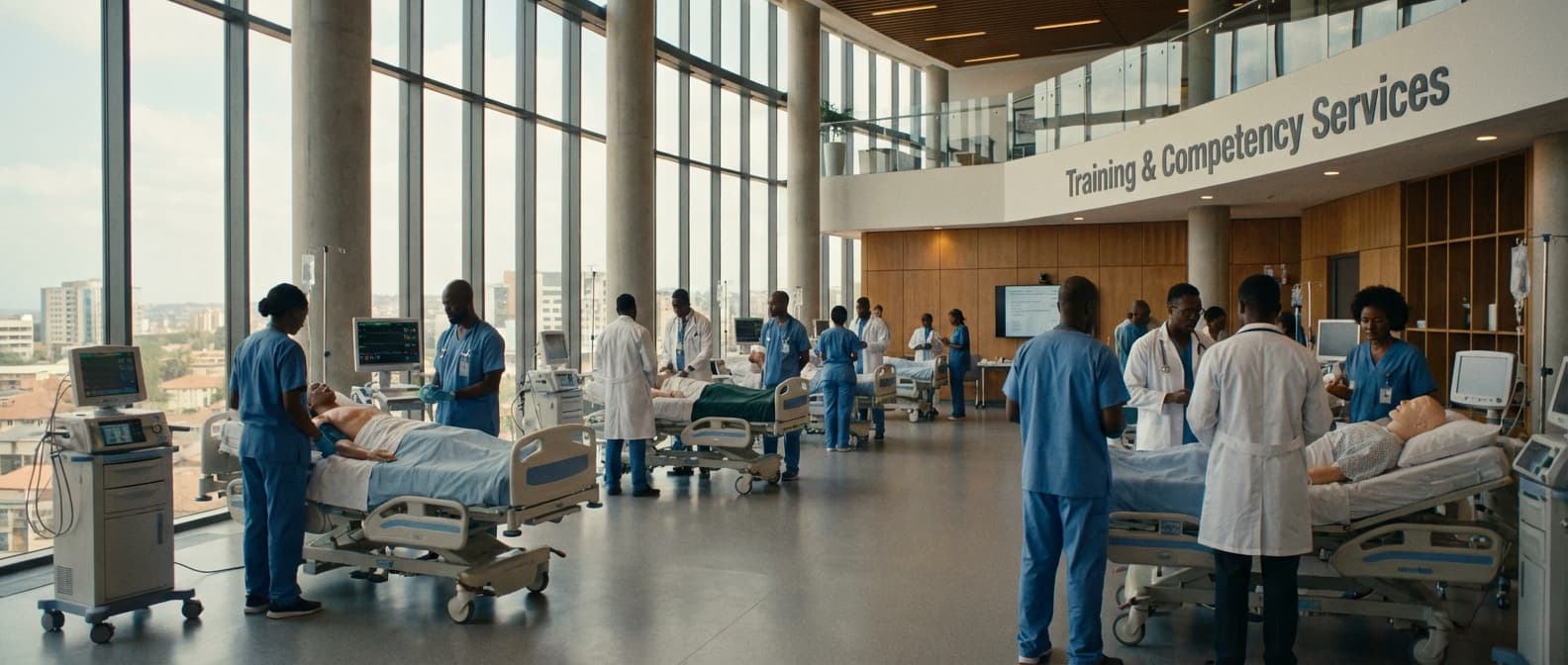
Anesthesia Workstation User Training Service in Namibia
Engineering Excellence & Technical Support
Anesthesia Workstation User Training Service High-standard technical execution following OEM protocols and local regulatory frameworks.
Mastering Anesthesia Workstation Navigation & Core Functions
Gain proficiency in the intuitive interface of modern anesthesia workstations. This module covers essential controls, ventilation modes, monitoring displays, and basic drug delivery setup, ensuring safe and efficient operation from day one.
Advanced Ventilation & Patient Monitoring Techniques
Elevate your expertise with in-depth training on advanced ventilation strategies, waveform analysis, and comprehensive patient monitoring. Learn to interpret complex physiological data and optimize anesthetic delivery for diverse patient populations.
Troubleshooting, Safety Protocols & Emergency Scenarios
Be prepared for any situation. This crucial module focuses on common workstation malfunctions, best practices for safety feature utilization, and hands-on simulation of critical emergency scenarios, empowering you to respond confidently and effectively.
What Is Anesthesia Workstation User Training Service In Namibia?
The Anesthesia Workstation User Training Service in Namibia is a specialized educational program designed to equip healthcare professionals with the knowledge and practical skills necessary for the safe and effective operation of modern anesthesia workstations. This service is crucial for ensuring patient safety, optimizing anesthetic delivery, and maximizing the utility of sophisticated medical equipment within the Namibian healthcare landscape. It encompasses theoretical instruction on workstation components, physiological principles, and pharmacological considerations, complemented by hands-on simulation and practical application scenarios.
| Target Audience | Need for Training | Typical Use Cases |
|---|---|---|
| Anesthesiologists | Essential for all practicing anesthesiologists to operate advanced workstations, interpret data, and manage patient ventilation and gas delivery. | Routine surgical procedures, complex anesthetic management, critical care settings, and emergency response. |
| Anesthesia Technicians/Nurses | Crucial for setting up, testing, and maintaining anesthesia workstations, assisting anesthesiologists, and responding to routine alarms. | Pre-operative setup and checks, intra-operative support, post-operative equipment management, and equipment calibration. |
| Medical Residents and Trainees | Foundational training for developing core competencies in anesthesia delivery and equipment management. | Simulation-based learning, supervised clinical practice, and skill development. |
| Healthcare Institutions (Hospitals, Clinics) | Ensures compliance with safety regulations, enhances quality of care, reduces equipment downtime, and optimizes resource utilization. | Acquisition of new workstation models, upgrades to existing equipment, and staff competency assurance. |
Key Components of Anesthesia Workstation User Training:
- Workstation Anatomy and Physiology: Comprehensive understanding of the mechanical ventilator, gas delivery systems, vaporizers, patient monitoring integration, and alarm management features.
- Anesthetic Gas Management: Principles of fresh gas flow, agent delivery, scavenging, and gas analysis.
- Ventilator Modes and Settings: Mastery of various ventilation modes (e.g., volume control, pressure control, proportional assist ventilation) and their appropriate application based on patient condition.
- Pharmacology and Drug Delivery: Integration of anesthetic drug administration (e.g., volatile agents, intravenous agents) with workstation functions.
- Patient Monitoring and Data Interpretation: Effective use of integrated patient monitoring systems and understanding of key physiological parameters displayed by the workstation.
- Alarm Management and Troubleshooting: Recognition of common alarms, appropriate responses, and basic troubleshooting procedures.
- Infection Control and Maintenance: Protocols for cleaning, disinfection, and routine maintenance of the anesthesia workstation.
- Emergency Procedures and Contingencies: Training on managing equipment malfunctions and patient emergencies in the context of workstation use.
Who Needs Anesthesia Workstation User Training Service In Namibia?
Anesthesia workstation user training services are crucial for ensuring the safe, effective, and efficient use of complex medical equipment in healthcare settings. In Namibia, these services cater to a specific set of medical professionals and institutions that rely on advanced anesthesia delivery systems. The training focuses on practical application, troubleshooting, and understanding the nuances of different workstation models, ultimately contributing to improved patient outcomes and operational excellence.
| Target Customer Group | Primary Departments/Users | Reasons for Needing Training |
|---|---|---|
| Public Hospitals (e.g., Windhoek Central Hospital, Katutura State Hospital) | Anesthesiology Departments, Operating Theaters, Intensive Care Units (ICUs) | Ensuring consistent and safe anesthetic care across a high patient volume; training new staff; maintaining equipment compliance; optimizing resource utilization. |
| Private Hospitals and Clinics (e.g., Roman Catholic Hospital, MediClinic) | Anesthesiology Departments, Operating Rooms, Surgical Suites | Maintaining high standards of patient care and safety; competitive edge through skilled personnel; efficient use of sophisticated equipment; compliance with international best practices. |
| Specialized Surgical Centers (e.g., centers focusing on cardiology, neurosurgery, or pediatrics) | Anesthesiologists, Anesthetic Nurses, Respiratory Therapists | Understanding specialized anesthetic delivery requirements for complex procedures; mastering advanced features of specific workstations; ensuring patient safety in critical care scenarios. |
| Tertiary and Referral Hospitals | Anesthesiology and Critical Care Departments | Managing a wide range of complex cases; ensuring readiness for critical emergencies; facilitating the use of advanced monitoring and ventilation modes. |
| Medical Training Institutions (e.g., University of Namibia - School of Medicine, other medical training colleges) | Medical Students, Residents (Anesthesiology), Anesthetic Technicians, Nursing Students | Providing foundational knowledge and practical skills in anesthesia workstation operation; preparing future healthcare professionals; curriculum development and practical component of education. |
Target Customers and Departments in Namibia Requiring Anesthesia Workstation User Training
- Hospitals (Public and Private)
- Surgical Centers
- Specialized Clinics (e.g., Cardiac, Neuro, Pediatric)
- Tertiary and Referral Hospitals
- Training and Academic Medical Institutions
Anesthesia Workstation User Training Service Process In Namibia
This document outlines the user training service process for anesthesia workstations in Namibia, from initial inquiry to successful execution. The process is designed to ensure that healthcare professionals receive comprehensive and practical training, enabling them to operate anesthesia workstations safely and effectively. The workflow emphasizes clear communication, tailored training, and post-training support.
| Phase | Key Activities | Responsible Party | Deliverables |
|---|---|---|---|
| Inquiry & Initial Contact | Receive and acknowledge inquiry; Initial discussion of training needs. | Training Service Provider (TSP) | Acknowledgement of Inquiry; Understanding of basic training request. |
| Needs Assessment & Proposal Development | Conduct detailed needs assessment (workstation model, user profile, objectives); Develop customized training proposal. | TSP (with client input) | Needs Assessment Report; Customized Training Proposal (curriculum, duration, cost, schedule options). |
| Agreement & Scheduling | Client reviews and accepts proposal; Finalize training schedule and logistics. | Client & TSP | Signed Training Agreement; Confirmed Training Schedule. |
| Pre-Training Preparation | Develop/gather training materials; Distribute pre-training resources to participants. | TSP | Training Manuals; Pre-reading materials; Access to online resources (if applicable). |
| Training Execution | Deliver theoretical sessions; Conduct practical demonstrations and hands-on exercises; Utilize simulation. | TSP (Certified Trainer) | Interactive Training Sessions; Practical Skill Development; Real-time feedback. |
| Assessment & Evaluation | Conduct knowledge-based assessments; Evaluate practical skills and competency. | TSP (Certified Trainer) | Post-Training Assessment Results; Competency Evaluation Report. |
| Certification & Completion | Award certificates to successful participants; Provide feedback on training effectiveness. | TSP | Certificates of Training; Training Feedback Summary. |
| Post-Training Support | Provide access to support resources; Offer follow-up consultations; Schedule refresher courses (if required). | TSP | Ongoing technical support; Access to FAQs and documentation; Refresher training opportunities. |
Anesthesia Workstation User Training Service Process
- The process begins with an inquiry from a healthcare facility or individual seeking anesthesia workstation user training.
- Following the inquiry, a detailed needs assessment is conducted to understand the specific workstation model, the users' existing knowledge, and the desired training outcomes.
- A customized training proposal is then developed, outlining the curriculum, duration, delivery method (on-site, remote, or hybrid), and associated costs.
- Upon acceptance of the proposal, a training schedule is established in consultation with the client.
- Pre-training materials, including user manuals and introductory content, are provided to participants.
- The training execution phase involves theoretical instruction, practical demonstrations, hands-on exercises, and simulation sessions using the actual anesthesia workstation.
- A comprehensive post-training assessment is conducted to evaluate participants' understanding and proficiency.
- Upon successful completion, participants receive a certificate of training.
- Post-training support is offered, including access to resources, follow-up consultations, and refresher courses as needed.
Anesthesia Workstation User Training Service Cost In Namibia
The cost of Anesthesia Workstation User Training services in Namibia can vary significantly due to several key factors. These factors influence the overall price, making it crucial for healthcare facilities to understand them when budgeting for such essential training. The primary drivers of cost include the provider's reputation and experience, the duration and intensity of the training program, the number of participants, the location of the training (on-site vs. off-site), and whether the training includes hands-on practical sessions with actual equipment or is purely theoretical. Furthermore, the specific type and complexity of the anesthesia workstation being covered will impact the training's depth and therefore its cost. Some providers may also offer additional services like post-training support and certification, which are factored into the overall pricing structure. Due to the specialized nature of this training and the limited number of qualified providers in Namibia, costs can be perceived as high, but they represent a critical investment in patient safety and staff competency.
| Training Component/Type | Estimated Cost Range (NAD) | Notes |
|---|---|---|
| Basic User Training (1-2 Days) | 3,500 - 7,000 | Covers fundamental operation, safety features, and basic troubleshooting. |
| Advanced User Training (3-5 Days) | 7,000 - 15,000 | Includes in-depth features, maintenance, advanced troubleshooting, and scenario-based practice. |
| Customized/On-site Training (per day) | 2,000 - 4,000 | Price can vary based on provider, number of participants, and specific requirements. May include travel and accommodation costs for trainers. |
| Certification Fee (per participant) | 500 - 1,500 | For recognized certifications issued by the training provider or a third party. |
| Refresher/Update Training (1 Day) | 1,500 - 3,000 | For existing users to update knowledge on new features or protocols. |
| Training Materials and Manuals | 200 - 800 | Often included in the overall training cost but sometimes itemized. |
Key Pricing Factors for Anesthesia Workstation User Training in Namibia
- Provider Reputation and Experience
- Training Program Duration and Intensity
- Number of Participants
- Training Location (On-site vs. Off-site)
- Inclusion of Hands-on Practical Sessions
- Type and Complexity of Anesthesia Workstation
- Post-Training Support and Certification
Affordable Anesthesia Workstation User Training Service Options
Our affordable anesthesia workstation user training service is designed to equip your healthcare professionals with the knowledge and skills necessary for safe and efficient operation of anesthesia equipment. We understand the budgetary constraints faced by many healthcare facilities, and therefore offer flexible training solutions that prioritize value and cost-effectiveness. Our services range from basic operational training to advanced troubleshooting and maintenance, ensuring your team is fully proficient. We achieve affordability through flexible delivery methods, scalable training modules, and a focus on practical, job-relevant skills, minimizing unnecessary time and resources spent on theoretical or overly complex topics. This approach not only reduces direct training costs but also minimizes indirect costs associated with downtime, errors, and equipment underutilization.
| Cost-Saving Strategy | Description | Benefit |
|---|---|---|
| Flexible Delivery Methods | Offering on-site, remote (virtual instructor-led), and self-paced online training options. | Reduces travel and accommodation costs for trainers and trainees; accommodates diverse learning preferences and schedules. |
| Scalable Training Modules | Providing modular training content that can be adapted to the specific needs and skill levels of different user groups. | Ensures trainees receive relevant information, avoiding wasted time on unnecessary topics and reducing overall training duration. |
| Group Discounts | Offering tiered pricing based on the number of trainees or sessions booked. | Significantly reduces the per-person cost of training for larger teams or multiple departments. |
| Bundled Services | Combining basic training with advanced modules, maintenance workshops, or digital resources at a reduced combined price. | Provides comprehensive training at a lower overall investment compared to purchasing individual services. |
| Focus on Practical Application | Prioritizing hands-on exercises and real-world scenarios over purely theoretical instruction. | Increases user confidence and competence, leading to fewer errors and better equipment utilization, thereby reducing potential costs associated with downtime or repair. |
| Remote Support & Refresher Courses | Offering follow-up remote support sessions and access to refresher training materials. | Minimizes the need for repeat on-site training and provides ongoing support to reinforce learning and address emerging challenges. |
Value Bundles for Affordable Anesthesia Workstation User Training
- Basic Operator Training Bundle: Covers essential workstation functions, patient monitoring, alarm management, and emergency procedures. Ideal for new staff or general refreshers.
- Advanced Functionality Bundle: Expands on basic training with in-depth modules on specific anesthetic delivery modes, ventilation strategies, and integrated technology features.
- Troubleshooting & Maintenance Bundle: Focuses on common issues, preventative maintenance schedules, and basic troubleshooting techniques to empower your biomedical team and reduce reliance on external service calls.
- Site-Specific Customization Bundle: Tailored training programs based on your specific workstation models, clinical workflows, and institutional protocols, ensuring maximum relevance and impact.
- Train-the-Trainer Program: Equips selected personnel within your organization to deliver ongoing in-house training, fostering long-term cost savings and internal expertise.
- On-Demand Digital Learning Bundle: Access to a library of pre-recorded modules, simulations, and knowledge checks for flexible, self-paced learning and ongoing competency reinforcement.
Verified Providers In Namibia
Finding verified healthcare providers in Namibia is crucial for ensuring quality care and peace of mind. Franance Health distinguishes itself by meticulously vetting its network of professionals, upholding rigorous standards to guarantee that every provider meets exceptional benchmarks for expertise, ethics, and patient-centered service. This commitment to verification means that when you choose a Franance Health-affiliated provider, you are selecting from a curated list of Namibia's finest medical practitioners.
| Provider Type | Specialty/Focus | Franance Health Verification Highlights |
|---|---|---|
| General Practitioner | Family Medicine, Primary Care | Verified medical degree, licensed practitioner, positive patient reviews, adherence to evidence-based medicine. |
| Specialist Physician | Cardiology, Pediatrics, Dermatology, etc. | Verified specialist qualifications, board certifications, extensive clinical experience, proven track record in their field. |
| Surgeon | General Surgery, Orthopedics, Ophthalmology, etc. | Verified surgical training and certifications, demonstrated surgical competence, commitment to patient safety and post-operative care. |
| Dentist | General Dentistry, Orthodontics, Periodontics, etc. | Verified dental degree and licenses, demonstrated clinical skills, commitment to oral health education and preventative care. |
| Therapist/Counselor | Psychology, Counseling, Physiotherapy, etc. | Verified degrees and certifications in their respective therapeutic disciplines, ethical practice, and client-centered approach. |
Why Franance Health Providers are the Best Choice in Namibia
- Rigorous Verification Process: Franance Health employs a multi-stage credentialing process that goes beyond basic licensing. This includes thorough background checks, verification of qualifications and experience, and assessment of professional reputation.
- Commitment to Quality: We are dedicated to partnering with healthcare professionals who demonstrate a consistent track record of excellence in patient care, diagnostic accuracy, and treatment outcomes.
- Ethical Standards: All Franance Health providers adhere to the highest ethical guidelines, ensuring patient privacy, informed consent, and compassionate treatment.
- Patient-Centric Approach: We prioritize providers who are known for their empathetic communication, patient education, and collaborative approach to healthcare decisions.
- Continuously Updated Network: Franance Health regularly reviews and updates its provider network to ensure that all listed professionals maintain their high standards and stay abreast of the latest medical advancements.
Scope Of Work For Anesthesia Workstation User Training Service
This Scope of Work (SOW) outlines the requirements for providing comprehensive user training services for a new Anesthesia Workstation. The training will ensure that clinical staff, including anesthesiologists, nurse anesthetists, and anesthesia technicians, are proficient in the safe, effective, and efficient operation of the workstation.
| Category | Description of Deliverables | Technical Specifications / Standards |
|---|---|---|
| Training Program Development | Development of a comprehensive training curriculum tailored to the Anesthesia Workstation, including theoretical knowledge and practical application. Includes creation of training materials (manuals, presentations, handouts, quick reference guides). | Curriculum shall cover device overview, patient monitoring, ventilation modes, drug delivery, ventilation parameters, troubleshooting, maintenance, and safety features. Materials to be developed in clear, concise language with visual aids. Adherence to principles of adult learning. |
| On-Site Hands-On Training Sessions | Delivery of interactive, hands-on training sessions conducted at the client's facility. Sessions will involve demonstration, practice, and supervised application of workstation functionalities. | Minimum of X hours of instruction per training group. Each group size not to exceed Y participants. Training to be conducted using actual or simulated Anesthesia Workstations. Session schedules to be agreed upon with the client. |
| Competency Assessment | Development and administration of a competency assessment to evaluate user proficiency post-training. This may include written tests, practical demonstrations, or scenario-based evaluations. | Assessment to cover key learning objectives. A passing score of Z% or higher is required. Retraining opportunities to be provided for individuals not meeting the competency standard. |
| Train-the-Trainer Program (Optional) | If specified, a program to train selected client personnel to become internal trainers for the Anesthesia Workstation, enabling ongoing internal training capabilities. | Includes in-depth module review, pedagogical techniques for adult learners, and practical coaching on delivering training effectively. Trainers will receive certification upon successful completion. |
| Post-Training Support | Provision of limited post-training support to address user queries and provide clarification on workstation operation. | Support to be available via email or phone for a period of W weeks following the completion of on-site training. Response time within 24 business hours. |
| Reporting and Documentation | Submission of a comprehensive training report detailing training attendance, assessment results, and recommendations. | Report to include participant lists, individual competency scores, summary of feedback received, and any identified areas for further training. Report to be submitted within 10 business days of training completion. |
Key Objectives
- To equip users with the knowledge and skills necessary to operate all functionalities of the Anesthesia Workstation.
- To ensure users understand and can implement safety features and alarms.
- To train users on proper setup, calibration, and routine maintenance procedures.
- To familiarize users with troubleshooting common issues.
- To ensure compliance with relevant regulatory standards and hospital protocols.
- To promote optimal patient care through skilled use of the Anesthesia Workstation.
Service Level Agreement For Anesthesia Workstation User Training Service
This Service Level Agreement (SLA) outlines the terms and conditions for the Anesthesia Workstation User Training Service, specifically addressing response times for support requests and uptime guarantees for the training platform. This SLA aims to ensure a high level of service availability and timely support for users of the Anesthesia Workstation training platform.
| Service Component | Uptime Guarantee | Response Time (Emergency Support) | Response Time (Standard Support) |
|---|---|---|---|
| Anesthesia Workstation Training Platform | 99.5% (measured monthly) | 1 hour | 4 business hours |
Definitions
- Anesthesia Workstation Training Platform: The digital environment and associated resources used for delivering and managing user training on the Anesthesia Workstation.
- Normal Business Hours: Monday through Friday, 8:00 AM to 5:00 PM in the provider's primary time zone, excluding national holidays.
- Emergency Support: Critical issues that render the Anesthesia Workstation Training Platform completely inaccessible or prevent users from completing essential training modules.
- Standard Support: Non-critical issues that affect user experience or access to specific features but do not completely halt training.
- Response Time: The maximum time allowed for the provider to acknowledge and begin working on a support request after it has been logged.
- Uptime Guarantee: The percentage of time the Anesthesia Workstation Training Platform is available and accessible to users.
Frequently Asked Questions

Ready when you are
Let's scope your Anesthesia Workstation User Training Service in Namibia project in Namibia.

Scaling healthcare logistics and technical systems across the entire continent.