
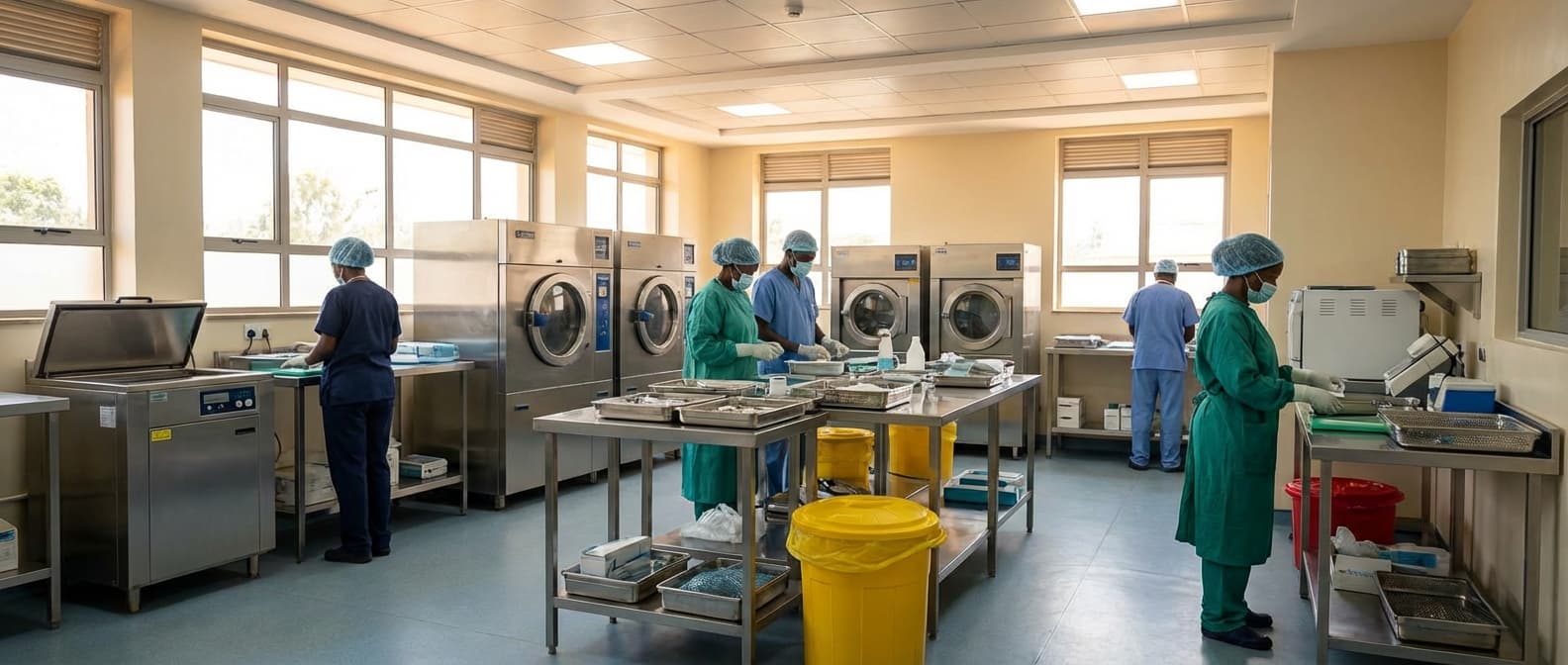
Medical Equipment Decontamination Service (Pre-Repair/Pre-Relocation) in Namibia
Engineering Excellence & Technical Support
Medical Equipment Decontamination Service (Pre-Repair/Pre-Relocation) High-standard technical execution following OEM protocols and local regulatory frameworks.
Pre-Repair Decontamination
Ensures technician safety and prevents cross-contamination in healthcare facilities. Our rigorous decontamination process prepares medical equipment for safe and efficient repair, safeguarding your staff and patients.
Pre-Relocation Sterilization
Facilitates smooth and compliant relocation of medical devices across Namibia. We provide certified decontamination to prevent the spread of pathogens and meet regulatory requirements for equipment transfer.
Advanced Bioburden Reduction
Utilizes state-of-the-art techniques to drastically reduce bioburden on critical medical equipment. Essential for maintaining the integrity of sensitive devices and ensuring their optimal performance post-service or relocation.
What Is Medical Equipment Decontamination Service (Pre-repair/pre-relocation) In Namibia?
Medical Equipment Decontamination Service (Pre-Repair/Pre-Relocation) in Namibia refers to the specialized process of rendering medical devices safe for handling, transport, and repair by eliminating or inactivating biological, chemical, or radiological contaminants. This service is critical in mitigating infection control risks and ensuring the safety of personnel involved in equipment maintenance, logistics, and service operations within the Namibian healthcare ecosystem. The decontamination process is typically performed prior to the equipment leaving its operational environment for off-site repair or relocation to a new facility.
| Who Needs This Service? | Typical Use Cases | ||||
|---|---|---|---|---|---|
| Hospitals and Clinics: Facilities that own and operate medical equipment requiring off-site servicing or transfer. | Medical Equipment Manufacturers & Distributors: Companies that provide repair, maintenance, or relocation services for their equipment within Namibia. | Third-Party Biomedical Engineering Services: Independent service providers contracted to maintain and repair medical devices. | Government and Non-Governmental Organizations (NGOs): Entities operating healthcare facilities or managing medical equipment inventories, particularly in remote areas. | Logistics and Transportation Companies: Businesses involved in the movement of medical equipment between facilities or to service centers. | |
| Scheduled Maintenance/Repair: Equipment returning from loan periods or undergoing routine servicing at an external workshop. | Emergency Repairs: Devices requiring immediate attention at a specialized repair facility. | Equipment Relocation: Transfer of functional medical devices between departments, buildings, or different healthcare institutions. | End-of-Life Disposal Preparation: Decontamination before equipment is sent for recycling or environmentally sound disposal. | Equipment Returns: Devices being returned to the manufacturer or supplier due to defects or warranty claims. | Outbreak Management Support: Decontamination of equipment used in areas affected by infectious disease outbreaks before it is moved or serviced. |
Key Aspects of Medical Equipment Decontamination Service (Pre-Repair/Pre-Relocation)
- Objective: To neutralize or remove infectious agents (e.g., bacteria, viruses, prions) and other hazardous substances (e.g., bodily fluids, chemical residues) from the surface and accessible internal components of medical equipment.
- Methodology: Involves a systematic approach employing validated cleaning agents, disinfectants, or sterilants, often in conjunction with physical removal techniques. The specific methods are dictated by the equipment type, intended use, and the nature of potential contaminants.
- Scope: Encompasses visible exterior surfaces, user interfaces, and any accessible internal cavities or fluid pathways that may have come into contact with patient-derived materials or hazardous substances.
- Validation: The efficacy of the decontamination process should be verifiable, often through documentation and adherence to established protocols and industry standards.
- Personnel Safety: Designed to protect service technicians, logistics personnel, and subsequent handlers from occupational exposure to biohazards or chemical agents.
- Equipment Integrity: Performed in a manner that does not compromise the functional integrity or performance characteristics of the medical equipment.
- Regulatory Compliance: Adherence to national and international guidelines pertaining to infection control and hazardous materials handling within healthcare settings.
Who Needs Medical Equipment Decontamination Service (Pre-repair/pre-relocation) In Namibia?
Medical equipment decontamination services are crucial in Namibia to ensure the safety of technicians, the integrity of equipment during repair or relocation, and the prevention of cross-contamination. These services are essential for a range of healthcare providers and related organizations.
| Customer Type | Key Departments Requiring Service | Reason for Decontamination (Pre-Repair/Pre-Relocation) |
|---|---|---|
| Hospitals (Public & Private) | Operating Theatres, ICU, ER, Radiology, Pathology, Sterilization Units, General Wards | To protect surgical teams, patient safety, laboratory technicians, and prevent equipment damage or malfunction due to bio-burden. |
| Clinics & Health Centers | General Consultation Rooms, Minor Procedure Rooms, Pharmacy | Ensuring safety of healthcare workers and technicians, maintaining equipment functionality. |
| Diagnostic Laboratories | Microbiology, Hematology, Biochemistry, Histopathology, Imaging Departments | Preventing exposure to infectious agents for lab personnel and repair technicians, safeguarding analytical accuracy. |
| Dental Practices | Treatment Rooms, Sterilization Areas | Crucial for preventing transmission of oral pathogens and ensuring hygiene standards. |
| Medical Equipment Suppliers | Service Workshops, Logistics/Warehousing, Sales (Demo Units) | Protecting service technicians, maintaining equipment value, ensuring safe handling during transit. |
| Research & Academia | Research Labs, Teaching Facilities | Protecting researchers and students from potential biological hazards, ensuring experimental integrity. |
| Government Health Agencies | Public Health Facilities, Central Medical Stores | Ensuring public health infrastructure integrity, compliance with safety regulations. |
| Healthcare NGOs | Mobile Clinics, Outreach Programs, Health Posts | Maintaining operational safety in remote or underserved areas, ensuring continuity of care. |
Target Customers and Departments for Medical Equipment Decontamination Service (Pre-Repair/Pre-Relocation) in Namibia
- {"title":"Hospitals (Public and Private)","description":"Hospitals are the primary users of medical equipment and thus the most significant beneficiaries of decontamination services. This includes all departments that handle potentially contaminated equipment."}
- {"title":"Clinics and Health Centers","description":"Smaller healthcare facilities that may not have in-house decontamination capabilities but still require safe handling of equipment for repairs or transfers."}
- {"title":"Diagnostic Laboratories (Pathology, Radiology, etc.)","description":"Laboratories utilize a wide array of diagnostic equipment that can harbor biological hazards, necessitating thorough decontamination before servicing or relocation."}
- {"title":"Dental Practices","description":"Dental equipment, such as drills, handpieces, and X-ray machines, requires stringent decontamination to prevent the spread of infections."}
- {"title":"Medical Equipment Suppliers and Distributors","description":"Companies that sell, service, and transport medical equipment often require decontamination services for returned units, demo equipment, or items being relocated between branches."}
- {"title":"Research Institutions and Universities (Medical Faculties)","description":"Facilities involved in medical research or training may have specialized equipment that needs decontamination before being sent for repair or moved to different research sites."}
- {"title":"Government Health Ministries and Agencies","description":"Government bodies overseeing public health infrastructure might contract these services for equipment within their purview, especially during public health initiatives or infrastructure upgrades."}
- {"title":"Non-Governmental Organizations (NGOs) involved in Healthcare","description":"NGOs operating clinics, mobile health units, or providing medical aid often manage medical equipment that requires regular maintenance and safe handling."}
Medical Equipment Decontamination Service (Pre-repair/pre-relocation) Process In Namibia
This document outlines the workflow for Medical Equipment Decontamination Services (Pre-Repair/Pre-Relocation) in Namibia. This essential process ensures that medical equipment is rendered safe from biological hazards before being sent for repair or relocation, protecting technicians, the environment, and preventing cross-contamination.
| Stage | Activity | Description | Responsible Party | Key Outputs/Deliverables |
|---|---|---|---|---|
| Client Contact & Needs Assessment | Healthcare facility (hospital, clinic, lab) contacts the decontamination service provider with a request for pre-repair/relocation decontamination of specific medical equipment. The service provider gathers initial information about the equipment type, quantity, intended destination (repair facility/new location), and urgency. | Client & Decontamination Service Provider | Understanding of client's decontamination needs, preliminary equipment list. |
| Information Gathering & Service Proposal | If necessary, the provider may conduct a site visit to assess the equipment's location, accessibility, and any specific environmental considerations. Based on the information gathered, a detailed quotation outlining the scope of work, methodology, chemicals/agents used, timeline, and cost is prepared. | Decontamination Service Provider | Detailed quotation, proposed decontamination plan. |
| Agreement & Planning | The client reviews and accepts the quotation. A formal agreement is established, and a specific date and time for the decontamination service are scheduled, coordinating with the client's operational schedule and the logistics for equipment repair/relocation. | Client & Decontamination Service Provider | Signed service agreement, confirmed schedule. |
| Logistics & Material Readiness | The decontamination service provider mobilizes necessary resources, including trained personnel, appropriate disinfectants/sterilants (certified for medical use in Namibia), personal protective equipment (PPE), containment materials, and documentation tools. The client may be asked to ensure equipment accessibility and provide any specific user information if required. | Decontamination Service Provider (primarily), Client (support) | Trained personnel mobilized, decontamination supplies ready, PPE available, client cooperation secured. |
| Application of Decontamination Procedures | Trained technicians arrive at the client's facility. They systematically apply the agreed-upon decontamination procedures to the specified medical equipment. This may involve surface cleaning, disinfection, or sterilization depending on the equipment and identified biohazards. Strict adherence to safety protocols and chemical handling guidelines is paramount. | Decontamination Service Provider | Decontamination performed according to protocol, all target equipment treated. |
| Validation & Record Keeping | The effectiveness of the decontamination process is verified (e.g., visual inspection for residue, use of indicator strips if applicable). A comprehensive decontamination certificate is issued, detailing the equipment treated, date of service, decontamination agents used, and confirmation of successful decontamination. This documentation is crucial for the subsequent repair or relocation process. | Decontamination Service Provider | Decontamination certificate issued, records maintained. |
| Handover & Logistics | Once the decontamination is complete and certified, the equipment is formally handed over to the client or their designated logistics partner for onward transportation to the repair facility or new location. The decontamination service provider ensures that the equipment is presented in a safe and clearly labeled state. | Decontamination Service Provider & Client/Logistics Partner | Equipment released for transport, client confirmation of receipt of certificate. |
Key Stages of the Medical Equipment Decontamination Service Workflow
- Inquiry & Initial Consultation
- Site Assessment & Quotation
- Service Scheduling & Confirmation
- Pre-Decontamination Preparation
- On-Site Decontamination Execution
- Post-Decontamination Verification & Documentation
- Equipment Release & Transportation
Medical Equipment Decontamination Service (Pre-repair/pre-relocation) Cost In Namibia
The cost of medical equipment decontamination services in Namibia, specifically for pre-repair or pre-relocation purposes, can vary significantly. This service is crucial to prevent the spread of infections and ensure the safety of technicians and the environment. Several factors influence the final price, and understanding these will help in budgeting and comparing service providers.
| Equipment Category | Estimated Cost Range (NAD) | Notes |
|---|---|---|
| Small Diagnostic Equipment (e.g., blood pressure monitors, pulse oximeters) | 800 - 2,500 | Standard cleaning, basic disinfectants. May include minor packaging. |
| Medium-Sized Medical Devices (e.g., patient monitors, infusion pumps, portable ultrasounds) | 1,500 - 5,000 | More thorough cleaning, potentially specialized disinfectants. May require mobile unit. |
| Large Imaging Equipment (e.g., X-ray machines, stationary ultrasounds) | 4,000 - 15,000+ | Complex decontamination protocols, specialized equipment, and trained technicians. Fumigation or advanced UV treatments might be necessary. |
| Highly Specialized/Infectious Equipment (e.g., laboratory centrifuges exposed to biohazards, ventilators from ICU isolation) | 5,000 - 20,000+ | Requires strict containment, advanced decontamination agents, and extensive safety measures. Often involves multi-stage processes and significant documentation. |
| Hourly Rate for Specialized Technicians (if not a fixed package) | 300 - 800 | Applicable for extended or highly complex scenarios where a fixed quote is not feasible. |
Key Factors Influencing Medical Equipment Decontamination Costs in Namibia:
- {"title":"Type and Size of Equipment:","description":"Larger and more complex equipment, such as CT scanners or MRI machines, will naturally incur higher costs than smaller devices like diagnostic tools or patient monitors. The intricacy of the components and the surface area to be decontaminated are significant drivers."}
- {"title":"Level of Contamination:","description":"The degree of contamination directly impacts the labor and resources required. Equipment known to have been exposed to highly infectious agents or biohazardous materials will necessitate more rigorous decontamination protocols, including specialized disinfectants and longer treatment times."}
- {"title":"Decontamination Method Used:","description":"Different methods have varying costs. Common methods include manual cleaning with disinfectants, fumigation (e.g., using hydrogen peroxide vapor), and UV-C light treatment. The choice of method depends on the equipment type, the nature of contaminants, and regulatory requirements."}
- {"title":"Turnaround Time (Urgency):","description":"Express or same-day decontamination services will typically command a premium compared to standard turnaround times. Urgent requests often require re-allocation of resources and may involve overtime for technicians."}
- {"title":"Location and Accessibility:","description":"The geographical location of the facility in Namibia and the accessibility of the equipment can affect costs. Travel time and expenses for technicians, especially to remote areas, will be factored into the quote. Mobile decontamination units can mitigate some of these costs."}
- {"title":"Service Provider's Expertise and Reputation:","description":"Established and reputable decontamination service providers with certified technicians and specialized equipment may charge more due to their proven track record, quality assurance, and compliance with industry standards."}
- {"title":"Ancillary Services:","description":"Some providers may offer additional services bundled with decontamination, such as minor repairs, packaging, transportation, or waste disposal, which will add to the overall cost."}
- {"title":"Regulatory Compliance and Documentation:","description":"Ensuring that the decontamination process meets specific healthcare regulations (e.g., for infectious disease control) and providing detailed certification and documentation can also influence pricing."}
Affordable Medical Equipment Decontamination Service (Pre-repair/pre-relocation) Options
Providing an affordable medical equipment decontamination service is crucial for healthcare facilities to ensure patient safety, comply with regulations, and extend the lifespan of their valuable assets. Our pre-repair and pre-relocation decontamination services offer a cost-effective solution, minimizing downtime and preventing the spread of pathogens. We understand the financial pressures on healthcare providers, so we've developed flexible value bundles and implement strategic cost-saving measures to make these essential services accessible.
| Cost-Saving Strategy | Description | Benefit |
|---|---|---|
| Scheduled Service Appointments | Booking decontamination services in advance during off-peak hours or combining multiple equipment decontamination needs. | Reduces labor costs by optimizing technician routes and scheduling, potentially leading to lower per-unit pricing. |
| Preventative Maintenance Integration | Incorporating decontamination as part of a broader preventative maintenance plan for medical equipment. | Minimizes unexpected repair costs and downtime by addressing potential issues early, including contamination. Can often be bundled with repair services at a reduced rate. |
| Tiered Service Levels | Offering different levels of decontamination intensity based on the equipment's specific needs and intended use. | Ensures clients only pay for the level of service required, avoiding overspending on unnecessary treatments. |
| Partnership Programs | Establishing long-term partnerships with healthcare institutions for regular service contracts. | Provides consistent revenue for the service provider, allowing for lower, more stable pricing for the client and dedicated account management. |
| Remote Assessment & Triage | Utilizing telecommunication to assess equipment status and contamination risk before on-site visits. | Reduces unnecessary site visits and allows for more efficient planning of decontamination procedures, saving on travel and on-site labor costs. |
| Eco-Friendly Cleaning Agents | Utilizing environmentally conscious and cost-effective cleaning solutions that are highly effective. | Can lead to lower material costs and potentially reduced disposal fees, contributing to overall affordability. |
Value Bundles for Decontamination Services
- {"title":"Essential Decontamination Package","description":"Ideal for routine cleaning and preparation for minor repairs or short-distance moves. Includes standard surface disinfection and bioburden reduction."}
- {"title":"Comprehensive Decontamination Package","description":"Recommended for preparation for major repairs, inter-facility relocation, or equipment with a higher risk of contamination. Includes advanced disinfection techniques, specialized cleaning agents, and detailed documentation."}
- {"title":"Priority Express Decontamination","description":"For urgent needs requiring rapid turnaround. Combines the benefits of the Comprehensive Package with expedited service and dedicated support."}
- {"title":"Bulk Service Agreement","description":"Discounted rates for facilities committing to a recurring schedule of decontamination services or a large volume of equipment over a specified period. Excellent for proactive maintenance and inventory management."}
Verified Providers In Namibia
Navigating the healthcare landscape in Namibia can be challenging, but choosing a provider with verified credentials ensures you receive quality care. Franance Health stands out in this regard, offering a robust network of healthcare professionals and facilities that have undergone rigorous vetting processes. This commitment to verification isn't just a formality; it's a cornerstone of their patient-centric approach, guaranteeing competence, ethical practice, and reliable service delivery. Understanding what constitutes a verified provider, and why Franance Health's credentials signify the best choice, is crucial for informed healthcare decisions.
| Franance Health Credential | What it Means for Patients | Why it Represents the Best Choice |
|---|---|---|
| Rigorous Practitioner Vetting | Ensures all doctors, nurses, and specialists on their network meet stringent qualification and licensing requirements. | Guarantees access to competent and legally practicing medical professionals, reducing risks associated with unqualified personnel. |
| Approved Facility Standards | Franance Health partners with hospitals and clinics that have passed their internal quality and safety audits, often aligning with national and international accreditation standards. | Provides assurance of a safe, clean, and well-equipped healthcare environment for diagnosis, treatment, and recovery. |
| Compliance with Regulatory Bodies | Franance Health operates in strict adherence to all Namibian health regulations and guidelines, including those set by the Ministry of Health and Social Services and professional councils. | Ensures all services are delivered within legal frameworks, protecting patient rights and promoting ethical medical practices. |
| Focus on Continuous Quality Improvement | They actively monitor performance, gather patient feedback, and encourage their network providers to participate in ongoing training and development. | Demonstrates a commitment to not just meeting current standards, but actively striving for excellence and adapting to evolving healthcare needs. |
| Transparent Service Delivery | Franance Health prioritizes clear communication regarding services offered, costs, and expected outcomes. | Empowers patients to make informed decisions about their healthcare journey with a clear understanding of what to expect, fostering trust and reducing anxiety. |
Key Indicators of Verified Healthcare Providers in Namibia
- Official Registration and Licensing: All practitioners must be registered and licensed by the relevant Namibian health professional councils (e.g., Health Professions Council of Namibia).
- Accreditation of Facilities: Hospitals and clinics should hold accreditation from recognized bodies, indicating adherence to safety, quality, and operational standards.
- Continuous Professional Development (CPD): Verified providers engage in ongoing training to stay abreast of the latest medical advancements and best practices.
- Adherence to Ethical Guidelines: A commitment to patient rights, confidentiality, and professional integrity is paramount.
- Positive Patient Feedback and Testimonials: While subjective, consistent positive feedback often reflects a commitment to excellent care.
- Membership in Professional Associations: Participation in recognized medical and healthcare organizations can indicate a dedication to professional standards.
- Robust Insurance and Malpractice Coverage: Demonstrates financial responsibility and a commitment to patient safety.
Scope Of Work For Medical Equipment Decontamination Service (Pre-repair/pre-relocation)
This Scope of Work (SOW) outlines the requirements for a professional Medical Equipment Decontamination Service. This service is to be performed on medical equipment prior to repair or relocation to ensure the safety of personnel and prevent cross-contamination. The service will encompass a comprehensive cleaning and decontamination process adhering to industry best practices and relevant regulatory guidelines.
| Activity | Description | Technical Deliverables | Standard Specifications |
|---|---|---|---|
| Pre-Service Assessment | Initial inspection of equipment to identify the type of equipment, potential contaminants, and assess the level of contamination. | Contamination assessment report, including photographic evidence (if applicable). | Assessment based on manufacturer's guidelines, regulatory standards (e.g., CDC, OSHA), and risk assessment. |
| Surface Cleaning | Removal of gross soil, debris, and visible contamination from all accessible surfaces of the equipment. | Clean surfaces free of visible particulate matter. | Use of approved cleaning agents and sterile wipes. Methodical cleaning pattern to avoid spreading contaminants. |
| Disinfection | Application of disinfectants to kill or inactivate microorganisms on equipment surfaces. | Disinfected surfaces meeting established microbial reduction targets. | Use of EPA-registered, hospital-grade disinfectants effective against a broad spectrum of pathogens. Contact time according to disinfectant manufacturer's instructions and EPA registration. Use of appropriate Personal Protective Equipment (PPE). |
| High-Level Disinfection (HLD) / Sterilization (as applicable) | For specific equipment or components requiring a higher level of decontamination. | Equipment processed to HLD or sterilization standards. | Follow manufacturer's instructions for reprocessing (IFU). Use of validated HLD agents or sterilization methods (e.g., autoclaving, ethylene oxide) if specified. |
| Decontamination of Internal Components (if accessible and specified) | Targeted cleaning and disinfection of accessible internal components, if necessary and permitted by equipment design. | Internal components cleaned and disinfected as per scope. | Adherence to equipment manufacturer's specifications to avoid damage. Use of specialized tools and techniques. |
| Drying | Thorough drying of all equipment surfaces to prevent microbial growth. | Completely dry surfaces. | Use of lint-free cloths or air drying methods that do not reintroduce contaminants. |
| Final Inspection and Verification | Visual inspection to ensure all decontamination steps have been completed effectively. | Signed decontamination certificate for each piece of equipment. | Confirmation of absence of visible contaminants. Verification of disinfection efficacy through visual inspection or approved testing methods (if required). |
| Packaging and Labeling | Proper packaging and labeling of decontaminated equipment for safe transport or storage. | Securely packaged equipment with clear 'Decontaminated' labeling. | Use of appropriate, clean packaging materials. Labeling to include date of decontamination, name of service provider, and equipment identification. |
| Documentation and Reporting | Provision of comprehensive documentation detailing the decontamination process. | Decontamination Logbook/Record, including equipment details, services performed, date, technician, and chemicals used. | Compliance with regulatory record-keeping requirements. Clear and concise reporting format. |
| Waste Disposal | Safe and compliant disposal of all biohazardous and chemical waste generated during the decontamination process. | Properly disposed of contaminated materials according to local, state, and federal regulations. | Use of licensed medical waste disposal services. Segregation and labeling of waste streams. |
Objectives of Decontamination Service
- To eliminate biological, chemical, and radiological contaminants from medical equipment.
- To ensure the safety of repair technicians, relocation personnel, and future users of the equipment.
- To prevent the spread of infectious agents between healthcare facilities or during equipment transport.
- To comply with regulatory requirements for medical device handling and sanitation.
- To prepare equipment for internal or external repair services.
- To facilitate safe and compliant relocation of medical equipment.
Service Level Agreement For Medical Equipment Decontamination Service (Pre-repair/pre-relocation)
This Service Level Agreement (SLA) outlines the terms and conditions for the Medical Equipment Decontamination Service provided by [Your Company Name] (hereinafter referred to as "Provider") to [Client Name] (hereinafter referred to as "Client") for equipment requiring decontamination prior to repair or relocation. This SLA focuses on response times for service requests and uptime guarantees related to the decontamination process.
| Service Type | Response Time Target (Business Hours) | Uptime Guarantee | Notes |
|---|---|---|---|
| Scheduled Decontamination: (Pre-defined appointment) | 24 hours prior to scheduled appointment for confirmation and final arrangements. | 100% of scheduled appointments will be met, subject to reasonable force majeure events. | Client must provide at least [Number] business days' notice for scheduling. |
| Emergency Decontamination: (Urgent request, e.g., post-spill) | Target: Within 4 hours of a confirmed Decontamination Request during Business Hours. After Hours/Weekends: Within 8 hours of a confirmed Decontamination Request. | 95% of Emergency Decontamination requests will be responded to within the target response times. | An 'Emergency Decontamination' will be mutually agreed upon by the Provider and Client at the time of the request. This category may incur additional charges as per the separate service agreement. |
| Decontamination Completion: (Estimated time from technician arrival) | N/A (Dependent on equipment complexity and level of contamination. Estimated completion time will be provided at the time of service booking.) | The Provider will strive to complete decontamination within the estimated timeframe provided. Delays due to unforeseen complexities will be communicated proactively. | Completion is subject to the Client providing safe and unimpeded access to the equipment and the decontamination area. |
Definitions
- Decontamination Request: A formal request initiated by the Client for the Provider to perform decontamination services on a specific piece of medical equipment.
- Scheduled Decontamination: Decontamination services agreed upon in advance by both parties, typically for routine relocation or scheduled maintenance.
- Emergency Decontamination: Decontamination services required due to an unexpected event or urgent need for equipment transfer or repair, often following a spill or known contamination.
- Response Time: The time elapsed from when a Decontamination Request is formally acknowledged by the Provider to when a technician is dispatched or on-site (as applicable).
- Decontamination Completion Time: The time elapsed from the arrival of the technician on-site to the successful completion of the decontamination process, as verified by the Client.
- Uptime Guarantee: Refers to the availability of the decontamination service within the agreed-upon response times and the successful completion of the decontamination within the estimated timeframe, enabling the equipment's subsequent repair or relocation to proceed as planned.
- Business Hours: [Specify your company's standard business hours, e.g., Monday to Friday, 8:00 AM to 5:00 PM, excluding public holidays].
Frequently Asked Questions

Ready when you are
Let's scope your Medical Equipment Decontamination Service (Pre-Repair/Pre-Relocation) in Namibia project in Namibia.

Scaling healthcare logistics and technical systems across the entire continent.