
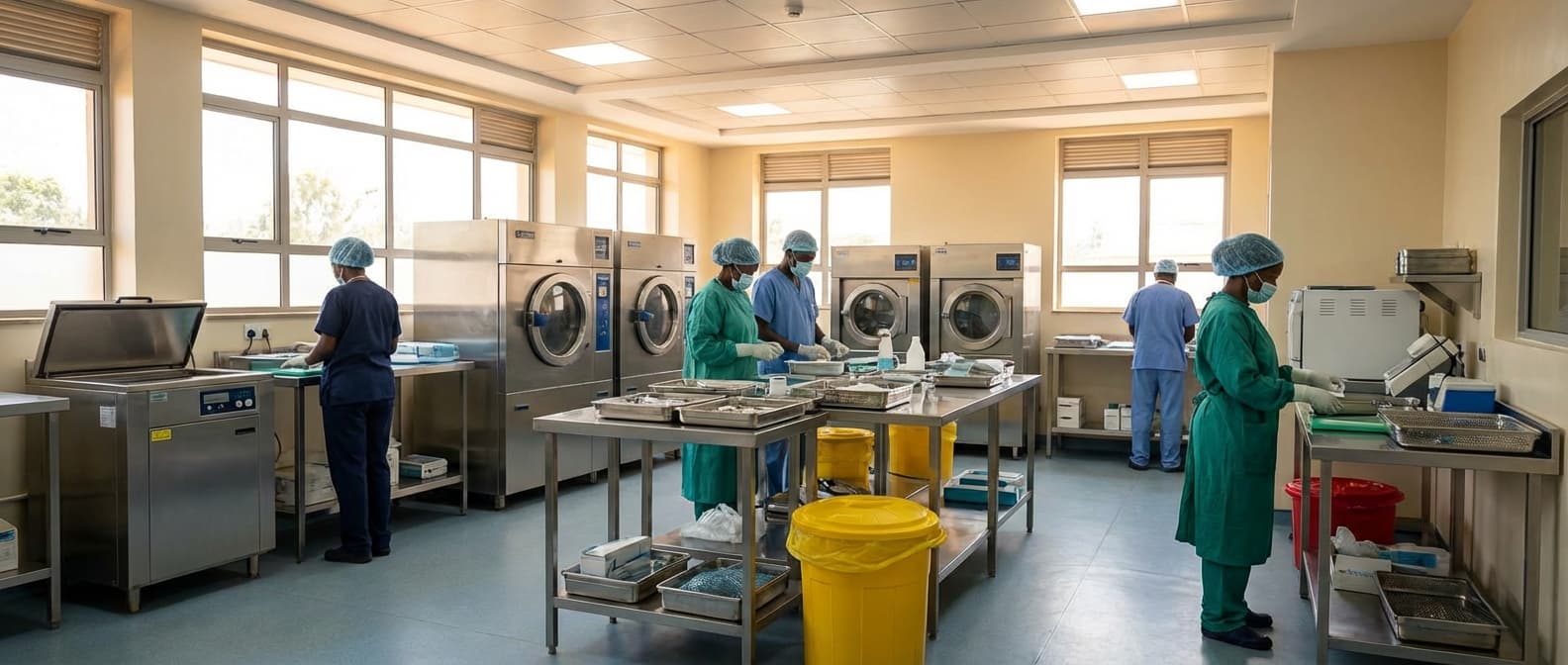
Infection-Control Readiness Support Service for Reusable Equipment in Namibia
Engineering Excellence & Technical Support
Infection-Control Readiness Support Service for Reusable Equipment High-standard technical execution following OEM protocols and local regulatory frameworks.
Centralized Sterilization Unit Upgrade
Implementing a state-of-the-art centralized sterilization unit with automated tracking and validation systems to ensure consistent, high-level disinfection of critical reusable medical equipment across Namibian healthcare facilities, significantly reducing cross-contamination risks and improving patient safety.
Competency-Based Training Modules
Delivering tailored, hands-on training programs for healthcare professionals on proper decontamination, sterilization, and handling protocols for various reusable items. Modules incorporate competency assessments and refresher courses, creating a skilled workforce dedicated to infection prevention standards.
Digital Traceability System
Deploying a robust digital traceability system that utilizes barcodes or RFID tags for real-time monitoring of reusable equipment throughout its lifecycle. This ensures accountability, facilitates rapid recall if needed, and provides data for continuous improvement in infection control practices nationwide.
What Is Infection-control Readiness Support Service For Reusable Equipment In Namibia?
Infection-Control Readiness Support Service for Reusable Equipment in Namibia refers to a specialized set of activities and interventions designed to ensure that healthcare facilities consistently meet established standards for the safe cleaning, disinfection, and sterilization of reusable medical equipment. This service aims to mitigate the risk of Healthcare-Associated Infections (HAAs) by guaranteeing that equipment used on multiple patients is rendered microbiologically safe for subsequent use.
This service involves a comprehensive approach encompassing the entire lifecycle of reusable equipment from a sterilization perspective. Key components include:
- Assessment and Gap Analysis: Evaluating current practices, infrastructure, and personnel competency against national and international infection prevention and control guidelines and standards for reusable medical devices.
- Policy and Procedure Development/Refinement: Assisting in the creation or updating of Standard Operating Procedures (SOPs) for the decontamination, inspection, packaging, sterilization, storage, and distribution of reusable equipment.
- Training and Capacity Building: Providing targeted training programs for healthcare workers involved in the reprocessing of reusable equipment, covering principles of microbiology, efficacy of different decontamination methods, proper use of equipment, and quality assurance protocols.
- Equipment and Infrastructure Evaluation: Advising on the suitability of existing decontamination and sterilization equipment (e.g., autoclaves, washer-disinfectors, chemical sterilants) and infrastructure (e.g., ventilation, water supply) and recommending upgrades or new acquisitions where necessary.
- Process Validation and Monitoring: Supporting the implementation of systems for validating sterilization processes (e.g., biological and chemical indicators) and routine monitoring of equipment performance.
- Supply Chain Management for Consumables: Advising on the procurement and quality control of essential consumables used in reprocessing, such as detergents, disinfectants, sterilization wraps, and indicators.
- Waste Management Integration: Ensuring that waste generated during the reprocessing of reusable equipment is managed according to infection control protocols.
- Auditing and Quality Assurance: Conducting regular audits of reprocessing practices to identify deviations, provide feedback, and drive continuous improvement.
Who Needs It:
This service is crucial for all healthcare facilities in Namibia that utilize reusable medical equipment. This includes, but is not limited to:
- Public and Private Hospitals: Across all levels of care, from district hospitals to tertiary referral centers.
- Specialty Clinics: Including surgical centers, dental clinics, ophthalmology practices, and endoscopy units.
- Primary Healthcare Centers: Particularly those performing minor procedures or utilizing reusable diagnostic tools.
- Blood Transfusion Services: Requiring sterile equipment for sample collection and processing.
- Laboratories: Utilizing reusable glassware and instruments.
Typical Use Cases:
- Pre-accreditation or Post-inspection Support: Healthcare facilities preparing for accreditation surveys or following findings from regulatory inspections that highlight deficiencies in reusable equipment reprocessing.
- Introduction of New Medical Procedures or Equipment: When new surgical techniques or reusable devices are introduced, requiring updated reprocessing protocols and staff training.
- Addressing Recurrent HAIs: Facilities experiencing a persistent increase in HAIs potentially linked to inadequate reusable equipment sterilization.
- Establishment of New Healthcare Facilities: Providing foundational infection control readiness for the sterile processing departments of newly built or renovated facilities.
- Response to Outbreaks: During public health emergencies or outbreaks where the integrity of reusable equipment reprocessing is critical to containment.
- Capacity Building Initiatives: As part of broader national health sector strengthening programs aimed at improving patient safety and infection control standards.
- Technological Upgrades: When facilities invest in advanced sterilization technologies, requiring expertise to ensure proper implementation, validation, and operation.
| Facility Type | Primary Need for Service | Typical Reusable Equipment Examples |
|---|---|---|
| Public and Private Hospitals | Ensuring consistent patient safety standards across diverse departments; managing large volumes of varied equipment. | Surgical instruments, anaesthesia equipment, endoscopes, delivery instruments, diagnostic tools. |
| Specialty Clinics (e.g., Surgical, Dental, Endoscopy) | Maintaining high levels of decontamination for procedures with increased risk of transmission; specialized equipment requirements. | Surgical drills, dental handpieces, biopsy forceps, colonoscopes, bronchoscopes. |
| Primary Healthcare Centers | Ensuring basic safety standards for routine procedures and diagnostics where resources may be limited. | Syringes (if reusable), speculums, wound care instruments, minor surgical tools. |
| Blood Transfusion Services | Sterility for equipment used in collection and processing to prevent transfusion-transmitted infections. | Collection sets, donor questionnaires (if reusable), processing instruments. |
| Laboratories | Preventing cross-contamination of samples and ensuring the integrity of diagnostic results. | Pipettes, beakers, flasks, inoculation loops, petri dishes (if reusable). |
Key Components of Infection-Control Readiness Support Service for Reusable Equipment
- Assessment and Gap Analysis
- Policy and Procedure Development/Refinement
- Training and Capacity Building
- Equipment and Infrastructure Evaluation
- Process Validation and Monitoring
- Supply Chain Management for Consumables
- Waste Management Integration
- Auditing and Quality Assurance
Who Needs Infection-control Readiness Support Service For Reusable Equipment In Namibia?
In Namibia, comprehensive infection control is paramount to ensuring patient safety and the effective delivery of healthcare services. Reusable medical equipment, while cost-effective, presents unique challenges in preventing the transmission of infections. Proper cleaning, disinfection, and sterilization are critical, and often require specialized knowledge, equipment, and adherence to stringent protocols. Facilities that may struggle with the resources or expertise to consistently achieve optimal infection-control readiness for reusable equipment are the primary beneficiaries of dedicated support services.
| Target Customer Segment | Key Departments/Areas of Focus | Specific Needs/Challenges |
|---|---|---|
| Government Hospitals & Clinics | Central Sterile Supply Departments (CSSD), Operating Theatres, Outpatient Departments, Maternity Wards, Dental Clinics | Limited budget for advanced equipment, insufficient trained personnel, inconsistent availability of consumables, need for standardized protocols. |
| Private Hospitals & Clinics | CSSD, Surgical Units, Endoscopy Suites, Dental Practices | Need for compliance with national and international standards, optimizing workflow efficiency, training on new technologies, risk management for reusable devices. |
| NGO Healthcare Providers | Mobile Clinics, Community Health Centers, Specialized Project Sites | Resource limitations, logistical challenges for equipment maintenance, need for portable and sustainable solutions, basic training and awareness programs. |
| Tertiary & Referral Hospitals | Complex Surgical Specialties (e.g., Neurosurgery, Cardiology), Intensive Care Units (ICUs), Pathology Laboratories | Management of high-risk reusable devices, validation of reprocessing cycles, advanced sterilization technologies, training on complex instrumentation. |
| Specialized Clinics (e.g., Dental, Ophthalmology, Physio) | Treatment rooms, procedure rooms | Specific instrument reprocessing needs, small-scale but critical equipment, potential for cross-contamination if protocols are not followed. |
| Medical & Nursing Training Institutions | Simulation labs, practical training areas | Ensuring training aligns with current infection control best practices, proper handling and reprocessing of training equipment, awareness of potential risks. |
Target Customers and Departments for Infection-Control Readiness Support Service for Reusable Equipment in Namibia
- Government Healthcare Facilities: Public hospitals and clinics across Namibia, particularly those in rural or underserved areas, often have limited budgets, staff, and access to specialized training. They handle a high volume of patients and diverse medical procedures, increasing the reliance on reusable equipment.
- Private Healthcare Providers: While private clinics and hospitals may have more resources, they can still benefit from external expertise to ensure compliance with evolving infection control standards, optimize their processes, and mitigate potential risks associated with reusable equipment. This includes smaller private practices and larger hospital groups.
- Non-Governmental Organizations (NGOs) Operating Healthcare Services: NGOs involved in providing healthcare in Namibia, especially those running clinics or mobile health units, may have resource constraints that make maintaining rigorous infection control for reusable equipment challenging.
- Tertiary and Referral Hospitals: These facilities often perform complex procedures and manage a wide range of specialized reusable instruments. Ensuring their readiness is crucial for maintaining high standards of care and preventing healthcare-associated infections (HAIs).
- District and Regional Hospitals: These facilities serve as essential hubs for healthcare within their respective regions. Consistent infection control for reusable equipment is vital to prevent outbreaks and ensure the safety of the patient population they serve.
- Specialized Clinics: This includes clinics focusing on areas like dental care, ophthalmology, physiotherapy, and diagnostic imaging, all of which utilize specific reusable instruments that require meticulous reprocessing.
- Training Institutions: Medical and nursing schools that utilize reusable equipment for practical training can benefit from support to ensure their training aligns with current best practices in infection control.
Infection-control Readiness Support Service For Reusable Equipment Process In Namibia
This document outlines the workflow for the Infection-Control Readiness Support Service for Reusable Equipment Processes in Namibia. This service aims to assess, advise, and enhance the infection prevention and control (IPC) practices related to the cleaning, disinfection, and sterilization of reusable medical equipment in healthcare facilities across Namibia. The workflow is designed to be comprehensive, transparent, and adaptable to the specific needs of each facility. It begins with an initial inquiry and culminates in the execution of support activities and post-service follow-up.
| Stage | Description | Key Activities | Responsible Parties | Deliverables | Timeline (Indicative) |
|---|---|---|---|---|---|
| Inquiry and Initial Contact | The process begins when a healthcare facility or relevant Ministry of Health entity expresses interest in the Infection-Control Readiness Support Service. | Facility/entity contacts the service provider. Initial discussion to understand basic needs and context. | Healthcare Facility/Ministry Official, Service Provider Representative | Acknowledgement of inquiry, initial contact record. | 1-3 Days |
| Needs Assessment and Scoping | A more in-depth understanding of the facility's current challenges, resources, and specific requirements for reusable equipment processing is established. | Remote or brief in-person meeting to discuss existing IPC policies, SOPs, equipment availability, staff training levels, and specific concerns regarding reusable equipment. Define the scope of services required. | Service Provider Specialist, Facility IPC Focal Person/Manager | Needs assessment report, defined scope of work. | 3-7 Days |
| Proposal Development and Agreement | A tailored proposal outlining the services, methodologies, timelines, and costs is prepared and submitted for approval. | Develop detailed proposal based on needs assessment. Include methodology, activities, expected outcomes, timelines, budget, and terms of engagement. Present and discuss proposal with the requesting entity. Finalize and sign service agreement. | Service Provider Specialist, Facility/Ministry Representative | Formal proposal, signed service agreement/contract. | 7-14 Days |
| Pre-Site Visit Preparations | Logistical arrangements and initial documentation gathering to ensure an efficient on-site assessment. | Schedule site visit dates. Request relevant documentation (SOPs, training records, equipment inventories, past audit reports). Brief assessment team. Communicate visit details to the facility. | Service Provider Team, Facility IPC Focal Person/Manager | Confirmed site visit schedule, list of required pre-visit documents. | 3-5 Days |
| On-Site Assessment and Data Collection | A comprehensive evaluation of the facility's current practices for reusable equipment processing, from point of use to storage. | Observe workflows for cleaning, disinfection, and sterilization. Interview staff. Inspect facilities, equipment, and consumables. Review records and documentation. Collect data on compliance, resource availability, and staff knowledge. | Service Provider Assessment Team, Facility Staff (various departments) | Raw assessment data, interview notes, photographic evidence, completed checklists. | 3-10 Days (depending on facility size and scope) |
| Analysis and Report Generation | Collected data is analyzed to identify strengths, weaknesses, and areas for improvement. | Synthesize data from observations, interviews, and documentation review. Identify key findings and root causes of issues. Draft a comprehensive assessment report. | Service Provider Assessment Team, Service Provider Lead | Draft assessment report. | 5-10 Days |
| Recommendation Development | Specific, actionable, and evidence-based recommendations are formulated to address identified gaps. | Develop tailored recommendations for policy updates, SOP revisions, equipment upgrades/maintenance, supply chain improvements, and staff training. Prioritize recommendations based on impact and feasibility. | Service Provider Specialist, Service Provider Lead | List of prioritized recommendations. | 2-4 Days |
| Implementation Support (Execution) | The service provider assists the facility in putting the recommendations into practice. | Provide technical guidance, develop revised SOPs/guidelines, assist in procurement planning, support the establishment of quality control mechanisms, and facilitate process improvements. | Service Provider Specialist, Facility Management and Staff | Revised SOPs, draft policies, procurement plans, implemented changes. | Variable (depends on scope and recommendations) |
| Training and Capacity Building | Equipping facility staff with the knowledge and skills to maintain improved IPC practices. | Conduct targeted training sessions for different staff cadres on IPC principles, safe handling of reusable equipment, proper use of equipment and consumables, and monitoring techniques. | Service Provider Trainer/Specialist, Facility Staff | Training materials, attendance records, post-training assessments (optional). | Variable (integrated with implementation) |
| Follow-up and Monitoring | Ensuring the sustainability of implemented changes and identifying any emerging challenges. | Conduct follow-up visits or remote check-ins. Monitor the adherence to new procedures. Provide ongoing technical support and troubleshooting. Gather data on the impact of interventions. | Service Provider Specialist, Facility IPC Focal Person/Manager | Follow-up reports, updated data on compliance and outcomes. | Ongoing (e.g., 1-3 months post-implementation) |
| Service Closure and Feedback | Formally concluding the service engagement and gathering feedback for continuous improvement of the service. | Present final report and outcomes. Discuss lessons learned. Obtain formal sign-off. Collect feedback from the facility on the service provided. Archive project documentation. | Service Provider Lead, Facility/Ministry Representative | Final project report, signed completion certificate, service evaluation feedback. | 2-3 Days |
Workflow Stages
- Inquiry and Initial Contact
- Needs Assessment and Scoping
- Proposal Development and Agreement
- Pre-Site Visit Preparations
- On-Site Assessment and Data Collection
- Analysis and Report Generation
- Recommendation Development
- Implementation Support (Execution)
- Training and Capacity Building
- Follow-up and Monitoring
- Service Closure and Feedback
Infection-control Readiness Support Service For Reusable Equipment Cost In Namibia
This document outlines the pricing considerations for an Infection-Control Readiness Support Service for reusable equipment in Namibia. This service aims to ensure that healthcare facilities have robust systems and practices in place to prevent infections associated with the use and reprocessing of reusable medical devices. The cost will be influenced by a variety of factors, including the scope of services, the size and complexity of the healthcare facility, the type and volume of reusable equipment, the level of existing infrastructure, and the specific training and consultation needs. Pricing will be presented in Namibian Dollars (NAD) to reflect local market conditions and facilitate budgeting for healthcare providers.
| Service Component/Tier | Estimated Cost Range (NAD) | Description |
|---|---|---|
| Basic Readiness Assessment | 5,000 - 15,000 | Initial on-site assessment of current practices, identification of key gaps in infection control for reusable equipment, and a high-level report with recommendations. |
| Standard Readiness Support Package | 20,000 - 60,000 | Includes a comprehensive assessment, development of tailored infection control protocols, basic staff training on key procedures, and a follow-up review. |
| Comprehensive Readiness Implementation | 75,000 - 200,000+ | Encompasses a full assessment, detailed protocol development, extensive on-site staff training, assistance with implementation of new procedures, initial equipment validation support, and quarterly progress reviews. Costs can escalate significantly based on facility size and complexity. |
| Ongoing Monitoring and Quality Assurance | 10,000 - 30,000 per quarter | Regular audits, data analysis, refresher training, and continuous improvement recommendations for facilities that have implemented a readiness program. |
| Specialized Training Modules (per group) | 3,000 - 8,000 | Focused training sessions on specific topics like endoscope reprocessing, sterilization monitoring, or hazardous material handling. |
| Consultation Hourly Rate (Expert) | 500 - 1,500 | Ad-hoc expert advice and guidance on specific infection control challenges. |
Key Pricing Factors for Infection-Control Readiness Support Service:
- Scope of Service: This is the primary driver of cost. It can range from a basic assessment and recommendation report to a comprehensive implementation and ongoing monitoring program.
- Facility Size and Type: Larger hospitals, with multiple departments and a higher patient load, will generally incur higher costs than smaller clinics or specialized centers.
- Volume and Complexity of Reusable Equipment: Facilities with a greater number and variety of reusable medical devices (e.g., surgical instruments, endoscopes, ventilators) will require more extensive support.
- Existing Infrastructure and Processes: The current state of the facility's sterilization, disinfection, and waste management systems will impact the level of intervention needed.
- Training Requirements: The number of staff to be trained, the specific training modules required (e.g., basic disinfection, advanced sterilization techniques, quality assurance), and the delivery method (on-site vs. remote) will affect costs.
- Consultation and Advisory Services: The frequency and duration of expert consultations, protocol development, and policy review are significant cost components.
- Equipment Audit and Inventory Management: Assessing the current inventory, condition, and lifecycle of reusable equipment will be factored in.
- Technology Integration: If the service includes recommendations or implementation of technological solutions for tracking or monitoring, this will add to the cost.
- Geographic Location within Namibia: Travel and accommodation costs for service providers will vary depending on the facility's remoteness.
- Duration of Engagement: Whether the service is a one-off project or an ongoing contract will influence the overall pricing structure.
Affordable Infection-control Readiness Support Service For Reusable Equipment Options
Our Affordable Infection-Control Readiness Support Service for Reusable Equipment Options is designed to empower healthcare facilities with robust infection prevention protocols while optimizing operational costs. We understand the critical need for maintaining sterile reusable equipment, which is essential for patient safety and regulatory compliance. This service focuses on providing accessible and effective solutions for cleaning, disinfection, and sterilization processes, ensuring your equipment is always ready for use and minimizing the risk of healthcare-associated infections (HAIs). Our approach emphasizes proactive readiness, reducing the likelihood of costly outbreaks or equipment downtime.
| Cost-Saving Strategy | Description | Impact on Readiness |
|---|---|---|
| Optimized Workflow Design | Analyzing and streamlining your equipment processing workflows to reduce bottlenecks and minimize processing times. | Faster equipment availability, reduced need for duplicate or disposable alternatives. |
| Preventative Maintenance Guidance | Providing recommendations for proactive maintenance of cleaning, disinfection, and sterilization equipment to prevent breakdowns and costly repairs. | Ensures consistent operational readiness and avoids unexpected downtime. |
| Staff Training & Competency Validation | Delivering efficient and effective training to ensure staff proficiency in infection control procedures, reducing errors and rework. | Minimizes human error leading to reprocessing or infection transmission. |
| Consumable & Chemical Optimization | Advising on the most effective and cost-efficient cleaning agents and disinfectants that meet required efficacy standards. | Reduces expenditure on supplies without compromising infection control effectiveness. |
| Data-Driven Performance Monitoring | Utilizing data analytics to identify areas of inefficiency or non-compliance, allowing for targeted interventions. | Proactive identification of issues before they escalate into costly problems or patient safety risks. |
| Reduced Risk of HAIs & Fines | Our comprehensive support directly contributes to a lower incidence of HAIs, avoiding associated treatment costs and potential regulatory fines. | Significant long-term financial savings through improved patient outcomes and compliance. |
Value Bundles for Comprehensive Readiness
- Basic Readiness Bundle: Ideal for smaller facilities or those with a lower volume of reusable equipment. Includes access to our standardized cleaning and disinfection protocols, basic training modules for staff, and quarterly remote consultations to review adherence and identify minor improvement areas.
- Standard Readiness Bundle: Suitable for medium-sized facilities. Expands on the Basic Bundle with more in-depth, on-site staff training, advanced disinfection validation support, and monthly remote monitoring of key performance indicators (KPIs) related to equipment turnaround times and sterilization efficacy.
- Premium Readiness Bundle: Tailored for larger institutions or those with complex reusable equipment needs. Offers comprehensive on-site and remote support, including custom protocol development, advanced sterilization monitoring and validation, dedicated compliance auditing, proactive equipment maintenance recommendations to prevent failure, and priority access to expert consultation for emerging infection control challenges.
- Custom Solutions: For unique facility requirements or specific equipment types, we offer bespoke bundles designed to address your precise infection control needs and budgetary constraints.
Verified Providers In Namibia
When seeking healthcare in Namibia, especially from providers who offer a range of services and prioritize patient well-being, identifying verified and credentialed professionals is paramount. Franance Health stands out in this regard, not just for their comprehensive service offerings but for the stringent credentialing processes that ensure their practitioners are highly qualified and dedicated to providing excellent care. This commitment to verification builds trust and offers patients peace of mind, knowing they are in capable hands. Understanding what makes Franance Health's credentials superior can help you make an informed decision for your health needs.
| Provider Type | Essential Credentials | Franance Health Assurance |
|---|---|---|
| General Practitioners | Registered with HPCNA (Health Professions Council of Namibia), valid medical degree. | Verified HPCNA registration, evidence of continuous practice and adherence to ethical guidelines. |
| Specialists (e.g., Cardiologists, Dermatologists) | HPCNA registration, postgraduate qualifications (e.g., MMed, FCP), specific board certifications. | Verification of specialist qualifications, proof of ongoing specialist training and active practice in their field. |
| Nurses | Registered with the Nurses' Association of Namibia (NAN), relevant nursing qualifications. | Verified NAN registration, confirmation of specialized nursing training and experience. |
| Allied Health Professionals (e.g., Physiotherapists, Pharmacists) | Relevant professional body registration (e.g., Namibia Society of Physiotherapy, Pharmacy Council of Namibia), appropriate qualifications. | Confirmation of professional body membership and current practice credentials. |
| Administrative and Support Staff | Relevant training and experience for their roles. | Internal vetting and training to ensure efficient, ethical, and patient-friendly service delivery. |
Key Credentials and Why They Matter:
- Professional Licensure: All Franance Health providers hold valid licenses issued by the relevant Namibian health regulatory bodies. This is the foundational requirement, ensuring they meet minimum standards of education, training, and ethical practice.
- Specialized Certifications: Beyond general licensure, many Franance Health practitioners possess specialized certifications in their respective fields. These indicate advanced training and expertise, allowing them to offer more targeted and effective treatments.
- Continuing Professional Development (CPD): Franance Health mandates and supports ongoing training for its staff. This ensures practitioners stay abreast of the latest medical advancements, techniques, and best practices, guaranteeing up-to-date care.
- Experience and Proven Track Record: While not always a formal credential, Franance Health values and verifies the practical experience of its providers. This includes assessing their history of successful patient outcomes and their ability to handle diverse medical situations.
- Affiliation with Reputable Medical Institutions: Many of their specialists are affiliated with recognized national and international medical organizations, further validating their expertise and commitment to professional standards.
- Patient-Centric Approach: Beyond technical qualifications, Franance Health's verification process also considers a provider's communication skills, empathy, and dedication to patient-centered care. This holistic approach ensures a positive and supportive healthcare experience.
Scope Of Work For Infection-control Readiness Support Service For Reusable Equipment
This Scope of Work (SOW) outlines the services to be provided for infection-control readiness support specifically for reusable medical equipment within a healthcare facility. The objective is to ensure that all reusable equipment is managed, processed, and maintained in a manner that minimizes the risk of healthcare-associated infections (HAIs). This SOW details the technical deliverables and the standard specifications that will be adhered to.
| Deliverable | Description | Key Specifications / Standards | Acceptance Criteria |
|---|---|---|---|
| Assessment Report on Current Reusable Equipment Infection Control Practices | A comprehensive review of existing policies, procedures, infrastructure, staff training, and actual practices related to the handling, cleaning, disinfection, and sterilization of reusable medical equipment. | Adherence to relevant national and international guidelines (e.g., CDC, WHO, AAMI), facility-specific policies, and best practices in infection prevention and control for medical devices. | Report is accurate, comprehensive, clearly identifies strengths and weaknesses, and is delivered within the agreed timeframe. |
| Gap Analysis and Risk Assessment for Reusable Equipment Processing | Identification of discrepancies between current practices and established standards, and an evaluation of the associated risks of infection transmission. | Quantitative and qualitative assessment of infection risks based on equipment type, processing methods, staff competency, and environmental factors. Prioritization of identified risks. | Clear identification of all identified gaps and associated risks, with a logical prioritization of remediation efforts. |
| Standard Operating Procedures (SOPs) for Reusable Equipment Decontamination and Sterilization | Development and/or refinement of detailed SOPs for the entire lifecycle of reusable equipment, from point-of-use cleaning to final storage and distribution. | SOPs must cover: Point-of-use cleaning, pre-cleaning, manual cleaning, mechanical cleaning (washer-disinfectors), high-level disinfection, sterilization (steam, EtO, hydrogen peroxide), packaging, storage, and transport. Must reference manufacturer's instructions for use (IFU) for all equipment and reprocessing devices. Adherence to ISO 13485 principles. | SOPs are clear, concise, actionable, evidence-based, and approved by relevant stakeholders (e.g., Infection Control Committee, Biomedical Engineering, Clinical Departments). |
| Training Materials and Curriculum for Staff Involved in Reusable Equipment Management | Creation of educational materials and a structured curriculum for all personnel involved in reusable equipment processing. | Content to include: principles of infection control, understanding of microorganisms, importance of proper cleaning and disinfection, safe handling of contaminated items, operation of reprocessing equipment, aseptic technique, documentation requirements, and troubleshooting common issues. Tailored to different staff roles (e.g., nurses, technicians, sterile processing staff). | Training materials are engaging, informative, and meet competency assessment requirements. Evidence of training completion and competency validation. |
| Equipment Validation Protocols and Reports for Sterilization/Disinfection Devices | Development of protocols for the qualification and periodic validation of all sterilization and disinfection equipment used for reusable medical devices. | Protocols to include: Installation Qualification (IQ), Operational Qualification (OQ), Performance Qualification (PQ) for autoclaves, washer-disinfectors, and other relevant equipment. Validation to be performed according to manufacturer specifications and relevant standards (e.g., AAMI ST series). | Protocols are comprehensive and well-documented. Validation reports demonstrate that equipment is functioning as intended and meeting all performance specifications. |
| Monitoring and Auditing Plan for Reusable Equipment Infection Control Compliance | Establishment of a system for ongoing monitoring and periodic auditing of reusable equipment reprocessing practices. | Plan to include: frequency of audits, audit checklists, data collection methods, root cause analysis for non-compliance, corrective action plans, and reporting mechanisms. Includes environmental monitoring where applicable (e.g., air quality in sterile storage). | A robust and sustainable plan for continuous improvement, with clear metrics for success and regular reporting of compliance rates. |
| Recommendations for Infrastructure and Workflow Improvements | Identification of necessary changes to physical infrastructure, equipment, and workflow to optimize infection control for reusable equipment. | Recommendations may include: dedicated areas for decontamination, improved ventilation, ergonomic workflow design, updated instrumentation, and technological solutions. Consideration of traffic flow and containment of contaminants. | Recommendations are practical, cost-effective where possible, and aligned with best practices and future healthcare trends. |
| Final Project Report with Summary of Findings and Recommendations | A comprehensive report summarizing all activities undertaken, key findings, implemented solutions, and overarching recommendations for sustained infection control readiness. | Report to include executive summary, detailed findings from each phase of the project, impact assessment of implemented changes, and a roadmap for ongoing management and improvement. All deliverables previously mentioned should be referenced. | Report is clear, well-organized, evidence-based, and provides a clear path forward for the healthcare facility. |
Technical Deliverables
- Assessment Report on Current Reusable Equipment Infection Control Practices
- Gap Analysis and Risk Assessment for Reusable Equipment Processing
- Standard Operating Procedures (SOPs) for Reusable Equipment Decontamination and Sterilization
- Training Materials and Curriculum for Staff Involved in Reusable Equipment Management
- Equipment Validation Protocols and Reports for Sterilization/Disinfection Devices
- Monitoring and Auditing Plan for Reusable Equipment Infection Control Compliance
- Recommendations for Infrastructure and Workflow Improvements
- Final Project Report with Summary of Findings and Recommendations
Service Level Agreement For Infection-control Readiness Support Service For Reusable Equipment
This Service Level Agreement (SLA) outlines the response times and uptime guarantees for the Infection-Control Readiness Support Service for Reusable Equipment. This service is designed to ensure timely and effective support for our clients in maintaining the highest standards of infection control for their reusable medical equipment. The service encompasses technical assistance, troubleshooting, and proactive readiness checks.
| Service Level | Response Time Guarantee | Uptime Guarantee |
|---|---|---|
| Critical Incident (e.g., complete system failure impacting patient care) | Within 1 hour for initial acknowledgement and assessment. Dispatch of on-site technician within 4 hours for critical locations, 8 hours for standard locations. | 99.9% availability of supported systems, excluding scheduled maintenance. |
| High Priority Incident (e.g., partial system malfunction affecting a significant number of users) | Within 2 hours for initial acknowledgement and assessment. Remote resolution attempt within 4 hours. On-site technician dispatch within 12 hours if remote resolution fails. | 99.5% availability of supported systems, excluding scheduled maintenance. |
| Standard Incident (e.g., minor system issue, user query) | Within 4 business hours for initial acknowledgement and resolution attempt. | 99.0% availability of supported systems, excluding scheduled maintenance. |
| Proactive Monitoring & Readiness Checks | Scheduled in advance with client. System alerts for anomalies triggered within 30 minutes of detection. | N/A (Focus is on proactive identification and prevention) |
Key Service Components
- 24/7 availability of technical support personnel via phone and email.
- Proactive monitoring of designated reusable equipment systems.
- Remote troubleshooting and diagnostic capabilities.
- On-site support dispatch for critical issues.
- Regular reporting on equipment readiness and performance.
Frequently Asked Questions

Ready when you are
Let's scope your Infection-Control Readiness Support Service for Reusable Equipment in Namibia project in Namibia.

Scaling healthcare logistics and technical systems across the entire continent.