
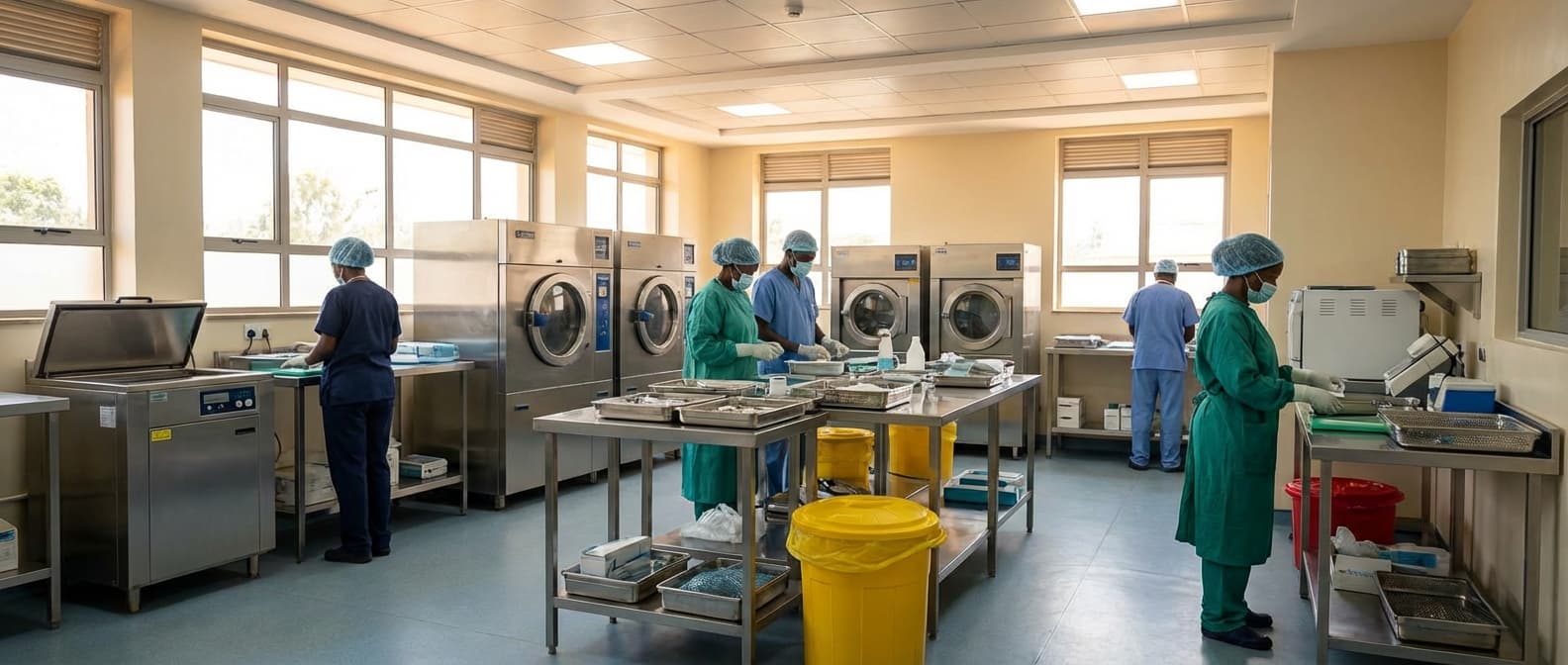
Endoscope Reprocessing Equipment Support Service in Namibia
Engineering Excellence & Technical Support
Endoscope Reprocessing Equipment Support Service High-standard technical execution following OEM protocols and local regulatory frameworks.
Regulatory Compliance Assurance
Our expert technicians ensure your endoscope reprocessing equipment adheres to Namibian health regulations and international standards, safeguarding patient safety and mitigating compliance risks through meticulous calibration and validation.
Optimized Equipment Uptime
We provide proactive maintenance schedules and rapid-response technical support, minimizing downtime and maximizing the operational efficiency of your endoscope reprocessing systems, crucial for uninterrupted patient care delivery in Namibia.
Advanced Diagnostic & Repair
Leveraging state-of-the-art diagnostic tools and manufacturer-trained expertise, our Namibian-based service team offers precise troubleshooting and efficient repair for all makes and models of endoscope reprocessing equipment, restoring full functionality quickly.
What Is Endoscope Reprocessing Equipment Support Service In Namibia?
Endoscope reprocessing equipment support services in Namibia refer to the comprehensive range of technical and maintenance activities required to ensure the optimal functionality, safety, and compliance of automated and semi-automated equipment used for the cleaning, disinfection, and sterilization of endoscopes. This service is critical for healthcare facilities that utilize flexible and rigid endoscopes in diagnostic and therapeutic procedures, as these instruments require rigorous reprocessing to prevent patient-to-patient cross-contamination and maintain procedural integrity. The service encompasses preventative maintenance, calibration, repairs, validation, and technical consultation related to various endoscope reprocessor models, including high-level disinfectors (HLDs), ultrasonic cleaners, and associated automated flushing and drying systems.
| Who Needs Endoscope Reprocessing Equipment Support Service? | Typical Use Cases |
|---|---|
| Hospitals (Public and Private): Primarily those with surgical, gastroenterology, pulmonology, urology, and other departments performing endoscopic procedures. | Ensuring the sterility of endoscopes used in gastroscopies, colonoscopies, bronchoscopies, cystoscopies, ERCPs, and surgical laparoscopies. |
| Specialized Clinics: Including gastroenterology clinics, surgical centers, and diagnostic imaging facilities that utilize endoscopes. | Maintaining the readiness and safety of endoscopes for outpatient procedures requiring high-level disinfection or sterilization. |
| Diagnostic Laboratories: Where flexible endoscopes are used for diagnostic sample collection and require thorough reprocessing. | Reliability of equipment for repeated diagnostic testing and patient throughput. |
| Medical Equipment Suppliers and Distributors: Who sell and service endoscope reprocessing equipment, often outsourcing specialized technical support or requiring manufacturer-certified technicians. | Facilitating the installation, commissioning, and ongoing maintenance of new equipment placed in the Namibian healthcare market. |
| Government Health Ministries and Regulatory Bodies: To ensure adherence to safety and quality standards in healthcare facilities. | Oversight of reprocessing practices and equipment performance to safeguard public health. |
Key Components of Endoscope Reprocessing Equipment Support Service:
- Preventative Maintenance (PM): Scheduled inspections, lubrication, filter replacement, and system checks to avert failures and prolong equipment lifespan.
- Calibration and Performance Verification: Ensuring that the equipment's cleaning, disinfection, and sterilization parameters (e.g., temperature, time, chemical concentration, flow rates) are within manufacturer specifications and regulatory standards.
- Repair and Troubleshooting: Diagnosis and resolution of equipment malfunctions, including replacement of faulty components and software updates.
- Validation and Revalidation: Performance of IQ (Installation Qualification), OQ (Operational Qualification), and PQ (Performance Qualification) to confirm the equipment's suitability for its intended use and ongoing efficacy.
- Technical Consultation and Training: Providing expertise on equipment operation, best practices in endoscope reprocessing, and staff training on the correct use and maintenance of the equipment.
- Spare Parts Management: Ensuring availability of genuine and compatible spare parts for timely repairs.
- Regulatory Compliance Support: Assisting facilities in meeting national and international standards for medical device reprocessing.
- Decontamination and Cleaning Services: For specialized cleaning of the reprocessing equipment itself, ensuring it does not become a source of contamination.
- Service Contracts and Service Level Agreements (SLAs): Formal agreements outlining the scope of services, response times, and cost structures.
Who Needs Endoscope Reprocessing Equipment Support Service In Namibia?
In Namibia, the demand for reliable and efficient endoscope reprocessing equipment support services is critical for ensuring patient safety and maintaining high standards of healthcare. These services are essential for the optimal functioning of endoscopes, which are delicate and reusable medical instruments used in minimally invasive diagnostic and therapeutic procedures. Proper reprocessing prevents the transmission of infections and prolongs the lifespan of expensive equipment. The primary beneficiaries of these services are healthcare facilities that utilize flexible and rigid endoscopes for a wide range of medical specialties.
| Target Customer/Department | Specific Needs Addressed by Support Service | Examples of Endoscope Usage |
|---|---|---|
| Gastroenterology Department | Maintenance, calibration, and repair of gastroscopes, colonoscopes, and duodenoscopes. Ensuring proper functioning of automated washer-disinfectors. Technical assistance for troubleshooting and preventative maintenance. | Diagnostic procedures (biopsies, polyp removal), treatment of gastrointestinal disorders. |
| Pulmonology Department | Support for bronchoscopes, including cleaning, disinfection, and repair. Assistance with associated imaging and suction equipment. Ensuring leak testing compliance. | Diagnostic procedures for lung diseases, removal of foreign bodies, stent placement. |
| Urology Department | Maintenance and repair of cystoscopes, ureteroscopes, and nephroscopes. Support for flexible and rigid scopes. Ensuring sterility of instruments. | Diagnostic imaging of the urinary tract, stone removal, tumor ablation. |
| Ear, Nose, and Throat (ENT) Department | Servicing of various types of endoscopes (nasoscopes, laryngoscopes, otoscopes). Calibration of cameras and light sources. Training on reprocessing protocols. | Diagnosis and treatment of ear, nose, and throat conditions, surgical interventions. |
| Surgical Departments (General Surgery, Gynecology, etc.) | Support for laparoscopic and arthroscopic instruments. Maintenance of video processors and light sources. Ensuring equipment readiness for emergency procedures. | Minimally invasive surgeries, diagnostic laparoscopies, gynecological procedures. |
| Infection Control Department | Ensuring compliance with national and international reprocessing standards. Auditing of reprocessing workflows. Validation of disinfection and sterilization processes. Training of staff. | Overarching responsibility for patient safety and preventing healthcare-associated infections related to endoscopic procedures. |
| Biomedical Engineering Departments | Partnerships for preventative maintenance schedules, equipment validation, and emergency repairs. Technical expertise in troubleshooting complex issues. Management of spare parts inventory. | Internal management and maintenance of all medical equipment, including endoscope reprocessing systems. |
Target Customers and Departments in Namibia Requiring Endoscope Reprocessing Equipment Support Service:
- Hospitals (Public and Private)
- Specialized Clinics
- Diagnostic Centers
- Surgical Centers
- Medical Training Institutions
Endoscope Reprocessing Equipment Support Service Process In Namibia
This document outlines the workflow for Endoscope Reprocessing Equipment Support Services in Namibia, detailing the process from initial inquiry to successful execution. It encompasses client interaction, technical assessment, service delivery, and post-service follow-up, ensuring efficient and effective maintenance of vital healthcare equipment.
| Phase | Key Activities | Responsible Party | Deliverables/Outcome |
|---|---|---|---|
| Client contacts service provider via phone, email, or web portal to report an issue or request routine maintenance for endoscope reprocessing equipment. Provider acknowledges receipt of inquiry. | Client, Service Provider | Confirmed receipt of inquiry. |
| Service provider gathers detailed information about the equipment (make, model, serial number), the nature of the issue (malfunction, error code, performance degradation), and the urgency. Initial remote troubleshooting may be attempted. If on-site assessment is deemed necessary, a preliminary assessment is scheduled. | Service Provider, Client | Detailed service request form, preliminary diagnosis, identification of potential parts needed (if applicable). |
| Based on the assessment, the service provider prepares a detailed quotation including labor costs, parts (if any), travel expenses, and estimated time for completion. The quotation is submitted to the client for review and approval. | Service Provider, Client | Approved quotation, Purchase Order (PO) from the client. |
| Upon approval, the service provider schedules the service appointment, considering the client's availability and technician availability. Necessary parts are procured and logistical arrangements for travel are made. The client is informed of the confirmed schedule. | Service Provider, Client | Confirmed service date and time, technician assigned, necessary parts and tools mobilized. |
| The qualified service technician arrives at the client's facility. The equipment is inspected, diagnosed, and any necessary repairs or maintenance are performed as per the approved quotation and manufacturer's guidelines. This may include component replacement, calibration, or software updates. | Service Technician | Repaired or maintained endoscope reprocessing equipment. |
| After repairs/maintenance, the equipment undergoes rigorous testing and validation to ensure it meets all operational specifications and safety standards. This may involve functional tests, performance checks, and validation against established protocols. | Service Technician | Successful test results, validated equipment performance. |
| A comprehensive service report is generated, detailing the work performed, parts used, test results, and any recommendations for future maintenance. The report is reviewed with the client, and the client signs off on the completed service. Relevant documentation (e.g., service manual excerpts) may be provided. | Service Technician, Client | Signed service report, validated equipment, client acceptance. |
| The service provider follows up with the client within a specified period to ensure satisfaction and address any post-service queries. Warranty information for parts and labor is provided. The client is informed about ongoing support options (e.g., maintenance contracts). | Service Provider, Client | Client satisfaction confirmation, information on warranty and future support. |
Endoscope Reprocessing Equipment Support Service Process in Namibia
- Phase 1: Inquiry and Initial Contact
- Phase 2: Service Request and Assessment
- Phase 3: Quotation and Approval
- Phase 4: Scheduling and Logistics
- Phase 5: On-site Service Execution
- Phase 6: Testing and Validation
- Phase 7: Documentation and Handover
- Phase 8: Post-Service Follow-up and Support
Endoscope Reprocessing Equipment Support Service Cost In Namibia
Endoscope reprocessing equipment support services are crucial for maintaining the functionality and longevity of these expensive medical devices. In Namibia, the cost of such services is influenced by several key factors, leading to a range of pricing. These services typically include preventative maintenance, calibration, repairs, and potentially the supply of spare parts. The overall economic climate, the complexity of the specific endoscope model, the vendor's service level agreement (SLA), and the geographic location within Namibia all play a role in determining the final cost. "On-call" emergency repairs will generally command a higher hourly rate than scheduled preventative maintenance. Furthermore, contracts that bundle multiple services or cover a fleet of equipment often offer volume-based discounts.
| Service Category | Typical Cost Range (NAD) | Notes |
|---|---|---|
| Annual Preventative Maintenance Contract (per endoscope) | 5,000 - 15,000 | Covers scheduled checks, cleaning, minor adjustments, and basic testing. May or may not include minor parts. |
| Hourly Repair Rate (On-call/Unscheduled) | 800 - 2,000 | Applicable for emergency repairs or troubleshooting outside of a maintenance contract. Excludes parts. |
| Cost of Common Spare Parts (e.g., seals, filters, small electronic components) | 500 - 5,000+ | Highly variable depending on the part and endoscope model. Major components can cost significantly more. |
| Full Endoscope Overhaul/Major Repair (estimate) | 20,000 - 100,000+ | This is for significant issues requiring extensive work and potentially replacement of major components. Often quoted on a case-by-case basis. |
| On-site Calibration Service | 2,000 - 6,000 | Ensuring the equipment meets manufacturer specifications. May be included in premium maintenance contracts. |
Key Pricing Factors for Endoscope Reprocessing Equipment Support Service in Namibia:
- Service Type (Preventative Maintenance vs. Emergency Repair)
- Endoscope Model and Complexity
- Vendor's Service Level Agreement (SLA)
- Geographic Location within Namibia
- Frequency and Duration of Service
- Inclusion of Spare Parts
- Contractual Agreements (Bundling, Volume Discounts)
- Technician's Expertise and Certification
- Travel and Accommodation Costs (for remote areas)
Affordable Endoscope Reprocessing Equipment Support Service Options
Maintaining a reliable and efficient endoscope reprocessing workflow is crucial for patient safety and operational continuity. However, the cost of specialized equipment and ongoing maintenance can be a significant burden for healthcare facilities. This document outlines affordable endoscope reprocessing equipment support service options, emphasizing the value of value bundles and effective cost-saving strategies.
| Cost-Saving Strategy | Description | Impact on Affordability |
|---|---|---|
| Multi-Year Service Contracts | Committing to longer-term service agreements can unlock tiered discounts from equipment manufacturers or third-party service providers. This also locks in current pricing, protecting against future inflation. | Significant reduction in annual service costs due to volume discounts and price stability. |
| Preventative Maintenance Prioritization | Focusing on regular, scheduled preventative maintenance can identify minor issues before they escalate into costly breakdowns. This proactive approach minimizes unscheduled downtime and emergency repair expenses. | Reduces the need for expensive emergency repairs and costly downtime. Extends the lifespan of equipment, delaying replacement costs. |
| Third-Party Service Providers (TPSPs) | Exploring TPSP options can often provide more competitive pricing for maintenance and repair compared to original equipment manufacturers (OEMs). Many TPSPs offer specialized expertise and quicker response times. | Potentially lower service and repair costs, increased flexibility in service provider choice. |
| Parts Management and Inventory | Strategic inventory management of common replacement parts can reduce lead times and the cost associated with expedited shipping. Negotiating bulk discounts on frequently used parts is also beneficial. | Reduced parts costs through bulk purchasing and minimized expedited shipping fees. |
| Remote Diagnostics and Support | Leveraging remote diagnostic capabilities offered by service providers can quickly identify issues, sometimes resolving them without a site visit. This saves on travel costs and technician time. | Reduced labor costs and faster resolution times by minimizing site visits. |
| Equipment Usage Optimization | Ensuring proper training for staff on equipment operation and reprocessing protocols can prevent misuse and unnecessary wear and tear, thus reducing the frequency of repairs. | Lower incidence of damage and wear, leading to fewer repair calls and extended equipment life. |
| Leasing vs. Purchasing Decisions | Evaluating leasing options for new equipment can offer lower upfront costs and include maintenance packages. This can be more financially viable than outright purchase, especially for facilities with budget constraints. | Lower initial capital outlay and predictable operating expenses, often including maintenance. |
Understanding Value Bundles
- {"item":"Definition: Value bundles combine multiple support services into a single package, often at a discounted rate compared to purchasing each service individually. These bundles are designed to offer comprehensive coverage and predictable budgeting."}
- {"item":"Components: Typical components include preventative maintenance, emergency repair services, parts replacement, software updates, and sometimes even training or consultation on best practices."}
- {"item":"Benefits: Streamlined vendor management, reduced administrative overhead, predictable maintenance costs, extended equipment lifespan, and often priority service response times."}
- {"item":"Types: Bundles can vary based on the level of service required, from basic preventative maintenance plans to comprehensive, all-inclusive coverage. Facilities can often tailor bundles to their specific needs and equipment inventory."}
Verified Providers In Namibia
Finding reliable and credentialed healthcare providers is paramount for ensuring quality medical care. In Namibia, Franance Health stands out as a leading platform connecting individuals with verified healthcare professionals. Their rigorous vetting process and commitment to transparency ensure that all listed providers meet high standards of qualification, experience, and ethical practice. This dedication to verification offers peace of mind to patients seeking medical assistance, knowing they are engaging with competent and trustworthy individuals.
| Provider Type | Key Credentials Verified | Franance Health Advantage |
|---|---|---|
| Doctors (GPs & Specialists) | Medical Degree (MBChB/MD), Specialist Board Certification, Annual Practicing License, Clean Disciplinary Record | Access to verified specialists with proven expertise, detailed profiles, and patient reviews. |
| Nurses | Nursing Diploma/Degree, Registered Nurse (RN) License, Specialty Certifications (e.g., Midwifery, Critical Care) | Find qualified nurses for home care, clinic support, or specialized medical assistance. |
| Therapists (Physio, Psycho, etc.) | Relevant Degree/Diploma, Professional Registration/Licensure, Specific Therapy Certifications | Connect with accredited therapists offering a range of rehabilitation and mental health services. |
| Dentists | Dental Degree (BDS/DDS), Dental Board Registration, Specialization Certifications (if applicable) | Locate trusted dental professionals for general and specialized dental care. |
Why Franance Health Providers are the Best Choice:
- Comprehensive Verification Process: Franance Health meticulously verifies the credentials, licenses, and specializations of every healthcare provider on their platform. This ensures that only qualified professionals are listed.
- Patient-Centric Approach: The platform prioritizes patient well-being and accessibility, making it easier to find the right specialist for specific needs.
- Transparency and Trust: By clearly displaying provider credentials and patient reviews, Franance Health fosters an environment of trust and informed decision-making.
- Wide Range of Specialties: Access a diverse network of doctors, nurses, therapists, and other medical professionals across various medical disciplines.
- Commitment to Quality Care: Franance Health is dedicated to promoting high standards of healthcare delivery and patient satisfaction.
Scope Of Work For Endoscope Reprocessing Equipment Support Service
This Scope of Work (SOW) outlines the requirements for comprehensive support services for endoscope reprocessing equipment. The objective is to ensure the optimal performance, reliability, and compliance of all endoscope reprocessing equipment throughout its lifecycle. This includes preventative maintenance, corrective maintenance, technical support, and compliance assistance.
| Category | Specification/Standard | Description | Frequency/Trigger |
|---|---|---|---|
| Preventative Maintenance (PM) | Manufacturer's Recommended PM Schedule (e.g., AAMI ST79, ISO 17665, manufacturer's guidelines) | Includes cleaning, lubrication, inspection of components, functional testing, calibration checks, and replacement of wear parts. | As per manufacturer's schedule (e.g., quarterly, semi-annually, annually) |
| Corrective Maintenance (CM) | Response Time: < 24 hours for critical failures, < 48 hours for non-critical. | Includes diagnosis, repair, part replacement, and functional testing to restore equipment to operational status. | Upon equipment failure or malfunction report |
| Equipment Performance Verification (EPV) | Adherence to ASNI/AAMI ST79, ISO 13485, and relevant regulatory body requirements (e.g., FDA, local health authorities). | Verifies critical cleaning, disinfection, and sterilization parameters (e.g., temperature, pressure, flow rates, cycle times) using calibrated test equipment. | Post-PM, post-CM, and as per regulatory/accreditation requirements |
| Calibration | Traceable to NIST or equivalent national standards. | Calibration of all critical measuring instruments (thermometers, pressure gauges, flow meters, etc.) used for testing and verification. | As per manufacturer's recommendation or regulatory requirements (e.g., annually, bi-annually) |
| Technical Support | 24/7 availability for urgent issues via phone/email; standard business hours for routine inquiries. | Assistance with troubleshooting, operational guidance, and clarification of equipment functions. | As needed |
| Software Updates | Installation of manufacturer-approved software updates and patches. | Ensures equipment runs on the latest stable version, addressing bugs and security vulnerabilities. | As released by the manufacturer and approved by the client |
| Documentation | All reports and certificates must be clear, concise, and include date, technician name, equipment ID, and findings. | Standardized formats for all deliverables as per industry best practices and client requirements. | Upon completion of each service event |
Technical Deliverables
- Scheduled Preventative Maintenance (PM) Reports
- Corrective Maintenance (CM) Service Reports
- Root Cause Analysis (RCA) Reports for Equipment Failures
- Equipment Performance Verification (EPV) Reports
- Software Update and Patching Logs
- Technical Training Materials and Session Records
- Calibration Certificates for Measuring Instruments
- Parts Inventory and Usage Reports
- Asset Register Updates
- Compliance Audit Support Documentation
Service Level Agreement For Endoscope Reprocessing Equipment Support Service
This Service Level Agreement (SLA) outlines the support services, response times, and uptime guarantees for Endoscope Reprocessing Equipment. It aims to ensure the continuous and efficient operation of critical reprocessing equipment, minimizing downtime and supporting patient safety.
| Service Component | Response Time (Business Hours) | Uptime Guarantee (%) | Remediation/Escalation |
|---|---|---|---|
| Critical Equipment Failure (e.g., unable to reprocess ANY endoscopes) | 1-2 Hours | 98% | Immediate dispatch of certified technician. Escalation to senior management if unresolved within 4 hours. |
| Major Equipment Malfunction (e.g., reprocessing capacity reduced by >50%) | 2-4 Hours | 99% | On-site technician within 4 business hours. Remote support to attempt resolution prior to dispatch. |
| Minor Equipment Issue (e.g., performance degradation, non-critical function failure) | 4-8 Business Hours | 99.5% | Remote diagnostics and troubleshooting. On-site visit scheduled within 24 business hours if remote resolution is not possible. |
| Preventative Maintenance (PM) Scheduling | Notification 14 days in advance | N/A (scheduled activity) | Flexible scheduling to minimize disruption. |
| Routine Inquiries & Support Requests | Within 24 Business Hours | N/A | Initial acknowledgment within 4 business hours. Resolution or plan of action within 24 business hours. |
| Spare Parts Availability | 24-48 Business Hours for standard parts; 72 Business Hours for specialized parts (estimated) | N/A (service component) | Proactive inventory management. Expedited shipping options available for critical parts. |
Scope of Service
- Preventative Maintenance (PM) scheduling and execution.
- Corrective Maintenance (CM) for equipment malfunctions and failures.
- On-site technical support and troubleshooting.
- Remote diagnostic support.
- Spare parts management and replacement.
- Software updates and patches.
- Training and recertification for user staff (as specified in separate agreement).
- Emergency support services.
Frequently Asked Questions

Ready when you are
Let's scope your Endoscope Reprocessing Equipment Support Service in Namibia project in Namibia.

Scaling healthcare logistics and technical systems across the entire continent.