
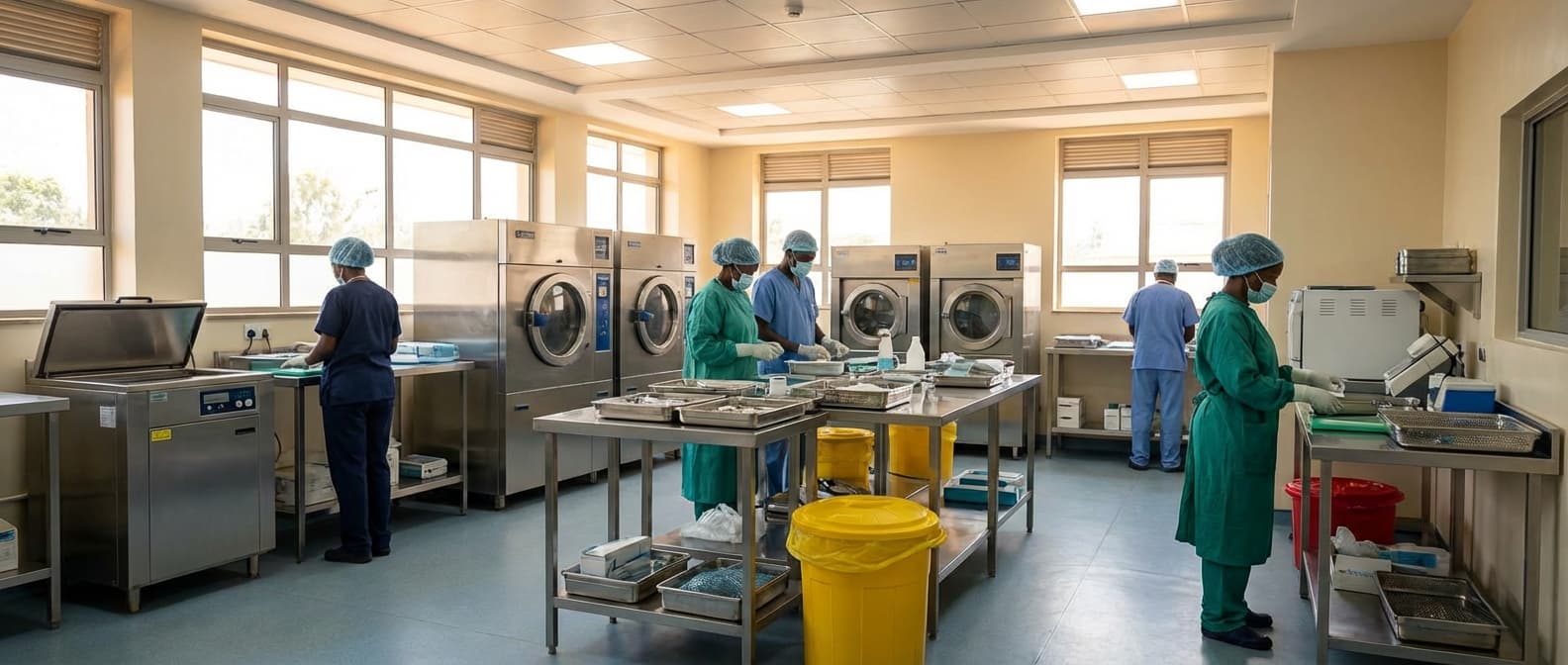
Autoclave Validation Support Service in Namibia
Engineering Excellence & Technical Support
Autoclave Validation Support Service High-standard technical execution following OEM protocols and local regulatory frameworks.
Comprehensive Validation Cycles
We execute multi-point, full-load validation cycles for your autoclaves, ensuring efficacy across all operational parameters and sterilization parameters relevant to your medical, laboratory, or industrial needs in Namibia.
Advanced Data Analysis & Reporting
Leveraging state-of-the-art data loggers and analysis software, we provide detailed reports that precisely document temperature, pressure, and time profiles, guaranteeing compliance with Namibian regulatory standards and international best practices.
Calibration & Preventative Maintenance Integration
Our validation service includes an optional integrated calibration of critical autoclave components and recommendations for preventative maintenance, minimizing downtime and ensuring consistent, reliable sterilization performance for Namibian facilities.
What Is Autoclave Validation Support Service In Namibia?
Autoclave validation support services in Namibia are specialized technical offerings designed to ensure the efficacy, reliability, and compliance of steam sterilization processes within healthcare, pharmaceutical, and research facilities. These services are critical for maintaining sterile environments, preventing healthcare-associated infections, and meeting stringent regulatory requirements. The core objective is to provide documented evidence that an autoclave consistently achieves the necessary conditions (temperature, pressure, time, and steam penetration) to effectively sterilize medical devices, laboratory equipment, and other critical materials.
| Who Needs Autoclave Validation Support Service? | Typical Use Cases | |||||
|---|---|---|---|---|---|---|
| Hospitals and Clinics: For sterilization of surgical instruments, medical devices, linens, and laboratory consumables to prevent cross-contamination and healthcare-associated infections. | Dental Practices: Sterilization of dental instruments and equipment used in patient care. | Pharmaceutical Manufacturing Facilities: Sterilization of raw materials, sterile drug products, laboratory equipment, and cleanroom components to maintain product sterility and prevent microbial contamination. | Biotechnology and Research Laboratories: Sterilization of laboratory glassware, culture media, biohazard waste, and equipment to ensure experimental integrity and safety. | Veterinary Clinics and Hospitals: Sterilization of surgical instruments and medical supplies for animal care. | Specialty Medical Device Manufacturers: Validation of their sterilization processes for devices that are then supplied to healthcare providers. | Government and Military Healthcare Facilities: Ensuring compliance with stringent sterilization standards for operational readiness and patient safety. |
| Sterilization of reusable medical instruments (e.g., scalpels, forceps, retractors). | Validation of steam sterilization cycles for complex or lumen-containing medical devices. | Ensuring sterility assurance for compounded sterile preparations (CSPs) in pharmacies. | Decontamination of biohazardous waste materials prior to disposal. | Sterilization of laboratory culture media and glassware to prevent contamination in research experiments. | Qualification of autoclaves used in Good Manufacturing Practice (GMP) environments for pharmaceutical production. | Revalidation of sterilization cycles after scheduled maintenance or unexpected equipment malfunctions. |
What Autoclave Validation Support Service Involves:
- Installation Qualification (IQ): Verification that the autoclave is installed correctly according to the manufacturer's specifications and relevant standards. This includes checks on power, plumbing, ventilation, and environmental conditions.
- Operational Qualification (OQ): Assessment of the autoclave's operational parameters. This phase involves testing the equipment's ability to reach and maintain specified temperature, pressure, and time cycles under various load conditions. It typically includes running empty cycles and cycles with simulated loads.
- Performance Qualification (PQ): This is the most critical phase, where the autoclave's ability to achieve sterilization is validated using biological indicators (BIs) and chemical indicators (CIs). PQ involves multiple test cycles with challenging loads that represent the actual materials being sterilized by the facility. The success of these cycles, indicated by negative BI results and appropriate CI color changes, demonstrates consistent sterilization efficacy.
- Revalidation Studies: Periodic revalidation is required to ensure ongoing compliance, particularly after major repairs, modifications, relocation, or at predetermined intervals as per regulatory guidelines and manufacturer recommendations.
- Cycle Development and Optimization: Assistance in developing and optimizing sterilization cycles tailored to specific load types and materials, ensuring both efficacy and efficiency.
- Documentation and Reporting: Comprehensive generation of validation protocols, reports, and certificates that serve as auditable records for regulatory bodies and internal quality assurance.
- Training: Provision of training for facility personnel on the proper operation, monitoring, and basic maintenance of the autoclave.
Who Needs Autoclave Validation Support Service In Namibia?
Autoclave validation is a critical process for ensuring that autoclaves sterilize medical equipment effectively and consistently. In Namibia, where healthcare standards are continually improving and regulatory compliance is paramount, various entities require robust autoclave validation support services. These services are essential for maintaining patient safety, preventing healthcare-associated infections, and adhering to national and international sterilization guidelines. Without proper validation, the efficacy of sterilization is uncertain, posing significant risks to public health and potentially leading to regulatory non-compliance.
| Customer Type | Key Departments/Units Involved | Specific Needs for Autoclave Validation |
|---|---|---|
| Hospitals (Public and Private) | Central Sterile Supply Department (CSSD), Operating Theatres, Maternity Wards, Emergency Rooms, Outpatient Departments | Ensuring sterilization of surgical instruments, medical devices, gowns, and drapes; compliance with national health regulations; preventing hospital-acquired infections; maintaining accreditation. |
| Clinics and Health Centers | Treatment Rooms, Minor Procedure Areas | Sterilization of instruments for basic medical procedures, ensuring patient safety in primary healthcare settings, compliance with minimal standards. |
| Dental Practices | Sterilization Area | Validation of dental instruments (handpieces, explorers, forceps), ensuring patient safety, adherence to dental council guidelines. |
| Laboratories (Medical and Research) | Microbiology Labs, Research Labs, Pathology Labs | Sterilization of media, glassware, instruments for diagnostic testing, research protocols, and prevention of contamination. |
| Veterinary Clinics and Practices | Surgery Rooms, Treatment Areas | Sterilization of surgical instruments and equipment used on animals, ensuring animal welfare and preventing zoonotic disease transmission. |
| Surgical Centers and Day Clinics | Sterilization Room, Procedure Rooms | High volume sterilization of instruments for elective surgeries, ensuring rapid turnaround and patient safety. |
| Manufacturing Facilities (Medical Devices/Pharmaceuticals) | Quality Control, Production, Sterilization Units | Validation of autoclaves used for terminal sterilization of medical devices or reusable components, ensuring product safety and regulatory compliance (e.g., for export). |
| Government Health Agencies and Regulators | Inspections and Licensing Departments | Ensuring that healthcare facilities under their purview adhere to sterilization standards and regulations, conducting audits and inspections. |
| Medical Training Institutions | Simulation Labs, Practical Training Areas | Validation of autoclaves used in training environments to ensure students practice with properly sterilized equipment and understand sterilization principles. |
Target Customers and Departments Requiring Autoclave Validation Support Service in Namibia:
- Hospitals (Public and Private)
- Clinics and Health Centers
- Dental Practices
- Laboratories (Medical and Research)
- Veterinary Clinics and Practices
- Surgical Centers and Day Clinics
- Manufacturing Facilities (Medical Devices/Pharmaceuticals)
- Government Health Agencies and Regulators
- Medical Training Institutions
Autoclave Validation Support Service Process In Namibia
This document outlines the typical workflow for an Autoclave Validation Support Service Process in Namibia, from initial inquiry to final execution and reporting. The service aims to ensure that autoclaves meet the required sterilization standards and regulatory compliance within the Namibian healthcare and laboratory sectors. The process is designed to be systematic, transparent, and client-focused.
| Stage | Description | Key Activities | Deliverables/Outcomes | Responsible Party (Typical) | Namibian Context Relevance |
|---|---|---|---|---|---|
| The client initiates contact to inquire about autoclave validation services. The service provider gathers information about the client's needs, the type of autoclave, its usage, and any specific regulatory requirements (e.g., Ministry of Health and Social Services guidelines, international standards like ISO 13485, EN 285). | Initial phone call/email exchange, understanding client's objectives, identifying specific autoclave(s) to be validated, determining validation scope (e.g., IQ, OQ, PQ). | Clear understanding of client's requirements, preliminary assessment of service scope. | Client, Service Provider | Ensuring compliance with Namibian healthcare regulations and standards pertinent to sterilization practices in hospitals, clinics, and laboratories. |
| Based on the needs assessment, the service provider develops a detailed quotation and proposal outlining the scope of work, methodology, validation parameters, equipment to be used, timeline, and associated costs. This includes specifying the types of tests to be performed (e.g., biological indicators, chemical indicators, temperature mapping). | Site visit (optional for initial scoping), defining validation protocols, calculating costs, preparing formal proposal document. | Formal quotation, detailed service proposal, outlining terms and conditions. | Service Provider | Transparent pricing and clear methodology align with good business practices and client expectations in Namibia. |
| Upon acceptance of the proposal, a formal service agreement or contract is signed. The parties agree on the project timeline, including the dates for on-site execution. Availability of the autoclave and site access are confirmed. | Contract negotiation and signing, scheduling on-site visit dates, confirming client and service provider availability. | Signed service agreement, confirmed service schedule. | Client, Service Provider | Formalizing the engagement provides legal clarity and sets expectations for both parties, crucial for any professional service in Namibia. |
| Before the on-site visit, the service provider may request specific documentation (e.g., autoclave maintenance logs, previous validation reports, operating manuals). The client ensures the autoclave is accessible, clean, and in good working order. The service provider prepares the necessary validation equipment and consumables. | Requesting and reviewing client documentation, preparing validation kits (biological indicators, chemical indicators, data loggers), calibrating equipment. | Client readiness for validation, service provider's preparedness. | Client, Service Provider | Effective preparation minimizes delays and ensures a smooth validation process, vital for maintaining essential healthcare services in Namibia. |
| The service provider conducts the validation tests according to the agreed-upon protocols. This typically involves Installation Qualification (IQ), Operational Qualification (OQ), and Performance Qualification (PQ). Tests include temperature and pressure monitoring, cycle efficacy testing using biological and chemical indicators, and potentially load studies. | Performing IQ (verifying installation and materials), OQ (verifying operational parameters), PQ (verifying performance under normal and worst-case conditions), collecting data and samples. | Raw validation data, executed test records, sample results. | Service Provider | Adherence to international standards ensures that Namibian healthcare facilities achieve effective sterilization, critical for patient safety and infection control. |
| Once on-site execution is complete, the service provider analyzes the collected data. A comprehensive validation report is generated, detailing the methodology, results, deviations (if any), and conclusions. The report will indicate whether the autoclave meets the specified validation criteria. | Analyzing temperature, pressure, and biological/chemical indicator results, comparing against acceptance criteria, compiling the validation report, providing interpretation and recommendations. | Comprehensive Autoclave Validation Report, executive summary, detailed findings, recommendations. | Service Provider | A clear, well-documented report is essential for regulatory audits and internal quality assurance within Namibian healthcare institutions. |
| The service provider presents the validation report to the client. Any identified issues or recommendations for improvement are discussed. Recommendations for routine monitoring and periodic revalidation schedules are provided to ensure continued compliance. | Presenting the report, answering client queries, discussing findings, recommending revalidation frequency based on usage and regulations. | Client understanding of validation status, plan for ongoing monitoring and future validations. | Service Provider, Client | Ongoing support and clear guidance on revalidation schedules help Namibian facilities maintain long-term compliance and operational efficiency. |
Key Stages of the Autoclave Validation Support Service Process in Namibia
- Inquiry and Needs Assessment
- Quotation and Proposal Development
- Service Agreement and Scheduling
- Pre-Site Preparation and Information Gathering
- On-Site Validation Execution
- Data Analysis and Reporting
- Follow-up and Retesting Recommendations
Autoclave Validation Support Service Cost In Namibia
Autoclave validation is a critical process for ensuring the effectiveness of sterilization cycles in medical, pharmaceutical, and research facilities. In Namibia, the cost of this essential service can vary significantly based on several key factors. Understanding these elements is crucial for budgeting and selecting the right service provider. The pricing typically reflects the complexity of the validation process, the size and number of autoclaves to be validated, the scope of the validation (e.g., initial, routine, revalidation), and the expertise of the service provider. Local economic conditions and the availability of specialized technicians also play a role in determining the final cost.
| Service Component | Estimated Price Range (NAD) | Notes |
|---|---|---|
| Initial Validation (IQ/OQ/PQ) - Single Autoclave | 15,000 - 35,000+ | Includes Installation Qualification, Operational Qualification, and Performance Qualification. Price varies with autoclave size and complexity. |
| Routine Revalidation/Performance Qualification - Single Autoclave | 8,000 - 20,000+ | Typically conducted annually or semi-annually. Focuses on confirming ongoing efficacy. |
| Additional Autoclave (when part of a multi-unit validation) | 5,000 - 15,000+ | Reduced cost per unit when multiple autoclaves are validated concurrently. |
| IQ (Installation Qualification) | 4,000 - 10,000 | Verifies proper installation and that the autoclave meets manufacturer specifications. |
| OQ (Operational Qualification) | 5,000 - 15,000 | Tests the autoclave's operation across its defined range of parameters. |
| PQ (Performance Qualification) | 6,000 - 20,000 | Demonstrates the autoclave consistently delivers effective sterilization under normal operating conditions, often using biological indicators. |
| Calibration of Probes/Sensors | 1,000 - 3,000 per probe | Essential component of validation, ensuring accuracy of temperature and pressure readings. |
| Travel and Accommodation (if applicable) | Variable | Dependent on technician's location and client's facility location. |
Key Factors Influencing Autoclave Validation Service Costs in Namibia
- Scope of Validation: Initial validation (IQ/OQ/PQ) is generally more comprehensive and costly than routine revalidation or performance qualification.
- Autoclave Size and Type: Larger autoclaves or specialized types (e.g., high-pressure, complex cycles) may require more time, resources, and specialized equipment, thus increasing costs.
- Number of Autoclaves: Bulk discounts may be available for validating multiple autoclaves at a single facility.
- Geographic Location: Travel time and logistics for the validation team can add to the overall cost, especially for remote locations within Namibia.
- Service Provider Expertise and Reputation: Highly experienced and accredited service providers may command higher fees.
- Downtime Requirements: The duration the autoclave will be out of service for validation can impact operational costs for the facility, and some providers might factor this into their pricing models.
- Reporting and Documentation: The level of detail and customization required for validation reports can influence the cost.
- Frequency of Validation: Regular validation is required, and the frequency (e.g., annual, bi-annual) will impact the total expenditure over time.
Affordable Autoclave Validation Support Service Options
Affordable Autoclave Validation Support Services are crucial for ensuring the reliability and safety of sterilization processes in healthcare, laboratory, and manufacturing settings. These services help facilities meet regulatory requirements, prevent costly failures, and maintain the highest standards of infection control and product integrity. We offer a range of flexible options designed to fit various budgets and operational needs.
| Value Bundle Name | Included Services | Typical Frequency | Cost-Saving Benefit | Ideal For |
|---|---|---|---|---|
| Basic Compliance Package | Annual PQ Testing, Calibration, Basic Documentation | Annually | Reduced per-service cost for essential annual checks, avoids penalties for non-compliance. | Small clinics, individual labs with lower throughput. |
| Proactive Maintenance Bundle | Annual PQ, Calibration, Quarterly PM, Priority Service Call | Quarterly/Annually | Minimizes unexpected downtime and costly emergency repairs through regular maintenance, discounts on PM. | Medium-sized clinics, research labs with critical equipment. |
| Comprehensive Assurance Plan | IQ/OQ (as needed), Annual PQ, Calibration, Bi-Annual PM, Dedicated Support Contact, Discounted Repair Labor | Bi-Annual/Annually | Bundled services offer significant discounts over individual bookings, includes preventative measures to avert major issues, reduced labor costs. | Hospitals, large manufacturing facilities, high-volume labs. |
| Customized Validation Solutions | Tailored to specific facility needs, can include specific test protocols, frequency adjustments. | As per agreement | Pay only for necessary services, optimize validation schedules for efficiency. | Facilities with unique equipment, specialized validation requirements, or strict budget constraints. |
Key Autoclave Validation Support Services
- Routine Performance Qualification (PQ) Testing: Regular validation to confirm the autoclave is consistently meeting specified parameters.
- Installation Qualification (IQ) and Operational Qualification (OQ): Initial validation to verify proper installation and operational functionality.
- Calibration Services: Ensuring accuracy of critical control points like temperature, pressure, and time.
- Preventive Maintenance (PM): Scheduled maintenance to minimize downtime and extend equipment lifespan.
- Documentation and Reporting: Comprehensive records and reports required for regulatory compliance.
- Troubleshooting and Repair: Expert assistance to resolve validation failures or equipment issues.
Verified Providers In Namibia
Finding reliable and credentialed healthcare providers in Namibia is crucial for ensuring quality medical care. Franance Health stands out by meticulously vetting its network of medical professionals. This commitment to verification means that when you choose a Franance Health provider, you are selecting from a pool of doctors, specialists, and facilities that meet rigorous standards for expertise, ethical practice, and patient safety. Their credentialing process involves in-depth background checks, validation of medical licenses, review of educational qualifications, and often, peer assessments. This thorough approach provides an unparalleled level of assurance for individuals seeking medical services in Namibia, making Franance Health the premier choice for dependable healthcare.
| Credentialing Aspect | Franance Health's Approach | Benefit to Patients |
|---|---|---|
| License Verification | Confirmation of current, valid medical licenses with relevant Namibian authorities. | Ensures providers are legally permitted to practice medicine. |
| Educational Background | Thorough review of medical degrees, diplomas, and specialized training from accredited institutions. | Guarantees a strong foundation of medical knowledge and expertise. |
| Professional Experience | Assessment of past work history, including areas of specialization and duration of practice. | Provides insight into a provider's practical skills and experience. |
| Ethical Standards | Checks for any disciplinary actions or complaints filed with medical boards or professional bodies. | Upholds a commitment to patient trust and ethical treatment. |
| Specialist Certifications | Validation of any board certifications or specialized accreditations. | Confirms advanced proficiency in specific medical fields. |
Why Franance Health Credentials Matter
- Rigorous Vetting Process: Franance Health employs a multi-faceted verification system to ensure all listed providers are qualified and reputable.
- Validated Licenses and Qualifications: Essential certifications, medical licenses, and educational backgrounds are meticulously checked.
- Focus on Ethical Practice: Providers are assessed for their commitment to ethical patient care and professional conduct.
- Enhanced Patient Safety: The credentialing process prioritizes patient well-being and the highest standards of medical practice.
- Peace of Mind: Choosing a Franance Health-verified provider offers confidence in the quality and reliability of the medical care received.
Scope Of Work For Autoclave Validation Support Service
This Scope of Work (SOW) outlines the services to be provided by [Service Provider Name] for Autoclave Validation Support to [Client Name]. The objective is to ensure that the client's autoclave systems consistently operate within defined parameters to achieve the required sterilization efficacy for [specify the intended use, e.g., medical devices, laboratory equipment, pharmaceutical components]. This SOW details the technical deliverables and standard specifications required for this validation process.
| Deliverable | Description | Standard Specification/Methodology |
|---|---|---|
| IQ Protocol Document | A documented plan detailing the checks and tests to verify that the autoclave has been installed correctly according to manufacturer's specifications and relevant industry standards. | Conforms to GAMP 5 principles, relevant ISO standards (e.g., ISO 13485 for medical devices, ISO 17665 for moist heat sterilization), and manufacturer's installation manual. Includes checks on utilities (power, water, steam), physical installation, safety features, and documentation review. |
| IQ Report | A comprehensive report summarizing the results of the IQ activities, including any deviations encountered and their resolution. | Includes completed IQ checklist, evidence of calibration for any measurement devices used, records of utility checks, and a final sign-off by client and service provider. |
| OQ Protocol Document | A documented plan to verify that the autoclave operates consistently at the proposed operating limits and performs as intended under normal and worst-case conditions. | Conforms to GAMP 5 principles, relevant ISO standards, and manufacturer's operational specifications. Includes tests for temperature, pressure, cycle time, drying efficacy (if applicable), and alarm functionalities across the defined operating range. |
| OQ Report | A comprehensive report detailing the results of the OQ activities, including data logs, graphical representations of critical parameters, identified deviations, and their impact. | Includes completed OQ checklists, calibration certificates for challenge devices (e.g., biological indicators, chemical indicators, temperature probes), raw data logs, and a final sign-off by client and service provider. |
| PQ Protocol Document | A documented plan to establish, with a high degree of assurance, that the autoclave will consistently produce a product/result meeting its predetermined specifications, and will perform reliably during routine use. | Conforms to GAMP 5 principles, relevant ISO standards, and client's specific sterilization requirements. Includes a defined number of consecutive successful cycles using representative loads under routine operating conditions, with validation of sterility assurance levels (SAL). |
| PQ Report | A comprehensive report summarizing the PQ results, demonstrating consistent achievement of the desired sterilization efficacy. Includes analysis of biological indicator and chemical indicator results, and assessment of the overall validation. | Includes completed PQ checklists, challenge device results, load maps, environmental monitoring data (if relevant), and a final sign-off by client and service provider. |
| Revalidation Protocol & Report (if applicable) | Documents and results for periodic revalidation or revalidation after significant changes (e.g., maintenance, repairs, process changes). | Follows the principles of IQ/OQ/PQ as applicable, based on the extent of the change or the defined revalidation frequency as per client's SOPs and regulatory guidelines. |
| Calibration Certificates | Certificates for all measurement and test equipment used during the validation process. | Traceable to national or international standards (e.g., NIST, UKAS). Must be within their calibration validity period. |
| Challenge Devices (Biological Indicators, Chemical Indicators, etc.) | Materials used to challenge the autoclave's sterilization process. | Must be sourced from reputable manufacturers, lot-specific certificates of analysis provided, and used within their expiry dates. Specific types and quantities to be defined in the respective protocols. |
| Validation Summary Report | An executive summary of the entire validation project, highlighting key findings and recommendations. | Provides a high-level overview of the validation status and any critical observations or proposed actions. |
Key Areas of Validation
- Installation Qualification (IQ)
- Operational Qualification (OQ)
- Performance Qualification (PQ)
- Revalidation Support (as needed)
Service Level Agreement For Autoclave Validation Support Service
This Service Level Agreement (SLA) outlines the guaranteed response times and uptime for the Autoclave Validation Support Service. It is designed to ensure timely assistance and reliable access to critical validation support, minimizing downtime and operational disruptions for our clients.
| Service Category / Issue Severity | Response Time Guarantee | Uptime Guarantee | Notes |
|---|---|---|---|
| Critical (System Outage, Validation Failure) | 1 Hour | 99.9% | 24/7 support availability |
| High (Significant impact on validation progress, performance degradation) | 4 Business Hours | 99.5% | Business hours: Monday-Friday, 9 AM - 5 PM (Client's Time Zone) |
| Medium (Minor impact on validation, non-critical functionality issues) | 8 Business Hours | 99.0% | Support requests submitted outside business hours will be addressed on the next business day. |
| Low (Inquiries, feature requests, documentation questions) | 2 Business Days | N/A (General availability of knowledge base and support portal) | For informational requests and general inquiries. |
Key Performance Indicators (KPIs)
- Response Time: The maximum time allowed for the support team to acknowledge and begin actively working on a reported issue.
- Resolution Time: The target time to resolve an issue, categorized by severity.
- Uptime Guarantee: The percentage of time the Autoclave Validation Support Service is expected to be operational and accessible.
Frequently Asked Questions

Ready when you are
Let's scope your Autoclave Validation Support Service in Namibia project in Namibia.

Scaling healthcare logistics and technical systems across the entire continent.