
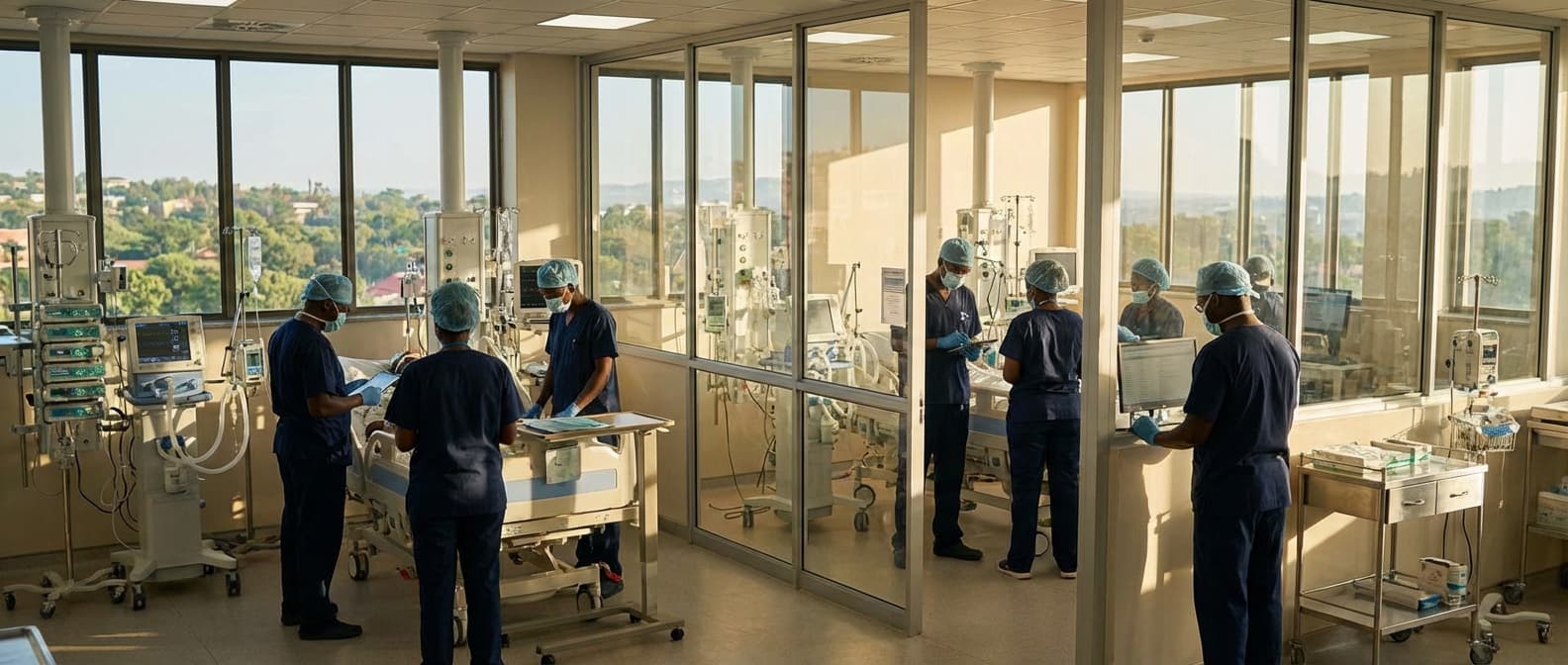
Ventilator Fleet Management & PM in Namibia
Engineering Excellence & Technical Support
Preventive maintenance and fleet management for ICU ventilators High-standard technical execution following OEM protocols and local regulatory frameworks.
Predictive Maintenance Optimization
Leveraging historical data and real-time sensor inputs from the Namibian ventilator fleet, our AI-powered platform predicts potential equipment failures and schedules proactive maintenance. This minimizes unexpected downtime, ensures optimal patient care continuity, and reduces costly emergency repairs across remote and challenging terrains.
Geospatial Asset Tracking & Resource Allocation
A centralized, GPS-enabled dashboard provides real-time location data for every ventilator in Namibia. This allows for intelligent resource allocation during emergencies, efficient logistical planning for service technicians, and rapid deployment to areas of highest need, maximizing fleet availability and response times.
Automated PM Compliance & Reporting
Our system automates the scheduling and tracking of all preventive maintenance activities according to manufacturer specifications and regulatory requirements. This ensures 100% PM compliance, generates auditable digital records, and provides instant performance reports for administrative oversight and operational efficiency within Namibia's healthcare system.
What Is Ventilator Fleet Management & Pm In Namibia?
Ventilator fleet management and preventative maintenance (PM) in Namibia refers to the comprehensive program dedicated to the acquisition, deployment, operational oversight, and proactive servicing of mechanical ventilators. This service ensures the optimal functioning, safety, and longevity of these critical medical devices within healthcare facilities, mitigating the risk of device failure during patient care and reducing the overall cost of ownership through scheduled maintenance and timely repairs. The service encompasses asset tracking, calibration, firmware updates, bio-medical engineering support, and spare parts inventory management, all tailored to the specific needs and logistical constraints prevalent in Namibia.
| Who Needs Ventilator Fleet Management & PM? | Typical Use Cases in Namibia |
|---|---|
| Tertiary and Referral Hospitals: Larger facilities with a significant number of ventilators across various specialties (ICU, ER, Respiratory Care). | Emergency Preparedness and Response: Ensuring sufficient functional ventilators are available during public health crises (e.g., pandemics) and natural disasters. |
| District Hospitals: Facilities serving wider geographical areas, often with limited in-house technical expertise. | Routine Patient Care in High-Acuity Units: Maintaining continuous operational readiness for ventilators in Intensive Care Units (ICUs), High Dependency Units (HDUs), and Emergency Rooms (ERs) for patients with respiratory failure. |
| Specialized Medical Centers: Institutions focusing on specific patient populations (e.g., pediatric, neonatal) requiring specialized ventilator types. | Transport and Mobile Medical Units: Ensuring ventilators used in ambulances, air ambulances, or field hospitals are maintained and operational for patient transport. |
| Government Health Ministries and Regional Health Authorities: Responsible for overseeing the national health infrastructure and ensuring equitable access to functional medical equipment. | Surgical Departments: Providing ventilation support during and immediately after surgical procedures, particularly major abdominal or thoracic surgeries. |
| Non-Governmental Organizations (NGOs) and Humanitarian Organizations: Operating medical facilities in remote or underserved regions. | Long-Term Ventilation Support: Managing ventilators for patients requiring prolonged mechanical ventilation due to chronic respiratory conditions or severe illness. |
Key Components of Ventilator Fleet Management & PM in Namibia:
- Asset Inventory and Tracking: Establishing and maintaining a centralized, up-to-date registry of all ventilators, including make, model, serial number, acquisition date, location, and current operational status.
- Preventative Maintenance (PM) Scheduling: Implementing a rigorous schedule for routine inspections, cleaning, calibration, and functional testing of ventilators, adhering to manufacturer recommendations and regulatory standards.
- Corrective Maintenance and Repair: Providing prompt and efficient repair services for ventilators experiencing malfunctions or failures, utilizing qualified biomedical technicians and genuine spare parts.
- Performance Monitoring and Diagnostics: Utilizing diagnostic tools and software to monitor ventilator performance parameters, identify potential issues before they become critical, and optimize operational efficiency.
- Software and Firmware Management: Ensuring ventilators are running the latest, secure, and manufacturer-approved software and firmware versions.
- User Training and Support: Offering training programs for clinical staff on proper ventilator operation, basic troubleshooting, and emergency procedures.
- Spare Parts Management: Maintaining an adequate inventory of critical spare parts to minimize downtime during repairs and ensure swift resolution of issues.
- Regulatory Compliance: Ensuring all aspects of ventilator management and maintenance adhere to relevant national healthcare regulations and international best practices.
- End-of-Life Management: Planning for the responsible decommissioning, disposal, or refurbishment of ventilators reaching the end of their service life.
Who Needs Ventilator Fleet Management & Pm In Namibia?
Ventilator fleet management and preventive maintenance (PM) are crucial for ensuring the reliable operation of life-saving medical equipment. In Namibia, where healthcare infrastructure can face unique challenges, robust fleet management is not just a matter of efficiency but of critical patient care. This service is essential for any entity operating or relying on a fleet of ventilators, guaranteeing their availability, functionality, and longevity, thereby directly impacting patient outcomes and resource optimization.
| Customer/Department | Key Responsibilities/Needs | Specific Considerations for Namibia |
|---|---|---|
| Hospitals (Public & Private) | Operating and maintaining ventilator fleets for critical care, surgery, and general patient support. Need for regular PM, rapid repairs, and asset tracking. | Managing diverse patient populations and resource constraints. Ensuring equipment availability in both well-equipped urban centers and potentially under-resourced rural facilities. |
| Ministry of Health and Social Services | Overseeing national health infrastructure, procurement, and maintenance standards for public hospitals and clinics. Ensuring equitable distribution and functionality of ventilators across the country. | Developing and enforcing national PM protocols. Centralized fleet management for all public health facilities. Addressing logistical challenges for servicing remote areas. |
| District Health Offices | Supervising health services within specific districts, including the maintenance and operational readiness of medical equipment in district hospitals and clinics. | Ensuring PM schedules are adhered to. Localized troubleshooting and immediate response for equipment issues. |
| Emergency Medical Services (EMS) | Utilizing portable and transport ventilators for critical patient stabilization en route to medical facilities. Requiring reliable, well-maintained, and mobile equipment. | Ensuring ventilators are operational for emergency response, often in challenging environmental conditions. Swift deployment and maintenance for critical transport equipment. |
| Non-Governmental Organizations (NGOs) involved in healthcare | Providing healthcare services, often in underserved areas, and operating medical facilities that may include ventilators. Need for reliable equipment to fulfill their mission. | Supporting specific community health projects. Managing fleets with potentially limited in-house technical expertise. Focus on cost-effective and sustainable maintenance solutions. |
| Tertiary and Specialized Medical Centers | Operating high-dependency units and ICUs with sophisticated ventilation requirements. Needing advanced PM and calibration for specialized ventilators. | Handling complex cases requiring advanced respiratory support. Ensuring specialized technical expertise is available for advanced equipment. |
| Medical Equipment Suppliers/Distributors | Providing sales, installation, and often post-sales maintenance and PM services for ventilators. Offering service contracts to healthcare providers. | Establishing a robust local service network. Training local technicians. Ensuring availability of spare parts, especially for imported equipment. |
| Tertiary Training Institutions (Medical Schools/Nursing Colleges) | Utilizing ventilators in simulation labs for training healthcare professionals. Requiring functional and well-maintained equipment for educational purposes. | Ensuring training equipment is readily available and calibrated. Integrating PM awareness into the training curriculum. |
Target Customers and Departments in Namibia for Ventilator Fleet Management & PM
- Hospitals (Public & Private)
- Ministry of Health and Social Services
- District Health Offices
- Emergency Medical Services (EMS)
- Non-Governmental Organizations (NGOs) involved in healthcare
- Tertiary and Specialized Medical Centers
- Rehabilitation Centers
- Remote Health Posts/Clinics with ventilator capabilities
- Medical Equipment Suppliers/Distributors (for service contracts)
- Tertiary Training Institutions (Medical Schools/Nursing Colleges with simulation labs)
Ventilator Fleet Management & Pm Process In Namibia
This document outlines the workflow for ventilator fleet management and preventative maintenance (PM) processes in Namibia, from the initial inquiry to the final execution and documentation.
| Stage | Description | Key Activities | Responsible Parties | Deliverables/Outcomes |
|---|---|---|---|---|
| Inquiry & Needs Assessment | The process begins when a healthcare facility or the Ministry of Health identifies a need for new ventilators, PM services, or repairs. | Receiving inquiry, understanding specific ventilator models, quantity, required services (new purchase, PM, repair), technical specifications, and budget constraints. | Client (Healthcare Facility/MoH), Supplier/Service Provider. | Clear understanding of requirements, initial needs assessment report. |
| Quotation & Procurement | Based on the needs assessment, a formal quotation is prepared and submitted for approval and procurement. | Developing detailed quotation with pricing, specifications, warranty information, delivery timelines. Client reviews and approves quotation. Procurement process initiation (purchase order generation). | Supplier/Service Provider, Client (Procurement Department/MoH). | Approved quotation, Purchase Order (PO). |
| Service Scheduling & Logistics | Once the order is confirmed, arrangements are made for delivery, installation, and PM/repair services. | Coordinating delivery schedules, booking technician appointments, arranging necessary transport for equipment and personnel, ensuring availability of spare parts (for PM/repairs). | Supplier/Service Provider (Logistics), Client (Facility Manager). | Confirmed service schedule, logistics plan, allocated technicians and parts. |
| On-site Execution (PM & Repairs) | Trained technicians perform the scheduled preventative maintenance or necessary repairs on the ventilators at the facility. | Performing comprehensive PM checks as per manufacturer's guidelines, diagnosing and repairing faults, replacing worn-out parts, cleaning and disinfecting equipment. | Certified Technicians (Supplier/Service Provider). | Completed PM checklist, list of parts replaced, description of repairs performed. |
| Testing & Calibration | After PM or repairs, ventilators are rigorously tested and calibrated to ensure optimal performance and patient safety. | Running functional tests, verifying operational parameters against specifications, calibrating sensors and alarms, performing leak tests. | Certified Technicians (Supplier/Service Provider). | Calibration certificates, test reports confirming adherence to specifications. |
| Documentation & Reporting | All activities, findings, and outcomes are meticulously documented for record-keeping and future reference. | Completing service reports, updating equipment logs, generating certificates of completion, submitting reports to the client, storing digital and physical records. | Certified Technicians, Service Manager (Supplier/Service Provider). | Comprehensive service reports, updated asset registers, compliance documentation. |
| Inventory Management & Follow-up | Ongoing management of the ventilator fleet and proactive follow-up to ensure continued operational readiness. | Maintaining an accurate inventory of all ventilators, tracking service history, scheduling future PM based on usage and age, providing technical support and training, addressing any recurring issues. | Supplier/Service Provider (Fleet Manager), Client (Biomedical Engineering Department/MoH). | Optimized fleet utilization, reduced downtime, proactive maintenance planning, customer satisfaction. |
Key Stages in Ventilator Fleet Management & PM Process
- Inquiry & Needs Assessment
- Quotation & Procurement
- Service Scheduling & Logistics
- On-site Execution (PM & Repairs)
- Testing & Calibration
- Documentation & Reporting
- Inventory Management & Follow-up
Ventilator Fleet Management & Pm Cost In Namibia
Managing a ventilator fleet in Namibia involves significant financial considerations, from initial procurement to ongoing maintenance and eventual replacement. This requires a strategic approach to cost management, focusing on factors that influence pricing and understanding typical cost ranges within the Namibian context. Effective fleet management ensures optimal utilization, extends equipment lifespan, and ultimately contributes to better patient outcomes while controlling expenditure.
| Ventilator Category | Estimated Acquisition Cost Range (NAD) | Estimated Annual PM Cost Range (NAD) (per unit) | Notes |
|---|---|---|---|
| Basic Transport/Emergency Ventilators (Manual/Battery-powered) | NAD 15,000 - NAD 50,000 | NAD 1,000 - NAD 3,000 | Lower complexity, primarily for basic ventilation support. PM might involve simpler checks and battery replacement. |
| Portable/Compact ICU Ventilators (Non-invasive & Invasive) | NAD 150,000 - NAD 500,000 | NAD 10,000 - NAD 30,000 | Suitable for general ICU use, offering more modes and monitoring. PM includes more intricate calibration and filter replacements. |
| Advanced Critical Care Ventilators (Full Feature ICU) | NAD 500,000 - NAD 2,000,000+ | NAD 30,000 - NAD 100,000+ | High-end machines with extensive features for complex respiratory conditions. PM involves specialized diagnostics, software updates, and potential sensor replacements. |
| Service & Maintenance Contract (Annual - Comprehensive) | N/A (often bundled or priced separately) | Typically 5-15% of acquisition cost annually | This percentage can vary greatly based on the provider, level of coverage, and equipment age. May include labor, parts, and emergency call-outs. |
| Spare Parts (e.g., Sensors, Batteries, Filters) | Varies significantly by part | Included in PM or budgeted separately | Genuine parts are often more expensive but crucial for reliability. Costs can escalate with demand and import duties. |
| Biomedical Engineer Training (per technician, per course) | NAD 20,000 - NAD 100,000+ | One-time or periodic cost | Cost depends on the manufacturer, complexity of the training, and whether it's on-site or at a training center. |
Key Pricing Factors for Ventilator Fleet Management & PM in Namibia
- Type and Complexity of Ventilators: High-end, critical care ventilators with advanced features (e.g., invasive and non-invasive ventilation, lung protective strategies, integrated monitoring) will naturally command higher prices than simpler, transport ventilators. The technology and sophistication directly impact the purchase and maintenance costs.
- Brand and Manufacturer Reputation: Established, reputable brands often come with a premium due to perceived reliability, advanced technology, and robust support networks. However, for fleet management, balancing initial cost with long-term durability and serviceability is crucial.
- Procurement Volume: Hospitals or government health ministries purchasing ventilators in larger quantities (for fleet management) often negotiate bulk discounts, significantly reducing the per-unit cost compared to single-unit purchases.
- Service and Maintenance Contracts: Comprehensive preventative maintenance (PM) contracts are essential for extending ventilator lifespan and minimizing costly emergency repairs. These contracts often include scheduled servicing, calibration, and potentially replacement parts, and their pricing varies based on the level of coverage and contract duration.
- Warranty Period: The duration and scope of the manufacturer's warranty can influence initial pricing. Longer or more comprehensive warranties might be factored into the upfront cost.
- Training and Technical Support: The cost of training biomedical engineers and clinical staff on the operation and basic maintenance of ventilators is a crucial component of fleet management. This can be a one-time cost or an ongoing expense depending on staff turnover and the introduction of new equipment.
- Spare Parts Availability and Cost: The accessibility and cost of genuine spare parts are critical. Regions with limited supply chains or reliance on imported parts may experience higher costs and longer lead times for replacements, impacting both PM and repair expenses.
- Logistics and Transportation: For remote healthcare facilities in Namibia, the cost of transporting ventilators and skilled technicians for maintenance can add a significant layer to overall fleet management expenses.
- Inflation and Exchange Rates: As Namibia relies on imported medical equipment, fluctuating global exchange rates and local inflation rates directly impact the Namibian Dollar (NAD) cost of ventilators and their associated parts and services.
- Regulatory and Compliance Costs: Ensuring ventilators meet Namibian health regulations and standards may involve specific testing or certifications, contributing to overall costs.
- End-of-Life Disposal and Refurbishment: Planning for the eventual replacement of ventilators includes costs associated with safe disposal of old equipment or potential refurbishment if viable.
Affordable Ventilator Fleet Management & Pm Options
Managing a ventilator fleet effectively is crucial for ensuring patient care continuity and maximizing asset utilization. This involves not only routine maintenance but also strategic planning for upgrades, replacements, and disposal. Affordable fleet management and preventative maintenance (PM) options focus on minimizing total cost of ownership while upholding equipment reliability and safety. Value bundles and cost-saving strategies are key to achieving these goals.
| Value Bundle/Strategy | Description | Cost-Saving Mechanism | Benefits |
|---|---|---|---|
| Bundled PM & Repair Services | A single contract covering scheduled PM and a predetermined number of repairs per year. | Bulk purchasing discounts, reduced administrative overhead, predictable budgeting. | Lower overall service costs, reduced downtime risk, streamlined vendor management. |
| Extended Warranty Packages | Purchasing extended warranties beyond the manufacturer's initial offering. | Protection against unforeseen, high-cost repairs, especially for older equipment. | Financial predictability, risk mitigation for critical equipment. |
| Third-Party Service Agreements | Engaging independent service organizations (ISOs) for PM and repairs. | Often more competitive pricing than OEM contracts, flexibility in service levels. | Cost reduction, access to specialized expertise, quicker response times for non-OEM equipment. |
| Managed Equipment Services (MES) | Outsourcing the entire management of a specific equipment category (e.g., ventilators) to a specialized provider. | Economies of scale, optimized utilization, access to advanced technology without upfront capital investment. | Significant cost savings, improved efficiency, reduced administrative burden. |
| Refurbished Equipment Procurement | Purchasing certified pre-owned and refurbished ventilators. | Substantially lower acquisition costs compared to new equipment. | Cost-effective way to expand fleet capacity or replace aging units without a large capital outlay. |
| Parts Inventory Optimization Software | Utilizing software to track and manage spare parts for ventilators. | Reduces overstocking, minimizes emergency orders at premium prices, identifies slow-moving inventory. | Improved cash flow, reduced waste, better part availability for PM and repairs. |
| In-House Training & Certification | Investing in training biomedical technicians to perform PM and basic repairs. | Reduces reliance on external service providers for routine tasks. | Lower labor costs, faster turnaround times for repairs, increased internal expertise. |
Key Components of Affordable Ventilator Fleet Management & PM
- Proactive Preventative Maintenance (PM): Scheduled inspections and servicing to identify and address potential issues before they lead to costly breakdowns.
- Optimized Inventory Management: Balancing spare parts stock to avoid both overstocking (tied-up capital) and understocking (extended downtime).
- Strategic Asset Lifecycle Planning: Forecasting replacement needs based on age, usage, technological advancements, and repair costs.
- Negotiated Service Contracts: Securing favorable terms with manufacturers or third-party service providers.
- Data-Driven Decision Making: Utilizing fleet data to track performance, identify trends, and inform purchasing and maintenance strategies.
- Training and Skill Development: Empowering in-house biomedical teams to handle routine PM and minor repairs, reducing reliance on external technicians.
Verified Providers In Namibia
In Namibia's evolving healthcare landscape, identifying trusted and verified providers is paramount for ensuring quality and effective medical care. Franance Health stands out as a beacon of reliability, offering a comprehensive network of accredited professionals and facilities. Their rigorous credentialing process ensures that every provider within their network meets the highest standards of expertise, ethical practice, and patient safety. Choosing Franance Health means accessing a curated selection of healthcare professionals who are not only skilled but also committed to delivering patient-centered care. This dedication to verification and quality assurance makes Franance Health the premier choice for individuals and families seeking dependable healthcare solutions in Namibia.
| Provider Type | Franance Health Verification Criteria | Benefits of Choosing Verified Providers |
|---|---|---|
| Doctors (Specialists & General Practitioners) | Valid Medical Council Registration, Board Certifications, Peer Reviews, Criminal Background Checks | Accurate diagnosis, effective treatment plans, access to specialized knowledge, reduced risk of malpractice |
| Hospitals & Clinics | Accreditation by relevant health authorities, adherence to safety protocols, qualified medical staff, quality management systems | Safe environment for procedures, access to advanced medical equipment, coordinated patient care, improved health outcomes |
| Diagnostic Laboratories | Licensing from Ministry of Health, quality control certifications (e.g., ISO), qualified technicians, up-to-date equipment | Reliable test results, accurate diagnostic information, timely reporting, support for informed medical decisions |
| Pharmacies | Valid Pharmacy Council License, dispensing by registered pharmacists, adherence to medication management standards | Safe and authentic medication supply, proper drug counseling, prevention of counterfeit drugs, optimized treatment efficacy |
Why Franance Health Credentials Matter:
- Rigorous Verification Process: Franance Health meticulously vets all its providers, ensuring they possess the necessary qualifications, licenses, and experience.
- Commitment to Quality Care: Providers within the Franance Health network are dedicated to upholding the highest standards of medical practice and patient well-being.
- Ethical Conduct Assurance: A strong emphasis is placed on ethical behavior and professional integrity among all affiliated healthcare professionals.
- Access to Expertise: Patients can be confident that they are accessing specialists and general practitioners with proven track records and up-to-date knowledge.
- Enhanced Patient Trust: The verification process fosters trust and peace of mind, allowing patients to focus on their health without unnecessary concern about provider quality.
Scope Of Work For Ventilator Fleet Management & Pm
This Scope of Work (SOW) outlines the requirements for a comprehensive Ventilator Fleet Management and Preventive Maintenance (PM) program. The objective is to ensure the optimal performance, reliability, and regulatory compliance of the organization's ventilator inventory. This includes proactive maintenance, repair, inventory tracking, and lifecycle management.
| Category | Description | Technical Deliverables | Standard Specifications / Requirements | |
|---|---|---|---|---|
| Fleet Inventory Management | Establishing and maintaining a comprehensive database of all ventilators. | Complete and accurate asset registry including make, model, serial number, acquisition date, location, and current status. | Utilization of a robust Computerized Maintenance Management System (CMMS) or equivalent for real-time tracking. Data accuracy to be maintained at >98%. | Regular (e.g., quarterly) physical inventory audits to reconcile database records with actual assets. |
| Preventive Maintenance (PM) | Execution of scheduled maintenance tasks to prevent equipment failure. | Development and implementation of a tailored PM schedule based on manufacturer recommendations and usage patterns. | Adherence to manufacturer-specified PM checklists and procedures. All PM tasks documented in CMMS with completion dates, technician details, and any findings. | PM completion rate of >95% within the scheduled timeframe. |
| Corrective Maintenance & Repair | Prompt and effective response to equipment malfunctions and breakdowns. | Rapid diagnosis and repair of faulty ventilators to restore them to operational status. | Response time for critical equipment failure: <2 hours. Repair completion time for common issues: <24 hours. For complex issues: within agreed-upon timeframes. | Utilization of qualified and trained biomedical technicians. Use of genuine or approved replacement parts. All repairs documented in CMMS, including parts used and labor hours. |
| Calibration & Performance Verification | Ensuring ventilators meet manufacturer performance specifications. | Scheduled calibration and performance verification checks according to manufacturer guidelines. | Calibration performed using traceable standards. Documentation of calibration results and certificates available in CMMS. Verification of performance against specified parameters (e.g., flow, pressure, volume accuracy). | Calibration frequency to align with manufacturer recommendations and regulatory requirements. |
| Regulatory Compliance & Documentation | Ensuring all activities meet industry and regulatory standards. | Comprehensive record-keeping of all maintenance, repair, and calibration activities. | Compliance with relevant standards (e.g., FDA, Joint Commission, AAMI). Maintenance records to be readily accessible for audits. | Regular review of PM procedures and documentation to ensure ongoing compliance. Training records for all personnel involved in maintenance. |
| Reporting & Analytics | Providing insights into fleet performance and maintenance effectiveness. | Regular reports on key performance indicators (KPIs) related to fleet availability, downtime, PM completion, and repair costs. | Monthly and quarterly reports delivered in a clear and concise format. Dashboards for real-time monitoring of critical metrics. | Analysis of trends to identify areas for improvement in maintenance strategies and equipment replacement planning. |
| Parts & Consumables Management | Ensuring availability of necessary parts and consumables. | Maintenance of an adequate stock of critical spare parts and common consumables. | Just-in-time (JIT) inventory management for high-cost items. Minimum and maximum stock levels defined and monitored. | Tracking of parts usage and costs through CMMS. Supplier management and quality assurance of purchased parts. |
Key Objectives
- Maintain high levels of ventilator availability and readiness for patient care.
- Minimize equipment downtime and associated costs.
- Ensure compliance with all relevant regulatory standards and manufacturer recommendations.
- Optimize the lifespan of ventilator assets through effective PM and repair strategies.
- Provide accurate and real-time data on ventilator status, maintenance history, and location.
- Support efficient inventory management and resource allocation.
Service Level Agreement For Ventilator Fleet Management & Pm
This Service Level Agreement (SLA) outlines the performance standards and guarantees for the management and preventative maintenance (PM) of the hospital's ventilator fleet. The objective is to ensure optimal equipment availability and functionality, minimizing disruptions to patient care. Key metrics include response times for critical issues and guaranteed uptime for the ventilator fleet.
| Service Element | Target Response Time | Uptime Guarantee | Escalation Protocol |
|---|---|---|---|
| Critical Ventilator Failure (e.g., complete unit non-functional during use) | Within 15 minutes of notification (initiate contact/dispatch) | 98% fleet uptime (measured monthly) | Immediate notification to Biomedical Engineering Lead and Department Manager. Provision of a backup ventilator if available. |
| Non-Critical Ventilator Malfunction (e.g., alarm issue, minor performance degradation) | Within 4 business hours of notification (initiate contact/diagnosis) | N/A (addressed by repair turnaround time) | Notification to Biomedical Engineering Supervisor within 24 hours. |
| Scheduled Preventative Maintenance (PM) | Adherence to scheduled PM dates/times (as per manufacturer recommendations and hospital policy) | N/A (ensures future uptime) | Notification of any unavoidable rescheduling at least 48 hours in advance. |
| Equipment Downtime due to PM | Minimize disruption; PM performed during low-usage periods where possible | N/A (planned downtime) | Communication of scheduled PM downtime to relevant departments 72 hours in advance. |
Key Performance Indicators (KPIs)
- Response Time for Critical Equipment Failure: Time taken to initiate diagnosis and action upon notification of a critical ventilator malfunction.
- Uptime Guarantee: Percentage of time the ventilator fleet is available and operational for patient use.
- Preventative Maintenance Completion Rate: Percentage of scheduled PM tasks completed within the designated timeframe.
- Repair Turnaround Time: Time taken to fully repair a non-critical equipment malfunction.
Frequently Asked Questions

Ready when you are
Let's scope your Ventilator Fleet Management & PM in Namibia project in Namibia.

Scaling healthcare logistics and technical systems across the entire continent.