
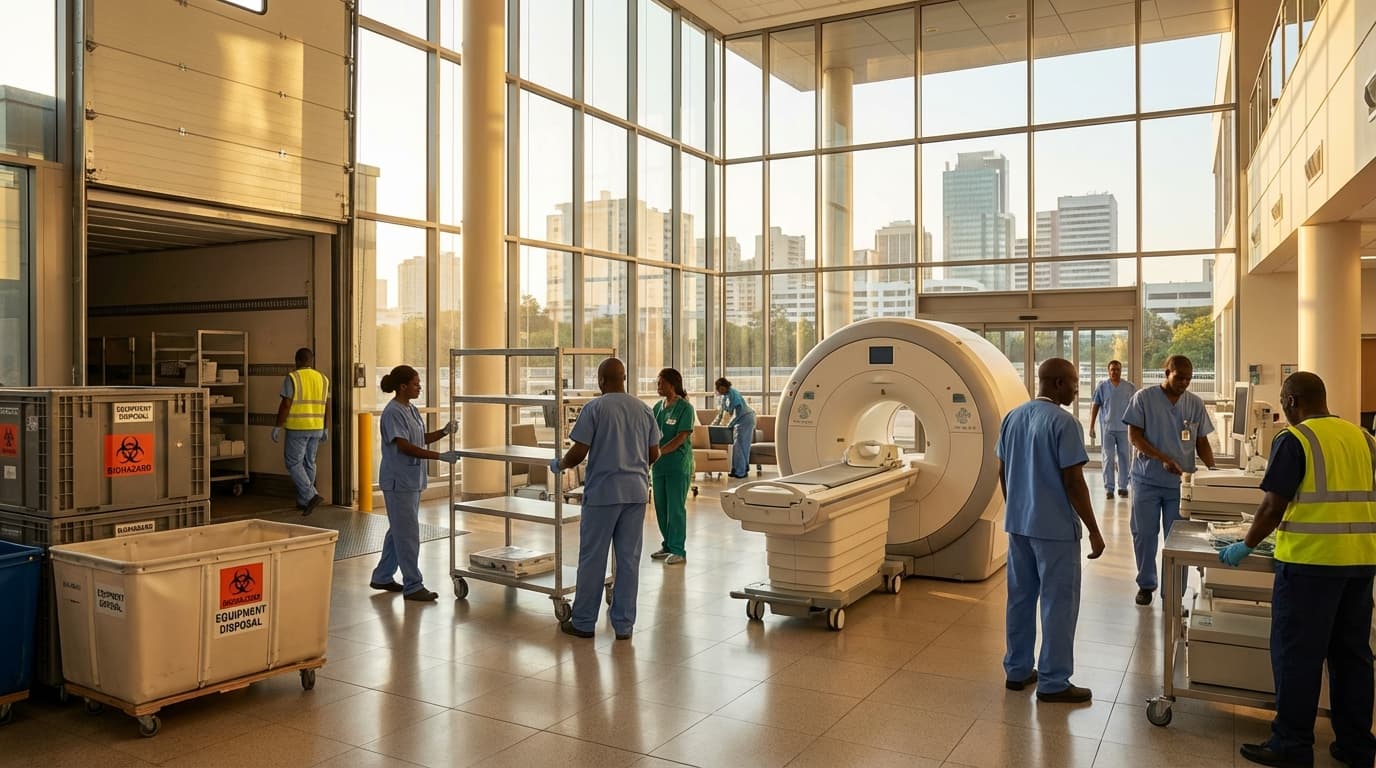
Medical Equipment Relocation Service (Move & Re-Install) in Namibia
Engineering Excellence & Technical Support
Medical Equipment Relocation Service (Move & Re-Install) High-standard technical execution following OEM protocols and local regulatory frameworks.
Precision Medical Equipment Relocation
Expert handling and secure transportation of sensitive medical devices across Namibia. Our specialized vehicles and climate-controlled environments ensure equipment integrity throughout the journey.
Seamless Re-Installation & Calibration
Certified technicians provide meticulous re-installation and calibration of your medical equipment at the new location, guaranteeing operational readiness and compliance with all relevant standards.
Comprehensive Relocation Project Management
End-to-end project management for medical facility moves in Namibia. We offer detailed planning, risk assessment, and execution, minimizing downtime and ensuring a smooth transition for your healthcare services.
What Is Medical Equipment Relocation Service (Move & Re-install) In Namibia?
Medical Equipment Relocation Service (Move & Re-Install) in Namibia refers to a specialized logistical and technical undertaking focused on the safe and operational transfer of medical devices and associated infrastructure between locations within Namibia. This comprehensive service extends beyond mere transportation, encompassing the meticulous dismantling, secure packaging, insured transit, and subsequent reassembly, calibration, and functional testing of medical equipment at its new site. The primary objective is to ensure the uninterrupted availability and optimal performance of critical healthcare machinery, minimizing downtime and adhering to stringent industry standards and regulatory requirements specific to the Namibian healthcare sector.
| Who Needs It | Typical Use Cases |
|---|---|
| Hospitals and Clinics (Public & Private) | Relocation of an entire hospital or clinic wing. Upgrading or consolidating medical facilities. Moving specific departments (e.g., Radiology, Oncology) during renovations. Establishing new healthcare facilities. |
| Diagnostic Imaging Centers | Transfer of MRI, CT scanners, X-ray machines, and ultrasound equipment. Relocation due to facility expansion or closure. |
| Surgical Centers and Operating Theaters | Moving specialized surgical tables, anesthesia machines, surgical lighting, and endoscopic equipment. Reconfiguration of operating room layouts. |
| Laboratories and Research Facilities | Relocation of sophisticated laboratory equipment such as centrifuges, incubators, microscopes, and analytical instruments. Transfer of biohazardous material containment systems. |
| Medical Equipment Manufacturers and Distributors | Delivery and installation of new equipment at client sites. Relocation of demo units or equipment for servicing. Warehouse consolidation or expansion. |
| Government Health Agencies | Redeployment of medical equipment to underserved regions. Centralization of equipment for asset management. Establishment of emergency medical response facilities. |
Key Components of Medical Equipment Relocation Service (Move & Re-Install) in Namibia:
- Pre-move assessment and site survey
- Specialized packing and crating
- Secure, climate-controlled transportation
- De-installation and re-installation by certified technicians
- Calibration and performance validation
- Post-installation support and documentation
- Compliance with Namibian health regulations and safety standards
Who Needs Medical Equipment Relocation Service (Move & Re-install) In Namibia?
Relocating sensitive and specialized medical equipment requires a high degree of expertise, precision, and adherence to stringent safety protocols. Our Medical Equipment Relocation Service (Move & Re-Install) in Namibia is designed to address the unique challenges of transporting and setting up medical devices, ensuring minimal disruption to healthcare services and maintaining the integrity of the equipment. This comprehensive service is crucial for a range of institutions and professionals who depend on their medical technology functioning flawlessly in its new environment.
| Customer Type | Key Departments Involved | Specific Equipment Relocation Needs |
|---|---|---|
| Hospitals (Public & Private) | Radiology, Cardiology, Oncology, Surgery, ICU, Laboratories, Pharmacy, Operating Rooms, Rehabilitation | MRI machines, CT scanners, X-ray units, Linear accelerators, Endoscopic equipment, Anesthesia machines, Ventilators, Surgical robots, Laboratory analyzers, Sterilizers, Patient monitoring systems. |
| Specialized Clinics (e.g., Cardiology, Dermatology, Ophthalmology) | Clinical operations, diagnostic areas, treatment rooms | ECG machines, Echocardiography equipment, Laser treatment devices, Slit lamps, Ophthalmoscopes, Dermatoscopes, Cryotherapy units. |
| Diagnostic Imaging Centers | Radiology, Sonography, Nuclear Medicine | Ultrasound machines, PET scanners, SPECT scanners, Mammography units, Bone densitometers. |
| Research & Development Laboratories | Biotechnology, Pharmaceuticals, Clinical Trials, Academia | Microscopes, Spectrophotometers, Centrifuges, DNA sequencers, Incubators, Biosafety cabinets, Analytical instruments. |
| Medical Training Institutions | Simulation labs, anatomy departments, practical training areas | Anatomical models, simulation manikins, surgical simulators, cadaver storage equipment. |
| Government Health Ministries & Agencies | Public health programs, national health infrastructure | Mobile health units, large-scale medical equipment for public hospitals, specialized diagnostic tools for outbreak response. |
| NGOs with Medical Programs | Field clinics, disaster relief efforts, remote healthcare provision | Portable X-ray units, ultrasound devices, basic laboratory equipment, water purification systems with medical applications, generators for powering medical equipment. |
Target Customers & Departments in Namibia Needing Medical Equipment Relocation Services
- Hospitals (Public & Private)
- Specialized Clinics
- Diagnostic Imaging Centers
- Surgical Centers
- Dental Practices
- Veterinary Clinics
- Research & Development Laboratories
- Medical Training Institutions
- Government Health Ministries & Agencies
- Non-Governmental Organizations (NGOs) with Medical Programs
- Emergency Medical Services (EMS)
- Mobile Clinics & Field Hospitals
- Pharmaceutical & Medical Device Companies (for showroom or demonstration moves)
- Private Medical Practitioners (especially those expanding or relocating practices)
Medical Equipment Relocation Service (Move & Re-install) Process In Namibia
This document outlines the typical workflow for a medical equipment relocation and re-installation service within Namibia. The process is designed to ensure the safe, efficient, and compliant transfer of sensitive medical equipment from its current location to a new one, followed by its proper setup and testing. The service caters to hospitals, clinics, laboratories, and other healthcare facilities requiring professional expertise in moving specialized and often delicate machinery.
| Stage | Description | Key Activities | Responsible Party | Timeline (Approx.) |
|---|---|---|---|---|
| 1. Inquiry & Consultation | Initial contact from the client to request relocation services and receive preliminary information. |
| Client, Service Provider | 1-2 Business Days |
| 2. Site Assessment & Planning | A thorough evaluation of both the origin and destination sites to identify logistical challenges and develop a detailed relocation plan. |
| Service Provider, Client | 2-5 Business Days (Post-Consultation) |
| 3. De-installation & Preparation | The process of safely disconnecting, dismantling (if necessary), and preparing the medical equipment for transport. |
| Service Provider (Technicians) | Varies based on equipment complexity (e.g., 1 hour to several days per unit) |
| 4. Transportation | The safe and secure movement of the packed medical equipment from the origin to the destination. |
| Service Provider (Logistics Team) | Varies based on distance (e.g., hours to days) |
| 5. Re-installation & Setup | The process of carefully unpacking, re-assembling, and positioning the medical equipment at the new location. |
| Service Provider (Technicians) | Varies based on equipment complexity (e.g., 1 hour to several days per unit) |
| 6. Testing & Calibration | Ensuring the medical equipment is functioning correctly and accurately after re-installation. |
| Service Provider (Technicians/Engineers), Client (Observer) | Varies based on equipment complexity (e.g., hours to days per unit) |
| 7. Handover & Documentation | Formal handover of the re-installed equipment to the client and provision of necessary documentation. |
| Service Provider, Client | 0.5 - 1 Business Day |
| 8. Post-Relocation Support (Optional) | Ongoing support to address any issues that may arise after the initial handover. |
| Service Provider | As per service agreement |
Medical Equipment Relocation & Re-Installation Workflow
- Phase 1: Inquiry & Consultation
- Phase 2: Site Assessment & Planning
- Phase 3: De-installation & Preparation
- Phase 4: Transportation
- Phase 5: Re-installation & Setup
- Phase 6: Testing & Calibration
- Phase 7: Handover & Documentation
- Phase 8: Post-Relocation Support (Optional)
Medical Equipment Relocation Service (Move & Re-install) Cost In Namibia
Relocating medical equipment in Namibia, whether it's within a hospital, between facilities, or to a new clinic, requires specialized handling due to the sensitive nature and often high value of these items. The cost of such a service, encompassing both moving and re-installation, can vary significantly. Several factors influence the final price, and understanding these can help in budgeting and obtaining accurate quotes from service providers. The ranges provided are estimates in Namibian Dollars (NAD) and should be considered indicative rather than definitive, as actual costs can fluctuate based on specific circumstances.
| Equipment Category | Estimated Cost Range (NAD) | Notes |
|---|---|---|
| Small Diagnostic Tools (e.g., blood pressure monitors, stethoscopes, basic lab equipment) | NAD 1,000 - NAD 5,000 | For local moves within a city, minimal disassembly. |
| Medium-Sized Equipment (e.g., dental chairs, basic ultrasound machines, centrifuges) | NAD 5,000 - NAD 25,000 | May require specialized packing and careful handling. Local to regional moves. |
| Large/Complex Equipment (e.g., X-ray machines, large laboratory analyzers, patient monitors) | NAD 25,000 - NAD 100,000+ | Significant dismantling, specialized transport, and professional re-installation/calibration required. Can be higher for inter-regional or very complex units. |
| Very Large/Specialized Equipment (e.g., MRI, CT scanners, linear accelerators) | NAD 100,000 - NAD 500,000+ | Extensive engineering, specialized heavy lifting, transportation permits, and multi-disciplinary teams. Costs can be highly variable depending on the specific model and site modifications needed. |
Key Pricing Factors for Medical Equipment Relocation in Namibia
- Type and Size of Equipment: Larger, heavier, or more complex equipment (e.g., MRI machines, CT scanners, X-ray units, large laboratory analyzers) will naturally incur higher costs due to the specialized lifting, transportation, and installation requirements. Smaller items like dental chairs or basic diagnostic tools will be less expensive.
- Distance of Relocation: The geographical distance between the origin and destination is a primary cost driver. Longer distances translate to higher fuel costs, potential overnight accommodation for the crew, and increased transit time, all of which add to the overall expense.
- Dismantling and Re-assembly Complexity: Some medical equipment requires partial or full dismantling for safe transport and then meticulous re-assembly and calibration at the new location. The more intricate this process, the higher the labor costs and the longer the service duration.
- Specialized Handling and Tools: Certain medical devices require specialized packing materials, climate-controlled transport, vibration dampening, and precise handling by trained technicians. The use of specialized tools, cranes, or other equipment will also impact the price.
- Re-installation and Calibration: Beyond simply placing the equipment, many medical devices need to be professionally re-installed, connected to power and data, and then calibrated to ensure they function correctly and safely. This often involves qualified biomedical engineers, adding to the cost.
- Accessibility and Site Conditions: The ease of access to both the pickup and delivery locations plays a role. Narrow doorways, stairs, multi-story buildings without elevators, or difficult terrain can complicate the move and increase labor and time, thereby escalating costs.
- Insurance and Liability: Reputable moving companies will offer insurance options for the valuable medical equipment being transported. The level of coverage chosen will influence the final price.
- Urgency of the Service: If the relocation needs to be completed on short notice or outside of standard working hours (weekends, public holidays), providers may charge a premium for the expedited or non-standard service.
- Service Provider's Expertise and Reputation: Highly experienced companies with a proven track record in handling sensitive medical equipment often command higher prices due to their expertise, specialized personnel, and established safety protocols.
- Additional Services: This could include site surveys, project management, waste disposal of old equipment, or temporary storage, all of which contribute to the overall cost.
Affordable Medical Equipment Relocation Service (Move & Re-install) Options
Relocating medical equipment can be a complex and costly undertaking. This service focuses on providing affordable options for moving and re-installing your valuable medical machinery, ensuring minimal disruption to your operations. We understand the unique challenges associated with medical equipment, including its size, weight, fragility, and the need for precise re-installation and calibration. Our goal is to offer cost-effective solutions without compromising on safety or professionalism.
| Cost-Saving Strategy | Description | Potential Savings Impact |
|---|---|---|
| Off-Peak Scheduling | Scheduling your move during less busy periods (e.g., weekends, evenings, or less popular days of the week) can reduce demand and potentially lower service costs. | Moderate to High |
| Consolidated Moves | If you have multiple pieces of equipment to move, consolidating them into a single move can optimize logistics and reduce per-item transportation costs. | Moderate |
| DIY Site Preparation | Performing basic site preparation (clearing pathways, ensuring power access) yourself can reduce the time technicians spend on-site, lowering labor costs. | Low to Moderate |
| Bundled Services Discount | Opting for comprehensive value bundles that include packing, moving, and re-installation often comes with a discount compared to booking services individually. | Moderate |
| Long-Term Contracts | For healthcare facilities with frequent equipment relocation needs, negotiating a long-term service contract can secure preferential rates and dedicated support. | High |
| Early Booking & Planning | The more lead time you provide, the better we can plan, optimize routes, and secure resources, potentially leading to better pricing. | Moderate |
| Re-use of Packing Materials | Where feasible and safe, discuss the possibility of re-using suitable existing packing materials to reduce crating costs. | Low |
Key Service Components & Value Bundles
- Pre-Move Assessment & Planning: Expert evaluation of equipment, site surveys, and detailed move plans to identify potential challenges and optimize logistics.
- Specialized Packing & Crating: Use of custom-built crates and protective materials designed for sensitive medical devices, ensuring maximum safety during transit.
- Secure Transportation: Climate-controlled and vibration-dampened vehicles operated by trained professionals experienced in handling delicate and heavy equipment.
- Professional De-installation & Re-installation: Trained technicians to safely disconnect, move, and meticulously re-install equipment to manufacturer specifications.
- Calibration & Testing: Post-installation verification and calibration to ensure optimal performance and readiness for use.
- Site Preparation & Restoration: Minor modifications to doorways, floors, or utilities as needed, and tidying up the relocation areas.
- Insurance & Liability Coverage: Comprehensive insurance to protect your assets during the entire relocation process.
- Value Bundle 1: 'Essential Move' - Includes specialized packing, secure transportation, and basic de-installation/re-installation. Ideal for standard equipment with minimal complexity.
- Value Bundle 2: 'Full Service Re-Life' - Encompasses pre-move assessment, custom crating, secure transportation, expert de-installation/re-installation, and initial calibration. Best for high-value or complex machinery.
- Value Bundle 3: 'Campus Connect' - Designed for multi-location moves within a campus or between closely situated facilities. Often includes expedited services and integrated IT/electrical setup. Customizable for specific needs.
- Custom Bundle: Tailored solutions based on your unique equipment inventory, relocation distance, and specific service requirements.
Verified Providers In Namibia
Finding reliable and credentialed healthcare providers in Namibia is paramount for ensuring quality medical care. Franance Health stands out as a leading organization committed to verifying and showcasing the best healthcare professionals across the nation. Their rigorous credentialing process ensures that all listed providers meet stringent standards for education, training, experience, and ethical practice. This dedication to verification offers patients peace of mind, knowing they are accessing care from highly qualified individuals. Franance Health's commitment to transparency and excellence makes them an indispensable resource for anyone seeking verified healthcare providers in Namibia. Their platform not only lists these professionals but also highlights their specific expertise, areas of specialization, and patient reviews, providing a comprehensive overview to aid in making informed decisions.
| Credential Type | Franance Health Verification Standard | Benefit to Patient |
|---|---|---|
| Medical Degrees & Licenses | Confirmed against official regulatory bodies and educational institutions. | Ensures fundamental medical knowledge and legal authorization to practice. |
| Specialty Certifications | Validated through recognized professional boards and examination results. | Confirms advanced expertise in specific medical fields. |
| Clinical Experience | Verified through references, hospital affiliations, and practice history. | Demonstrates practical application of knowledge and patient care skills. |
| Continuing Professional Development (CPD) | Documentation of participation in ongoing training and education. | Guarantees providers are up-to-date with the latest medical advancements and practices. |
| Professional References | Thorough checks with colleagues and supervisors. | Provides insight into a provider's professional conduct and collaborative abilities. |
| Patient Feedback & Testimonials | Moderated and reviewed for authenticity and relevance. | Offers real-world perspectives on patient experience and satisfaction. |
Why Franance Health Credentials Represent the Best Choice:
- Rigorous Verification Process: Franance Health employs a thorough vetting system, examining qualifications, licensing, and professional history of all listed providers.
- Commitment to Quality Care: Their credentialing process is designed to identify and promote providers who consistently deliver high standards of medical treatment and patient service.
- Enhanced Patient Trust: By presenting verified professionals, Franance Health builds confidence and trust, empowering patients to make secure healthcare choices.
- Transparency and Accessibility: The platform offers clear and accessible information about each provider's credentials, specializations, and patient feedback.
- Comprehensive Provider Profiles: Detailed profiles allow patients to understand the expertise and experience of each healthcare professional.
- Focus on Ethical Practice: Franance Health ensures that verified providers adhere to the highest ethical standards in their practice.
- Streamlined Healthcare Navigation: The service simplifies the process of finding qualified healthcare professionals in Namibia.
Scope Of Work For Medical Equipment Relocation Service (Move & Re-install)
This Scope of Work (SOW) outlines the requirements for a comprehensive medical equipment relocation service, encompassing the safe disconnection, transportation, and re-installation of specified medical devices. The objective is to ensure minimal disruption to clinical operations and maintain the integrity and functionality of all relocated equipment. This document also details the technical deliverables and standard specifications that the service provider must adhere to.
| Phase | Description | Technical Deliverables | Standard Specifications | |||||
|---|---|---|---|---|---|---|---|---|
| Pre-Move Planning & Assessment | Initial site survey, inventory confirmation, risk assessment, and detailed move plan development. | Detailed Equipment Inventory List (with serial numbers, model numbers, current location). | Move Plan document including timeline, personnel, equipment, and critical path items. | Risk Assessment Report outlining potential hazards and mitigation strategies. | Coordination meetings with client stakeholders. | Access to site blueprints/layouts for both origin and destination. | Identification of any specialized handling requirements (e.g., cleanroom, RF shielding). | Confirmation of power, data, and medical gas availability at the destination. |
| Disconnection & Preparation | Safe and documented disconnection of equipment from power, data, and medical gas lines. | Photographic/video documentation of equipment prior to disconnection. | Proper labeling of all cables and connections for easy re-connection. | Defueling or preparation of equipment for transport (e.g., draining water tanks). | Industry best practices for handling sensitive components. | Use of anti-static packaging for electronic components. | Compliance with manufacturer's recommendations for shutdown and preparation. | Lock-out/tag-out procedures for electrical safety where applicable. |
| Packing & Protection | Secure packing of all equipment and accessories to prevent damage during transit. | Use of appropriate packing materials (e.g., padded crates, bubble wrap, anti-static bags). | Custom-built crating for oversized or fragile equipment. | Environmental controls (e.g., temperature, humidity) if required for sensitive equipment. | All packing materials to be clean, new, and free from contaminants. | Materials to be sufficient to absorb shock and vibration. | Secure strapping and bracing within crates. | |
| Transportation | Safe and efficient transport of all packed equipment from origin to destination. | Use of climate-controlled, air-ride suspension vehicles. | GPS tracking of the transport vehicle. | Real-time communication regarding transit status. | Vehicles to be clean and well-maintained. | Experienced and trained moving personnel with medical equipment handling expertise. | Adherence to all traffic laws and regulations. | Secure loading and unloading procedures. |
| Unpacking & Re-installation | Careful unpacking of equipment at the destination. | Positioning of equipment in designated locations as per floor plans. | Re-connection of all power, data, and medical gas lines. | Verification of correct cable and connection placement. | Environmentally controlled unpacking areas if necessary. | Use of provided floor protection during movement within the destination facility. | Compliance with manufacturer's installation guidelines. | Re-assembly of any disassembled components. |
| Testing & Validation | Thorough testing and calibration of all re-installed equipment to ensure full functionality. | Functional testing and performance verification. | Calibration certificates for any equipment requiring re-calibration. | User acceptance testing (UAT) with client personnel. | On-site troubleshooting and resolution of any immediate issues. | Demonstration of equipment functionality to relevant personnel. | Adherence to manufacturer's performance specifications. | Use of calibrated test equipment. |
| Documentation & Handover | Provision of all required documentation for the relocation process. | Final Equipment Inventory List confirming all items moved and re-installed. | Detailed move report including any incidents, deviations, or issues encountered and resolved. | Photographic/video documentation of re-installed equipment. | Sign-off by client representative confirming satisfactory completion. | Maintenance of confidentiality of all client information. | Archiving of all project documentation for a specified period. | Post-move review meeting. |
| Contingency & Support | Procedures for addressing unforeseen issues or damage. | On-call technical support for a defined period post-relocation. | Escalation procedures for critical issues. | Insurance coverage for equipment during the relocation process. | Availability of spare parts or access to manufacturer support if needed. | Rapid response team for emergency situations. |
Key Objectives
- Safe and secure disconnection and packing of all specified medical equipment.
- Efficient and damage-free transportation of equipment to the new location.
- Professional and functional re-installation and testing of all equipment.
- Minimization of downtime for clinical operations.
- Compliance with all relevant health and safety regulations.
- Comprehensive documentation of the relocation process.
Service Level Agreement For Medical Equipment Relocation Service (Move & Re-install)
This Service Level Agreement (SLA) outlines the guaranteed response times and uptime for the Medical Equipment Relocation Service (Move & Re-Install). This SLA applies to all medical equipment relocation projects commissioned by [Client Name] and executed by [Service Provider Name].
| Service Component | Response Time Guarantee | Uptime Guarantee (Post Re-Installation) |
|---|---|---|
| Initial Site Assessment & Planning Meeting (post-contract signing) | Within 2 business days | N/A |
| Notification of Move Commencement | Minimum 5 business days prior to scheduled move date | N/A |
| On-site Support During Move (Disassembly/Packaging) | As per agreed project schedule | N/A |
| On-site Support During Move (Transportation) | N/A (covered by transit insurance) | N/A |
| On-site Support During Move (Re-assembly/Re-installation) | As per agreed project schedule | N/A |
| Post-Re-installation Operational Check (within 24 hours of completion) | Within 24 hours of technician's departure from site | N/A |
| Critical Equipment Downtime (following successful re-installation and sign-off) | For critical equipment requiring immediate operational status, a technician will be dispatched within 4 hours of reported downtime. | 99.5% uptime for critical equipment within the first 7 days post-re-installation, excluding scheduled maintenance or client-induced issues. |
| Non-Critical Equipment Downtime (following successful re-installation and sign-off) | For non-critical equipment, a technician will be dispatched within 8 business hours of reported downtime. | 98% uptime for non-critical equipment within the first 7 days post-re-installation, excluding scheduled maintenance or client-induced issues. |
Scope of Service
- Pre-move consultation and planning.
- Safe disassembly and packaging of designated medical equipment.
- Secure transportation of medical equipment to the new location.
- Unpacking and re-assembly of medical equipment at the new location.
- Initial testing and calibration to confirm operational status (as per manufacturer's specifications, where applicable).
- Post-move documentation and handover.
Frequently Asked Questions

Ready when you are
Let's scope your Medical Equipment Relocation Service (Move & Re-Install) in Namibia project in Namibia.

Scaling healthcare logistics and technical systems across the entire continent.