
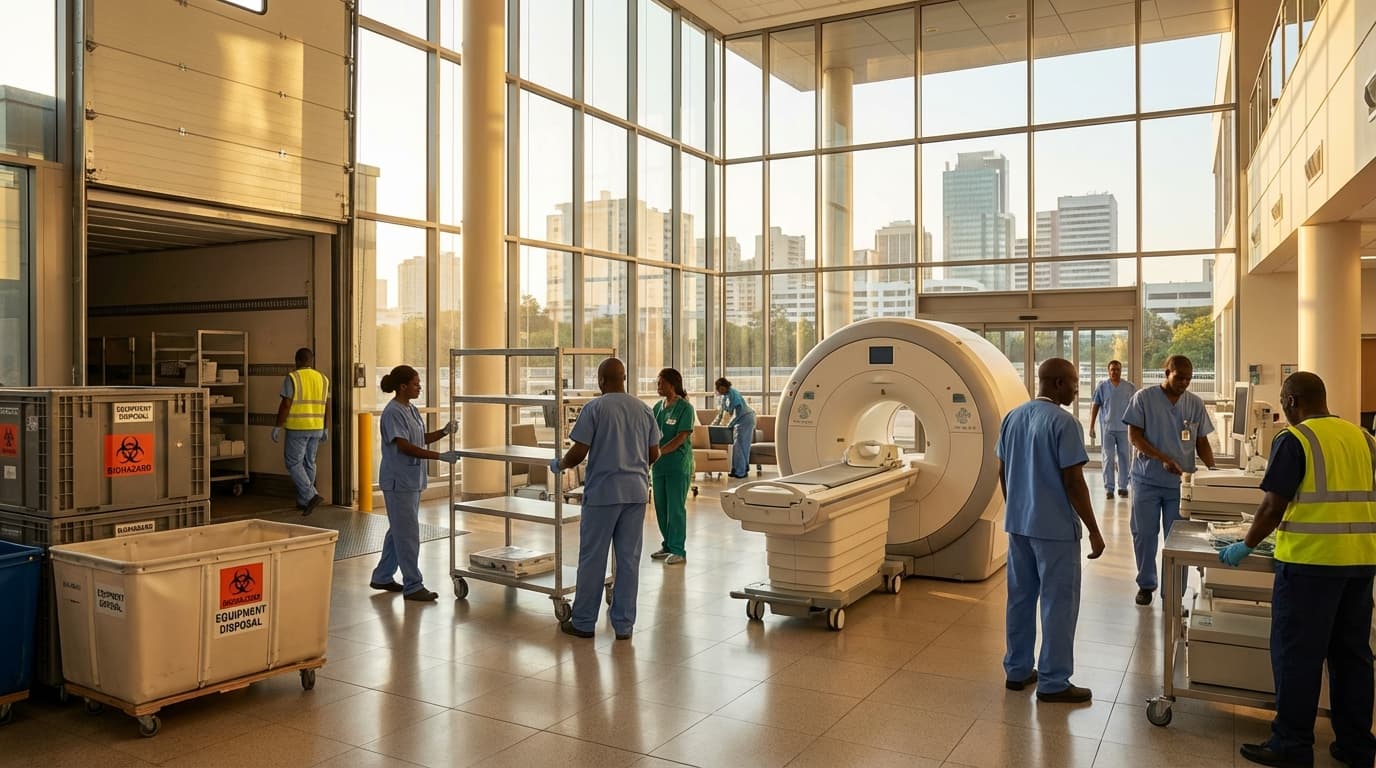
Decommissioning Service for Medical Devices in Namibia
Engineering Excellence & Technical Support
Decommissioning Service for Medical Devices High-standard technical execution following OEM protocols and local regulatory frameworks.
Certified Decommissioning Expertise
Our specialized technicians are certified and trained in the secure and compliant decommissioning of medical devices in Namibia. We ensure adherence to all national regulations and international best practices, guaranteeing data privacy and environmental safety throughout the process.
Environmentally Responsible Disposal
We implement a robust, environmentally conscious decommissioning strategy for medical devices, prioritizing responsible recycling and disposal of components. Our process minimizes landfill impact and promotes the recovery of valuable materials, aligning with Namibia's sustainability goals.
Comprehensive Chain of Custody & Documentation
We provide complete, auditable documentation for every stage of the decommissioning process, including asset tracking, data sanitization certificates, and proof of environmentally sound disposal. This ensures full compliance and peace of mind for healthcare providers in Namibia.
What Is Decommissioning Service For Medical Devices In Namibia?
Decommissioning service for medical devices in Namibia refers to the formal process of retiring a medical device from active use, ensuring its data is securely handled, its components are disposed of or repurposed responsibly, and all relevant regulatory and safety requirements are met. This service is critical for healthcare facilities to manage their equipment lifecycle effectively, maintain compliance, and mitigate potential risks associated with outdated or malfunctioning devices. The process is typically initiated when a medical device reaches its end-of-life, is replaced by a newer model, or is no longer required for clinical operations.
| Who Needs Decommissioning Service? | Typical Use Cases for Decommissioning |
|---|---|
| Hospitals and clinics (public and private) | Replacement of outdated diagnostic imaging equipment (e.g., X-ray machines, MRI scanners) |
| Specialty medical centers (e.g., dental, physiotherapy, ophthalmology) | End-of-life for laboratory analytical instruments |
| Government health facilities and ministries | Obsolescence of older patient monitoring systems |
| Medical research institutions | Disposal of specialized research equipment no longer in use |
| Medical device manufacturers and distributors (for demonstration or loaner units) | Retirement of surplus or damaged medical devices |
Key Aspects of Medical Device Decommissioning in Namibia
- Data Sanitization: Secure erasure or physical destruction of all sensitive patient data stored on the device's internal memory, adhering to data privacy regulations.
- Asset Management Update: Removal of the device from the facility's inventory and asset tracking systems.
- Environmental Disposal/Recycling: Proper handling of hazardous materials and environmentally sound disposal or recycling of the device's components in accordance with Namibian environmental laws.
- Safety Verification: Confirmation that the device is no longer capable of operation or is rendered safe to prevent accidental use.
- Documentation and Certification: Provision of a formal decommissioning certificate or report detailing the process, date of decommissioning, and responsible parties.
- Regulatory Compliance: Ensuring adherence to guidelines set by the Ministry of Health and Social Services and other relevant Namibian regulatory bodies.
Who Needs Decommissioning Service For Medical Devices In Namibia?
Decommissioning medical devices in Namibia is a critical, yet often overlooked, aspect of healthcare facility management. Proper decommissioning ensures the secure and environmentally responsible disposal of obsolete, damaged, or end-of-life medical equipment. This process is vital for maintaining data privacy, preventing the misuse of sensitive technologies, and adhering to national and international regulations regarding hazardous waste and radiation safety.
| Target Customer Group | Relevant Departments | Specific Needs / Concerns |
|---|---|---|
| Public Hospitals | Biomedical Engineering Department, Estates and Facilities Management, IT Department, Procurement Department, Radiology Department, Pathology Department, Surgical Departments | Large volumes of diverse equipment, strict budgetary constraints, compliance with Ministry of Health regulations, secure data wiping for imaging and patient record systems, responsible disposal of radioactive materials. |
| Private Hospitals | Biomedical Engineering, Hospital Administration, IT Security, Procurement, Radiology, Pathology, Surgery | Emphasis on efficient and reliable service, data security for patient confidentiality, potential for higher-end equipment requiring specialized decommissioning, maintaining brand reputation through responsible practices. |
| Clinics and Health Centers | Clinic Management, Nursing Staff, General Practitioners | Smaller scale but consistent need, often lacking in-house technical expertise, focus on basic diagnostic equipment, potential for mobile clinics needing regular updates. |
| Diagnostic Laboratories | Laboratory Management, Biomedical Technicians, IT Department | Specialized equipment (e.g., analysers, centrifuges, incubators), handling of biohazardous materials, data sanitization of laboratory information systems (LIS). |
| Research Institutions | Research Leads, Laboratory Managers, IT Security | Cutting-edge and often complex equipment, potential for proprietary data, specific disposal requirements for experimental apparatus, compliance with research ethics and data integrity. |
| Government Health Agencies | Health Planning and Information Systems, Procurement and Logistics, Environmental Health Departments | Oversight of public health infrastructure, development of national guidelines, management of large-scale asset disposal, ensuring compliance across multiple facilities, public health data security. |
| Medical Equipment Suppliers and Manufacturers | Service and Repair Departments, Product Management, Legal and Compliance | Managing product returns, handling end-of-life product buy-back schemes, ensuring compliance with their own product lifecycle management, brand image management. |
Who Needs Decommissioning Service for Medical Devices in Namibia? Target Customers & Departments
- Hospitals (Public and Private)
- Clinics and Health Centers
- Diagnostic Laboratories
- Research Institutions
- Government Health Agencies
- Medical Equipment Suppliers and Manufacturers (for returns and end-of-life management)
Decommissioning Service For Medical Devices Process In Namibia
This document outlines the workflow for the Decommissioning Service of Medical Devices in Namibia, covering the process from initial inquiry to the final execution of decommissioning. The service ensures that medical devices are safely and environmentally responsibly retired from service according to regulatory requirements and best practices.
| Stage | Description | Key Activities | Deliverables |
|---|---|---|---|
| Client expresses interest and provides preliminary information. | Understand scope, device types, quantity, client needs, and timelines. | Initial understanding of project requirements. |
| Formal proposal and contractual commitment. | Prepare and submit detailed quotation; negotiate and sign service agreement. | Service quotation, Signed Service Agreement. |
| On-site evaluation and strategic planning. | Assess physical location, identify logistics, develop decommissioning plan (safety, environmental, disposal/recycling). | Site survey report, Decommissioning Plan. |
| Administrative and preparatory steps. | Obtain permits/authorizations, prepare documentation, coordinate logistics, device preparation (cleaning). | Permits/Authorizations (if applicable), Project readiness confirmation. |
| Physical removal and retirement of devices. | Disassembly, decontamination, data sanitization, safe component removal. | Decommissioned devices (ready for transport). |
| Responsible handling of waste materials. | Categorization of waste, transport to licensed facilities (disposal/recycling). | Waste manifests, Proof of disposal/recycling. |
| Formal record of completion. | Issue Certificate of Decommissioning, provide all supporting documents. | Certificate of Decommissioning, Comprehensive project documentation package. |
| Client satisfaction and feedback. | Review project completion with client, address any remaining issues. | Client feedback, Project closure report. |
Decommissioning Service Workflow for Medical Devices in Namibia
- Inquiry and Initial Assessment: The process begins when a healthcare facility or organization inquires about decommissioning services for their medical devices. This involves understanding the scope of work, the types and number of devices, and the facility's specific needs and timelines.
- Quotation and Agreement: Based on the initial assessment, a detailed quotation is provided, outlining the services, costs, and estimated timeline. Upon acceptance, a formal service agreement is established, defining the responsibilities of both parties.
- Site Survey and Planning: A comprehensive site survey is conducted to assess the physical location of the devices, identify any logistical challenges, and determine the most appropriate decommissioning methods. A detailed decommissioning plan is developed, including safety protocols, environmental considerations, and disposal/recycling strategies.
- Pre-Decommissioning Preparation: This stage involves obtaining any necessary permits or authorizations, preparing the necessary documentation, and coordinating with the healthcare facility regarding access and operational impact. Devices may require basic cleaning or preparation before decommissioning.
- On-Site Decommissioning Execution: Trained technicians perform the decommissioning of the medical devices according to the approved plan. This may involve disassembly, decontamination, data sanitization (for devices with stored patient data), and safe removal of components.
- Waste Management and Disposal/Recycling: Decommissioned devices and their components are categorized and managed according to Namibian regulations for hazardous and non-hazardous waste. This includes transport to licensed disposal or recycling facilities.
- Certification and Documentation: Upon successful completion of the decommissioning, a Certificate of Decommissioning is issued, verifying that the devices have been retired responsibly. All relevant documentation, including waste manifests and certificates of destruction/recycling, is provided to the client.
- Post-Decommissioning Review: A final review may be conducted with the client to ensure satisfaction and address any outstanding queries or concerns. This also serves as an opportunity for continuous improvement of the service.
Decommissioning Service For Medical Devices Cost In Namibia
Decommissioning medical devices in Namibia involves a comprehensive process of safely and responsibly retiring equipment that is no longer in use, damaged, or obsolete. This process is crucial for data security, environmental protection, and regulatory compliance. The cost of decommissioning medical devices in Namibia is influenced by several key factors, leading to a variable pricing structure. These factors include the type and complexity of the device, the required level of data sanitization, the chosen disposal method, and the service provider's operational overhead and expertise.
| Device Category | Estimated Cost Range (NAD) | Notes |
|---|---|---|
| Small Diagnostic Equipment (e.g., ECG machines, portable ultrasounds) | 1,500 - 5,000 | Includes basic data sanitization and standard disposal. |
| Mid-range Imaging/Therapeutic Equipment (e.g., X-ray units, basic anesthesia machines) | 4,000 - 15,000 | May involve more complex disassembly and potentially specialized waste handling. |
| Large/Complex Imaging Equipment (e.g., MRI, CT scanners, high-end surgical systems) | 15,000 - 50,000+ | Significant disassembly, secure data destruction, and specialized transport required. Costs can vary widely based on specific model and site accessibility. |
| General Hospital Furniture & Fixtures (non-electronic) | 500 - 2,000 | Focus on removal and responsible disposal/recycling. |
| Specialized Laboratory Equipment (e.g., centrifuges, microscopes) | 1,000 - 6,000 | Depends on presence of hazardous materials or sensitive data storage. |
Key Pricing Factors for Medical Device Decommissioning in Namibia:
- Device Type and Complexity: Larger, more intricate, or specialized medical equipment (e.g., MRI machines, CT scanners, complex surgical robots) will generally incur higher decommissioning costs due to the specialized tools, expertise, and time required for disassembly, transport, and disposal.
- Data Sanitization Requirements: Medical devices often store sensitive patient data. The level of data sanitization needed (e.g., physical destruction of hard drives, multi-pass data wiping) directly impacts the cost. Higher security standards translate to higher expenses.
- Disposal Method: The chosen method for disposal significantly affects pricing. Options can include recycling (which may offer a partial credit), resale of functional components, or secure destruction. Environmentally sound disposal, especially for hazardous materials, often comes with a premium.
- Logistics and Transportation: The location of the medical facility and the disposal site will influence transportation costs. Remote areas or difficult-to-access locations will naturally increase the overall price.
- Regulatory Compliance and Documentation: Ensuring adherence to Namibian health and environmental regulations requires meticulous documentation and reporting. The cost associated with this administrative overhead can be factored into the service price.
- Service Provider's Expertise and Overhead: Experienced and certified decommissioning service providers often command higher prices due to their established processes, trained personnel, specialized equipment, and insurance. Smaller or less specialized providers might offer lower rates but potentially with different service guarantees.
- Volume of Devices: For larger decommissioning projects involving multiple devices, service providers may offer bulk discounts, reducing the per-unit cost.
Affordable Decommissioning Service For Medical Devices Options
Decommissioning medical devices is a critical but often overlooked aspect of healthcare operations. It involves the safe and compliant retirement, disposal, or repurposing of equipment. Finding affordable options is essential for budget-conscious healthcare providers. This involves understanding the available services, the value they offer, and implementing smart cost-saving strategies. Exploring value bundles and negotiating effectively can significantly reduce the overall expenditure.
| Service Component | Standard Cost | Bundled/Negotiated Cost Example | Potential Savings Strategy |
|---|---|---|---|
| Data Sanitization (per device) | $50 - $150 | $30 - $100 | Bundled with other services; volume discounts |
| Physical Destruction (per device) | $30 - $75 | $20 - $50 | Included in value bundles; bulk processing |
| Environmentally Responsible Disposal (per device) | $15 - $40 | $10 - $30 | Optimized logistics; partner with certified recyclers |
| Asset Tracking & Reporting (per device) | $5 - $20 | $3 - $15 | Integrated into larger decommissioning projects |
| Certification & Documentation (per project) | $100 - $500 | Included in comprehensive bundles | Negotiated as part of the overall service agreement |
Understanding Value Bundles and Cost-Saving Strategies
- Value Bundles: These are service packages designed to offer comprehensive solutions at a potentially discounted rate compared to purchasing individual services. They often combine services like data sanitization, asset tracking, physical destruction, and environmentally responsible disposal.
- Data Sanitization: Essential for protecting patient privacy and complying with regulations like HIPAA. This process ensures all sensitive data is irrevocably removed from devices.
- Asset Tracking and Inventory Management: Knowing what devices you have, their status, and their location is crucial for efficient decommissioning and can prevent unnecessary disposal costs.
- Environmentally Responsible Disposal: Adhering to regulations for electronic waste (e-waste) is paramount. This includes proper recycling and disposal to minimize environmental impact.
- Certifications and Compliance: Reputable decommissioning services will provide documentation demonstrating compliance with relevant regulations and data security standards.
- Negotiation: Don't accept the first quote. Be prepared to negotiate pricing, especially for larger volumes or long-term contracts.
- Bulk Discounts: Inquire about discounts for decommissioning a large number of devices at once or over a defined period.
- Extended Service Contracts: For ongoing decommissioning needs, longer-term contracts might offer better rates.
- Early Planning: Proactive planning for decommissioning, rather than reactive, allows for better budgeting and potential for phased disposal, which can be more cost-effective.
- Donation/Resale Options: For functional but retired equipment, explore options for donation to non-profits or resale to certified refurbishers. This can offset decommissioning costs.
Verified Providers In Namibia
Ensuring access to quality healthcare is paramount, and in Namibia, understanding which providers are genuinely credentialed and reliable is crucial. Franance Health stands out as a leading organization dedicated to verifying healthcare providers, offering Namibians a trusted pathway to the best medical services. This commitment to verification not only elevates the standards of care but also provides patients with the confidence and security they deserve when making critical health decisions.
| Credential Verification Aspect | Franance Health's Approach | Patient Benefit |
|---|---|---|
| Educational Background | Thorough verification of degrees, diplomas, and certifications from accredited institutions. | Ensures providers have the foundational knowledge and training required for safe practice. |
| Professional Experience | Validation of work history, including previous roles, responsibilities, and lengths of service. | Confirms practical application of knowledge and hands-on experience. |
| Specialized Training & Certifications | Verification of advanced training, fellowships, and specialized certifications in various medical fields. | Helps patients identify highly skilled professionals for specific medical conditions. |
| Licensing and Registration | Confirmation of valid and current registration with relevant national and international medical boards. | Guarantees providers are legally permitted to practice. |
| Professional References & Peer Reviews | Where applicable, seeking references and feedback from peers or previous employers. | Provides insights into a provider's reputation and clinical performance. |
| Ethical Conduct & Disciplinary History | Checking for any past disciplinary actions, malpractice suits, or ethical violations. | Protects patients from potentially harmful or unethical practitioners. |
Why Franance Health Credentials Represent the Best Choice:
- Rigorous Vetting Process: Franance Health employs a comprehensive and multi-layered verification process that goes beyond basic licensing. This includes scrutinizing educational qualifications, specialized training, professional experience, and adherence to ethical standards.
- Commitment to Patient Safety: By ensuring that all listed providers meet stringent criteria, Franance Health significantly enhances patient safety and minimizes the risks associated with unqualified practitioners.
- Access to Specialized Expertise: The verification process identifies and highlights providers with specific expertise, allowing patients to easily find specialists for their unique medical needs.
- Upholding Ethical Standards: Franance Health actively checks for any disciplinary actions or ethical breaches, ensuring that their network comprises only reputable and trustworthy healthcare professionals.
- Promoting Transparency: The credentialing process provides transparency to the public, empowering individuals with the information needed to make informed choices about their healthcare providers.
- Continuous Monitoring and Updates: Franance Health doesn't just verify once; they maintain a system for ongoing monitoring and regular updates to their provider credentials, ensuring continued compliance and excellence.
Scope Of Work For Decommissioning Service For Medical Devices
This Scope of Work (SOW) outlines the comprehensive decommissioning services required for medical devices. The objective is to ensure safe, secure, and compliant removal and disposal of medical equipment, adhering to all relevant regulations and standards. The services include assessment, data sanitization, physical dismantling, environmental disposal, and documentation.
| Activity | Description | Technical Deliverables | Standard Specifications/Compliance |
|---|---|---|---|
| Initial Assessment and Planning | Survey of medical devices to be decommissioned, identification of device types, quantities, locations, and specific removal requirements. Development of a detailed project plan. | Decommissioning Plan, Site Survey Report, Risk Assessment Report. | HIPAA (for data-bearing devices), OSHA (safety protocols), site-specific facility management guidelines. |
| Data Security and Sanitization | Secure erasure or physical destruction of all sensitive data stored on medical devices, including patient information and device configuration settings. | Data Sanitization Certificate (for each device), Hard Drive Destruction Certificate (if applicable). | NIST SP 800-88 Rev. 1 (Guidelines for Media Sanitization), HIPAA Security Rule, GDPR (if applicable). |
| Physical Dismantling and Removal | Safe and efficient dismantling of medical devices, including disconnection from power and other utilities. Packaging and transportation of devices from the site. | Dismantled device components, Removal Log (detailing devices removed, date, personnel). | OSHA safety standards, relevant equipment manufacturer guidelines, transportation regulations (e.g., DOT for hazardous materials). |
| Environmental Disposal and Recycling | Proper disposal of decommissioned medical devices and their components in accordance with environmental regulations. Prioritization of recycling and refurbishment where feasible. | Waste Manifests, Recycling Certificates, Certificate of Destruction (for non-recyclable/hazardous waste). | EPA regulations (RCRA), state and local environmental laws, WEEE Directive (for European operations), local waste management authority requirements. |
| Documentation and Certification | Provision of comprehensive documentation to the client, certifying the successful and compliant decommissioning of all specified medical devices. | Final Decommissioning Report, Summary of all Certificates (data sanitization, destruction, recycling), Asset Disposal Report. | Client-specific reporting requirements, ISO 9001 (quality management), ISO 14001 (environmental management) if applicable. |
Key Stages of Decommissioning Service
- Initial Assessment and Planning
- Data Security and Sanitization
- Physical Dismantling and Removal
- Environmental Disposal and Recycling
- Documentation and Certification
Service Level Agreement For Decommissioning Service For Medical Devices
This Service Level Agreement (SLA) outlines the response times and uptime guarantees for the Decommissioning Service for Medical Devices provided by [Your Company Name] to [Client Company Name]. This SLA is an addendum to the Master Service Agreement (MSA) between the parties, dated [Date of MSA].
| Service Component | Priority Level | Response Time Target | Resolution Target | Uptime Guarantee |
|---|---|---|---|---|
| Decommissioning Service Operations (e.g., scheduling, execution, reporting) | Critical Incident | 1 hour | 4 hours | 99.9% |
| Decommissioning Service Operations (e.g., scheduling, execution, reporting) | Major Incident | 2 hours | 8 business hours | 99.9% |
| Decommissioning Service Operations (e.g., scheduling, execution, reporting) | Minor Incident | 4 business hours | 2 business days | 99.9% |
| Support Availability (phone, email, portal) | General Inquiry / Non-critical Request | 8 business hours | Not Applicable (standard support hours apply) | N/A (refer to support schedule) |
Key Definitions
- Decommissioning Service: The process of safely and compliantly retiring medical devices from service, including data sanitization, physical destruction (if required), and appropriate disposal.
- Downtime: Any period during which the Decommissioning Service is unavailable or unable to perform its agreed-upon functions due to reasons within [Your Company Name]'s reasonable control.
- Response Time: The maximum time allowed for [Your Company Name] to acknowledge and begin working on a reported issue or request.
- Uptime Guarantee: The minimum percentage of time the Decommissioning Service is expected to be available and operational.
- Critical Incident: An event that renders the Decommissioning Service completely unavailable or causes significant disruption to the client's ability to decommission devices.
- Major Incident: An event that degrades the performance of the Decommissioning Service, impacting a significant number of users or operations, but not completely preventing service.
- Minor Incident: An event that causes minor inconvenience or affects a limited number of users or operations, with workarounds available.
Frequently Asked Questions

Ready when you are
Let's scope your Decommissioning Service for Medical Devices in Namibia project in Namibia.

Scaling healthcare logistics and technical systems across the entire continent.