
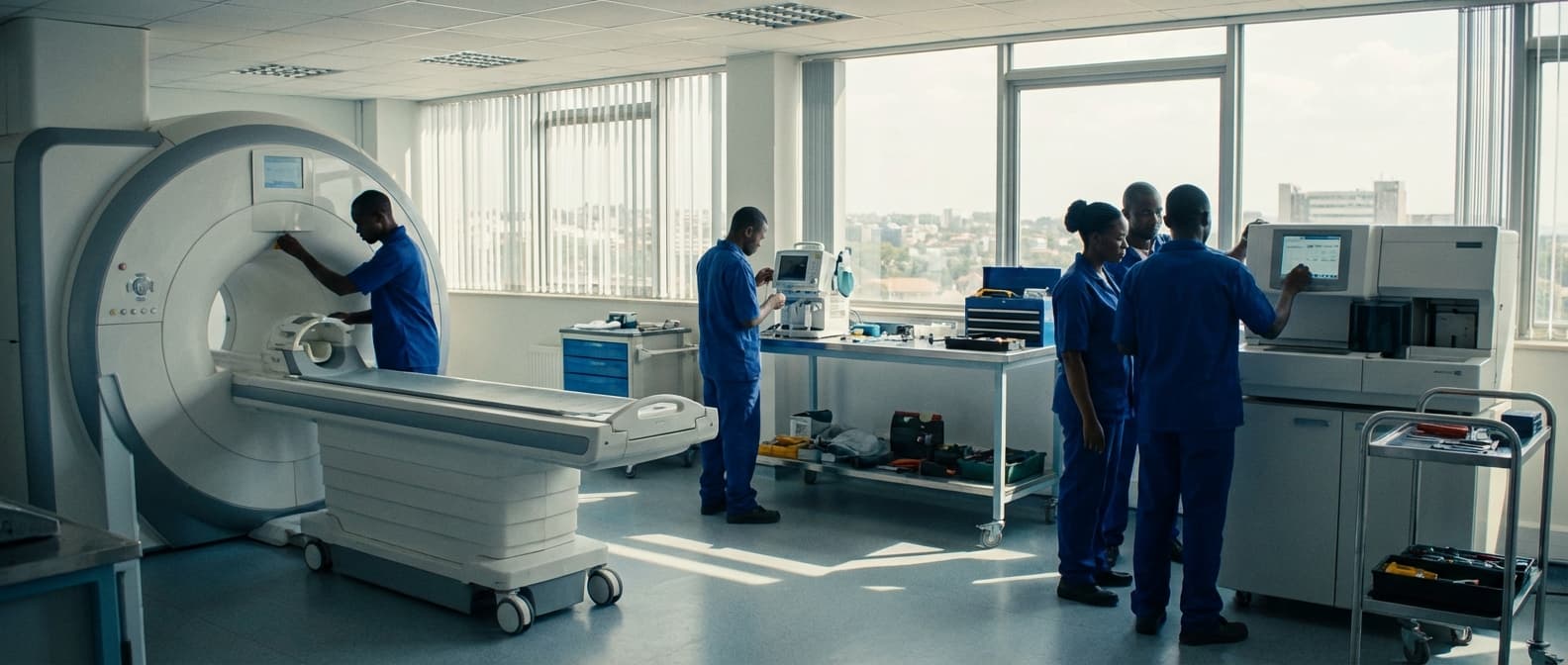
Planned Shutdown Coordination Service for Critical Equipment in Namibia
Engineering Excellence & Technical Support
Planned Shutdown Coordination Service for Critical Equipment High-standard technical execution following OEM protocols and local regulatory frameworks.
Optimized Downtime for Namibia's Critical Infrastructure
Our expert planned shutdown coordination service minimizes disruptions to Namibia's vital industrial operations, ensuring critical equipment undergoes scheduled maintenance with unparalleled efficiency and reduced operational impact.
Proactive Risk Mitigation & Enhanced Safety Protocols
We implement rigorous risk assessment and detailed safety planning for every shutdown, safeguarding personnel and equipment across Namibia's diverse industrial landscape, preventing unforeseen incidents and ensuring compliance.
Seamless Integration with Namibia's Supply Chain
Our service expertly synchronizes planned shutdowns with supply chain logistics, minimizing inventory impact and ensuring a smooth transition back to full operational capacity for Namibian businesses.
What Is Planned Shutdown Coordination Service For Critical Equipment In Namibia?
The Planned Shutdown Coordination Service for Critical Equipment in Namibia is a specialized operational and maintenance support function designed to manage and optimize the scheduled cessation of operation for essential industrial and utility assets. This service encompasses a comprehensive suite of activities focused on minimizing disruption, ensuring safety, and maximizing efficiency during planned maintenance, upgrades, or decommissioning of critical equipment. Its primary objective is to orchestrate complex operational transitions in a controlled and systematic manner, thereby safeguarding asset integrity, operational continuity, and personnel safety within Namibia's industrial and infrastructure sectors.
| Who Needs It? | Typical Use Cases | |||
|---|---|---|---|---|
| Power Generation and Distribution Utilities: Operators of thermal, hydro, and renewable energy plants, as well as grid operators, requiring scheduled maintenance for turbines, generators, transformers, switchgear, and transmission lines. | Routine overhauls of large-scale power generation units. | Transformer replacement or refurbishment. | Switchyard upgrades and maintenance. | Planned grid infrastructure extensions and modernization. |
| Mining and Mineral Processing Operations: Companies involved in extraction and processing of minerals, necessitating shutdowns for crushers, mills, conveyors, smelters, refineries, and other heavy machinery. | Annual preventative maintenance on critical processing equipment. | Installation of new processing technologies or capacity expansion. | Refurbishment or replacement of wear parts in high-throughput machinery. | Decommissioning of obsolete plant sections. |
| Water and Wastewater Treatment Facilities: Municipalities and industrial operators responsible for water purification and sewage treatment plants, requiring maintenance for pumps, filtration systems, clarifiers, and chemical dosing equipment. | Cleaning and inspection of large-diameter pipelines and reservoirs. | Maintenance of aeration and disinfection systems. | Upgrade of pumping stations or treatment processes. | Scheduled inspection of dam infrastructure. |
| Petroleum and Gas Industry (Upstream & Downstream): Exploration, production, refining, and distribution companies needing to service drilling rigs, pipelines, storage tanks, refineries, and distribution terminals. | Turnaround maintenance for refinery units. | Pipeline integrity assessments and repairs. | Offshore platform maintenance and inspection. | Fuel terminal storage tank inspections and recoating. |
| Industrial Manufacturing Plants: Facilities operating continuous or batch processes that rely on critical machinery and integrated systems. | Overhaul of large industrial furnaces or kilns. | Maintenance of complex automated production lines. | Installation of new control systems or instrumentation. | Specialized cleaning and inspection of process vessels. |
Service Components and Scope
- Detailed planning and scheduling of shutdown windows, considering production cycles, regulatory compliance, and stakeholder impact.
- Development and execution of comprehensive risk assessment and mitigation strategies specific to the shutdown event.
- Resource management, including labor (skilled technicians, engineers, specialized contractors), materials, and specialized equipment procurement and deployment.
- Permit-to-work system administration and oversight for all activities conducted during the shutdown.
- Logistics and supply chain management for necessary parts, consumables, and external services.
- On-site supervision and coordination of all maintenance, repair, inspection, and modification activities.
- Quality assurance and control of work performed to ensure adherence to specifications and standards.
- Safety management, including the implementation of robust safety protocols, hazard identification, and incident prevention measures.
- Communication and stakeholder engagement with internal departments, external regulatory bodies, and affected parties.
- Documentation and reporting of all shutdown activities, including progress updates, incident reports, and final performance reviews.
- Post-shutdown validation, testing, and recommissioning of equipment to ensure operational readiness.
Who Needs Planned Shutdown Coordination Service For Critical Equipment In Namibia?
Planned Shutdown Coordination Service is essential for organizations in Namibia that rely on critical equipment for their operations. These services ensure that planned maintenance, upgrades, or repairs are conducted efficiently and with minimal disruption to business continuity. Identifying the right target customers and the departments within those organizations that benefit most is crucial for service providers. This service is particularly valuable for sectors where downtime is costly and can have significant safety or operational implications.
| Industry/Sector | Critical Equipment Examples | Impact of Downtime | Key Departments Involved |
|---|---|---|---|
| Mining and Metallurgy | Crushers, conveyors, processing plants, hoists | Production loss, revenue loss, safety hazards | Operations, Maintenance, Engineering, HSE |
| Energy (Power Generation) | Turbines, generators, boilers, transformers | Blackouts, service disruption, grid instability | Operations, Maintenance, Engineering, HSE |
| Oil and Gas (Refineries) | Pumps, distillation columns, reactors, pipelines | Production halt, environmental risks, revenue loss | Operations, Maintenance, Engineering, HSE |
| Water and Wastewater Treatment | Pumps, filters, treatment machinery, pipelines | Water scarcity, sanitation issues, environmental pollution | Operations, Maintenance, Engineering, HSE |
| Manufacturing | Assembly lines, CNC machines, packaging equipment | Production delays, missed orders, quality issues | Operations, Maintenance, Engineering |
| Telecommunications | Base stations, network switches, data centers | Service interruption, customer dissatisfaction, revenue loss | Operations, IT/Infrastructure, Engineering |
Target Customers and Departments for Planned Shutdown Coordination Service in Namibia
- {"items":["Mining and Metallurgy","Energy (Power Generation and Distribution)","Oil and Gas (Upstream and Downstream)","Water and Wastewater Treatment","Manufacturing and Industrial Production","Telecommunications Infrastructure","Transportation and Logistics (Port Operations, Rail)","Large-scale Agriculture and Food Processing","Healthcare (Hospitals with critical medical equipment)","Large Commercial Facilities and Shopping Centers"],"title":"Key Industries Benefiting from the Service"}
- {"items":["Operations Department: Directly responsible for the continuous functioning of critical equipment.","Maintenance Department: Oversees all maintenance activities, planned and unplanned.","Engineering Department: Involved in technical aspects of upgrades, repairs, and project management.","Asset Management Department: Focuses on the lifecycle management and performance of critical assets.","Health, Safety, and Environment (HSE) Department: Ensures all shutdown activities comply with safety regulations.","Project Management Office (PMO): Manages various projects, including those requiring equipment shutdowns.","Risk Management Department: Assesses and mitigates risks associated with operational disruptions.","IT/Infrastructure Department: For organizations with critical IT hardware and data centers.","Procurement/Supply Chain Department: Involved in sourcing resources and materials for planned shutdowns.","Finance Department: Approves budgets for maintenance and shutdown activities."],"title":"Specific Departments Within Target Organizations"}
Planned Shutdown Coordination Service For Critical Equipment Process In Namibia
This document outlines the workflow for the Planned Shutdown Coordination Service for Critical Equipment in Namibia. This service ensures that planned shutdowns of critical equipment are executed efficiently, safely, and with minimal disruption to operations. The workflow covers the entire process from initial inquiry to post-execution review.
| Phase | Stage | Description | Key Activities | Responsible Parties | Deliverables |
|---|---|---|---|---|---|
| Phase 1: Inquiry and Initial Assessment | Inquiry Received | Client expresses a need for a planned shutdown of critical equipment. | Client submits an inquiry detailing equipment, desired timeframe, and objectives. | Client | Initial Inquiry Document |
| Phase 1: Inquiry and Initial Assessment | Needs Assessment & Scope Definition | Understand the full scope, objectives, and constraints of the shutdown. | Site visit (if necessary), review of equipment history, identification of critical dependencies, preliminary risk assessment. | Coordination Service Provider, Client | Scope of Work Document, Preliminary Assessment Report |
| Phase 2: Planning and Scheduling | Detailed Planning | Develop a comprehensive plan for the shutdown, including resources, timelines, and procedures. | Develop detailed work packages, resource allocation (personnel, materials, tools), safety plan, communication plan, contingency plans. | Coordination Service Provider, Client | Detailed Shutdown Plan, Resource Schedule |
| Phase 2: Planning and Scheduling | Scheduling and Synchronization | Align the shutdown schedule with operational needs and external dependencies. | Finalize shutdown dates, coordinate with other departments, suppliers, and regulatory bodies (if applicable). | Coordination Service Provider, Client | Approved Shutdown Schedule, Stakeholder Communication Matrix |
| Phase 3: Pre-Shutdown Preparation | Procurement and Logistics | Ensure all necessary materials, equipment, and personnel are available and on-site. | Procure spare parts, specialized tools, arrange for external contractors, confirm personnel availability and qualifications. | Coordination Service Provider, Client | Procurement Orders, Logistics Plan, Contractor Agreements |
| Phase 3: Pre-Shutdown Preparation | Pre-Shutdown Briefing & Safety Induction | Brief all involved parties on the shutdown plan, safety procedures, and their roles. | Conduct pre-shutdown meetings, safety inductions, review work permits, emergency procedures. | Coordination Service Provider, Client | Pre-Shutdown Meeting Minutes, Safety Briefing Records |
| Phase 4: Shutdown Execution | Equipment Isolation & Safety Checks | Safely isolate the critical equipment and perform initial safety checks. | Implement lock-out/tag-out procedures, verify isolation, conduct pre-task safety assessments. | Coordination Service Provider, Site Personnel | Isolation Certificates, Pre-Task Safety Assessment Forms |
| Phase 4: Shutdown Execution | Execution of Work Packages | Carry out the planned maintenance, repair, or upgrade activities. | Supervise and coordinate the execution of all work packages according to the plan, manage resources, and address any unforeseen issues. | Coordination Service Provider, Technicians, Contractors | Work Execution Logs, Progress Reports |
| Phase 4: Shutdown Execution | Quality Control & Testing | Ensure all work is completed to the required standards and perform necessary testing. | Conduct inspections, perform functional tests, performance testing, and document results. | Coordination Service Provider, Quality Assurance Team, Client | Inspection Reports, Test Results |
| Phase 5: Post-Shutdown Activities and Review | Equipment Re-commissioning | Safely bring the equipment back online and verify its operational status. | Remove isolations, perform final checks, start-up procedures, and monitor performance. | Coordination Service Provider, Site Personnel, Client | Re-commissioning Certificates, Initial Operational Data |
| Phase 5: Post-Shutdown Activities and Review | Post-Shutdown Reporting | Document the entire shutdown process and its outcomes. | Prepare a comprehensive shutdown report, including achievements, deviations, lessons learned, and recommendations. | Coordination Service Provider | Final Shutdown Report |
| Phase 5: Post-Shutdown Activities and Review | Performance Review & Close-out | Review the effectiveness of the shutdown and formally close out the project. | Conduct a post-shutdown review meeting with all stakeholders, finalize financial reconciliation, archive documentation. | Coordination Service Provider, Client | Post-Shutdown Review Meeting Minutes, Project Close-out Document |
Planned Shutdown Coordination Service Workflow
- Phase 1: Inquiry and Initial Assessment
- Phase 2: Planning and Scheduling
- Phase 3: Pre-Shutdown Preparation
- Phase 4: Shutdown Execution
- Phase 5: Post-Shutdown Activities and Review
Planned Shutdown Coordination Service For Critical Equipment Cost In Namibia
Coordinating planned shutdowns for critical equipment in Namibia involves several cost factors that influence the overall price. These factors are crucial for businesses to budget effectively and ensure minimal disruption. The pricing for such services is typically variable, depending on the complexity of the shutdown, the duration, the type and quantity of critical equipment involved, and the specific expertise required.
| Service Component | Estimated Cost Range (NAD) | Notes |
|---|---|---|
| Initial Assessment & Planning | 15,000 - 75,000+ | Varies based on complexity and scope of equipment. |
| On-site Coordination (Project Management) | 50,000 - 200,000+ per week | Depends on the number of personnel and duration. Can be project-based or daily/weekly rates. |
| Specialized Technical Expertise (if outsourced) | 2,000 - 8,000+ per day per specialist | Rates vary significantly based on skill, experience, and demand. |
| Safety Management & Compliance | 10,000 - 50,000+ | Includes planning, training, PPE, and on-site supervision. |
| Logistics (Travel, Accommodation, Site Access) | 5,000 - 30,000+ per shutdown | Highly dependent on location and number of personnel. |
| Reporting & Documentation | 5,000 - 25,000+ | For comprehensive post-shutdown reports and analysis. |
| Contingency (Buffer for unforeseen issues) | 10% - 20% of total estimated cost | Standard practice for complex projects. |
Key Pricing Factors for Planned Shutdown Coordination Services in Namibia:
- Scope and Complexity of the Shutdown: The number of equipment units requiring shutdown, the interdependencies between them, and the overall scale of the operation significantly impact costs. A simple shutdown of one piece of equipment will be less expensive than a complex, multi-stage shutdown involving numerous interconnected systems.
- Duration of the Shutdown: The longer the planned downtime, the higher the costs associated with labor, resource allocation, and potential production losses. This includes the time for planning, execution, testing, and recommissioning.
- Type and Criticality of Equipment: Specialized or highly critical equipment (e.g., in mining, oil and gas, power generation, or heavy manufacturing) often requires specialized technicians, advanced tools, and more rigorous safety protocols, all of which contribute to higher costs. The potential financial impact of failure or extended downtime also plays a role in the perceived value and therefore the cost of coordination.
- Human Resources and Expertise: The number of personnel required for planning, supervision, execution, and safety management is a major cost driver. This includes engineers, technicians, project managers, safety officers, and administrative staff. The level of experience and specialized certifications of these personnel will also affect their rates.
- Third-Party Services and Contractors: The involvement of external vendors for specialized maintenance, repairs, calibration, or testing during the shutdown will add to the overall cost. This includes the rates charged by these contractors and any markup applied by the coordination service provider.
- Logistics and Site Access: Costs associated with transporting personnel, equipment, and materials to remote or difficult-to-access locations in Namibia can be substantial. This includes accommodation, travel, and permits.
- Safety and Environmental Compliance: Implementing stringent safety protocols and ensuring compliance with all relevant environmental regulations adds to the operational cost. This may involve specialized training, personal protective equipment (PPE), and waste disposal procedures.
- Project Management and Planning Tools: The use of sophisticated project management software, detailed planning methodologies, and communication platforms can contribute to efficiency but also represent an investment that is factored into the service cost.
- Contingency Planning and Risk Management: Developing robust contingency plans to address unforeseen issues and manage risks during the shutdown is a critical part of the service. The effort and expertise involved in this process are costed.
- Reporting and Documentation: Comprehensive reporting on the shutdown process, including progress updates, incident reports, and post-shutdown analysis, requires dedicated resources and is included in the service fee.
Affordable Planned Shutdown Coordination Service For Critical Equipment Options
Managing planned shutdowns for critical equipment is essential to minimize downtime and ensure operational continuity. Our Affordable Planned Shutdown Coordination Service offers flexible value bundles designed to meet your specific needs and budget. We focus on proactive planning, efficient execution, and transparent cost management. By leveraging our expertise and streamlined processes, we help you reduce unexpected expenses, optimize resource allocation, and achieve a faster return to full operational capacity.
| Cost-Saving Strategy | Description | Bundle Applicability |
|---|---|---|
| Early Bird Scheduling Discounts | Book your shutdown coordination services well in advance to secure preferential rates and ensure availability of key personnel. | All Bundles |
| Standardized Work Packages | Utilizing pre-defined and optimized work templates for common shutdown tasks reduces planning time and potential for errors. | Essential Planning, Integrated Management |
| Leveraging Existing Internal Resources | We collaborate with your internal teams to identify and integrate their expertise, reducing the need for external hires and associated overhead. | All Bundles |
| Phased Shutdown Approach | Where feasible, breaking down larger shutdowns into smaller, manageable phases can reduce overall downtime and allow for incremental resource deployment. | Integrated Management, Comprehensive Optimization |
| Bulk Service Agreements | Committing to multiple planned shutdowns annually can unlock significant volume discounts on our coordination services. | All Bundles |
| Post-Shutdown Performance Review | Analyzing shutdown effectiveness and identifying areas for improvement in future shutdowns helps prevent recurring issues and associated costs. | Integrated Management, Comprehensive Optimization |
Key Value Bundles
- {"title":"Essential Planning Bundle","description":"For organizations needing core shutdown planning and basic coordination. Includes risk assessment, scope definition, scheduling, and preliminary resource identification."}
- {"title":"Integrated Management Bundle","description":"Builds upon the Essential Planning Bundle with enhanced on-site supervision, detailed work package development, contractor vetting, and real-time progress tracking."}
- {"title":"Comprehensive Optimization Bundle","description":"Our most robust offering, encompassing all aspects of Integrated Management plus advanced predictive maintenance integration, post-shutdown analysis, and continuous improvement recommendations."}
Verified Providers In Namibia
In the dynamic landscape of Namibian healthcare, identifying verified and reputable providers is paramount for individuals seeking quality and trustworthy medical services. Franance Health stands out as a leading entity, distinguished by its rigorous credentialing process and unwavering commitment to excellence. This dedication ensures that all affiliated healthcare professionals and facilities meet the highest standards of medical practice, patient care, and ethical conduct. Choosing Franance Health means opting for a network that prioritizes your well-being through a curated selection of the most competent and reliable healthcare partners in Namibia.
| Provider Type | Franance Health Verification Includes | Benefits to Patients |
|---|---|---|
| Medical Doctors (GPs & Specialists) | Valid Medical Council License, Specialist Accreditation, Verified Educational Background, Peer Reviews, Criminal Record Checks | Assurance of Competent and Licensed Medical Professionals, Access to Credible Specialists, Reduced Risk of Medical Malpractice |
| Hospitals & Clinics | Accreditation by relevant health authorities, Compliance with National Health Standards, Quality Assurance Protocols, Infrastructure and Equipment Verification, Staff Credentials | Access to Safe and Well-Equipped Facilities, High Standards of Medical Treatment, Improved Patient Safety and Outcomes |
| Diagnostic Laboratories | Accreditation by recognized bodies, Quality Control Measures, Trained Personnel, Up-to-date Technology | Reliable and Accurate Diagnostic Results, Timely Reporting, Trustworthy Health Assessments |
| Pharmacies | Valid Pharmacy Board License, Compliance with Dispensing Regulations, Authentic Product Sourcing, Qualified Pharmacists | Access to Genuine Medications, Safe and Professional Dispensing Services, Expert Advice on Prescriptions |
Why Franance Health is the Best Choice for Verified Providers in Namibia:
- Rigorous Vetting Process: Franance Health employs a comprehensive and stringent vetting process for all its providers. This includes verification of medical licenses, certifications, educational qualifications, professional experience, and a thorough background check.
- Commitment to Quality of Care: Only providers who demonstrate a consistent track record of delivering high-quality patient care, adherence to best medical practices, and patient satisfaction are accredited.
- Ethical Standards and Integrity: Franance Health ensures that all its partners uphold the highest ethical standards and professional integrity, fostering trust and transparency in healthcare.
- Continuous Monitoring and Improvement: Providers are subject to ongoing performance monitoring and re-credentialing to ensure they maintain their high standards over time.
- Patient-Centric Approach: The network is designed with the patient's needs at its core, aiming to provide accessible, efficient, and effective healthcare solutions.
- Access to Specialized Expertise: Franance Health connects patients with a diverse range of specialists and general practitioners, ensuring access to the right care for any medical need.
Scope Of Work For Planned Shutdown Coordination Service For Critical Equipment
This Scope of Work (SOW) outlines the requirements for a Planned Shutdown Coordination Service for Critical Equipment. The service aims to ensure the safe, efficient, and timely execution of planned shutdowns for critical operational assets. This includes detailed planning, scheduling, resource management, risk assessment, and post-shutdown analysis to minimize downtime and maximize equipment availability and reliability. The service provider will be responsible for the end-to-end coordination of all activities related to the planned shutdown, from initial notification to final handover and reporting.
| Phase | Key Activities | Technical Deliverables | Standard Specifications/References |
|---|---|---|---|
| Define shutdown scope and objectives. Identify critical equipment. Develop detailed work breakdown structure (WBS). Create preliminary schedule. Identify resource requirements (internal/external). Conduct initial risk assessment. Develop preliminary budget. Obtain necessary permits and approvals. | Shutdown Scope Document. Preliminary Schedule. Resource Plan. Initial Risk Register. Preliminary Budget. Permit Application Log. | Project Management Body of Knowledge (PMBOK) standards. Company's Maintenance Planning Procedures. Relevant OEM Manuals. Safety regulations (e.g., OSHA, COMAH). |
| Finalize detailed schedule with task dependencies. Allocate specific resources to tasks. Procure materials and spare parts. Coordinate with vendors and contractors. Finalize safety procedures and permits. Develop communication plan. Conduct pre-shutdown meetings. | Detailed Shutdown Schedule (Gantt Chart). Finalized Resource Allocation Matrix. Material Procurement Plan. Contractor Management Plan. Approved Work Permits. Communication Matrix. Pre-Shutdown Meeting Minutes. | Critical Path Method (CPM) scheduling. Company's Procurement Policies. Contractor Pre-qualification Criteria. Permit-to-Work (PTW) system requirements. |
| Implement safety procedures. Execute planned maintenance tasks. Monitor progress against schedule. Manage resources and troubleshoot issues. Conduct regular progress meetings. Implement quality control checks. Document all work performed. | Daily Progress Reports. Incident/Near-Miss Reports. Quality Control Checklists. Work Completion Records. Material Usage Logs. Updated Risk Register. | Company's Standard Operating Procedures (SOPs) for maintenance. Quality Management System (QMS) standards. Safety protocols and emergency response plans. |
| Commission and test equipment. Conduct final inspections. Complete all documentation. Perform lessons learned session. Prepare final shutdown report. Release equipment back to operation. Finalize contractor close-out. | Commissioning and Testing Reports. Final Inspection Sign-offs. As-Built Documentation Updates. Lessons Learned Report. Final Shutdown Report. Contractor Performance Evaluation. | Company's Equipment Commissioning Procedures. OEM recommended testing protocols. Project Close-out procedures. |
Key Objectives
- Minimize unplanned downtime of critical equipment.
- Ensure safety of all personnel involved in the shutdown activities.
- Optimize resource allocation (personnel, materials, tools).
- Adhere to defined project timelines and budgets.
- Maintain high standards of quality in all executed maintenance tasks.
- Facilitate effective communication among all stakeholders.
- Document all activities and lessons learned for continuous improvement.
Service Level Agreement For Planned Shutdown Coordination Service For Critical Equipment
This Service Level Agreement (SLA) outlines the service standards for the Planned Shutdown Coordination Service provided for critical equipment. It defines the response times for coordination requests and the uptime guarantees for the coordination platform itself.
| Service Component | Response Time (Business Hours) | Uptime Guarantee |
|---|---|---|
| Planned Shutdown Coordination Request Processing | 1 Hour | N/A (Service is coordination-based, not uptime-dependent) |
| Platform Availability (Coordination Portal) | N/A (Always available) | 99.5% Monthly Uptime |
| Emergency Contact Notification (for critical issues related to coordination) | 30 Minutes | N/A (Service is coordination-based, not uptime-dependent) |
Scope of Service
- Coordination of planned maintenance and upgrade shutdowns for designated critical equipment.
- Facilitation of communication between all stakeholders involved in planned shutdowns.
- Provision of a platform for scheduling, tracking, and documenting shutdown activities.
- Issuance of notifications and reminders for key shutdown milestones.
- Post-shutdown review and reporting support.
Frequently Asked Questions

Ready when you are
Let's scope your Planned Shutdown Coordination Service for Critical Equipment in Namibia project in Namibia.

Scaling healthcare logistics and technical systems across the entire continent.