
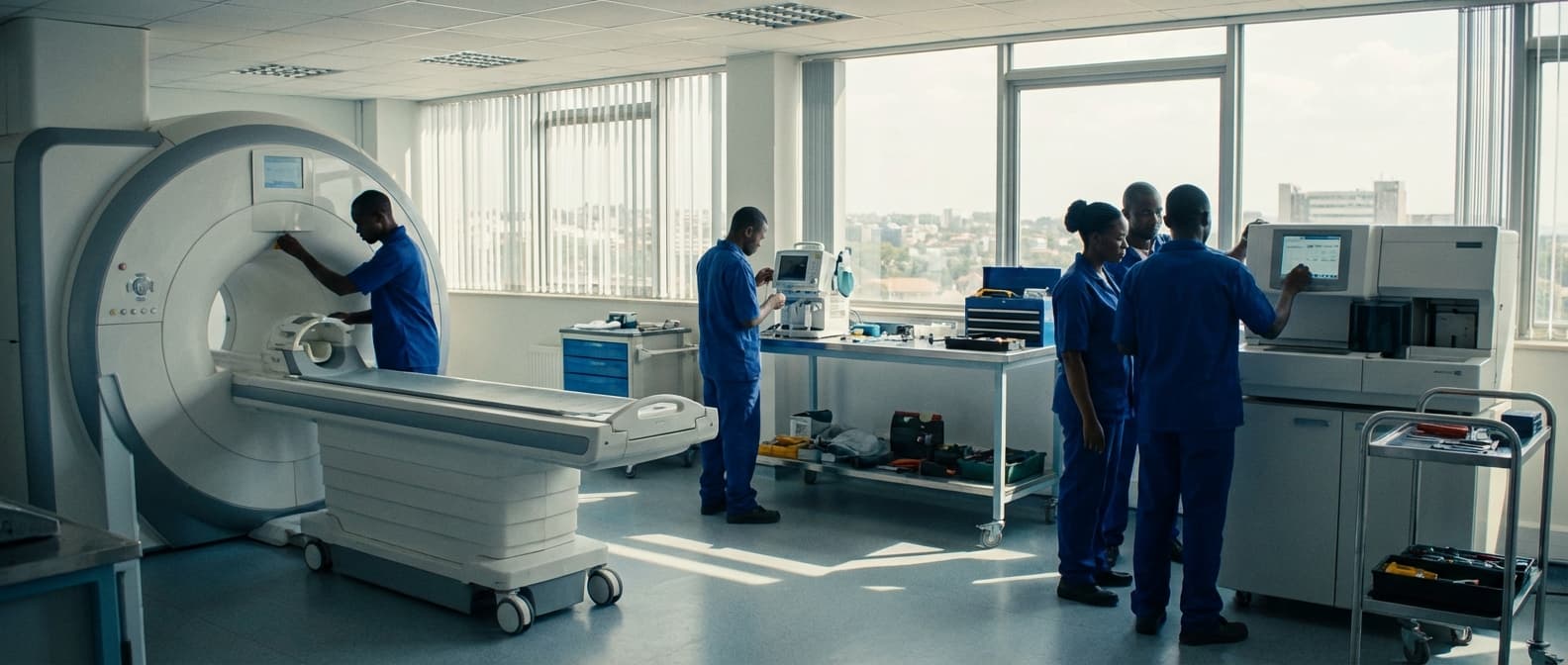
Comprehensive Maintenance Contract (CMC) Management Service (Parts & Labor) in Namibia
Engineering Excellence & Technical Support
Comprehensive Maintenance Contract (CMC) Management Service (Parts & Labor) High-standard technical execution following OEM protocols and local regulatory frameworks.
Proactive Asset Preservation
Leveraging advanced diagnostic tools and scheduled preventative maintenance, our CMC ensures optimal operational uptime and extends the lifespan of your critical machinery and equipment across Namibia, minimizing costly breakdowns and unforeseen repairs.
Integrated Parts & Labor Solution
Experience seamless service delivery with our all-inclusive CMC, covering both genuine OEM parts procurement and expert, certified labor. We manage the entire supply chain and workforce, guaranteeing quality repairs and replacements that adhere to stringent industry standards within Namibia.
Cost-Optimized Operational Efficiency
Our comprehensive maintenance strategies are designed to forecast and control expenses. By bundling parts and labor under a predictable contract, we help Namibian businesses achieve significant cost savings, improve budget predictability, and enhance overall operational efficiency and ROI.
What Is Comprehensive Maintenance Contract (Cmc) Management Service (Parts & Labor) In Namibia?
Comprehensive Maintenance Contract (CMC) Management Service (Parts & Labor) in Namibia refers to a specialized offering designed to oversee and execute the complete maintenance lifecycle of a client's assets. This service encompasses proactive and reactive maintenance, including the procurement, inventory management, and installation of spare parts, as well as the provision of skilled labor for all repair and servicing activities. The primary objective is to ensure optimal operational uptime, extend asset lifespan, and mitigate unforeseen costs through a structured and contractual framework. CMC management in Namibia is particularly relevant for organizations relying on critical equipment or infrastructure where disruptions can lead to significant financial losses and operational inefficiencies. It shifts the burden of maintenance planning, execution, and resource management from the asset owner to a specialized service provider, who assumes responsibility for both the cost and availability of necessary parts and labor within agreed-upon service level agreements (SLAs).
| Who Needs CMC Management Service (Parts & Labor)? | Typical Use Cases in Namibia | |||||
|---|---|---|---|---|---|---|
| Industries with High Capital Equipment Investment: Manufacturing, mining, energy generation, and processing plants where equipment downtime is costly. | Critical Infrastructure Operations: Water treatment facilities, telecommunications networks, and power distribution grids requiring continuous service delivery. | Healthcare Sector: Hospitals and clinics relying on specialized medical equipment (e.g., MRI scanners, ventilators) for patient care. | Logistics and Transportation: Fleet management for trucks, buses, and other heavy-duty vehicles requiring consistent operational readiness. | Agricultural Sector: Large-scale farming operations utilizing sophisticated machinery and irrigation systems. | Construction and Engineering Firms: Managing the maintenance of heavy construction equipment and project-specific installations. | Government and Public Sector Agencies: Maintaining public assets like municipal vehicles, emergency services equipment, and public infrastructure. |
| Mining Operations: Comprehensive maintenance of heavy earthmoving equipment, processing machinery, and electrical systems. | Power Generation Plants: Servicing of turbines, generators, transformers, and associated control systems. | Manufacturing Facilities: Ensuring the uptime of production lines, assembly equipment, and industrial automation systems. | Telecommunications Infrastructure: Maintenance of base stations, transmission equipment, and network hardware. | Water and Wastewater Treatment Plants: Upkeep of pumps, filtration systems, chemical dosing units, and control instrumentation. | Fleet Management: Proactive and reactive maintenance for commercial vehicle fleets, including scheduled servicing and repairs. | Commercial Buildings: HVAC systems, elevators, escalators, and building management systems (BMS). |
Key Components of CMC Management Service (Parts & Labor)
- Preventive Maintenance (PM) Planning and Execution: Scheduled inspections, servicing, and component replacements to prevent failures.
- Corrective Maintenance (CM) and Breakdown Response: Immediate dispatch of technicians and parts to address emergent equipment failures.
- Spare Parts Management: Inventory control, forecasting, procurement, warehousing, and logistics of all required spare parts, ensuring availability and minimizing lead times.
- Labor Management: Sourcing, scheduling, training, and deployment of qualified technical personnel, including in-house teams or subcontracted specialists.
- Condition Monitoring and Predictive Maintenance (PdM): Utilization of advanced diagnostic tools and techniques to anticipate potential failures and optimize maintenance interventions.
- Technical Support and Troubleshooting: Expert assistance for diagnosing and resolving complex technical issues.
- Reporting and Performance Analysis: Regular documentation of maintenance activities, asset performance metrics, cost tracking, and trend analysis for continuous improvement.
- Warranty Management: Administration and coordination of manufacturer warranties for parts and equipment.
- Contractual Obligation Fulfillment: Adherence to all terms and conditions outlined in the CMC agreement, including response times, repair completion targets, and availability guarantees.
Who Needs Comprehensive Maintenance Contract (Cmc) Management Service (Parts & Labor) In Namibia?
A Comprehensive Maintenance Contract (CMC) Management Service, encompassing both parts and labor, is crucial for organizations in Namibia that rely heavily on specialized equipment and infrastructure for their operations. These services ensure that critical assets are maintained in optimal working condition, minimizing downtime, extending lifespan, and preventing costly unexpected breakdowns. This translates to improved operational efficiency, reduced repair costs, and enhanced business continuity.
| Industry/Sector | Key Departments Benefiting | Specific Equipment/Infrastructure Concerns |
|---|---|---|
| Mining and Extractive Industries | Operations, Maintenance, Engineering, Health & Safety | Heavy machinery (excavators, haul trucks), processing equipment (crushers, conveyors), electrical systems, ventilation systems, dewatering pumps. |
| Manufacturing and Industrial Operations | Production, Engineering, Quality Control, Facilities Management | Assembly lines, specialized machinery, HVAC systems, industrial automation equipment, power generation units. |
| Healthcare Sector | Biomedical Engineering, Facilities Management, IT Department, Clinical Operations | Diagnostic imaging equipment (MRI, CT scanners), surgical equipment, laboratory analyzers, life support systems, HVAC, generators. |
| Telecommunications Companies | Network Operations, Infrastructure Management, IT Department | Base stations, fiber optic networks, data centers, power supply systems, cooling systems. |
| Energy and Utilities | Operations, Maintenance, Engineering, Safety | Power turbines, generators, transformers, substations, water treatment plants, pumping stations, distribution networks. |
| Logistics and Transportation | Fleet Management, Operations, Maintenance | Trucks, specialized vehicles, warehousing equipment (forklifts), refrigeration units, IT systems for tracking and management. |
| Financial Institutions | IT Operations, Facilities Management, Security | Servers, data storage, networking equipment, uninterruptible power supplies (UPS), cooling systems, security systems. |
| Government and Public Sector Agencies | Procurement, Facilities Management, IT, Operations | Public transport vehicles, defense equipment, IT infrastructure, municipal infrastructure (water, sanitation), emergency services equipment. |
| Large Commercial Agriculture | Operations, Farm Management, Engineering | Irrigation systems, harvesting machinery, processing equipment, generators, cold storage facilities. |
| Hospitality and Tourism | Facilities Management, Engineering, IT, Operations | HVAC systems, kitchen equipment, laundry facilities, elevators, pool equipment, IT infrastructure, backup power systems. |
Target Customers for CMC Management Service (Parts & Labor) in Namibia
- Mining and Extractive Industries
- Manufacturing and Industrial Operations
- Healthcare Sector (Hospitals, Clinics, Diagnostic Centers)
- Telecommunications Companies
- Energy and Utilities (Power Generation, Water Treatment)
- Logistics and Transportation Companies
- Financial Institutions (Banks, Data Centers)
- Government and Public Sector Agencies (Defense, Infrastructure)
- Large Commercial Agriculture Operations
- Hospitality and Tourism (Large Resorts, Hotels)
Comprehensive Maintenance Contract (Cmc) Management Service (Parts & Labor) Process In Namibia
This document outlines the comprehensive workflow for managing Comprehensive Maintenance Contracts (CMCs) covering both parts and labor within Namibia. It details the process from initial customer inquiry to the successful execution and closure of the contract, ensuring efficient service delivery and client satisfaction.
| Stage | Description | Key Activities | Responsible Department/Role | Key Outputs/Deliverables | Potential Challenges & Mitigation | |
|---|---|---|---|---|---|---|
| Inquiry & Qualification | Receiving and evaluating initial interest from potential clients for CMC services. | Respond to inquiries (phone, email, web). Understand client needs and equipment. Pre-qualify client based on scope and capability. Schedule initial consultation. | Sales/Business Development, Technical Sales Support | Qualified lead, Initial client needs assessment document. | Lack of clear requirements. Mitigation: Detailed questioning and site visits. | Unclear budget. Mitigation: Discuss budget expectations early on. |
| Proposal Generation & Negotiation | Developing a tailored service proposal based on the client's specific needs and equipment. | Conduct site survey. Assess asset inventory. Define service scope (preventive, corrective, parts included). Cost estimation (labor, parts, travel). Prepare detailed proposal document. Present proposal to client. Negotiate terms and pricing. | Technical Sales Support, Service Manager, Procurement | Comprehensive CMC proposal, Revised proposal, Pricing matrix. | Underestimation of costs. Mitigation: Robust cost analysis, buffer inclusion. | Client requesting extensive scope not initially considered. Mitigation: Change order process, clear scope definition. |
| Contract Finalization & Signing | Formalizing the agreed-upon terms and conditions into a legally binding contract. | Draft contract document. Legal review. Client review and approval. Signing of contract by both parties. Issuance of official purchase order/contract confirmation. | Legal Department, Sales Department, Finance Department | Signed CMC contract, Purchase Order. | Disagreements on legal clauses. Mitigation: Standard contract templates, clear communication with legal. | Delays in internal approvals. Mitigation: Proactive follow-up with internal departments. |
| Onboarding & Asset Registration | Integrating the new client and their assets into the company's service management system. | Client onboarding documentation. Create client profile in CRM/ERP. Register all covered assets (serial numbers, model, location, warranty status). Assign dedicated service team/manager. Schedule initial asset inspection (if applicable). | Service Operations, Client Relationship Manager, IT Department | Client profile in system, Registered asset list, Assigned service team. | Inaccurate asset data. Mitigation: Thorough verification during registration and initial inspections. | System integration issues. Mitigation: Dedicated IT support and testing. |
| Service Delivery Planning | Developing a proactive plan for delivering all contractual maintenance services. | Create preventive maintenance schedule. Plan for spare parts inventory. Allocate labor resources. Define escalation procedures. Establish communication protocols with client. | Service Manager, Operations Manager, Planning Department | Preventive maintenance schedule, Resource allocation plan, Communication plan. | Insufficient skilled labor. Mitigation: Training programs, cross-skilling. | Unforeseen resource demands. Mitigation: Contingency planning, outsourcing options. |
| Preventive Maintenance | Executing scheduled maintenance activities to prevent equipment failure and downtime. | Conduct scheduled inspections. Perform routine servicing and cleaning. Lubrication. Calibration. Replace wear-and-tear parts as per schedule. Document all activities and findings. | Field Service Technicians, Service Engineers | Completed PM checklists, Maintenance logs, Service reports. | Access issues to client site. Mitigation: Pre-scheduling and client coordination. | Equipment accessibility for maintenance. Mitigation: Flexible scheduling, client liaison. |
| Corrective Maintenance & Repair | Responding to equipment breakdowns and performing necessary repairs. | Receive service request/breakdown notification. Diagnose issue. Dispatch technician. Repair or replace faulty parts. Test functionality. Document all activities and parts used. | Field Service Technicians, Service Engineers, Technical Support | Fault diagnosis reports, Repair logs, Service completion reports. | Availability of specialized technicians. Mitigation: Training, on-call specialist roster. | Difficulty in diagnosing complex issues. Mitigation: Advanced diagnostic tools, knowledge base access. |
| Parts Procurement & Management | Ensuring the availability of necessary spare parts for repairs and preventive maintenance. | Monitor inventory levels. Procure parts based on demand and contract. Manage stock (storage, tracking, quality control). Handle returns and warranty claims. Maintain relationships with suppliers. | Procurement Department, Stores/Inventory Management, Service Manager | Inventory reports, Procurement orders, Stock reconciliation. | Parts lead times. Mitigation: Strategic supplier relationships, buffer stock. | Counterfeit or low-quality parts. Mitigation: Strict supplier vetting and quality checks. |
| Labor Management & Scheduling | Efficiently allocating and managing the technical workforce. | Schedule technician availability. Assign technicians to PM and CM tasks. Manage travel and accommodation. Track technician time and performance. Ensure compliance with labor laws and safety regulations. | Service Manager, Field Service Supervisors, HR Department | Technician schedules, Time sheets, Performance reports. | Technician absenteeism or turnover. Mitigation: Employee engagement, attractive compensation. | Overlapping or conflicting schedules. Mitigation: Robust scheduling software, clear communication. |
| Reporting & Invoicing | Providing regular performance updates to the client and generating accurate invoices. | Generate monthly/quarterly service reports (PMs completed, CMs performed, response times). Invoice for services rendered as per contract terms. Reconcile invoices with service records. Address client queries regarding invoices. | Finance Department, Service Administrator, Client Relationship Manager | Monthly/Quarterly Service Reports, Invoices, Payment reconciliations. | Discrepancies in service records and invoices. Mitigation: Automated reconciliation, rigorous verification. | Client disputes on invoices. Mitigation: Clear documentation, transparent billing. |
| Contract Review & Renewal | Periodically reviewing contract performance and managing the renewal process. | Conduct periodic contract performance reviews with client. Assess client satisfaction. Identify areas for improvement. Initiate renewal discussions. Update contract terms if necessary. | Client Relationship Manager, Service Manager, Sales Department | Performance review minutes, Renewal proposal, Updated contract. | Client dissatisfaction leading to non-renewal. Mitigation: Proactive service improvement and communication. | Difficulty in renegotiating terms. Mitigation: Early engagement, clear value proposition. |
| Service Closure & Feedback | Formally closing out contracts and gathering feedback for continuous improvement. | Finalize all outstanding service activities. Conduct final asset handover (if applicable). Obtain client sign-off on service completion. Collect client feedback (surveys, interviews). Archive contract and service records. | Service Administrator, Client Relationship Manager, Quality Assurance | Service closure confirmation, Client feedback report, Archived records. | Outstanding issues at closure. Mitigation: Thorough final inspections and sign-offs. | Lack of meaningful feedback. Mitigation: Well-designed feedback mechanisms and incentives. |
Key Stages of CMC Management Service (Parts & Labor) Process
- Inquiry & Qualification
- Proposal Generation & Negotiation
- Contract Finalization & Signing
- Onboarding & Asset Registration
- Service Delivery Planning
- Preventive Maintenance
- Corrective Maintenance & Repair
- Parts Procurement & Management
- Labor Management & Scheduling
- Reporting & Invoicing
- Contract Review & Renewal
- Service Closure & Feedback
Comprehensive Maintenance Contract (Cmc) Management Service (Parts & Labor) Cost In Namibia
Managing Comprehensive Maintenance Contracts (CMCs) for parts and labor in Namibia involves a variety of costs influenced by several key factors. These contracts are essential for businesses to ensure the smooth operation and longevity of their equipment, ranging from IT infrastructure and industrial machinery to vehicles and specialized operational assets. The pricing of such services is not a fixed figure but rather a dynamic calculation based on the specific needs and circumstances of the client and the service provider.
| Asset Category (Examples) | Estimated Annual CMC Cost Range (NAD) - % of Asset Value | Typical Coverage Elements |
|---|---|---|
| IT Equipment (Servers, Workstations, Laptops) | 5% - 15% of Asset Value | On-site/remote support, hardware repair (parts & labor), software troubleshooting, preventative maintenance, guaranteed response times. |
| Office Equipment (Printers, Copiers, Scanners) | 8% - 20% of Asset Value | On-site repair (parts & labor), toner/consumables (sometimes excluded), preventative maintenance, call-out fees. |
| Industrial Machinery (Manufacturing, Mining) | 8% - 25% of Asset Value (can be higher for highly specialized equipment) | On-site repair (parts & labor), scheduled preventative maintenance, breakdown support, specialized technician deployment, availability of critical spares. |
| Vehicles (Fleet Management) | 5% - 12% of Vehicle Value (annual cost) | Scheduled servicing, breakdown repairs (parts & labor), diagnostics, fluid replacements, tire rotation (often excludes wear and tear items like tires, brakes unless specified). |
| Specialized Scientific or Medical Equipment | 10% - 30% of Asset Value (can be significantly higher) | Highly specialized on-site repair (parts & labor), calibration, certification, access to manufacturer-trained technicians, critical spare parts management. |
Key Pricing Factors for CMC (Parts & Labor) in Namibia:
- Asset Type and Complexity: The nature of the equipment is a primary determinant. Complex machinery with intricate components, specialized diagnostic tools, or high-risk operational elements will command higher CMC costs than simpler, more standardized equipment. For instance, maintaining a fleet of heavy-duty mining equipment will be significantly more expensive than a contract for office printers.
- Age and Condition of Equipment: Older or pre-existing equipment that may be prone to more frequent breakdowns or require specialized parts will generally incur higher maintenance costs. A service provider might factor in a higher risk premium for older assets.
- Scope of Coverage (Parts & Labor): The comprehensiveness of the contract is crucial. Full parts and labor coverage, including preventative maintenance, emergency repairs, and on-site support, will be priced higher than contracts that might exclude certain types of parts or limit labor hours.
- Downtime Sensitivity: For businesses where downtime is extremely costly (e.g., manufacturing, critical IT systems), the contract may include provisions for rapid response times, 24/7 support, and guaranteed uptime. These premium service levels will directly impact the overall cost.
- Geographic Location and Accessibility: The physical location of the equipment within Namibia plays a role. Remote areas may incur additional travel and logistical costs for technicians and parts delivery, leading to higher CMC pricing.
- Manufacturer and Brand: The availability and cost of spare parts from specific manufacturers can influence pricing. Original Equipment Manufacturer (OEM) parts are often more expensive than generic alternatives. Some brands may also have higher recommended service intervals or require specialized, costly parts.
- Service Provider's Expertise and Reputation: Established service providers with a proven track record, certified technicians, and extensive experience in specific equipment types may charge a premium for their expertise and reliability.
- Contract Duration and Service Level Agreements (SLAs): Longer contract durations can sometimes lead to slightly discounted rates per period. The specific SLAs, including response times, resolution times, and availability guarantees, will be priced accordingly.
- Usage and Operating Environment: The intensity of equipment usage and the environment in which it operates (e.g., dusty, corrosive, high-temperature) can lead to increased wear and tear, thus affecting maintenance frequency and cost. For example, vehicles used in mining operations will require more frequent and intensive maintenance than those used for city commuting.
- Included Preventative Maintenance: The frequency and scope of scheduled preventative maintenance are crucial. A robust preventative maintenance program can reduce unexpected breakdowns but adds to the overall CMC cost.
- Inventory Management and Parts Availability: If the CMC includes ensuring the availability of critical spare parts, the cost of holding and managing this inventory will be factored in.
Affordable Comprehensive Maintenance Contract (Cmc) Management Service (Parts & Labor) Options
Our Affordable Comprehensive Maintenance Contract (CMC) Management Service offers a robust solution for businesses seeking to streamline their equipment upkeep while optimizing costs. We understand that proactive maintenance is crucial for minimizing downtime, extending equipment lifespan, and ensuring operational efficiency. Our service goes beyond basic repairs, encompassing a holistic approach to your asset management. We provide tailored CMC options that integrate parts and labor, offering peace of mind and predictable budgeting. Explore our value bundles designed to cater to diverse business needs and discover our proven cost-saving strategies that deliver significant ROI.
| Value Bundle | Description | Included Services | Ideal For | Cost-Saving Strategies Leveraged |
|---|---|---|---|---|
| Essential Care | Our foundational CMC package, designed for standard maintenance needs and budget-conscious businesses. | Scheduled preventive maintenance, priority breakdown support (within business hours), standard parts replacement, labor included. | Small to medium-sized businesses, non-critical equipment, established asset base. | Preventive Maintenance: Reduces frequency of costly reactive repairs. Standardized Parts: Bulk purchasing discounts on common components. Efficient Scheduling: Optimized technician routes. |
| Proactive Plus | An enhanced package offering more comprehensive support and proactive diagnostics for increased uptime. | All Essential Care features PLUS: Advanced remote monitoring, predictive maintenance insights, 24/7 emergency support, extended warranty on replaced parts. | Growing businesses, critical operational equipment, companies prioritizing uptime and efficiency. | Predictive Maintenance: Prevents major failures. Remote Monitoring: Reduces on-site visits. Bulk Part Orders: Negotiated rates for higher volume needs. Extended Warranty Savings: Reduced out-of-pocket for recurring part issues. |
| Total Asset Guardian | Our premium solution offering end-to-end management of your asset maintenance lifecycle with maximum cost optimization. | All Proactive Plus features PLUS: Full asset lifecycle management, performance optimization consultation, strategic parts inventory management, dedicated on-site technician (optional), training for internal staff. | Large enterprises, mission-critical infrastructure, companies with diverse and complex asset portfolios. | Total Cost of Ownership (TCO) Optimization: Strategic planning for asset replacement and maintenance. Strategic Inventory: Reduced carrying costs and minimized obsolescence. Process Streamlining: Improved workflow for maintenance operations. Energy Efficiency Audits: Identifying and implementing cost-saving operational adjustments. |
Key Features & Benefits of Our CMC Management Service
- Comprehensive Coverage: Includes both parts and labor for all scheduled and unscheduled maintenance, minimizing unexpected expenses.
- Proactive Maintenance Scheduling: Utilizes data-driven insights to predict potential issues and schedule maintenance before failures occur, reducing costly downtime.
- 24/7 Emergency Support: Access to expert technicians and rapid response for critical equipment breakdowns.
- Dedicated Account Management: A single point of contact to manage your CMC, ensuring seamless communication and personalized service.
- Inventory Management: Optimized parts ordering and warehousing to reduce lead times and ensure availability.
- Performance Monitoring & Reporting: Regular analysis of equipment performance and maintenance records to identify trends and improvement opportunities.
- Extended Equipment Lifespan: Regular and expert maintenance significantly extends the operational life of your assets, deferring capital expenditure.
- Budget Predictability: Fixed or tiered pricing models provide clear visibility into maintenance costs, aiding financial planning.
- Increased Operational Efficiency: Minimizing downtime and ensuring equipment reliability directly impacts productivity and output.
- Compliance & Safety Assurance: Ensures equipment operates within safety regulations and industry standards.
Verified Providers In Namibia
Finding reliable and trustworthy healthcare providers is paramount to your well-being. In Namibia, the landscape of healthcare services can sometimes be complex to navigate. This guide focuses on identifying verified providers and highlights why Franance Health stands out as a premier choice, backed by strong credentials and a commitment to quality care.
| Feature/Credential | Franance Health's Offering | Why it Matters |
|---|---|---|
| Ministry of Health and Social Services (MoHSS) Recognition | Fully recognized and compliant with MoHSS regulations and standards. | Ensures adherence to national healthcare policies, safety protocols, and quality benchmarks set by the Namibian government. |
| International Accreditation Standards (if applicable) | Actively pursuing or meeting international quality benchmarks in patient care and facility management. | Demonstrates a commitment to global best practices, enhancing patient safety, efficiency, and the overall quality of medical services. |
| Qualified and Licensed Medical Professionals | Employs a team of highly qualified doctors, nurses, and specialists, all holding valid Namibian practicing licenses and relevant certifications. | Guarantees that you are treated by competent professionals with the expertise and legal authority to provide medical care. |
| Patient-Centric Approach | Prioritizes patient comfort, clear communication, and personalized treatment plans. | Fosters trust and confidence, leading to better patient outcomes and a more positive healthcare experience. |
| Advanced Medical Technology and Facilities | Invests in modern diagnostic and treatment equipment, maintaining well-equipped and clean facilities. | Enables accurate diagnoses, effective treatments, and a safe and comfortable environment for patients. |
| Ethical Practice and Transparency | Upholds the highest ethical standards in all patient interactions, with clear and upfront communication regarding treatments and costs. | Builds a foundation of trust and ensures patients are fully informed and respected throughout their healthcare journey. |
| Positive Patient Feedback and Testimonials | Consistently receives positive feedback from satisfied patients regarding service quality, professionalism, and outcomes. | Provides real-world evidence of their commitment to excellence and patient satisfaction. |
What Makes a Healthcare Provider 'Verified'?
- Accreditation by recognized health authorities (e.g., Namibia's Ministry of Health and Social Services, international bodies).
- Membership in professional medical associations.
- Positive patient reviews and testimonials from verified sources.
- Adherence to strict ethical and professional standards.
- Proof of continuous professional development for medical staff.
- Transparent pricing and billing practices.
Scope Of Work For Comprehensive Maintenance Contract (Cmc) Management Service (Parts & Labor)
This Scope of Work (SOW) outlines the requirements for a Comprehensive Maintenance Contract (CMC) Management Service, encompassing both parts and labor. The service provider will be responsible for the proactive and reactive maintenance of designated equipment, ensuring optimal performance, minimal downtime, and extended equipment lifespan. This includes scheduled preventive maintenance, emergency repairs, spare parts management, and reporting.
The objective is to establish a robust maintenance framework that guarantees the operational readiness of critical assets and minimizes unforeseen expenditures associated with equipment failure.
| Category | Specific Deliverables | Standard Specifications / Requirements |
|---|---|---|
| Preventive Maintenance (PM) | Execution of scheduled PM activities as per manufacturer recommendations and agreed-upon schedule. | PM checklists developed and approved by the client. Use of manufacturer-recommended lubricants, filters, and consumables. Calibration of critical components. Performance testing post-PM. PM reports detailing activities performed, findings, and recommendations. |
| Corrective Maintenance (CM) / Breakdown Maintenance | Response to equipment breakdowns and emergency repair requests. | Defined response times (e.g., 4 hours for critical equipment, 8 hours for non-critical). On-site diagnosis and repair. Use of genuine or OEM-approved spare parts. Root cause analysis (RCA) for recurring issues. Post-repair testing and verification. CM reports detailing incident, diagnosis, parts used, labor hours, and resolution. |
| Spare Parts Management | Procurement, stocking, and inventory management of critical spare parts. | Identification of critical spare parts based on equipment criticality and failure history. Maintenance of an adequate stock of essential spares. Just-in-time (JIT) procurement for non-stocked items. Inventory tracking and reporting. Management of warranty claims for parts. Cost-effective procurement strategies. |
| Technical Support and Troubleshooting | Provision of remote and on-site technical assistance. | Availability of qualified technicians for troubleshooting. Access to technical documentation and manuals. Guidance on operational best practices. Support for minor adjustments and configurations. |
| Reporting and Documentation | Regular and comprehensive reporting on maintenance activities. | Monthly/Quarterly/Annual maintenance reports including PM and CM activities, equipment status, downtime analysis, spare parts consumption, costs incurred, and recommendations for improvement. Maintenance logs and records maintained digitally. Asset register updates. |
| Continuous Improvement Initiatives | Proactive identification and implementation of opportunities to enhance equipment reliability and reduce maintenance costs. | Analysis of maintenance data to identify trends and patterns. Recommendations for equipment upgrades or replacements. Implementation of predictive maintenance techniques where applicable. Training of client personnel on basic maintenance and operation. |
Key Service Components
- Preventive Maintenance (PM)
- Corrective Maintenance (CM) / Breakdown Maintenance
- Spare Parts Management
- Technical Support and Troubleshooting
- Reporting and Documentation
- Continuous Improvement Initiatives
Service Level Agreement For Comprehensive Maintenance Contract (Cmc) Management Service (Parts & Labor)
This Service Level Agreement (SLA) outlines the response times and uptime guarantees for the Comprehensive Maintenance Contract (CMC) Management Service, covering both parts and labor. It is designed to ensure prompt and reliable support for all covered equipment and systems.
| Incident Severity | Support Availability | Response Time Target | Target Resolution Time (after response) | Uptime Guarantee |
|---|---|---|---|---|
| Critical | 24x7 | 1 Hour | 4 Hours | 99.8% (monthly) |
| Major | Business Hours | 2 Hours | 8 Business Hours | 99.5% (monthly) |
| Minor | Business Hours | 4 Business Hours | 2 Business Days | 99.0% (monthly) |
Key Definitions
- Critical Incident: An event that renders a core system or critical piece of equipment inoperable, significantly impacting business operations.
- Major Incident: An event that degrades the performance of a system or equipment, causing significant but not complete operational disruption.
- Minor Incident: An event that causes a minor disruption to a system or equipment, or a request for information or a routine maintenance task.
- Response Time: The maximum time allowed for our support team to acknowledge and begin working on a reported incident after it has been logged and classified.
- Resolution Time: The maximum time allowed to resolve an incident and restore the affected system or equipment to full operational status. This is an indicative target and may be subject to the availability of parts and third-party vendor support.
- Uptime Guarantee: The percentage of time that covered systems and equipment are expected to be operational and available for use.
- Business Hours: Typically 08:00 to 18:00 local time, Monday to Friday, excluding public holidays, unless otherwise specified in the CMC contract.
- 24x7 Support: Support available on a continuous basis, regardless of day or time.
Frequently Asked Questions

Ready when you are
Let's scope your Comprehensive Maintenance Contract (CMC) Management Service (Parts & Labor) in Namibia project in Namibia.

Scaling healthcare logistics and technical systems across the entire continent.