
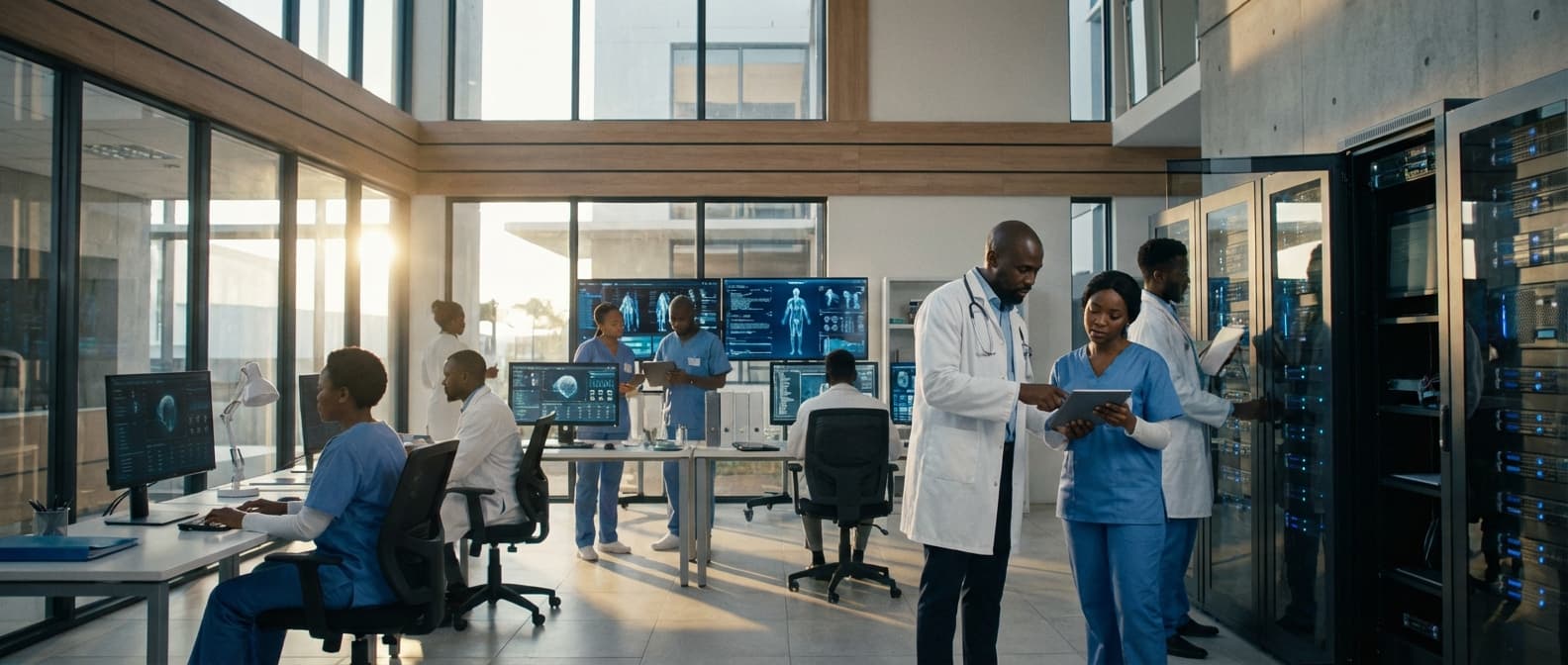
Tele-Radiology in Namibia
Engineering Excellence & Technical Support
24/7 access to certified radiologists providing rapid, accurate remote interpretation of diagnostic imaging studies. High-standard technical execution following OEM protocols and local regulatory frameworks.
Enhanced Diagnostic Reach
Tele-radiology expands diagnostic capabilities across Namibia, enabling remote specialists to interpret medical images from underserved or remote clinics, ensuring timely and accurate diagnoses for a wider population, irrespective of geographical barriers.
Rapid Image Transfer & Collaboration
Secure and efficient digital transmission of radiological images (X-rays, CT scans, MRIs) allows for near real-time consultation and collaboration between Namibian healthcare facilities and international or national tele-radiology hubs, accelerating patient care pathways.
AI-Assisted Interpretation
Integration of Artificial Intelligence (AI) algorithms with tele-radiology platforms in Namibia can assist radiologists in identifying potential abnormalities and prioritizing urgent cases, improving diagnostic accuracy and workflow efficiency.
What Is Tele-radiology In Namibia?
Tele-radiology in Namibia refers to the practice of remotely transmitting radiological images (such as X-rays, CT scans, MRIs, and ultrasounds) from one geographic location to another for the purpose of interpretation and consultation by a qualified radiologist. This service bridges the gap in access to specialized radiological expertise, particularly in remote or underserved areas of Namibia where fully equipped diagnostic imaging facilities and on-site radiologists may be scarce or non-existent. It involves the utilization of secure digital networks and Picture Archiving and Communication Systems (PACS) to ensure efficient and safe transfer of large imaging files. The core functionality lies in enabling radiologists to read and report on medical images from off-site locations, thereby facilitating timely diagnosis and treatment planning for patients.
| Who Needs Tele-Radiology in Namibia? | Typical Use Cases |
|---|---|
| Patients in Remote and Rural Areas: Individuals living far from major hospitals or urban centers with limited access to diagnostic imaging services and specialist radiologists. | Emergency Department Consultations: Providing immediate interpretation of critical imaging studies (e.g., trauma, stroke) when on-site radiologists are unavailable, enabling rapid decision-making. |
| Primary Healthcare Facilities: Clinics and health posts lacking in-house radiology departments or specialists, requiring remote interpretation of basic imaging studies. | Specialized Consultations: Facilitating access to sub-specialty radiology expertise (e.g., neuroradiology, musculoskeletal radiology, interventional radiology) that may not be locally present. |
| District and Regional Hospitals: Facilities with imaging equipment but insufficient radiologist staffing, leading to diagnostic backlogs or delayed reporting. | Outreach Programs and Mobile Clinics: Supporting diagnostic capabilities for medical missions or mobile health units operating in geographically dispersed communities. |
| Private Healthcare Providers: Smaller clinics or practices that may not warrant a full-time radiologist but require access to diagnostic imaging interpretation. | Second Opinion and Case Review: Enabling referring physicians to obtain expert second opinions on complex or challenging cases to enhance diagnostic accuracy. |
| Medical Training and Education: Providing remote learning opportunities for radiology trainees and referring physicians, exposing them to a wider range of cases. | Screening Programs: Supporting large-scale public health screening initiatives (e.g., tuberculosis, mammography) by enabling centralized interpretation of a high volume of images. |
Key Components and Requirements of Tele-Radiology in Namibia
- Image Acquisition: Generation of diagnostic quality radiological images using various modalities (X-ray, CT, MRI, Ultrasound).
- Digitalization and Archiving: Conversion of analog images to digital format (if applicable) and storage within a PACS.
- Secure Transmission Network: Establishment of a robust and secure digital network infrastructure (e.g., VPNs, encrypted channels) for image data transfer.
- Tele-radiology Platform/Software: Specialized software for image viewing, manipulation, reporting, and communication between referring physicians and radiologists.
- Radiologist Interpretation: Board-certified radiologists providing expert analysis and written reports of the acquired images.
- Reporting and Communication: Delivery of interpreted reports back to the referring clinician in a timely manner, often via the tele-radiology platform or secure electronic means.
- Quality Assurance: Protocols for ensuring image quality, data integrity, and accuracy of interpretation.
Who Needs Tele-radiology In Namibia?
Tele-radiology offers a transformative solution for enhancing diagnostic imaging services in Namibia, addressing critical gaps in access, expertise, and efficiency. Given the vast geographical spread and limited availability of specialized radiologists, particularly in rural and underserved areas, tele-radiology can bridge these disparities. It enables remote interpretation of medical images (X-rays, CT scans, MRIs, ultrasounds) by qualified radiologists located anywhere, providing timely and accurate diagnoses that are crucial for effective patient care and management. This technology is not just a luxury; it's a necessity for improving health outcomes across the nation.
| Customer Segment | Key Needs Addressed by Tele-Radiology | Impact on Departments |
|---|---|---|
| Rural/Remote Clinics & Hospitals | Access to specialized interpretation, reduced travel burden, faster diagnosis, improved patient outcomes. | Enhances diagnostic capabilities for primary care, emergency, and general medicine departments. |
| District Hospitals | Supplementing existing radiologist capacity, reducing turnaround times, improving diagnostic accuracy, access to sub-specialties. | Supports emergency, general surgery, internal medicine, and pediatrics. |
| Tertiary/Referral Hospitals | Sub-specialty consultations, managing workload overflow, 24/7 coverage, access to niche expertise. | Benefits all specialized departments including neurology, cardiology, oncology, and pediatrics. |
| Private Radiology Practices | Expanding service offerings, 24/7 availability, access to broader expertise, cost-effectiveness. | Increases efficiency and scope for general radiology, diagnostic imaging, and specialized reporting. |
| Emergency Departments | Rapid interpretation of critical imaging (trauma, stroke, acute abdomen), timely decision-making, improved patient survival rates. | Directly impacts patient care in critical situations, supporting trauma, acute care, and resuscitation. |
| Maternal & Child Health | Expert interpretation of ultrasounds and pediatric scans, early detection of developmental or congenital issues. | Crucial for obstetrics, gynecology, and pediatrics departments. |
| Oncology | Accurate staging, treatment planning, and monitoring of treatment response. | Essential for the oncology department's diagnostic and follow-up protocols. |
Target Customers and Departments for Tele-Radiology in Namibia:
- Rural and Remote Clinics/Hospitals: These facilities often lack on-site radiologists and may experience significant delays in diagnosis due to the need to transport images or patients to larger centers. Tele-radiology provides immediate access to expert interpretation.
- District Hospitals: Even these larger facilities may have a shortage of specialized radiologists or struggle with high caseloads. Tele-radiology can supplement existing services, reduce turnaround times, and improve diagnostic accuracy.
- Tertiary and Referral Hospitals: While these institutions typically have more radiologists, tele-radiology can be used for sub-specialty consultations, overflow management during peak times, or to access expertise not locally available (e.g., pediatric radiology, neuro-radiology).
- Private Radiology Practices: Smaller private practices, especially those outside major urban centers, can leverage tele-radiology to expand their service offerings and compete with larger institutions by offering 24/7 coverage or access to a wider range of sub-specialties.
- Emergency Departments (All Facility Types): Timely interpretation of emergency imaging is critical. Tele-radiology can provide rapid reads for conditions like trauma, stroke, and acute abdominal pain, especially outside of regular working hours.
- Maternal and Child Health Departments: Access to expert interpretation of obstetric ultrasounds and pediatric imaging is vital for early detection of abnormalities and appropriate management.
- Oncology Departments: Accurate and timely imaging is essential for staging, treatment planning, and monitoring response in cancer patients.
- Surgical Departments: Pre-operative and post-operative imaging interpretation is crucial for surgical planning and patient recovery. Tele-radiology can ensure prompt reviews.
- Public Health Initiatives and Screening Programs: For large-scale screening programs (e.g., tuberculosis, breast cancer), tele-radiology can efficiently manage the high volume of images and ensure consistent quality of interpretation across different sites.
Tele-radiology Process In Namibia
Tele-radiology, also known as teleradiology, is the practice of interpreting medical images remotely. In Namibia, this process has become increasingly vital for expanding access to diagnostic imaging services, particularly in underserved rural areas or regions with limited radiologist availability. The workflow generally begins with a referral or inquiry from a healthcare facility, which then triggers a series of steps to ensure efficient and accurate image interpretation and reporting.
| Stage | Description | Key Stakeholders | Technology/Tools |
|---|---|---|---|
| Inquiry & Referral | Request for radiological interpretation initiated by a healthcare provider. | Referring Physician, Healthcare Facility Staff | Referral Forms, EMR/EHR Systems |
| Image Acquisition & Preparation | Capturing and preparing medical images for transmission. | Radiology Technologist, Imaging Department | X-ray Machines, CT Scanners, MRI Machines, DICOM software, Anonymization tools |
| Secure Transmission | Sending anonymized images to the tele-radiology hub. | IT Department, PACS Administrator | Secure Internet Connection, VPN, PACS, HL7 standards |
| Teleradiology Platform Reception & Triage | Receiving, organizing, and prioritizing incoming studies. | Teleradiology Platform Operator, Radiologist (for triage) | Teleradiology Worklist Software, PACS Viewer |
| Radiologist Interpretation | Remote analysis of medical images by a qualified radiologist. | Radiologist | High-resolution Monitors, PACS Viewer, Dictation Software |
| Report Generation | Creating a detailed diagnostic report based on image findings. | Radiologist | Dictation Software, Speech Recognition Software, Reporting Templates |
| Report Review (Optional) | Quality assurance and verification of the generated report. | Senior Radiologist | Radiology Reporting Software |
| Report Transmission | Sending the finalized report back to the referring facility. | Teleradiology Platform Operator, IT Department | Secure Email, PACS, Secure Web Portal |
| Referring Physician Action | Integrating the report into patient care and management. | Referring Physician, Clinical Team | EMR/EHR Systems, Patient Records |
| Billing & Administration | Processing invoices and managing financial transactions. | Billing Department, Administration | Billing Software, Accounting Systems |
Tele-Radiology Process in Namibia: Workflow Breakdown
- {"title":"1. Inquiry and Referral Generation","description":"The process starts when a referring physician or healthcare facility in Namibia identifies a need for radiological interpretation of medical images (e.g., X-rays, CT scans, MRIs)."}
- {"title":"2. Image Acquisition and Preparation","description":"Local healthcare professionals at the referring facility acquire the medical images using their diagnostic imaging equipment. These images are then prepared for transmission, often involving DICOM (Digital Imaging and Communications in Medicine) formatting and anonymization to protect patient privacy."}
- {"title":"3. Secure Image Transmission","description":"The anonymized DICOM images are securely transmitted to a central tele-radiology hub or directly to the radiologist's workstation. This transmission typically occurs over a secure internet connection or a dedicated Picture Archiving and Communication System (PACS) network, adhering to data security and privacy regulations."}
- {"title":"4. Teleradiology Platform Reception and Triage","description":"Upon receipt at the tele-radiology platform, the images are logged into a worklist. A preliminary review or triage might be conducted to prioritize urgent cases (e.g., stroke, trauma) based on pre-defined protocols."}
- {"title":"5. Radiologist Interpretation","description":"A qualified Namibian radiologist, or a radiologist contracted through a tele-radiology service provider, accesses the images on their specialized workstation. They perform a thorough interpretation of the scans, identifying any abnormalities or findings."}
- {"title":"6. Report Generation","description":"Following the interpretation, the radiologist dictates or types a comprehensive diagnostic report. This report includes findings, impression, and recommendations for further management. The report is often generated using standardized templates and voice recognition software."}
- {"title":"7. Report Review and Quality Assurance","description":"In some tele-radiology models, reports may undergo a secondary review by a senior radiologist for quality assurance and to ensure accuracy and consistency. This step is crucial for maintaining high diagnostic standards."}
- {"title":"8. Report Transmission and Communication","description":"The finalized diagnostic report is securely transmitted back to the referring healthcare facility. This can be done via the PACS, a secure email, or a dedicated reporting portal. Critical findings may be communicated verbally to the referring physician for immediate action."}
- {"title":"9. Referring Physician Action and Follow-up","description":"The referring physician receives the report and integrates the radiological findings into the patient's overall management plan. This may involve further investigations, treatment, or patient counseling. The referring facility is responsible for archiving the report and images within their local system."}
- {"title":"10. Billing and Administration","description":"The administrative aspect involves the processing of billing for the tele-radiology service provided to the referring facility or directly to the relevant healthcare provider or insurer."}
Tele-radiology Cost In Namibia
Tele-radiology, the practice of interpreting medical images remotely, is an emerging field in Namibia with the potential to significantly improve access to diagnostic services, especially in underserved areas. However, understanding the cost associated with these services is crucial for healthcare providers and patients. The pricing of tele-radiology in Namibia is influenced by a complex interplay of factors, and a definitive, standardized price list is not yet widely established due to the nascent nature of the market. Costs are typically negotiated or structured based on service models. Key pricing factors include:
- Type of Imaging Modality: Different imaging types (X-ray, CT, MRI, Ultrasound) require varying levels of expertise and interpretation time. More complex modalities like CT and MRI will generally incur higher costs.
- Urgency and Turnaround Time: Expedited readings for emergency cases or urgent requests will command a premium over routine interpretations. Standard turnaround times can range from several hours to a few days, depending on the agreement.
- Volume and Long-Term Contracts: Healthcare facilities that commit to a higher volume of studies or enter into long-term contracts with tele-radiology providers often benefit from discounted rates. This is a common practice to incentivize consistent usage.
- Radiologist Specialization: The need for sub-specialty interpretations (e.g., neuro-radiology, pediatric radiology) can influence pricing, as these highly specialized skills may be more in demand and thus command higher fees.
- Technology Infrastructure and Support: The cost to the provider for maintaining the tele-radiology platform, secure data transmission, and technical support is often factored into the pricing model. This can be a significant overhead for tele-radiology companies.
- Geographic Location and Accessibility: While tele-radiology aims to bridge geographical gaps, the operational costs for the provider might still be influenced by the complexity of reaching and supporting remote sites within Namibia.
- Billing Model: Providers may offer various billing models. Per-study fees are common, but some may offer per-exam or even subscription-based models for facilities with predictable caseloads.
Pricing Ranges in Namibian Dollars (NAD):
Due to the limited market and varying provider structures, precise pricing is difficult to pinpoint. However, based on discussions with healthcare professionals and the general understanding of service costs, estimated ranges can be provided. These are illustrative and subject to negotiation and specific service agreements.
- X-rays: A per-study interpretation for standard X-rays might range from NAD 200 to NAD 500. This can increase for more complex multi-view studies or specialized X-ray types.
- CT Scans: For CT scan interpretations, the cost per study could be estimated between NAD 600 to NAD 1500. Higher costs would apply for complex abdominal/pelvic scans, head CTs requiring detailed neuro-radiological assessment, or multi-phase studies.
- MRI Scans: MRI interpretations are generally more expensive due to longer scan times and complexity. Per-study costs could range from NAD 1000 to NAD 2500 or more for advanced sequences or specific anatomical regions like the spine or brain.
- Ultrasound: Ultrasound interpretations, depending on the complexity (e.g., obstetric vs. general abdominal), might fall within the range of NAD 300 to NAD 800 per study.
It is important to note that these figures are estimations. Healthcare institutions in Namibia looking to implement tele-radiology services are strongly advised to engage directly with potential service providers to obtain accurate quotes tailored to their specific needs and expected volume. Factors such as existing infrastructure, local partnerships, and the provider's operational model will significantly impact the final pricing.
| Imaging Modality | Estimated Price Range (NAD) | Notes |
|---|---|---|
| X-ray | 200 - 500 | Per-study; may increase for complex or multi-view studies. |
| CT Scan | 600 - 1500 | Per-study; higher for complex anatomical regions or multi-phase scans. |
| MRI Scan | 1000 - 2500+ | Per-study; can be higher for advanced sequences or specific body parts. |
| Ultrasound | 300 - 800 | Per-study; dependent on the type and complexity of the scan. |
Key Factors Influencing Tele-Radiology Costs in Namibia
- Type of Imaging Modality (X-ray, CT, MRI, Ultrasound)
- Urgency and Turnaround Time (Standard vs. Expedited)
- Volume of Studies and Contract Duration
- Radiologist Specialization (General vs. Sub-specialty)
- Technology Infrastructure and Support Costs
- Geographic Location and Accessibility Considerations
- Billing Model (Per-Study, Per-Exam, Subscription)
Affordable Tele-radiology Options
Tele-radiology offers a flexible and often more cost-effective solution for medical imaging interpretation compared to traditional in-house radiology departments. The value of tele-radiology lies in its ability to provide access to expert interpretations without the overhead of employing full-time radiologists, especially for facilities with fluctuating caseloads or those in underserved areas. Understanding value bundles and implementing cost-saving strategies are key to maximizing the financial benefits of tele-radiology.
| Cost-Saving Strategy | Description | Benefit | |
|---|---|---|---|
| Volume-Based Pricing | Negotiating lower per-study rates as imaging volumes increase. | Reduces per-interpretation cost for higher utilization. | Can incentivize higher imaging volumes if quality and efficiency are high. |
| Fixed-Fee Contracts | Agreeing on a set monthly or annual fee for a defined volume or service level. | Provides budget predictability and can be advantageous for stable or predictable workloads. | May offer discounts compared to pay-per-study for consistent, high volumes. |
| Tiered Service Levels | Selecting different service levels based on urgency and subspecialty needs (e.g., standard vs. stat reads). | Allows for cost optimization by paying only for the required level of service. | Ensures appropriate response times and expertise are utilized efficiently. |
| Bundling Services | Combining interpretation with other services like preliminary reporting, advanced analytics, or IT support. | Streamlines operations and can lead to overall cost reductions through integrated solutions. | Reduces the need for multiple vendor contracts and management overhead. |
| Long-Term Contracts | Committing to a longer-term partnership with the tele-radiology provider. | Often results in more favorable pricing and dedicated resource allocation. | Builds stronger relationships and can lead to customized solutions. |
| Data Analytics & Efficiency Reporting | Leveraging the provider's data to identify trends, optimize workflows, and improve radiologist efficiency. | Drives continuous improvement and can lead to further cost savings. | Provides insights for better resource allocation and operational adjustments. |
Key Tele-Radiology Value Bundles
- On-Demand Interpretation: Immediate access to radiologists for urgent cases, reducing turnaround times and potential delays in patient care. This often comes as a pay-per-study model.
- Subspecialty Coverage: Access to highly specialized radiologists (e.g., neuroradiology, pediatric radiology) on a fractional or dedicated basis, which is often cost-prohibitive to maintain in-house.
- Overflow Support: Supplementing existing in-house radiology capacity during peak times or staff shortages. This is typically a volume-based arrangement.
- 24/7 Coverage: Ensuring continuous interpretation services around the clock, crucial for emergency departments and critical care units.
- Quality Assurance & Peer Review: Integrated quality control measures and peer review processes built into the service, contributing to better diagnostic accuracy and patient outcomes.
- Technology & IT Support: The tele-radiology provider often manages the PACS (Picture Archiving and Communication System) and IT infrastructure, reducing internal IT burden and capital expenditure.
Verified Providers In Namibia
In Namibia's evolving healthcare landscape, access to verified and trustworthy medical providers is paramount. Franance Health stands out as a leading credentialing body, ensuring that healthcare professionals and facilities meet the highest standards of quality, safety, and ethical practice. Their rigorous verification process offers patients peace of mind, empowering them to make informed decisions about their care. By scrutinizing qualifications, licenses, experience, and compliance with regulatory requirements, Franance Health guarantees that affiliated providers are not only competent but also committed to delivering exceptional healthcare services. Choosing a Franance Health-verified provider means opting for reliability, expertise, and a dedication to patient well-being.
| Provider Type | Franance Health Verification Criteria | Benefits for Patients |
|---|---|---|
| Doctors (Specialists & General Practitioners) | Medical degree verification, specialist board certification, valid medical license, peer reviews, clean disciplinary record, continuing medical education (CME) compliance. | Access to highly qualified and experienced physicians, assurance of up-to-date medical knowledge, reduced risk of misdiagnosis or malpractice. |
| Nurses (RNs, ENs, Auxiliaries) | Nursing degree/diploma validation, professional nursing council registration, practice license, criminal record check, professional references. | Skilled and compassionate nursing care, adherence to patient care protocols, safety and comfort during treatment. |
| Hospitals & Clinics | Facility accreditation (e.g., from recognized national or international bodies), compliance with health and safety regulations, quality management systems, adequate staffing levels, appropriate equipment and technology. | Safe and well-equipped medical facilities, standardized and quality-assured treatment processes, reliable infrastructure for healthcare delivery. |
| Pharmacists & Pharmacies | Pharmacy degree verification, professional registration, pharmacy license, inspection of premises and dispensing practices, medication management protocols. | Access to legitimate and safe medications, accurate dispensing of prescriptions, professional advice on drug usage and interactions. |
| Allied Health Professionals (e.g., Physiotherapists, Radiologists, Lab Technicians) | Relevant degree/diploma, professional body registration/licensure, proof of competence and experience, adherence to professional standards. | Expertise in specialized diagnostic and therapeutic services, accurate test results, effective rehabilitation and treatment plans. |
Why Franance Health Credentials Matter
- Ensures a high standard of medical expertise and qualifications.
- Verifies that providers adhere to ethical and professional conduct.
- Confirms compliance with Namibian healthcare regulations and licensing.
- Promotes patient safety through thorough background checks.
- Builds trust and confidence in the healthcare system.
- Facilitates access to reliable and quality healthcare services.
Scope Of Work For Tele-radiology
This Scope of Work (SOW) outlines the requirements for tele-radiology services, including technical deliverables and standard specifications. The tele-radiology service will enable remote interpretation of medical imaging studies, facilitating timely diagnoses and improved patient care by leveraging a network of qualified radiologists. The project aims to establish a secure, reliable, and efficient tele-radiology workflow.
| Category | Technical Deliverables | Standard Specifications | Description |
|---|---|---|---|
| Platform and Infrastructure | Tele-radiology Platform | Cloud-based or On-premise, scalable, secure, DICOM compliant, HL7 integration capabilities. | A robust and secure platform for receiving, transmitting, storing, and reporting on medical images. |
| Platform and Infrastructure | Image Acquisition Integration | Seamless integration with existing PACS, RIS, or direct modality connection via DICOM. Support for various imaging modalities (X-ray, CT, MRI, Ultrasound, Nuclear Medicine). | Ability to reliably receive imaging studies from various sources without manual intervention. |
| Platform and Infrastructure | Image Transmission and Archiving | Secure, encrypted transmission (e.g., TLS 1.2+). DICOM standard for image storage. Redundant and high-availability storage solutions. | Ensuring the integrity and availability of imaging data during transit and storage. |
| Platform and Infrastructure | Radiologist Workstation | High-resolution medical-grade monitors (minimum 2MP for general radiography, 4MP or higher for CT/MRI). Ergonomic setup. Efficient viewing software with advanced visualization tools (e.g., MPR, MIP, 3D rendering). | Dedicated workstations for radiologists to perform accurate image interpretation. |
| Software and Tools | Reporting Software | User-friendly interface, structured reporting templates, voice recognition integration, electronic signature capabilities, customizable report templates. | Software enabling radiologists to generate, review, and sign off on diagnostic reports. |
| Software and Tools | Quality Assurance (QA) Module | Tools for peer review, case feedback, performance monitoring, and audit trails. | Mechanisms to ensure and improve the quality of interpretations. |
| Software and Tools | Communication Tools | Secure messaging and collaboration features between radiologists, referring physicians, and referring sites. | Facilitating efficient communication for case clarification and report discussion. |
| Security and Compliance | Data Encryption | End-to-end encryption for data in transit and at rest. Compliance with HIPAA, GDPR, and other relevant data protection regulations. | Protecting patient data from unauthorized access or breaches. |
| Security and Compliance | Access Control and Authentication | Role-based access control (RBAC), multi-factor authentication (MFA), audit logs for all user activities. | Ensuring only authorized personnel can access sensitive data and systems. |
| Security and Compliance | Disaster Recovery and Business Continuity | Well-defined DR/BC plans, regular backups, and failover mechanisms to ensure minimal downtime. | Guaranteeing service availability even in the event of unforeseen incidents. |
| Operational Services | Radiologist Network | Board-certified radiologists with subspecialty expertise, credentialing and privileging processes, availability 24/7/365 or defined coverage hours. | A pool of qualified and licensed radiologists to provide interpretations. |
| Operational Services | Service Level Agreements (SLAs) | Defined turnaround times (TATs) for routine and STAT interpretations, uptime guarantees, response times for critical findings. | Guarantees on service performance and availability. |
| Operational Services | Training and Support | Comprehensive training for site staff and radiologists on platform usage, ongoing technical and clinical support, remote troubleshooting. | Ensuring smooth adoption and ongoing operational efficiency. |
Key Objectives of Tele-Radiology Service
- To provide timely and accurate radiological interpretations for a wide range of medical imaging modalities.
- To improve access to specialized radiological expertise, especially in underserved areas.
- To enhance workflow efficiency and reduce turnaround times for radiology reports.
- To ensure data security, patient privacy, and compliance with all relevant regulations (e.g., HIPAA, GDPR).
- To integrate seamlessly with existing Picture Archiving and Communication Systems (PACS) and Electronic Health Records (EHR).
- To offer a scalable and flexible solution to meet evolving healthcare demands.
Service Level Agreement For Tele-radiology
This Service Level Agreement (SLA) outlines the guaranteed performance standards for the tele-radiology services provided. It defines key metrics for response times and uptime to ensure consistent and reliable service delivery.
| Service Metric | Guaranteed Level | Measurement Period | Applicable Cases |
|---|---|---|---|
| Platform Uptime | 99.9% | Monthly | All services (image transmission, viewer access, reporting) |
| First Read TRT (Routine) | 8 Business Hours | Per Study | Non-critical studies |
| First Read TRT (STAT/Critical) | 1 Business Hour | Per Study | Studies flagged as STAT or Critical |
| Report Availability | Within 1 hour of First Read completion | Per Report | All finalized reports |
| Scheduled Maintenance | Max 4 hours per month, during off-peak hours | Monthly | N/A |
Key Metrics and Definitions
- Availability (Uptime): The percentage of time the tele-radiology platform is accessible and operational for image transmission, interpretation, and reporting.
- First Read Turnaround Time (TRT): The maximum time allowed from the successful transmission of a radiology study to the PACS by the client facility to the delivery of a preliminary or final report by the radiologist.
- Critical Case TRT: A specific, shorter turnaround time guaranteed for studies designated as critical (e.g., suspected stroke, trauma).
- Report Availability: The time within which a finalized report is accessible to the client facility through the provided platform.
- Scheduled Maintenance: Planned downtime for system upgrades, patches, or preventative maintenance, communicated to the client in advance.
Frequently Asked Questions

Ready when you are
Let's scope your Tele-Radiology in Namibia project in Namibia.

Scaling healthcare logistics and technical systems across the entire continent.