
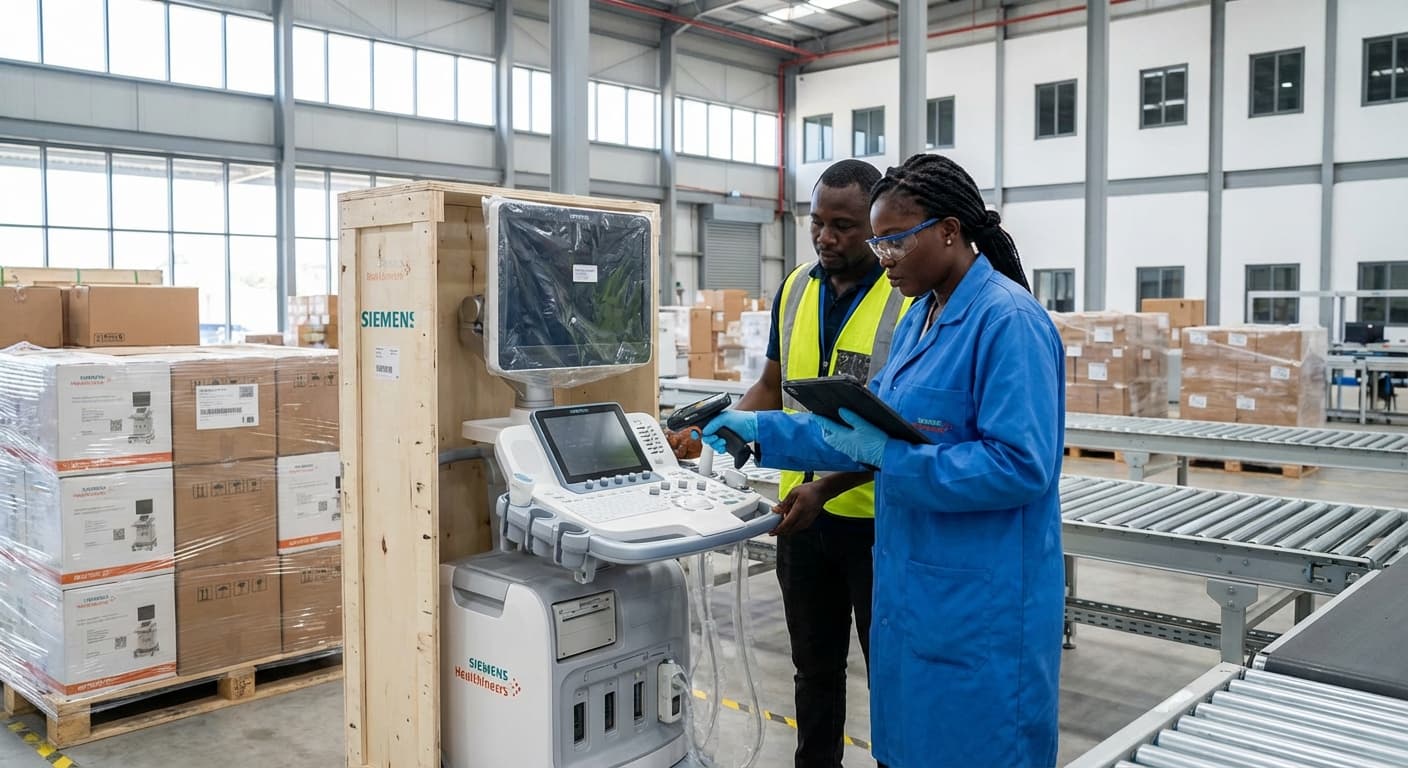
Warehouse Receiving Inspection Service (Medical Equipment) in Namibia
Engineering Excellence & Technical Support
Warehouse Receiving Inspection Service (Medical Equipment) High-standard technical execution following OEM protocols and local regulatory frameworks.
Advanced Barcode & RFID Verification
Leveraging state-of-the-art barcode and RFID scanning technology to ensure accurate and efficient identification and tracking of all incoming medical equipment against purchase orders, minimizing errors and stock discrepancies.
Comprehensive Visual & Functional Diagnostics
Our highly trained technicians conduct rigorous visual inspections for any damage or defects and perform initial functional tests on critical medical equipment to verify operational readiness and compliance with specifications upon arrival.
Regulatory Compliance & Documentation Assurance
Dedicated to upholding Namibian healthcare regulations, we meticulously verify all accompanying documentation, certifications, and expiry dates for medical equipment, providing a seamless and compliant receiving process for your facility.
What Is Warehouse Receiving Inspection Service (Medical Equipment) In Namibia?
Warehouse Receiving Inspection Service (Medical Equipment) in Namibia is a critical quality assurance process performed upon the arrival of medical equipment at a designated warehouse or storage facility. This service aims to verify that the received medical equipment conforms to specified requirements, including quality, quantity, documentation, and physical condition, prior to its integration into the supply chain or deployment. The inspection mitigates risks associated with receiving non-conforming, damaged, or counterfeit medical devices, ensuring patient safety and operational efficiency within the Namibian healthcare sector. It is an integral component of the broader medical supply chain management, often mandated by regulatory bodies and internal quality management systems.
| Stakeholder/Entity | Reason for Requiring Service | Typical Use Case Example |
|---|---|---|
| Healthcare Facilities (Hospitals, Clinics, Laboratories) | To ensure the safety, efficacy, and proper functioning of medical equipment prior to patient use. To maintain compliance with regulatory standards and internal quality control protocols. | Receiving a consignment of new diagnostic imaging equipment or surgical instruments. |
| Medical Equipment Distributors/Importers | To fulfill contractual obligations with manufacturers and healthcare providers. To manage inventory effectively and prevent the introduction of substandard or counterfeit products into the Namibian market. | Upon arrival of a shipment of ventilators from an international supplier. |
| Government Health Ministries/Agencies (e.g., Ministry of Health and Social Services) | To safeguard public health by ensuring the procurement and distribution of quality-assured medical devices. To comply with national health regulations and procurement policies. | Receiving bulk supplies of essential medicines and medical devices for national health programs. |
| Non-Governmental Organizations (NGOs) involved in healthcare | To ensure that donated or procured medical equipment meets required standards for effective service delivery in underserved areas. | Receiving a shipment of refurbished medical equipment for a rural health center. |
| Third-Party Logistics (3PL) Providers for Healthcare | To offer value-added services to their clients and ensure the integrity of the supply chain managed on behalf of other entities. | Inspecting a pallet of sterile syringes before they are dispatched to various vaccination sites. |
Key Components of Warehouse Receiving Inspection Service for Medical Equipment:
- Documentation Verification: Cross-referencing received items against purchase orders, invoices, packing lists, certificates of origin, quality control reports, and any other relevant supply chain documentation.
- Physical Inspection: Assessing the external condition of packaging for damage, tampering, or signs of compromise. Inspecting the equipment itself for visible defects, cosmetic imperfections, or signs of mishandling.
- Quantity Verification: Accurately counting and verifying the number of units received against the documented quantities.
- Identification and Traceability: Confirming the correct make, model, serial numbers, batch/lot numbers, and expiry dates (where applicable) of the received equipment against specifications and regulatory requirements.
- Functional Testing (Sampling): Performing basic functional checks or performance tests on a representative sample of the equipment to ensure it operates as intended, especially for critical or complex devices.
- Labeling and Packaging Review: Verifying that labels are legible, accurate, and compliant with Namibian regulations and international standards. Ensuring packaging provides adequate protection for transit and storage.
- Adherence to Storage Conditions: If specified, verifying that the equipment has been transported and received under appropriate environmental conditions (e.g., temperature, humidity).
- Non-Conformance Reporting: Documenting and reporting any discrepancies, damages, or deviations from specifications to relevant stakeholders for corrective action.
- Record Keeping: Maintaining comprehensive inspection records for audit purposes and future reference.
Who Needs Warehouse Receiving Inspection Service (Medical Equipment) In Namibia?
Warehouse Receiving Inspection Services for medical equipment in Namibia are crucial for ensuring the quality, safety, and compliance of incoming goods. These services play a vital role in preventing the introduction of faulty, counterfeit, or substandard medical devices into the supply chain, thereby safeguarding patient health and maintaining the integrity of healthcare operations. This is particularly important in a country like Namibia, where access to reliable healthcare infrastructure and equipment is paramount.
| Customer Segment | Key Needs Addressed by Inspection | Potential Impact of Non-Inspection |
|---|---|---|
| Government Healthcare Providers | Ensuring compliance with tender specifications, patient safety, cost-effectiveness, regulatory adherence. | Patient harm, wasted public funds, delays in service delivery, reputational damage, legal liabilities. |
| Private Healthcare Facilities | Maintaining high standards of patient care, operational efficiency, brand reputation, risk mitigation. | Patient injury or dissatisfaction, increased maintenance costs, legal disputes, loss of patient trust, business interruption. |
| Medical Equipment Suppliers & Distributors | Product quality control, brand integrity, compliance with import regulations, minimizing returns and warranty claims. | Reputational damage, product recalls, financial losses from faulty goods, strained supplier relationships, non-compliance penalties. |
| NGOs & Charities | Maximizing the impact of donations, ensuring equipment suitability for intended use, accountability to donors. | Ineffective aid delivery, equipment malfunction leading to unmet needs, donor dissatisfaction, wasted resources. |
| International Aid Organizations & Donors | Verification of donated/funded goods, accountability for funds, ensuring effective use of resources in recipient countries. | Misuse of funds, ineffective development programs, reputational damage for the donor organization. |
| Research and Educational Institutions | Accuracy and reliability of experimental results, safety of students and researchers, proper functioning of learning tools. | Inaccurate research findings, safety hazards, disruption of academic programs, damage to valuable equipment. |
Target Customers & Departments for Medical Equipment Warehouse Receiving Inspection Services in Namibia:
- {"departments":["Ministry of Health and Social Services (MoHSS)","Regional Health Directorates","Public Hospitals (e.g., Windhoek Central Hospital, Oshakati State Hospital)","District Health Centers","Primary Health Clinics"],"description":"These are the primary recipients of medical equipment procured through government tenders and programs.","customerType":"Government Healthcare Providers"}
- {"departments":["Private Hospitals and Clinics","Specialist Medical Practices (e.g., cardiology, radiology, surgery)","Dental Clinics","Optometry Practices"],"description":"Independent healthcare providers who rely on a consistent supply of quality medical equipment for their operations.","customerType":"Private Healthcare Facilities"}
- {"departments":["Procurement Departments","Quality Assurance (QA) Departments","Logistics and Warehousing Departments","Sales and Technical Support Teams"],"description":"Companies that import, distribute, and sell medical equipment to various healthcare providers.","customerType":"Medical Equipment Suppliers & Distributors"}
- {"departments":["Procurement and Logistics Teams","Program Implementation Units"],"description":"Organizations involved in providing healthcare services, often to underserved communities, and procuring medical equipment.","customerType":"Non-Governmental Organizations (NGOs) & Charities"}
- {"departments":["Project Management Offices","Supply Chain Management"],"description":"Entities that fund or provide medical equipment as part of development aid and humanitarian initiatives.","customerType":"International Aid Organizations & Donors"}
- {"departments":["Laboratory Management","Procurement Offices","Research Project Management"],"description":"Universities and research facilities that utilize specialized medical equipment for teaching and research.","customerType":"Research and Educational Institutions"}
Warehouse Receiving Inspection Service (Medical Equipment) Process In Namibia
This document outlines the standard workflow for a Warehouse Receiving Inspection Service for Medical Equipment in Namibia, detailing the process from initial client inquiry to the final execution and reporting. This service ensures that all incoming medical equipment meets specified quality, safety, and documentation standards before being accepted into the warehouse.
| Stage | Step | Description | Key Activities | Responsible Parties | Deliverables/Outcomes |
|---|---|---|---|---|---|
| Initial Contact | Prospective client contacts the inspection service provider to request receiving inspection for medical equipment. | Receive and acknowledge inquiry, understand basic requirements. | Client, Inspection Service Provider | Initial understanding of client needs. |
| Information Gathering | Detailed discussion to understand the specific equipment, quantity, origin, and inspection requirements. | Gather client specifications, import documents, equipment lists, quality standards, and any specific client concerns. | Client, Inspection Service Provider | Comprehensive understanding of inspection scope. |
| Develop Quotation | Based on the defined scope, prepare a detailed quotation outlining services, fees, and terms. | Define inspection checklist, determine resources (inspectors, equipment), calculate costs, prepare formal quotation. | Inspection Service Provider | Formal quotation for the inspection service. |
| Agreement | Client accepts the quotation and a formal service agreement is established. | Sign service agreement, confirm terms and conditions, payment schedule. | Client, Inspection Service Provider | Legally binding agreement. |
| Scheduling | Coordinate inspection dates and times with the client, considering equipment arrival schedules. | Confirm inspection date, time, and location with the client. Communicate pre-inspection requirements. | Client, Inspection Service Provider | Scheduled inspection date and time. |
| Document Review | Review all relevant documentation provided by the client and/or manufacturer prior to the inspection. | Examine shipping manifests, purchase orders, import permits, manufacturer's datasheets, certificates of conformity, etc. | Inspection Service Provider | Familiarity with equipment and its documentation. |
| Prepare Inspection Tools | Gather and calibrate necessary inspection tools, equipment, and forms. | Ensure availability of measuring devices, safety equipment, sampling tools, and standardized inspection forms. | Inspection Service Provider | Ready for on-site inspection. |
| Arrival & Briefing | Inspectors arrive at the designated warehouse location and conduct a pre-inspection briefing with relevant client personnel. | Introduce inspection team, confirm scope, discuss site access and safety protocols. | Inspection Service Provider, Client Representatives | Alignment on inspection procedures and safety. |
| Visual Inspection | Conduct a thorough visual examination of the equipment and its packaging. | Check for physical damage, correct labeling, branding, model numbers, serial numbers, and overall condition. | Inspection Service Provider | Identification of obvious defects or discrepancies. |
| Documentation Verification | Verify the completeness and accuracy of accompanying documentation. | Compare equipment against purchase orders and shipping documents, check for manuals, warranty cards, certificates. | Inspection Service Provider | Confirmation of documentation integrity. |
| Functional Testing (as per scope) | Perform functional tests to ensure the equipment operates as intended (if applicable and agreed upon). | Conduct basic operational checks, power-on tests, and critical function verification. | Inspection Service Provider | Assessment of operational readiness. |
| Sampling & Testing (as per scope) | If required, collect samples for laboratory testing or conduct specific performance tests. | Follow established sampling procedures and testing protocols. | Inspection Service Provider | Data for detailed analysis. |
| Record Keeping | Meticulously record all findings, observations, and measurements. | Document discrepancies, damages, conformity, and any non-conformities using standardized forms and photographic evidence. | Inspection Service Provider | Comprehensive inspection data. |
| Analysis of Findings | Analyze all collected data, test results, and observations against the defined standards and client requirements. | Evaluate conformity, identify root causes of non-conformities. | Inspection Service Provider | Clear understanding of equipment's status. |
| Report Generation | Prepare a detailed inspection report summarizing the findings. | Include executive summary, scope, methodology, detailed findings (including photos), conformity assessment, recommendations, and conclusions. | Inspection Service Provider | Official Inspection Report. |
| Report Submission & Review | Submit the inspection report to the client for review and discussion. | Present report findings, address client queries. | Inspection Service Provider, Client | Client acknowledgement of findings. |
| Recommendations & Corrective Actions | Provide recommendations for corrective actions for any identified non-conformities. | Suggest steps for resolution, re-inspection if necessary. | Inspection Service Provider | Path to resolution. |
| Final Closure | Once all issues are resolved or accepted by the client, the service engagement is formally closed. | Final invoicing, file archiving, and confirmation of client satisfaction. | Inspection Service Provider, Client | Completion of service cycle. |
Warehouse Receiving Inspection Service (Medical Equipment) Process Workflow in Namibia
- Inquiry & Engagement
- Scope Definition & Quotation
- Service Agreement & Scheduling
- Pre-Inspection Preparation
- On-Site Inspection Execution
- Data Analysis & Reporting
- Follow-up & Closure
Warehouse Receiving Inspection Service (Medical Equipment) Cost In Namibia
This document outlines the typical cost of warehouse receiving inspection services for medical equipment in Namibia. Receiving inspection is a critical quality control process that ensures medical equipment meets specifications, is free from damage, and complies with relevant regulations before being accepted into inventory. The cost of these services is influenced by a variety of factors, leading to a range of pricing rather than a fixed rate.
| Service Type/Complexity | Estimated Cost Range (NAD) | Notes |
|---|---|---|
| Basic Visual Inspection (per item/pallet) | 150 - 450 NAD | Covers external damage, correct labeling, and quantity verification for simpler equipment. |
| Standard Inspection (per item/pallet) | 300 - 800 NAD | Includes visual check, basic documentation review (e.g., packing list), and basic functional check if applicable. |
| Comprehensive Inspection (per item) | 800 - 3,000+ NAD | For complex or high-value equipment. Involves detailed functional testing, calibration checks, in-depth documentation review, and potential regulatory compliance checks. Costs can escalate significantly for very specialized equipment. |
| Per Shipment (for multiple small items) | 1,000 - 5,000+ NAD | A flat fee for inspecting a shipment containing numerous smaller items, with the price varying based on volume and complexity of items within the shipment. |
| Specialized/Biomedical Engineering Inspection (hourly rate) | 500 - 1,500+ NAD per hour | For inspections requiring certified biomedical engineers to perform technical assessments, calibration, or advanced diagnostics. Often billed hourly with a minimum engagement period. |
| Rush/Expedited Service Surcharge | 20% - 50% additional | Applied on top of standard service fees for urgent requests. |
Key Pricing Factors for Warehouse Receiving Inspection Services (Medical Equipment) in Namibia:
- {"title":"Type and Complexity of Medical Equipment","description":"Highly specialized, complex, or sensitive medical equipment (e.g., MRI machines, surgical robots, advanced diagnostic imaging systems) will require more time, expertise, and potentially specialized tools for inspection, thus increasing costs. Simpler items like basic consumables or non-electronic devices will be less expensive to inspect."}
- {"title":"Volume of Equipment","description":"The number of units or the total volume of equipment being inspected is a primary cost driver. Inspections are often priced per item, per pallet, or per shipment. Bulk discounts may be available for larger volumes."}
- {"title":"Scope of Inspection","description":"The depth and breadth of the inspection will impact the cost. This can range from a basic visual check for damage and correct labeling to a comprehensive functional test, calibration verification, documentation review (certificates of conformity, user manuals), and adherence to specific regulatory requirements (e.g., NAMPOL, Ministry of Health regulations)."}
- {"title":"Required Expertise and Qualifications","description":"If the inspection requires specialized technical knowledge, engineering expertise, or specific certifications (e.g., certified biomedical engineers), the cost will be higher due to the scarcity of such qualified personnel and their associated salary expectations."}
- {"title":"Location of Warehouse Facility","description":"The geographical location of the warehouse within Namibia can influence costs. Remote locations might incur additional travel and logistical expenses for the inspection team."}
- {"title":"Downtime and Waiting Time","description":"If the inspection team experiences significant delays or waiting time due to the client's operational inefficiencies or unpreparedness (e.g., equipment not readily accessible), these costs may be passed on to the client."}
- {"title":"Reporting Requirements","description":"The level of detail and format of the inspection report can affect the price. Standard reports are usually included, but custom or highly detailed reports with photographic evidence and extensive documentation may incur additional charges."}
- {"title":"Urgency and Turnaround Time","description":"Expedited inspection services for urgent deliveries will generally command a premium price."}
- {"title":"Provider's Overhead and Profit Margin","description":"The operational costs, staffing, insurance, and desired profit margin of the inspection service provider will be factored into their pricing."}
Affordable Warehouse Receiving Inspection Service (Medical Equipment) Options
Navigating the complexities of medical equipment receiving inspections can be a significant operational cost. This guide outlines affordable service options, explains value bundles, and details cost-saving strategies for medical equipment warehouse receiving inspections.
| Service Option | Description | Potential Value Bundle | Cost-Saving Strategies |
|---|---|---|---|
| On-Demand Inspection | Inspection services booked as needed for individual shipments. Ideal for lower volume or unpredictable receiving needs. | Bundle with expedited shipping notification and basic damage reporting. | Utilize a provider with a clear per-inspection fee. Avoid long-term contracts if volume is highly variable. Negotiate volume discounts for consistent, albeit infrequent, usage. |
| Scheduled Routine Inspections | Regularly scheduled inspections (e.g., daily, weekly) for consistent shipment volumes. Offers predictability and potentially lower per-inspection rates. | Combine with pre-shipment verification, standardized documentation, and basic inventory checks. | Opt for bundled packages that include a set number of inspections per period. Negotiate tiered pricing based on projected volume. Centralize inspection scheduling to optimize technician routes. |
| Comprehensive Warehouse Audit | Includes receiving inspections as part of a broader warehouse management audit. Focuses on overall efficiency and compliance. | Integrate receiving inspection with quality control checks, vendor performance reviews, and process optimization recommendations. | View as an investment in overall operational efficiency. Leverage findings to improve processes and reduce future inspection needs. Negotiate a fixed annual fee for comprehensive services. |
| Technology-Enabled Remote Inspection | Utilizes video conferencing, image sharing, and digital forms for remote inspection capabilities. Suitable for less critical equipment or initial visual checks. | Pair with on-site detailed inspections for complex equipment. Include digital signature capture for approval. | Significantly reduces travel costs. Leverage your internal staff for initial remote checks to minimize external service fees. Invest in a platform that integrates with your existing systems. |
Key Considerations for Affordable Medical Equipment Receiving Inspections
- Define Inspection Scope: Clearly outline what needs to be inspected. This prevents unnecessary checks and associated costs.
- Frequency of Inspections: Determine if daily, weekly, or a less frequent schedule is appropriate based on shipment volume and risk.
- Technology Integration: Explore services that utilize technology for streamlined reporting and data management, potentially reducing manual labor costs.
- Service Level Agreements (SLAs): Negotiate SLAs that align with your business needs without overpaying for excessive guarantees.
- Geographic Proximity: Partnering with providers located near your warehouse can reduce travel time and associated expenses.
- Scalability: Choose services that can adapt to fluctuations in your inspection volume without drastic price increases.
Verified Providers In Namibia
When seeking healthcare in Namibia, ensuring you are engaging with verified and credentialed providers is paramount. This not only guarantees a higher standard of care but also offers peace of mind. Franance Health stands out as a beacon of trust, offering a network of healthcare professionals who have undergone rigorous vetting processes. Their commitment to excellence is reflected in the stringent criteria they apply, ensuring that every provider listed meets the highest professional and ethical standards. This dedication to quality makes Franance Health a distinguished choice for individuals prioritizing reliable and effective medical services in Namibia.
| Credential | Verification Process | Benefit to Patients |
|---|---|---|
| Medical Licenses | Verified with Namibian Ministry of Health and Social Services | Ensures legal and authorized practice |
| Specialist Certifications | Confirmed with relevant professional bodies (e.g., Colleges of Medicine) | Guarantees specialized knowledge and skills |
| Educational Qualifications | Validated against accredited institutions | Confirms foundational medical training |
| Continuing Professional Development (CPD) | Evidence reviewed for ongoing learning and skill enhancement | Ensures providers are up-to-date with medical advancements |
| Criminal Background Checks | Conducted for enhanced patient safety | Provides an additional layer of security and trust |
| Professional Indemnity Insurance | Confirmed with reputable insurers | Protects patients in case of unforeseen circumstances |
Why Franance Health Providers are the Best Choice
- Rigorous Credentialing: Franance Health meticulously verifies the qualifications, licenses, and certifications of all its listed healthcare professionals, ensuring they meet national and international standards.
- Experience and Expertise: Providers are selected based on their proven track record, specialized skills, and commitment to continuous professional development.
- Ethical Practice Standards: A strong emphasis is placed on adherence to ethical guidelines and patient-centered care, promoting trust and transparency.
- Comprehensive Network: Franance Health offers a wide array of medical specialists and general practitioners across various disciplines, catering to diverse healthcare needs.
- Patient-Centric Approach: The focus is always on delivering compassionate, effective, and accessible healthcare solutions tailored to individual patient requirements.
Scope Of Work For Warehouse Receiving Inspection Service (Medical Equipment)
This Scope of Work (SOW) outlines the requirements for Warehouse Receiving Inspection Services for medical equipment. The service includes the verification of received medical equipment against purchase orders and shipping manifests, identification of damages or discrepancies, and documentation of findings. The objective is to ensure that only accurate, undamaged, and correctly specified medical equipment enters the warehouse inventory.
| Deliverable | Description | Standard Specification / Requirement |
|---|---|---|
| Receiving Inspection Report (RIR) | A comprehensive report detailing the findings of the inspection for each shipment. | Must include PO number, shipment date, supplier name, list of items received, quantities, model/serial numbers, inspection status (accepted/rejected), details of any damages or discrepancies, photographic evidence of damages, and inspector's signature/date. |
| Non-Conformance Report (NCR) | A report generated for any received item that does not meet specifications or is damaged. | Must include RIR reference, details of the non-conformance, proposed disposition (return to vendor, quarantine, etc.), and recommendations for resolution. |
| Acceptance/Rejection Tag | A physical or digital tag affixed to items indicating their inspection status. | Clear markings indicating 'Accepted' or 'REJECTED', with space for RIR number and date. |
| Photographic Evidence | High-resolution photographs documenting any damages or significant discrepancies. | Photos must be clear, well-lit, and provide sufficient detail of the issue. Labelled with item and RIR reference. |
| Data Entry Confirmation | Confirmation of received goods within the client's inventory management system (if applicable). | Timestamped confirmation of goods receipt and update of stock levels as per client's system procedures. |
Key Activities and Responsibilities
- Receipt and verification of incoming medical equipment shipments.
- Comparison of received items against purchase orders (POs) and packing lists/shipping manifests.
- Visual inspection of equipment for any physical damage (dents, scratches, broken components, etc.).
- Verification of product specifications, model numbers, serial numbers, and quantities against documentation.
- Identification and documentation of any discrepancies (shortages, overages, wrong items, damaged items).
- Segregation of damaged or discrepant items and initiation of the non-conformance reporting process.
- Generation of detailed inspection reports for each received shipment.
- Confirmation of received goods in the inventory management system (if applicable).
- Adherence to all relevant safety and handling procedures for medical equipment.
Service Level Agreement For Warehouse Receiving Inspection Service (Medical Equipment)
This Service Level Agreement (SLA) outlines the terms and conditions governing the Warehouse Receiving Inspection Service for Medical Equipment provided by [Your Company Name] to [Client Company Name]. This SLA focuses on response times for reported issues and defines uptime guarantees for the inspection service.
| Metric | Definition | Service Level Objective (SLO) | Measurement | Remedy/Escalation |
|---|---|---|---|---|
| Issue Acknowledgment Time | The maximum time allowed for [Your Company Name] to acknowledge receipt of a reported issue from the client. | 95% of reported issues acknowledged within 1 hour during Service Hours. | Timestamp of client report vs. timestamp of acknowledgment. | For each incident where the SLO is not met, a written explanation will be provided. Repeated failures may result in a service credit of 5% of the monthly fee for the affected month. |
| Initial Response/Investigation Time | The maximum time allowed for [Your Company Name] to begin initial investigation or provide a preliminary assessment of a reported issue. | 90% of reported issues with an initial response/investigation within 4 business hours during Service Hours. | Timestamp of client report vs. timestamp of initial investigative action or communication. | For each incident where the SLO is not met, a written explanation will be provided. Repeated failures may result in a service credit of 10% of the monthly fee for the affected month. |
| Resolution Time (Tier 1 Issues) | The maximum time allowed to resolve basic or straightforward issues that can be addressed with standard procedures (e.g., correcting minor documentation errors, providing clarification). | 85% of Tier 1 issues resolved within 8 business hours during Service Hours. | Timestamp of client report vs. timestamp of confirmed issue resolution. | For each incident where the SLO is not met, a written explanation will be provided. Repeated failures may result in a service credit of 10% of the monthly fee for the affected month. |
| Uptime Guarantee | The percentage of time the receiving inspection service is available and operational during the agreed-upon Service Hours. | 99.5% uptime during Service Hours. | Calculated as (Total Service Hours - Downtime Hours) / Total Service Hours * 100%. Downtime is defined as periods when the service is unavailable due to technical issues, maintenance, or personnel unavailability on [Your Company Name]'s part. | If uptime falls below 99.5% in a given month, a service credit of 5% of the monthly fee will be applied for every 1% of downtime below the guaranteed level (pro-rated). Downtime due to client-side issues or force majeure events are excluded. |
Key Service Components
- Service Scope: The Warehouse Receiving Inspection Service for Medical Equipment includes, but is not limited to, visual inspection of incoming medical equipment for damage, verification of contents against purchase orders, checking for proper packaging, and initial identification of serial numbers and model numbers.
- Service Hours: The service is available during standard business hours, Monday to Friday, 9:00 AM to 5:00 PM [Client's Time Zone], excluding public holidays.
- Reporting of Issues: Clients shall report any issues or discrepancies encountered during the receiving inspection process via [Designated Reporting Channel - e.g., email to support@[yourcompany.com], dedicated portal link].
Frequently Asked Questions

Ready when you are
Let's scope your Warehouse Receiving Inspection Service (Medical Equipment) in Namibia project in Namibia.

Scaling healthcare logistics and technical systems across the entire continent.