
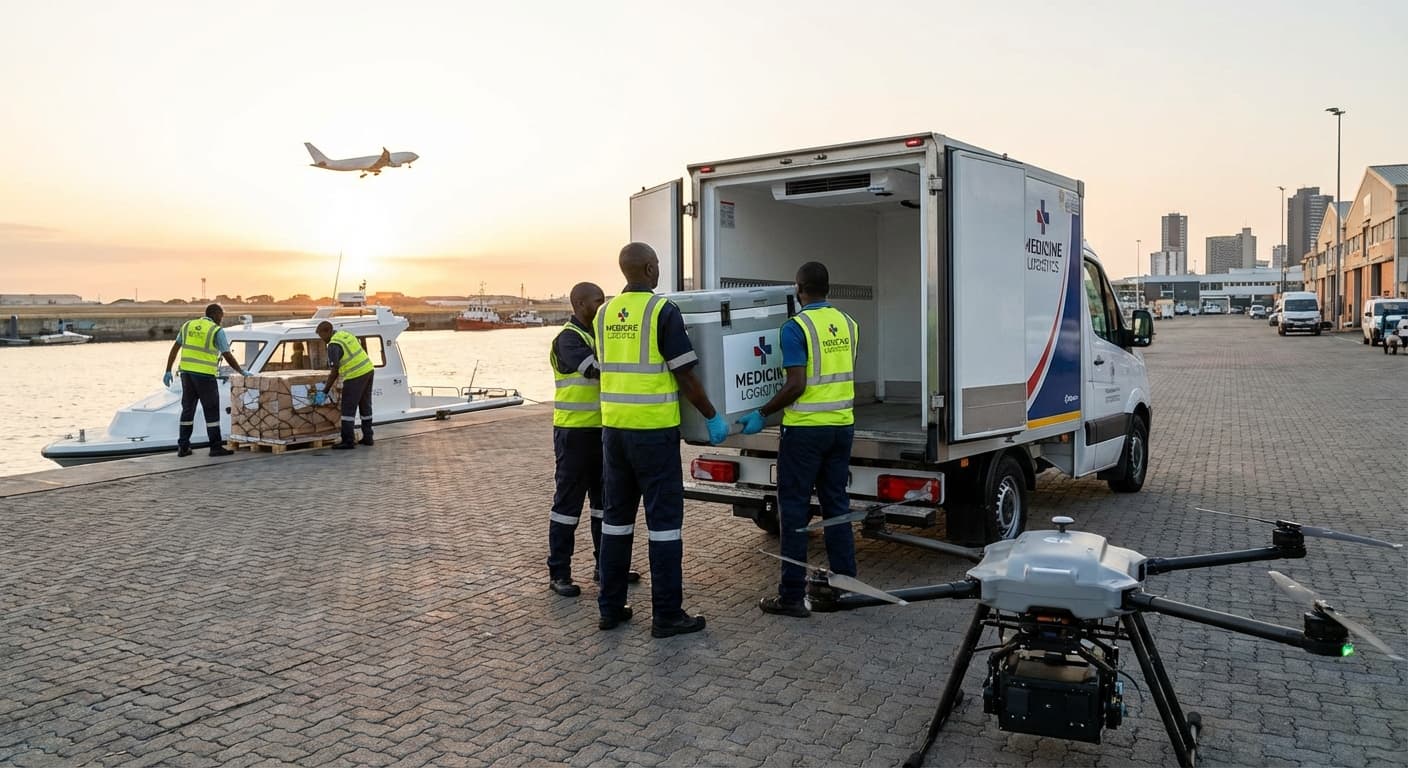
Door-to-Door Medical Logistics Coordination Service (Air/Sea/Road) in Namibia
Engineering Excellence & Technical Support
Door-to-Door Medical Logistics Coordination Service (Air/Sea/Road) High-standard technical execution following OEM protocols and local regulatory frameworks.
Expedited Air Cargo for Critical Medical Supplies
Leveraging a network of reliable air freight partners, we ensure rapid transit of temperature-sensitive pharmaceuticals, vaccines, and urgent medical equipment across Namibia, minimizing transit times and safeguarding product integrity from point of origin to remote healthcare facilities.
Secure & Compliant Sea Freight for Bulk Medical Goods
Managing the complexities of international and coastal sea freight, we provide cost-effective solutions for bulk medical supplies and equipment. Our expertise includes customs clearance, specialized handling for hazardous materials, and strict adherence to Namibian maritime regulations for safe and timely delivery.
Optimized Road Networks for Last-Mile Medical Delivery
Utilizing a fleet of specialized vehicles and advanced route optimization software, we guarantee efficient and secure last-mile delivery of medical supplies to clinics and hospitals across Namibia's diverse terrain, ensuring accessibility and uninterrupted healthcare services.
What Is Door-to-door Medical Logistics Coordination Service (Air/sea/road) In Namibia?
Door-to-Door Medical Logistics Coordination Service (Air/Sea/Road) in Namibia refers to a comprehensive, integrated supply chain management solution designed to transport medical equipment, pharmaceuticals, biological samples, and other healthcare-related materials from their origin point (e.g., manufacturer, laboratory) to their final destination (e.g., hospital, clinic, patient's residence) within Namibia, utilizing a multimodal transportation network. This service encompasses all facets of the logistics process, including planning, procurement, warehousing, inventory management, transportation booking, customs clearance, last-mile delivery, and final recipient confirmation. The coordination aspect is paramount, ensuring seamless transitions between different modes of transport (air, sea, and road) and managing all associated stakeholders and documentation.
| Stakeholder/Entity | Need for Service | Typical Use Cases | ||
|---|---|---|---|---|
| Hospitals and Clinics (Public & Private) | Reliable and timely access to essential medicines, medical devices, and specialized equipment. | Procurement and delivery of pharmaceuticals, surgical instruments, imaging equipment, and spare parts. | Transport of patient-specific medications and prosthetics. | Expedited delivery of emergency medical supplies. |
| Pharmaceutical Manufacturers & Distributors | Efficient and compliant distribution of finished products to market. | Importation of active pharmaceutical ingredients (APIs). | Nationwide distribution of vaccines, antibiotics, and chronic disease medications. | Cold chain management for temperature-sensitive drugs. |
| Diagnostic Laboratories | Prompt and secure transportation of biological samples for analysis. | Collection of blood, urine, and tissue samples from remote locations. | Delivery of diagnostic kits and reagents. | Return of analyzed results or certified samples. |
| Medical Research Institutions | Movement of specialized equipment, reagents, and biological materials for research projects. | Importation of research-grade chemicals and lab supplies. | Transport of biological specimens for collaborative studies. | Deployment of portable research equipment to field sites. |
| Government Health Agencies & NGOs | Ensuring equitable access to healthcare supplies across the nation, especially in underserved areas. | Distribution of essential medicines and medical kits for public health programs. | Delivery of supplies for disease outbreak response (e.g., cholera, malaria). | Facilitating the transport of equipment for mobile clinics and outreach programs. |
| Patients (Homecare) | Delivery of vital medications or medical equipment directly to their residence. | Home delivery of insulin, oxygen supplies, or specialized nutritional formulas. | Transport of mobility aids or home dialysis equipment. |
Service Components:
- Origin Handling: Collection and preparation of medical goods at the point of origin.
- Warehousing & Storage: Secure, temperature-controlled (if required), and compliant storage facilities.
- Inventory Management: Tracking and maintaining optimal stock levels to prevent shortages or expiries.
- Transportation Management: Selection and booking of appropriate transport modes (air, sea, road) based on urgency, volume, and nature of the cargo.
- Customs Brokerage: Navigating import/export regulations and facilitating customs clearance for medical goods.
- Last-Mile Delivery: Specialized delivery to the final destination, often requiring specific handling protocols.
- Real-time Tracking & Visibility: Continuous monitoring of shipment status and location.
- Documentation Management: Ensuring all necessary permits, licenses, and shipping documents are in order.
- Risk Management & Compliance: Adherence to national and international regulations for medical transport (e.g., IATA DGR for airfreight, ADR for road freight).
- Temperature & Condition Monitoring: Employing cold chain solutions and specialized equipment for sensitive materials.
Who Needs Door-to-door Medical Logistics Coordination Service (Air/sea/road) In Namibia?
In Namibia's vast and often challenging terrain, efficient and reliable medical logistics are paramount. Door-to-door medical logistics coordination services, encompassing air, sea, and road transport, are essential for ensuring timely and secure delivery of critical medical supplies, equipment, and personnel. These services go beyond simple transportation, offering comprehensive coordination, tracking, and management to address the unique needs of the healthcare sector. The demand for such specialized services is driven by a diverse range of entities facing geographical, operational, and regulatory hurdles.
| Target Customer/Department | Key Needs | Logistics Modalities Utilized |
|---|---|---|
| Government Health Agencies (e.g., Ministry of Health, Regional Health Directorates) | Nationwide distribution of vaccines, essential medicines, medical supplies; emergency response logistics; support for remote clinics. | Air (for speed and remote access), Road (for broad coverage), Sea (for bulk imports/exports). |
| Hospitals and Healthcare Facilities (Pharmacy, Procurement, Emergency Departments) | Regular and emergency supply of pharmaceuticals, medical equipment, surgical instruments, laboratory reagents; patient transfers. | Road (for daily deliveries), Air (for urgent supplies and specialized equipment), Sea (for bulk equipment imports). |
| Pharmaceutical Companies and Distributors (Sales, Distribution, Supply Chain) | Timely and secure delivery of drugs and medical devices to healthcare providers; temperature-controlled logistics; regulatory compliance. | Road (primary distribution), Air (for high-value/urgent shipments), Sea (for international imports/exports). |
| Medical Research Institutions and Laboratories (Research, Lab Operations) | Transport of biological samples, diagnostic kits, research materials; delivery of specialized laboratory equipment. | Air (for time-sensitive and sensitive samples), Road (for local transfers). |
| NGOs and International Aid Organizations (Logistics, Program Management) | Distribution of medical aid in crisis situations, support for health programs in underserved areas, equipment for mobile clinics. | Air (for rapid deployment), Road (for last-mile delivery), Sea (for large-scale donations). |
| Private Clinics and Specialized Practices (Practice Management, Procurement) | Access to niche medications, specialized equipment, and consumables; efficient inventory management. | Road (for routine needs), Air (for urgent or specialized items). |
| Emergency Medical Services (EMS) | Replenishment of ambulance supplies, transport of critical medical devices, coordination of air ambulance services. | Road (for local replenishment), Air (for patient evacuation/transport). |
| Mining and Remote Operations (Occupational Health, HR) | Provision of medical supplies and personnel to isolated work sites; emergency medical evacuation. | Air (essential for remote access and evacuation), Road (where feasible). |
Who Needs Door-to-Door Medical Logistics Coordination Service (Air/Sea/Road) in Namibia? Target Customers and Departments
- {"title":"Government Health Agencies","description":"Central to public healthcare delivery, these agencies require robust logistics for national immunization programs, emergency medical supplies, and distribution to remote clinics. This includes ministries of health and regional health directorates."}
- {"title":"Hospitals and Healthcare Facilities","description":"From large urban hospitals to smaller rural clinics, these institutions depend on regular and emergency deliveries of pharmaceuticals, specialized medical equipment, laboratory reagents, and patient transfer services. Departments like Pharmacy, Procurement, and Emergency Departments are key stakeholders."}
- {"title":"Pharmaceutical Companies and Distributors","description":"Manufacturers and distributors of medicines and medical devices need reliable channels to get their products to market, adhering to strict temperature control and security requirements. This involves their Sales, Distribution, and Supply Chain departments."}
- {"title":"Medical Research Institutions and Laboratories","description":"These entities require the transport of sensitive biological samples, research materials, and specialized equipment, often with tight deadlines and specific handling protocols. Research and Laboratory Operations departments are primary users."}
- {"title":"Non-Governmental Organizations (NGOs) and International Aid Organizations","description":"Organizations involved in public health initiatives, disaster relief, and health programs in underserved areas rely heavily on these services for the distribution of medical aid and equipment. Their Logistics, Program Management, and Procurement departments would utilize these services."}
- {"title":"Private Clinics and Specialized Medical Practices","description":"While smaller in scale, these facilities also require timely access to specialized drugs, equipment, and disposables, especially those in more isolated locations. Their Practice Management and Procurement officers would be involved."}
- {"title":"Emergency Medical Services (EMS)","description":"Paramedic services and ambulance operators require efficient logistics for the replenishment of medical supplies, transportation of specialized equipment, and potentially, air ambulance coordination for critical patient transfers."}
- {"title":"Mining and Remote Operations","description":"Companies operating in remote areas often have their own on-site medical facilities or require contracted medical services. They need reliable logistics for medical supplies and personnel to these isolated sites. Their Occupational Health and Safety, and Human Resources departments are relevant."}
Door-to-door Medical Logistics Coordination Service (Air/sea/road) Process In Namibia
This document outlines the comprehensive workflow for a Door-to-Door Medical Logistics Coordination Service (Air/Sea/Road) in Namibia, from initial inquiry to final execution. Our service ensures the safe, efficient, and compliant transportation of medical supplies, equipment, and personnel across Namibia via all available transport modes.
| Stage | Description | Key Activities | Responsible Parties | Key Deliverables |
|---|---|---|---|---|
| Initial contact from a client seeking medical logistics services. | Client contacts service provider via phone, email, or website. Initial discussion to understand basic requirements. | Client, Service Provider (Sales/Operations Team) | Initial understanding of client's needs and service scope. |
| Detailed understanding of the specific medical shipment and associated risks. | Gathering details on shipment type (e.g., pharmaceuticals, medical devices, biological samples), volume, weight, origin, destination, temperature requirements, regulatory compliance needs (e.g., SADC regulations, Namibian Ministry of Health), potential risks (e.g., temperature excursions, security, customs delays). | Client, Service Provider (Operations Team, Logistics Specialists, Compliance Officers) | Comprehensive shipment profile, identified risks, initial compliance assessment. |
| Presenting a tailored service offering and pricing to the client. | Developing a detailed quotation based on gathered information, including transportation costs (air, sea, road), handling fees, insurance, customs duties, and potential surcharges. Creating a formal proposal outlining the service plan, timeline, and terms. | Service Provider (Commercial Team, Operations Team) | Formal quotation, detailed service proposal. |
| Formalizing the agreement and commencing operational planning. | Client accepts quotation/proposal. Service provider initiates internal operational planning, booking transportation (carriers, airlines, shipping lines), coordinating ground handlers, and scheduling resources. Developing a detailed execution plan. | Client, Service Provider (Operations Team, Planning Department) | Confirmed booking, detailed operational plan, assigned logistics team. |
| Ensuring the shipment is ready for transit and compliant. | Packaging of medical supplies/equipment according to international/local standards (e.g., IATA for air cargo, IMO for sea cargo). Procurement of necessary permits and licenses. Arranging for temperature-controlled packaging (if required). Quality control checks. Insurance arrangements. | Client, Service Provider (Operations Team, Quality Control, Compliance Officers) | Properly packaged and documented shipment, confirmed insurance, necessary permits. |
| The actual movement of the medical cargo. | Coordination of pick-up from origin (door), transportation to the relevant port/airport, loading onto the chosen mode of transport (air cargo, sea freight, or road transport). Real-time tracking and monitoring of the shipment throughout its journey. Managing any transit delays or disruptions. | Service Provider (Operations Team, Drivers, Freight Forwarders, Ground Handlers, Carriers) | Shipment in transit, real-time tracking updates, secured cargo. |
| Navigating Namibian import/export regulations and customs procedures. | Preparing and submitting all required customs documentation. Liaising with Namibian Customs and Excise. Ensuring compliance with all Ministry of Health regulations for medical imports/exports. Facilitating inspection if required. Payment of duties and taxes. | Service Provider (Customs Brokers, Compliance Officers), Client (providing documentation) | Cleared customs, all regulatory approvals obtained. |
| The final leg of the journey to the client's specified destination. | Arranging for appropriate vehicles (e.g., temperature-controlled vans for pharmaceuticals) for the final delivery. Coordination of delivery to the exact location (e.g., hospital, clinic, research facility). Ensuring safe and timely arrival. | Service Provider (Operations Team, Delivery Drivers) | Shipment at the final destination. |
| Confirming successful delivery and providing necessary records. | Obtaining signed proof of delivery (POD) from the recipient. Providing the client with all relevant shipment documentation, including POD, tracking reports, customs clearance certificates, and any other agreed-upon records. | Service Provider (Delivery Personnel, Operations Team) | Signed Proof of Delivery, comprehensive shipment documentation. |
| Ensuring client satisfaction and continuous service improvement. | Following up with the client to confirm satisfaction. Gathering feedback on the service provided. Addressing any post-delivery queries or concerns. Using feedback for service enhancement. | Service Provider (Client Relations Team, Operations Manager) | Client satisfaction, service improvement insights. |
Key Stages of the Door-to-Door Medical Logistics Coordination Service
- Inquiry & Consultation
- Information Gathering & Risk Assessment
- Quotation & Proposal Generation
- Order Confirmation & Planning
- Pre-Shipment Preparation
- Transportation Execution (Air/Sea/Road)
- Customs Clearance & Regulatory Compliance
- Last-Mile Delivery
- Proof of Delivery & Documentation
- Post-Delivery Follow-up & Feedback
Door-to-door Medical Logistics Coordination Service (Air/sea/road) Cost In Namibia
Navigating medical logistics, especially for urgent or specialized equipment and supplies, requires a reliable and efficient door-to-door service. In Namibia, this often involves coordinating air, sea, and road transportation to ensure timely delivery from origin to final destination. The cost of such a service is influenced by a multitude of factors, making it difficult to provide a single, fixed price. Instead, we'll explore the key determinants of cost and offer estimated ranges in Namibian Dollars (NAD) for these specialized logistics operations.
| Service Component | Estimated Cost Range (NAD) | Notes |
|---|---|---|
| Local Road Freight (within Namibia, e.g., Windhoek to Walvis Bay) | NAD 1,500 - NAD 8,000+ | Depends on distance, vehicle type, and urgency. Higher for specialized temperature-controlled vans. |
| Regional Road Freight (e.g., to/from South Africa) | NAD 8,000 - NAD 30,000+ | Influenced by distance, border crossing fees, and freight volume. Can be per pallet or per cubic meter. |
| Air Freight (International Inbound/Outbound - Per Kg) | NAD 150 - NAD 800+ per kg | Highly variable based on airline, origin, destination, urgency, and dimensions. Minimum charges often apply. |
| Sea Freight (International Inbound/Outbound - Per 20ft/40ft Container) | NAD 10,000 - NAD 50,000+ per container | Includes ocean freight, terminal handling charges, and potential local transport. Less common for urgent medical supplies, more for bulk equipment. |
| Coordination & Management Fee (Percentage of Freight Cost) | 5% - 20% of total freight cost | Covers planning, booking, documentation, tracking, and problem-solving. Can be a fixed fee for smaller shipments. |
| Specialized Handling (e.g., Temperature Control, Hazmat) | NAD 2,000 - NAD 15,000+ per shipment | Additional charges for reefer units, monitoring, and specialized expertise. |
| Customs Clearance & Duties | Variable (based on shipment value and goods classification) | Can range from a few hundred to tens of thousands of NAD. Exemptions may apply for certain medical aid. |
| Insurance | 1% - 5% of declared value of cargo | Crucial for high-value medical equipment and pharmaceuticals. |
Key Pricing Factors for Door-to-Door Medical Logistics Coordination (Air/Sea/Road) in Namibia:
- Type of Cargo & Classification: Medical goods range from lightweight documents to bulky equipment, temperature-sensitive pharmaceuticals, and hazardous materials. Each has unique handling, storage, and regulatory requirements, impacting cost.
- Urgency & Transit Time: Expedited services (air freight) are significantly more expensive than standard sea or road freight due to faster transit times and limited capacity.
- Distance & Origin/Destination: The geographical distance between the point of origin and the final destination within or to Namibia is a primary cost driver. Internal movements within Namibia will be less expensive than international inbound or outbound shipments.
- Mode of Transport: The choice between air, sea, and road freight dictates the cost. Air is the most expensive but fastest, sea is the most cost-effective for bulk but slowest, and road is suitable for shorter distances and last-mile delivery.
- Volume & Weight: Larger and heavier shipments naturally incur higher costs due to increased handling, space utilization, and fuel consumption.
- Special Handling Requirements: Temperature-controlled shipments (e.g., vaccines, biologics) require specialized reefer containers, monitoring equipment, and trained personnel, adding to the expense.
- Customs Duties & Taxes: Import duties, VAT, and other government levies in Namibia will be factored into the overall cost. These vary based on the type of medical goods and their declared value.
- Insurance: Comprehensive insurance coverage for valuable and sensitive medical cargo is essential and adds to the service cost.
- Packaging & Palletization: The need for specialized packaging to protect medical items, including sterile packaging or secure crating, will impact the price.
- Regulatory Compliance & Documentation: Obtaining necessary permits, licenses, and ensuring compliance with Namibian health and customs regulations can involve administrative fees and expert consultation costs.
- Warehousing & Storage: If intermediate storage or warehousing is required at any point during transit, this will add to the overall cost.
- Last-Mile Delivery: The final leg of the journey from a major port or airport to the specific healthcare facility or clinic often involves specialized vehicles and trained personnel, especially for temperature-sensitive items.
Affordable Door-to-door Medical Logistics Coordination Service (Air/sea/road) Options
Our Affordable Door-to-Door Medical Logistics Coordination Service offers comprehensive solutions for the safe and efficient transport of medical supplies, equipment, and samples via air, sea, and road. We understand the critical nature of medical shipments and the need for cost-effectiveness without compromising on quality or compliance. Our service acts as a single point of contact, managing all aspects of your supply chain, from pickup to final delivery, ensuring temperature control, security, and timely arrival. We provide flexible options and transparent pricing to meet diverse needs and budgets.
| Value Bundle Tier | Included Services | Ideal For | Estimated Cost Range (per shipment, indicative) |
|---|---|---|---|
| Basic Essentials | Standard door-to-door transit (road/consolidated air), basic tracking, standard insurance. | Low-volume, non-critical supplies, internal transfers. | $150 - $400 |
| Pro Secure | Expedited road/standard air freight, enhanced temperature monitoring, priority customs clearance, increased insurance coverage. | Pharmaceuticals, vaccines, urgent medical equipment, clinical trial materials. | $400 - $1200 |
| Global Critical | Dedicated air/express sea freight, active temperature-controlled containers, on-board couriers (if required), comprehensive customs brokerage, highest insurance. | Organ transplants, rare biological samples, high-value surgical instruments, international emergency medical aid. | $1200+ |
Key Features & Benefits
- End-to-end logistics management (air, sea, road).
- Specialized handling for temperature-sensitive and high-value medical goods.
- Real-time tracking and monitoring.
- Customizable packaging and crating solutions.
- Regulatory compliance assistance (customs, import/export).
- 24/7 customer support.
- Expert coordination with carriers, customs brokers, and local couriers.
Verified Providers In Namibia
Ensuring access to quality healthcare is paramount, and in Namibia, this means identifying and trusting verified healthcare providers. Franance Health stands out as a leading entity in this regard, meticulously vetting and credentialing medical professionals and facilities. This rigorous process guarantees that patients receive care from highly competent and ethical practitioners. Franance Health's commitment to verification ensures not only patient safety but also the highest standards of medical expertise, making them the definitive choice for reliable healthcare access in Namibia.
| Credentialing Aspect | Franance Health Standard | Patient Benefit |
|---|---|---|
| Educational Verification | Thorough review of all medical degrees and certifications from recognized institutions. | Ensures providers possess foundational knowledge and expertise. |
| Licensure Confirmation | Verification of current and valid medical licenses with relevant regulatory bodies in Namibia. | Guarantees providers are legally authorized to practice. |
| Professional Experience Assessment | Evaluation of past work experience, including specializations and areas of practice. | Confirms practical skills and relevant experience. |
| Background Checks | Comprehensive checks for any disciplinary actions or malpractice claims. | Protects patients from potential risks. |
| Peer Review and Reputation | Gathering of feedback and assessments from other medical professionals. | Provides insight into a provider's standing and reliability within the medical community. |
Why Franance Health Credentials Represent the Best Choice:
- Rigorous Vetting Process: Franance Health employs a multi-stage credentialing process that scrutinizes educational backgrounds, professional licenses, and practice history of all providers.
- Commitment to Quality: Only providers who consistently demonstrate adherence to the highest medical standards and ethical practices are accredited.
- Patient Safety First: Verification by Franance Health offers peace of mind, assuring patients they are in capable and safe hands.
- Access to Excellence: Franance Health connects individuals with a network of highly skilled and experienced healthcare professionals across various specializations.
- Continuous Monitoring: Providers are subject to ongoing evaluation to ensure sustained quality of care and patient satisfaction.
Scope Of Work For Door-to-door Medical Logistics Coordination Service (Air/sea/road)
This Scope of Work (SOW) outlines the requirements for a Door-to-Door Medical Logistics Coordination Service. This service encompasses the planning, execution, and monitoring of the transportation of medical supplies, equipment, and pharmaceuticals via air, sea, and road. The primary objective is to ensure the safe, secure, timely, and compliant delivery of sensitive medical goods from the origin point to the final destination.
| Category | Technical Deliverable | Standard Specification |
|---|---|---|
| Shipment Planning & Optimization | Route Planning and Mode Selection Report | Selection of optimal air, sea, or road routes considering transit time, cost, security, and regulatory requirements. Includes consideration for multimodal integration. |
| Shipment Planning & Optimization | Consolidation/Deconsolidation Plan | Strategy for consolidating smaller shipments for efficiency or deconsolidating at destination for last-mile delivery, specifying handling protocols. |
| Documentation & Compliance | Import/Export Documentation Package | Provision and verification of all necessary permits, licenses, customs declarations, certificates of origin, and health/pharma-specific documentation compliant with international and local regulations. |
| Documentation & Compliance | Temperature Control Protocols and Records | Detailed procedures for maintaining required temperature ranges (e.g., ambient, refrigerated, frozen) during transit and storage, with continuous temperature monitoring and logged data available post-delivery. |
| Handling & Security | Packaging and Labeling Standards | Adherence to IATA, IMDG, ADR, and specific medical product guidelines for packaging (e.g., UN-certified, cushioning, moisture-proof) and labeling (e.g., hazard symbols, handling instructions, temperature indicators). |
| Handling & Security | Security Plan | Measures to ensure cargo integrity and prevent theft or tampering, including secure loading/unloading procedures, authorized personnel access, and surveillance where applicable. |
| Transportation Execution | Carrier Selection and Vetting Report | Identification and vetting of qualified carriers with proven experience in handling sensitive medical cargo, including their compliance certifications and insurance. |
| Transportation Execution | Fleet/Vessel/Aircraft Suitability Assessment | Confirmation that chosen transportation assets are appropriate for the specific medical cargo, including temperature control capabilities, ventilation, and cargo space suitability. |
| Tracking & Communication | Real-time Shipment Tracking Platform Access | Access to a web-based or API-integrated platform providing live location updates, estimated time of arrival (ETA), and status notifications for all shipments. |
| Tracking & Communication | Communication Protocol Document | Defined escalation paths and contact points for immediate issue resolution, including 24/7 operational support. |
| Risk Management | Contingency Plan | Predefined strategies for managing unforeseen events such as delays, extreme weather, customs holds, or temperature excursions, including alternative routes and solutions. |
| Reporting | Post-Shipment Performance Report | Comprehensive report detailing shipment performance against KPIs, including on-time delivery rates, temperature compliance, incident summaries, and cost analysis. |
| Reporting | Incident Log and Resolution Summary | Detailed record of any deviations, damage, or delays, including root cause analysis and corrective actions taken. |
Key Service Components
- End-to-End Transportation Management
- Regulatory Compliance and Documentation
- Temperature-Controlled and Specialized Handling
- Real-time Tracking and Visibility
- Risk Management and Contingency Planning
- Reporting and Performance Analysis
Service Level Agreement For Door-to-door Medical Logistics Coordination Service (Air/sea/road)
This Service Level Agreement (SLA) outlines the guaranteed response times and uptime for our Door-to-Door Medical Logistics Coordination Service, encompassing air, sea, and road transportation. It defines the performance standards expected from our service and the remedies available in case of non-compliance.
| Service Component | Uptime Guarantee (Monthly) | Urgent Inquiry Response Time (Business Hours) | Urgent Inquiry Response Time (Outside Business Hours) | Standard Inquiry Response Time (Business Hours) |
|---|---|---|---|---|
| Coordination Platform & Communication Channels | 99.5% | N/A | N/A | N/A |
| Urgent Logistical Issue Resolution | N/A | 15 minutes | 60 minutes | N/A |
| Standard Inquiry Response | N/A | N/A | N/A | 4 business hours |
Key Service Metrics and Guarantees
- Uptime Guarantee: Our coordination platform and communication channels will be available 99.5% of the time, measured monthly, excluding scheduled maintenance.
- Response Time for Urgent Inquiries: For critical logistical issues requiring immediate attention (e.g., shipment delays impacting patient care, temperature excursions), a designated response team will acknowledge and begin addressing the inquiry within 15 minutes during business hours (08:00 - 18:00 local time, Monday-Friday) and within 60 minutes outside of business hours.
- Response Time for Standard Inquiries: For non-urgent inquiries (e.g., general shipment status updates, booking requests), a response will be provided within 4 business hours during business hours.
- Proactive Notification of Delays: In the event of a foreseen delay impacting the scheduled delivery of a medical shipment, notification will be provided to the client within 2 hours of our awareness of the delay.
- Incident Resolution Target: For critical incidents, we aim to provide an initial resolution or a clear action plan within 4 business hours.
- Communication Channel Availability: All primary communication channels (phone, email, dedicated portal) will be monitored and maintained for accessibility during defined service hours.
Frequently Asked Questions

Ready when you are
Let's scope your Door-to-Door Medical Logistics Coordination Service (Air/Sea/Road) in Namibia project in Namibia.

Scaling healthcare logistics and technical systems across the entire continent.