
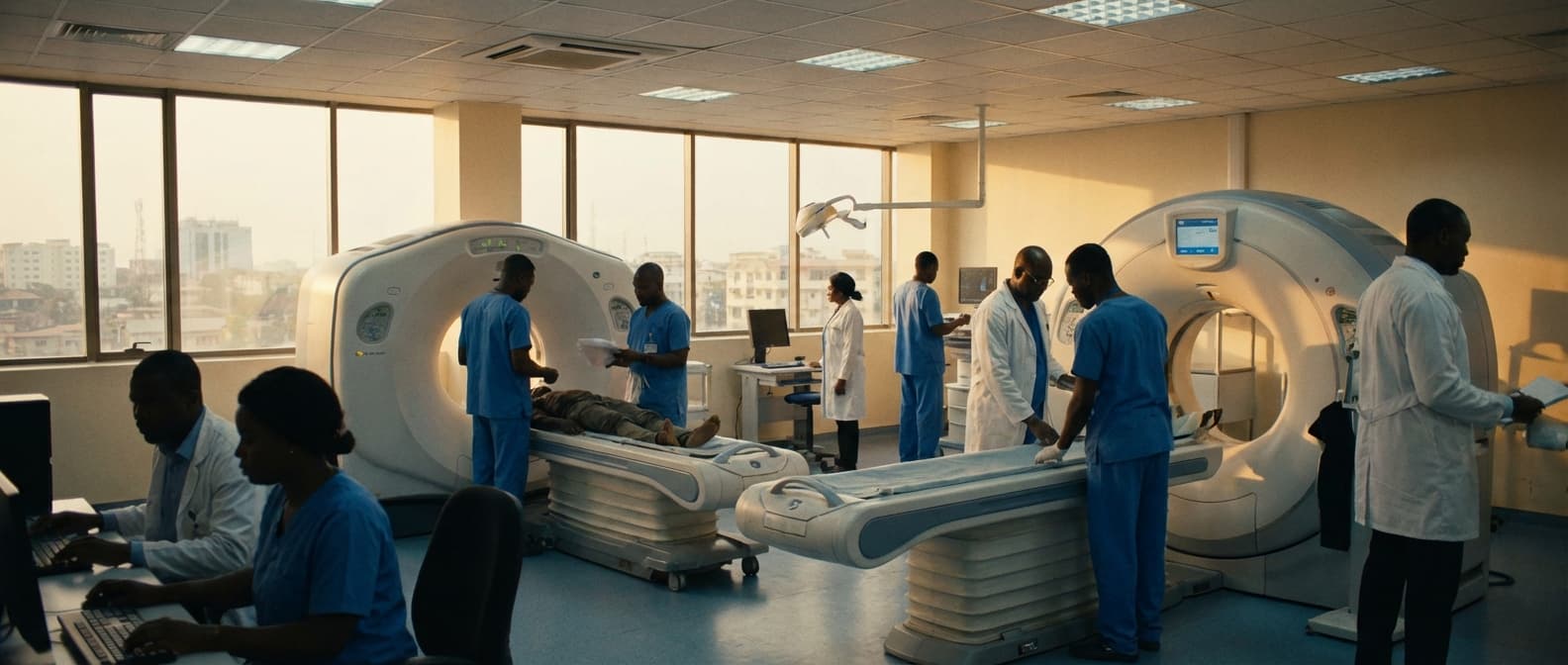
Radiology Room Design & Shielding Calculation in Namibia
Engineering Excellence & Technical Support
Turnkey room planning, shielding drawings and approvals for imaging suites. High-standard technical execution following OEM protocols and local regulatory frameworks.
Optimized Radiation Shielding for Namibian Radiology Facilities
We provide precise radiation shielding calculations for X-ray rooms, CT scanners, and other radiological suites in Namibia, adhering to international safety standards and local regulations. Our designs minimize radiation exposure to staff and patients while ensuring the integrity of diagnostic imaging equipment.
Ergonomic and Efficient Radiology Room Layout Design
Our expertise extends to designing functional and patient-centric radiology room layouts in Namibia. We focus on workflow optimization, accessibility for all patient needs, and integration of imaging equipment for seamless operation, enhancing both staff productivity and patient comfort.
Namibian Regulatory Compliance for Radiology Design
We ensure that all radiology room designs and shielding calculations for facilities in Namibia fully comply with the latest radiation protection regulations and licensing requirements set by relevant Namibian authorities, guaranteeing safe and legal operation.
What Is Radiology Room Design & Shielding Calculation In Namibia?
Radiology Room Design & Shielding Calculation in Namibia refers to the specialized engineering and architectural service focused on the planning, layout, and structural protection of medical imaging facilities. This encompasses the meticulous consideration of radiation safety, patient and staff ergonomics, workflow efficiency, regulatory compliance, and the integration of advanced imaging equipment. The core objective is to create an environment that minimizes radiation exposure to individuals while ensuring optimal diagnostic capabilities and operational functionality.
Scope of Service:
This service involves a comprehensive approach, including:
- Radiation Shielding Calculations: Determining the precise thickness and type of shielding materials (e.g., lead, concrete, barytes) required for walls, floors, ceilings, doors, and windows to attenuate primary and secondary radiation from X-ray, CT, MRI, and nuclear medicine equipment to meet or exceed national and international safety standards (e.g., NCRP, ICRP, IAEA recommendations, and Namibian regulatory guidelines).
- Room Layout and Architectural Design: Planning the spatial arrangement of the radiology suite, considering factors such as equipment placement, patient and staff pathways, control room positioning, waiting areas, changing rooms, and ancillary spaces. This ensures efficient workflow, patient comfort, and infection control.
- Equipment Specification Integration: Understanding the radiation output, beam geometry, and spatial requirements of specific imaging modalities (e.g., fixed radiography, fluoroscopy, CT scanners, mammography units, PET-CT, linear accelerators for radiotherapy) to inform both shielding and layout decisions.
- Ventilation and Environmental Control: Designing appropriate HVAC systems to maintain comfortable temperatures, humidity levels, and air quality, crucial for both patient comfort and equipment longevity.
- Electrical and Plumbing Considerations: Integrating power requirements for imaging equipment, emergency power backup, and necessary plumbing for specific modalities.
- Acoustic Design: Minimizing noise levels within the facility to enhance patient experience and operational clarity.
- Regulatory Compliance Review: Ensuring the design adheres to all relevant Namibian radiation protection regulations, building codes, and occupational health and safety standards.
| Use Case | Description | Key Considerations |
|---|---|---|
| New Hospital Wing Construction | Designing a comprehensive radiology department within a newly constructed hospital building. | High-volume patient throughput, multiple imaging modalities, integration with other hospital services, long-term expansion potential. |
| CT Scanner Installation | Designing or retrofitting a room for a new Computed Tomography (CT) scanner. | Significant shielding requirements due to high-energy X-rays, precise equipment positioning, patient gantry access, control room isolation. |
| Mammography Suite Upgrade | Renovating an existing space or designing a new suite for digital mammography. | Specific patient privacy and comfort needs, controlled lighting, mammography equipment footprint, dedicated changing facilities. |
| Nuclear Medicine Facility Establishment | Setting up a department for radiopharmaceutical administration and imaging (e.g., PET-CT, SPECT). | Radioactive material handling protocols, shielded "hot labs," waste management, patient recovery areas, specialized ventilation. |
| Radiotherapy Treatment Bunker Design | Designing bunkers for linear accelerators or other radiotherapy equipment. | Extremely high radiation levels requiring substantial structural shielding, precise beam targeting, safety interlock systems, patient treatment positioning. |
| Portable X-ray Unit Usage Area | Ensuring adequate shielding in areas where portable X-ray units will be frequently used, especially in patient wards. | Temporary shielding solutions, strategic placement of equipment, patient and staff awareness of radiation zones. |
| Fluoroscopy Suite Optimization | Designing or improving a room for interventional radiology procedures. | Dynamic X-ray beam management, shielding for mobile C-arms, surgeon and staff protection, sterile field considerations. |
Who Needs Radiology Room Design & Shielding Calculation in Namibia?
- Hospitals and Healthcare Facilities: Both public and private hospitals requiring new or renovated radiology departments, diagnostic imaging centers, or specialized imaging suites.
- Private Diagnostic Imaging Clinics: Independent imaging centers seeking to establish or expand their services.
- Specialized Medical Practices: Practices incorporating diagnostic imaging into their operations, such as orthopedic surgeons, oncologists, or urologists.
- Veterinary Clinics and Animal Hospitals: Facilities utilizing advanced diagnostic imaging for animal care.
- Research Institutions: Organizations conducting medical research that involves the use of ionizing radiation or advanced imaging techniques.
- Government and Regulatory Bodies: Agencies responsible for licensing, inspecting, and enforcing radiation safety standards within Namibia.
- Architects and Construction Companies: Professionals involved in the design and construction of healthcare infrastructure who require specialized expertise in radiology room design.
Who Needs Radiology Room Design & Shielding Calculation In Namibia?
Radiology room design and shielding calculations are crucial for ensuring the safety of patients, staff, and the public from ionizing radiation. In Namibia, these specialized services are essential for any facility that utilizes or plans to install X-ray equipment, CT scanners, or other radiation-producing diagnostic imaging modalities. This includes a range of healthcare providers, research institutions, and potentially veterinary clinics, all of whom must adhere to national and international radiation safety standards.
| Target Customer/Department | Specific Needs & Justification | Examples of Equipment Requiring Design/Shielding |
|---|---|---|
| Hospitals (Public & Private) | Comprehensive patient care requires a full spectrum of imaging services. Compliance with national health regulations and international safety standards is paramount. Minimizing radiation exposure to staff and patients is a primary concern. | X-ray rooms (general radiography, fluoroscopy), CT suites, MRI suites (though magnetic shielding is different from radiation shielding), Nuclear Medicine departments, Interventional Radiology suites. |
| Specialized Imaging Clinics | These facilities focus on specific diagnostic imaging modalities and serve a high volume of patients. Efficient workflow and patient throughput are important, alongside strict adherence to safety protocols to maintain their license to operate. | Dedicated CT scan centers, MRI centers, Bone densitometry (DXA) rooms, Mammography suites, Angiography suites. |
| Diagnostic Laboratories | While not primarily patient-facing, some laboratories may use X-ray equipment for sample analysis or research purposes, requiring containment and shielding. | X-ray diffraction (XRD) equipment, some industrial X-ray inspection systems used in research. |
| Veterinary Clinics | Increasingly, veterinary practices are investing in advanced imaging to provide better diagnostic care for animals. This necessitates proper room design and shielding to protect veterinarians, technicians, and animal handlers. | Veterinary X-ray rooms, veterinary CT scanners. |
| Research Institutions | Universities and research bodies may utilize radiation-producing equipment for scientific studies, requiring controlled environments and adherence to ethical and safety guidelines. | Medical research X-ray units, research CT scanners, particle accelerators for research (though this is a different scale of shielding). |
| Dental Practices (for advanced imaging) | Larger dental practices or those offering specialized treatments may have panoramic X-ray machines or CBCT scanners, requiring appropriate shielding for dentists, hygienists, and patients. | Panoramic X-ray units, Cone Beam CT (CBCT) scanners. |
Target Customers & Departments in Namibia for Radiology Room Design & Shielding Calculations
- Hospitals (Public & Private)
- Specialized Imaging Clinics
- Diagnostic Laboratories
- Veterinary Clinics
- Research Institutions
- Dental Practices (for advanced imaging)
- Industrial Applications (where radiation is used for inspection, though less common for diagnostic imaging focus)
Radiology Room Design & Shielding Calculation Process In Namibia
Designing and implementing radiology rooms with adequate radiation shielding in Namibia involves a structured workflow, from the initial client inquiry to the final execution and commissioning. This process ensures compliance with national radiation safety regulations, protects both patients and staff from unnecessary radiation exposure, and guarantees the optimal functionality of the radiology equipment. The workflow is a collaborative effort involving the client (hospital/clinic), radiation protection officers (RPOs), medical physicists, architects/designers, and construction teams. Key considerations throughout the process include the type and energy of radiation emitted by the equipment, the occupancy of adjacent areas, workload, and desired dose limits for staff and the public.
| Stage | Key Activities | Responsible Parties | Key Deliverables | Notes/Considerations |
|---|---|---|---|---|
| Client defines requirements for new or renovated radiology facility (room type, equipment, number of rooms). Discusses budget, timeline, and specific operational needs. | Client (Hospital/Clinic Management), Radiology Department Heads | Project Brief, Scope of Work | Understanding the specific medical imaging modalities (X-ray, CT, MRI, Nuclear Medicine) is crucial as shielding requirements vary significantly. |
| On-site assessment of the proposed location. Gathering information on existing structures, adjacent room occupancy (patient rooms, offices, public areas), floor plans, and building materials. | Medical Physicist, Radiation Protection Officer (RPO), Architect/Designer | Site Survey Report, Existing Floor Plans, Occupancy Data | Accurate assessment of structural integrity and load-bearing capacity of walls and floors for potential shielding materials. |
| Review of Namibian radiation protection regulations (e.g., Atomic Energy and Radiation Protection Act, associated regulations) and guidelines from the Radiation Protection Authority of Namibia (RPAN). | RPO, Medical Physicist | Understanding of RPAN requirements, Dose Limit Guidelines | Ensuring all design aspects adhere to legal and safety standards for radiation protection. |
| Developing preliminary room layouts, considering equipment placement, patient flow, staff working areas, and accessibility. Incorporating shielding requirements into the initial layout. | Architect/Designer, Medical Physicist, RPO | Conceptual Floor Plans, Initial Layout Options | Optimizing space utilization and ensuring safe distances from radiation sources. |
| Performing detailed calculations based on equipment specifications (kVp, mA, workload), distances, and occupancy factors to determine the required shielding thickness for walls, doors, windows, and floors. Selecting appropriate shielding materials (e.g., lead, concrete, baryte plaster). | Medical Physicist | Shielding Calculation Report, Recommended Shielding Specifications | Workload and occupancy factors are critical inputs. Different materials have varying attenuation properties. |
| Translating the conceptual design and shielding specifications into detailed architectural and engineering drawings. This includes structural details, electrical and mechanical services, and the precise integration of shielding elements. | Architect/Designer, Structural Engineer, Mechanical/Electrical Engineers | Detailed Architectural Drawings, Structural Drawings, MEP Drawings, Material Specifications | Drawings must clearly indicate the type and thickness of shielding for all relevant surfaces. |
| Submitting the detailed design plans to the relevant authorities for review and approval. This typically includes the RPAN, local building authorities, and potentially the Ministry of Health. | Client, Architect/Designer, Medical Physicist | Approved Building Permits, Radiation Safety Approval from RPAN | This stage can be time-consuming and requires thorough documentation. |
| Implementing the approved designs. This involves construction of walls, installation of lead lining (if applicable), fitting of radiation-shielded doors and windows, and integration of other services. | Construction Contractor, Specialized Shielding Installers, Equipment Vendors | Completed Construction, Installed Shielding Elements | Quality control during construction is paramount to ensure the integrity of the shielding. Regular site inspections by the medical physicist are recommended. |
| Post-construction verification of shielding effectiveness. This involves radiation surveys with the installed equipment to confirm that radiation levels in adjacent areas are within permissible limits. | Medical Physicist, RPO | Radiation Survey Report, Shielding Verification Certificate | Tests should simulate realistic operating conditions and workloads. |
| Final commissioning of the radiology room, including equipment testing and calibration, and operational readiness. Formal handover of the completed facility to the client. | Equipment Vendors, Medical Physicist, Client | Equipment Commissioning Report, Facility Handover Documentation | Ensuring the room is fully functional and safe for operation. |
| Periodic radiation safety audits and reviews to ensure ongoing compliance and the continued effectiveness of the shielding. Updating shielding calculations if equipment or workload changes significantly. | RPO, Medical Physicist | Periodic Audit Reports, Updated Safety Assessments | Regular monitoring is essential for long-term radiation safety management. |
Radiology Room Design & Shielding Calculation Process in Namibia Workflow
- Inquiry & Needs Assessment
- Site Survey & Data Collection
- Regulatory Compliance Review
- Conceptual Design & Layout Planning
- Shielding Calculation & Material Selection
- Detailed Design & Engineering Drawings
- Permitting & Approvals
- Construction & Installation
- Shielding Verification & Testing
- Commissioning & Handover
- Post-Installation Monitoring & Review
Radiology Room Design & Shielding Calculation Cost In Namibia
Designing and implementing radiology room shielding in Namibia involves several cost factors. These range from the architectural and engineering design services to the specific materials and labor required for radiation protection. The complexity of the room, the type of imaging equipment installed, and the required shielding thickness are primary drivers of cost. Additionally, regulatory compliance, licensing fees, and the need for specialized expertise from qualified radiation physicists and engineers play a significant role. Local currency (Namibian Dollar - NAD) pricing can vary based on the contractor, the project's location within Namibia, and the current economic climate.
| Service/Component | Estimated Price Range (NAD) |
|---|---|
| Architectural & Engineering Design (per room) | 15,000 - 75,000 |
| Lead Shielding Material (per square meter, 1-3mm thickness) | 3,000 - 10,000 |
| Lead Installation Labor (per square meter) | 1,500 - 5,000 |
| Lead-Lined Door (standard size) | 25,000 - 70,000 |
| Lead-Lined Window (custom size) | 15,000 - 50,000 |
| Radiation Physics Consultation & Survey | 10,000 - 40,000 |
| Permitting & Licensing Fees | 2,000 - 10,000 |
| Total Project Cost (Small to Medium Clinic/Hospital Room) | 150,000 - 800,000+ |
Key Pricing Factors for Radiology Room Design & Shielding in Namibia
- Architectural & Engineering Design Fees: Cost of designing the room layout, ventilation, and structural integrity, including radiation safety considerations.
- Radiation Shielding Material Costs: Primarily lead (Pb) sheeting, but potentially concrete or specialized drywall. The thickness and quantity are critical.
- Lead Installation Labor: Skilled labor is required for precise installation of lead sheeting to ensure effective shielding.
- Construction & Renovation Costs: Modifications to existing structures or construction of new rooms, including wall framing, plastering, and finishing.
- Ventilation & HVAC Systems: Specialized systems to manage heat generated by equipment and ensure air quality, sometimes integrated with shielding design.
- Door & Window Shielding: Custom-designed lead-lined doors and observation windows are often necessary and can be expensive.
- Radiation Physics Consultation & Survey: Fees for qualified professionals to design the shielding plan and perform post-installation radiation surveys to ensure compliance.
- Permitting & Licensing Fees: Costs associated with obtaining necessary approvals from Namibian regulatory bodies (e.g., Ministry of Health and Social Services).
- Equipment Integration: Consideration for the radiation output and shielding requirements of the specific radiology equipment (X-ray, CT scanner, etc.).
- Project Management & Contingency: Overhead costs for project oversight and a buffer for unforeseen issues.
- Geographic Location: Costs can vary between major centers (e.g., Windhoek) and more remote areas due to logistics and availability of specialized services.
Affordable Radiology Room Design & Shielding Calculation Options
Designing and outfitting a radiology room involves careful consideration of spatial layout, equipment placement, and crucially, radiation shielding. This process directly impacts both the initial construction costs and long-term operational efficiency. This guide explores affordable design strategies, essential shielding calculations, and introduces value bundles and cost-saving options to optimize your radiology room investment.
| Design Element | Cost-Saving Strategy | Value Bundle Option | Notes |
|---|---|---|---|
| Room Layout & Size | Prioritize functional flow and minimize unnecessary square footage. Consider shared waiting areas if applicable. | 'Compact & Compliant' Bundle: Pre-designed, optimized layouts for common imaging modalities (e.g., X-ray, CT). | Smaller rooms require less shielding and construction materials. |
| Shielding Material Selection | Utilize standard lead sheeting or lead-infused drywall where appropriate. Explore alternatives for non-critical areas. | 'Smart Shield' Package: Consultation on optimal lead thickness and placement, potentially incorporating less expensive materials where permitted. | Cost varies significantly between lead, concrete, and other shielding options. |
| Door & Window Design | Standard lead-lined doors and viewing windows are essential. Consider integrated shielding solutions. | 'Integrated Access' Kit: Pre-fabricated lead-lined doors with built-in viewing windows. | Custom solutions can be significantly more expensive. |
| Electrical & HVAC Integration | Plan for equipment power and cooling needs early to avoid costly retrofitting. Standardized conduit runs. | 'Ready-Power' Infrastructure: Basic electrical and HVAC provisions tailored to typical radiology equipment. | Complex or unconventional requirements drive up costs. |
| Shielding Calculations & Design | Accurate calculations are vital to avoid over-shielding (wasteful) or under-shielding (non-compliant). | 'Shielding Essentials' Service: Professional calculation and design for a specific modality, ensuring regulatory compliance and material optimization. | This is a critical area where expert consultation is paramount. |
| Project Management & Installation | Work with contractors experienced in healthcare construction. Phased installation if budget is a constraint. | 'Turnkey Lite' Option: Basic design and installation coordination for a single radiology room. | Bulk purchasing of materials can offer discounts. |
Key Considerations for Affordable Radiology Room Design & Shielding
- Space Optimization: Efficient layout minimizes wasted space and the amount of shielding required.
- Equipment Selection: Choosing appropriate-sized and multi-functional equipment can reduce the need for extensive room modifications.
- Shielding Material Choice: Understanding the properties and costs of various shielding materials is crucial.
- Regulatory Compliance: Adhering to all local and national radiation safety regulations is non-negotiable.
- Future-Proofing: Designing with potential future upgrades or equipment changes in mind can save costs down the line.
- Professional Consultation: Engaging with experienced radiology designers and shielding experts can prevent costly mistakes.
Verified Providers In Namibia
Navigating the healthcare landscape in Namibia can be challenging. Identifying trustworthy and qualified medical professionals is paramount for ensuring optimal health outcomes. This guide focuses on Verified Providers in Namibia, with a special emphasis on Franance Health credentials and why they stand out as the best choice for your healthcare needs. Verified providers undergo rigorous checks to ensure their qualifications, experience, and ethical standards meet stringent requirements. Franance Health, in particular, has established a reputation for excellence by meticulously vetting its network, offering patients peace of mind and access to top-tier medical expertise.
| Credential Type | Verification Standard | Benefit to Patient |
|---|---|---|
| Medical Licensing (e.g., Health Professions Council of Namibia) | Mandatory government-issued license to practice. | Ensures basic legal and professional qualification. |
| Specialist Certifications | Proof of advanced training and expertise in a specific medical field (e.g., cardiology, pediatrics). | Guarantees specialized knowledge and skills for complex conditions. |
| Work Experience Verification | Confirmation of previous employment and roles within reputable healthcare institutions. | Indicates practical application of knowledge and experience in real-world settings. |
| Continuing Professional Development (CPD) | Evidence of ongoing learning and staying updated with medical advancements. | Ensures providers are current with the latest treatments and technologies. |
| Franance Health's Internal Quality Assurance | Franance Health's own stringent review of qualifications, background checks, and patient feedback. | Provides an additional layer of assurance for quality, ethics, and patient satisfaction. |
Why Franance Health Credentials Represent the Best Choice:
- Rigorous Vetting Process: Franance Health employs a multi-stage credentialing process that goes beyond basic licensing. This includes verification of educational qualifications, specialist training, work experience, and professional references.
- Commitment to Quality and Safety: Providers associated with Franance Health are committed to adhering to the highest standards of medical care, patient safety, and ethical conduct. This commitment is consistently monitored and maintained.
- Access to Specialized Expertise: The Franance Health network encompasses a diverse range of medical specialists, ensuring you can find the right expertise for your specific health concerns, from general practitioners to highly specialized surgeons and diagnosticians.
- Patient-Centric Approach: Franance Health prioritizes patient well-being. Verified providers are known for their empathetic communication, personalized treatment plans, and a focus on building long-term patient-provider relationships.
- Transparency and Accountability: Franance Health champions transparency. Patients can be confident that providers within their network have met all necessary requirements and are accountable for their professional practice.
Scope Of Work For Radiology Room Design & Shielding Calculation
This Scope of Work (SOW) outlines the requirements for the design of a radiology room, including radiation shielding calculations, and details the technical deliverables and standard specifications. The project aims to ensure a safe and functional environment for radiology procedures while adhering to all relevant regulatory standards and best practices.
| Section | Description | Deliverables | Standard Specifications/References |
|---|---|---|---|
| 1.0 Project Understanding & Site Survey | Understand project requirements, existing conditions, and site-specific constraints. | Site survey report, existing condition drawings (if applicable), preliminary requirements document. | N/A |
| 2.0 Conceptual Design & Layout | Develop initial room layouts, considering workflow, equipment placement, patient access, and staff areas. | Conceptual floor plans, 3D massing models, preliminary equipment placement diagrams. | Radiology equipment manufacturer guidelines, ergonomic design principles. |
| 3.0 Architectural & Structural Design | Develop detailed architectural drawings, including room dimensions, door swings, finishes, and integration with building structure. | Detailed architectural floor plans, elevations, sections, details drawings (doorways, windows, etc.). | Local building codes (e.g., IBC), architectural design standards (e.g., AIA), accessibility standards (e.g., ADA). |
| 4.0 Radiation Shielding Calculations | Calculate required shielding thickness for walls, floor, ceiling, and openings (doors, windows) based on projected radiation levels and workload. | Radiation shielding calculation report (including workload, occupancy factors, primary/secondary barriers), shielding material specifications. | NCRP Report No. 147, NCRP Report No. 151, ICRP Publication 73, local radiation safety regulations (e.g., FDA, state health departments). |
| 5.0 Electrical & Mechanical Design Integration | Coordinate electrical and mechanical systems to support radiology equipment and ensure environmental controls. | Electrical layout drawings (power, lighting, data), HVAC schematics and specifications, communication system integration. | National Electrical Code (NEC), ASHRAE standards, relevant medical equipment specifications. |
| 6.0 Door & Window Design | Design and specify radiation-shielded doors and windows, including frame details and interlocks. | Door and window detail drawings, hardware specifications, interlock system diagrams. | Radiation shielding requirements (as per Section 4.0), door manufacturer specifications, safety interlock standards. |
| 7.0 Finishes & Materials | Specify durable, cleanable, and radiologically appropriate finishes for all surfaces. | Finishes schedule, material data sheets, submittal requirements. | Healthcare-specific material requirements (e.g., antimicrobial surfaces), fire-rating standards. |
| 8.0 Equipment Integration | Ensure proper space, power, ventilation, and shielding for all planned radiology equipment. | Equipment mounting details, utility connection points, clearance requirements. | Radiology equipment manufacturer installation manuals and specifications. |
| 9.0 Final Deliverables Package | Compile all design documents into a comprehensive package for construction. | Complete set of construction drawings (architectural, structural, electrical, mechanical), specifications, reports, equipment schedules. | Project-specific requirements, industry best practices. |
Key Objectives
- Develop comprehensive architectural and structural designs for a radiology room.
- Perform accurate radiation shielding calculations to ensure radiation safety for staff, patients, and the public.
- Specify all materials, equipment, and finishes required for the radiology room.
- Ensure compliance with all applicable local, national, and international radiation safety regulations and building codes.
- Produce detailed technical deliverables for construction and implementation.
Service Level Agreement For Radiology Room Design & Shielding Calculation
This Service Level Agreement (SLA) outlines the guaranteed response times and uptime for our Radiology Room Design & Shielding Calculation services. It defines the expected performance standards to ensure client satisfaction and operational continuity.
| Service Component | Target Response Time | Uptime Guarantee | Escalation Contact |
|---|---|---|---|
| Initial Project Inquiry Acknowledgement | 4 Business Hours | N/A | Project Manager |
| Initial Design & Shielding Calculation Report | 3 Business Days (upon full documentation receipt) | N/A | Lead Radiology Designer |
| Revisions & Clarifications | 1 Business Day | N/A | Project Manager |
| Service Availability (during business hours) | N/A | 99.5% | Technical Support Lead |
Service Level Objectives (SLOs)
- Service Availability: The service will be available for access and use during normal business hours (Monday-Friday, 9 AM - 5 PM local time, excluding public holidays).
- Response Time for Initial Consultation: A dedicated project manager will acknowledge receipt of a new project inquiry and schedule an initial consultation within 4 business hours.
- Response Time for Design & Calculation Requests: Upon receipt of all necessary project documentation (blueprints, equipment specifications, usage patterns), the initial design and shielding calculation report will be delivered within 3 business days.
- Response Time for Revisions & Clarifications: Requests for revisions or clarifications to the delivered design or calculations will be addressed within 1 business day.
- Uptime Guarantee: The service aims for 99.5% uptime during normal business hours. This excludes scheduled maintenance windows, which will be communicated at least 48 hours in advance.
- Data Security: All project data will be handled with the utmost confidentiality and protected using industry-standard security protocols.
Frequently Asked Questions

Ready when you are
Let's scope your Radiology Room Design & Shielding Calculation in Namibia project in Namibia.

Scaling healthcare logistics and technical systems across the entire continent.