
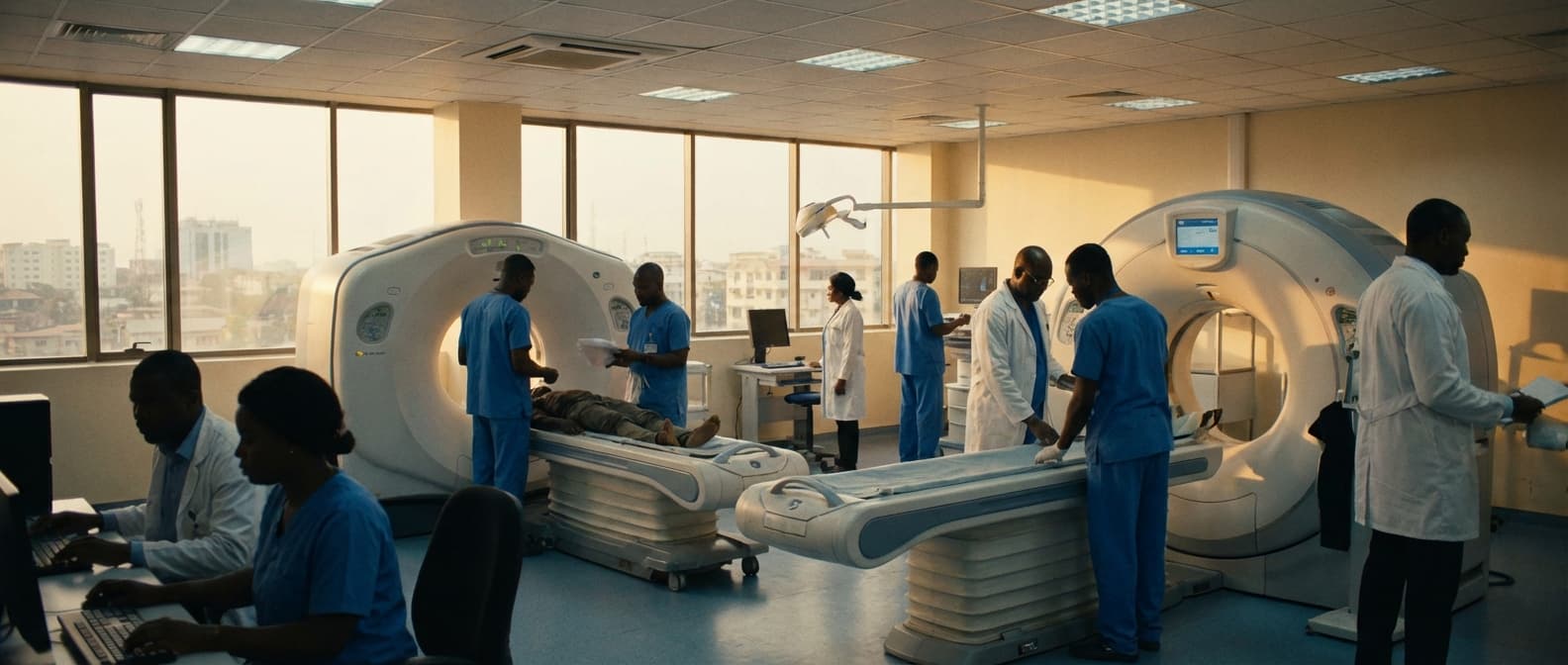
Imaging Acceptance Testing & QA in Namibia
Engineering Excellence & Technical Support
Commissioning and periodic QA for CT/MRI/X‑ray/US/Mammo. High-standard technical execution following OEM protocols and local regulatory frameworks.
Advanced Imaging QA for Diagnostic Accuracy
Implementing rigorous acceptance testing protocols for medical imaging equipment (X-ray, CT, MRI, Ultrasound) across Namibian healthcare facilities. This ensures optimal image quality, accurate diagnostic outputs, and adherence to international standards, directly impacting patient care and reducing misdiagnosis rates.
Automated QA Workflows & Performance Benchmarking
Developing and deploying automated testing solutions for medical imaging systems to streamline QA processes. This includes performance benchmarking, radiation dose verification, and artifact detection, leading to faster acceptance cycles, reduced operational costs, and enhanced reliability for healthcare providers in Namibia.
Comprehensive Regulatory Compliance & Documentation
Ensuring all imaging equipment meets stringent Namibian health regulations and international quality standards through meticulous acceptance testing. Providing detailed documentation and reports that facilitate regulatory approval, support accreditation processes, and ensure the long-term safety and efficacy of medical imaging services.
What Is Imaging Acceptance Testing & Qa In Namibia?
Imaging Acceptance Testing & Quality Assurance (QA) in Namibia is a specialized service focused on verifying that digital imaging systems, including hardware (e.g., scanners, cameras, medical imaging devices) and software (e.g., image processing applications, PACS, VNA), meet predefined functional, performance, and reliability standards. This process ensures that captured, processed, and stored images are accurate, interpretable, and adhere to relevant industry regulations and organizational requirements specific to the Namibian context. It encompasses a systematic evaluation of image quality, data integrity, workflow efficiency, and interoperability within the Namibian healthcare, archival, or industrial sectors.
| Who Needs Imaging Acceptance Testing & QA in Namibia? | Typical Use Cases in Namibia | |||||
|---|---|---|---|---|---|---|
| Healthcare Providers: Hospitals, clinics, diagnostic imaging centers (radiology, pathology, ophthalmology), and dental practices seeking to implement or upgrade imaging equipment and Picture Archiving and Communication Systems (PACS) / Vendor Neutral Archives (VNA). | Public Sector Archives & Libraries: Institutions responsible for preserving historical documents, photographic collections, or government records requiring digitization and long-term digital storage. | Industrial & Manufacturing: Companies utilizing imaging for quality control, inspection, and non-destructive testing (NDT) of manufactured goods. | Research Institutions: Universities and research facilities employing imaging technologies for scientific studies and data collection. | Government Agencies: Entities involved in forensic imaging, land surveying, or infrastructure monitoring. | IT Vendors & Integrators: Companies deploying imaging solutions within Namibia, ensuring their products meet client specifications and local regulatory requirements. | Medical Device Manufacturers & Distributors: Ensuring their Namibian market-approved devices perform as intended and meet all quality standards. |
| Deployment of new MRI, CT, X-ray, Ultrasound, or Digital Pathology scanners: Ensuring image quality and integration with PACS. | Implementation of new PACS/VNA systems: Verifying image storage, retrieval, and interoperability with existing hospital information systems (HIS/EMR). | Digitization projects for national archives or historical societies: Assessing the quality and integrity of scanned documents and photographs. | Automated visual inspection systems in manufacturing plants: Validating the accuracy and reliability of defect detection. | Rollout of telehealth imaging services: Ensuring reliable transmission and accurate interpretation of diagnostic images remotely. | Upgrades to existing imaging software or hardware: Confirming that new versions maintain or improve performance and functionality. | Compliance audits for medical imaging departments: Ensuring adherence to international and local quality standards. |
Key Components of Imaging Acceptance Testing & QA:
- Image Quality Assessment: Evaluating resolution, contrast, noise levels, artifacts, and color fidelity to ensure diagnostic or archival suitability.
- Functional Verification: Testing core functionalities such as image acquisition, manipulation, storage, retrieval, and display against specified requirements.
- Performance Benchmarking: Measuring acquisition speeds, processing times, data transfer rates, and system responsiveness under various load conditions.
- Data Integrity Checks: Ensuring the accuracy, completeness, and non-corruptibility of image data throughout its lifecycle.
- Interoperability Testing: Validating seamless integration and data exchange with other systems (e.g., EMR/EHR, DICOM, HL7) in accordance with Namibian healthcare IT standards.
- Security and Compliance Audits: Verifying adherence to data privacy regulations (e.g., data protection laws applicable in Namibia) and cybersecurity best practices.
- Usability and Workflow Analysis: Assessing the ease of use for operators and the efficiency of imaging workflows within the Namibian operational environment.
- Regulatory Compliance: Ensuring alignment with any specific Namibian medical device regulations, archival standards, or industrial quality control mandates.
Who Needs Imaging Acceptance Testing & Qa In Namibia?
In Namibia's burgeoning healthcare sector, ensuring the accuracy, reliability, and compliance of medical imaging equipment is paramount. This is where Imaging Acceptance Testing & Quality Assurance (QA) plays a critical role. It's not just a regulatory formality, but a vital step to guarantee patient safety, optimize diagnostic outcomes, and ensure the longevity and efficient operation of expensive imaging investments. While often perceived as a specialized service, its benefits extend to a wide range of stakeholders within the Namibian healthcare landscape.
| Target Customer/Department | Key Needs & Benefits of Imaging Acceptance Testing & QA | Specific Considerations for Namibia |
|---|---|---|
| Public Hospitals & Clinics (e.g., Ministry of Health and Social Services facilities) | Ensuring optimal performance of essential imaging equipment (X-ray, Ultrasound, CT, MRI) for serving the general population. Verification of compliance with national standards. Minimizing downtime and costly repairs due to early detection of issues. Cost-effective deployment of limited resources. | Focus on robust, user-friendly testing protocols. Training local technicians. Cost-effective solutions that align with public healthcare budgets. Ensuring accessibility of QA services across remote regions. |
| Private Hospitals & Diagnostic Centers (e.g., Windhoek Central Hospital, MediPark, private radiology practices) | Maintaining high diagnostic accuracy for a competitive market. Upholding reputation for quality patient care. Ensuring equipment meets international benchmarks. Validating new technology acquisitions. Risk mitigation and liability protection. | Emphasis on advanced imaging techniques and high-resolution imaging QA. Integration with existing IT infrastructure. Timely and efficient testing to minimize disruption to patient flow. Access to specialized testing for advanced modalities. |
| Radiology Departments (within hospitals or standalone practices) | Ensuring image quality for accurate diagnosis by radiologists. Optimizing radiation dose for patient safety. Verifying system performance against manufacturer specifications. Early identification of potential equipment degradation. Facilitating seamless integration of new imaging systems. | Regular scheduled QA testing. Calibration and performance verification protocols tailored to specific equipment types. Training for radiographers and technologists on basic QA checks. Development of robust image archiving and retrieval systems. |
| Medical Equipment Suppliers & Installers | Demonstrating the quality and correct installation of new imaging systems to clients. Fulfilling contractual obligations for performance guarantees. Reducing post-installation service calls and warranty claims. Building trust and long-term relationships with healthcare providers. | Providing comprehensive acceptance testing reports as part of the installation package. Offering ongoing QA services as a value-added offering. Ensuring alignment with Namibian import and installation regulations. Developing local partnerships for efficient service delivery. |
| Government Health Ministries & Regulatory Bodies | Establishing and enforcing national standards for medical imaging equipment. Ensuring patient safety and quality of care across the healthcare system. Monitoring compliance of healthcare facilities with regulatory requirements. Informing procurement decisions and resource allocation. | Development and implementation of clear national guidelines and protocols for acceptance testing and QA. Accreditation of QA service providers. Periodic audits and inspections of healthcare facilities. Data collection and analysis for public health planning. |
| Tertiary Healthcare Centers & Research Institutions | Ensuring the highest levels of image quality for complex diagnostic procedures and cutting-edge research. Validating equipment for advanced clinical trials. Maintaining data integrity and reproducibility for research studies. Compliance with ethical and scientific standards. | Specialized testing for advanced imaging techniques (e.g., functional MRI, PET-CT). Rigorous validation for research-specific applications. Ensuring compatibility with sophisticated data analysis software. Collaboration with international research standards. |
Who Needs Imaging Acceptance Testing & QA in Namibia?
- Healthcare Facilities (Public & Private)
- Medical Imaging Departments
- Radiology Practices
- Hospitals & Clinics
- Government Health Ministries & Regulatory Bodies
- Medical Equipment Suppliers & Installers
- Research Institutions
- Tertiary Healthcare Centers
Imaging Acceptance Testing & Qa Process In Namibia
This document outlines the Imaging Acceptance Testing & Quality Assurance (QA) process for imaging systems and solutions deployed or considered for deployment in Namibia. The workflow ensures that imaging solutions meet predefined specifications, function correctly in the local context, and comply with relevant standards before full operational acceptance.
| Phase | Key Activities | Responsibility | Deliverables | Notes/Namibian Context |
|---|---|---|---|---|
| Receive initial interest/request for imaging solution. Understand business needs, existing infrastructure, user base, and specific imaging requirements (e.g., medical, document, industrial). Define functional and non-functional requirements. | Client/Requestor, Project Manager, Business Analyst | Requirements Document, Use Cases | Consider local regulatory requirements (e.g., healthcare data privacy if applicable), existing IT landscape in Namibia (bandwidth, power stability). |
| Develop a detailed technical design based on gathered requirements. Specify hardware, software, network components, integration points, and performance benchmarks. Define acceptance criteria. | Solution Architect, Technical Lead | Technical Design Document, System Specifications, Test Plan Outline | Ensure chosen technologies are sustainable and supportable within Namibia's technological ecosystem. Consider local vendor support availability. |
| Issue Request for Proposal (RFP) to potential vendors. Evaluate technical proposals, pricing, support models, and past performance. Conduct demonstrations and proof-of-concept if necessary. | Procurement Team, Technical Evaluation Committee, Project Manager | Vendor Scorecard, Selected Vendor Recommendation, Contract Draft | Prioritize vendors with established presence or strong local partnerships in Namibia for better support and maintenance. |
| Vendor conducts internal testing of the proposed solution in a controlled environment. This might include lab testing or staging. Focus on core functionality and conformance to specifications. | Vendor (Internal QA Team) | PAT Report, Bug Logs, Initial Test Results | May be conducted at vendor's site or a remote lab. Client may participate in witness testing. |
| Evaluate the target deployment site(s) in Namibia for necessary infrastructure: power, network connectivity, physical space, environmental controls (if applicable). Identify any required upgrades. | IT Infrastructure Team, Site Survey Team, Project Manager | Site Readiness Report, Remediation Plan | Critical for remote or rural locations in Namibia where infrastructure might be less robust. Assess internet/network stability for cloud-based solutions. |
| Install and configure the imaging solution at the Namibian site(s) according to the design. This includes hardware setup, software installation, network integration, and initial data migration (if applicable). | Installation Engineers (Vendor/Local Partner), IT Support Team | Installation Report, Configuration Documentation, Initial System Check | Ensure sufficient training for local IT support personnel during installation for ongoing maintenance. |
| End-users and key stakeholders test the system in a realistic operational environment. Focus on usability, workflow efficiency, and satisfaction of business requirements. Identify and report any defects or deviations. | End-Users, Subject Matter Experts, QA Team, Project Manager | UAT Test Cases, Bug Reports, UAT Sign-off Document | Involve users from diverse geographical locations within Namibia if the system is to be deployed nationally. Adapt test cases to reflect local workflows and languages if necessary. |
| Test the system's performance under expected and peak load conditions. Measure response times, throughput, and resource utilization to ensure it meets specified benchmarks. | Performance Test Engineers, QA Team | Performance Test Results, Load Test Report | Crucial for ensuring the system can handle the demands of the Namibian user base and data volumes, considering potential network latency. |
| Verify that the system adheres to all relevant security policies and data privacy regulations (e.g., protection of sensitive data). Conduct vulnerability assessments and penetration testing. | Security Analysts, Compliance Officers, QA Team | Security Test Report, Compliance Audit Findings | Pay close attention to Namibian data protection laws and any industry-specific compliance mandates (e.g., health sector regulations). |
| Ensure that user and administrator training materials are comprehensive, accurate, and delivered effectively. Verify that all system documentation is up-to-date and accessible. | Training Facilitators, Technical Writers, End-Users | Training Completion Records, Verified Documentation Set | Consider delivering training in local languages or adapting materials for different literacy levels if prevalent. |
| Formal sign-off by authorized stakeholders confirming that all testing phases have been successfully completed and the system meets all defined acceptance criteria. Formal handover to operations. | Project Sponsor, Key Stakeholders, Project Manager | Final Acceptance Certificate/Sign-off Form | This is the official green light for the system to go live in Namibia. |
| After a period of operational use, review the system's performance, user satisfaction, and any emergent issues. Identify lessons learned for future deployments. | Project Manager, Operations Team, Key Stakeholders | Post-Implementation Review Report, Lessons Learned Document | Gather feedback on the long-term success of the imaging solution in the Namibian context and its impact on operational efficiency. |
Imaging Acceptance Testing & QA Workflow in Namibia
- Inquiry and Requirements Gathering
- Solution Design and Specification
- Vendor Selection and Proposal Evaluation
- Pre-Acceptance Testing (PAT)
- Site Readiness Assessment
- Installation and Configuration
- User Acceptance Testing (UAT)
- Performance and Load Testing
- Security and Compliance Testing
- Training and Documentation Verification
- Final Acceptance and Sign-off
- Post-Implementation Review
Imaging Acceptance Testing & Qa Cost In Namibia
Imaging acceptance testing and Quality Assurance (QA) in Namibia are crucial steps to ensure that digital imaging systems, such as X-ray machines, CT scanners, or MRI units, meet performance, safety, and diagnostic accuracy standards before clinical use. The cost of these services is influenced by several factors, including the complexity of the imaging modality, the scope of the testing, the vendor or service provider's expertise, and geographical location within Namibia. Prices are typically quoted on a per-procedure or per-device basis. Due to the specialized nature of this service and the relatively small market in Namibia, it's important to obtain detailed quotes from multiple accredited service providers.
| Imaging Modality | Estimated Price Range (NAD) |
|---|---|
| Basic X-ray Unit | 2,000 - 5,000 |
| Digital Radiography (DR) / Computed Radiography (CR) System | 3,000 - 7,000 |
| Fluoroscopy System | 4,000 - 8,000 |
| Mammography Unit | 5,000 - 10,000 |
| Computed Tomography (CT) Scanner | 8,000 - 20,000+ |
| Magnetic Resonance Imaging (MRI) Scanner | 10,000 - 25,000+ |
| Ultrasound Machine (Basic to Advanced) | 2,500 - 7,000 |
Key Pricing Factors for Imaging Acceptance Testing & QA in Namibia:
- Imaging Modality Complexity: More sophisticated and higher-cost equipment (e.g., MRI, PET-CT) generally incurs higher testing fees than simpler modalities (e.g., basic X-ray).
- Scope of Testing: The breadth and depth of the acceptance testing protocol significantly impact cost. This can range from basic functional checks to comprehensive performance evaluations, including image quality assessments, radiation dose verification, and adherence to international standards (e.g., IEC standards).
- Vendor/Service Provider Expertise and Reputation: Established and certified service providers with specialized knowledge and experience often command higher rates. Accreditation and adherence to regulatory requirements are also key factors.
- Geographical Location: While less of a factor for routine testing performed at a vendor's facility, on-site acceptance testing can incur additional travel and accommodation costs, especially for remote locations within Namibia.
- Equipment Age and Condition: Older or used equipment might require more extensive or specialized testing, potentially increasing costs.
- Required Documentation and Reporting: The level of detail and formality in the final report, including certifications and compliance statements, can influence the overall price.
- Additional Services: Bundled services, such as initial calibration, user training, or ongoing maintenance contracts, can affect the quoted price for acceptance testing.
Affordable Imaging Acceptance Testing & Qa Options
Ensuring the accuracy and reliability of medical imaging systems is paramount for patient safety and effective diagnosis. Acceptance Testing (AT) and Quality Assurance (QA) are crucial for this. However, the cost of comprehensive AT/QA can be a significant barrier, especially for smaller clinics or facilities with limited budgets. This document outlines affordable imaging acceptance testing & QA options, focusing on value bundles and cost-saving strategies. We'll explore how strategic planning and the adoption of efficient methodologies can deliver robust testing without breaking the bank.
| Cost-Saving Strategy | Description | Benefits |
|---|---|---|
| Phased/Modular Testing: | Instead of conducting all tests at once, break down AT/QA into smaller, manageable phases. This allows for staged approval and potentially spreads costs over time. | Reduced upfront investment, allows for incremental budget allocation, facilitates quicker integration of essential functionalities. |
| Leveraging Vendor-Provided Tools & Training: | Many vendors offer basic testing tools and training as part of the purchase agreement. Maximize the use of these resources. | Reduces the need for external testing equipment or specialized software, empowers internal staff to perform routine checks. |
| Standardized Testing Protocols: | Develop or adopt standardized, efficient testing protocols that cover essential parameters. Avoid overly complex or redundant tests. | Streamlines the testing process, reduces test duration, ensures consistency and comparability of results. |
| In-House QA Personnel & Training: | Train existing biomedical engineers or technicians to perform routine QA tasks. This requires investment in training but can save significantly on external service contracts. | Reduced reliance on external vendors for routine QA, faster response times for issues, builds internal expertise. |
| Remote Monitoring & Support: | Explore imaging systems that offer remote monitoring capabilities. This can help identify potential issues proactively, reducing the need for on-site visits. | Early detection of problems, reduced travel costs for technicians, minimized downtime. |
| Data Analysis & Trend Monitoring: | Focus on analyzing test results over time. Identifying trends can help predict potential failures and allow for proactive maintenance, preventing costly breakdowns. | Proactive problem-solving, extended system lifespan, optimized maintenance schedules. |
| Bundled Service Contracts (Strategically): | When purchasing new equipment, negotiate bundled AT/QA services as part of the overall package. Ensure the bundle clearly defines scope and duration. | Potentially lower per-unit cost when bundled, predictable expenses, simplified procurement. |
| Utilizing Simulation & Phantom Testing: | For certain aspects of AT/QA, especially for image quality, utilize phantoms and simulation software. These can be cost-effective alternatives to complex patient-based testing. | Safe and repeatable testing, cost-effective for image quality assessment, reduces radiation exposure. |
| Shared Resources (for Multi-Site Facilities): | If operating multiple facilities, centralize AT/QA expertise and resources to serve all sites efficiently. | Economies of scale, consistent testing standards across facilities, optimized use of specialized equipment. |
Understanding Acceptance Testing (AT) and Quality Assurance (QA)
- Acceptance Testing (AT): Performed when a new imaging system is installed or a significant upgrade is made. It verifies that the system meets the manufacturer's specifications and the user's requirements before it is put into clinical use.
- Quality Assurance (QA): An ongoing process to ensure that imaging systems consistently produce high-quality images and operate within established performance standards throughout their lifespan. This includes regular checks, calibration, and troubleshooting.
Verified Providers In Namibia
Navigating the healthcare landscape in Namibia can be challenging, but for those seeking reliable and high-quality medical services, identifying verified providers is paramount. Franance Health stands out as a leading entity, distinguished by its rigorous credentialing process and unwavering commitment to patient well-being. This document outlines why Franance Health credentials signify the best choice for healthcare in Namibia.
| Franance Health Credential | What it Represents for Patients | Benefit to Patient Care |
|---|---|---|
| Certified Medical Professionals | Doctors, nurses, and allied health professionals who have met stringent educational, licensing, and competency standards. | Ensures patients receive care from qualified and competent individuals, minimizing risks and maximizing treatment effectiveness. |
| Accredited Facilities | Hospitals, clinics, and diagnostic centers that adhere to rigorous operational, safety, and quality standards. | Guarantees that medical facilities are well-equipped, safe, and maintained to the highest standards, providing a conducive environment for treatment. |
| Adherence to Ethical Guidelines | Providers committed to upholding the highest ethical standards in medical practice, patient confidentiality, and informed consent. | Builds trust and confidence, ensuring patients' rights are respected and their privacy is protected throughout their healthcare journey. |
| Proven Track Record | A history of successful patient outcomes and positive feedback from those who have utilized their services. | Offers reassurance and evidence of the provider's ability to deliver effective and satisfactory medical care. |
Key Aspects of Franance Health's Verified Provider Program:
- Comprehensive Vetting: Franance Health employs a multi-faceted vetting process that scrutinizes not only professional licenses and qualifications but also clinical experience, ethical standing, and adherence to best medical practices.
- Continuous Quality Assurance: Beyond initial verification, Franance Health engages in ongoing monitoring of its network providers. This includes regular performance reviews, patient feedback analysis, and staying abreast of the latest advancements in medical science and technology.
- Specialized Expertise: The network encompasses a wide spectrum of medical specialties, ensuring that patients can access the specific expertise they require, from general practitioners to highly specialized surgeons and diagnosticians.
- Patient-Centric Approach: Franance Health prioritizes patient experience. Verified providers are expected to demonstrate exceptional communication skills, empathy, and a commitment to shared decision-making.
- Technological Integration: Providers are encouraged and often required to adopt modern healthcare technologies, facilitating efficient appointment booking, access to medical records, and streamlined communication.
Scope Of Work For Imaging Acceptance Testing & Qa
This Scope of Work (SOW) outlines the requirements for Imaging Acceptance Testing and Quality Assurance (QA) for the [Project Name] project. It details the technical deliverables expected and the standard specifications to be adhered to throughout the testing process. The primary objective is to ensure that all imaging functionalities meet the defined requirements, perform optimally, and are free from defects before deployment. This SOW will guide the testing team in executing comprehensive validation of the imaging system.
| Deliverable | Description | Format/Standard | Acceptance Criteria |
|---|---|---|---|
| Test Plan | A comprehensive document detailing the scope, approach, resources, and schedule of testing activities. | Microsoft Word / PDF | Approved by stakeholders; covers all identified imaging features and risks. |
| Test Cases | Detailed step-by-step instructions for executing specific tests, including expected results. | Microsoft Excel / Test Management Tool (e.g., Jira, TestRail) | Traceable to requirements; cover positive, negative, and edge cases. |
| Test Data | Representative imaging datasets (e.g., DICOM files, raw sensor data) used for testing. | DICOM, TIFF, JPEG, RAW (as applicable) | Sufficient variety and volume to cover all test scenarios; anonymized if necessary. |
| Defect Reports | Detailed documentation of identified bugs, including steps to reproduce, severity, and impact. | Defect Tracking Tool (e.g., Jira) | Clearly documented, prioritized, and actionable for developers. |
| Test Execution Summary Report | An overview of test execution status, including passed, failed, and blocked test cases. | Microsoft Word / PDF | Provides a high-level view of testing progress and quality status. |
| Acceptance Test Report (ATR) | A final report summarizing all testing activities, key findings, outstanding defects, and a recommendation for acceptance. | Microsoft Word / PDF | Signed off by all relevant stakeholders, indicating readiness for deployment. |
| Performance Test Results | Data and analysis of system performance under various load conditions. | CSV / PDF / Performance Testing Tool Report | Meets defined performance benchmarks and Service Level Agreements (SLAs). |
| Usability Test Findings | Feedback and observations from user testing sessions related to the imaging interface. | Microsoft Word / PDF | Identifies areas for improvement in user experience and workflow efficiency. |
Key Objectives of Imaging Acceptance Testing & QA
- Validate that all imaging features function as per the specified requirements.
- Ensure the accuracy, integrity, and quality of captured, processed, and displayed images.
- Verify system performance, including speed, responsiveness, and resource utilization under expected loads.
- Identify and document any defects or deviations from expected behavior.
- Confirm seamless integration with other system components.
- Assess user experience and usability of the imaging interface.
- Ensure compliance with relevant industry standards and regulatory requirements.
Service Level Agreement For Imaging Acceptance Testing & Qa
This Service Level Agreement (SLA) outlines the performance expectations for Imaging Acceptance Testing and Quality Assurance (QA) services. It defines response times for critical issues and uptime guarantees for the testing environments.
| Service Component | Service Level Objective (SLO) | Measurement Method |
|---|---|---|
| Critical Issue Response Time (e.g., production-impacting test failures) | Within 2 business hours | Ticket creation timestamp to acknowledgment by QA team |
| High Priority Issue Response Time (e.g., blocking further testing) | Within 4 business hours | Ticket creation timestamp to acknowledgment by QA team |
| Medium Priority Issue Response Time (e.g., non-blocking defects) | Within 1 business day | Ticket creation timestamp to acknowledgment by QA team |
| Testing Environment Uptime | 99.5% per calendar month | Monitoring of environment availability via automated probes and user reports. Downtime excludes scheduled maintenance. |
| Scheduled Maintenance Notification | Minimum 48 hours prior notice | Email notification sent to designated stakeholders |
| Resolution Time Target (Critical Issues) | Within 8 business hours (aim for resolution or workaround) | Acknowledgment timestamp to resolution confirmation or documented workaround by QA team |
| Resolution Time Target (High Priority Issues) | Within 2 business days (aim for resolution or workaround) | Acknowledgment timestamp to resolution confirmation or documented workaround by QA team |
Key Performance Indicators
- Response Time for Critical Issues
- Uptime Guarantee for Testing Environments
- Resolution Time Targets
Frequently Asked Questions

Ready when you are
Let's scope your Imaging Acceptance Testing & QA in Namibia project in Namibia.

Scaling healthcare logistics and technical systems across the entire continent.