
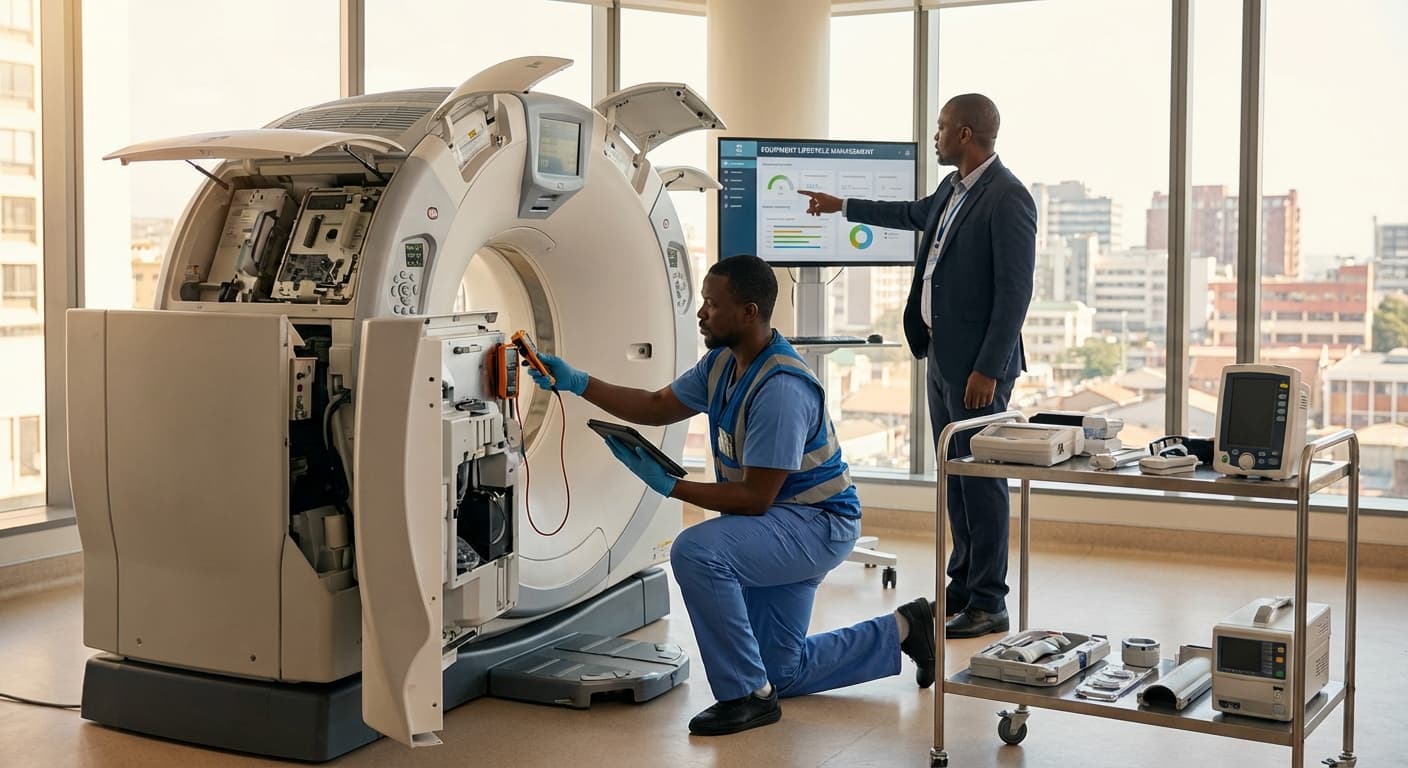
Equipment Replacement Planning & Obsolescence Strategy Service in Namibia
Engineering Excellence & Technical Support
Equipment Replacement Planning & Obsolescence Strategy Service High-standard technical execution following OEM protocols and local regulatory frameworks.
Proactive Obsolescence Forecasting
Leveraging advanced analytics and global supply chain intelligence to predict equipment obsolescence trends in Namibia, ensuring timely and cost-effective replacements before critical failures impact operations. Our service provides actionable insights into technology lifecycles and emerging alternatives, minimizing downtime and maximizing asset longevity.
Risk Mitigation & Compliance Assurance
Implementing robust strategies to identify and mitigate risks associated with aging equipment and component obsolescence within Namibia's regulatory framework. We ensure your replacement plans align with industry standards and compliance requirements, safeguarding your business from operational disruptions and potential penalties.
Optimized Lifecycle Cost Analysis
Conducting comprehensive lifecycle cost analysis for all critical equipment in Namibia. Our service identifies the most economically viable replacement points, factoring in acquisition, maintenance, operational, and disposal costs. This ensures strategic investments that reduce total cost of ownership and enhance operational efficiency.
What Is Equipment Replacement Planning & Obsolescence Strategy Service In Namibia?
Equipment Replacement Planning & Obsolescence Strategy Service in Namibia is a specialized consultancy designed to assist organizations in proactively managing the lifecycle of their critical assets. This service addresses the inevitable decline in performance, increasing maintenance costs, and eventual obsolescence of machinery and technological systems. It involves a comprehensive assessment of an organization's existing equipment inventory, coupled with forward-looking analysis of technological advancements, market trends, and operational requirements. The core objective is to develop strategic, data-driven plans for the timely and cost-effective replacement of aging or outdated equipment, thereby mitigating risks, optimizing operational efficiency, and maximizing return on investment. This strategy also encompasses the identification and mitigation of obsolescence risks, which can arise from the discontinuation of manufacturing, support, or spare parts availability for critical components or systems.
| Who Needs This Service? | Typical Use Cases in Namibia |
|---|---|
| Industries with significant capital asset investment, including but not limited to: Mining and Extractive Industries, Manufacturing, Power Generation and Utilities, Telecommunications, Transportation and Logistics, Healthcare (medical equipment), Agriculture (heavy machinery), and Public Infrastructure (water treatment, road maintenance). | Mining Sector: Planning for the replacement of aging drilling rigs, crushers, conveyors, and processing equipment susceptible to breakdowns and requiring costly specialized parts. Power Utilities: Strategizing the upgrade of obsolete power generation turbines, transformers, and transmission infrastructure to meet growing demand and improve grid reliability. Telecommunications: Managing the lifecycle of network infrastructure, including base stations and switching equipment, to stay ahead of evolving mobile and broadband technologies. Manufacturing Plants: Implementing a proactive replacement schedule for production lines, machinery, and control systems to maintain competitiveness and product quality. Government & Municipalities: Planning for the replacement of critical infrastructure such as water treatment plants, road construction equipment, and public transport fleets. Healthcare Providers: Developing strategies for the timely replacement of diagnostic imaging equipment, surgical instruments, and patient monitoring systems to ensure optimal patient care and compliance with evolving medical standards. |
Key Components of the Service:
- Asset Inventory and Condition Assessment: Detailed cataloging of all equipment, including age, condition, maintenance history, and performance metrics.
- Performance Benchmarking: Evaluating current equipment performance against industry standards and operational needs.
- Total Cost of Ownership (TCO) Analysis: Calculating the full lifecycle costs of existing and potential replacement equipment, including acquisition, operation, maintenance, and disposal.
- Obsolescence Risk Assessment: Identifying equipment vulnerable to obsolescence due to technological advancements, vendor support discontinuation, or regulatory changes.
- Technology Roadmapping: Forecasting future technological trends and their potential impact on operational requirements.
- Replacement Strategy Development: Creating phased plans for equipment replacement, prioritizing assets based on risk, criticality, and ROI.
- Business Case Justification: Developing detailed justifications for capital expenditure on new equipment, including expected benefits and payback periods.
- Procurement Support: Assisting in the selection and procurement of suitable replacement equipment.
- Disposal and Decommissioning Planning: Developing environmentally responsible and cost-effective plans for retiring old equipment.
Who Needs Equipment Replacement Planning & Obsolescence Strategy Service In Namibia?
In Namibia, businesses and organizations across various sectors face critical challenges related to aging equipment and the ever-present threat of obsolescence. Proactive planning and strategic management of these issues are not just beneficial, but essential for maintaining operational efficiency, mitigating financial risks, and ensuring long-term sustainability. A specialized Equipment Replacement Planning & Obsolescence Strategy Service in Namibia is designed to address these needs for a diverse range of clientele.
| Target Customer/Industry | Specific Departments/Roles Responsible | Key Challenges Addressed |
|---|---|---|
| Mining and Extractive Industries | Operations Management, Maintenance Department, Asset Management, Procurement, Finance | High-value, specialized heavy machinery with long lifecycles but prone to wear and tear; supply chain disruptions for critical spare parts; technological advancements in extraction methods. |
| Manufacturing and Industrial Production | Production Management, Engineering, Maintenance, Quality Control, Supply Chain, Finance | Automated production lines, specialized machinery, the need for consistent output and product quality; integration of new technologies; cost of downtime. |
| Energy and Utilities (Power Generation, Water Treatment) | Engineering, Operations, Maintenance, Asset Management, Regulatory Compliance, Finance | Critical infrastructure with long operational lifespans; regulatory requirements for safety and reliability; aging power generation units, transmission lines, and water treatment plants. |
| Telecommunications and IT Infrastructure | Network Operations, IT Management, Infrastructure Planning, Procurement, Finance | Rapid technological evolution; network upgrades and expansion; end-of-life for hardware and software; cybersecurity risks associated with outdated systems. |
| Transportation and Logistics | Fleet Management, Operations, Maintenance, Procurement, Safety, Finance | Fleet renewal for trucks, buses, and specialized vehicles; maintenance schedules; fuel efficiency and environmental regulations; integration of tracking and logistics technologies. |
| Healthcare Sector (Hospitals, Clinics) | Biomedical Engineering, Facilities Management, Procurement, IT Department, Clinical Departments, Finance | Medical equipment requiring regular calibration and upgrades; patient safety; expensive specialized diagnostic and treatment machinery; compliance with medical standards. |
| Government and Public Sector Agencies | Public Works, Infrastructure Departments, IT Services, Procurement, Asset Management, Finance | Public infrastructure (roads, bridges, buildings); fleet vehicles for public services; IT systems for government operations; budget constraints and long-term planning for essential services. |
| Agriculture and Agribusiness | Farm Management, Operations, Maintenance, Procurement, Finance | Agricultural machinery and equipment; impact of weather and usage on lifespan; adoption of precision agriculture technologies; efficiency and productivity gains. |
| Construction and Civil Engineering | Project Management, Plant and Machinery Management, Maintenance, Procurement, Finance | Heavy construction equipment; wear and tear on site; need for reliable machinery for project timelines; technological advancements in building methods. |
Who Needs Equipment Replacement Planning & Obsolescence Strategy Service in Namibia?
- Organizations with significant investments in physical assets.
- Sectors reliant on specialized or proprietary machinery.
- Businesses operating in rapidly evolving technological landscapes.
- Companies aiming to optimize capital expenditure and reduce downtime.
- Entities seeking to maintain compliance with safety and environmental regulations.
Equipment Replacement Planning & Obsolescence Strategy Service Process In Namibia
This document outlines the Equipment Replacement Planning & Obsolescence Strategy Service Process in Namibia. This comprehensive service helps organizations manage the lifecycle of their assets, ensuring optimal performance, minimizing risks associated with outdated equipment, and maximizing return on investment. The workflow is designed to be iterative and collaborative, involving close consultation with the client at each stage.
| Stage | Description | Key Activities | Deliverables/Outputs | Client Involvement |
|---|---|---|---|---|
| The client expresses interest in the service, and an initial discussion is held to understand their general needs and objectives. | Initial contact, understanding client's industry, size, and general asset concerns. Discussing scope and potential benefits. | Understanding of client's high-level needs, preliminary scope definition. | High-level discussion of needs and expectations. |
| A deep dive into the client's current equipment inventory, operational data, and strategic goals. | Detailed inventory collection (equipment type, age, condition, maintenance history, performance metrics). Understanding of operational demands, budget constraints, regulatory requirements, and business objectives. Site visits may be conducted. | Comprehensive equipment inventory database, performance data reports, identified obsolescence risks, user requirement documentation. | Providing access to records, personnel interviews, site access, feedback on data accuracy. |
| Analyzing the gathered data to identify obsolescence risks, predict future needs, and develop a tailored replacement strategy. | Performance analysis, failure rate analysis, cost of ownership calculation, technology trend research, risk assessment (operational, safety, financial), identification of alternative solutions (repair, upgrade, replacement). Development of various replacement scenarios. | Obsolescence risk assessment report, predictive maintenance insights, cost-benefit analysis of different strategies, draft replacement roadmap. | Review of draft analysis, validation of assumptions, prioritization of needs. |
| Presenting the developed strategy and specific recommendations to the client, including a detailed proposal. | Developing a phased replacement plan with timelines, budget estimations, vendor pre-qualification considerations, and potential funding options. Finalizing the strategic recommendations. | Formal proposal outlining recommended strategy, detailed action plan, budget breakdown, risk mitigation strategies, projected ROI. | Review and feedback on the proposal, clarification of recommendations, approval of the proposed strategy. |
| Collaboratively creating a detailed plan for executing the approved replacement strategy. | Defining specific procurement processes, selecting vendors (if not already done), detailed project scheduling, resource allocation, change management planning, training requirements, and decommissioning plans for old equipment. | Detailed project implementation plan, procurement specifications, vendor selection criteria, risk management plan for implementation, communication plan. | Approval of implementation plan, participation in vendor selection, resource allocation confirmation. |
| Assisting the client in the procurement and installation of new equipment. | Facilitating the procurement process, contract negotiation support, overseeing equipment delivery and installation, initial testing and commissioning, and ensuring smooth handover. | Procured and installed equipment, commissioning reports, initial training documentation, completed project milestones. | Active participation in procurement, site supervision, acceptance testing, staff training. |
| Ensuring the new equipment performs as expected and providing ongoing support for the obsolescence strategy. | Performance monitoring of new assets, post-implementation review, warranty management, ongoing review of the obsolescence strategy based on evolving technology and business needs. Providing recommendations for future updates. | Performance review reports, updated obsolescence strategy, recommendations for continuous improvement, knowledge transfer. | Regular feedback on performance, participation in review meetings, identification of new needs. |
Key Stages of the Equipment Replacement Planning & Obsolescence Strategy Service Process
- Inquiry & Initial Consultation
- Needs Assessment & Data Gathering
- Analysis & Strategy Development
- Recommendation & Proposal
- Implementation Planning
- Execution & Procurement Support
- Monitoring, Review & Ongoing Support
Equipment Replacement Planning & Obsolescence Strategy Service Cost In Namibia
Securing a competitive and accurate cost for Equipment Replacement Planning & Obsolescence Strategy services in Namibia requires understanding several key pricing factors. These services are crucial for businesses to maintain operational efficiency, mitigate risks associated with aging equipment, and optimize capital expenditure. The cost is not static and can vary significantly based on the scope of the project, the complexity of the equipment involved, the duration of the engagement, and the expertise of the service provider.
| Service Scope | Estimated Cost Range (NAD) | Notes |
|---|---|---|
| Basic Equipment Audit & Inventory (Limited Scope) | N$ 5,000 - N$ 20,000 | Focus on cataloging assets and identifying immediate critical needs. Suitable for small businesses or specific departments. |
| Standard Obsolescence Assessment (Mid-Scope) | N$ 25,000 - N$ 75,000 | Includes data analysis, basic risk identification, and preliminary replacement recommendations for a defined period (e.g., 3-5 years). Suitable for medium-sized businesses with moderate asset complexity. |
| Comprehensive Replacement Planning & Strategy (Full Scope) | N$ 80,000 - N$ 300,000+ | Involves detailed lifecycle costing, advanced obsolescence forecasting, risk mitigation strategies, financial modeling, and long-term (5-15 years) capital planning. Suitable for large enterprises, industries with high asset value, or critical infrastructure. |
| Specialized Consultancy (e.g., Technology Forecasting, Vendor Negotiation) | N$ 10,000 - N$ 50,000 (per module/specialization) | Can be an add-on to a comprehensive plan or a standalone service for specific expertise. Costs are highly variable based on the specialization. |
Key Pricing Factors for Equipment Replacement Planning & Obsolescence Strategy Services in Namibia:
- Scope of Services: This is the most significant determinant of cost. Services can range from a high-level assessment to a comprehensive, multi-year replacement plan involving detailed data analysis, risk assessment, technology forecasting, and vendor negotiations.
- Number and Complexity of Equipment Assets: A larger fleet of diverse and complex machinery (e.g., heavy industrial equipment, specialized manufacturing lines, sophisticated IT infrastructure) will naturally incur higher planning costs than a smaller, more uniform asset base.
- Data Availability and Quality: The ease with which a service provider can access, cleanse, and analyze relevant data (maintenance logs, purchase history, performance metrics, manufacturer specifications) impacts the time and effort required, thus influencing cost.
- Duration of the Planning Horizon: Developing a strategy for a 3-year replacement cycle will be less expensive than a 10-year or 15-year outlook, which demands more sophisticated forecasting and scenario planning.
- Level of Detail and Customization: A standardized, off-the-shelf approach will be more cost-effective than a highly customized strategy tailored to unique business processes, risk appetites, and financial constraints.
- Provider's Expertise and Reputation: Established firms with proven track records and specialized expertise in asset management and obsolescence strategies may command higher fees, but often deliver greater value and assurance.
- Geographical Reach and Site Visits: If the service requires extensive on-site assessments across multiple Namibian locations, travel and accommodation expenses will be factored into the overall cost.
- Technology Integration and Tools: The use of advanced software for asset management, predictive analytics, or lifecycle costing can influence the pricing, either as a direct cost or embedded within the service fee.
- Risk Assessment and Mitigation Planning: The depth of analysis required to identify and quantify risks associated with equipment failure, obsolescence, and compliance will impact the service cost.
- Reporting and Deliverable Requirements: The format, frequency, and level of detail in the reports and final strategy documents can also affect the pricing.
Affordable Equipment Replacement Planning & Obsolescence Strategy Service Options
Our Affordable Equipment Replacement Planning & Obsolescence Strategy service is designed to help organizations proactively manage their asset lifecycle, ensuring operational continuity and cost efficiency. We offer flexible value bundles and implement proven cost-saving strategies to minimize the financial impact of equipment replacement and obsolescence.
| Cost-Saving Strategy | Description | Impact |
|---|---|---|
Value Bundles
- {"title":"Essential Planning Bundle","description":"Covers core equipment assessment, lifecycle data collection, and basic replacement scheduling for critical assets. Ideal for businesses with established infrastructure seeking to optimize existing replacement cycles."}
- {"title":"Strategic Obsolescence Bundle","description":"Includes the Essential Planning Bundle plus proactive obsolescence risk assessment, mitigation strategies, and early-stage technology scouting. Suited for organizations in rapidly evolving industries or those with long-lifecycle equipment facing imminent technological shifts."}
- {"title":"Comprehensive Asset Management Bundle","description":"Encompasses all aspects of the Strategic Obsolescence Bundle, adding detailed total cost of ownership (TCO) analysis, vendor negotiation support, and integrated preventative maintenance planning. This is our most robust offering for organizations seeking a complete, end-to-end asset lifecycle management solution."}
Verified Providers In Namibia
In the rapidly evolving landscape of healthcare, ensuring you are engaging with verified and credible providers is paramount. In Namibia, Franance Health stands out as a beacon of trust and quality. This document outlines Franance Health's credentials and highlights why they represent the best choice for your healthcare needs.
| Aspect | Franance Health's Commitment | Why it Matters for You |
|---|---|---|
| Professional Expertise | Recruits and retains highly qualified, licensed, and continuously trained medical professionals. | Ensures you receive care from competent and up-to-date practitioners, leading to accurate diagnoses and effective treatments. |
| Facility Standards | Maintains modern, well-equipped facilities adhering to strict safety and hygiene regulations. | Provides a safe, comfortable, and advanced environment for your medical procedures and recovery. |
| Ethical Practice | Adheres to the highest ethical standards, prioritizing patient confidentiality and informed consent. | Guarantees your privacy is protected and you are fully involved in decisions about your health. |
| Patient Experience | Fosters a patient-centric approach with clear communication and personalized care plans. | Ensures you feel heard, respected, and supported throughout your healthcare journey. |
| Regulatory Compliance | Fully licensed and accredited by Namibian health authorities. | Offers peace of mind knowing your provider meets all legal and quality standards. |
Franance Health Credentials and Why They Represent the Best Choice:
- Rigorous Accreditation and Licensing: Franance Health meticulously adheres to and surpasses all national and international healthcare accreditation standards. Their facilities and practitioners are fully licensed by the relevant Namibian regulatory bodies, guaranteeing compliance with the highest safety and ethical protocols.
- Highly Qualified and Experienced Professionals: The backbone of Franance Health is its team of dedicated and experienced medical professionals. This includes doctors, nurses, specialists, and support staff who possess advanced degrees, specialized training, and a commitment to patient-centered care. Continuous professional development is a core tenet, ensuring their team remains at the forefront of medical advancements.
- State-of-the-Art Facilities and Technology: Franance Health invests heavily in modern medical equipment and technologies. From advanced diagnostic tools to sophisticated treatment modalities, their facilities are designed to provide accurate diagnoses and effective treatments, enhancing patient outcomes and comfort.
- Comprehensive Range of Services: Franance Health offers a broad spectrum of medical services, catering to diverse healthcare needs. This includes general practice, specialized consultations, diagnostic imaging, laboratory services, and various therapeutic interventions, making them a one-stop solution for many health concerns.
- Unwavering Commitment to Patient Safety and Ethics: Patient safety is not just a protocol at Franance Health; it's an ingrained culture. They implement stringent infection control measures, robust patient identification procedures, and a transparent approach to medical information. Ethical conduct and patient confidentiality are upheld with the utmost integrity.
- Patient-Centric Approach to Care: Franance Health prioritizes understanding and addressing the individual needs of each patient. They foster open communication, encourage patient involvement in treatment decisions, and strive to create a supportive and reassuring healthcare experience. This dedication to personalized care builds trust and ensures a positive journey towards recovery and well-being.
- Community Engagement and Health Education: Beyond direct patient care, Franance Health actively engages with the Namibian community through health awareness campaigns and educational initiatives. This commitment to public health demonstrates their broader dedication to improving the overall well-being of the nation.
- Positive Patient Testimonials and Reputation: The consistent positive feedback from satisfied patients is a testament to Franance Health's excellence. Their strong reputation within Namibia is built on a foundation of reliable, compassionate, and effective healthcare delivery.
Scope Of Work For Equipment Replacement Planning & Obsolescence Strategy Service
This Scope of Work (SOW) outlines the services to be provided for Equipment Replacement Planning and Obsolescence Strategy. The objective is to develop a comprehensive strategy and actionable plan to proactively manage equipment lifecycle, mitigate risks associated with obsolescence, and optimize replacement investments. The services will include an assessment of current equipment, analysis of obsolescence trends, development of a long-term replacement strategy, and creation of a detailed implementation roadmap.
| Deliverable | Description | Format | Key Content/Purpose |
|---|---|---|---|
| Current State Equipment Inventory & Assessment Report | Detailed documentation of all critical operational equipment. | Digital Document (PDF, Word) | Asset identification, age, condition, performance data, current maintenance costs, warranty status, expected remaining useful life (RUL). |
| Obsolescence Risk Assessment & Prioritization Matrix | Analysis of identified equipment against obsolescence factors. | Digital Document (Excel, PDF) | Categorization of equipment by obsolescence risk level (high, medium, low), identification of key drivers (e.g., manufacturer support, technology evolution, regulatory changes), and prioritization for replacement. |
| Equipment Replacement Strategy Framework | A high-level strategic approach to equipment replacement. | Digital Document (PDF, PowerPoint) | Defining replacement triggers, funding models, technology selection criteria, build vs. buy considerations, and risk mitigation strategies. |
| Long-Term Equipment Replacement Roadmap (5-10 years) | A phased plan for equipment replacement over a specified period. | Digital Document (Excel, Gantt Chart) | Sequencing of replacements, estimated capital expenditure forecasts, resource allocation requirements, and key milestones. |
| Obsolescence Management Policy & Procedures | Guidelines and standard operating procedures for ongoing obsolescence management. | Digital Document (PDF, Word) | Defining roles and responsibilities, reporting mechanisms, continuous monitoring processes, and decision-making frameworks for obsolescence. |
| Total Cost of Ownership (TCO) Analysis for Key Equipment Categories | Detailed financial analysis for selected critical equipment. | Digital Document (Excel) | Includes acquisition costs, installation, operation, maintenance, energy consumption, and disposal costs over the equipment's lifecycle. |
| Recommended Spare Parts Strategy | Guidance on optimal spare parts inventory and management. | Digital Document (PDF) | Recommendations for critical spares, stocking levels, procurement strategies, and end-of-life spare parts planning. |
| Training Materials for Internal Stakeholders | Resources to educate internal teams on the new strategy and procedures. | Digital Document (PowerPoint, PDF) | Covers the obsolescence strategy, replacement planning process, and new policy guidelines. |
| Final Project Report & Presentation | A comprehensive summary of the project findings, recommendations, and implementation plan. | Digital Document (PDF, PowerPoint) | Executive summary, detailed findings, validated recommendations, implementation roadmap, and next steps. |
Technical Deliverables
- Current State Equipment Inventory & Assessment Report
- Obsolescence Risk Assessment & Prioritization Matrix
- Equipment Replacement Strategy Framework
- Long-Term Equipment Replacement Roadmap (5-10 years)
- Obsolescence Management Policy & Procedures
- Total Cost of Ownership (TCO) Analysis for Key Equipment Categories
- Recommended Spare Parts Strategy
- Training Materials for Internal Stakeholders
- Final Project Report & Presentation
Service Level Agreement For Equipment Replacement Planning & Obsolescence Strategy Service
This Service Level Agreement (SLA) outlines the commitments regarding response times and uptime guarantees for the Equipment Replacement Planning & Obsolescence Strategy Service (the "Service"). This Service aims to provide proactive planning, risk mitigation, and strategic guidance to ensure the continued operational efficiency and cost-effectiveness of the Client's equipment lifecycle.
| Service Aspect | Uptime Guarantee | Response Time (for critical inquiries) | Response Time (for standard inquiries) |
|---|---|---|---|
| Service Availability (access to planning tools, reports, and advisory support) | 99.5% Uptime | N/A | N/A |
| Critical Inquiry Response (e.g., imminent critical equipment failure, major obsolescence risk impacting operations) | N/A | Within 2 business hours | N/A |
| Standard Inquiry Response (e.g., request for report updates, general planning questions, policy clarification) | N/A | N/A | Within 1 business day |
| Scheduled Maintenance Notifications | N/A | Minimum 48 hours notice | N/A |
Key Service Components Covered by this SLA:
- Proactive identification of potential equipment obsolescence.
- Development and maintenance of equipment replacement roadmaps.
- Risk assessment and mitigation strategies for end-of-life (EOL) equipment.
- Recommendations for alternative solutions and upgrade paths.
- Support for budgeting and financial planning related to replacements.
- Advisory services on industry best practices for asset management.
Frequently Asked Questions

Ready when you are
Let's scope your Equipment Replacement Planning & Obsolescence Strategy Service in Namibia project in Namibia.

Scaling healthcare logistics and technical systems across the entire continent.