
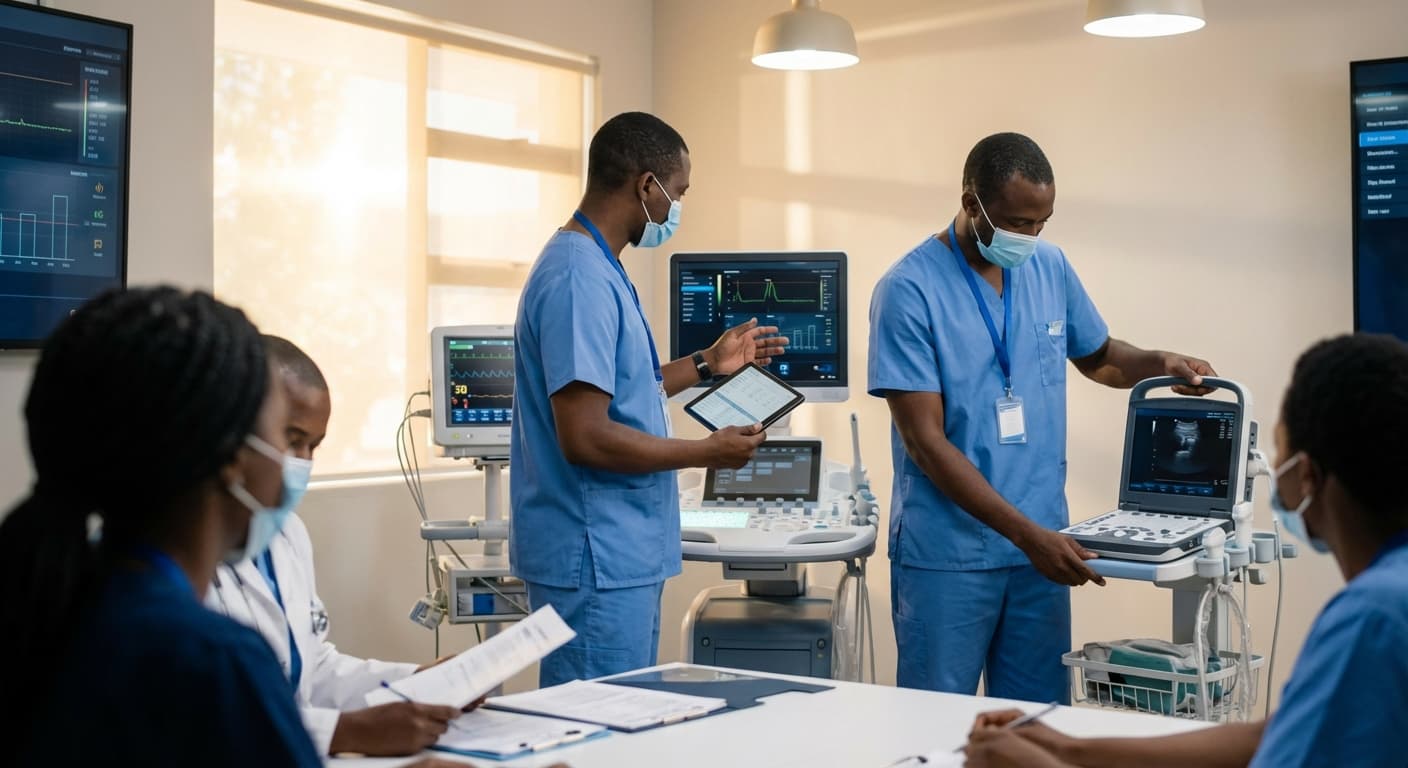
Clinical Needs Assessment for Medical Equipment in Namibia
Engineering Excellence & Technical Support
Clinical Needs Assessment for Medical Equipment High-standard technical execution following OEM protocols and local regulatory frameworks.
Precision Needs Identification
Leveraging data analytics and stakeholder consultations to pinpoint precise equipment needs across diverse Namibian healthcare facilities, ensuring optimal resource allocation and addressing critical gaps in specialized care delivery.
Interconnected Health Infrastructure
Developing a comprehensive needs assessment framework that considers the interconnectedness of the Namibian healthcare system, mapping equipment requirements to existing infrastructure, supply chains, and maintenance capabilities for sustainable long-term impact.
Capacity Building Integration
Integrating training and technical support requirements directly into the medical equipment needs assessment, ensuring that healthcare professionals in Namibia are equipped not only with the right tools but also with the skills to operate and maintain them effectively.
What Is Clinical Needs Assessment For Medical Equipment In Namibia?
A Clinical Needs Assessment (CNA) for Medical Equipment in Namibia is a systematic process designed to identify, quantify, and prioritize the medical equipment requirements of healthcare facilities. This service involves a comprehensive evaluation of existing infrastructure, current service delivery models, patient demographics, disease prevalence, technological advancements, and regulatory compliance to determine the most appropriate and essential medical devices for optimal patient care. The assessment considers factors such as equipment availability, functionality, maintenance capacity, user training needs, and integration with existing health information systems. The primary objective is to ensure that healthcare providers have access to the right equipment, at the right time, and in the right place to effectively diagnose, treat, and manage patient conditions, thereby enhancing the quality and accessibility of healthcare services across Namibia. This includes evaluating the need for new equipment, upgrades to existing systems, and the decommissioning of obsolete or non-functional devices.
| Who Needs It | Typical Use Cases |
|---|---|
| Ministry of Health and Social Services (MoHSS) of Namibia: For national health planning, resource allocation, and strategic procurement initiatives. | Procurement of new diagnostic imaging equipment for regional hospitals to address increased demand for radiological services. |
| Regional Health Directorates: To align equipment acquisition with specific regional health priorities and challenges. | Upgrading anesthesia machines in district hospitals to improve surgical safety and patient outcomes. |
| Individual Healthcare Facilities (public and private hospitals, clinics, health centers): To inform capital expenditure plans and ensure operational readiness. | Assessing the need for essential laboratory equipment in rural health centers to facilitate timely point-of-care diagnostics. |
| Non-Governmental Organizations (NGOs) and Development Partners: To guide targeted investments and support in specific healthcare areas. | Determining the requirements for neonatal intensive care unit (NICU) equipment for a new maternal and child health wing. |
| Healthcare Technology Management Departments/Teams: To develop comprehensive asset management strategies and maintenance plans. | Evaluating the necessity for upgrading outdated electrocardiogram (ECG) machines with advanced, networked devices for better data management. |
| Medical Equipment Suppliers and Manufacturers: To understand market demands and tailor product offerings to specific Namibian healthcare needs. | Identifying the need for a fleet of mobile ultrasound units to extend diagnostic capabilities to remote communities. |
Key Components of a Clinical Needs Assessment for Medical Equipment in Namibia
- Facility Infrastructure Evaluation (e.g., power supply, space, environmental controls)
- Current Equipment Inventory and Condition Assessment (including maintenance history and functionality)
- Analysis of Patient Load and Demographics (age, gender, prevalent diseases, geographic distribution)
- Review of Clinical Service Delivery Models and Workflow Optimization
- Identification of Technological Gaps and Opportunities for Improvement
- Assessment of User Training Requirements and Capacity Building Needs
- Evaluation of Maintenance and Technical Support Infrastructure
- Consideration of Healthcare Regulations, Standards, and Best Practices
- Budgetary Constraints and Funding Availability Analysis
- Prioritization of Equipment Needs based on Impact and Urgency
Who Needs Clinical Needs Assessment For Medical Equipment In Namibia?
Clinical needs assessments are crucial for ensuring that medical equipment procured in Namibia is appropriate, effective, and aligns with the actual healthcare demands of various facilities and patient populations. This process prevents the acquisition of redundant, obsolete, or unsuitable equipment, thereby optimizing resource allocation and improving patient care outcomes. Understanding who needs these assessments highlights the strategic importance of informed equipment planning across the Namibian healthcare landscape.
| Customer Type | Typical Departments Involved | Key Needs Assessment Focus |
|---|---|---|
| Public Healthcare Facilities (MoHSS) | All departments, including but not limited to: Emergency, Surgery, Internal Medicine, Pediatrics, Obstetrics & Gynecology, Radiology, Pathology, Intensive Care Units (ICUs), Outpatient Departments (OPDs). | Ensuring equitable access to essential equipment across diverse geographical regions, addressing disease burden, supporting public health programs, and meeting the needs of underserved populations. |
| Private Healthcare Providers | Similar to public facilities, with a focus on: Operating Theaters, Imaging Departments (X-ray, CT, MRI), Cardiology Units, Gastroenterology, Dermatology, Dental Clinics, Aesthetic Medicine, and diagnostic laboratories. | Meeting the demands of specialized patient services, incorporating advanced technologies for competitive advantage, and ensuring compliance with private healthcare standards. |
| NGOs in Healthcare | Departments often tied to their specific mandates, such as: Maternal and Child Health, HIV/AIDS Care, Tuberculosis (TB) control, Malaria prevention, and primary healthcare outreach. | Procuring equipment for targeted interventions, supporting community-based health initiatives, and addressing specific health challenges within their program areas. |
| Tertiary and Referral Hospitals | Highly specialized departments like: Neurosurgery, Cardiothoracic Surgery, Transplant Units, Advanced Intensive Care, Neonatal Intensive Care Units (NICUs), Comprehensive Cancer Centers, and Interventional Radiology. | Acquiring cutting-edge, complex, and high-volume equipment to support advanced medical procedures and manage critically ill patients. |
| District and Regional Hospitals | General departments such as: Internal Medicine, Surgery, Pediatrics, Obstetrics & Gynecology, Emergency, Radiology, and basic laboratory services. | Ensuring availability of core medical and surgical equipment for routine care, emergency response, and management of common health conditions. |
| Primary Health Clinics and Health Centers | Departments focusing on: General consultation, Maternal and Child Health, Minor procedures, basic diagnostics (e.g., blood pressure monitors, glucose meters, basic microscopy), and essential drug administration. | Procuring durable, user-friendly, and cost-effective equipment for primary healthcare delivery, preventative services, and early detection of common ailments. |
| Specialty Clinics | Specific to their specialty, e.g., Ophthalmology (slit lamps, visual acuity charts), Cardiology (ECG machines, stress test equipment), Oncology (chemotherapy infusion pumps, radiation therapy planning equipment). | Acquiring specialized diagnostic and therapeutic equipment tailored to the unique needs of their patient cohort and clinical protocols. |
| Diagnostic Laboratories | Clinical Chemistry, Hematology, Microbiology, Serology, Molecular Diagnostics, Histopathology, Cytology. | Selecting advanced analytical instruments, automated analyzers, microscopes, and specialized reagents to ensure accurate and timely diagnostic testing. |
| Emergency Medical Services (EMS) | Ambulance services, pre-hospital care units. | Equipping ambulances and response vehicles with essential life-support devices, patient monitoring systems, and specialized trauma care equipment. |
| Rehabilitation Centers | Physiotherapy, Occupational Therapy, Speech Therapy. | Acquiring therapeutic exercise equipment, assistive devices, diagnostic tools for functional assessments, and specialized training aids. |
| Training and Research Institutions | Medical simulation labs, research laboratories, teaching hospitals. | Procuring advanced simulation equipment for training, specialized instruments for research studies, and technology to support medical education. |
Target Customers and Departments Requiring Clinical Needs Assessments for Medical Equipment in Namibia
- Public Healthcare Facilities (Ministry of Health and Social Services)
- Private Healthcare Providers
- Non-Governmental Organizations (NGOs) in Healthcare
- Tertiary and Referral Hospitals
- District and Regional Hospitals
- Primary Health Clinics and Health Centers
- Specialty Clinics (e.g., Oncology, Cardiology, Ophthalmology)
- Diagnostic Laboratories
- Emergency Medical Services (EMS)
- Rehabilitation Centers
- Training and Research Institutions
Clinical Needs Assessment For Medical Equipment Process In Namibia
This document outlines the workflow for a Clinical Needs Assessment (CNA) for Medical Equipment in Namibia, detailing the process from initial inquiry to the final execution of recommendations. A robust CNA is crucial for ensuring that healthcare facilities acquire appropriate, effective, and sustainable medical equipment, aligning with national health priorities and resource availability.
| Stage | Activities | Responsible Parties | Key Outputs | Timeline (Indicative) |
|---|---|---|---|---|
| Receiving the initial request for a CNA (e.g., from Ministry of Health, regional health directorates, specific hospitals). Defining the scope of the assessment: geographical area, specific departments/services, type of equipment, existing infrastructure, and budget constraints. Forming the CNA team. | Requesting Body, Ministry of Health (MoH), CNA Team Lead | Formalized Terms of Reference (ToR) for the CNA, agreed scope, established CNA team. | 1-2 Weeks |
| Reviewing existing health data, facility reports, and current equipment inventories. Conducting site visits to healthcare facilities. Interviewing healthcare professionals (doctors, nurses, technicians, administrators) to understand clinical needs, equipment gaps, and usage patterns. Assessing existing infrastructure (power, water, space) and maintenance capacity. Collecting data on patient demographics, disease prevalence, and service delivery models. | CNA Team, Healthcare Facility Staff, Regional Health Offices | Comprehensive data on existing equipment, infrastructure, user feedback, clinical service requirements, and identified gaps. | 4-8 Weeks |
| Analyzing collected data to identify specific equipment needs based on clinical priorities, disease burden, and service delivery targets. Evaluating the suitability of existing equipment. Assessing technical specifications and required consumables. Prioritizing identified needs based on impact on patient care, cost-effectiveness, feasibility, and alignment with national health policies. | CNA Team, MoH Technical Advisors | Ranked list of prioritized medical equipment needs with justifications. Identification of obsolete or underperforming equipment. | 2-4 Weeks |
| Developing detailed recommendations for specific medical equipment, including technical specifications, estimated costs, potential suppliers, training requirements, and maintenance strategies. Proposing alternative solutions or strategies for addressing identified gaps (e.g., equipment sharing, upgrading existing systems). | CNA Team | Draft report with detailed equipment recommendations, specifications, cost estimates, and implementation considerations. | 3-5 Weeks |
| Presenting the draft report and recommendations to key stakeholders (MoH leadership, technical committees, regional health authorities) for feedback and validation. Incorporating feedback and finalizing the CNA report. Securing formal approval for the recommended equipment procurement. | CNA Team, MoH Leadership, Stakeholders | Finalized and approved Clinical Needs Assessment Report. Official endorsement of recommended equipment. | 2-3 Weeks |
| Developing detailed procurement plans based on the approved CNA. Issuing tenders, evaluating bids, and selecting suppliers. Managing the procurement process. Overseeing the delivery, installation, and commissioning of new equipment. Arranging for necessary training for healthcare professionals and biomedical technicians. | Procurement Unit (MoH), Ministry of Finance, Suppliers, CNA Team (support) | Procured and installed medical equipment. Trained personnel. Commissioned equipment ready for use. | Variable (depends on procurement process and equipment delivery) |
| Conducting follow-up assessments to evaluate the effectiveness of the procured equipment. Monitoring usage, maintenance, and impact on service delivery. Identifying any challenges or issues and recommending corrective actions. Ensuring sustainable use and maintenance of the equipment. | CNA Team (follow-up), Biomedical Engineering Department, Facility Management | Post-implementation review report. Recommendations for ongoing maintenance, training, and future needs. Improved patient outcomes and service delivery. | Ongoing (e.g., 6-12 months post-implementation and periodically thereafter) |
Key Stages of the Clinical Needs Assessment Workflow
- Inquiry & Scoping
- Information Gathering & Data Collection
- Analysis & Prioritization
- Recommendation Development
- Validation & Approval
- Procurement & Implementation
- Post-Implementation Review & Monitoring
Clinical Needs Assessment For Medical Equipment Cost In Namibia
This document outlines a clinical needs assessment for medical equipment cost in Namibia. Accurate costing is crucial for effective healthcare resource allocation, procurement planning, and ensuring the availability of essential medical devices. This assessment aims to provide a foundational understanding of the pricing landscape for medical equipment within Namibia, considering both local and international factors that influence cost.
The pricing of medical equipment in Namibia is influenced by a complex interplay of factors. These include import duties and taxes, shipping and logistics costs (especially given Namibia's landlocked or coastal access challenges), currency exchange rates (primarily USD to NAD), manufacturer pricing strategies, supplier markups, the volume of purchase, and the specific features and technological sophistication of the equipment. Furthermore, local availability, warranty services, and after-sales support also contribute to the overall cost. The demand for specific types of equipment, driven by the prevalent health challenges in Namibia, can also play a role.
This assessment will delve into common categories of medical equipment and provide estimated price ranges in Namibian Dollars (NAD). It's important to note that these are indicative ranges and actual prices can vary significantly based on the specific make, model, supplier, and prevailing market conditions. For precise and up-to-date pricing, direct consultation with Namibian medical equipment suppliers and distributors is highly recommended. The subsequent sections will break down these costs by equipment category.
| Medical Equipment Category | Estimated Price Range (NAD) | Notes/Key Considerations |
|---|---|---|
| Basic Diagnostic Tools (e.g., Stethoscope, Blood Pressure Monitor, Thermometer) | NAD 500 - 5,000 | Highly variable based on brand and accuracy. Essential for primary healthcare. |
| Vital Signs Monitors (e.g., Patient Monitors, Pulse Oximeters) | NAD 10,000 - 100,000+ | Includes basic to advanced features. Cost increases with more parameters and portability. |
| Laboratory Equipment (e.g., Microscope, Centrifuge, Basic Analyzers) | NAD 20,000 - 500,000+ | Ranges from simple manual equipment to semi-automated analyzers. Influenced by test capacity and automation level. |
| Imaging Equipment (e.g., Portable X-ray, Ultrasound Machine) | NAD 150,000 - 2,000,000+ | Significant investment. Advanced ultrasound systems and fixed X-ray units are much higher. Digital vs. analog also affects price. |
| Surgical Instruments (Sets) | NAD 5,000 - 50,000+ | Per set. Varies by specialization (e.g., general surgery, orthopedics) and material quality. |
| Anesthesia Machines | NAD 100,000 - 750,000+ | Includes basic to modern anesthesia workstations with advanced ventilation and monitoring. |
| Sterilization Equipment (e.g., Autoclave) | NAD 20,000 - 250,000+ | Depends on size, capacity, and type (e.g., steam, plasma). |
| Hospital Beds (Manual & Electric) | NAD 5,000 - 50,000+ | Electric beds are significantly more expensive. Features like adjustability and pressure relief are key. |
| Defibrillators (AED & Manual) | NAD 15,000 - 150,000+ | AEDs are generally less expensive than advanced manual defibrillators with pacing capabilities. |
| Emergency/Ambulance Equipment (e.g., Stretcher, Suction Unit) | NAD 10,000 - 100,000+ | Bundled equipment for mobile care. Cost depends on comprehensiveness and portability. |
Key Pricing Factors for Medical Equipment in Namibia
- Import Duties and Taxes: Levied by Namibian customs on imported goods, significantly impacting the final price.
- Shipping and Logistics: Costs associated with transportation from the manufacturer to Namibia, including freight, insurance, and potential local warehousing.
- Currency Exchange Rates: Fluctuations between the Namibian Dollar (NAD) and major international currencies (e.g., USD, EUR) directly affect import costs.
- Manufacturer Pricing: The base price set by the original equipment manufacturer, which can vary by brand reputation and technological advancement.
- Supplier Markups: The profit margin added by local distributors and resellers.
- Volume of Purchase: Larger orders may qualify for bulk discounts from manufacturers and suppliers.
- Equipment Specification and Technology: Advanced features, higher precision, and newer technologies generally command higher prices.
- Warranty and After-Sales Support: The cost of service agreements, spare parts availability, and technical support can be factored into the initial purchase price.
- Local Market Demand: The prevalence of certain diseases or healthcare needs can influence the demand and, consequently, the pricing of specific equipment.
- Regulatory Compliance Costs: Ensuring equipment meets Namibian health regulations and standards can add to the overall cost.
Affordable Clinical Needs Assessment For Medical Equipment Options
Navigating medical equipment procurement can be a significant challenge for healthcare providers, particularly those with budget constraints. An affordable clinical needs assessment is crucial for identifying essential equipment, avoiding unnecessary expenditures, and ensuring optimal resource allocation. This involves a systematic evaluation of current and future patient care requirements, departmental workflows, and existing technology. By understanding true clinical needs, organizations can make informed decisions about which equipment will deliver the most value and impact on patient outcomes. Value bundles and strategic cost-saving measures are key to maximizing the return on investment for medical equipment.
| Value Bundle Concept | Cost-Saving Strategy | Description | Benefit |
|---|---|---|---|
| Integrated Solutions | Negotiated Multi-Year Contracts | Purchasing a package of related equipment or services from a single vendor at a discounted price. This can include equipment, installation, training, and ongoing maintenance. | Streamlined procurement, reduced administrative overhead, potential for bulk discounts, predictable long-term costs, and seamless integration between devices. |
| Service & Support Packages | Leasing vs. Purchasing Analysis | Bundling equipment with extended warranties, preventative maintenance plans, and rapid repair services. This shifts the focus from just the initial purchase price to the total cost of ownership. | Minimized downtime, reduced unexpected repair costs, extended equipment lifespan, and improved operational reliability. Allows for capital preservation through leasing if it aligns with financial strategy. |
| Training & Education Bundles | Refurbished or Certified Pre-Owned Equipment | Including comprehensive training programs for clinical staff on the effective and safe use of new equipment as part of the purchase agreement. | Enhanced user proficiency, improved patient safety, maximized equipment utilization, and reduced errors. Offers significant cost reduction without compromising quality on select items. |
| Consumables & Accessories | Group Purchasing Organizations (GPOs) | Negotiating bundled pricing for essential consumables and accessories that are specifically designed to work with the purchased equipment. | Ensures compatibility, reduces the risk of using suboptimal accessories, and can lead to discounts on recurring supply costs. Leverages collective buying power for better pricing and terms. |
Key Components of an Affordable Clinical Needs Assessment:
- Define Scope & Objectives: Clearly outline what the assessment aims to achieve (e.g., equipping a new clinic, upgrading a specific department, evaluating cost-effectiveness of existing equipment).
- Inventory Existing Equipment: Catalog all current medical equipment, its age, condition, maintenance history, and utilization rates.
- Analyze Clinical Workflows: Map out how patient care is delivered and identify bottlenecks or areas where new or upgraded equipment could improve efficiency and patient safety.
- Consult End-Users: Engage clinicians, nurses, and technicians to understand their day-to-day needs, pain points, and desired equipment functionalities.
- Forecast Future Needs: Consider anticipated changes in patient demographics, service offerings, and technological advancements that may influence future equipment requirements.
- Research Market Options: Explore available equipment from various manufacturers, focusing on functionality, reliability, and total cost of ownership.
- Prioritize Equipment: Based on clinical impact, safety, and cost-effectiveness, rank the identified equipment needs.
Verified Providers In Namibia
In Namibia's healthcare landscape, identifying truly verified and high-quality providers is paramount. Franance Health stands out as a beacon of excellence, offering a rigorously vetted network of medical professionals and facilities. This commitment to verification ensures that patients receive safe, effective, and compassionate care. Their stringent credentialing process, which includes thorough background checks, license verification, and peer reviews, guarantees that every provider within the Franance Health network meets the highest standards of clinical expertise and ethical practice. Choosing Franance Health means opting for peace of mind, knowing you are in the hands of trusted and qualified professionals dedicated to your well-being.
| Franance Health Credentialing Aspect | Description of Verification | Benefit to Patients |
|---|---|---|
| License and Accreditation Verification | All medical licenses and facility accreditations are rigorously checked and confirmed with relevant Namibian authorities. | Ensures providers are legally qualified and operating under approved standards. |
| Professional Background Checks | In-depth review of educational history, professional experience, and any disciplinary actions. | Guarantees that providers have the necessary expertise and a clean professional record. |
| Peer Review and Reputation Assessment | Feedback and assessments from other medical professionals and patient testimonials are considered. | Provides an additional layer of assurance regarding clinical competence and patient care quality. |
| Adherence to Ethical Standards | Providers are vetted for their commitment to ethical medical practices and patient confidentiality. | Upholds patient rights and ensures a respectful and trustworthy healthcare experience. |
| Continuous Monitoring | Ongoing evaluation and re-verification processes to maintain network integrity. | Ensures that all providers consistently meet Franance Health's high standards over time. |
Why Franance Health Represents the Best Choice in Namibia:
- Uncompromising Verification Standards: Franance Health employs a multi-layered vetting process to ensure all listed providers are fully licensed, accredited, and have a proven track record.
- Focus on Patient Safety and Quality: Their core mission is to connect patients with providers who prioritize safety, adhere to best practices, and deliver exceptional medical outcomes.
- Comprehensive Network: Access a wide range of medical specialists and facilities across Namibia, all meeting Franance Health's stringent criteria.
- Transparency and Trust: Patients can be confident in the qualifications and legitimacy of every provider recommended by Franance Health.
- Enhanced Patient Experience: By eliminating the guesswork, Franance Health allows patients to focus on their health journey with trusted partners.
Scope Of Work For Clinical Needs Assessment For Medical Equipment
This Scope of Work (SOW) outlines the requirements for conducting a comprehensive clinical needs assessment for medical equipment. The assessment will identify current and future equipment needs, evaluate existing equipment, and provide recommendations for procurement, upgrade, or decommissioning. The primary objective is to ensure that the healthcare facility is equipped with the appropriate, modern, and functional medical equipment to deliver high-quality patient care.
| Deliverable Name | Description | Format | Timeline |
|---|---|---|---|
| Current Equipment Inventory Analysis | Detailed report on existing medical equipment, including condition, maintenance, and utilization. | Document (PDF/Word) | Week 2 |
| Stakeholder Consultation Summary | Consolidated feedback and identified needs from all interviewed stakeholders. | Document (PDF/Word) | Week 3 |
| Future Needs Projection Report | Analysis of patient data and service trends to forecast future equipment demands. | Document (PDF/Word) | Week 4 |
| Technology Landscape Review | Overview of relevant emerging medical technologies and their potential application. | Document (PDF/Word) | Week 5 |
| Recommended Equipment List | Prioritized list of proposed equipment procurements, upgrades, and replacements with justifications. | Document (PDF/Word) | Week 6 |
| Technical Equipment Specifications | Detailed technical specifications for each recommended piece of equipment. | Document (PDF/Word) and Spreadsheet (Excel) | Week 7 |
| Infrastructure Requirements Assessment | Assessment of space, power, IT, and other infrastructural needs for new equipment. | Document (PDF/Word) | Week 8 |
| Budgetary Estimate Report | Estimated costs for procurement, installation, training, and maintenance. | Spreadsheet (Excel) and Document (PDF/Word) | Week 9 |
| Decommissioning & Disposal Plan | Recommendations for the disposal of obsolete medical equipment. | Document (PDF/Word) | Week 9 |
| Phased Implementation Plan | Proposed timeline and strategy for equipment acquisition and deployment. | Document (PDF/Word) and Gantt Chart (MS Project/Excel) | Week 10 |
| Final Clinical Needs Assessment Report | Comprehensive report integrating all findings, recommendations, and strategic roadmap. | Document (PDF/Word) | Week 12 |
Key Activities and Deliverables
- Conduct a comprehensive review of existing medical equipment inventory, including age, condition, maintenance history, and utilization rates.
- Interview key stakeholders, including clinicians (physicians, nurses, technicians), department heads, biomedical engineers, and procurement officers, to understand their equipment needs and challenges.
- Analyze patient demographics, disease prevalence, and projected service utilization to forecast future equipment requirements.
- Research and identify emerging medical technologies and equipment relevant to the facility's specialties and strategic goals.
- Evaluate the clinical efficacy, safety, and cost-effectiveness of potential equipment solutions.
- Develop a prioritized list of recommended equipment purchases, upgrades, and replacements.
- Define technical specifications for each recommended piece of equipment, including functional requirements, performance standards, and interoperability needs.
- Assess the required infrastructure (space, power, IT connectivity, ventilation) for new or upgraded equipment.
- Estimate budgetary requirements for equipment procurement, installation, training, and ongoing maintenance.
- Provide recommendations for decommissioning and disposal of obsolete equipment.
- Develop a phased implementation plan for equipment acquisition and deployment.
- Create a final report summarizing findings, recommendations, and a proposed equipment modernization strategy.
Service Level Agreement For Clinical Needs Assessment For Medical Equipment
This Service Level Agreement (SLA) outlines the guaranteed response times and uptime for the Clinical Needs Assessment service for medical equipment. This service is critical for ensuring the timely procurement and deployment of essential medical devices, thereby supporting patient care and operational efficiency within the healthcare facility.
| Service Component | Response Time Guarantee (Business Hours) | Uptime Guarantee (for supporting systems/platforms) |
|---|---|---|
| Initial Consultation & Requirements Gathering | 4 Business Hours | 99.9% |
| Needs Analysis & Gap Identification | 8 Business Hours (after initial consultation completion) | 99.9% |
| Technology Review & Vendor Options | 2 Business Days (after Needs Analysis completion) | 99.9% |
| Cost-Benefit Analysis & ROI Projection | 3 Business Days (after Technology Review completion) | 99.9% |
| Final Report & Recommendations Submission | 2 Business Days (after Cost-Benefit Analysis completion) | 99.9% |
Key Service Components
- Initial Consultation & Requirements Gathering
- Needs Analysis & Gap Identification
- Technology Review & Vendor Options
- Cost-Benefit Analysis & ROI Projection
- Final Report & Recommendations Submission
Frequently Asked Questions

Ready when you are
Let's scope your Clinical Needs Assessment for Medical Equipment in Namibia project in Namibia.

Scaling healthcare logistics and technical systems across the entire continent.