
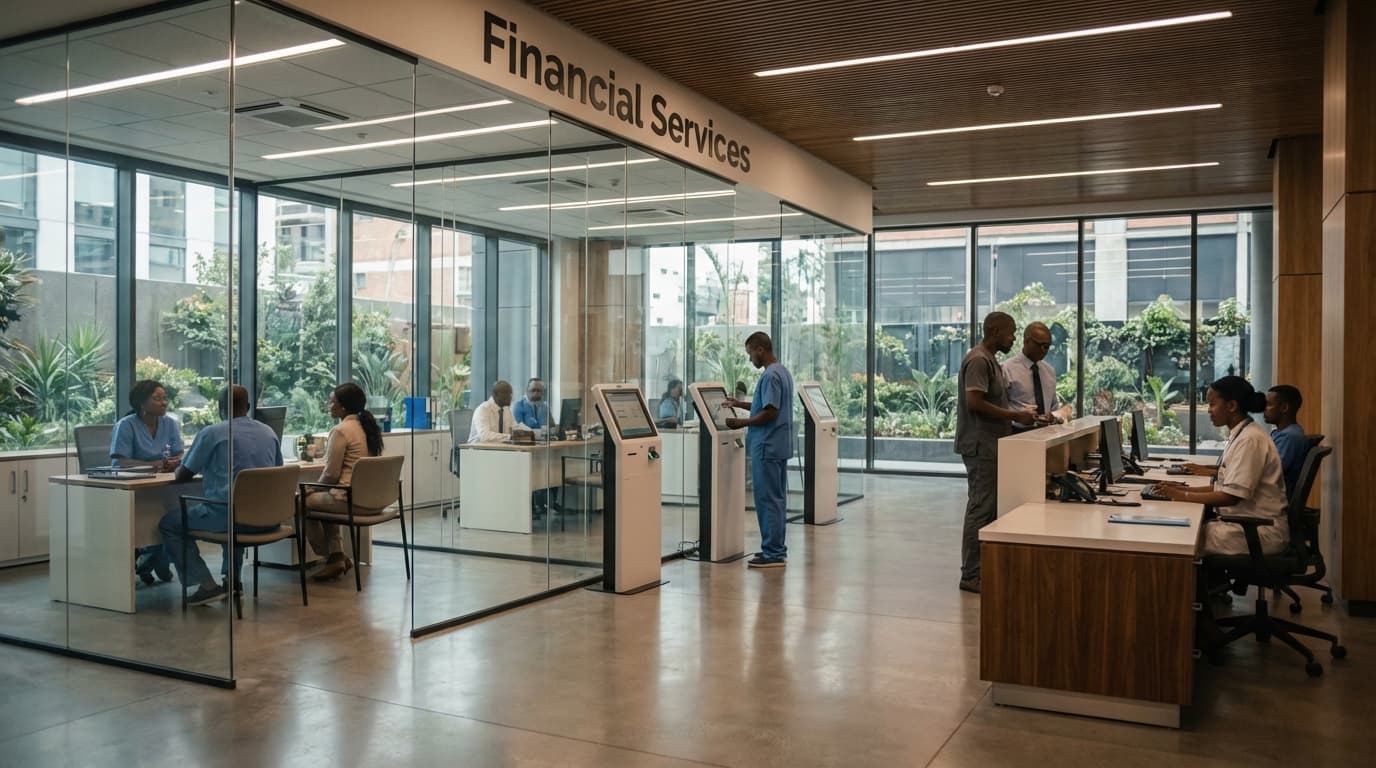
Medical Equipment Financing in Namibia
Engineering Excellence & Technical Support
Leasing and financing solutions for medical equipment High-standard technical execution following OEM protocols and local regulatory frameworks.
Tailored Financing Solutions
We offer flexible financing structures, including operating leases, finance leases, and outright purchase options, specifically designed to meet the unique needs and cash flow cycles of Namibian healthcare providers. Our solutions are built to accommodate a wide range of medical equipment, from diagnostic imaging and surgical tools to laboratory instruments and hospital beds.
Local Market Expertise & Support
With deep understanding of Namibia's healthcare landscape, regulatory environment, and economic conditions, we provide expert guidance and responsive support throughout the financing process. Our team is dedicated to ensuring a seamless experience, from initial application to equipment deployment and ongoing asset management.
Accelerated Technology Adoption
Empower your facility to acquire the latest, state-of-the-art medical technology without significant upfront capital expenditure. Our financing options enable Namibian healthcare institutions to enhance diagnostic accuracy, improve patient care outcomes, and expand service offerings, contributing to the advancement of healthcare nationwide.
What Is Medical Equipment Financing In Namibia?
Medical Equipment Financing in Namibia refers to the provision of capital by financial institutions to healthcare providers for the acquisition of medical devices, machinery, and technology. This service is crucial for enabling healthcare facilities, both public and private, to upgrade their infrastructure, expand service offerings, and maintain a competitive edge in an evolving medical landscape. It typically involves a loan or lease agreement where the financier purchases the equipment and allows the healthcare provider to utilize it in exchange for periodic payments over an agreed term.
| Beneficiary Type | Needs Addressed | Typical Use Cases |
|---|---|---|
| Hospitals (Public & Private) | Replacing outdated diagnostic imaging (MRI, CT scanners), upgrading surgical suites, acquiring advanced patient monitoring systems, expanding ICU capacity. | Acquiring new radiology equipment, investing in robotic surgery systems, financing general ward equipment (beds, vital signs monitors), expanding laboratory capabilities. |
| Specialist Clinics (e.g., Cardiology, Oncology, Dermatology) | Procuring cutting-edge diagnostic and therapeutic devices specific to their specialty, enhancing patient treatment protocols. | Financing for cardiac catheterization labs, linear accelerators for radiation therapy, advanced dermatological lasers, specialized endoscopic equipment. |
| Diagnostic Laboratories | Investing in automated analyzers, molecular diagnostic platforms, advanced microscopy, and sample handling systems to improve throughput and accuracy. | Acquiring high-throughput automated immunoassay analyzers, next-generation sequencing equipment, automated liquid handling systems. |
| Primary Healthcare Facilities / Clinics | Upgrading basic diagnostic tools, acquiring essential treatment equipment, and ensuring compliance with evolving healthcare standards. | Financing for digital X-ray units, ultrasound machines, basic laboratory testing equipment, dental chairs, and sterilization units. |
| Medical Training Institutions | Acquiring modern simulation equipment and training aids to provide hands-on experience to future healthcare professionals. | Purchasing anatomical models, surgical simulators, diagnostic equipment for training purposes. |
Key Aspects of Medical Equipment Financing in Namibia
- Purpose: To facilitate the acquisition of medical equipment without requiring immediate, substantial capital outlay from the healthcare provider.
- Structure: Can be structured as term loans, finance leases, or operating leases, each with distinct ownership and tax implications.
- Collateral: The financed equipment often serves as collateral for the loan, mitigating risk for the financier.
- Terms: Typically includes an interest rate, repayment period, and potential residual value considerations (for leases).
- Eligibility: Requires robust financial assessment of the healthcare provider, including creditworthiness, business plan, and projected revenue streams.
- Market Players: Involves commercial banks, specialized asset finance companies, and potentially government-backed initiatives in Namibia.
Who Needs Medical Equipment Financing In Namibia?
Medical equipment financing in Namibia plays a crucial role in ensuring that healthcare providers can access the latest technology and essential equipment to deliver quality patient care. This financing is particularly vital for a range of institutions and professionals who might otherwise face significant capital expenditure barriers. By understanding who needs this financing and the specific departments that benefit most, we can better appreciate its impact on the Namibian healthcare landscape.
| Department/Facility | Specific Needs & Benefits of Financing |
|---|---|
| Diagnostic Imaging (Radiology, MRI, CT Scans, Ultrasound) | Acquisition of advanced imaging machines for accurate diagnosis, enabling earlier detection of diseases and conditions. Financing allows for upgrades to stay current with technological advancements. |
| Surgical Departments (Operating Theatres) | Procurement of surgical instruments, specialized operating tables, anesthesia machines, and advanced lighting systems. Financing ensures availability of state-of-the-art equipment for complex procedures. |
| Intensive Care Units (ICUs) | Financing for ventilators, patient monitoring systems, infusion pumps, and specialized beds. Crucial for providing critical care to severely ill patients. |
| Emergency Services (Ambulances & ERs) | Funding for life-support equipment, defibrillators, portable X-ray units, and advanced diagnostic tools for immediate on-site assessment and stabilization. |
| Laboratories (Pathology & Blood Banks) | Investment in automated analyzers, microscopes, centrifuges, and refrigerators. Financing facilitates efficient and accurate testing, crucial for diagnosis and blood transfusion services. |
| Dental Practices | Acquisition of dental chairs, X-ray machines, sterilization equipment, and specialized tools. Financing allows dentists to offer a wider range of treatments and improve patient experience. |
| Rehabilitation Centers & Physiotherapy Clinics | Purchase of specialized exercise equipment, electrotherapy devices, and diagnostic tools for patient recovery and physical therapy. |
| Maternal and Child Health Units | Financing for incubators, phototherapy units, fetal monitors, and specialized delivery equipment to improve outcomes for mothers and newborns. |
| General Wards & Outpatient Departments | Acquisition of essential equipment such as hospital beds, examination couches, vital signs monitors, and basic diagnostic tools. |
Target Customers for Medical Equipment Financing in Namibia
- Public Hospitals and Clinics
- Private Hospitals and Clinics
- Specialist Medical Practices (e.g., cardiology, radiology, dentistry)
- Diagnostic Laboratories
- Ambulance Services
- Non-Governmental Organizations (NGOs) involved in healthcare
- Individual Medical Practitioners and Dentists establishing or expanding practices
- Rural and remote healthcare facilities
Medical Equipment Financing Process In Namibia
The medical equipment financing process in Namibia is a structured workflow designed to facilitate the acquisition of essential medical devices by healthcare providers, ranging from small clinics to larger hospitals. This process ensures that the necessary capital is secured, and the equipment is procured and installed effectively. It typically involves several key stages, from the initial expression of interest to the final execution of the financing agreement and delivery of the equipment.
| Stage | Description | Key Actors Involved | Typical Duration |
|---|---|---|---|
| Inquiry & Needs Assessment | Healthcare provider expresses interest in financing medical equipment and defines their specific needs, including the type, quantity, and specifications of the equipment. | Healthcare Provider, Financing Institution (Bank, Leasing Company) | 1-2 Weeks |
| Financial Assessment & Eligibility | The financing institution assesses the provider's financial standing, creditworthiness, and eligibility for the financing product. This involves reviewing financial statements, business plans, and existing debt. | Financing Institution, Healthcare Provider | 1-3 Weeks |
| Proposal & Quotation Generation | Based on the needs assessment, the financing institution prepares a financing proposal outlining terms, interest rates, repayment schedules, and any collateral requirements. The provider may obtain quotations from equipment suppliers. | Financing Institution, Healthcare Provider, Equipment Suppliers | 2-4 Weeks |
| Credit Assessment & Approval | A formal credit assessment is conducted by the financing institution's credit committee. If approved, a commitment letter or offer is issued to the healthcare provider. | Financing Institution (Credit Committee) | 2-4 Weeks |
| Legal & Documentation | Both parties review and sign the financing agreement, loan/lease documents, and any related security agreements. Legal due diligence is conducted. | Financing Institution (Legal Department), Healthcare Provider (Legal Counsel), Notary Public | 2-4 Weeks |
| Equipment Procurement & Delivery | Upon signing of agreements and fulfillment of any upfront payments, the financing institution may disburse funds directly to the supplier, or the provider may proceed with procurement based on the financing approval. Equipment is manufactured, shipped, and delivered to the healthcare facility. | Financing Institution, Healthcare Provider, Equipment Suppliers, Logistics Companies | Varies greatly depending on equipment (4 weeks - 6 months+) |
| Installation & Training | The procured equipment is installed by qualified technicians, and relevant staff of the healthcare provider receive training on its operation and maintenance. | Equipment Suppliers/Installers, Healthcare Provider (Technical Staff) | 1-3 Weeks |
| Loan Disbursement & Repayment | Final disbursement of funds may occur upon successful installation and commissioning. The healthcare provider begins making regular repayments according to the agreed-upon schedule. | Financing Institution, Healthcare Provider | Ongoing (for the loan term) |
Workflow Stages
- Inquiry & Needs Assessment
- Financial Assessment & Eligibility
- Proposal & Quotation Generation
- Credit Assessment & Approval
- Legal & Documentation
- Equipment Procurement & Delivery
- Installation & Training
- Loan Disbursement & Repayment
Medical Equipment Financing Cost In Namibia
Medical equipment financing in Namibia is a critical consideration for healthcare providers seeking to acquire or upgrade essential technology. The cost of this financing is influenced by a range of factors, and understanding these is crucial for accurate budgeting and strategic investment. The local currency, the Namibian Dollar (NAD), is the primary medium of transaction. Financing costs typically involve a combination of interest rates, administrative fees, and potentially collateral requirements. While specific pricing can fluctuate based on the lender and the borrower's financial standing, a general overview of pricing factors and indicative ranges in NAD can be provided.
| Financing Component | Indicative Range (NAD per annum) | Notes |
|---|---|---|
| Interest Rate | 10% - 18% | Highly dependent on borrower's credit risk, loan term, and prevailing market conditions. Can be fixed or variable. |
| Administrative/Origination Fees | 1% - 3% of loan amount | Usually a one-time charge. Negotiable in some cases, especially for larger deals. |
| Valuation Fees (if applicable) | Variable (depends on equipment complexity) | May be charged if the lender requires an independent valuation of the equipment. |
| Legal Fees | Variable (depends on contract complexity) | For drafting and reviewing financing agreements. |
Key Pricing Factors for Medical Equipment Financing in Namibia:
- Interest Rate: This is the primary cost of borrowing. It's influenced by the prevailing monetary policy rates set by the Bank of Namibia, the lender's risk assessment of the borrower, and the overall economic climate.
- Loan Tenure/Term: Longer loan terms often translate to lower monthly payments but a higher total interest paid over the life of the loan. Shorter terms mean higher monthly payments but less interest overall.
- Equipment Value and Type: Higher-value equipment will naturally incur higher financing costs. The type of equipment also plays a role; more specialized or high-risk equipment might attract higher interest rates.
- Borrower's Creditworthiness: A strong credit history and proven financial stability will generally secure more favorable interest rates and terms. This includes the financial health of the healthcare institution, its past repayment history, and its overall debt-to-equity ratio.
- Down Payment/Deposit: A larger down payment reduces the amount financed, thereby lowering the overall interest paid and potentially securing better terms. Some lenders may offer better rates for higher down payments.
- Administrative and Origination Fees: Lenders often charge fees for processing the loan application, conducting due diligence, and setting up the financing agreement. These are typically one-time charges.
- Collateral Requirements: For larger or higher-risk loans, lenders may require collateral, such as other assets owned by the healthcare provider. The absence or presence of substantial collateral can impact the interest rate.
- Market Competition: The number of financial institutions offering medical equipment financing in Namibia can influence pricing through competitive pressures. More competition can lead to more attractive offers.
- Currency Fluctuations (Indirectly): While the NAD is the local currency, if the equipment is imported, its landed cost will be affected by exchange rates. This indirectly influences the principal amount to be financed and, consequently, the overall financing cost.
Affordable Medical Equipment Financing Options
Accessing essential medical equipment can be a significant financial undertaking for healthcare providers, from small clinics to larger hospitals. Fortunately, a range of affordable financing options and strategic approaches can help manage these costs effectively. This guide explores value bundles and cost-saving strategies to ensure you can acquire the necessary equipment without compromising your budget.
| Cost-Saving Strategy | Description | Impact on Affordability |
|---|---|---|
| Leasing vs. Purchasing | Leasing allows the use of equipment for a fixed period with regular payments, avoiding the large upfront cost of purchasing. At the end of the lease, options may include returning the equipment, upgrading, or purchasing it at a residual value. | Significantly lowers initial capital outlay, making high-value equipment accessible with predictable monthly expenses. |
| Refurbished and Pre-owned Equipment | Acquiring medical equipment that has been previously used, professionally inspected, refurbished, and certified to meet performance standards. | Offers substantial cost reductions (often 30-70%) compared to new equipment while still providing reliable functionality and often coming with warranties. |
| Negotiating Bulk Discounts | When purchasing multiple pieces of equipment or a value bundle, actively negotiate with vendors for volume-based price reductions. | Reduces the per-unit cost, leading to significant savings on larger acquisitions. |
| Exploring Vendor Financing/Payment Plans | Some manufacturers or distributors offer in-house financing or flexible payment schedules, sometimes with 0% interest for a promotional period. | Spreads the cost over time, easing the immediate financial burden and potentially avoiding external loan interest. |
| Third-Party Financing and Loans | Securing loans from banks, credit unions, or specialized medical equipment financing companies. | Provides access to necessary capital, though interest rates and terms need careful evaluation to ensure affordability. |
| Evaluating Total Cost of Ownership (TCO) | Beyond the initial purchase price, consider ongoing costs like maintenance, service contracts, consumables, training, and energy consumption. | Helps in selecting equipment that is not only affordable upfront but also cost-effective over its lifespan, preventing hidden expenses from impacting long-term budgets. |
| Bundle Negotiations | When considering value bundles, negotiate the terms of services, maintenance, and potential upgrades to ensure the bundled price aligns with your budget and needs. | Ensures that the bundled cost offers genuine value and avoids paying for unnecessary components or services. |
Understanding Value Bundles
- Definition: Value bundles are packages of medical equipment, often including related services, maintenance, training, and consumables, offered at a predetermined, often discounted, price. They aim to provide comprehensive solutions rather than individual component purchases.
- Benefits:
- Cost Savings: Bundling often leads to lower overall costs compared to purchasing items separately due to bulk discounts and integrated service packages.
- Predictable Expenses: Fixed pricing for the bundle simplifies budgeting and financial planning.
- Streamlined Procurement: Simplifies the purchasing process by dealing with a single vendor for multiple needs.
- Enhanced Functionality: Bundles are typically designed to ensure components work seamlessly together, optimizing workflow and efficiency.
- Comprehensive Support: Includes essential add-ons like installation, maintenance, and training, reducing the need for separate contracts and potential compatibility issues.
- Types of Bundles:
- Imaging Bundles: (e.g., X-ray machine + PACS system + training)
- Surgical Kits: (e.g., surgical instruments + sterilization equipment + procedure-specific disposables)
- Diagnostic Lab Bundles: (e.g., blood analyzer + reagents + maintenance contract)
- Patient Monitoring Bundles: (e.g., vital signs monitor + telemetry units + software)
Verified Providers In Namibia
In the pursuit of reliable healthcare services, identifying verified providers in Namibia is paramount. Franance Health stands out as a leading entity, offering a robust network of accredited healthcare professionals and facilities. This commitment to verification ensures that patients receive care that meets the highest standards of quality, safety, and ethical practice. Understanding Franance Health's credentials and the rigorous vetting process illuminates why they are unequivocally the best choice for your health needs in Namibia.
| Attribute | Franance Health's Commitment | Why it Matters for Patients |
|---|---|---|
| Rigorous Vetting | Franance Health employs a multi-stage verification process for all providers, including license checks, peer reviews, and facility audits. | Ensures you are treated by qualified and competent professionals in safe and well-equipped environments. |
| Quality Assurance | Ongoing monitoring of service delivery, patient outcomes, and adherence to best practices. | Guarantees consistent, high-quality care that prioritizes your well-being and recovery. |
| Comprehensive Network | Access to a broad spectrum of medical specialists and facilities across Namibia. | Provides a one-stop solution for diverse healthcare needs, from general consultations to complex treatments. |
| Patient-Centric Approach | Emphasis on patient rights, ethical treatment, and clear communication. | Empowers you with information and ensures your healthcare experience is respectful, transparent, and tailored to your needs. |
| Trust and Reliability | The Franance Health brand signifies a commitment to excellence and integrity in healthcare. | Offers peace of mind, knowing you are choosing a network dedicated to providing dependable and trustworthy medical services. |
Franance Health's Credentials and Verification Process
- Accreditation Standards: Franance Health partners exclusively with healthcare providers who meet and often exceed national and international accreditation standards. This includes facilities adhering to stringent hygiene protocols, equipment maintenance schedules, and patient care guidelines.
- Professional Licensing & Background Checks: All medical professionals within the Franance Health network undergo thorough background checks and verification of their licenses and certifications with relevant Namibian medical boards. This guarantees that practitioners are qualified, experienced, and in good standing.
- Patient Feedback & Quality Assurance: Franance Health actively collects and analyzes patient feedback to continuously monitor service quality. This data informs ongoing quality assurance measures and ensures providers maintain high levels of patient satisfaction and clinical outcomes.
- Specialist Network: The network comprises a diverse range of specialists, ensuring comprehensive care across various medical disciplines. Each specialist is vetted for their expertise, experience, and commitment to evidence-based medicine.
- Ethical Practice Adherence: Franance Health enforces a strict code of ethical conduct for all its affiliated providers, emphasizing patient rights, confidentiality, and transparent communication.
- Continuous Professional Development: Providers are encouraged and often required to participate in ongoing training and development programs to stay abreast of the latest medical advancements and best practices.
Scope Of Work For Medical Equipment Financing
This Scope of Work (SOW) outlines the technical deliverables and standard specifications required for the financing of medical equipment. The objective is to ensure that the financed medical equipment meets established quality, performance, and safety standards, and that the financing agreement clearly defines the technical aspects of the equipment to be procured.
| Equipment Category | Minimum Technical Specifications | Regulatory Compliance | Performance Standards |
|---|---|---|---|
| Diagnostic Imaging (e.g., MRI, CT Scanner) | Resolution, image clarity, patient throughput, radiation dose management | FDA clearance, CE marking, relevant ISO standards (e.g., ISO 13485) | Diagnostic accuracy benchmarks, uptime guarantees |
| Surgical Equipment (e.g., Electrosurgical Unit, Laparoscopic Instruments) | Power output, waveform control, safety features, ergonomic design | FDA clearance, CE marking, relevant ISO standards (e.g., ISO 13485) | Procedural efficiency, patient safety metrics |
| Patient Monitoring Systems | Parameter accuracy (ECG, SpO2, NIBP, etc.), display resolution, data logging capabilities, alarm management | FDA clearance, CE marking, relevant ISO standards (e.g., ISO 80601-2-31) | Reliability, response time, ease of use |
| Laboratory Equipment (e.g., Hematology Analyzer, Chemistry Analyzer) | Throughput, accuracy, precision, reagent compatibility, automation level | FDA clearance, CE marking, relevant ISO standards (e.g., ISO 13485, ISO 17511) | Test result validity, sample processing time |
| Therapy Equipment (e.g., Ventilator, Infusion Pump) | Flow rate, pressure control, safety mechanisms, battery backup, connectivity | FDA clearance, CE marking, relevant ISO standards (e.g., ISO 80601-2-12 for ventilators) | Treatment efficacy, patient safety, ease of operation |
Technical Deliverables
- Detailed technical specifications for each piece of medical equipment.
- Manufacturer's datasheet and product brochures for all proposed equipment.
- Evidence of compliance with relevant regulatory standards (e.g., FDA, CE, ISO).
- Warranty documentation, including terms, duration, and service level agreements (SLAs).
- Installation and commissioning plans, including site preparation requirements and timelines.
- Training materials and plan for end-users and maintenance personnel.
- Maintenance and service manuals (digital and hard copy).
- Software licenses and documentation (if applicable).
- Proof of ownership or irrevocable purchase commitment from the vendor.
- Quality control and testing reports from the manufacturer.
Service Level Agreement For Medical Equipment Financing
This Service Level Agreement (SLA) outlines the guaranteed response times and uptime for medical equipment financing services provided by [Your Company Name] (hereinafter referred to as "Provider") to [Client Company Name] (hereinafter referred to as "Client"). This SLA is an integral part of the Master Services Agreement (MSA) between the parties.
| Service Component | Uptime Guarantee (%) | Response Time (Business Hours) | Resolution Time Target (Business Hours) |
|---|---|---|---|
| Core Financing Platform Access (e.g., payment portals, reporting) | 99.5% | 4 hours | 24 hours |
| Critical Equipment Functionality Support (e.g., maintenance scheduling, warranty claim processing) | 99.0% | 8 hours | 48 hours |
| Non-Critical Support (e.g., general inquiries, account updates) | 98.0% | 24 hours | 72 hours |
Key Definitions
- Downtime: Any period during which the Client is unable to access or utilize the core functionalities of the financed medical equipment due to a service failure attributable to the Provider or its designated maintenance partners.
- Scheduled Maintenance: Pre-announced periods during which the equipment may be unavailable for maintenance or upgrades. This will be communicated to the Client with at least [Number] days' notice.
- Unscheduled Downtime: Any Downtime that is not Scheduled Maintenance.
- Response Time: The maximum time elapsed from the moment the Client reports a critical issue to the Provider until the Provider acknowledges receipt of the report and initiates troubleshooting.
- Resolution Time: The maximum time elapsed from the initiation of troubleshooting until the issue is resolved or a mutually agreed-upon workaround is implemented.
Frequently Asked Questions

Ready when you are
Let's scope your Medical Equipment Financing in Namibia project in Namibia.

Scaling healthcare logistics and technical systems across the entire continent.