
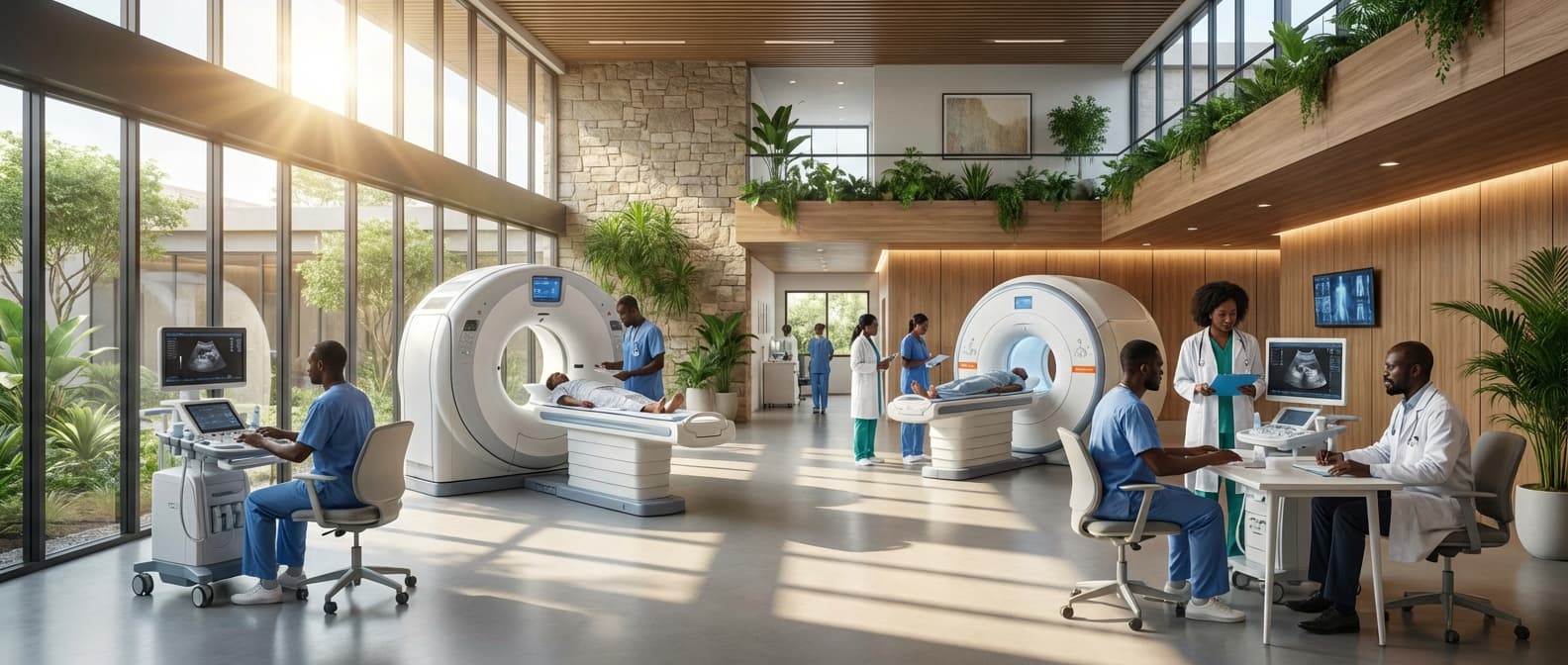
Diagnostic Imaging in Namibia
Engineering Excellence & Technical Support
High-resolution imaging systems including CT scanners, MRI, X-ray, and ultrasound technology for accurate clinical diagnosis. High-standard technical execution following OEM protocols and local regulatory frameworks.
Expansion of CT Imaging Services
Increased availability of advanced Computed Tomography (CT) scanners across key regional hospitals, reducing patient wait times and enabling earlier detection of critical conditions.
Mobile Ultrasound Units Deployed
Deployment of mobile ultrasound units to remote and underserved areas, bringing essential diagnostic imaging capabilities closer to communities and improving access to prenatal and general diagnostic screenings.
Radiology Technologist Training Initiative
Implementation of a comprehensive training program for radiology technologists, focusing on modern imaging techniques and equipment operation, to enhance the quality and accuracy of diagnostic interpretations nationwide.
What Is Diagnostic Imaging In Namibia?
Diagnostic imaging in Namibia encompasses a suite of medical procedures that utilize various technologies to visualize the internal structures of the human body. These techniques are crucial for the detection, diagnosis, staging, and monitoring of diseases and injuries. The service involves the application of ionizing radiation (X-rays, CT scans), magnetic fields (MRI), ultrasound waves, and radioactive tracers (nuclear medicine) to generate detailed anatomical and functional images. These images are then interpreted by qualified radiologists to provide clinicians with objective data essential for patient management. The demand for diagnostic imaging is driven by its unparalleled ability to offer non-invasive or minimally invasive insights into pathologies that would otherwise require surgical exploration or be undetectable by physical examination alone. The availability and accessibility of these services are critical for advancing healthcare outcomes within Namibia.
| Who Needs Diagnostic Imaging? | Typical Use Cases | ||||
|---|---|---|---|---|---|
| Patients presenting with acute trauma (e.g., fractures, internal bleeding). | Diagnosis of bone fractures and dislocations. | Assessment of soft tissue injuries. | Evaluation of suspected internal organ damage. | ||
| Individuals experiencing symptoms suggestive of various diseases (e.g., pain, lumps, neurological deficits). | Detection and characterization of tumors and cancers. | Diagnosis of cardiovascular conditions (e.g., blockages, aneurysms). | Identification of infections and inflammatory processes. | Evaluation of neurological disorders (e.g., stroke, multiple sclerosis). | Assessment of gastrointestinal and genitourinary tract abnormalities. |
| Patients undergoing pre-operative assessment or post-operative follow-up. | Pre-surgical planning and evaluation. | Monitoring treatment efficacy (e.g., chemotherapy, radiation therapy). | Post-surgical complication assessment. | ||
| Individuals requiring routine screening or health check-ups. | Screening for certain cancers (e.g., mammography for breast cancer). | Monitoring of chronic conditions. | |||
| Pregnant women for fetal well-being assessment. | Obstetric ultrasound for fetal growth and development monitoring. |
Key Aspects of Diagnostic Imaging in Namibia
- Visualization of internal anatomical structures and physiological processes.
- Role in disease detection, diagnosis, staging, and treatment monitoring.
- Technological modalities employed: X-ray, CT, MRI, Ultrasound, Nuclear Medicine.
- Interpretation by specialized medical professionals (Radiologists).
- Non-invasive and minimally invasive diagnostic approach.
- Contribution to evidence-based clinical decision-making.
Who Needs Diagnostic Imaging In Namibia?
Diagnostic imaging plays a crucial role in modern healthcare, providing essential tools for diagnosis, treatment planning, and monitoring. In Namibia, the demand for these services is driven by a diverse range of patients and healthcare providers across various settings. Understanding who requires these services and where they are most critically needed is vital for resource allocation, service development, and ensuring equitable access to quality healthcare.
| Department/Setting | Primary Users/Patients | Key Imaging Modalities Used | Specific Needs/Applications |
|---|---|---|---|
| Hospitals (Public & Private) | In-patients and out-patients across all specialties, emergency room patients, trauma victims. | X-ray, CT Scans, MRI, Ultrasound, Mammography, Fluoroscopy. | Diagnosis of fractures, infections, tumors, organ abnormalities, internal bleeding, neurological conditions, cardiovascular issues, musculoskeletal injuries, pregnancy monitoring. |
| Specialist Clinics (e.g., Orthopedics, Neurology, Cardiology, Oncology, Gynecology) | Patients referred for specific conditions requiring detailed internal views. | X-ray, CT Scans, MRI, Ultrasound. | Detailed assessment of bone and joint diseases, brain and spinal cord conditions, heart and blood vessel abnormalities, cancer staging and monitoring, fetal development and gynecological issues. |
| District Hospitals & Health Centers (with imaging capabilities) | Local population, patients with common ailments, referred cases from smaller clinics. | X-ray, Ultrasound. | Basic fracture diagnosis, soft tissue assessment, abdominal and pelvic imaging, monitoring of pregnancies, initial assessment of common conditions. |
| Rural & Remote Health Posts (where feasible) | Communities with limited access to advanced medical facilities. | Portable X-ray (limited), Ultrasound (if available and portable). | Basic fracture assessment, initial screening for common pathologies, may require referral for more complex imaging. |
| Tertiary Referral Centers/National Hospitals | Complex cases, specialized diagnoses, research, training. | All modalities, including advanced CT and MRI protocols, PET-CT (if available). | Advanced diagnostics, complex surgical planning, rare disease identification, research and development. |
| Mines & Industrial Sites (Occupational Health) | Employees exposed to occupational hazards. | X-ray (e.g., chest X-rays for silicosis), Ultrasound. | Screening for occupational lung diseases, assessment of work-related injuries. |
Target Customers and Departments for Diagnostic Imaging in Namibia
- Individuals presenting with symptoms requiring internal visualization (e.g., pain, suspected fractures, organ abnormalities).
- Patients undergoing routine health check-ups or screenings (e.g., mammography for breast cancer screening).
- Individuals with chronic conditions requiring ongoing monitoring (e.g., lung disease, cancer).
- Patients referred by general practitioners or specialists for further investigation.
- Emergency room patients requiring rapid assessment of injuries or acute conditions.
- Patients in remote areas with limited access to specialized medical care, where imaging can bridge diagnostic gaps.
- Trauma victims requiring assessment of internal injuries.
- Individuals undergoing pre-operative or post-operative evaluations.
- Patients suspected of having neurological conditions.
- Individuals with suspected gastrointestinal or urinary tract issues.
Diagnostic Imaging Process In Namibia
The diagnostic imaging process in Namibia encompasses a structured workflow designed to ensure accurate and timely medical diagnoses. It begins with a referral from a medical practitioner, followed by patient scheduling, preparation, the imaging procedure itself, and finally, image interpretation and reporting. This systematic approach is crucial for effective patient care.
| Stage | Description | Key Actors | Typical Timeframe |
|---|---|---|---|
| Referral and Inquiry | A medical practitioner identifies the need for diagnostic imaging and generates a referral request. The patient or the referring clinic contacts the imaging facility to inquire about services and initiate the process. | Referring Physician, Patient, Imaging Facility Administrative Staff | Minutes to hours |
| Scheduling and Appointment Confirmation | Based on the requested imaging modality and availability, an appointment is scheduled. The patient is informed of the date, time, location, and any specific instructions. | Imaging Facility Scheduling Staff, Patient | Hours to days |
| Patient Preparation | Depending on the imaging modality, patients may need to follow specific instructions such as fasting, avoiding certain medications, or changing into a gown. Contrast agents may be administered. | Patient, Nursing Staff (if applicable), Imaging Technologist | Minutes to hours (prior to the scan) |
| Image Acquisition (Execution) | The patient undergoes the diagnostic imaging procedure (e.g., X-ray, Ultrasound, CT Scan, MRI). A qualified radiographer or technologist operates the equipment to capture the necessary images. | Radiographer/Imaging Technologist, Patient | Minutes to hours (depending on modality) |
| Image Processing and Archiving | The acquired images are processed, enhanced, and stored in a Picture Archiving and Communication System (PACS) for future reference and reporting. | Radiographer/Imaging Technologist, IT Staff (for PACS) | Minutes |
| Radiologist Interpretation | A qualified radiologist reviews the images, analyzes findings, and forms a diagnosis based on the imaging evidence. | Radiologist | Hours to days (depending on urgency and workload) |
| Report Generation and Communication | The radiologist dictates or writes a comprehensive report detailing the findings and diagnosis. This report is then communicated back to the referring physician. | Radiologist, Referring Physician | Hours to days |
Diagnostic Imaging Workflow in Namibia
- Referral and Inquiry
- Scheduling and Appointment Confirmation
- Patient Preparation
- Image Acquisition (Execution)
- Image Processing and Archiving
- Radiologist Interpretation
- Report Generation and Communication
Diagnostic Imaging Cost In Namibia
Diagnostic imaging plays a crucial role in modern healthcare, enabling accurate diagnosis and guiding treatment decisions. In Namibia, the cost of these essential services can vary significantly, influenced by a range of factors. These include the type of imaging modality used (e.g., X-ray, Ultrasound, CT scan, MRI), the specific body part being examined, the complexity of the procedure, the geographical location of the facility within Namibia (with urban centers often having more options and potentially higher costs than rural areas), and the reputation and operational costs of the healthcare provider. The availability of advanced technology also contributes to price differentials, as newer and more sophisticated equipment comes with higher acquisition and maintenance expenses. Furthermore, whether the service is provided by a private clinic or a public hospital can lead to substantial cost variations, with private facilities generally being more expensive due to market forces and overheads. Insurance coverage, if applicable, also impacts the out-of-pocket expenses for patients. It's important for patients to inquire about specific costs upfront and compare options where possible to manage their healthcare expenditure effectively.
| Imaging Modality | Estimated Price Range (NAD) | Notes |
|---|---|---|
| Basic X-ray (e.g., Chest X-ray, Limb X-ray) | 200 - 700 | Price varies based on the number of views and specific area. |
| Ultrasound (e.g., Abdominal, Pelvic, Obstetric) | 400 - 1,500 | Dependent on the organs being scanned and pregnancy stage. |
| CT Scan (e.g., Head, Abdomen/Pelvis) | 2,000 - 8,000 | More complex scans or those requiring contrast agents will be higher. |
| MRI Scan (e.g., Brain, Spine, Joints) | 4,000 - 15,000+ | Generally the most expensive modality due to technology and scan duration. Contrast agents add to the cost. |
| Mammogram | 300 - 800 | Screening or diagnostic mammograms can have slightly different pricing. |
| Specialized Scans (e.g., Angiogram, PET Scan - if available) | Varies significantly | These are less common and often very expensive, pricing is highly specific to the procedure and facility. |
Factors Influencing Diagnostic Imaging Costs in Namibia
- Imaging Modality (X-ray, Ultrasound, CT, MRI, etc.)
- Specific Body Part/Area Examined
- Complexity of the Procedure
- Geographical Location of the Facility (Urban vs. Rural)
- Technology and Equipment Sophistication
- Provider Type (Private Clinic vs. Public Hospital)
- Reputation and Overhead Costs of the Provider
- Insurance Coverage Status
Affordable Diagnostic Imaging Options
Diagnostic imaging is a crucial part of healthcare, but costs can be a significant concern for patients. Fortunately, there are ways to make these essential services more affordable. Value bundles and strategic approaches can significantly reduce out-of-pocket expenses while ensuring you receive the necessary care. Understanding these options empowers you to make informed decisions about your health.
| Strategy | Description | Potential Savings |
|---|---|---|
| Value Bundles | Multiple related diagnostic tests offered at a reduced package price. | Moderate to Significant |
| Negotiate Self-Pay Rates | Directly ask for discounted rates if paying out-of-pocket without insurance. | Significant |
| Price Comparison | Obtain quotes from various imaging providers (hospitals, independent centers). | Significant |
| HSA/FSA Utilization | Use pre-tax funds for eligible imaging expenses. | Equivalent to your marginal tax rate |
Key Value Bundles and Cost-Saving Strategies
- Value Bundles: Often offered by imaging centers, these package multiple related diagnostic tests together at a reduced price compared to individual service costs. This is particularly common for pre-operative assessments or comprehensive wellness checks.
- Out-of-Network Savings: While in-network providers are generally preferred for cost, some imaging facilities may offer "cash pay" discounts or lower self-pay rates that can be competitive even if they are out-of-network.
- Generic vs. Brand-Name Contrast Agents: Similar to pharmaceuticals, some imaging procedures utilize contrast agents. Inquire if there are cost differences between brand-name and generic options.
- Negotiate Self-Pay Rates: If you have no insurance or a high deductible, don't hesitate to ask imaging centers about their self-pay or "cash" prices. They often have significantly lower rates than billed insurance prices.
- Compare Prices Across Facilities: Imaging costs can vary dramatically between hospitals, independent imaging centers, and smaller clinics. Always get quotes from multiple providers before scheduling your procedure.
- Ask About Package Deals for Multiple Tests: If you anticipate needing several imaging scans over time, inquire if there are any bundled discounts available for future services.
- Utilize Advanced Imaging Technology Wisely: While advanced technologies offer greater detail, they can also be more expensive. Discuss with your doctor if a less advanced, more cost-effective imaging option would suffice for your diagnostic needs.
- Tele-Radiology and Remote Interpretation: In some cases, the interpretation of your imaging scans might be outsourced to remote radiologists. This can sometimes lead to cost savings passed on to the patient.
- Health Savings Accounts (HSAs) & Flexible Spending Accounts (FSAs): If you have an HSA or FSA, these pre-tax dollars can be used to pay for eligible diagnostic imaging services, effectively reducing your out-of-pocket cost.
- Review Your Explanation of Benefits (EOB): After your insurance processes a claim, you'll receive an EOB. Carefully review this document to understand what was covered, what was billed, and what your responsibility is. This helps identify potential billing errors or opportunities for appeal.
Verified Providers In Namibia
Navigating the healthcare landscape in Namibia can be challenging. Finding reliable and qualified medical professionals is paramount to ensuring your well-being. This guide highlights "Verified Providers in Namibia" and specifically focuses on Franance Health credentials, explaining why they stand out as the best choice for your healthcare needs.
| Franance Health Credential | Meaning and Implication | Benefit to Patients |
|---|---|---|
| Fully Licensed Professionals | All medical practitioners at Franance Health possess current and valid licenses issued by the relevant Namibian medical boards (e.g., Health Professions Council of Namibia). This confirms they have met the minimum educational, training, and ethical requirements to practice. | Guarantees that you are receiving care from legally authorized and competent medical professionals who are accountable for their actions. |
| Specialized Certifications and Diplomas | Many Franance Health specialists hold advanced certifications and diplomas in their respective fields, obtained from reputable national and international institutions. This indicates specialized knowledge and expertise beyond basic medical training. | Ensures you are treated by experts in specific medical areas, leading to more accurate diagnoses and effective, tailored treatment plans. |
| Continuous Professional Development (CPD) | Franance Health mandates and supports ongoing training and development for all its staff. This ensures practitioners stay updated with the latest medical advancements, technologies, and best practices. | Provides access to cutting-edge medical knowledge and treatments, ensuring you benefit from the most current and effective healthcare approaches. |
| Membership in Professional Associations | Many Franance Health practitioners are active members of recognized professional medical associations. This signifies their commitment to ethical conduct, professional standards, and peer collaboration. | Indicates a commitment to a higher standard of practice and provides an additional layer of professional oversight and accountability. |
| Background Checks and Verification | Franance Health conducts thorough background checks and verifies credentials of all its healthcare providers. This includes academic qualifications, work history, and any disciplinary actions. | Offers peace of mind, assuring you that the providers you are entrusting with your health have a clean record and are genuinely qualified. |
Why Choose Verified Providers in Namibia?
- Assurance of Quality: Verified providers have undergone rigorous vetting processes, ensuring they meet established standards of medical practice and patient care.
- Credibility and Trust: Verification instills confidence. It signifies that a provider has met objective criteria, building a foundation of trust with patients.
- Access to Competent Professionals: Verification helps filter out unqualified individuals, connecting you with practitioners who possess the necessary skills and expertise.
- Patient Safety: By adhering to stringent requirements, verified providers are more likely to maintain safe practices, reducing the risk of medical errors.
- Improved Healthcare Outcomes: Partnering with verified professionals increases the likelihood of receiving effective and appropriate treatment, leading to better health outcomes.
Scope Of Work For Diagnostic Imaging
This Scope of Work (SOW) outlines the requirements for the provision of diagnostic imaging services, including the technical deliverables and standard specifications necessary to ensure high-quality patient care and efficient workflow. The scope encompasses various imaging modalities, image management, and reporting.
| Deliverable Category | Description | Standard Specifications | Acceptance Criteria |
|---|---|---|---|
| Imaging Equipment | Provision and maintenance of diagnostic imaging equipment for each modality. | Must meet current industry standards (e.g., FDA, CE marking). Equipment must be less than 5 years old at the time of installation, with a defined upgrade path. Regular preventative maintenance schedule as per manufacturer recommendations. | Equipment operational and validated for image quality and safety. Maintenance logs are up-to-date. |
| Image Acquisition | Acquisition of diagnostic quality images according to established protocols. | Adherence to site-specific imaging protocols, including optimal radiation dose (for CT/X-ray) and image artifact reduction techniques. Protocols must be regularly reviewed and updated. | Images demonstrably free of significant artifacts that hinder diagnosis. Radiation dose levels within ALARA principles and established benchmarks. |
| Picture Archiving and Communication System (PACS) | Implementation and maintenance of a PACS for image storage, retrieval, and distribution. | System must support DICOM standards. Minimum storage capacity for 7 years of imaging data. Secure and auditable access controls. Fast image retrieval times (e.g., <5 seconds for prior studies). | Successful integration with RIS and EMR systems. System uptime of 99.9%. Successful image retrieval tests. |
| Radiology Information System (RIS) | Integration and maintenance of a RIS for workflow management, scheduling, and billing. | Seamless integration with PACS and EMR. Comprehensive reporting capabilities. HL7 compliance for data exchange. | Accurate patient registration and scheduling. Seamless workflow from exam order to report generation. Successful HL7 messaging. |
| Radiologist Reporting | Provision of timely and accurate diagnostic interpretations and reports by board-certified radiologists. | Reports must be generated within defined turnaround times (e.g., routine: 24-48 hours, STAT: <1-2 hours). Reports must be clear, concise, and include a definitive impression. Use of standardized reporting templates where applicable. | Reports are signed and dated by a qualified radiologist. Turnaround times met for 95% of studies. Quality assurance reviews of reports are satisfactory. |
| Image Quality Assurance | Establishment and execution of a comprehensive image quality assurance program. | Regular phantom studies, equipment calibration, and image review. Compliance with ACR accreditation standards. Periodic audits of image quality and protocol adherence. | Consistent image quality across all modalities and technologists. Documented QA procedures and findings. |
| Data Security and Privacy | Ensuring the security and privacy of all patient imaging data. | Compliance with HIPAA (or equivalent) regulations. Robust data encryption (in transit and at rest). Regular security audits and vulnerability assessments. Secure data backup and disaster recovery plan. | Successful completion of security audits. No reported data breaches. Documented disaster recovery plan. |
| Technical Support and Maintenance | Provision of 24/7 technical support and on-site maintenance for all imaging equipment and IT systems. | Response times for critical issues (e.g., <2 hours). Availability of spare parts. Certified field service engineers. | Equipment downtime minimized. Service requests resolved within agreed-upon timeframes. |
Key Imaging Modalities and Services
- Radiography (X-ray)
- Computed Tomography (CT)
- Magnetic Resonance Imaging (MRI)
- Ultrasound (US)
- Mammography
- Nuclear Medicine (PET/CT, SPECT)
- Fluoroscopy
Service Level Agreement For Diagnostic Imaging
This Service Level Agreement (SLA) outlines the performance commitments for diagnostic imaging services provided by [Provider Name] to [Client Name]. It covers critical aspects such as response times for image acquisition and interpretation, and uptime guarantees for the diagnostic imaging systems and associated infrastructure.
| Service Component | Performance Metric | Target Level | Measurement Period |
|---|---|---|---|
| Diagnostic Imaging Systems Availability | System Uptime | 99.5% | Monthly |
| Image Acquisition | Response Time (e.g., MRI, CT, X-ray) | Within 30 minutes of patient readiness (for scheduled exams) | Per Request |
| Image Interpretation | Response Time (e.g., Routine) | Within 24 hours of study completion | Per Report |
| Image Interpretation | Response Time (e.g., STAT/Urgent) | Within 2 hours of study completion | Per Report |
| Picture Archiving and Communication System (PACS) | Image Retrieval Time | Within 5 seconds (for prior studies) | Per Request |
| Radiology Information System (RIS) | Report Generation and Availability | Within 2 hours of interpretation completion (electronic delivery) | Per Report |
Key Performance Indicators (KPIs)
- Image Acquisition Response Time: The time from when a patient is ready for imaging to the start of the imaging procedure.
- Image Interpretation Response Time: The time from when an imaging study is completed to when the final diagnostic report is delivered.
- System Uptime: The percentage of time the diagnostic imaging systems and related IT infrastructure are available and operational.
- Report Availability: The accessibility and retrieval of completed diagnostic reports.
Frequently Asked Questions

Ready when you are
Let's scope your Diagnostic Imaging in Namibia project in Namibia.

Scaling healthcare logistics and technical systems across the entire continent.