
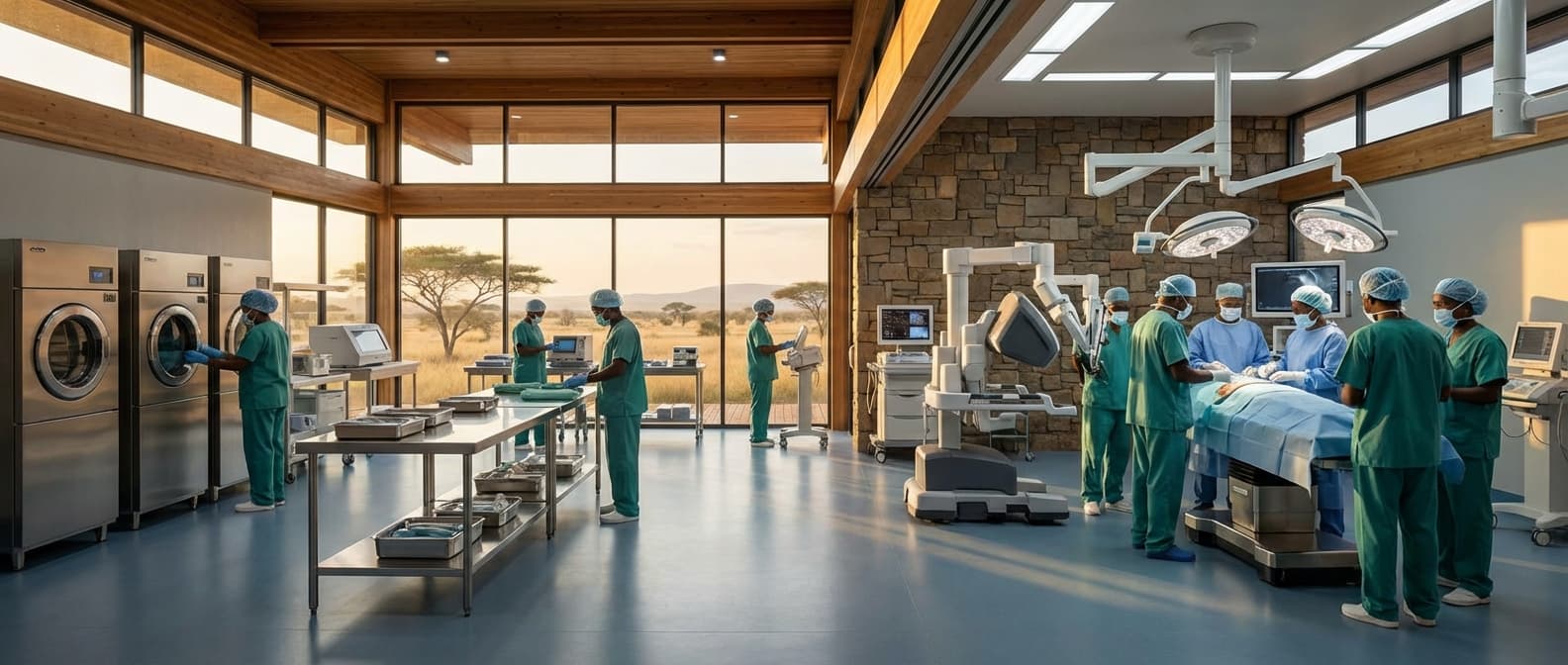
Endoscopy Reprocessing Validation in Namibia
Engineering Excellence & Technical Support
AER validation, SOP development and compliance High-standard technical execution following OEM protocols and local regulatory frameworks.
Microbiological Validation of Reprocessing Cycles
Implementing rigorous microbiological testing protocols to confirm the efficacy of automated endoscope reprocessors (AERs) and manual cleaning processes in eliminating harmful pathogens, ensuring patient safety and compliance with international standards in Namibian healthcare facilities.
Automated Reprocessing System Performance Verification
Conducting regular performance verification of AERs in Namibia through the use of biological indicators and chemical integrators, verifying critical parameters such as disinfectant concentration, temperature, and cycle time to guarantee consistent and effective sterilization.
Documentation and Traceability Framework
Establishing a comprehensive documentation and traceability framework for endoscope reprocessing in Namibia, including logbooks, patient records, and reprocessing cycle reports, to ensure accountability, facilitate audits, and support quality improvement initiatives.
What Is Endoscopy Reprocessing Validation In Namibia?
Endoscopy reprocessing validation in Namibia refers to the systematic process of verifying and documenting that reusable endoscopes and their accessories have been cleaned and disinfected according to established protocols and regulatory requirements. This validation ensures that the reprocessing procedure effectively eliminates microbial contamination, thereby preventing the transmission of infections between patients. It is a critical component of patient safety and infection control within healthcare facilities utilizing endoscopic procedures.
| Who Needs Endoscopy Reprocessing Validation? | Typical Use Cases | |||||
|---|---|---|---|---|---|---|
| All healthcare facilities in Namibia that utilize reusable endoscopes for diagnostic or therapeutic procedures. | Hospitals (public and private) | Specialist clinics (e.g., gastroenterology, pulmonology, urology, gynecology) | Endoscopy units and centers | Any healthcare setting where endoscopes are subjected to reprocessing. | ||
| Routine reprocessing of gastrointestinal endoscopes (gastroscopes, colonoscopes, duodenoscopes) | Reprocessing of respiratory endoscopes (bronchoscopes) | Reprocessing of urological endoscopes (cystoscopes, ureteroscopes) | Reprocessing of gynecological endoscopes (hysteroscopes, laparoscopes) | Reprocessing of surgical endoscopes (arthroscopes, laparoscopes, thoracoscopes) | Validation of new reprocessing equipment or processes | Response to outbreaks or suspected breaches in infection control. |
Key Components of Endoscopy Reprocessing Validation:
- Validation of cleaning efficacy: Demonstrating that the physical and chemical removal of soil and organic material is consistently achieved.
- Validation of high-level disinfection (HLD) or sterilization efficacy: Confirming that the chosen HLD agent or sterilization method effectively inactivates or eliminates all viable microorganisms, including resistant forms like bacterial spores.
- Verification of automated reprocessor performance: If automated systems are used, validation includes ensuring that the equipment operates within its validated parameters and achieves the intended level of disinfection/sterilization.
- Documentation and record-keeping: Maintaining comprehensive records of validation studies, routine monitoring, and quality control measures.
- Staff training and competency assessment: Ensuring that personnel involved in reprocessing are adequately trained and demonstrate proficiency in the procedures.
- Microbiological testing: Periodic environmental monitoring and/or direct testing of reprocessed endoscopes to confirm the absence of viable microorganisms.
Who Needs Endoscopy Reprocessing Validation In Namibia?
Endoscopy reprocessing validation is crucial for ensuring patient safety and preventing the transmission of infections within healthcare facilities. In Namibia, several key institutions and departments are prime candidates for implementing and validating their endoscopy reprocessing procedures. This validation process confirms that reusable endoscopic instruments are thoroughly cleaned, disinfected, or sterilized according to established standards, thereby minimizing the risk of healthcare-associated infections (HAIs) to patients undergoing diagnostic or therapeutic endoscopic procedures.
| Customer/Department | Reason for Validation Need | Specific Endoscopic Procedures Involved | Potential Risks if Validation is Lacking |
|---|---|---|---|
| Public Hospitals (e.g., Windhoek Central Hospital, Katutura State Hospital) | High patient volume, diverse patient population, potential for resource constraints impacting reprocessing consistency. | Gastroscopy, Colonoscopy, Bronchoscopy, Cystoscopy, Laparoscopy. | Increased risk of HAI transmission among vulnerable patient populations, burden on public health resources, potential for outbreaks. |
| Private Hospitals and Clinics (e.g., Roman Catholic Hospital, Mediclinic Windhoek) | Adherence to international best practices, maintaining reputation, catering to patients with higher expectations for safety and quality of care. | Gastroscopy, Colonoscopy, Sigmoidoscopy, Laparoscopy, Arthroscopy, Hysteroscopy. | Reputational damage, patient dissatisfaction, potential legal repercussions, loss of patient trust. |
| Specialized Diagnostic and Therapeutic Endoscopy Units | Core function involves direct use of endoscopes, requiring meticulous adherence to reprocessing protocols for every procedure. | Endoscopic Retrograde Cholangiopancreatography (ERCP), Endoscopic Ultrasound (EUS), Percutaneous Endoscopic Gastrostomy (PEG) insertion. | High risk of transmitting specific pathogens (e.g., C. difficile, multidrug-resistant organisms), leading to severe patient outcomes and prolonged hospital stays. |
| Surgical Departments (Utilizing Endoscopic Techniques) | Endoscopic surgery is increasingly common, necessitating robust reprocessing of instruments used in minimally invasive procedures. | Laparoscopic Cholecystectomy, Laparoscopic Appendectomy, Arthroscopy. | Surgical site infections, complications related to retained foreign bodies, increased morbidity and mortality. |
| Infection Prevention and Control (IPC) Departments | Responsible for establishing and overseeing infection control policies, including endoscopy reprocessing standards and validation. | All endoscopy-related procedures. | Failure to ensure effective reprocessing leads to direct IPC failures, inability to control HAIs, and compromised patient safety across the facility. |
| Ministry of Health and Social Services (MoHSS) & Other Regulatory Bodies | Mandated to ensure the safety and quality of healthcare services provided in Namibia. Validation provides evidence of compliance. | All procedures involving reusable medical devices. | Inability to enforce healthcare standards, lack of data on patient safety risks, potential for substandard healthcare delivery nationwide. |
Target Customers and Departments in Namibia Requiring Endoscopy Reprocessing Validation
- Hospitals (both public and private)
- Specialized clinics and day surgery centers
- Diagnostic and therapeutic endoscopy units
- Surgical departments utilizing endoscopic procedures
- Gastroenterology departments
- Pulmonology departments
- Ear, Nose, and Throat (ENT) departments
- Urology departments
- Gynecology departments
- Infection Prevention and Control (IPC) departments
- Regulatory bodies overseeing healthcare standards
- Training institutions for healthcare professionals
Endoscopy Reprocessing Validation Process In Namibia
The Endoscopy Reprocessing Validation Process in Namibia is a crucial quality assurance measure designed to ensure that endoscopes are rendered safe for patient use after each procedure. This process involves a systematic approach, from the initial inquiry about reprocessing standards to the final validation of the entire reprocessing cycle. The primary goal is to prevent healthcare-associated infections (HAIs) by eliminating or inactivating microorganisms that may be present on the endoscope.
| Stage | Description | Key Activities | Responsible Parties | Outcome |
|---|---|---|---|---|
| Initial contact to understand reprocessing needs, existing infrastructure, and regulatory requirements. | Understanding institutional policies, available reprocessing equipment, detergents, disinfectants, and sterilants. Reviewing national guidelines (if any) and international best practices. | Healthcare Facility Management, Infection Prevention and Control (IPC) Team, Endoscopy Unit Staff. | Clear understanding of the scope of validation and the existing reprocessing system. |
| A thorough evaluation of the current reprocessing practices and infrastructure to identify potential gaps and areas for improvement. | Observing manual cleaning steps, automated reprocessing machine performance, drying procedures, storage conditions, and staff adherence to protocols. | IPC Team, Endoscopy Unit Supervisor, Biomedical Engineering Department. | Identification of deficiencies, risks, and necessary modifications to the reprocessing process. |
| Establishing or reviewing a detailed, written protocol for the entire reprocessing cycle, encompassing all steps from initial cleaning to storage. | Defining cleaning agents, disinfection/sterilization parameters (temperature, time, concentration), rinsing procedures, drying methods, and storage requirements. Ensuring alignment with manufacturer instructions for use (IFU) and relevant standards (e.g., ISO 13485). | IPC Team, Endoscopy Unit Staff, Manufacturer Representatives (if applicable), External Validation Experts (if engaged). | A robust and documented reprocessing protocol that meets safety and efficacy standards. |
| Ensuring all staff involved in reprocessing are adequately trained and competent in executing the validated protocol. | Providing comprehensive training on the protocol, equipment operation, troubleshooting, and infection control principles. Conducting competency assessments through observation and knowledge testing. | IPC Team, Endoscopy Unit Supervisor, Training Department. | Competent and confident reprocessing staff. |
| Assessing the reprocessing environment to ensure it does not contribute to contamination. | Monitoring air quality, water quality (especially for rinse cycles), and surface cleanliness in the reprocessing area. | Laboratory Services, IPC Team, Facility Maintenance. | A controlled and clean reprocessing environment. |
| Verifying that all reprocessing equipment (e.g., automated reprocessors, washer-disinfectors) is functioning correctly and calibrated. | Ensuring regular maintenance schedules are followed and calibration records are up-to-date for temperature, pressure, flow rates, and cycle parameters. | Biomedical Engineering Department, Equipment Service Providers. | Reliable and accurately functioning reprocessing equipment. |
| Simulating the reprocessing cycle using controlled parameters and monitoring key indicators. | Running test cycles with relevant detergents and disinfectants, monitoring temperature, time, and chemical concentrations. Checking for effective removal of biological soil. | Endoscopy Unit Staff, IPC Team, Biomedical Engineering. | Confirmation that the reprocessing equipment and consumables perform as expected under operational conditions. |
| Directly assessing the efficacy of the reprocessing protocol in eliminating microorganisms. | Taking samples from critical areas of the endoscope (e.g., lumens, channels) after the entire reprocessing cycle and performing quantitative microbiological cultures to detect any residual viable organisms. | External accredited laboratory, IPC Team. | Demonstrated absence or reduction of microbial load to acceptable safety levels. |
| Ensuring all aspects of the reprocessing cycle are meticulously documented. | Reviewing daily logs, maintenance records, calibration certificates, training records, and any incident reports related to reprocessing. | IPC Team, Endoscopy Unit Supervisor, Quality Assurance Department. | Complete and accurate records of all reprocessing activities and validation steps. |
| Compiling all findings, data, and conclusions into a formal validation report. | Summarizing the assessment, protocol, training, testing results (including microbiological data), and the overall conclusion on the validation of the reprocessing process. | IPC Team, Validation Team Lead (if applicable). | A formal document certifying the validated status of the endoscopy reprocessing process. |
| Establishing a system for continuous monitoring and periodic revalidation to maintain the validated status. | Implementing routine quality control checks, regular staff competency reviews, environmental monitoring, and scheduled revalidations (e.g., annually or after significant changes). | IPC Team, Endoscopy Unit Management, Quality Assurance Department. | Sustained reprocessing safety and compliance with evolving standards. |
Endoscopy Reprocessing Validation Workflow in Namibia
- Inquiry and Information Gathering
- Pre-Validation Assessment
- Protocol Development/Review
- Staff Training and Competency Assessment
- Environmental Monitoring
- Equipment Calibration and Maintenance
- Process Simulation and Testing
- Microbiological Testing
- Documentation Review
- Validation Report Generation
- Ongoing Monitoring and Revalidation
Endoscopy Reprocessing Validation Cost In Namibia
The cost of validating endoscopy reprocessing in Namibia is influenced by several key factors, leading to a range of potential expenses. Validation ensures that reusable medical devices, particularly endoscopes, are properly cleaned and disinfected to prevent healthcare-associated infections. The pricing is largely determined by the scope of the validation, the chosen service provider, the complexity of the reprocessing workflow, and the specific regulatory requirements being met. Local currency costs will fluctuate based on these elements.
Pricing Factors:
- Scope of Validation: This is a primary driver of cost. A comprehensive validation might include testing of the entire reprocessing workflow, from initial cleaning through high-level disinfection or sterilization, including manual steps and automated washer-disinfectors. A limited validation might focus on specific critical steps or equipment.
- Number of Endoscope Types/Models: Different endoscopes have varying designs and materials, requiring specific validation protocols. The more diverse the range of endoscopes being validated, the higher the cost.
- Methodology and Testing: Validation typically involves a combination of biological and chemical indicators, as well as process monitoring. The type and quantity of these consumables contribute to the overall expense. This can include microbial challenge testing, residual protein detection, and performance verification of disinfection cycles.
- Service Provider Expertise and Reputation: Specialized companies or consultants with a proven track record in medical device reprocessing validation will often command higher fees due to their expertise, experience, and established methodologies. However, they may also offer more robust and reliable validation.
- Equipment Calibration and Maintenance: Ensuring the accuracy and functionality of reprocessing equipment (e.g., washer-disinfectors, automated endoscope reprocessors) is a crucial part of validation. Costs may arise from calibrating or repairing these machines if they are found to be outside acceptable parameters.
- Documentation and Reporting: The creation of detailed validation reports, standard operating procedures (SOPs), and ongoing monitoring records is an integral part of the process. The level of detail and regulatory compliance required will impact the time and therefore the cost.
- On-site vs. Off-site Services: While on-site validation is often preferred for comprehensive assessments, some components might be performed off-site by laboratories. This can influence travel, accommodation, and logistical costs.
- Regulatory Compliance: Adherence to national (e.g., Namibian Ministry of Health and Social Services) and international guidelines (e.g., WHO, CDC, AAMI) is essential. Meeting stringent regulatory requirements may necessitate more extensive testing and documentation, thereby increasing costs.
- Frequency of Validation: Validation is not a one-time event. Periodic revalidation (e.g., annually, or after equipment changes or process modifications) is required, adding to the ongoing operational expenditure.
Pricing Ranges in Namibian Dollars (NAD):
Given the influencing factors, providing exact figures is challenging without specific project details. However, based on general industry practices and the Namibian economic context, the following ranges are estimated. These are indicative and should be considered for initial budgeting purposes only.
- Basic Validation (e.g., validation of a single washer-disinfector or a limited set of critical steps): NAD 5,000 - NAD 15,000
- Standard Validation (e.g., validation of a reprocessing workflow for a moderate number of endoscope types): NAD 15,000 - NAD 40,000
- Comprehensive Validation (e.g., full workflow validation for multiple endoscope types, including biological challenge testing and extensive documentation): NAD 40,000 - NAD 100,000+
Note: These ranges do not typically include the cost of major equipment repairs or replacements, nor the cost of developing entirely new SOPs from scratch if none exist. It is highly recommended to obtain detailed quotes from multiple qualified service providers in Namibia to get accurate pricing for specific validation needs.
| Validation Scope | Estimated Price Range (NAD) |
|---|---|
| Basic Validation (Single equipment/limited steps) | NAD 5,000 - NAD 15,000 |
| Standard Validation (Moderate endoscope types/workflow) | NAD 15,000 - NAD 40,000 |
| Comprehensive Validation (Multiple types, full workflow, advanced testing) | NAD 40,000 - NAD 100,000+ |
Factors Influencing Endoscopy Reprocessing Validation Costs in Namibia
- Scope of Validation
- Number of Endoscope Types/Models
- Methodology and Testing (Biological/Chemical Indicators)
- Service Provider Expertise and Reputation
- Equipment Calibration and Maintenance Requirements
- Documentation and Reporting Complexity
- On-site vs. Off-site Service Components
- Regulatory Compliance Standards
- Frequency of Revalidation
Affordable Endoscopy Reprocessing Validation Options
Ensuring the proper reprocessing of flexible endoscopes is critical for patient safety and infection prevention. While comprehensive validation can be expensive, there are several affordable options available. These strategies focus on optimizing existing resources, leveraging technology, and strategic purchasing. Value bundles and cost-saving initiatives can significantly reduce the financial burden without compromising on quality or compliance.
| Strategy | Description | Potential Cost Savings |
|---|---|---|
| Value Bundles | Purchasing validation services, training, and maintenance as a package from a single provider can often lead to discounted rates compared to individual procurement. This can include consolidated service agreements for AERs, scope repair, and validation testing. | Reduced per-unit costs, streamlined administration, potential for volume discounts. |
| Consolidated Service Agreements | Negotiate comprehensive service agreements that cover routine maintenance, repairs, and periodic validation testing for your AERs and endoscopes. This provides predictable costs and can include priority service. | Lower overall maintenance expenditure, reduced downtime, fewer unexpected repair bills. |
| Technology Integration for Monitoring | Invest in integrated systems that automate the monitoring of critical parameters (e.g., water quality, disinfectant concentration, temperature) and link them to AER logs. This reduces manual checks and the potential for human error. | Reduced labor costs for manual monitoring, improved data accuracy, fewer reprocessing failures due to parameter deviations. |
| Strategic Outsourcing of Specific Tests | Identify which validation tests are most critical and complex, and consider outsourcing only those to specialized third-party providers. Routine checks can be handled internally. | Reduced investment in specialized internal equipment and expertise, potentially lower cost for specific, infrequently performed tests. |
| Preventative Maintenance Programs | A robust preventative maintenance program for AERs and endoscopes is crucial. Proactive servicing prevents breakdowns that lead to costly emergency repairs and re-processing cycles. | Decreased likelihood of costly breakdowns, extended equipment lifespan, fewer reprocessing failures. |
| Optimizing Staffing & Workflow | Analyzing and streamlining the reprocessing workflow can identify bottlenecks and inefficiencies. Cross-training staff and implementing efficient scheduling can reduce overtime and improve productivity. | Reduced labor costs, improved efficiency, minimized staff errors. |
Affordable Endoscopy Reprocessing Validation Options
- Internal Validation Protocols: Developing and rigorously following in-house validation protocols can be a cost-effective alternative to external services for certain aspects of reprocessing. This requires a strong understanding of regulatory guidelines and a dedicated quality assurance team.
- Manufacturer-Provided Resources: Many endoscope manufacturers offer validation protocols and guidance specifically for their equipment. Utilizing these resources can be a free or low-cost way to ensure compatibility and proper reprocessing.
- Utilizing Existing Data & Trend Analysis: Regularly analyzing internal data from automated endoscope reprocessors (AERs) and manual cleaning processes can identify potential issues and trends. Proactive adjustments based on this data can prevent costly failures and re-processing events.
- External Quality Control & Audits (Targeted): Instead of full-scale validation, consider targeted external audits or quality control checks for specific, high-risk processes or after equipment changes. This provides external assurance without the cost of continuous validation.
- Third-Party Validation Services (Competitively Sourced): Obtain quotes from multiple reputable third-party validation service providers. Negotiate pricing and explore options for bundled services or long-term contracts.
- Staff Training & Competency Assessment: Investing in robust staff training and regular competency assessments is a preventative measure that reduces errors, minimizes re-processing, and therefore saves costs associated with wasted supplies and staff time.
- Focus on High-Level Disinfection (HLD) Verification: For certain scopes, focusing validation efforts on the HLD step, which is crucial for patient safety, can be more cost-effective than validating every single reprocessing parameter.
- Leveraging Technology for Monitoring: Implement cost-effective monitoring systems for critical parameters like water quality, temperature, and disinfectant concentration. Simple tools and regular checks can be surprisingly effective.
- Benchmarking & Peer Collaboration: Engage with other healthcare facilities to share best practices and discuss cost-effective validation strategies. Benchmarking can highlight areas where costs can be reduced without sacrificing quality.
Verified Providers In Namibia
In Namibia's evolving healthcare landscape, identifying and trusting verified providers is paramount. Franance Health stands out as a beacon of reliability and quality, offering a comprehensive network of healthcare professionals and facilities that have undergone rigorous credentialing processes. This meticulous vetting ensures that patients receive safe, effective, and ethical medical care. Choosing a verified provider like Franance Health means prioritizing your well-being with confidence, knowing you are in capable and trustworthy hands. Their commitment to transparency and excellence makes them the definitive choice for healthcare needs in Namibia.
| Key Verification Criteria | Franance Health Standard |
|---|---|
| Professional Licenses & Certifications | Actively verified and up-to-date |
| Educational Background & Training | Thoroughly reviewed for authenticity and relevance |
| Clinical Experience & Specializations | Confirmed through references and verifiable records |
| Reputation & Ethical Conduct | Assessed through patient feedback and peer reviews |
| Compliance with National Healthcare Standards | Ensured through regular audits and adherence to regulations |
Why Franance Health is the Premier Choice for Verified Providers:
- Rigorous Credentialing: All affiliated healthcare professionals and facilities undergo extensive background checks and verification of qualifications, licenses, and certifications.
- Commitment to Quality Care: Franance Health partners only with providers who demonstrate a consistent track record of high-quality patient outcomes and ethical practices.
- Patient-Centric Approach: Their network prioritizes patient satisfaction, accessibility, and a personalized healthcare experience.
- Comprehensive Network: Access a wide range of medical specialists, general practitioners, diagnostic services, and healthcare facilities across Namibia.
- Transparency and Trust: Franance Health is dedicated to fostering trust through clear communication and accessible information about their verified providers.
Scope Of Work For Endoscopy Reprocessing Validation
This Scope of Work (SOW) outlines the requirements for validating the reprocessing procedures for flexible endoscopes to ensure they meet established standards for patient safety and infection prevention. The validation process will verify the efficacy of the cleaning and high-level disinfection (HLD) or sterilization processes for various endoscope types and their associated accessories. The technical deliverables will include comprehensive documentation, performance data, and a final validation report. Standard specifications referenced will include guidelines from relevant regulatory bodies and professional organizations.
| Category | Standard Specification/Guideline | Description | Applicability |
|---|---|---|---|
| Cleaning | AAMI ST79: Comprehensive guide to sterilization and sterile processing of health care facilities | Provides guidance on cleaning of medical devices, including pre-cleaning, manual cleaning, and automated cleaning. | Applicable to all cleaning steps for endoscopes and accessories. |
| High-Level Disinfection (HLD) | CDC Guidelines for Disinfection and Sterilization in Healthcare Facilities | Details requirements for HLD, including disinfectant selection, concentration, contact time, and monitoring. | Applicable to HLD processes for reusable semi-critical medical devices. |
| High-Level Disinfection (HLD) | FDA General Principles of Device Reprocessing | Outlines fundamental principles for reprocessing medical devices, including cleaning and HLD. | Applicable to all HLD processes. |
| Sterilization | AAMI ST79: Comprehensive guide to sterilization and sterile processing of health care facilities | Provides guidance on various sterilization methods (e.g., ethylene oxide, hydrogen peroxide plasma) and their validation. | Applicable to any sterilization processes used for endoscope components or accessories. |
| Microbiological Testing | ISO 17665-1: Sterilization of health care products -- Moist heat -- Part 1: Requirements for the development, validation and routine control of a sterilization process for medical devices | Specifies requirements for the validation of moist heat sterilization processes, including microbiological testing. | Applicable for validation of steam sterilization of compatible endoscope components. |
| Endoscope Specific Guidelines | ASGE (American Society for Gastrointestinal Endoscopy) Guidelines for the Cleaning and Reprocessing of Flexible Gastrointestinal Endoscopes | Provides specific recommendations for the cleaning and disinfection of gastrointestinal endoscopes. | Applicable to gastrointestinal endoscope reprocessing. |
| Endoscope Specific Guidelines | SGNA (Society of Gastroenterology Nurses and Associates) Guidelines for the Use, Cleaning, and High-Level Disinfection of Flexible Nondurable Medical Devices | Offers detailed guidance on reprocessing flexible nondurable medical devices, including endoscopes. | Applicable to reprocessing of various types of flexible endoscopes. |
| Quality Management | ISO 13485: Medical devices -- Quality management systems -- Requirements for regulatory purposes | Specifies requirements for a quality management system for organizations involved in the design, development, production, installation, and servicing of medical devices. | Underpins the overall quality framework for reprocessing validation. |
| Risk Management | ISO 14971: Medical devices -- Application of risk management to medical devices | Provides a framework for identifying, evaluating, and controlling risks associated with medical devices. | Essential for risk assessment in the reprocessing validation process. |
Technical Deliverables
- Detailed Process Mapping and Risk Assessment Report
- Cleaning Efficacy Validation Protocols and Reports (including validation of cleaning agents, lumens, and manual/automated cleaning)
- High-Level Disinfection (HLD) Efficacy Validation Protocols and Reports (including validation of disinfectant efficacy, concentration, contact time, and temperature)
- Sterilization Validation Protocols and Reports (if applicable, for sterilizable components)
- Microbiological Testing Reports (e.g., bioburden, microbial challenge studies)
- Endoscope Component and Accessory Validation Matrix
- Instrument Tracking and Traceability System Integration Verification Report
- Staff Training Materials and Competency Assessment Records
- Standard Operating Procedure (SOP) Review and Validation
- Validation Summary Report
- Recommendations for Process Improvement and Ongoing Monitoring
Service Level Agreement For Endoscopy Reprocessing Validation
This Service Level Agreement (SLA) outlines the response times and uptime guarantees for the Endoscopy Reprocessing Validation service provided by [Your Company Name]. This service is critical for ensuring the effective and safe reprocessing of endoscopic equipment, adhering to regulatory and infection control standards. This SLA applies to all valid service requests submitted through the designated channels.
| Service Component | Response Time Target | Resolution Time Target (excluding external dependencies) | Uptime Guarantee |
|---|---|---|---|
| Critical Issue Support: (e.g., Immediate validation failures, regulatory audit concerns) | 1 Hour | 4 Business Hours | 99.9% |
| Standard Support: (e.g., Protocol development, documentation review, general inquiries) | 4 Business Hours | 2 Business Days | 99.5% |
| Scheduled Maintenance Notifications: | Minimum 48 hours in advance (via email and portal announcement) | N/A | N/A |
Service Scope and Definitions
- Endoscopy Reprocessing Validation Service: Refers to the provision of expert consultation, validation protocols, and documentation support to ensure that endoscopy reprocessing procedures meet established standards and are demonstrably effective in eliminating microbial contamination.
- Response Time: The maximum time allowed for [Your Company Name] to acknowledge a reported issue or request and initiate troubleshooting or action.
- Resolution Time: The maximum time allowed for [Your Company Name] to resolve a reported issue, excluding situations requiring external dependencies or extended validation periods.
- Uptime Guarantee: The percentage of time the validation service, including access to relevant documentation platforms and support personnel, is available and functional.
- Downtime: Any period during which the Endoscopy Reprocessing Validation service is unavailable or not functional, excluding scheduled maintenance.
- Scheduled Maintenance: Pre-announced periods of planned downtime for system updates, upgrades, or preventative maintenance.
- Critical Issue: A problem that renders the endoscopy reprocessing validation process entirely non-functional or leads to immediate non-compliance with critical regulatory requirements.
Frequently Asked Questions

Ready when you are
Let's scope your Endoscopy Reprocessing Validation in Namibia project in Namibia.

Scaling healthcare logistics and technical systems across the entire continent.