
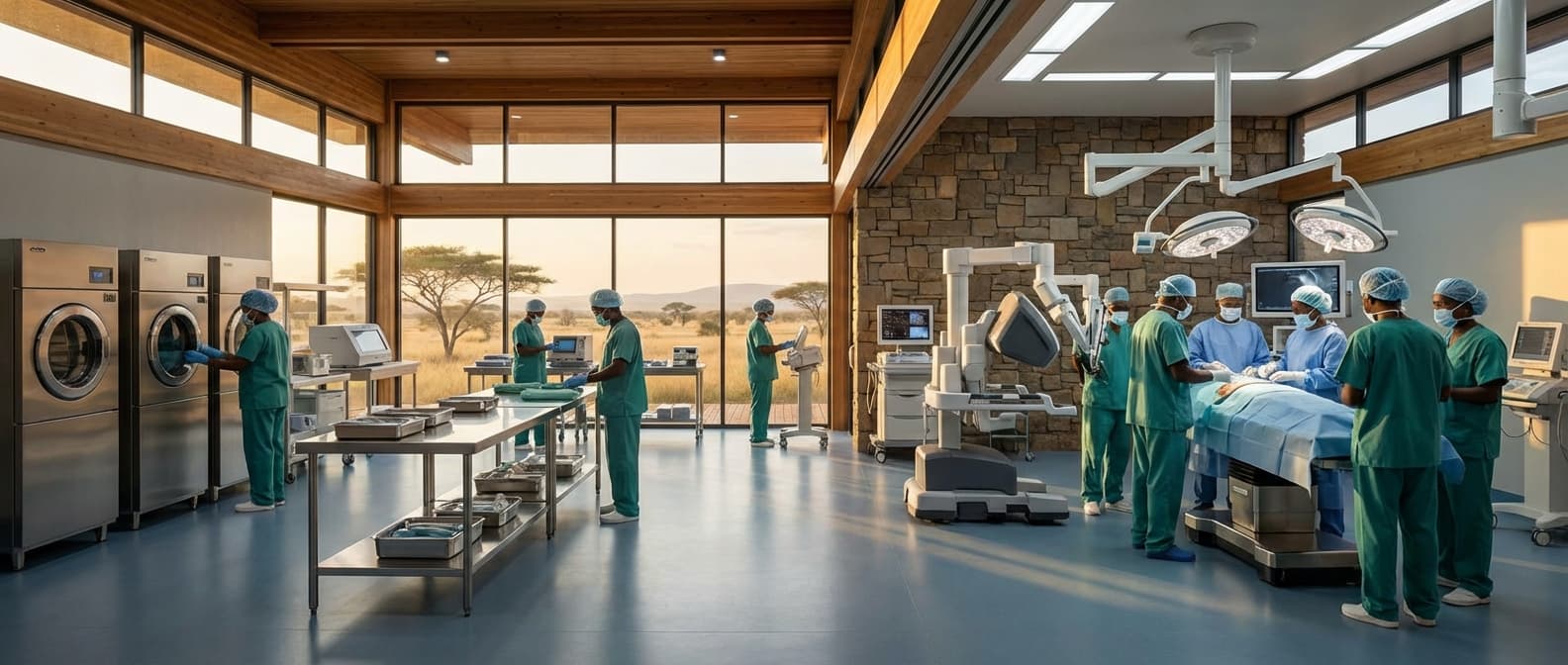
CSSD Design & Validation in Namibia
Engineering Excellence & Technical Support
CSSD workflow design, validation and process development High-standard technical execution following OEM protocols and local regulatory frameworks.
Advanced Sterilization Process Design
Leveraging state-of-the-art sterilization technologies and process optimization for CSSD facilities in Namibia, ensuring the highest levels of infection control and instrument safety in compliance with international standards.
Comprehensive Validation & Qualification Services
Providing expert validation and qualification of CSSD equipment and processes, including Installation Qualification (IQ), Operational Qualification (OQ), and Performance Qualification (PQ), to guarantee efficacy and regulatory adherence in Namibian healthcare settings.
Optimized CSSD Workflow & Layout Design
Designing efficient and ergonomic CSSD workflows and facility layouts tailored to the specific needs and resource availability in Namibia, maximizing throughput, minimizing contamination risks, and enhancing staff productivity.
What Is Cssd Design & Validation In Namibia?
Central Sterile Services Department (CSSD) design and validation in Namibia refers to the comprehensive process of planning, engineering, and verifying the optimal layout, equipment selection, workflow, and operational protocols for a CSSD facility. This ensures the safe, efficient, and compliant reprocessing of reusable medical devices to prevent surgical site infections (SSIs) and healthcare-associated infections (HAIs). It encompasses all stages from conceptualization and architectural integration to the final commissioning and ongoing performance monitoring of sterilization processes and associated infrastructure.
| Who Needs CSSD Design & Validation in Namibia? | Typical Use Cases & Scenarios |
|---|---|
| Public and Private Hospitals (all sizes) | Construction of new hospital wings or dedicated CSSD facilities. Renovation or expansion of existing CSSD departments to meet increased demand or improve efficiency. Upgrading of sterilization equipment and processes to comply with evolving standards. Addressing identified issues related to infection control and SSI rates. Establishing new healthcare facilities requiring a functional CSSD. |
| Specialized Clinics (e.g., surgical centers, dental clinics, ophthalmology clinics) | Setting up or optimizing reprocessing capabilities for reusable instruments. Ensuring compliance with specific instrument reprocessing requirements. Managing high volumes of instrument turnover. |
| Government Health Ministries & Regulatory Bodies | Developing national guidelines and standards for CSSD operations. Auditing and inspecting healthcare facilities for compliance. Ensuring public health and patient safety through standardized sterilization practices. |
| Medical Device Manufacturers & Suppliers | Providing technical expertise and solutions for CSSD design and equipment integration. Ensuring their products are compatible with validated reprocessing cycles. |
Key Components of CSSD Design & Validation:
- Facility Layout & Workflow Optimization: Designing a unidirectional flow to prevent cross-contamination between soiled, clean, and sterile areas. This includes spatial requirements for receiving, decontamination, inspection, assembly, sterilization, sterile storage, and distribution.
- Equipment Specification & Integration: Selecting and integrating appropriate sterilization equipment (e.g., steam sterilizers, low-temperature sterilizers), washer-disinfectors, ultrasonic cleaners, drying cabinets, and packaging systems, considering capacity, efficacy, and regulatory compliance.
- Environmental Control Systems: Designing and validating HVAC systems to maintain appropriate air pressure differentials, temperature, and humidity for each functional area, minimizing airborne contamination.
- Water Quality Management: Specifying and validating water treatment systems (e.g., reverse osmosis, deionization) to ensure the supply of high-purity water required for decontamination and sterilization processes.
- Material Handling & Storage Solutions: Designing efficient and compliant storage solutions for both sterile and non-sterile supplies, including shelving, carts, and environmental monitoring within sterile storage areas.
- Process Validation: Developing and executing protocols to validate the efficacy of cleaning, disinfection, and sterilization processes according to international standards (e.g., ISO 17665, ISO 11135, AAMI ST series). This involves biological and chemical indicators, process monitoring, and record-keeping.
- Equipment Qualification (IQ/OQ/PQ): Performing Installation Qualification (IQ), Operational Qualification (OQ), and Performance Qualification (PQ) for all critical equipment to ensure it functions as intended and meets performance specifications.
- Staff Training & Competency Assessment: Developing training programs and assessing staff competency in CSSD procedures, protocols, and equipment operation.
- Regulatory Compliance & Documentation: Ensuring adherence to Namibian healthcare regulations, international standards (ISO, AAMI), and best practices, with comprehensive documentation of all design, validation, and operational procedures.
Who Needs Cssd Design & Validation In Namibia?
In Namibia, the critical need for CSSD (Central Sterile Supply Department) design and validation is paramount for ensuring patient safety and operational efficiency within healthcare facilities. Proper CSSD design dictates workflows, equipment placement, and infection control measures, while validation confirms that these processes consistently meet stringent sterilization standards. This is not a luxury but a necessity for any institution committed to high-quality healthcare delivery.
| Customer Type | Key Departments Involved | Specific Needs/Benefits |
|---|---|---|
| Public Hospitals | Infection Control, Surgical Departments, Pharmacy, Nursing Administration, Engineering/Maintenance | Ensuring compliance with national health standards, optimizing space for high patient volume, cost-effective solutions for large-scale sterilization, training for staff on best practices. |
| Private Hospitals & Clinics | Administration, Surgical Teams, Nursing Management, Quality Assurance, Biomedical Engineering | Enhancing reputation for patient safety and quality, meeting international accreditation standards, efficient workflow for specialized procedures, investment in state-of-the-art technology. |
| Surgical Centers / Day Clinics | Surgeons, Anesthesiologists, Nurses, Clinic Managers | Streamlined instrument turnaround for high-frequency procedures, compact and efficient design for limited space, ensuring rapid and reliable sterilization for same-day surgeries. |
| Dental Clinics | Dentists, Dental Assistants, Practice Managers | Safe and effective sterilization of dental instruments, compliance with dental health regulations, space-saving design for smaller practices, user-friendly equipment. |
| Veterinary Clinics | Veterinarians, Veterinary Nurses, Clinic Owners | Sterilization of surgical instruments for animals, preventing cross-contamination between animals, ensuring hygiene for procedures, cost-effective solutions for specialized equipment. |
| Medical Device Manufacturers | Quality Control, R&D, Regulatory Affairs | Validation of sterilization processes for medical devices, ensuring product safety and marketability, meeting regulatory requirements for sterilization claims, testing and certification services. |
Target Customers & Departments for CSSD Design & Validation in Namibia
- Hospitals (Public & Private)
- Surgical Centers / Day Clinics
- Dental Clinics (requiring sterilization)
- Veterinary Clinics (requiring sterilization)
- Medical Device Manufacturers (for sterilization validation services)
Cssd Design & Validation Process In Namibia
The design and validation process for Central Sterile Services Departments (CSSDs) in Namibia, while adhering to international best practices and regulatory requirements, involves a structured workflow to ensure optimal functionality, safety, and compliance. This process typically begins with an initial inquiry from a healthcare facility and culminates in a fully validated and operational CSSD.
| Phase | Key Activities | Deliverables | Responsible Parties |
|---|---|---|---|
| Healthcare facility identifies the need for a new or upgraded CSSD. Initial discussions to understand scope, volume of work, budget, and existing infrastructure limitations. | Needs assessment report, preliminary scope of work. | Healthcare Facility Management, CSSD Manager (if existing), Potential Consultants/Designers. |
| Development of preliminary layout options, flow diagrams, and identification of major equipment. Assessment of technical feasibility, regulatory compliance, and estimated project costs. | Conceptual design drawings, preliminary equipment list, feasibility report, preliminary budget. | Design Consultants/Architects, Mechanical & Electrical Engineers, CSSD Specialists. |
| Creation of detailed architectural, mechanical, electrical, and plumbing (MEP) drawings. Development of comprehensive specifications for all equipment, materials, and finishes. Procurement planning. | Detailed design drawings (all disciplines), equipment specifications, Bill of Quantities (BOQ), procurement strategy. | Design Consultants/Architects, MEP Engineers, CSSD Specialists, Procurement Specialists. |
| Issuance of tender documents to qualified construction and equipment suppliers. Evaluation of bids and selection of preferred contractors based on technical capability, experience, and cost. | Tender documents, bid evaluations, awarded contracts. | Healthcare Facility Procurement Department, Design Consultants, Legal Advisors. |
| Site preparation, construction of the CSSD facility, and installation of all MEP services. Procurement and installation of CSSD equipment (sterilizers, washer-disinfectors, etc.) according to design specifications. | Completed building structure, installed MEP systems, installed equipment. | Main Contractor, Sub-contractors (MEP, specialized trades), Equipment Suppliers/Installers. |
| Pre-operational checks of all installed systems and equipment. Functional testing of individual components and systems to ensure they operate as intended. | Commissioning reports, punch lists, system operational verification. | Equipment Suppliers, MEP Engineers, CSSD Specialists, Facility Maintenance Team. |
| Installation Qualification (IQ): Verifying that equipment is installed correctly according to manufacturer's specifications and design requirements. Operational Qualification (OQ): Testing the equipment and systems to confirm they operate within defined parameters. Performance Qualification (PQ): Challenging the entire CSSD process with typical loads to demonstrate consistent and effective sterilization and disinfection. | IQ, OQ, and PQ protocols and reports, validation certificates. | Validation Specialists, CSSD Staff, Microbiology/Quality Assurance. |
| Comprehensive training for CSSD staff on equipment operation, maintenance, infection control protocols, and quality management systems. Formal handover of the operational CSSD facility and associated documentation. | Training materials, training attendance records, operational manuals, signed handover certificate. | Equipment Suppliers, CSSD Specialists, CSSD Manager, Facility Management. |
| Routine performance monitoring of equipment, regular preventative maintenance, and adherence to established quality control procedures. Periodic revalidation and audits. | Maintenance logs, performance reports, audit findings, CAPA (Corrective and Preventive Actions). | CSSD Staff, Facility Maintenance Department, Quality Assurance. |
CSSD Design & Validation Process Workflow in Namibia
- Initial Inquiry & Needs Assessment
- Conceptual Design & Feasibility Study
- Detailed Design & Specification Development
- Tendering & Contractor Selection
- Construction & Installation
- Commissioning
- Validation (IQ, OQ, PQ)
- Training & Handover
- Ongoing Monitoring & Maintenance
Cssd Design & Validation Cost In Namibia
Designing and validating a Central Sterile Supply Department (CSSD) in Namibia involves a multifaceted cost structure influenced by several key factors. These costs are not fixed and can vary significantly based on the scale of the facility, the complexity of the services offered, the chosen equipment, and the specific validation protocols implemented. Understanding these pricing drivers is crucial for accurate budgeting and successful project execution.
Key Pricing Factors for CSSD Design & Validation in Namibia:
- Facility Size and Scope: The overall footprint of the CSSD, including the number of sterile processing zones (decontamination, assembly, sterilization, storage), the volume of instruments processed, and the types of procedures supported, directly impacts design complexity and validation effort. Larger, more comprehensive CSSDs naturally incur higher costs.
- Equipment Selection: The choice of sterilization equipment (e.g., autoclaves, low-temperature sterilizers), washer-disinfectors, ultrasonic cleaners, packaging machines, and other ancillary devices is a major cost determinant. High-end, technologically advanced equipment typically comes with a higher upfront purchase price and potentially more complex validation requirements.
- Architectural and Engineering Design Fees: Professional services for architectural planning, mechanical, electrical, and plumbing (MEP) engineering, and specialized CSSD workflow design are essential. Fees are usually calculated as a percentage of the total construction or equipment cost, or on an hourly/project basis.
- Construction and Renovation Costs: If a new facility is being built or an existing space is being renovated to meet CSSD standards, construction materials, labor, and compliance with building codes will contribute significantly to the overall expense.
- Validation and Testing Services: This is a critical phase. Costs include the fees for specialized validation engineers or companies to perform Installation Qualification (IQ), Operational Qualification (OQ), and Performance Qualification (PQ) for all equipment. This often involves calibration, testing with biological indicators, chemical indicators, and process challenge devices (PCDs).
- Regulatory Compliance and Certification: Adherence to Namibian health regulations and potentially international standards (e.g., ISO 13485) may require specific documentation, audits, and certifications, which can incur associated fees.
- Training and Personnel Development: While not strictly a design/validation cost, initial training for CSSD staff on new equipment and processes is often bundled or considered part of the project's overall investment.
- Location and Infrastructure: The specific location within Namibia can influence construction and labor costs. Access to reliable utilities (power, water, HVAC) is also a consideration, as upgrades might be necessary.
Estimated Cost Ranges in Namibian Dollars (NAD):
It is challenging to provide precise figures without specific project details. However, based on general industry benchmarks and considering the Namibian economic context, the following ranges are indicative. These figures are for the design and validation phases only and do not include full construction or equipment procurement costs, which would be significantly higher.
- Small to Medium-Sized CSSD (e.g., for a smaller clinic or hospital ward):
* **Design Fees:** NAD 50,000 - NAD 200,000
* **Validation & Testing Fees:** NAD 75,000 - NAD 250,000
* **Total Estimated Range:** NAD 125,000 - NAD 450,000
- Medium to Large-Sized CSSD (e.g., for a regional hospital or a larger medical facility):
* **Design Fees:** NAD 200,000 - NAD 750,000
* **Validation & Testing Fees:** NAD 250,000 - NAD 1,000,000
* **Total Estimated Range:** NAD 450,000 - NAD 1,750,000
- Very Large or Specialized CSSD (e.g., for a major national referral hospital or a facility with highly specialized sterilization needs):
* **Design Fees:** NAD 750,000+ (potentially several million NAD)
* **Validation & Testing Fees:** NAD 1,000,000+ (potentially several million NAD)
* **Total Estimated Range:** NAD 1,750,000 - NAD 5,000,000+ (excluding construction and equipment)
Important Considerations:
- These ranges are rough estimates. It is highly recommended to obtain detailed quotes from multiple qualified architectural firms, engineering consultants, and specialized CSSD validation service providers operating in or familiar with the Namibian market.
- The cost of equipment itself is a separate, substantial investment that will likely be the largest component of the overall CSSD project budget. Validation costs are directly tied to the type and number of equipment pieces.
- Ongoing maintenance, calibration, and re-validation costs should also be factored into the long-term operational budget.
| Cost Category | Estimated Range (NAD) | Notes |
|---|---|---|
| Architectural & Engineering Design Fees | NAD 50,000 - NAD 750,000+ | Varies by project complexity and consultancy rates. |
| Validation & Testing Services (IQ, OQ, PQ) | NAD 75,000 - NAD 1,000,000+ | Depends on the number and type of equipment, and the validation firm's scope. |
| Specialized HVAC & Utility Design/Modification | NAD 30,000 - NAD 300,000+ | Crucial for sterile environments; costs can escalate with complex requirements. |
| Documentation & Regulatory Support | NAD 10,000 - NAD 100,000 | Fees for developing SOPs, risk assessments, and compliance checks. |
| Project Management (Design & Validation Phase) | NAD 20,000 - NAD 200,000 | If dedicated project management is outsourced. |
Factors Influencing CSSD Design & Validation Costs in Namibia
- Facility Size and Scope of Services
- Type and Quantity of Sterilization Equipment
- Architectural and Engineering Design Complexity
- Construction/Renovation Requirements
- Scope and Rigor of Validation Protocols (IQ, OQ, PQ)
- Selection of Validation Service Providers
- Regulatory Compliance and Certification Needs
- Need for Specialized HVAC and Utility Systems
- Training and Commissioning Support
- Geographic Location within Namibia
Affordable Cssd Design & Validation Options
Designing and validating a Central Sterile Services Department (CSSD) is crucial for infection control and patient safety. While often perceived as a significant investment, there are numerous affordable options and cost-saving strategies available. This document outlines value bundles and actionable cost-saving measures for CSSD design and validation.
| Cost-Saving Strategy | Description | Benefit |
|---|---|---|
| Modular Design & Pre-fabrication | Utilize modular components or pre-fabricated units for certain areas of the CSSD. This can speed up construction and reduce on-site labor costs. | Faster project completion, reduced on-site disruption, potentially lower labor expenses. |
| Prioritize Workflow Efficiency | Invest time in optimizing the layout for a smooth, linear workflow. This minimizes cross-contamination risks and reduces staff movement, indirectly saving time and resources. | Improved operational efficiency, reduced risk of errors, better staff productivity. |
| Phased Equipment Upgrades | Instead of replacing all equipment at once, identify critical needs and plan for phased upgrades or replacements over time. Consider reliable refurbished equipment for non-critical areas. | Spreads capital expenditure, allows for budgeting flexibility, leverages existing functional equipment. |
| Standardized Equipment Selection | Choose a limited range of standardized equipment from fewer manufacturers. This simplifies maintenance, training, and spare parts inventory. | Reduced training burden, streamlined maintenance, lower spare parts costs. |
| Leverage In-House Expertise | Utilize internal engineering, IT, or project management staff where possible for planning and oversight, rather than outsourcing every aspect. | Reduced consulting fees, better understanding of organizational needs. |
| Lean Validation Principles | Focus validation efforts on critical parameters and processes. Utilize risk assessment to determine the scope of validation, avoiding unnecessary testing. | Reduced validation time and cost, efficient use of resources, adherence to regulatory requirements. |
| Consolidated Purchasing & Bundled Services | Negotiate with suppliers for bundled equipment and service contracts. Explore group purchasing organizations (GPOs) for better pricing on equipment and consumables. | Bulk discounts, reduced administrative overhead, potentially longer warranty periods. |
| Invest in Staff Training & Cross-Training | Well-trained staff are more efficient and less prone to errors, leading to fewer reprocessing failures and reduced waste. Cross-training improves flexibility and coverage. | Increased staff competence, reduced reprocessing errors, improved operational resilience. |
| Energy-Efficient Equipment | While initial costs might be slightly higher, opt for energy-efficient equipment to reduce long-term operational costs (electricity, water). | Lower utility bills, reduced environmental impact. |
| Digital Documentation & Record Keeping | Implement digital systems for tracking and record-keeping. This reduces paper usage, improves accessibility, and streamlines audits. | Reduced material costs (paper, printing), improved data management, enhanced audit readiness. |
Value Bundles for Affordable CSSD Design & Validation
- {"title":"Essential Design & Planning Bundle","description":"Focuses on core functional layout, workflow optimization, and essential equipment selection. Prioritizes efficient space utilization and minimal disruption during implementation."}
- {"title":"Validation & Compliance Bundle","description":"Includes essential validation protocols, documentation support, and training for critical processes like sterilization cycles and equipment performance testing. Ensures regulatory adherence without overspending on extensive, non-critical validation steps."}
- {"title":"Phased Implementation Bundle","description":"Allows for a staged approach to CSSD upgrades or new builds. This bundle includes planning for future expansion and prioritizing immediate needs, spreading costs over a longer period."}
- {"title":"Technology Integration Lite Bundle","description":"Incorporates essential, cost-effective tracking and management systems (e.g., basic barcode scanning, simplified inventory) to enhance efficiency without the expense of highly advanced, integrated IT solutions."}
- {"title":"Training & Competency Bundle","description":"Provides foundational training for CSSD staff on best practices, safety procedures, and basic equipment operation, ensuring a competent workforce from the outset."}
Verified Providers In Namibia
When seeking healthcare in Namibia, identifying verified providers is paramount to ensuring quality care and peace of mind. Franance Health stands out as a beacon of trust and excellence, rigorously vetting its network to offer unparalleled medical services. This commitment to verification translates directly into superior patient outcomes and a seamless healthcare experience. Discover why Franance Health credentials signify the best choice for your health needs in Namibia.
| Provider Type | Verification Criteria | Franance Health Assurance |
|---|---|---|
| Doctors (General Practitioners & Specialists) | Valid Medical Council registration, current practicing certificate, specialization credentials, peer reviews. | Access to experienced and reputable medical professionals across various disciplines. |
| Hospitals & Clinics | Accreditation status (e.g., by recognized health bodies), compliance with national health regulations, patient safety protocols, facility quality. | Ensured access to well-equipped and safe healthcare facilities. |
| Diagnostic Laboratories | Accreditation by national or international bodies, quality control measures, qualified laboratory personnel. | Reliable and accurate diagnostic testing services. |
| Pharmacies | Valid operating license, pharmacist registration, adherence to drug dispensing regulations, quality of medicines. | Trustworthy access to essential medications and pharmaceutical advice. |
Why Franance Health Credentials Matter
- Rigorous Vetting Process: Franance Health employs a multi-stage verification process for all its healthcare partners.
- Qualified Professionals: We ensure all listed providers possess current and valid medical licenses and certifications.
- Reputation and Track Record: Our network includes providers with proven track records of excellent patient care and ethical practice.
- Specialized Expertise: We identify and highlight providers with specific specializations to match your unique medical requirements.
- Patient-Centric Approach: Franance Health prioritizes providers who demonstrate a strong commitment to patient well-being and satisfaction.
- Continuous Monitoring: Our verification is not a one-time event; we conduct ongoing assessments to maintain the highest standards.
Scope Of Work For Cssd Design & Validation
This Scope of Work (SOW) outlines the design and validation activities required for a Central Sterile Supply Department (CSSD). It details the technical deliverables and standard specifications to ensure a functional, efficient, and compliant CSSD operation.
| Stage | Key Activities | Technical Deliverables | Standard Specifications / Compliance |
|---|---|---|---|
| Phase 1: Needs Assessment & Conceptual Design | Define service scope, instrument reprocessing needs, workflow analysis, space requirements, budget estimation. | Functional Program Document, Conceptual Layout Drawings, preliminary equipment list, workflow diagrams. | ISO 13485 (Quality Management for Medical Devices), HTM 01-01 (Decontamination of Reusable Medical Devices), local health authority regulations. |
| Phase 2: Detailed Design & Engineering | Develop detailed architectural, mechanical, electrical, and plumbing (MEP) designs. Specify finishes, lighting, ventilation, and waste management systems. Finalize equipment specifications. | Detailed Architectural Drawings, MEP Drawings, Equipment Schedules, Bill of Quantities (BOQ), Material Specifications, 3D Renderings (optional). | Building Codes, ASHRAE Standards (Ventilation), NFPA Standards (Electrical), local environmental regulations, manufacturer's installation guidelines. |
| Phase 3: Equipment Procurement & Installation Support | Assist in tender document preparation, vendor evaluation, and provide technical oversight during equipment installation. | Technical Evaluation Reports, Site Inspection Reports, Installation Checklists. | CE Marking, FDA Approval (if applicable), relevant international standards for sterilization equipment (e.g., EN 285, ISO 11135, ISO 17665), manufacturer warranty requirements. |
| Phase 4: Commissioning & Validation | Perform IQ (Installation Qualification), OQ (Operational Qualification), and PQ (Performance Qualification) for all equipment and processes. Develop standard operating procedures (SOPs). | IQ/OQ/PQ Protocols and Reports, Validation Master Plan, SOPs for all CSSD processes (receiving, cleaning, disinfection, sterilization, storage, distribution). | ISO 17665 (Sterilization of healthcare products – Moist heat), ISO 11135 (Sterilization of healthcare products – Ethylene oxide), ISO 14937 (Sterilization of health care products – General requirements for characterization of a sterilant and for the development, validation and routine control of a sterilization process for medical devices), AAMI ST series (e.g., ST55 for washer-disinfectors). |
| Phase 5: Handover & Training | Provide comprehensive training to CSSD staff on equipment operation, maintenance, and SOPs. Finalize all project documentation. | Training Manuals, As-Built Drawings, O&M Manuals, Project Close-out Report. | Continuing education requirements for CSSD professionals, manufacturer's training materials. |
Key Stages and Deliverables
- Phase 1: Needs Assessment & Conceptual Design
- Phase 2: Detailed Design & Engineering
- Phase 3: Equipment Procurement & Installation Support
- Phase 4: Commissioning & Validation
- Phase 5: Handover & Training
Service Level Agreement For Cssd Design & Validation
This Service Level Agreement (SLA) outlines the performance expectations and guarantees for the Design and Validation services provided by [Your Company Name] for Central Sterile Supply Department (CSSD) facilities. It defines the agreed-upon response times for service requests and the guaranteed uptime for critical system components during the validation phase.
| Service Category | Response Time Guarantee | Uptime Guarantee (During Validation) |
|---|---|---|
| Critical Design Review/Clarification Request | 4 Business Hours | N/A |
| Standard Design Query/Information Request | 8 Business Hours | N/A |
| Initial Response to Validation Issue (e.g., equipment malfunction) | 2 Business Hours | N/A |
| On-site Technician Availability for Critical Validation Issues | Within 24 Business Hours (for issues impacting validation schedule) | N/A |
| Validation Software/System Availability (if provided by [Your Company Name]) | N/A | 99.5% |
| Access to Validation Documentation Portal (if applicable) | N/A | 99.9% |
Key Service Components
- CSSD Design Consultation & Review
- Sterilization Equipment Validation (IQ/OQ/PQ)
- Process Flow and Layout Optimization
- Documentation and Reporting
- Troubleshooting and Support during Validation
Frequently Asked Questions

Ready when you are
Let's scope your CSSD Design & Validation in Namibia project in Namibia.

Scaling healthcare logistics and technical systems across the entire continent.