
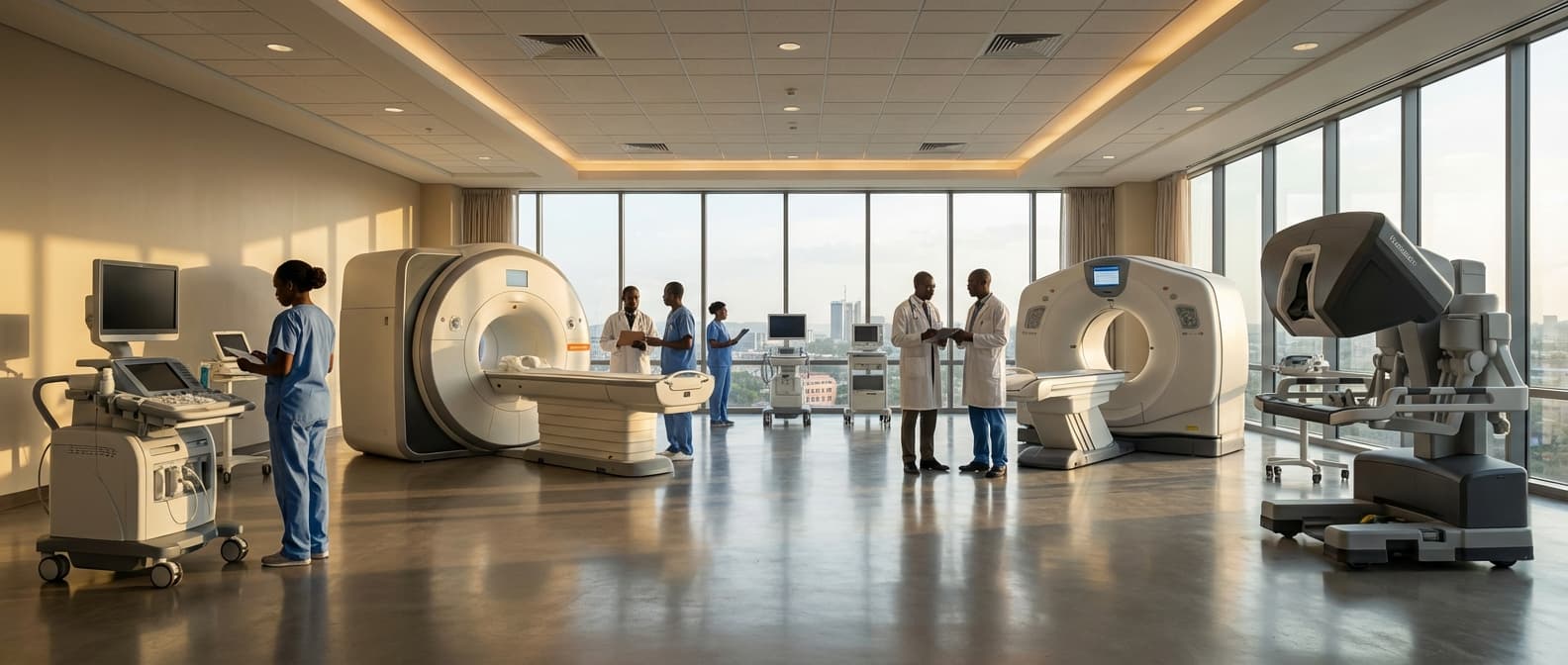
Renal Solutions in Namibia
Engineering Excellence & Technical Support
Complete dialysis systems and renal care equipment designed to deliver safe, effective, and patient-centered kidney treatment. High-standard technical execution following OEM protocols and local regulatory frameworks.
State-of-the-Art Dialysis Technology
Renal Solutions Namibia is equipped with the latest generation of dialysis machines, ensuring optimal blood purification and patient comfort. Our advanced technology allows for personalized treatment regimens tailored to each patient's unique needs, improving outcomes and quality of life.
Advanced Water Treatment Systems
We prioritize patient safety through our multi-stage water purification systems. These systems meticulously remove impurities, endotoxins, and micro-organisms from the water used in dialysis, exceeding international standards and guaranteeing the highest quality dialysis fluid.
Remote Patient Monitoring Capabilities
Renal Solutions Namibia is pioneering remote patient monitoring solutions. This allows for continuous data collection and analysis, enabling early detection of potential complications and facilitating proactive adjustments to treatment plans, ensuring patients receive timely and effective care, even from a distance.
What Is Renal Solutions In Namibia?
Renal Solutions in Namibia refers to a spectrum of medical services and products designed to manage, treat, and support individuals suffering from kidney disease (renal failure). These solutions aim to restore or maintain kidney function, mitigate disease progression, and improve the quality of life for patients. The scope of services can range from diagnostic evaluations to long-term renal replacement therapies and associated care.
| Service/Product | Description | Target Population | Typical Use Cases |
|---|---|---|---|
| Hemodialysis | Extracorporeal blood purification to remove waste products and excess fluid from the blood. | Patients with End-Stage Renal Disease (ESRD) requiring urgent or chronic kidney support. | Acute kidney injury (AKI), ESRD not yet on transplantation or peritoneal dialysis, acute drug overdose. |
| Peritoneal Dialysis | Intraperitoneal instillation of dialysate to absorb waste products and excess fluid from the blood across the peritoneal membrane. | Patients with ESRD suitable for home-based therapy, those with specific contraindications to hemodialysis, or for patient preference. | ESRD requiring continuous, flexible dialysis, patients with cardiovascular instability, or those seeking greater autonomy in their treatment regimen. |
| Kidney Transplantation | Surgical implantation of a donor kidney into a recipient with ESRD. | Patients with ESRD who are medically suitable and have a compatible donor (living or deceased). | Long-term solution for ESRD offering improved survival and quality of life compared to chronic dialysis. |
| Conservative Renal Management | Non-dialytic management focused on symptom control, slowing disease progression, and preparing for RRT or end-of-life care. | Patients with chronic kidney disease (CKD) who are not candidates for RRT, have a limited life expectancy, or choose not to pursue RRT. | Early to moderate CKD, advanced CKD with comorbidities precluding RRT, advanced age, or patient preference. |
| Pharmaceuticals and Consumables | Medications to manage complications of kidney disease and supplies for dialysis procedures. | All patients receiving renal care, from early CKD to those on RRT. | Treatment of hypertension, anemia, mineral and bone disorders, immunosuppression post-transplant, dialyzers, tubing, dialysate solutions. |
Key Components of Renal Solutions in Namibia
- Diagnostic Services: Early detection and accurate staging of kidney disease through laboratory tests (e.g., blood urea nitrogen, creatinine, glomerular filtration rate estimation), urinalysis, and imaging studies (ultrasound, CT scans).
- Medical Management: Pharmacological interventions for managing hypertension, diabetes, anemia, mineral and bone disorders, and fluid/electrolyte imbalances – all common comorbidities of renal disease.
- Renal Replacement Therapies (RRT): Interventions to artificially perform the filtering functions of failing kidneys.
- Patient Education and Support: Providing information and resources to patients and their families regarding disease management, dietary modifications, medication adherence, and lifestyle adjustments.
- Specialized Nephrology Care: Consultation and ongoing management by nephrologists (kidney specialists) and a multidisciplinary healthcare team including nurses, dietitians, and social workers.
Who Needs Renal Solutions In Namibia?
In Namibia, a growing demand for specialized renal services highlights the critical need for comprehensive Renal Solutions. These solutions cater to a diverse range of individuals and institutions grappling with kidney-related diseases and conditions. The focus is on providing accessible, high-quality care, advanced treatment options, and supportive services to improve the lives of those affected by renal ailments.
| Target Customer Group | Key Departments/Units Involved |
|---|---|
| Individual Patients | Nephrology Departments, Dialysis Centers, Urology Departments, General Wards. |
| Healthcare Professionals | Internal Medicine, Family Medicine, General Surgery, Emergency Medicine. |
| Hospitals and Clinics | Nephrology, Urology, Internal Medicine, Intensive Care Units (ICUs), Emergency Departments, Outpatient Clinics. |
| Government Health Ministries and Agencies | Public Health Departments, Curative Services, National Health Insurance Schemes (if applicable), Infrastructure Development Units. |
| NGOs and Charities | Patient Support Services, Health Education Programs, Community Health Initiatives, Fundraising and Advocacy Departments. |
| Research and Academic Institutions | Nephrology Research Units, Medical Schools (Internal Medicine, Nephrology training programs), Diagnostic Laboratories. |
Target Customers and Departments for Renal Solutions in Namibia
- {"title":"Individual Patients","description":"Namibians suffering from various stages of Chronic Kidney Disease (CKD), Acute Kidney Injury (AKI), end-stage renal disease (ESRD), and other kidney-related complications."}
- {"title":"Healthcare Professionals","description":"General practitioners, physicians, and specialists who encounter patients with suspected or diagnosed kidney problems and require referral or advanced diagnostic support."}
- {"title":"Hospitals and Clinics","description":"Both public and private healthcare facilities that need to augment their existing renal care capabilities, establish new dialysis units, or access specialized equipment and expertise."}
- {"title":"Government Health Ministries and Agencies","description":"Entities responsible for public health policy, infrastructure development, and ensuring equitable access to essential medical services, including renal care."}
- {"title":"Non-Governmental Organizations (NGOs) and Charities","description":"Organizations focused on health advocacy, patient support, and community outreach, particularly those involved in chronic disease management and patient welfare."}
- {"title":"Research and Academic Institutions","description":"Universities and research centers involved in nephrology studies, medical training, and the development of new diagnostic and therapeutic approaches."}
Renal Solutions Process In Namibia
The Renal Solutions process in Namibia is designed to provide comprehensive kidney care services, from initial patient inquiry to the successful execution of treatment plans. This workflow ensures a streamlined and efficient experience for patients seeking dialysis, transplant evaluations, and related nephrological support. The process typically begins with a patient or referring physician initiating contact, leading through a series of assessments, consultations, and logistical arrangements before treatment commencement. Throughout each stage, communication and coordination are key to achieving optimal patient outcomes.
| Stage | Description | Key Activities | Responsible Parties | Expected Outcome |
|---|---|---|---|---|
| Inquiry & Initial Contact | The first point of engagement where a patient or referring medical professional expresses interest in Renal Solutions' services. | Phone call, email, in-person visit, referral from doctor. | Patient, Family Member, Referring Physician, Renal Solutions Administrative Staff. | Initial understanding of patient's needs and provision of basic information about services. |
| Patient Assessment & Screening | A thorough evaluation to determine the patient's suitability for specific renal treatments and to gather necessary medical history. | Medical history review, physical examination, laboratory tests (blood, urine), imaging scans (ultrasound, CT). | Nephrologist, Renal Nurses, Medical Technicians, Renal Solutions Medical Staff. | Identification of kidney condition stage, overall health status, and eligibility for treatment options. |
| Consultation & Treatment Planning | Detailed discussion of findings, treatment options, risks, benefits, and development of a personalized care plan. | Consultation with nephrologist, discussion of dialysis modalities (hemodialysis, peritoneal dialysis), transplant evaluation process, lifestyle adjustments. | Nephrologist, Patient, Family Member, Renal Solutions Healthcare Team. | Informed patient consent, a clear understanding of the treatment plan, and establishment of patient goals. |
| Authorization & Logistics | Securing necessary approvals and arranging the practical aspects for treatment commencement. | Liaising with medical aid/insurance providers, obtaining referrals if needed, scheduling initial appointments, transportation arrangements (if applicable). | Renal Solutions Administrative Staff, Patient, Medical Aid/Insurance Providers. | Approved treatment plan, confirmed appointments, and logistical arrangements in place for smooth transition to treatment. |
| Treatment Initiation & Ongoing Care | The commencement of the prescribed renal treatment and continuous provision of care. | Initiation of dialysis sessions, administration of medications, post-treatment recovery, regular monitoring of vital signs and lab results. | Renal Nurses, Nephrologist, Dialysis Technicians, Patient. | Effective management of kidney disease symptoms, stabilization of patient's condition, and progress towards treatment objectives. |
| Follow-up & Monitoring | Regular check-ups and assessments to ensure the effectiveness of the treatment and to manage any potential complications. | Scheduled nephrology appointments, ongoing lab monitoring, adjustment of treatment plan as needed, patient education and support. | Nephrologist, Renal Nurses, Patient. | Long-term management of kidney health, prevention of complications, and optimization of patient quality of life. |
Renal Solutions Process Workflow in Namibia
- Inquiry & Initial Contact
- Patient Assessment & Screening
- Consultation & Treatment Planning
- Authorization & Logistics
- Treatment Initiation & Ongoing Care
- Follow-up & Monitoring
Renal Solutions Cost In Namibia
Renal solutions, essential for dialysis patients, represent a significant ongoing cost for individuals and healthcare providers in Namibia. The pricing of these solutions is influenced by a variety of factors, leading to a range of costs within the local currency, the Namibian Dollar (NAD). Understanding these factors is crucial for patients, families, and the healthcare system to manage and budget for this vital treatment. The cost is not static and can fluctuate based on several key determinants.
| Dialysis Type | Typical Solution Type | Estimated Price Range (NAD) |
|---|---|---|
| Hemodialysis | Dialysate concentrate (prepared on-site) | NAD 150 - NAD 300 per dialysis session (for concentrate mix for a single session) |
| Hemodialysis | Pre-mixed dialysate bags (less common for routine use) | NAD 300 - NAD 600 per bag (variable, depends on volume and formulation) |
| Peritoneal Dialysis (PD) | Peritoneal Dialysis Solutions (various concentrations of glucose, electrolyte balance) | NAD 250 - NAD 500 per 2-liter bag |
| Peritoneal Dialysis (PD) | Standard daily exchange volume (assuming 4-6 exchanges per day) | NAD 1,000 - NAD 3,000 per day |
Factors Influencing Renal Solution Costs in Namibia
- Type of Dialysis: Hemodialysis and peritoneal dialysis utilize different types of solutions with distinct compositions and manufacturing complexities, impacting their price.
- Brand and Manufacturer: Established international brands often come with a premium due to brand recognition, quality control, and research and development investments, compared to generic or local alternatives (if available).
- Volume and Packaging: Solutions are typically sold in specific volumes (e.g., liters for peritoneal dialysis, bags for hemodialysis). Larger volumes or specialized packaging might offer slight cost savings per unit but represent a higher upfront expenditure.
- Importation and Logistics: As Namibia relies heavily on imported medical supplies, costs are significantly affected by international shipping, customs duties, tariffs, and local distribution markups.
- Regulatory Compliance and Quality Standards: Adherence to stringent international and national quality and safety standards adds to the manufacturing and verification costs of renal solutions.
- Pharmacy or Supplier Markups: Retail pharmacies or medical suppliers add their own margins to the wholesale price, which can vary between different establishments.
- Insurance Coverage and Subsidies: The extent to which medical insurance or government subsidies cover renal solutions directly impacts the out-of-pocket expense for patients.
- Availability and Market Competition: Limited availability or lack of strong market competition can lead to higher prices, whereas a more competitive market might drive prices down.
Affordable Renal Solutions Options
Navigating the world of renal care can feel overwhelming, especially when considering costs. Fortunately, numerous affordable renal solutions are available, focusing on maximizing value and minimizing expenses. Understanding 'value bundles' and implementing smart cost-saving strategies are key to managing renal health effectively without breaking the bank. Value bundles often combine various services or products at a reduced overall price, offering convenience and predictability. Cost-saving strategies, on the other hand, empower individuals to make informed choices and leverage available resources to lower their out-of-pocket expenses.
| Cost-Saving Strategy | Description | Potential Savings Area |
|---|---|---|
| Generic Medications | Opting for generic versions of prescribed renal medications when available. | Prescription drug costs |
| Insurance Maximization | Thoroughly understanding and utilizing your health insurance benefits, including checking in-network providers and pre-authorization requirements. | Copays, deductibles, and uncovered services |
| Home Dialysis | While requiring an initial investment, home dialysis can significantly reduce long-term costs associated with facility visits and associated transportation. | Facility fees, transportation, and potential for fewer complications |
| Nutritional Counseling | Working with a renal dietitian to create a personalized meal plan that can help manage kidney function and potentially reduce the need for certain expensive treatments or medications. | Medication reliance, complication management |
| Preventative Lifestyle Changes | Adopting a healthy diet, regular exercise, and managing co-existing conditions like diabetes and hypertension can slow the progression of kidney disease. | Slowing disease progression, reducing need for advanced treatments |
| Patient Assistance Programs | Exploring financial assistance programs offered by pharmaceutical companies, non-profits, or government agencies for medications and treatment costs. | High-cost medications and treatments |
| Second Opinions | Seeking a second opinion for complex treatment decisions or before undergoing major procedures to ensure the most cost-effective and appropriate care. | Unnecessary procedures or treatments |
Understanding Value Bundles in Renal Care
- Comprehensive Treatment Packages: Bundles that include regular dialysis treatments, necessary medications, laboratory monitoring, and transportation to and from the facility.
- Nutritional Support Programs: Packages that combine dietitian consultations, educational materials, and potentially subsidized healthy food options or meal delivery services tailored for renal patients.
- Home Dialysis Kits & Support: Bundles offering the equipment for home dialysis (peritoneal or hemodialysis), ongoing supplies, and dedicated nurse support for training and troubleshooting.
- Medication Management Plans: Agreements with pharmacies or healthcare providers that bundle multiple essential renal medications at a discounted rate, often with refill reminders and adherence support.
- Preventative Care & Education Bundles: Services focusing on early detection, lifestyle modifications, and educational workshops designed to slow disease progression and prevent complications, often at a reduced group rate.
Verified Providers In Namibia
Navigating the healthcare landscape in Namibia can be challenging, and ensuring you're accessing quality care from verified providers is paramount. Franance Health stands out as a leading platform dedicated to connecting individuals with trusted and credentialed healthcare professionals across the nation. Their rigorous vetting process and commitment to patient well-being make them the optimal choice for anyone seeking reliable medical services.
| Feature | Franance Health Advantage | Benefit for Patients |
|---|---|---|
| Provider Vetting | Rigorous multi-stage credential verification (licenses, certifications, accreditations) | Ensures access to qualified and legitimate healthcare professionals, minimizing risk. |
| Specialty Coverage | Wide range of medical and allied health specialties available | Facilitates finding the exact specialist needed for any health concern. |
| User Experience | Intuitive online platform for search and booking | Saves time and reduces stress in finding and accessing healthcare. |
| Ongoing Quality | Continuous monitoring and patient feedback integration | Guarantees consistently high standards of care over time. |
| Information Access | Detailed provider profiles and service information | Enables informed decision-making and confidence in provider choice. |
Why Franance Health is the Best Choice:
- Unwavering Credential Verification: Franance Health employs a stringent verification process for all its listed providers. This includes thorough checks of medical licenses, certifications, and professional accreditations, ensuring that every practitioner meets the highest standards of expertise and ethical practice.
- Comprehensive Provider Network: The platform boasts a diverse and extensive network of healthcare professionals, encompassing a wide range of specialties, from general practitioners and specialists to dentists, therapists, and more. This breadth of coverage means you're likely to find the right expert for your specific needs.
- Patient-Centric Approach: Franance Health prioritizes patient satisfaction and access. Their user-friendly platform allows for easy searching, booking appointments, and accessing provider information, streamlining the healthcare journey.
- Commitment to Quality Assurance: Beyond initial verification, Franance Health maintains ongoing quality assurance measures, including gathering patient feedback and monitoring provider performance. This ensures that the high standards are consistently upheld.
- Transparency and Trust: The platform fosters transparency by providing detailed profiles of each provider, including their qualifications, experience, and areas of specialization. This empowers patients to make informed decisions about their healthcare.
Scope Of Work For Renal Solutions
This Scope of Work (SOW) outlines the technical deliverables and standard specifications for Renal Solutions, a comprehensive software platform designed to manage patient care, treatment plans, and operational workflows for dialysis centers. The project aims to enhance efficiency, improve patient outcomes, and ensure compliance with regulatory standards.
| Module/Feature | Description | Standard Specifications | Technology Stack (Primary) |
|---|---|---|---|
| Core Patient Management Module | Centralized database for patient demographics, medical history, insurance information, and contact details. | HIPAA compliant, secure data storage, robust search functionality, version control for patient records. | Frontend: React.js, Backend: Node.js, Database: PostgreSQL |
| Treatment Planning & Scheduling System | Allows creation and management of personalized dialysis treatment plans (e.g., hemodialysis, peritoneal dialysis), including schedule, duration, access type, and prescribed parameters. Includes appointment scheduling and resource allocation. | Intuitive calendar interface, conflict detection, automated reminders, support for recurring appointments, customizable treatment templates. | Frontend: React.js, Backend: Node.js, Database: PostgreSQL |
| Medication Management & Administration Module | Manages prescription orders, tracks medication inventory, facilitates electronic medication administration records (eMAR), and alerts for potential drug interactions. | Bar code scanning for administration, clear display of prescription details, automated refill notifications, adverse event reporting. | Frontend: React.js, Backend: Node.js, Database: PostgreSQL |
| Lab Result Integration & Analysis Tools | Securely integrates with external laboratory systems (e.g., LIS) to import lab results. Provides tools for trend analysis and flagging critical values. | HL7 v2.x/FHIR compliance for data exchange, customizable alert thresholds, graphical representation of lab trends, comparison with historical data. | Frontend: React.js, Backend: Node.js, Integration Layer: Mirth Connect, Database: PostgreSQL |
| Billing & Insurance Claims Processing Engine | Automates the generation of insurance claims, verifies eligibility, tracks claim status, and manages patient billing and payments. | Supports standard claim formats (e.g., UB-04, CMS-1500), real-time eligibility checks, denial management workflows, integration with clearinghouses. | Frontend: React.js, Backend: Node.js, Database: PostgreSQL, Billing Engine: Custom/Third-party integration |
| Reporting & Analytics Dashboard | Provides customizable reports on patient demographics, treatment outcomes, operational efficiency, financial performance, and regulatory compliance. Offers visual analytics. | Pre-defined and ad-hoc reporting capabilities, interactive charts and graphs, data export to CSV/Excel, role-based access to reports. | Frontend: React.js (with charting libraries like Chart.js/D3.js), Backend: Node.js, Database: PostgreSQL (with potential for data warehousing) |
| User Role & Access Management | Defines and enforces user roles, permissions, and access controls to ensure data security and HIPAA compliance. | Granular permission settings, multi-factor authentication, role inheritance, secure password policies. | Backend: Node.js, Authentication: OAuth 2.0/JWT |
| Audit Trail & Compliance Logging | Logs all user activities and system changes for auditing and compliance purposes. | Immutable logging, detailed timestamps, user attribution for every action, secure storage of logs. | Backend: Node.js, Database: PostgreSQL |
| API for Third-Party Integrations | Provides a RESTful API for seamless integration with other healthcare systems, devices, and third-party applications. | Well-documented API endpoints, standard authentication methods (e.g., API keys, OAuth), versioning strategy. | Backend: Node.js (with Express.js or similar framework) |
| Deployment & Hosting Infrastructure | Scalable and secure cloud-based infrastructure for application deployment and hosting. | AWS/Azure/GCP compliant, high availability, disaster recovery plan, regular security patching and updates. | Cloud Provider: AWS/Azure/GCP, Containerization: Docker, Orchestration: Kubernetes |
Key Technical Deliverables
- Core Patient Management Module (web-based)
- Treatment Planning & Scheduling System
- Medication Management & Administration Module
- Lab Result Integration & Analysis Tools
- Billing & Insurance Claims Processing Engine
- Reporting & Analytics Dashboard
- User Role & Access Management
- Audit Trail & Compliance Logging
- Data Migration Strategy & Tools
- API for Third-Party Integrations
- Deployment & Hosting Infrastructure
- User Manuals & Training Materials
- Testing & Quality Assurance Reports
Service Level Agreement For Renal Solutions
This Service Level Agreement (SLA) outlines the guaranteed response times and uptime for the services provided by Renal Solutions. It is designed to ensure the reliability and availability of our critical systems and support.
| Service Component | Severity Level | Response Time Target | Uptime Guarantee | Downtime Credit (per hour of unplanned downtime) |
|---|---|---|---|---|
| Core Application Functionality (e.g., Patient Data Access, Treatment Scheduling) | Critical (Severity 1 - System completely unavailable, major impact) | 15 minutes | 99.9% | 5% of monthly service fee |
| Core Application Functionality (e.g., Patient Data Access, Treatment Scheduling) | High (Severity 2 - Major feature unusable, significant impact) | 30 minutes | 99.9% | 3% of monthly service fee |
| Core Application Functionality (e.g., Patient Data Access, Treatment Scheduling) | Medium (Severity 3 - Minor feature issue, moderate impact) | 2 business hours | 99.5% | 1% of monthly service fee |
| Reporting and Analytics Modules | High (Severity 2 - Reporting inaccessible, significant impact) | 1 business hour | 99.5% | 2% of monthly service fee |
| Reporting and Analytics Modules | Medium (Severity 3 - Report generation slow, moderate impact) | 4 business hours | 99.0% | 0.5% of monthly service fee |
| Customer Support (General Inquiries, Non-Urgent Issues) | Low (Severity 4 - General question, minimal impact) | 1 business day | N/A (Customer Support is not subject to uptime guarantee) | N/A |
Key Service Metrics
- Response times are measured from the initiation of a support ticket or alert until the first acknowledgment from the Renal Solutions support team.
- Uptime is calculated on a monthly basis, excluding scheduled maintenance windows.
- Downtime refers to a period when the core Renal Solutions service is unavailable to end-users.
- Scheduled maintenance will be communicated at least 48 hours in advance via email and in-app notifications.
- Severity levels are defined to prioritize support response.
Frequently Asked Questions

Ready when you are
Let's scope your Renal Solutions in Namibia project in Namibia.

Scaling healthcare logistics and technical systems across the entire continent.