
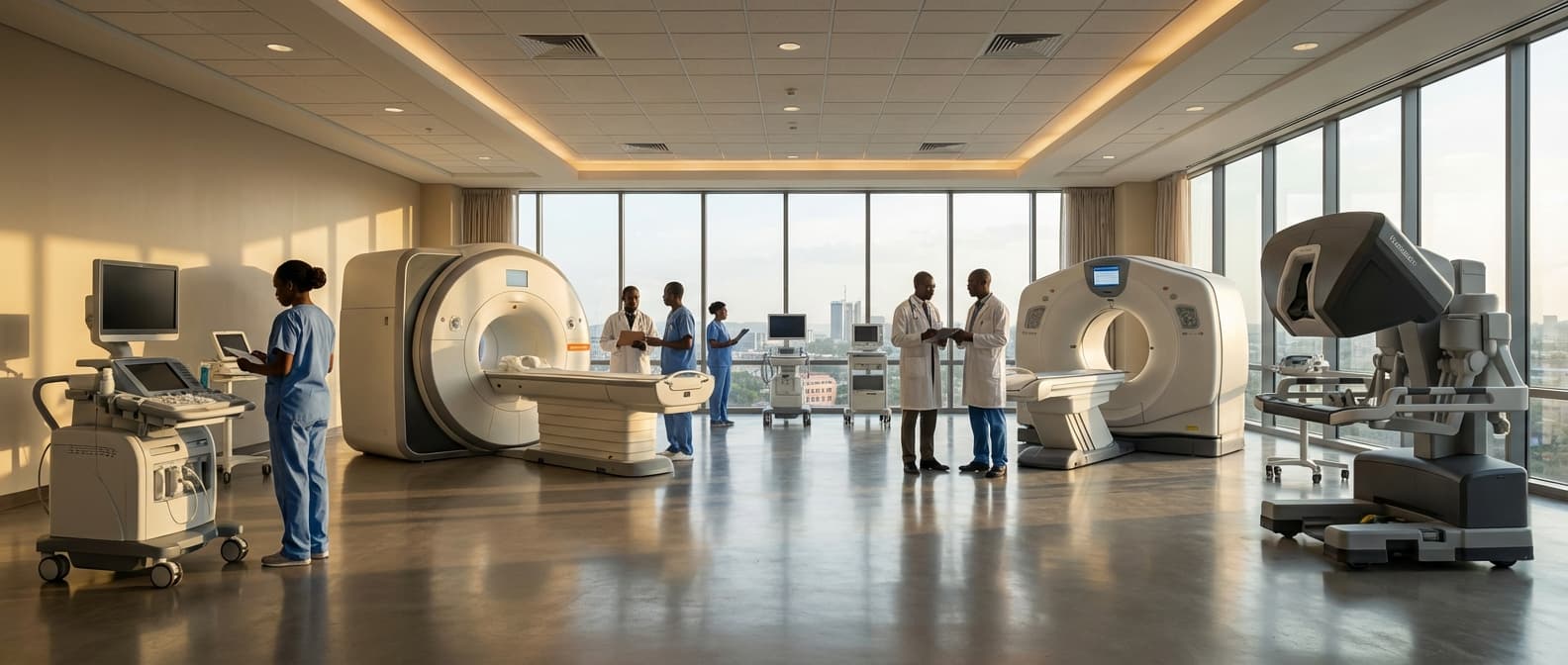
Life Support & Consumables in Namibia
Engineering Excellence & Technical Support
Reliable supply of essential medical consumables and life support equipment ensuring uninterrupted, quality patient care delivery. High-standard technical execution following OEM protocols and local regulatory frameworks.
Water Purification & Distribution
Implementing and maintaining advanced water purification systems and establishing robust distribution networks to ensure access to safe, potable water for communities and critical facilities, even in arid regions.
Oxygen Generation & Supply Chain
Designing and operating efficient oxygen generation plants and optimizing the logistics for reliable oxygen supply to healthcare facilities, addressing the unique challenges of Namibia's vast distances and infrastructure.
Medical Consumables Logistics
Establishing a resilient and cost-effective supply chain for essential medical consumables, including pharmaceuticals, bandages, and sterile equipment, ensuring timely delivery and proper storage across diverse Namibian landscapes.
What Is Life Support & Consumables In Namibia?
Life Support & Consumables in Namibia refers to the provision of essential equipment, supplies, and services required to sustain life and critical operational functions in challenging or remote environments. This encompasses a broad spectrum of goods and services designed to maintain human health, safety, and operational continuity where standard resources are unavailable or insufficient. The service is crucial for entities operating in sectors such as mining, oil and gas exploration, humanitarian aid, disaster relief, remote scientific research, and specialized healthcare settings within Namibia's often geographically diverse and resource-constrained landscape.
| User Group | Need | Typical Use Case |
|---|---|---|
| Mining Operations | Sustained personnel welfare and operational continuity in remote mine sites. | Provision of field medical facilities, potable water, food supplies, and waste management for exploration and extraction crews working in isolated areas. |
| Oil & Gas Exploration (Onshore & Offshore) | Maintaining health, safety, and productivity of personnel in challenging exploration environments. | Supply of emergency medical services, life rafts, survival suits, ration packs, and communication equipment for exploration teams. |
| Humanitarian Aid & Disaster Relief Agencies | Immediate support and sustenance for populations affected by natural disasters or crises. | Deployment of temporary shelters, water purification units, medical supplies, and essential food staples to disaster-stricken regions. |
| Scientific Research Expeditions | Ensuring the health and operational capability of researchers in remote field locations. | Provision of specialized medical kits, field laboratory consumables, communication devices, and sustainable power solutions for research teams in deserts or conservation areas. |
| Remote Healthcare Facilities | Augmenting local healthcare capabilities with essential supplies and specialized equipment. | Supplying pharmaceuticals, diagnostic kits, specialized medical devices, and portable life support systems to clinics in underserved rural areas. |
| Government & Security Forces | Sustaining personnel and operations in remote border regions or during security operations. | Provision of field rations, medical support, portable power, and communication systems for deployed units. |
Key Components of Life Support & Consumables Services:
- Medical & Health Support: Provision of medical personnel, emergency medical kits, pharmaceuticals, specialized medical equipment (e.g., portable oxygen generators, dialysis units), and evacuation services.
- Shelter & Accommodation: Deployment of temporary housing solutions, climate-controlled facilities, and associated amenities for personnel.
- Water & Sanitation: Supply of potable water, water purification systems, wastewater management solutions, and hygiene supplies.
- Food & Nutrition: Procurement and distribution of foodstuffs, specialized dietary supplements, and safe food preparation facilities.
- Power Generation & Management: Provision of generators, fuel supply, and power distribution systems for essential equipment and facilities.
- Communication Systems: Installation and maintenance of satellite communication devices, two-way radios, and associated infrastructure for operational coordination and emergency response.
- Waste Management: Collection, treatment, and disposal of solid and hazardous waste in compliance with environmental regulations.
- Environmental Control: Systems for temperature regulation, air quality monitoring and filtration, and protection against extreme environmental conditions.
- Specialized Equipment & Spares: Supply of operational equipment critical to specific industries (e.g., drilling fluids, drilling bits, laboratory reagents) and their associated spare parts.
Who Needs Life Support & Consumables In Namibia?
This document outlines the target customers and departments within Namibia who would require life support and consumables. The demand for these essential items spans various sectors, from healthcare and emergency services to remote operations and scientific research. Understanding these segments is crucial for businesses supplying these vital products and services.
| Customer Segment | Key Departments/Sub-Segments | Primary Needs | Examples of Consumables/Equipment |
|---|---|---|---|
| Healthcare Facilities | Hospitals (Public & Private), Clinics, Sanatoriums, Rehabilitation Centers, Intensive Care Units (ICUs), Operating Theaters | Patient care, life-sustaining interventions, sterile environments, diagnostic procedures, post-operative recovery | Oxygen, ventilators, IV fluids, catheters, bandages, sterile surgical instruments, personal protective equipment (PPE), medications, diagnostic reagents |
| Emergency Medical Services (EMS) | Ambulance Services, First Responders, Air Ambulance Services | Pre-hospital patient care, stabilization, rapid transport, trauma management, critical interventions | Oxygen cylinders, portable ventilators, defibrillators, trauma kits, splints, pain management medications, IV access supplies, stretchers |
| Mining Operations | Underground Mines, Surface Mines, Processing Plants, Exploration Sites | Worker safety, emergency response, occupational health, dust control, remote site support | Respiratory protection (dust masks, respirators), first-aid kits, portable oxygen, emergency shelters, water purification, hygiene supplies |
| Oil & Gas Exploration | Offshore Rigs, Onshore Exploration Sites, Production Facilities | Worker safety in hazardous environments, emergency preparedness, remote site medical support | Medical kits for remote locations, oxygen, emergency breathing apparatus, water, food supplies, specialized medical equipment for remote teams |
| Wildlife Conservation & Research | National Parks, Research Stations, Veterinary Services, Anti-poaching Units | Animal welfare, disease management, remote fieldwork, emergency care for animals and personnel | Veterinary medications, surgical supplies for animals, tranquilizers, sampling kits, remote first-aid, communication equipment, survival gear |
| Remote Scientific Expeditions | Field Research Teams (Geology, Biology, Archaeology, etc.), Remote Survey Teams | Survival in isolated environments, immediate medical assistance, maintaining team health | Comprehensive first-aid kits, emergency medications, water purification tablets, high-energy food rations, satellite phones, shelter equipment |
| Government Agencies | National Disaster Management Agency, Military Medical Corps, Emergency Response Units, Prisons | Mass casualty incidents, disaster relief, military operations, inmate healthcare | Mass casualty kits, bulk oxygen, sanitation supplies, temporary medical facilities, basic medical equipment, medications for common ailments |
| Industrial Facilities | Manufacturing Plants, Power Generation Stations, Chemical Plants | Occupational health, accident response, worker well-being in potentially hazardous environments | First-aid stations, specialized industrial safety equipment, emergency showers, eye wash stations, basic medical supplies |
| Aviation & Maritime Sectors | Airlines, Shipping Companies, Port Authorities | In-flight/onboard medical emergencies, passenger and crew safety, port health regulations | Aviation/maritime first-aid kits, oxygen masks, emergency medical equipment for aircraft/vessels, sanitation supplies |
| Educational Institutions | Medical Schools, Nursing Colleges, Paramedic Training Centers | Training of healthcare professionals, simulation exercises, campus health services | Medical training equipment, simulators, basic medical supplies for student health centers, anatomical models |
Target Customers & Departments in Namibia Requiring Life Support & Consumables
- Healthcare Facilities
- Emergency Medical Services (EMS)
- Mining Operations
- Oil & Gas Exploration
- Wildlife Conservation & Research
- Remote Scientific Expeditions
- Government Agencies (Disaster Management, Military)
- Industrial Facilities
- Aviation & Maritime Sectors
- Educational Institutions (Medical Schools)
Life Support & Consumables Process In Namibia
The process of acquiring life support and consumables in Namibia, from initial inquiry to successful execution, involves a series of carefully managed steps to ensure the timely and appropriate delivery of essential supplies. This workflow is crucial for various sectors, including healthcare, disaster relief, and remote operations, where reliable access to such items is paramount.
| Stage | Description | Key Activities | Responsible Parties | Documentation Required |
|---|---|---|---|---|
| The process begins with a clear identification of the required life support and consumables. | Defining specific items, quantities, quality standards, and urgency. Conducting a thorough needs assessment. | End-user/Client, Procurement Department | Needs Assessment Report, Requisition Form |
| Identifying potential suppliers capable of meeting the specified requirements. | Researching local and international suppliers, checking their credentials, certifications, track record, and financial stability. Requesting pre-qualification documents. | Procurement Department, Legal Department | Supplier Database, Pre-qualification Questionnaires, Company Profiles |
| Inviting shortlisted suppliers to submit their best offers. | Issuing a Request for Quotation (RFQ) or Request for Proposal (RFP). Suppliers prepare and submit detailed price lists, delivery timelines, and product specifications. | Procurement Department, Suppliers | RFQ/RFP Document, Supplier Quotations/Proposals, Product Data Sheets |
| Assessing the submitted quotations/proposals against predefined criteria. | Technical evaluation (compliance with specifications), commercial evaluation (price, payment terms), and delivery timelines. Selecting the most suitable supplier. | Evaluation Committee, Procurement Department | Evaluation Criteria Matrix, Evaluation Report, Supplier Scorecards |
| Formalizing the agreement with the selected supplier. | Issuing a Purchase Order (PO) or signing a formal contract. Negotiating final terms, including payment schedules, warranties, and liabilities. | Procurement Department, Legal Department, Selected Supplier | Purchase Order, Contract Agreement, Annexures |
| Arranging for the safe and efficient movement of goods to Namibia. | Identifying the most appropriate mode of transport (air, sea, road). Selecting reliable logistics partners. Planning routes, transit times, and warehousing needs. | Logistics Department, Procurement Department, Logistics Provider | Shipping Manifests, Bill of Lading/Air Waybill, Packing Lists |
| Navigating the necessary customs and import regulations in Namibia. | Preparing and submitting import documentation. Paying relevant duties and taxes. Working with customs brokers to ensure smooth clearance. | Logistics Provider, Customs Brokers, Procurement Department, Namibian Customs | Import Declaration Forms, Certificates of Origin, Invoices, Bills of Entry, Permits (if applicable) |
| Receiving the life support and consumables at the designated location. | Unloading goods, conducting quality checks and quantity verification against the PO/contract. Documenting any discrepancies or damages. | End-user/Client, Logistics Department, Warehouse Staff | Delivery Notes, Goods Received Note (GRN), Inspection Reports |
| Processing payments to the supplier and reconciling financial records. | Submitting invoices for payment as per contract terms. Verifying invoices against PO and GRN. Making timely payments. | Finance Department, Procurement Department | Invoices, Payment Vouchers, Proof of Payment |
| Evaluating the overall performance of the supplier and the procurement process. | Gathering feedback from the end-user on product quality and delivery. Reviewing process efficiency for future improvements. Supplier performance evaluation. | End-user/Client, Procurement Department | Supplier Performance Report, Post-Procurement Review |
Life Support & Consumables Procurement Workflow in Namibia
- Inquiry & Needs Assessment
- Supplier Identification & Vetting
- Quotation & Proposal Submission
- Evaluation & Selection
- Order Placement & Contract Negotiation
- Logistics & Transportation Planning
- Customs Clearance & Import Procedures
- Delivery & Verification
- Payment & Reconciliation
- Feedback & Review
Life Support & Consumables Cost In Namibia
The cost of life support and consumables in Namibia is influenced by several factors, leading to a range of prices. These factors include import duties, transportation logistics, the specific brand and quality of the product, and the retail markup by local vendors. Demand also plays a role, especially in remote areas where availability might be limited. Prices are typically quoted in Namibian Dollars (NAD).
| Category | Estimated Price Range (NAD) | Notes |
|---|---|---|
| Medical Oxygen (Cylinder, ~50L) | 500 - 1,500 | Price varies based on supplier, location, and whether it's a refill or new cylinder purchase. |
| Basic First-Aid Kit | 150 - 500 | Depends on the comprehensiveness and brand of contents. |
| Disposable Face Masks (Box of 50) | 50 - 150 | Surgical masks are generally cheaper than N95 respirators. |
| Hand Sanitizer (500ml) | 30 - 80 | Price depends on brand and alcohol concentration. |
| Sterile Gauze Pads (Pack of 10) | 20 - 60 | Varying sizes and quantities. |
| Pain Relievers (e.g., Paracetamol, 20 tablets) | 15 - 40 | Generic brands are more affordable. |
| Water Purification Tablets (Pack of 20) | 50 - 120 | Essential for remote areas. |
| Long-Life Milk (1L Tetra Pak) | 15 - 25 | Common staple, price varies by brand. |
| Canned Goods (e.g., Beans, Corn, ~400g) | 10 - 30 | Widely available, price depends on product and brand. |
| Dried Pasta/Rice (1kg) | 20 - 40 | Basic carbohydrate sources. |
| Vitamin Supplements (e.g., Multivitamins, 30 capsules) | 80 - 250 | Imported brands tend to be more expensive. |
| Baby Formula (900g tin) | 250 - 500 | Significantly impacted by import costs and brand. |
Key Factors Influencing Life Support & Consumables Costs in Namibia
- Import Duties and Taxes: Goods brought into Namibia are subject to customs duties and VAT, which are factored into the final retail price.
- Transportation and Logistics: The vast distances within Namibia, particularly to rural or remote areas, significantly increase transportation costs.
- Brand and Quality: Premium or specialized brands will naturally be more expensive than generic or locally produced alternatives.
- Retailer Markup: Local businesses add their profit margin to the cost of goods.
- Availability and Demand: Scarce items or those with high demand in specific regions can command higher prices.
- Supplier Networks: The reliability and efficiency of the supply chain from international manufacturers to local distributors impacts pricing.
- Currency Exchange Rates: For imported goods, fluctuations in the NAD against major currencies can affect pricing.
Affordable Life Support & Consumables Options
Navigating the costs associated with life support and essential consumables can be a significant concern. This guide explores how to find affordable options, focusing on value bundles and implementing effective cost-saving strategies. Understanding these approaches can help individuals and organizations manage expenses without compromising on quality or necessity.
| Strategy | Description | Potential Savings | Considerations |
|---|---|---|---|
| Value Bundles | Pre-packaged sets of related products offered at a discount. | Moderate to High (10-25% off individual item costs) | Ensure all items in the bundle are needed. May require commitment to a specific supplier. |
| Bulk Purchasing | Buying consumables in larger quantities than immediate needs. | High (15-30%+ depending on volume) | Requires adequate storage space, careful inventory management, and risk of expiry/obsolescence. |
| Subscription Services | Regular, scheduled delivery of consumables for a recurring fee. | Moderate (5-15% off list price + convenience) | Commitment to a supplier, potential for oversupply if needs fluctuate. |
| Generic/Third-Party Alternatives | Using non-branded or alternative manufacturer consumables. | High (20-50%+ off brand-name prices) | Requires thorough research on quality, compatibility, and safety. May void warranties on primary equipment. |
| Negotiation/Price Comparison | Actively seeking competitive pricing and bargaining with vendors. | Variable (can be significant with larger orders) | Time investment, requires understanding market prices. Best for larger/recurring orders. |
| Equipment Maintenance | Regular servicing and upkeep of life support devices. | Indirect savings by extending equipment life and preventing costly repairs/replacements. | Initial investment in maintenance contracts/services. Requires disciplined adherence to schedules. |
Key Strategies for Affordable Life Support & Consumables:
- Value Bundles: Many suppliers offer 'value bundles' or 'package deals' that combine multiple essential items at a reduced price compared to purchasing them individually. These can include a mix of primary equipment, regular consumables (like filters, tubing, or cleaning agents), and even maintenance services.
- Bulk Purchasing: For organizations or individuals with predictable long-term needs, purchasing consumables in larger quantities can significantly reduce the per-unit cost. This requires careful inventory management to avoid waste, but the savings can be substantial.
- Subscription Services: Some providers offer subscription models for recurring consumables. While this involves a regular payment, it often locks in a lower price and ensures timely delivery, preventing emergency purchases at higher prices.
- Generic vs. Brand-Name: For certain consumables, generic or third-party alternatives can offer comparable quality at a much lower price point than specialized brand-name products. It's crucial to research and verify the efficacy and safety of these alternatives.
- Negotiation and Price Comparison: Don't be afraid to negotiate with suppliers, especially for larger orders or long-term contracts. Always compare prices from multiple vendors before making a purchase to ensure you're getting the best deal.
- Maintenance and Longevity: Proper maintenance of life support equipment can extend its lifespan, delaying the need for costly replacements. Investing in regular servicing can be a long-term cost-saving measure.
- Review and Optimization: Regularly review your consumption patterns and supplier contracts. Are there items you're over-ordering? Can you switch to a more cost-effective supplier? Periodic optimization can reveal hidden savings.
- Exploring Government/Non-Profit Programs: Depending on your location and circumstances, there may be government assistance programs, non-profit organizations, or charitable foundations that can help subsidize the cost of life support equipment and consumables.
Verified Providers In Namibia
In Namibia's evolving healthcare landscape, the assurance of verified providers is paramount. Franance Health stands out as a beacon of trust, offering a network of healthcare professionals and facilities that have undergone rigorous credentialing and verification processes. This commitment to quality ensures that patients receive safe, effective, and patient-centered care. Understanding why Franance Health credentials represent the best choice involves examining their stringent verification protocols and the benefits they bring to both patients and healthcare providers.
| Verification Aspect | Franance Health Protocol | Benefit to Patients |
|---|---|---|
| Professional Licenses & Certifications | Thorough checks against official licensing bodies in Namibia and internationally. | Guarantees providers meet legal and educational requirements. |
| Education & Training | Verification of academic degrees, diplomas, and specialized training. | Confirms expertise and up-to-date knowledge in their respective fields. |
| Work Experience & References | Scrutiny of past employment records and professional references. | Assesses practical skills and the provider's professional reputation. |
| Criminal Background Checks | Comprehensive background checks to ensure patient safety. | Minimizes risk and provides peace of mind for patients. |
| Continuing Professional Development (CPD) | Ensuring providers actively participate in ongoing learning and skill enhancement. | Confirms commitment to staying current with medical advancements. |
| Disciplinary Actions & Malpractice History | Review of any past disciplinary actions or malpractice claims. | Identifies potential risks and ensures providers maintain high ethical standards. |
Why Franance Health Credentials Matter:
- Ensuring Patient Safety and Quality of Care
- Promoting Transparency and Accountability
- Facilitating Access to Reputable Healthcare Services
- Upholding Professional Standards and Ethics
- Building Trust and Confidence in the Healthcare System
Scope Of Work For Life Support & Consumables
This Scope of Work (SOW) outlines the requirements for the provision of Life Support and Consumables. It details the technical deliverables expected from the contractor and the standard specifications that all provided items and services must adhere to. The objective is to ensure the health, safety, and operational readiness of personnel through the reliable supply of essential life support and consumable items.
| Category | Item Type | Standard Specifications (Examples) | Acceptable Manufacturers/Brands (Examples) | Quantity Unit |
|---|---|---|---|---|
| Food & Nutrition | MREs (Meals Ready-to-Eat) | Shelf life > 5 years, compliant with military/civilian standards, diverse menu options, allergen information clearly labeled. | SOPAKO, MRE Mountain House, Ready Hour | Unit |
| Food & Nutrition | Water (Bottled/Purified) | Minimum 1-liter bottles, BPA-free plastic, NSF certified purification, 24-month shelf life. | Dasani, Fiji Water, Brita Filters (for systems) | Bottle/Liter |
| Medical & First Aid | First Aid Kits | Comprehensive kits for trauma and general care, sterile, up-to-date expiration dates, compliant with ANSI/ISEA Z308.1. | Johnson & Johnson, Adventure Medical Kits, Dynarex | Kit |
| Medical & First Aid | Medications (OTC) | FDA approved, clearly labeled with active ingredients and dosage, tamper-evident packaging, expiration dates > 1 year. | Tylenol, Advil, Benadryl (as approved) | Unit/Dose |
| Hygiene & Sanitation | Hand Sanitizer | Minimum 60% alcohol content, FDA approved, pump dispenser or individual packets, unscented or mild scent. | Purell, Germ-X, Safeguard | Bottle/Packet |
| Hygiene & Sanitation | Toilet Paper | 2-ply or 3-ply, individually wrapped rolls (if applicable), standard size. | Scott, Charmin, Cottonelle | Roll |
| Shelter & Comfort | Sleeping Bags | Temperature rating suitable for expected environmental conditions, durable, water-resistant outer shell, compressible. | Coleman, Kelty, North Face | Unit |
| Shelter & Comfort | Blankets | Durable, washable, hypoallergenic materials. | Woolrich, Pendleton, Fleece Blankets | Unit |
| Power & Lighting | Batteries | Alkaline or Lithium, specific sizes (AA, AAA, D, etc.), high capacity, long shelf life. | Energizer, Duracell, Rayovac | Pack |
| Power & Lighting | Flashlights (LED) | Durable casing, water-resistant, multiple brightness settings, reliable on/off switch. | Maglite, Streamlight, Fenix | Unit |
Technical Deliverables
- Detailed inventory and catalog of all proposed life support and consumable items.
- Product specification sheets for all proposed items, including manufacturer, model number, materials, dimensions, and performance data.
- Certifications and compliance documentation for all applicable items (e.g., FDA, CE, ISO, NSF).
- Quality Control Plan detailing inspection, testing, and acceptance procedures.
- Logistics and distribution plan for timely and secure delivery.
- Training materials and documentation for any specialized equipment or consumables requiring user instruction.
- Waste management and disposal plan for consumables and packaging.
- Regular reporting on inventory levels, delivery status, and any issues encountered (e.g., monthly reports).
- Contingency plans for unexpected demand or supply chain disruptions.
- Post-delivery support and warranty information.
Service Level Agreement For Life Support & Consumables
This Service Level Agreement (SLA) outlines the commitments for Life Support & Consumables services, focusing on response times for critical issues and guaranteed uptime for essential life support systems and their associated consumables. This SLA is applicable to [Customer Name] and [Provider Name] for the duration specified in the Master Service Agreement.
| Service Component | Uptime Guarantee (%) | Response Time (Critical Incident) | Escalation Procedure |
|---|---|---|---|
Key Definitions
- {"term":"Critical Incident","definition":"Any event that directly impacts the continuous functioning of a life support system, leading to immediate risk to patient safety or operational continuity of essential services. This includes, but is not limited to, complete system failure, critical component malfunction requiring immediate replacement, or severe supply chain disruption for essential consumables."}
- {"term":"Response Time","definition":"The maximum time allowed from the initial reporting of a Critical Incident to the commencement of active remediation efforts by the provider. Remediation efforts include diagnosis, troubleshooting, and the initiation of necessary actions to restore service."}
- {"term":"Uptime Guarantee","definition":"The minimum percentage of time that life support systems and their associated consumable supply chains are expected to be available and fully functional. This is measured over a defined period, typically a calendar month."}
- {"term":"Life Support System","definition":"Any medical device or equipment that is essential for maintaining patient life, as defined in Appendix A of the Master Service Agreement. Examples include ventilators, dialysis machines, infusion pumps, and cardiac monitors."}
- {"term":"Essential Consumables","definition":"Supplies and materials directly used by Life Support Systems that are critical for their ongoing operation. Examples include breathing circuits, dialysis filters, IV tubing, and medication cartridges."}
Frequently Asked Questions

Ready when you are
Let's scope your Life Support & Consumables in Namibia project in Namibia.

Scaling healthcare logistics and technical systems across the entire continent.