
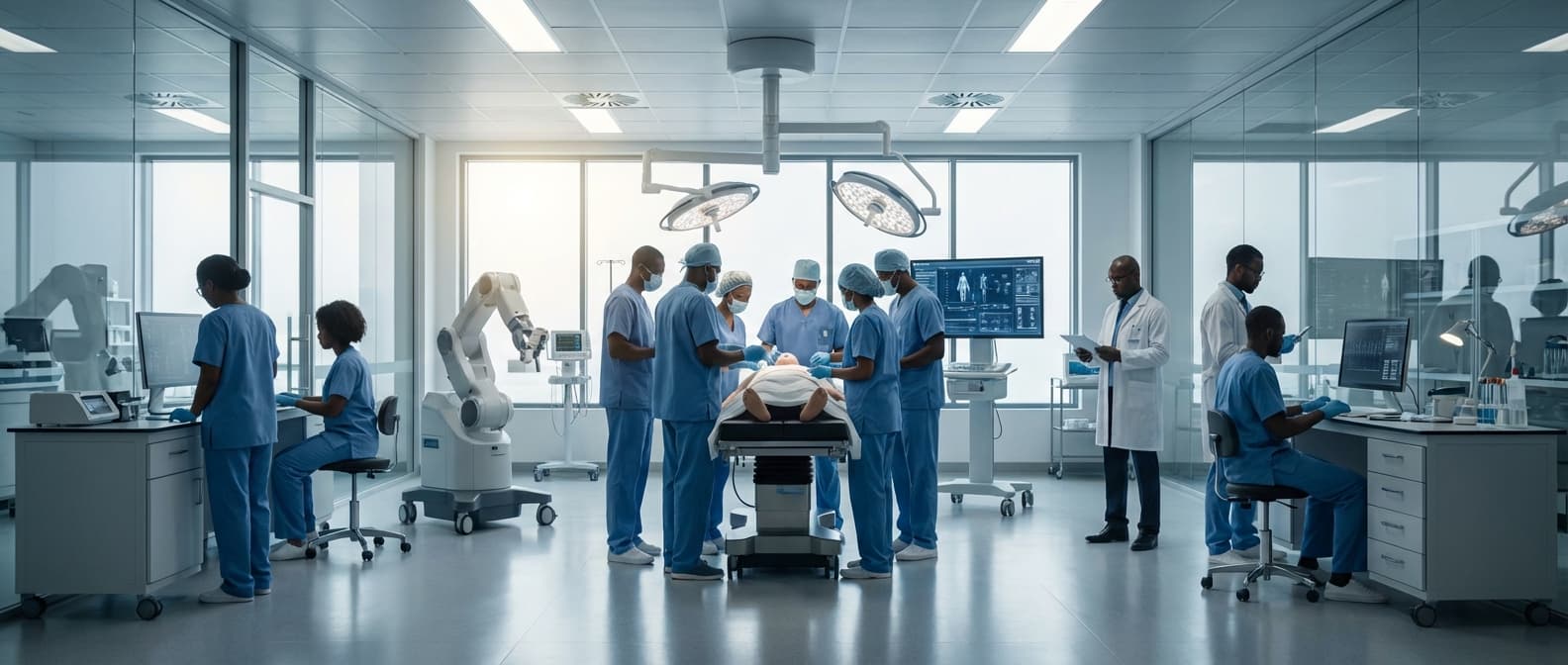
Managed Equipment Service (MES) in Namibia
Engineering Excellence & Technical Support
Long‑term equipment provision with uptime SLAs and lifecycle management. High-standard technical execution following OEM protocols and local regulatory frameworks.
Optimized Operational Efficiency & Cost Reduction
Our MES solution in Namibia analyzes and optimizes the entire lifecycle of your critical equipment, from procurement to maintenance and disposal. By leveraging predictive analytics and advanced monitoring, we proactively identify potential failures, minimize downtime, and reduce unnecessary expenditures on spare parts and emergency repairs. This leads to significant cost savings and a more predictable operational budget for your business.
Enhanced Equipment Uptime & Reliability
We understand the critical role your machinery plays in your Namibian operations. Our MES program implements robust preventative and predictive maintenance strategies, ensuring your equipment operates at peak performance. Through remote monitoring and expert intervention, we address minor issues before they escalate, drastically improving uptime and ensuring the consistent reliability of your assets, thereby boosting your productivity.
Access to Specialized Expertise & Global Best Practices
Leverage our global network of certified technicians and industry-leading expertise for your Namibian operations. Our MES framework provides access to specialized skills and the latest technological advancements in equipment management, often unavailable locally. We bring international best practices directly to your doorstep, ensuring your equipment is maintained to the highest standards, complying with all relevant regulations and safety protocols.
What Is Managed Equipment Service (Mes) In Namibia?
Managed Equipment Service (MES) in Namibia refers to a comprehensive outsourcing model where a third-party provider assumes responsibility for the procurement, installation, operation, maintenance, and eventual disposal of specialized equipment for an organization. This service is designed to optimize the lifecycle management of critical assets, thereby enhancing operational efficiency, reducing capital expenditure, and ensuring access to up-to-date technology. The MES provider typically enters into a long-term contract with the client, offering a bundled service package that covers all aspects of equipment management.
MES is particularly relevant for organizations that rely heavily on specialized or capital-intensive equipment, where managing these assets in-house presents significant logistical, technical, and financial challenges. It allows clients to focus on their core business activities, offloading the complexities associated with equipment management to expert service providers.
| Who Needs MES in Namibia? | Typical Use Cases for MES in Namibia | ||||||||
|---|---|---|---|---|---|---|---|---|---|
| Healthcare Sector: Hospitals, clinics, and diagnostic centers requiring advanced medical imaging equipment (MRI, CT scanners), laboratory equipment, and surgical instruments. | Mining and Extractive Industries: Operations needing specialized heavy machinery, exploration equipment, processing units, and safety apparatus. | Manufacturing and Industrial Production: Factories and plants utilizing complex production lines, automation systems, and precision machinery. | Telecommunications: Companies requiring infrastructure such as base stations, network equipment, and testing devices. | Energy Sector: Power generation facilities, oil and gas exploration companies needing turbines, drilling equipment, and monitoring systems. | Logistics and Transportation: Warehousing and distribution centers requiring automated handling systems, forklifts, and specialized vehicles. | Research and Development Institutions: Laboratories and research facilities needing cutting-edge scientific instruments and analytical equipment. | Government and Public Sector: Agencies and departments with specific equipment needs, such as defense, public works, or scientific research. | Large-scale Agriculture: Farms and agribusinesses requiring advanced farming machinery, processing equipment, and irrigation systems. | Educational Institutions: Universities and technical colleges with specialized laboratories and research equipment. |
| Medical Imaging Services: Outsourcing the management of MRI, CT, X-ray, and ultrasound machines to ensure high availability and reduced maintenance costs for diagnostic centers. | Laboratory Operations: Managed service for analytical instruments, centrifuges, and automated testing platforms in research and clinical laboratories. | Mining Equipment Fleet Management: Comprehensive service for excavators, haul trucks, drills, and crushers, including maintenance, parts, and operational support. | Automated Production Lines: MES for robotic arms, conveyor systems, and specialized manufacturing equipment in factories. | Telecommunication Network Infrastructure: Management of base station hardware, optical equipment, and network monitoring tools. | Power Generation Unit Maintenance: Outsourcing the servicing and upkeep of turbines, generators, and control systems in power plants. | Warehouse Automation Systems: MES for Automated Guided Vehicles (AGVs), robotic pickers, and conveyor networks in logistics hubs. | Scientific Instrumentation for Research: Managed service for high-precision scientific instruments like mass spectrometers, electron microscopes, and chromatographs. | Farm Machinery and Equipment: Service contracts for tractors, harvesters, planters, and processing equipment in large agricultural operations. | Specialized IT Hardware: For organizations with significant investments in servers, storage, and networking equipment that require specialized management and uptime guarantees. |
Key Components of a Managed Equipment Service (MES) in Namibia:
- Equipment Procurement and Sourcing: Identifying, acquiring, and procuring the necessary equipment based on client specifications and industry standards.
- Installation and Commissioning: Professional installation, setup, and integration of equipment into the client's existing infrastructure.
- Routine Maintenance and Servicing: Scheduled preventive maintenance, inspections, and calibration to ensure optimal performance and longevity of the equipment.
- Breakdown Maintenance and Repairs: Prompt response and resolution of equipment malfunctions and failures, minimizing downtime.
- Consumables and Spare Parts Management: Proactive management and supply of necessary consumables and spare parts to ensure uninterrupted operation.
- Technology Upgrades and Obsolescence Management: Planning and executing timely upgrades or replacements of equipment to prevent technological obsolescence and maintain competitive advantage.
- Performance Monitoring and Reporting: Continuous monitoring of equipment performance, operational efficiency, and utilization, with regular reporting to the client.
- Decommissioning and Disposal: Responsible and environmentally compliant removal and disposal of outdated or end-of-life equipment.
- Training and Skill Development: Providing training to client personnel on the operation and basic maintenance of the managed equipment.
- Risk Management and Compliance: Ensuring that all equipment adheres to relevant safety, environmental, and regulatory standards.
Who Needs Managed Equipment Service (Mes) In Namibia?
Managed Equipment Service (MES) plays a crucial role in optimizing operational efficiency and cost-effectiveness for various organizations in Namibia. MES essentially outsources the management, maintenance, and often the procurement of specialized equipment, allowing businesses and institutions to focus on their core competencies. This service is particularly beneficial for entities with a high volume of equipment usage, critical operational reliance on specific machinery, or a need to upgrade and maintain sophisticated technology without the capital expenditure and in-house expertise burden.
| Target Customer Type | Key Departments Benefiting from MES |
|---|---|
| Healthcare Facilities | Radiology, Pathology, Surgical Units, Central Sterile Services Department (CSSD), IT Department |
| Industrial & Manufacturing | Production Floor, Maintenance Department, Quality Control, Logistics |
| Mining Operations | Geology, Operations, Maintenance, Safety and Health |
| Telecommunication Providers | Network Operations Center (NOC), Field Services, IT Infrastructure |
| Large-Scale Agriculture | Farm Management, Machinery Maintenance, Irrigation Systems |
| Government & Public Sector | IT Departments, Infrastructure Management, National Archives, Emergency Services |
| Research & Development | Lab Management, IT Support, Equipment Calibration Teams |
| Educational Institutions | IT Services, Science Laboratories, Engineering Workshops, Media Departments |
Target Customers for MES in Namibia
- Healthcare Facilities (Hospitals, Clinics, Diagnostic Centers)
- Industrial and Manufacturing Companies
- Mining Operations
- Telecommunication Providers
- Large-Scale Agricultural Operations
- Government and Public Sector Institutions
- Research and Development Laboratories
- Educational Institutions (Universities, Technical Colleges)
Managed Equipment Service (Mes) Process In Namibia
The Managed Equipment Service (MES) process in Namibia outlines a comprehensive workflow for providing and managing specialized medical equipment for healthcare facilities. This process ensures that healthcare providers have access to the necessary technology, maintenance, and support, enabling them to deliver effective patient care. The workflow typically begins with an initial inquiry from a healthcare facility and concludes with the complete execution and ongoing management of the service agreement.
| Stage | Description | Key Activities | Responsible Parties |
|---|---|---|---|
| The initial stage where a healthcare facility expresses interest in MES and their specific equipment needs are identified. | Contacting MES provider, discussing requirements, site visit (if necessary), understanding clinical needs and volume projections. | Healthcare Facility, MES Provider |
| The MES provider develops a tailored proposal based on the assessed needs, and terms are negotiated. | Developing detailed equipment list, service specifications, pricing, service level agreements (SLAs), negotiating terms and conditions. | MES Provider, Healthcare Facility |
| Formalizing the agreement between the MES provider and the healthcare facility. | Legal review of the contract, signing of the MES agreement, outlining responsibilities, payment schedules, and dispute resolution mechanisms. | MES Provider, Healthcare Facility, Legal Teams |
| Sourcing, purchasing, and installing the agreed-upon medical equipment. | Placing orders with manufacturers, logistics and shipping, site preparation, installation, and initial setup of equipment. | MES Provider, Equipment Manufacturers, Installation Technicians |
| Ensuring that healthcare professionals are competent in using the new equipment and that it is fully operational. | Developing training programs, conducting user training sessions, validating equipment performance, and obtaining user sign-off. | MES Provider, Clinical Staff, Training Specialists |
| Providing routine maintenance, repairs, and technical support to ensure equipment uptime and performance. | Scheduled preventive maintenance, on-demand repair services, technical troubleshooting, spare parts management, and 24/7 support (as per SLA). | MES Provider, Field Service Engineers, Technical Support Team |
| Tracking equipment performance, service delivery, and financial aspects of the MES agreement. | Collecting data on equipment utilization, downtime, response times, maintenance history, and providing regular performance reports to the healthcare facility. | MES Provider, Healthcare Facility Management |
| Managing the lifecycle of the equipment, including upgrades and eventual replacement. | Assessing technological advancements, identifying opportunities for upgrades, planning for equipment obsolescence, and executing replacement strategies. | MES Provider, Healthcare Facility |
| Periodically reviewing the MES agreement and making decisions regarding its continuation or conclusion. | Evaluating contract performance against objectives, negotiating renewal terms, or initiating termination procedures if necessary. | MES Provider, Healthcare Facility |
MES Process Workflow in Namibia
- Inquiry and Needs Assessment
- Proposal Development and Negotiation
- Contracting and Agreement Finalization
- Equipment Procurement and Installation
- Training and Commissioning
- Ongoing Maintenance and Support
- Performance Monitoring and Reporting
- Equipment Upgrade and Replacement
- Contract Review and Renewal/Termination
Managed Equipment Service (Mes) Cost In Namibia
Managed Equipment Service (MES) in Namibia offers businesses a cost-effective and efficient way to manage their IT and office equipment. Instead of outright purchasing and maintaining hardware, companies can lease equipment and outsource its management to a third-party provider. This approach can lead to significant cost savings, improved uptime, and access to the latest technology. The cost of MES in Namibia is influenced by several key factors, leading to a range of pricing structures. Understanding these factors is crucial for businesses to accurately budget and select the most suitable MES package.
| Equipment Category | Estimated Monthly MES Cost Range (NAD) | Notes |
|---|---|---|
| Office Printers/Copiers (Mid-Volume) | 1,500 - 5,000 | Includes lease, maintenance, basic consumables (toner/ink), and on-site support. Cost varies with print volume and features (e.g., color, duplexing). |
| High-Volume Multifunction Devices (MFDs) | 4,000 - 12,000+ | For larger organizations with significant printing/copying needs. Often includes advanced features, higher print speeds, and more comprehensive support. |
| Desktop Computers (Standard Office Use) | 800 - 2,500 per unit | Covers lease of the device, basic warranty support, and sometimes IT setup. Software licensing and advanced support are usually separate or tiered. |
| Laptop Computers (Business Grade) | 1,000 - 3,000 per unit | Similar to desktops, includes lease and warranty. Mobility and higher specs influence the price. Extended warranties and data security services add to cost. |
| Servers (Entry-Level to Mid-Range) | 3,000 - 15,000+ per unit | Often includes hardware lease, installation, monitoring, and basic maintenance. Full managed IT services for servers can be significantly higher. |
| Networking Equipment (Routers, Switches - Entry) | 500 - 2,000 per device | For smaller office networks. Cost depends on port count, speed, and managed features. |
| Specialized Equipment (e.g., Plotters, Scanners) | 2,000 - 8,000+ | Highly variable based on the specific device, its capabilities, and usage. |
Key Pricing Factors for MES in Namibia
- Equipment Type and Volume: The specific types of equipment (e.g., printers, copiers, servers, desktops, laptops) and the total number of units required will directly impact the monthly service fee. High-volume or specialized equipment typically incurs higher costs.
- Service Level Agreement (SLA) Details: The level of service agreed upon is a major determinant. This includes response times for technical support, proactive maintenance schedules, on-site vs. remote support, and guaranteed uptime percentages. More comprehensive SLAs with faster response times and higher uptime guarantees will command higher prices.
- Contract Duration: MES contracts are typically offered for fixed terms (e.g., 2, 3, or 5 years). Longer contract durations often come with lower monthly rates as providers can better amortize their investment and operational costs over a longer period.
- Included Services: The scope of services included in the MES package is critical. This can range from basic equipment leasing and maintenance to full lifecycle management, including installation, configuration, software updates, consumables (like toner for printers), and even end-of-life disposal. More inclusive packages will be priced higher.
- Technology Age and Features: Leasing newer, more advanced equipment with greater functionality will generally be more expensive than older or more basic models. Businesses opting for cutting-edge technology should expect to pay a premium.
- Provider's Overhead and Profit Margin: Like any business, MES providers in Namibia have operational costs (salaries, infrastructure, logistics) and a profit margin they need to achieve. These are factored into the overall pricing.
- Geographic Location and Accessibility: While Namibia is a single country, remote areas or locations with challenging logistics might incur slightly higher service delivery costs, which could be reflected in the MES pricing.
- Consumables and Spare Parts: For equipment like printers and copiers, the cost of consumables (toner, ink, paper) and the availability/cost of spare parts for repairs are often bundled into the MES agreement. The estimated usage of these consumables will influence the price.
- Software and Licensing: If the MES includes specific software licenses or managed IT services beyond hardware, these costs will be incorporated into the overall package.
- Customization and Integration: Bespoke solutions or complex integration requirements with existing IT infrastructure can lead to additional charges.
Affordable Managed Equipment Service (Mes) Options
Finding affordable Managed Equipment Service (MES) options is crucial for organizations looking to optimize their operational costs while ensuring their critical equipment functions efficiently and reliably. MES offers a comprehensive solution for managing the lifecycle of your equipment, from procurement and installation to maintenance, calibration, and eventual decommissioning. Affordability in MES is often achieved through strategic planning, flexible service models, and the adoption of value-based bundles and smart cost-saving strategies.
| Value Bundle Type | Description | Cost-Saving Benefits |
|---|---|---|
| Basic Maintenance Bundle | Includes scheduled preventative maintenance, routine inspections, and labor for basic repairs. | Reduces unscheduled downtime, extends equipment lifespan, predictable budgeting for maintenance expenses. |
| Comprehensive Care Bundle | Expands on the basic bundle to include all spare parts, calibration services, and emergency repair response. | Eliminates surprise costs for parts and specialized services, faster resolution of issues due to immediate access to resources, improved compliance through regular calibration. |
| Full Lifecycle Management Bundle | Covers everything in comprehensive care, plus includes equipment upgrades, IT integration, and responsible decommissioning. | Streamlined asset management, reduced capital expenditure on frequent upgrades, efficient technology adoption, minimized disposal costs and environmental impact. |
| Performance-Based Bundle | Ties service provider compensation to specific performance metrics, such as uptime percentages, mean time between failures (MTBF), and response times. | Aligns provider incentives with operational efficiency, encourages proactive problem-solving, potential for performance-based rebates or reduced fees if targets are missed. |
Key Components of Affordable MES
- Proactive Maintenance: Implementing robust preventative maintenance schedules to minimize unexpected breakdowns and costly emergency repairs.
- Remote Monitoring & Diagnostics: Utilizing technology to identify potential issues before they escalate, allowing for timely interventions.
- Optimized Spare Parts Management: Efficient inventory control and strategic sourcing of spare parts to reduce holding costs and procurement expenses.
- Standardized Processes & Workflows: Implementing consistent and efficient maintenance procedures across all managed equipment.
- Performance-Based Contracts: Aligning service provider incentives with equipment uptime and performance metrics.
- Leveraging Technology: Embracing IoT, AI, and data analytics for predictive maintenance, real-time monitoring, and performance optimization.
Verified Providers In Namibia
Finding reliable and trustworthy healthcare providers is paramount for your well-being. In Namibia, discerning which clinics and practitioners are truly qualified and offer exceptional care can be challenging. This guide highlights verified providers and specifically focuses on Franance Health, explaining why their credentials and approach make them a leading choice for Namibians seeking top-tier healthcare services.
| Aspect | Franance Health Credentials & Strengths | Why This Matters for Patients |
|---|---|---|
| Licensing & Accreditation | Fully licensed by the HPCNA. Adheres to all national healthcare regulations and best practices. Actively pursues international quality accreditations (where applicable). | Ensures legal compliance and a baseline of quality care. Provides peace of mind that the facility operates under strict governmental oversight. |
| Medical Expertise | Employs a diverse team of specialists (e.g., General Practitioners, Dentists, Specialists in various fields) with extensive experience and continuous professional development. | Access to a broad range of medical knowledge and skills under one roof. Patients benefit from the collective expertise of seasoned professionals. |
| Patient-Centric Approach | Prioritizes compassionate care, clear communication, and personalized treatment plans. Strong emphasis on patient education and involvement in healthcare decisions. | Patients feel heard, understood, and empowered. Leads to better treatment adherence and improved health outcomes. |
| State-of-the-Art Facilities & Technology | Invests in modern medical equipment and diagnostic tools, ensuring accurate and efficient diagnoses and treatments. | Facilitates quicker and more precise diagnoses, leading to timely and effective interventions. Enhances the overall patient experience with advanced medical capabilities. |
| Commitment to Accessibility | Strives to make quality healthcare accessible, with convenient locations and flexible appointment scheduling. Explores partnerships to broaden reach. | Reduces barriers to healthcare access, allowing more Namibians to receive the care they need without undue stress or financial burden. |
| Ethical Standards & Trust | Upholds the highest ethical standards in medical practice, fostering an environment of trust and integrity. Transparent billing and treatment information. | Builds long-term relationships based on trust. Patients can rely on honest advice and fair treatment, crucial for their well-being. |
What Makes a Healthcare Provider "Verified" in Namibia?
- Professional Licensing and Accreditation: Verified providers hold current licenses from the Health Professions Council of Namibia (HPCNA) and are accredited by relevant national and international health organizations.
- Adherence to Quality Standards: They consistently meet and exceed established benchmarks for patient care, safety protocols, and operational efficiency.
- Qualified and Experienced Staff: Their medical teams comprise highly trained, board-certified professionals with a proven track record in their respective specialties.
- Patient Feedback and Reputation: Positive patient reviews, a strong community reputation, and a commitment to patient satisfaction are key indicators.
- Ethical Practices and Transparency: Verified providers operate with integrity, maintaining ethical standards in all aspects of their practice and being transparent with patients about treatment options and costs.
Scope Of Work For Managed Equipment Service (Mes)
This document outlines the Scope of Work (SOW) for a Managed Equipment Service (MES) contract. It details the technical deliverables expected from the service provider and the standard specifications that will govern the performance and quality of the service. The MES will encompass the provision, installation, maintenance, repair, and eventual disposal of specified medical equipment within the client's healthcare facility.
| Specification Category | Description | Standard/Reference | Compliance Requirement |
|---|---|---|---|
| Equipment Uptime | Guaranteed percentage of time equipment is operational and available for use. | Manufacturer specifications, agreed SLA thresholds (e.g., 98%). | Service credits or penalties for non-compliance. |
| Response Time | Maximum time to acknowledge a reported issue and dispatch a technician. | Agreed Service Level Agreement (SLA) tiers (e.g., critical: 1 hour, major: 4 hours, minor: 8 hours). | Defined response time targets for different severity levels. |
| Repair Turnaround Time (TAT) | Maximum time to repair and restore equipment to full operational status after initial response. | Agreed SLA tiers, often differentiated by equipment criticality. | Defined repair TAT targets for different severity levels. |
| Preventive Maintenance (PM) Compliance | Percentage of scheduled PM tasks completed within the designated timeframe. | Manufacturer recommendations, regulatory requirements, agreed schedule. | Target PM completion rate (e.g., 95% on time). |
| Spare Parts Management | Availability of critical spare parts to ensure timely repairs. | Manufacturer recommendations, criticality assessment of equipment. | Guaranteed availability of critical spare parts, defined stock levels. |
| Technician Competency | Qualifications, certifications, and experience of service personnel. | Manufacturer training certifications, relevant technical degrees/diplomas. | All technicians servicing specific equipment must be certified by the manufacturer. |
| Documentation and Reporting | Accuracy, completeness, and timeliness of all service records and reports. | ISO 9001 standards, agreed reporting templates and frequency. | All service activities meticulously documented and reported. |
| Safety and Regulatory Compliance | Adherence to all applicable safety standards and medical device regulations. | IEC 60601 series, local healthcare regulations (e.g., FDA, CE marking). | All equipment and services must meet current safety and regulatory standards. |
| Calibration Accuracy | Degree to which measured values agree with true values. | Manufacturer specifications, national/international metrology standards (e.g., ISO/IEC 17025). | Calibration results must fall within defined accuracy tolerances. |
| Asset Lifecycle Management | Proactive management of equipment from procurement to disposal. | Best practices in asset management, total cost of ownership (TCO) principles. | Regular asset reviews and planning for end-of-life replacements. |
Key Technical Deliverables
- Equipment Procurement and Installation: Sourcing, delivery, and seamless integration of new medical equipment as per agreed specifications and timelines. This includes site preparation, calibration, and initial testing.
- Preventive Maintenance (PM): Scheduled, routine inspections, servicing, and calibration of all managed equipment to ensure optimal performance, safety, and longevity, adhering to manufacturer guidelines and regulatory standards.
- Corrective Maintenance and Repair: Prompt and effective troubleshooting, diagnosis, and repair of equipment malfunctions and breakdowns, minimizing downtime and ensuring patient safety. This includes provision of spare parts and specialized technicians.
- Calibration and Performance Verification: Regular calibration and performance verification of equipment against established benchmarks and regulatory requirements to ensure accuracy and reliability of diagnostic and therapeutic functions.
- Asset Management and Tracking: Implementation of a robust asset management system to track equipment inventory, location, status, maintenance history, and lifecycle. This includes regular asset audits.
- Technical Training and Competency: Provision of training to client's clinical and technical staff on the safe and effective operation and basic troubleshooting of the managed equipment.
- Decommissioning and Disposal: Safe and compliant decommissioning, removal, and environmentally responsible disposal or refurbishment of equipment at the end of its lifecycle, as per contractual agreements and regulations.
- Performance Reporting: Regular reporting on key performance indicators (KPIs) related to equipment uptime, response times, repair turnaround times, PM completion rates, and cost analysis.
- Regulatory Compliance Support: Ensuring all managed equipment adheres to relevant national and international medical device regulations, safety standards, and accreditation requirements.
- Technology Refresh and Upgrades: Planning and execution of equipment upgrades or replacements to incorporate technological advancements and meet evolving clinical needs, within agreed budget and timelines.
Service Level Agreement For Managed Equipment Service (Mes)
This Service Level Agreement (SLA) outlines the terms and conditions for the Managed Equipment Service (MES) provided by [Your Company Name] to [Client Company Name]. It defines the expected response times and uptime guarantees for critical equipment and associated services. This SLA is effective as of [Start Date] and will remain in effect for the duration of the MES contract.
| Equipment Category/Service | Priority Level | Response Time Guarantee | Uptime Guarantee | Service Credit Calculation |
|---|---|---|---|---|
| Critical Servers & Network Infrastructure | P1 - Critical Outage | 15 Minutes (Remote), 4 Hours (On-site) | 99.9% | For every 1% of downtime below 99.9%, a credit equivalent to 5% of the monthly MES fee for the affected equipment will be issued. |
| Critical Servers & Network Infrastructure | P2 - Performance Degradation | 1 Hour (Remote), 8 Hours (On-site) | 99.7% | For every 1% of downtime below 99.7%, a credit equivalent to 3% of the monthly MES fee for the affected equipment will be issued. |
| Core Business Applications | P1 - Critical Outage | 30 Minutes (Remote), 4 Hours (On-site) | 99.8% | For every 1% of downtime below 99.8%, a credit equivalent to 4% of the monthly MES fee for the affected equipment will be issued. |
| Core Business Applications | P2 - Performance Degradation | 2 Hours (Remote), 12 Hours (On-site) | 99.5% | For every 1% of downtime below 99.5%, a credit equivalent to 2% of the monthly MES fee for the affected equipment will be issued. |
| Supporting Infrastructure (e.g., Printers, Non-critical Workstations) | P3 - General Issue | 4 Business Hours (Remote), 24 Business Hours (On-site) | 99.0% | Service credits are not applicable for this category, as per mutual agreement. Focus is on resolution within standard business hours. |
Definitions
- Managed Equipment Service (MES): A comprehensive service providing management, monitoring, maintenance, and support for designated equipment.
- Critical Equipment: Equipment identified as essential for the client's primary operations, failure of which would result in significant business disruption.
- Response Time: The maximum time allowed from the initiation of a support ticket or notification of an issue to the commencement of troubleshooting or service restoration efforts by [Your Company Name].
- Uptime Guarantee: The percentage of time the managed equipment is expected to be operational and available for use, excluding scheduled maintenance.
- Scheduled Maintenance: Planned periods of downtime for equipment updates, upgrades, or preventative maintenance, communicated in advance to the client.
- Unscheduled Downtime: Any period of equipment unavailability not falling under Scheduled Maintenance.
- Service Credit: A financial credit applied to the client's invoice as compensation for failing to meet agreed-upon uptime guarantees.
Frequently Asked Questions

Ready when you are
Let's scope your Managed Equipment Service (MES) in Namibia project in Namibia.

Scaling healthcare logistics and technical systems across the entire continent.