
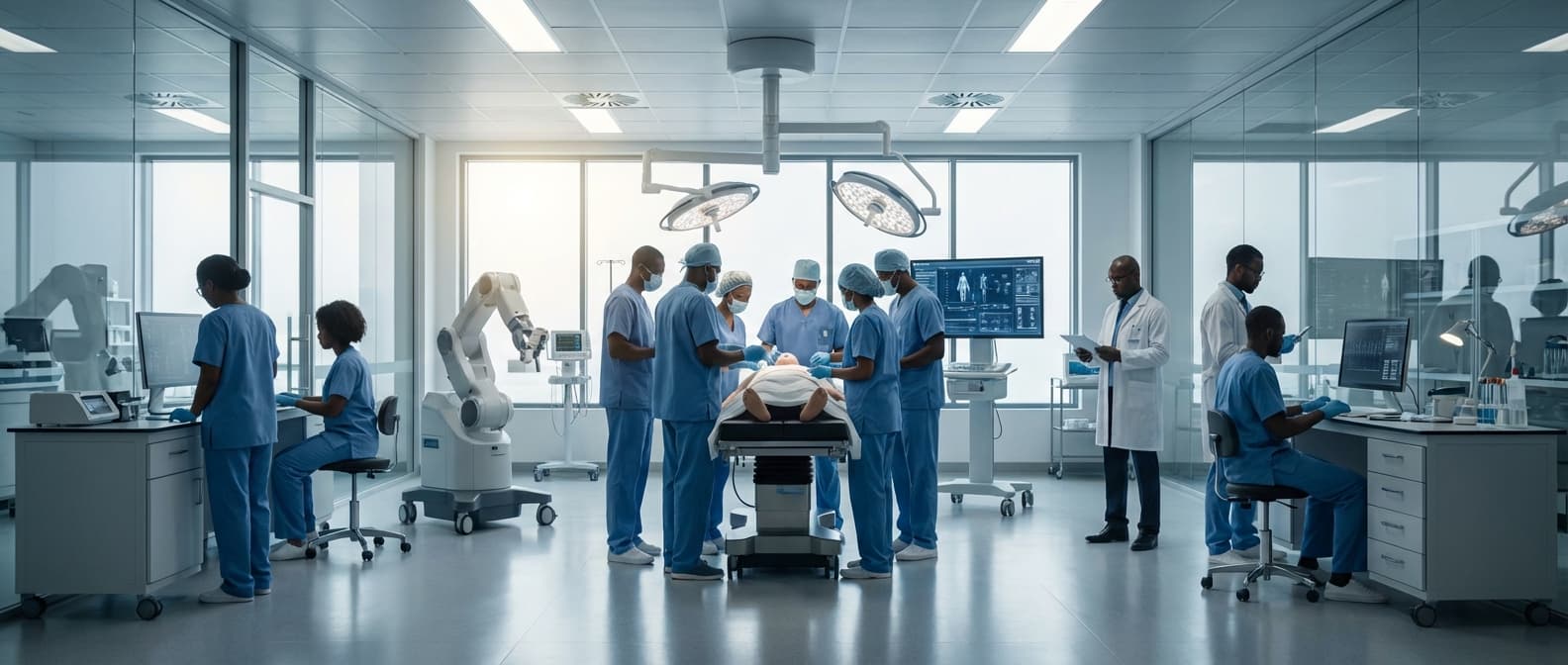
Biomedical Staffing Augmentation in Namibia
Engineering Excellence & Technical Support
Onsite biomedical engineers and PACS administrators High-standard technical execution following OEM protocols and local regulatory frameworks.
Expertise in Specialized Medical Fields
Our staffing augmentation provides Namibian healthcare facilities with access to highly skilled professionals in niche medical disciplines, including but not limited to radiology, pathology, anesthesiology, and intensive care. This ensures the highest quality of patient care and fills critical skill gaps within the local medical workforce.
Agile Workforce Solutions
We offer flexible and scalable staffing solutions tailored to the dynamic needs of Namibian healthcare. Whether for short-term project support, seasonal demand, or long-term capacity building, our augmentation services allow facilities to quickly deploy qualified biomedical personnel, optimizing resource allocation and operational efficiency.
Bridging Local and International Talent
Our augmentation services facilitate the seamless integration of both local Namibian biomedical talent and carefully vetted international specialists. This approach not only addresses immediate staffing shortages but also fosters knowledge transfer, skill development, and the adoption of global best practices within Namibia's healthcare sector.
What Is Biomedical Staffing Augmentation In Namibia?
Biomedical Staffing Augmentation in Namibia refers to the strategic provision of specialized, temporary, or contract-based biomedical personnel to healthcare institutions, research facilities, and related organizations. This service addresses critical gaps in workforce availability, skill sets, or project-specific needs within the Namibian biomedical sector. It involves identifying, recruiting, vetting, and deploying qualified professionals such as biomedical engineers, technicians, laboratory scientists, clinical research associates, and public health specialists on a flexible basis. The primary objective is to enhance operational capacity, expedite project timelines, ensure continuity of essential services, and introduce specialized expertise that may be scarce or difficult to retain on a permanent basis within the local context. This augmentation acts as a dynamic solution to the fluctuating demands and evolving landscape of healthcare delivery and biomedical research in Namibia.
| Who Needs Biomedical Staffing Augmentation? | Typical Use Cases | ||||||
|---|---|---|---|---|---|---|---|
| Public Hospitals and Clinics: Facilities facing staff shortages, particularly in specialized areas like medical equipment maintenance, laboratory analysis, or radiology. | Private Healthcare Providers: Expanding practices or introducing new services requiring specialized biomedical expertise for a limited duration. | Research Institutions and Universities: Requiring specialized technicians or scientists for specific research projects or to operate advanced equipment. | Medical Device Manufacturers and Distributors: Needing field service engineers for installation, maintenance, or training on newly deployed equipment. | Government Health Agencies: Undertaking public health initiatives, epidemiological studies, or mass screening programs requiring temporary data analysts, public health specialists, or laboratory personnel. | Non-Governmental Organizations (NGOs) in Health: Implementing health-focused projects with specific technical or clinical requirements. | Emerging Health Technology Companies: Requiring skilled personnel for product development, testing, or early-stage implementation. | |
| Equipment Maintenance and Repair: Covering for absent technicians, managing increased maintenance workloads, or providing specialized repair services for complex machinery. | Project-Specific Research Support: Augmenting research teams with scientists or technicians for the duration of a specific study or clinical trial. | New Technology Implementation: Providing trained personnel to install, calibrate, and operate new biomedical equipment. | Temporary Increase in Diagnostic/Laboratory Volume: Supplementing laboratory staff during peak periods or outbreaks to ensure timely results. | Clinical Trial Support: Engaging clinical research associates (CRAs) or data managers for specific phases of clinical trials. | Public Health Campaigns: Deploying staff for data collection, sample processing, or health education related to specific public health initiatives. | Training and Capacity Building: Bringing in experts to train existing staff on new technologies or procedures. | Interim Management or Specialist Roles: Filling critical leadership or specialist positions during recruitment for permanent hires or for short-term strategic projects. |
Key Aspects of Biomedical Staffing Augmentation
- Definition: The strategic integration of external, skilled biomedical professionals to supplement existing internal staff.
- Scope: Encompasses a broad range of roles, from technical support and maintenance to specialized research and clinical support.
- Flexibility: Offers adaptable staffing solutions to meet short-term needs, project-specific demands, or periods of high workload.
- Expertise: Provides access to niche skill sets and specialized knowledge that may not be readily available internally.
- Operational Enhancement: Aims to improve efficiency, reduce downtime, and maintain the quality of biomedical services.
- Cost-Effectiveness: Can be a more economical alternative to permanent hiring, particularly for project-based or temporary requirements.
Who Needs Biomedical Staffing Augmentation In Namibia?
Biomedical staffing augmentation in Namibia is crucial for healthcare facilities facing challenges in maintaining adequate staffing levels for their medical equipment. This service provides a flexible and cost-effective solution to bridge gaps caused by staff shortages, increased workload, or the need for specialized skills. It ensures that essential medical equipment remains operational, patient care is not compromised, and the healthcare system functions efficiently. The demand for such services is particularly high in areas experiencing rapid growth, technological advancements, or a general shortage of qualified biomedical technicians and engineers.
| Department/Facility Type | Primary Need for Augmentation | Impact of Augmentation |
|---|---|---|
| Radiology/Imaging Departments | Maintenance and repair of X-ray, CT scanners, MRI machines, ultrasound devices. | Ensures timely diagnostic imaging, reduces patient waiting times, improves diagnostic accuracy. |
| Intensive Care Units (ICUs) / Critical Care Units (CCUs) | Maintenance of ventilators, patient monitors, infusion pumps, defibrillators. | Guarantees life-support equipment reliability, minimizes critical equipment downtime, supports patient safety. |
| Operating Theatres | Maintenance of surgical equipment, anesthesia machines, electrosurgical units, surgical lights. | Ensures operational readiness for surgeries, prevents procedural delays, enhances surgical team efficiency. |
| Central Sterile Supply Departments (CSSD) | Maintenance of sterilizers (autoclaves), washer-disinfectors. | Ensures sterility of medical instruments, prevents hospital-acquired infections. |
| Emergency Departments (ERs) | Ensuring all emergency equipment (defibrillators, resuscitation carts, monitors) is functional. | Immediate availability of critical equipment during emergencies, saving lives. |
| Laboratory Services | Maintenance and calibration of analytical instruments, centrifuges, microscopes. | Accurate and timely diagnostic results, supporting effective treatment planning. |
| Pharmacy Departments | Maintenance of specialized dispensing and storage equipment. | Ensures accurate drug dispensing and appropriate storage conditions. |
Target Customers and Departments Requiring Biomedical Staffing Augmentation in Namibia
- {"title":"Public Hospitals","description":"Large public hospitals are often under immense pressure due to high patient volumes and limited budgets. They frequently experience shortages of skilled biomedical staff to manage and maintain their diverse range of medical equipment. Augmentation helps them keep critical equipment like imaging machines, life support systems, and diagnostic tools in optimal working condition."}
- {"title":"Private Hospitals and Clinics","description":"While often better resourced than public facilities, private entities also face the challenge of recruiting and retaining specialized biomedical personnel. Staffing augmentation allows them to quickly fill temporary vacancies or access expertise for complex equipment installations and maintenance, ensuring uninterrupted patient services."}
- {"title":"Specialized Medical Centers","description":"Facilities focusing on specific areas such as oncology, cardiology, or diagnostics have highly specialized and often expensive equipment. Maintaining these requires technicians with specific training. Augmentation can provide access to these niche skill sets when in-house staff are unavailable or overwhelmed."}
- {"title":"Diagnostic Laboratories","description":"Laboratories rely heavily on sophisticated analytical instruments and diagnostic machines. Malfunctions or lack of maintenance can lead to delays in results and impact patient treatment. Augmented biomedical staff ensure these critical laboratory systems are running smoothly."}
- {"title":"Rural and Remote Healthcare Facilities","description":"Healthcare providers in less populated or remote areas often struggle the most with attracting and retaining biomedical talent. Staffing augmentation can be a lifeline, providing essential maintenance and repair services that would otherwise be inaccessible, thereby improving healthcare equity."}
- {"title":"Government Health Ministries and Agencies","description":"National health bodies that oversee public healthcare infrastructure may utilize staffing augmentation to support their regional health directorates or to manage large-scale equipment deployment and maintenance projects across the country."}
- {"title":"Medical Equipment Suppliers and Manufacturers","description":"While not direct healthcare providers, these entities often need temporary biomedical technicians for installation, commissioning, training, and emergency repairs of the equipment they sell, especially in regions where their permanent presence is limited."}
Biomedical Staffing Augmentation Process In Namibia
The Biomedical Staffing Augmentation Process in Namibia outlines the systematic workflow for engaging external biomedical professionals to supplement existing healthcare staff. This process is crucial for addressing temporary shortages, specialized skill gaps, or increasing capacity during specific periods. It ensures that qualified personnel are deployed efficiently and effectively to support the Namibian healthcare system.
| Stage | Description | Key Activities | Responsible Parties | Deliverables/Outcomes |
|---|---|---|---|---|
| Inquiry & Needs Assessment | The initial stage where a healthcare facility or ministry identifies a need for augmented biomedical staffing. | Define specific role(s), required qualifications, duration, location, and budget. Document the justification for augmentation. | Requesting Healthcare Facility/Ministry of Health, HR Department | Formalized staffing needs document, including job descriptions and scope of work. |
| Provider Identification & Vetting | Identifying and assessing potential staffing augmentation providers (e.g., agencies, recruitment firms). | Research and identify reputable providers with experience in biomedical staffing. Conduct due diligence, including reference checks and review of credentials. Shortlist potential providers. | Procurement Department, HR Department | A shortlist of qualified and vetted staffing augmentation providers. |
| Proposal & Negotiation | Receiving and evaluating proposals from shortlisted providers and negotiating terms. | Issue Request for Proposals (RFPs) to shortlisted providers. Evaluate proposals based on qualifications, experience, proposed candidates, rates, and service delivery models. Conduct negotiations on rates, contract terms, and service level agreements (SLAs). | Procurement Department, HR Department, Legal Department | Agreed-upon terms and conditions for staffing augmentation. |
| Contracting & Onboarding | Formalizing the agreement and preparing the augmented staff for deployment. | Draft and execute a formal contract with the selected provider. Facilitate the provider in sourcing and presenting suitable candidates. Conduct background checks and verify qualifications of proposed candidates. Initiate the onboarding process, including orientation, necessary training, and administrative setup. | Legal Department, HR Department, Selected Provider | Signed contract, pre-deployment training materials, and prepared augmented staff. |
| Deployment & Supervision | Integrating the augmented biomedical staff into the healthcare facility's operations. | Deploy augmented staff to their assigned roles and locations. Provide ongoing supervision and mentorship. Ensure adherence to facility protocols, policies, and ethical standards. Facilitate access to necessary equipment and resources. | Supervising Department/Manager at Healthcare Facility, Selected Provider | Augmented biomedical staff actively contributing to healthcare services. |
| Performance Monitoring & Evaluation | Continuously assessing the performance of augmented staff and the effectiveness of the augmentation process. | Regularly monitor the performance of augmented staff against defined objectives and SLAs. Gather feedback from supervisors and augmented staff. Conduct periodic reviews and provide performance reports. | Supervising Department/Manager at Healthcare Facility, HR Department, Selected Provider | Performance reports, identification of areas for improvement, and documentation of achievements. |
| Offboarding & Feedback | Concluding the augmentation contract and capturing lessons learned. | Manage the exit of augmented staff upon contract completion. Conduct exit interviews with augmented staff and supervisors. Settle final payments and reconcile accounts. Document lessons learned for future augmentation initiatives. | HR Department, Procurement Department, Selected Provider | Completed offboarding procedures, final reports, and documented feedback for process improvement. |
Biomedical Staffing Augmentation Workflow
- Inquiry & Needs Assessment
- Provider Identification & Vetting
- Proposal & Negotiation
- Contracting & Onboarding
- Deployment & Supervision
- Performance Monitoring & Evaluation
- Offboarding & Feedback
Biomedical Staffing Augmentation Cost In Namibia
Biomedical staffing augmentation in Namibia involves sourcing and integrating qualified biomedical professionals into existing healthcare facilities, either on a temporary, project-based, or long-term contract basis. The cost of such services is influenced by a variety of factors, leading to a broad range of pricing. Understanding these factors is crucial for accurate budgeting and effective resource allocation within the Namibian healthcare sector. These costs are typically denominated in Namibian Dollars (NAD).
| Biomedical Role Category | Estimated Daily Rate (NAD) | Estimated Monthly Rate (NAD) |
|---|---|---|
| Biomedical Technician (Entry-Level/Junior) | 1,000 - 1,800 | 20,000 - 36,000 |
| Biomedical Technician (Experienced) | 1,500 - 2,500 | 30,000 - 50,000 |
| Biomedical Engineer (Junior) | 1,800 - 3,000 | 36,000 - 60,000 |
| Biomedical Engineer (Senior/Specialized) | 2,500 - 4,500 | 50,000 - 90,000 |
| Clinical Technologist (Generalist) | 1,500 - 2,800 | 30,000 - 56,000 |
| Clinical Technologist (Specialized - e.g., Radiology, Pathology) | 2,000 - 3,800 | 40,000 - 76,000 |
| Biomedical Equipment Service Manager | 3,000 - 5,000+ | 60,000 - 100,000+ |
Key Pricing Factors for Biomedical Staffing Augmentation in Namibia:
- {"title":"Professional's Skill Set and Experience","description":"Highly specialized roles (e.g., senior biomedical engineers, experienced clinical technologists in niche areas) command higher rates due to demand and specialized knowledge. Entry-level or generalist roles will be more affordable."}
- {"title":"Contract Duration and Type","description":"Longer-term contracts often benefit from slightly reduced hourly or daily rates as they offer stability to the staffing provider. Project-specific assignments might incur higher rates due to the focused nature and potential for urgent deployment."}
- {"title":"Demand and Supply Dynamics","description":"If there's a shortage of specific biomedical skills in Namibia, or a sudden surge in demand, rates will naturally increase. Conversely, a readily available pool of candidates can lead to more competitive pricing."}
- {"title":"Location of Service","description":"Staffing costs might vary slightly between major urban centers (like Windhoek) and more remote or rural areas, potentially factoring in travel and accommodation allowances for personnel deployed to distant locations."}
- {"title":"Staffing Agency Fees and Overhead","description":"Reputable staffing agencies incur costs for recruitment, screening, vetting, payroll, and administrative support. These overheads are incorporated into the final billing rate."}
- {"title":"Required Qualifications and Certifications","description":"Professionals holding advanced degrees, specialized certifications, or accreditations that are in high demand will typically command higher remuneration."}
- {"title":"Overtime and Shift Work","description":"If the augmented staff is required to work beyond standard hours, weekends, or public holidays, overtime rates, which are usually a premium on the base rate, will apply."}
- {"title":"Benefits and Allowances","description":"The cost may include or exclude benefits such as housing allowances, travel reimbursements, medical aid contributions, or per diems, depending on the agreement and the agency's package."}
Affordable Biomedical Staffing Augmentation Options
Affordable biomedical staffing augmentation involves strategically enhancing your existing team with external expertise without overextending your budget. This can be achieved through various flexible models and cost-saving approaches. Value bundles offer a comprehensive solution by combining multiple services at a discounted rate, while other strategies focus on optimizing resource allocation and minimizing overhead.
| Strategy | Description | Cost-Saving Benefit | Ideal For |
|---|---|---|---|
| Value Bundles | Pre-packaged combinations of services (e.g., staffing + training + maintenance). | Discounted pricing, streamlined procurement. | Organizations with multiple, interrelated needs. |
| On-Demand Specialists | Accessing experts for short-term needs or specific projects. | Avoids long-term salary/benefit costs, scales with demand. | Unexpected project needs, specialized skill gaps. |
| Remote/Hybrid Staffing | Utilizing talent that can work off-site. | Reduced office space, utilities, and relocation costs. | Roles with minimal physical presence requirements (e.g., data analysis, remote monitoring). |
| Managed Services | Outsourcing entire departmental functions. | Economies of scale, predictable operational costs, expert management. | Non-core functions, areas requiring high specialization. |
| Flexible Contract Durations | Agreements tailored to project timelines. | Avoids commitment to long-term overhead for temporary needs. | Projects with defined start and end dates. |
| Partnerships for Training | Collaborating for cost-effective skill development. | Lower training costs, customized skill acquisition. | Upskilling existing staff on new technologies or regulations. |
Key Value Bundles and Cost-Saving Strategies
- {"title":"Value Bundles: Comprehensive Solutions","description":"These packages are designed to address multiple needs under a single contract, often at a more favorable price point than procuring individual services. Bundles can include a combination of personnel placement, project management, training, and equipment maintenance."}
- {"title":"On-Demand Staffing","description":"Access specialized biomedical professionals on a project-by-project or as-needed basis. This avoids the long-term costs associated with full-time hires and allows for scaling up or down based on fluctuating project demands."}
- {"title":"Project-Based Staffing","description":"Engage expert teams or individuals for specific, time-bound projects. This is ideal for clinical trials, research initiatives, or implementing new technologies, ensuring specialized skills are available without ongoing overhead."}
- {"title":"Remote & Hybrid Workforce Models","description":"Leverage the cost savings of remote work for roles that don't require on-site presence. This can significantly reduce infrastructure, office space, and associated expenses."}
- {"title":"Managed Services","description":"Outsource entire functions or departments (e.g., equipment calibration, IT support for biomedical devices) to specialized providers. This often leads to economies of scale and predictable costs."}
- {"title":"Training & Skill Development Partnerships","description":"Collaborate with staffing providers for cost-effective training programs for your existing staff, tailored to specific biomedical technologies or regulatory requirements."}
- {"title":"Flexible Contract Terms","description":"Negotiate contract durations that align with project lifecycles. Short-term contracts offer flexibility, while longer-term engagements may come with volume discounts."}
- {"title":"Shared Services Models","description":"For larger organizations or consortia, explore sharing specialized biomedical staff or equipment maintenance services across multiple departments or affiliated institutions."}
- {"title":"Cost-Benefit Analysis of Outsourcing","description":"Conduct a thorough analysis to compare the total cost of internal staffing (salaries, benefits, training, overhead) against the cost of outsourced solutions."}
- {"title":"Leveraging Technology for Efficiency","description":"Utilize remote monitoring, telehealth platforms, and digital documentation to reduce the need for on-site personnel for certain tasks, thereby lowering costs."}
Verified Providers In Namibia
When seeking healthcare services in Namibia, it's paramount to ensure you are engaging with verified and credible providers. This is where Franance Health stands out, offering a commitment to quality, ethical practices, and patient-centric care. Understanding their credentials and the rigorous standards they uphold is crucial in making an informed decision for your health and well-being. Franance Health has established itself as a trusted name by consistently demonstrating excellence in various facets of healthcare delivery, making them the optimal choice for individuals and families across Namibia.
| Credential Type | Franance Health Standard | Implication for Patients |
|---|---|---|
| Medical Council Registration | All practitioners are fully registered and licensed with the Health Professions Council of Namibia. | Guarantees that healthcare professionals meet minimum standards of competence and conduct. |
| Facility Accreditation | Clinics and hospitals are accredited by relevant Namibian health authorities. | Ensures that facilities meet safety, hygiene, and operational standards. |
| Specialist Certifications | Doctors and specialists hold recognized board certifications in their respective fields. | Confirms advanced training and expertise in specific medical disciplines. |
| Quality Management Systems | Implementation of ISO or similar quality management frameworks. | Demonstrates a systematic approach to maintaining and improving service quality and patient outcomes. |
| Continuing Professional Development (CPD) | Mandatory participation in ongoing training and education for all staff. | Ensures healthcare providers stay updated with the latest medical advancements and techniques. |
Why Franance Health is the Best Choice:
- Rigorous Accreditation and Licensing: Franance Health facilities and practitioners undergo stringent vetting processes, ensuring compliance with all Namibian health regulations and international best practices.
- Highly Qualified Medical Professionals: Their team comprises experienced doctors, nurses, and specialists with recognized qualifications and continuous professional development.
- Commitment to Patient Safety and Quality: Franance Health prioritizes patient safety through adherence to strict protocols, advanced technology, and a culture of continuous improvement.
- Comprehensive Service Offering: From general consultations to specialized treatments, they provide a wide spectrum of healthcare services, often under one roof.
- Ethical Practice and Transparency: Franance Health operates with the highest ethical standards, ensuring transparent communication and honest care delivery.
- Patient-Centric Approach: Their focus is always on the individual patient's needs, providing compassionate and personalized care.
- Strong Community Trust: Over time, Franance Health has built a reputation for reliability and excellence, earning the trust of the Namibian community.
Scope Of Work For Biomedical Staffing Augmentation
This Scope of Work (SOW) outlines the requirements for augmenting the existing biomedical staff with specialized expertise to support critical projects and ongoing operations. The primary objective is to ensure the availability of skilled biomedical professionals to meet increased demand, address specific technical challenges, and maintain the high standards of service delivery within the organization. This augmentation is intended to be a temporary or project-specific solution, with the potential for extension based on organizational needs and performance.
| Deliverable Type | Technical Deliverable | Standard Specifications / Requirements | Acceptance Criteria |
|---|---|---|---|
| Repair/Maintenance | Completed Repair Reports | Detailed documentation of the fault, diagnosis, parts used, and work performed. Adherence to manufacturer service manuals and internal protocols. Time to complete repair within defined SLAs (e.g., 24-48 hours for critical equipment). | Signed-off repair reports by requesting department. Equipment functioning within specified parameters post-repair. Absence of recurrent issues within a defined period (e.g., 30 days). |
| Repair/Maintenance | Preventative Maintenance (PM) Completion Records | Completed PM checklists for each device, including calibration results. Documentation of any deviations and actions taken. Adherence to scheduled PM cycles. | Signed-off PM records for all assigned equipment. Compliance with scheduled PM targets (e.g., 95% completion rate). |
| Installation/Decommissioning | Equipment Installation & Testing Reports | Confirmation of successful installation, functional testing, and calibration according to manufacturer specifications. Updated asset tags and inventory records. Decontamination certificates where applicable. | Signed-off installation reports. Equipment confirmed operational and safe for use by clinical staff. Updated inventory database. |
| Installation/Decommissioning | Equipment Decommissioning & Disposal Records | Documentation of secure data erasure (if applicable), proper decontamination, and environmentally sound disposal or transfer. Updated inventory records. | Signed-off decommissioning reports. Proof of proper disposal/transfer according to organizational policy and regulatory requirements. |
| Validation/Verification | Device Validation/Verification Reports | Comprehensive reports detailing test methodologies, results, and compliance with relevant standards (e.g., IEC 60601). Identification of any safety or performance concerns. | Signed-off validation reports. All critical safety and performance parameters met. Recommendations for remediation provided and addressed. |
| Project Support | Project-Specific Reports & Documentation | As defined by individual project SOWs, may include status updates, risk assessments, technical specifications, and implementation plans. | Deliverables meeting project-specific requirements and timelines. Approval by project stakeholders. |
| Training | Training Materials & Attendance Records | Development and delivery of user-friendly training materials (presentations, guides). Accurate record of trained personnel and training completion. | Positive feedback from trainees. Evidence of improved user proficiency and reduced equipment-related incidents. |
Key Service Areas:
- Biomedical Equipment Repair and Maintenance: Providing skilled technicians to perform preventative maintenance, corrective repairs, and calibration of a wide range of medical devices.
- Biomedical Equipment Installation and Decommissioning: Assisting with the setup and removal of new and existing medical equipment, ensuring proper integration and documentation.
- Medical Device Validation and Verification: Conducting performance testing, safety checks, and regulatory compliance assessments for new and existing medical devices.
- Biomedical Equipment Lifecycle Management: Contributing to asset tracking, inventory management, and end-of-life planning for medical equipment.
- Specialized Biomedical Projects: Supporting specific initiatives such as technology upgrades, facility renovations impacting medical equipment, or the implementation of new clinical systems.
- Technical Training and Support: Providing on-site or remote training to clinical staff on the safe and effective use of medical equipment, as well as troubleshooting support.
Service Level Agreement For Biomedical Staffing Augmentation
This Service Level Agreement (SLA) outlines the response times and uptime guarantees for biomedical staffing augmentation services provided by [Your Company Name] to [Client Company Name]. This SLA is an integral part of the Master Service Agreement (MSA) dated [Date of MSA].
| Service Level | Response Time Target | Uptime Guarantee | Escalation Procedure |
|---|---|---|---|
| Critical Equipment Failure Support | On-site presence or remote diagnostic support within 2 hours of Service Request acknowledgement. | N/A (Focus on rapid response to minimize downtime) | Immediate notification to [Client Contact Person] and [Your Company Contact Person] upon acknowledgement of the request. Regular updates every 30 minutes until resolution or transition to another level. |
| Urgent Equipment Issue Support | Remote diagnostic support within 4 business hours of Service Request acknowledgement. On-site presence within 8 business hours if remote resolution is not possible. | N/A (Focus on timely resolution) | Notification to [Client Contact Person] and [Your Company Contact Person] upon acknowledgement. Updates every 2 business hours until resolution. |
| Routine Maintenance/Support | Scheduled within 48 business hours of Service Request acknowledgement. Actual service delivery will be coordinated based on mutually agreed schedules. | N/A (Focus on planned service delivery) | Acknowledgement of request within 24 business hours. Confirmation of scheduled appointment within 48 business hours. |
| Augmentation Staff Availability | N/A (Focus on scheduled availability) | 99.5% of scheduled work hours for dedicated augmentation staff. | If a scheduled augmentation staff member becomes unavailable, [Your Company Name] will notify [Client Contact Person] within 1 hour of notification to [Your Company Name] and will initiate recruitment for a replacement within 24 hours. Priority will be given to fulfilling the original service commitment. |
Definitions
- Augmentation Staff: Qualified biomedical technicians, engineers, or specialists provided by [Your Company Name] to supplement the client's existing staff.
- Service Request: A formal request submitted by the client for augmentation staff, specifying the required skills, duration, and location.
- Critical Equipment Failure: An event where a medical device is non-operational and poses an immediate risk to patient care or safety.
- Urgent Equipment Issue: An event where a medical device is experiencing malfunctions or performance degradation that, while not immediately critical, requires prompt attention to prevent escalation.
- Routine Maintenance/Support: Scheduled or non-urgent requests for support, installation, or preventative maintenance.
- Downtime: The period during which augmentation staff are unavailable to perform their duties due to reasons attributable to [Your Company Name] (e.g., staff illness without adequate replacement, system failures on [Your Company Name]'s end if applicable).
- Scheduled Downtime: Pre-approved and communicated periods when augmentation staff may be unavailable, typically for planned training or system upgrades by [Your Company Name] (if applicable).
Frequently Asked Questions

Ready when you are
Let's scope your Biomedical Staffing Augmentation in Namibia project in Namibia.

Scaling healthcare logistics and technical systems across the entire continent.