
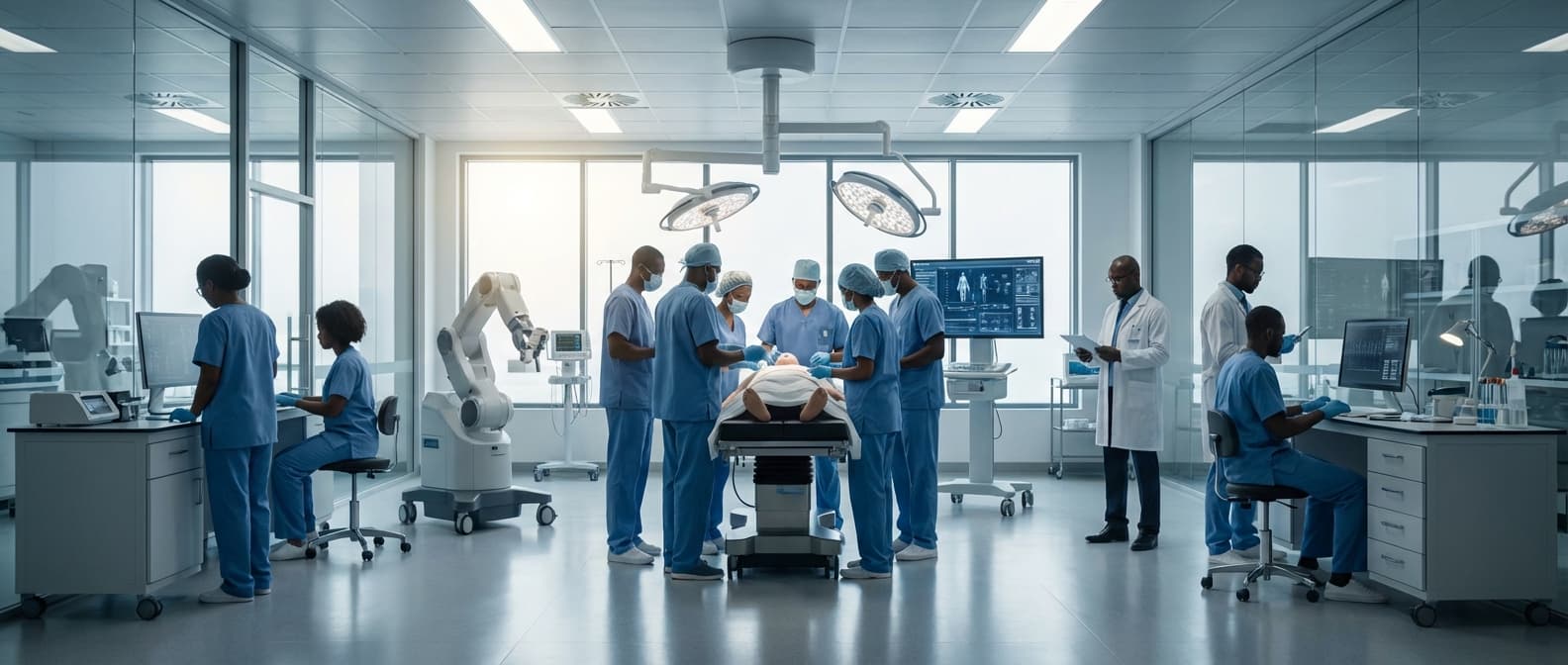
Biomedical Engineering Consulting in Namibia
Engineering Excellence & Technical Support
Equipment selection, procurement and implementation consulting High-standard technical execution following OEM protocols and local regulatory frameworks.
Advanced Medical Device Design & Prototyping
Leveraging cutting-edge CAD and simulation tools, we provide end-to-end design and rapid prototyping services for innovative medical devices. From concept validation to regulatory-ready prototypes, we empower Namibian healthcare providers with tailored solutions that improve patient outcomes and operational efficiency.
Biomedical Equipment Validation & Optimization
Ensuring the highest standards of safety and performance, our expert engineers offer comprehensive validation, calibration, and preventative maintenance services for all types of biomedical equipment. We help Namibian hospitals and clinics minimize downtime, reduce repair costs, and comply with international quality standards.
Biocompatibility & Sterilization Consulting
Navigating the complex landscape of material science and regulatory requirements, we provide specialized consulting on biocompatibility testing and effective sterilization strategies. Our expertise safeguards patient health and product integrity, ensuring Namibian medical innovations meet global benchmarks for safety and efficacy.
What Is Biomedical Engineering Consulting In Namibia?
Biomedical Engineering Consulting in Namibia refers to the provision of specialized technical expertise, advisory services, and problem-solving capabilities related to the application of engineering principles to biology and medicine, specifically within the Namibian healthcare landscape. This service bridges the gap between advanced medical technology and its practical, ethical, and regulatory implementation within the country's unique operational and resource constraints. Consultants offer guidance on the selection, acquisition, installation, maintenance, and optimal utilization of medical devices and equipment, as well as the design and management of healthcare facilities from an engineering perspective. They also advise on regulatory compliance, quality assurance, risk management, and technology innovation tailored to the Namibian context.
| Typical Use Cases for Biomedical Engineering Consulting in Namibia | Description |
|---|---|
| Medical Equipment Lifecycle Management | Assisting healthcare facilities in strategic planning for medical equipment acquisition, inventory management, preventive maintenance scheduling, and decommissioning of obsolete technology, optimizing operational efficiency and cost-effectiveness. |
| Healthcare Facility Design and Infrastructure | Providing engineering input for the design of new healthcare facilities or renovations, focusing on optimal workflow, infection control, utility systems (e.g., medical gas, electrical, HVAC), and space planning for medical equipment integration. |
| Regulatory Compliance and Standards Adherence | Guiding clients through Namibian and international regulatory frameworks for medical devices, ensuring compliance with standards for safety, efficacy, and quality. This includes assistance with registration, importation, and post-market surveillance. |
| Technology Assessment and Selection | Evaluating the suitability, cost-benefit, and technical feasibility of new medical technologies and devices for specific clinical needs and resource availability within Namibia. This involves market analysis and vendor evaluation. |
| Risk Management and Patient Safety | Developing and implementing robust risk management programs for medical devices and healthcare environments. This includes incident investigation, root cause analysis, and the implementation of corrective and preventive actions to enhance patient safety. |
| Biomedical Engineering Department Setup and Optimization | Assisting in the establishment or enhancement of in-house biomedical engineering departments, including defining roles, responsibilities, training requirements, and operational procedures. This also involves optimizing existing departmental structures and workflows. |
| Training and Capacity Building | Developing and delivering training programs for clinical staff on the proper use, basic maintenance, and safety of medical equipment, as well as training for technical personnel in advanced repair and troubleshooting techniques. |
| Medical Device Procurement and Tender Management | Supporting the procurement process by developing technical specifications, evaluating bids, and ensuring that acquired medical equipment meets defined requirements and quality standards. |
| Telemedicine and Digital Health Integration | Advising on the technical infrastructure, interoperability requirements, and cybersecurity aspects of implementing telemedicine and other digital health solutions in Namibian healthcare settings. |
| Medical Equipment Validation and Calibration | Ensuring that medical devices are properly installed, validated, and regularly calibrated to maintain accuracy, reliability, and compliance with performance specifications. |
Who Needs Biomedical Engineering Consulting in Namibia?
- Public and Private Hospitals and Clinics
- Medical Device Manufacturers and Distributors
- Government Ministries (e.g., Ministry of Health and Social Services)
- Research Institutions and Universities
- Non-Governmental Organizations (NGOs) involved in healthcare
- Insurance Providers and Funding Agencies
- Healthcare Technology Developers and Innovators
Who Needs Biomedical Engineering Consulting In Namibia?
Biomedical Engineering consulting in Namibia is crucial for a range of organizations and individuals seeking to enhance healthcare infrastructure, optimize medical device management, and ensure compliance with evolving regulations. The demand stems from a growing need for specialized expertise in areas such as medical equipment procurement, maintenance, training, and the implementation of new healthcare technologies. This consulting bridges the gap between cutting-edge medical technology and its practical, safe, and effective application within the Namibian healthcare landscape.
| Customer Type | Key Departments/Areas of Need | Specific Services Required |
|---|---|---|
| Hospitals (Public and Private) | Biomedical Engineering Department, Procurement Department, Clinical Departments (e.g., Radiology, Surgery, ICU), IT Department, Quality Assurance | Asset management, equipment lifecycle planning, procurement advisory, maintenance strategies, calibration services, technology assessments, training programs, compliance audits, incident investigation, clinical engineering support. |
| Clinics and Health Centers | Clinic Management, Procurement Officer, Healthcare Professionals | Basic equipment needs assessment, procurement guidance for essential medical devices, basic maintenance planning, user training, safety checks. |
| Medical Device Manufacturers and Distributors | Sales & Marketing, Technical Support, Regulatory Affairs, Training Department | Market entry strategy, product registration support, local regulatory compliance, after-sales service optimization, technical training for local technicians, post-market surveillance support. |
| Regulatory Bodies | Medical Device Regulation Unit, Standards Development, Inspection and Enforcement | Development of medical device regulations and standards, technical expertise for device evaluation, training for inspectors, post-market surveillance system development. |
| Research Institutions | Research Department, Laboratory Management, Equipment Management | Selection and procurement of specialized research equipment, equipment maintenance and calibration for research purposes, ensuring data integrity and safety in research settings. |
| Educational Institutions | Biomedical Technology Departments, Engineering Faculties, Training Centers | Curriculum development and review, laboratory setup and equipment sourcing for training programs, guest lectures and specialized workshops, industry linkage development. |
| Non-Governmental Organizations (NGOs) in the health sector | Program Management, Procurement, Technical Staff | Needs assessments for medical equipment in underserved areas, procurement and donation management of medical devices, training on equipment use and maintenance for field staff, project implementation support. |
| Government Ministries (e.g., Ministry of Health and Social Services) | Health Infrastructure Department, Procurement Directorate, Policy and Planning Unit, Public Health Divisions | National health technology assessment, development of national medical equipment policies and strategies, procurement frameworks for public health facilities, capacity building for the public health sector, regulatory framework development and implementation. |
Target Customers and Departments for Biomedical Engineering Consulting in Namibia
- Hospitals (Public and Private)
- Clinics and Health Centers
- Medical Device Manufacturers and Distributors
- Regulatory Bodies
- Research Institutions
- Educational Institutions (for biomedical technology programs)
- Non-Governmental Organizations (NGOs) in the health sector
- Government Ministries (e.g., Ministry of Health and Social Services)
Biomedical Engineering Consulting Process In Namibia
The biomedical engineering consulting process in Namibia, like in many other regions, follows a structured workflow designed to efficiently address the unique needs of healthcare facilities and manufacturers. This process ensures that clients receive tailored, expert advice and solutions, leading to improved healthcare outcomes and operational efficiency. The journey from an initial inquiry to the successful execution of a project typically involves several key stages, each with distinct objectives and deliverables.
| Stage | Description | Key Activities | Deliverables/Outcomes |
|---|---|---|---|
| Inquiry & Initial Consultation | The client contacts the consulting firm with a need or problem related to biomedical engineering. This stage focuses on understanding the broad nature of the request and establishing initial rapport. | Initial contact (email, phone, referral), preliminary discussion of needs, introduction to services, scheduling of a follow-up meeting. | Understanding of client's general requirements, decision to proceed to the next stage. |
| Needs Assessment & Scoping | A deep dive into the client's specific challenges, objectives, and existing infrastructure. This involves gathering detailed information to define the project's scope and requirements. | Site visits, interviews with stakeholders (clinicians, administrators, technical staff), review of existing documentation (equipment inventory, maintenance records, facility plans), identification of critical issues and opportunities. | Detailed report on current state, identification of gaps and needs, clearly defined project objectives, preliminary scope of work. |
| Proposal Development & Agreement | Based on the needs assessment, a formal proposal is drafted, outlining the proposed solutions, methodology, timeline, resources required, and associated costs. Upon acceptance, a formal agreement is signed. | Development of detailed technical and financial proposal, presentation of proposal to client, negotiation of terms and conditions, contract signing. | Comprehensive project proposal, signed consulting agreement/contract. |
| Project Planning & Mobilization | Once the agreement is in place, the consulting team develops a detailed project plan and mobilizes the necessary resources, including personnel, equipment, and any required permits. | Creation of detailed project schedule and work breakdown structure, resource allocation, team formation, stakeholder communication plan, risk assessment and mitigation strategies. | Detailed project management plan, mobilized project team, established communication channels. |
| Execution & Implementation | This is the core stage where the consulting services are delivered. This can involve a wide range of activities depending on the project's nature, such as equipment procurement, installation, training, policy development, or validation. | Performing agreed-upon consulting activities (e.g., equipment selection and procurement, installation supervision, commissioning, quality assurance, staff training, development of standard operating procedures, regulatory compliance checks). | Completion of specific project tasks, implemented solutions, trained personnel, established systems and processes. |
| Monitoring & Evaluation | Throughout the execution phase, the project's progress is continuously monitored against the plan. This stage ensures that the project is on track, within budget, and meeting its objectives. | Regular progress meetings, performance tracking, quality control checks, identification and resolution of deviations from the plan, stakeholder feedback collection. | Progress reports, identified and addressed issues, course corrections if necessary. |
| Project Closure & Handover | Upon successful completion of all project activities, the project is formally closed. This involves final documentation, handover of deliverables, and a review of lessons learned. | Final project report, handover of all documentation and deliverables (e.g., training manuals, maintenance plans, equipment specifications), final invoicing, project review meeting, lessons learned documentation. | Completed project documentation, formally handed-over deliverables, final project report, client sign-off. |
| Post-Project Support | Depending on the agreement, the consulting firm may offer ongoing support after the project closure. This can include troubleshooting, further training, or advice on future endeavors. | Ad-hoc support, follow-up consultations, ongoing training sessions, maintenance advice. | Sustained operational efficiency, continued client satisfaction, potential for future engagements. |
Biomedical Engineering Consulting Workflow in Namibia
- Inquiry & Initial Consultation
- Needs Assessment & Scoping
- Proposal Development & Agreement
- Project Planning & Mobilization
- Execution & Implementation
- Monitoring & Evaluation
- Project Closure & Handover
- Post-Project Support
Biomedical Engineering Consulting Cost In Namibia
Biomedical engineering consulting costs in Namibia are influenced by a variety of factors, making it challenging to provide a single definitive price. These costs are typically discussed and quoted in Namibian Dollars (NAD). The complexity of the project, the experience and reputation of the consultant, the duration of the engagement, and the specific services required all play a significant role in determining the final fee.
Factors influencing consulting costs include:
- Project Scope and Complexity: A simple equipment validation will cost less than designing and implementing a new hospital's medical device management system. The level of technical expertise and the number of stakeholders involved will impact the overall cost.
- Consultant's Experience and Reputation: Highly experienced and reputable biomedical engineers, especially those with a proven track record and specialized knowledge, will command higher rates. Junior consultants or those new to the field will generally charge less.
- Duration of Engagement: Projects requiring longer-term involvement, such as ongoing maintenance strategy development or extensive training programs, will naturally incur higher overall costs, even if the hourly rate is competitive.
- Specific Services Required: The nature of the consultation is crucial. This can range from technical assessments, regulatory compliance advice, procurement support, training, feasibility studies, to the development of operational procedures and safety protocols.
- Geographic Location and Travel: While Namibia has a relatively centralized business environment, travel to remote healthcare facilities for on-site assessments or installations will add to the costs, including accommodation and per diem.
- Urgency of the Project: Projects with tight deadlines might incur premium charges due to the need for expedited services and potentially reallocating resources from other commitments.
Pricing Ranges in Namibian Dollars (NAD):
It's important to note that these are general estimates and can vary significantly. Many consultants will provide tailored quotes after an initial needs assessment.
- Hourly Rates: These can range from NAD 400 to NAD 1,500+ per hour. Junior consultants might be at the lower end, while senior experts with niche skills will be at the higher end. This is common for short-term consultations or specific problem-solving tasks.
- Daily Rates: Often calculated as 6-8 hours of work, daily rates can range from NAD 3,000 to NAD 10,000+ per day. This is a common structure for on-site assessments or extended project phases.
- Project-Based Fees: For well-defined projects, consultants may offer a fixed fee. The total cost can vary dramatically, from NAD 5,000 for a simple report to NAD 100,000+ or even significantly more for complex system implementations or large-scale advisory roles. This provides budget certainty for the client.
- Retainer Fees: For ongoing support, clients might engage consultants on a retainer basis, typically a fixed monthly fee for a set number of hours or access to expertise. These can range from NAD 5,000 to NAD 25,000+ per month, depending on the scope of ongoing services.
| Service Type / Rate Structure | Estimated Cost Range (NAD) | Notes |
|---|---|---|
| Hourly Rate | 400 - 1,500+ | Varies with consultant seniority and specialization |
| Daily Rate | 3,000 - 10,000+ | Typically for on-site work or extended phases |
| Project-Based Fee | 5,000 - 100,000+ | Highly variable depending on project size and complexity; can be significantly higher for major implementations |
| Monthly Retainer | 5,000 - 25,000+ | For ongoing support and advisory services |
Key Pricing Factors for Biomedical Engineering Consulting in Namibia
- Project Scope and Complexity
- Consultant's Experience and Reputation
- Duration of Engagement
- Specific Services Required
- Geographic Location and Travel
- Urgency of the Project
Affordable Biomedical Engineering Consulting Options
Navigating the complex world of biomedical engineering can be daunting, especially for startups and smaller organizations with budget constraints. Fortunately, accessible and affordable biomedical engineering consulting options exist. This guide explores how value bundles and cost-saving strategies can make expert guidance attainable, ensuring your projects meet regulatory requirements, optimize performance, and achieve market success without breaking the bank.
| Value Bundle Type | Description | Cost-Saving Benefit |
|---|---|---|
| Project-Specific Packages | A predefined set of services tailored to common project phases, such as initial feasibility studies, regulatory submission preparation, or design verification. | Predictable costs, avoids hourly overruns, ensures all essential steps are covered. |
| Retainer Agreements (Limited Hours) | A fixed monthly fee for a set number of consulting hours, providing ongoing access to expertise for advice, reviews, and quick problem-solving. | Budget stability, immediate access to expertise, proactive issue resolution reducing more costly interventions later. |
| "On-Demand" Expert Access | Access to a network of specialists who can be brought in for short, focused tasks or emergency consultations, often with pre-negotiated rates. | Pay only for what you need, rapid deployment for critical issues, avoids maintaining a full-time specialized team. |
| Training & Mentorship Bundles | Combining consulting services with hands-on training for your internal team on specific engineering processes, software, or regulatory requirements. | Empowers internal staff for future projects, reduces long-term reliance on external consultants, builds internal capability. |
| Regulatory Compliance Assurance Packages | Bundles focused on specific regulatory pathways (e.g., FDA 510(k), CE marking) including documentation review, strategy development, and submission support. | Streamlines compliance, reduces risk of submission delays or rejections, often more cost-effective than piecemeal services. |
Key Considerations for Affordable Biomedical Engineering Consulting
- Define Your Needs Clearly: Before seeking consultants, precisely outline the scope of work, deliverables, and desired outcomes. This prevents scope creep and ensures you're only paying for necessary expertise.
- Phased Project Approach: Break down large projects into smaller, manageable phases. This allows for more flexible budgeting and the ability to bring in specialized consultants for specific tasks.
- Remote Consulting: Leverage the power of remote collaboration. Many high-quality consultants offer their services virtually, significantly reducing travel and accommodation costs.
- Tiered Service Levels: Look for consultants who offer different service tiers, from basic advice to comprehensive project management. This allows you to select a level that matches your budget and project complexity.
- In-House Training vs. Outsourcing: Consider if certain tasks can be handled internally with some expert guidance rather than full outsourcing. Consultants can provide training to upskill your existing team.
- Look for Niche Expertise: Specialized consultants may be more cost-effective for specific, unique challenges than generalist firms that charge a premium for broad capabilities.
- Negotiate Contracts Carefully: Understand the consultant's pricing structure (hourly, fixed-fee, retainer). Be sure to negotiate terms that are fair and transparent.
Verified Providers In Namibia
Finding reliable and accredited healthcare providers is crucial for anyone seeking quality medical services. In Namibia, the landscape of healthcare is continuously evolving, with a growing emphasis on verified credentials and patient safety. This guide focuses on identifying and understanding the significance of 'Verified Providers' within the Namibian context, with a particular spotlight on Franance Health. We will explore what 'Verified Provider' status entails, the stringent criteria involved, and why choosing providers like Franance Health, who meet these benchmarks, signifies a commitment to excellence and patient well-being.
| Credential | Description | Franance Health's Commitment |
|---|---|---|
| Medical Council Registration | Mandatory registration with the Health Professions Council of Namibia (HPCNA) ensuring practitioners meet basic competency and ethical standards. | All practicing medical professionals at Franance Health are fully registered and compliant with HPCNA regulations, undergoing regular verification. |
| Specialist Qualifications | Proof of advanced education and training in a specific medical field, often involving postgraduate degrees and fellowships. | Franance Health employs specialists who have obtained recognized international and national postgraduate qualifications, validated through rigorous academic and practical assessments. |
| Continuing Professional Development (CPD) | Requirement for healthcare professionals to engage in ongoing learning to stay updated with the latest medical advancements and best practices. | Franance Health mandates and facilitates regular CPD for all its staff, ensuring they are at the forefront of medical knowledge and techniques. |
| Clean Disciplinary Record | Absence of any substantiated complaints or disciplinary actions from regulatory bodies. | Franance Health conducts thorough background checks and maintains a strict policy of zero tolerance for any professional misconduct, ensuring all providers have unblemished records. |
| Accreditation (Facility Level) | Recognition of healthcare facilities that meet stringent quality and safety standards set by accreditation bodies. | While not directly applicable to individual providers, Franance Health operates within facilities that are pursuing or have achieved relevant accreditations, demonstrating a commitment to comprehensive quality assurance. |
Why Verified Providers Matter
- Ensures adherence to professional standards and ethical practices.
- Guarantees that practitioners hold legitimate and up-to-date qualifications.
- Provides assurance of a safe and effective healthcare experience.
- Reduces the risk of encountering unqualified or fraudulent practitioners.
- Facilitates access to specialists with proven expertise.
- Contributes to a more trustworthy and efficient healthcare system overall.
Scope Of Work For Biomedical Engineering Consulting
This Scope of Work (SOW) outlines the consulting services to be provided by [Consulting Firm Name] (hereinafter referred to as 'Consultant') to [Client Company Name] (hereinafter referred to as 'Client') for [Project Name/Description]. The objective of this project is to [Briefly state the overarching goal of the consulting engagement]. The Consultant will leverage its expertise in biomedical engineering to deliver technical solutions and recommendations that meet the Client's specific needs and regulatory requirements.
| Technical Deliverable | Description | Standard Specifications / Format | Acceptance Criteria |
|---|---|---|---|
| Project Requirements Document | A comprehensive document detailing all functional, performance, and technical requirements for the project. | Microsoft Word (.docx) or PDF (.pdf). Follows industry-standard requirement documentation templates. | Approved by Client stakeholders. All identified needs and constraints are captured. |
| Conceptual Design Report | Outlines the proposed technical approach, including system architecture, key components, and preliminary performance metrics. | Microsoft Word (.docx) or PDF (.pdf). Includes diagrams, flowcharts, and high-level schematics. | Feasible, aligned with requirements, and technically sound. Approved by Client. |
| Detailed Technical Specifications | Provides in-depth specifications for hardware, software, materials, and interfaces. | Microsoft Word (.docx) or PDF (.pdf). Includes precise measurements, tolerances, performance parameters, and material properties. | Clear, unambiguous, and complete. Meets regulatory and design requirements. Approved by Client. |
| Validation & Verification (V&V) Plan | A detailed plan outlining the strategy, methods, and resources for testing the product to ensure it meets specifications and regulatory requirements. | Microsoft Word (.docx) or PDF (.pdf). Follows IEEE 1012 or similar V&V standards. Includes test protocols and acceptance criteria. | Comprehensive, testable, and regulatory-compliant. Approved by Client. |
| Risk Management Report (as applicable) | Identifies potential risks associated with the product, including hazards, failure modes, and their impact, along with mitigation strategies. | Microsoft Word (.docx) or PDF (.pdf). Adheres to ISO 14971 or similar risk management standards. | All significant risks identified and appropriately addressed. Approved by Client. |
| Final Technical Recommendations Report | Summarizes the project findings, conclusions, and actionable recommendations for the Client. | Microsoft Word (.docx) or PDF (.pdf). Includes executive summary, detailed findings, and implementation roadmap. | Clear, concise, and actionable. Addresses all project objectives. Approved by Client. |
Project Phases and Key Activities
- Phase 1: Discovery and Requirements Gathering
- Conduct in-depth interviews with Client stakeholders to understand project goals, existing infrastructure, and specific challenges.
- Review existing documentation, including product specifications, user manuals, and regulatory submissions (if applicable).
- Define detailed technical requirements, performance criteria, and user needs.
- Identify potential risks and mitigation strategies.
- Phase 2: Technical Analysis and Design
- Perform detailed analysis of current biomedical systems or proposed designs.
- Develop conceptual designs or refine existing ones based on gathered requirements.
- Conduct feasibility studies and trade-off analyses for different technical approaches.
- Generate preliminary technical specifications and schematics.
- Phase 3: Development Support and Prototyping (if applicable)
- Provide guidance on hardware and software development processes.
- Assist in the selection of appropriate components and materials.
- Review and provide feedback on prototypes during development.
- Support the development of testing protocols.
- Phase 4: Validation and Verification Planning
- Develop comprehensive validation and verification (V&V) plans to ensure the product meets design specifications and regulatory requirements.
- Define test cases, procedures, and acceptance criteria.
- Plan for usability testing and human factors engineering.
- Phase 5: Regulatory Compliance and Documentation
- Advise on relevant regulatory standards (e.g., FDA, CE, ISO 13485).
- Assist in the preparation of technical documentation required for regulatory submissions.
- Review and provide feedback on technical reports and risk management documentation.
- Phase 6: Final Review and Recommendations
- Conduct a comprehensive review of all technical deliverables.
- Provide final recommendations for product development, implementation, or improvement.
- Present findings and recommendations to Client stakeholders.
Service Level Agreement For Biomedical Engineering Consulting
This Service Level Agreement (SLA) outlines the guaranteed response times and uptime commitments for Biomedical Engineering consulting services provided by [Your Company Name] to [Client Name]. This SLA is an addendum to the Master Services Agreement (MSA) between the parties.
| Issue Priority | Response Time (During Business Hours) | Resolution Time Target (During Business Hours) | Response Time (Outside Business Hours - if applicable) | Resolution Time Target (Outside Business Hours - if applicable) |
|---|---|---|---|---|
| Critical Issue | 1 hour | 4 business hours | 2 hours (if support contract includes 24/7 support) | 8 business hours (if support contract includes 24/7 support) |
| High Priority Issue | 2 business hours | 8 business hours | 4 hours (if support contract includes 24/7 support) | 16 business hours (if support contract includes 24/7 support) |
| Normal Priority Issue | 4 business hours | 2 business days | N/A (handled during next business hours) | N/A (handled during next business hours) |
Key Definitions
- Business Hours: Monday through Friday, 9:00 AM to 5:00 PM [Client's Time Zone], excluding public holidays in [Client's Location].
- Critical Issue: A problem that renders a critical biomedical device or system unusable, significantly impacts patient safety, or causes substantial operational disruption.
- High Priority Issue: A problem that impairs the functionality of a biomedical device or system, affects a significant number of users, or poses a moderate risk to patient safety or operational efficiency.
- Normal Priority Issue: A problem that causes minor inconvenience, affects a single user or a small group, or has minimal impact on patient safety or operational efficiency.
- Response Time: The maximum time within which [Your Company Name] will acknowledge a reported issue and begin active investigation or resolution efforts.
- Resolution Time: The maximum time within which [Your Company Name] aims to resolve an issue. Note: Resolution times are targets and may be influenced by factors outside of [Your Company Name]'s direct control, such as hardware failures, third-party vendor delays, or client-side dependencies.
- Uptime Guarantee: The percentage of time that critical biomedical systems and services supported by [Your Company Name] are available and operational.
Frequently Asked Questions

Ready when you are
Let's scope your Biomedical Engineering Consulting in Namibia project in Namibia.

Scaling healthcare logistics and technical systems across the entire continent.