
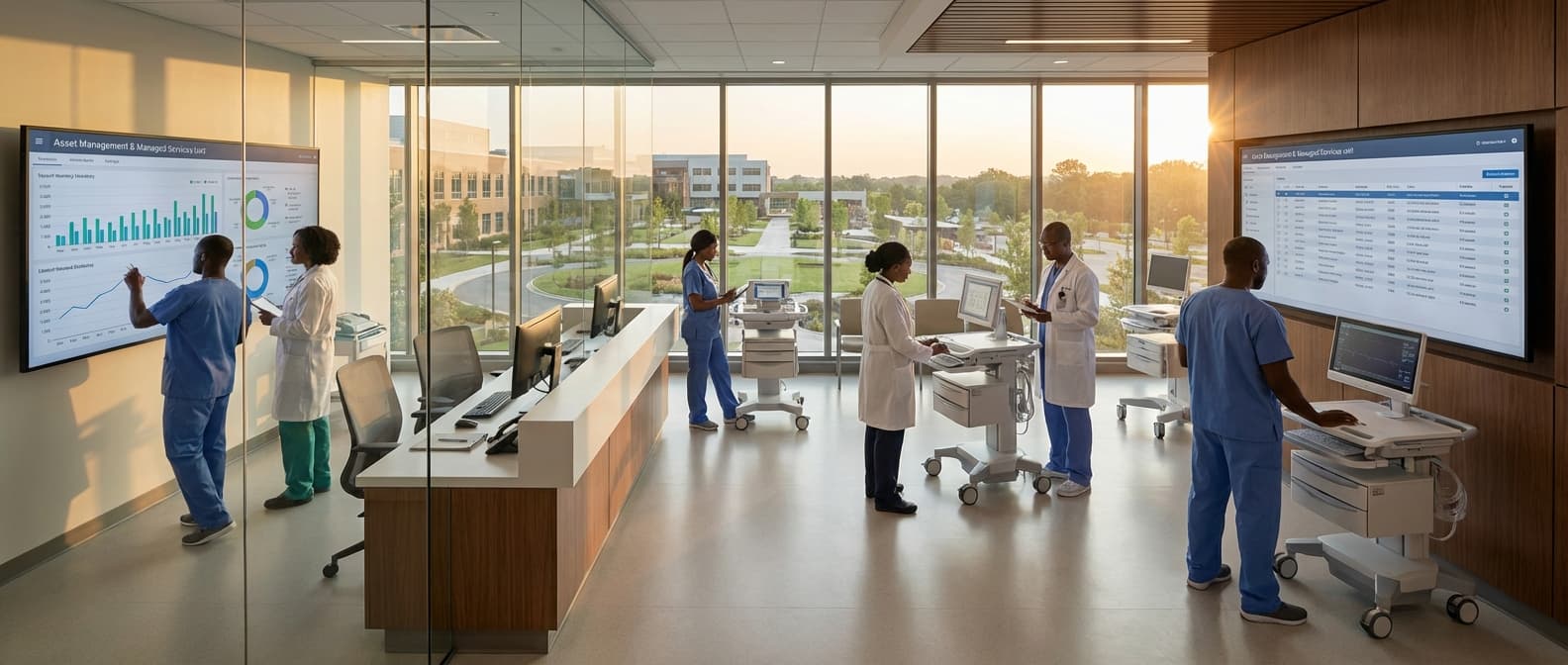
Maintenance KPI Reporting Service (Uptime/MTBF/MTTR) in Namibia
Engineering Excellence & Technical Support
Maintenance KPI Reporting Service (Uptime/MTBF/MTTR) High-standard technical execution following OEM protocols and local regulatory frameworks.
Maximize Uptime: Real-time Performance Monitoring for Namibian Industries
Our service delivers granular, real-time visibility into your operational uptime, directly from your Namibian sites. Leveraging advanced IoT integration and predictive analytics, we empower you to identify and address potential disruptions *before* they impact production, ensuring maximum asset availability and revenue generation.
Optimize Mean Time Between Failures (MTBF): Proactive Maintenance Strategies for Namibian Assets
Gain actionable insights into failure patterns across your Namibian equipment fleet. Our platform analyzes historical maintenance data and sensor readings to predict potential breakdowns, enabling you to shift from reactive repairs to predictive maintenance, significantly extending Mean Time Between Failures (MTBF) and reducing costly unplanned downtime.
Reduce Mean Time To Repair (MTTR): Streamlined Diagnostics & Faster Resolutions for Namibian Operations
Accelerate your response to equipment failures with our comprehensive MTTR reporting. We provide precise diagnostic tools, remote access capabilities where applicable, and optimized workflow recommendations to slash Mean Time To Repair (MTTR). This means getting your Namibian operations back online faster, minimizing lost productivity and service disruptions.
What Is Maintenance Kpi Reporting Service (Uptime/mtbf/mttr) In Namibia?
Maintenance KPI Reporting Service (Uptime/MTBF/MTTR) in Namibia refers to a specialized offering designed to collect, analyze, and present key performance indicators (KPIs) related to the operational availability and reliability of physical assets and systems within Namibian organizations. The core metrics typically include Uptime (percentage of time a system is operational), Mean Time Between Failures (MTBF - average time a system operates before a failure), and Mean Time To Repair (MTTR - average time it takes to restore a system after a failure). This service empowers businesses to proactively manage their maintenance strategies, identify trends, optimize resource allocation, and ultimately enhance operational efficiency and reduce costs.
| Who Needs This Service? | Typical Use Cases | ||||||||
|---|---|---|---|---|---|---|---|---|---|
| Industries with critical physical assets: Mining, Manufacturing, Oil & Gas, Power Generation, Telecommunications, Logistics, Hospitality, Healthcare, and Facilities Management in Namibia. | Optimizing production line efficiency in manufacturing by minimizing unplanned downtime. | Ensuring continuous availability of critical infrastructure in the mining sector. | Improving network reliability for telecommunications providers. | Reducing energy costs through efficient maintenance of power generation equipment. | Enhancing customer satisfaction in hospitality by maintaining operational systems (HVAC, elevators, etc.). | Streamlining asset management and repair processes in logistics and transportation. | Improving patient care through reliable medical equipment operation in healthcare facilities. | Proactive identification and mitigation of equipment failures in facilities management. | Informed decision-making for capital expenditure and equipment replacement strategies. |
What this Service Involves:
- Data Collection & Integration: Establishing robust mechanisms for gathering raw maintenance data from various sources such as Computerized Maintenance Management Systems (CMMS), sensor data (IoT), manual logs, and technician reports. This often involves API integrations and data warehousing.
- KPI Calculation & Analysis: Applying standardized methodologies to compute Uptime, MTBF, MTTR, and other relevant KPIs. This phase includes identifying root causes of failures, analyzing failure patterns, and identifying areas for improvement.
- Reporting & Visualization: Developing clear, concise, and actionable reports and dashboards. These visualizations typically employ charts, graphs, and trend analyses to present KPI performance over time and against set benchmarks.
- Benchmarking & Performance Tracking: Comparing current performance against historical data, industry standards, and predefined targets to gauge effectiveness and identify deviations.
- Recommendations & Actionable Insights: Providing data-driven recommendations for optimizing maintenance schedules, spare parts management, technician training, and equipment lifecycle management.
- System Monitoring & Alerting: Implementing real-time monitoring capabilities with automated alerts for critical deviations in KPI performance, enabling prompt intervention.
Who Needs Maintenance Kpi Reporting Service (Uptime/mtbf/mttr) In Namibia?
In Namibia, businesses and organizations across various sectors rely heavily on the consistent and efficient operation of their equipment and infrastructure. Downtime, whether planned or unplanned, can lead to significant financial losses, reputational damage, and decreased productivity. A robust Maintenance KPI Reporting Service, specifically focused on Uptime, Mean Time Between Failures (MTBF), and Mean Time To Repair (MTTR), is crucial for optimizing maintenance strategies, reducing operational costs, and ensuring business continuity. This service provides actionable insights derived from data analysis, enabling proactive maintenance and informed decision-making.
| Target Customer/Industry | Key Departments Involved | Primary Needs/Benefits |
|---|---|---|
| Mining and Extractive Industries | Operations, Maintenance, Asset Management, Production | Maximize equipment uptime for continuous extraction, reduce costly breakdowns in remote locations, optimize spare parts inventory, improve safety. |
| Manufacturing and Industrial Production | Production, Maintenance, Engineering, Quality Control | Ensure continuous production lines, minimize product defects due to equipment failure, optimize maintenance schedules, reduce energy consumption through efficient machinery. |
| Energy and Utilities (Power Generation, Water Treatment) | Operations, Maintenance, Engineering, Network Management | Guarantee uninterrupted service delivery, minimize power outages or water supply disruptions, extend the lifespan of critical infrastructure, manage compliance with regulations. |
| Telecommunications | Network Operations, Field Maintenance, IT Infrastructure | Ensure high network availability for customers, minimize service downtime, optimize technician dispatch and repair times, manage a complex asset base. |
| Transportation and Logistics | Fleet Management, Operations, Maintenance, Supply Chain | Maximize vehicle and equipment uptime for timely deliveries, reduce fuel consumption through efficient maintenance, minimize operational disruptions, improve safety records. |
| Agriculture and Agribusiness | Farm Management, Equipment Maintenance, Operations | Ensure critical machinery is operational during planting and harvesting seasons, minimize crop losses due to equipment failure, optimize irrigation system performance. |
| Construction and Infrastructure Development | Project Management, Site Operations, Equipment Maintenance | Ensure project timelines are met by keeping heavy machinery operational, minimize costly delays due to equipment breakdowns, optimize maintenance of diverse project assets. |
| Hospitality and Tourism (Hotels, Resorts) | Facilities Management, Engineering, Operations | Maintain guest comfort and satisfaction by ensuring all systems (HVAC, elevators, kitchen equipment) are operational, minimize disruptions to guest services, reduce energy waste. |
| Healthcare (Hospitals, Clinics) | Biomedical Engineering, Facilities Management, Operations | Ensure critical medical equipment is always functional, minimize patient care disruptions, maintain a safe and sterile environment, manage compliance with healthcare regulations. |
| Government and Public Services (Water, Sanitation, Municipalities) | Public Works, Maintenance Departments, Operations | Ensure essential public services are consistently available, optimize the use of public funds for maintenance, reduce citizen complaints due to service interruptions, extend the life of public assets. |
Target Customers and Departments Requiring Maintenance KPI Reporting Service in Namibia
- Industries with critical operational uptime requirements.
- Organizations managing large fleets of assets.
- Businesses focused on maximizing resource utilization.
- Companies striving for operational excellence and cost reduction.
Maintenance Kpi Reporting Service (Uptime/mtbf/mttr) Process In Namibia
This document outlines the workflow for the Maintenance KPI Reporting Service (Uptime/MTBF/MTTR) in Namibia, detailing the process from initial client inquiry through the successful execution and delivery of reports. This service aims to provide clients with critical insights into their asset maintenance performance, enabling informed decision-making for operational efficiency and cost optimization.
| Stage | Description | Key Activities | Deliverables | Responsible Parties | Estimated Timeline (Example) |
|---|---|---|---|---|---|
| Initial contact from a potential client seeking maintenance KPI reporting services. | Receive and acknowledge inquiry. Schedule initial consultation. Understand client's assets, existing systems, reporting requirements, and desired KPIs (Uptime, MTBF, MTTR). Discuss data availability and accessibility. Identify key stakeholders. | Confirmed client interest. Preliminary understanding of scope. List of required client data/systems. | Client, Service Provider (Sales/Consultant) | 1-3 Business Days |
| Formalizing the service offering based on the needs assessment. | Develop a detailed proposal outlining scope of work, KPIs to be tracked, data sources, methodology, reporting format, frequency, pricing, and service level agreements (SLAs). Negotiate terms and conditions. Finalize contract/service agreement. | Formal Service Proposal. Signed Service Agreement/Contract. | Service Provider (Sales/Project Manager), Client | 3-7 Business Days |
| Gathering and preparing the necessary data for analysis. | Identify and access relevant data sources (e.g., CMMS/EAM systems, SCADA data, maintenance logs, sensor data). Implement data extraction mechanisms (manual input, APIs, database connections). Cleanse and validate data for accuracy and completeness. Integrate data into the reporting platform. | Cleaned and validated dataset. Integrated data within the reporting environment. | Service Provider (Data Engineers/Analysts), Client (for system access/support) | 1-4 Weeks (depends on data complexity and accessibility) |
| Processing the data to derive meaningful maintenance metrics. | Apply defined formulas for Uptime, Mean Time Between Failures (MTBF), and Mean Time To Repair (MTTR). Perform trend analysis, identify outliers, and benchmark performance. Correlate KPI performance with operational events. | Calculated KPI values. Initial analysis insights. | Service Provider (Maintenance Analysts) | 1-2 Weeks |
| Creating clear and actionable reports for the client. | Design and generate standard KPI reports. Customize reports based on client-specific requirements (e.g., specific asset groups, timeframes, graphical representations). Include executive summaries and detailed breakdowns. Incorporate insights and recommendations. | Draft KPI Reports (various formats: PDF, dashboards). Customized report templates. | Service Provider (Report Developers/Analysts), Client (for review/feedback) | 3-5 Business Days |
| Presenting the findings and insights to the client. | Deliver final reports to the client via agreed-upon methods (email, secure portal). Schedule and conduct presentation meetings (virtual or in-person) to explain findings, answer questions, and discuss implications. Provide access to interactive dashboards if applicable. | Final KPI Reports. Presentation materials. Interactive dashboards (if applicable). | Service Provider (Project Manager/Analysts), Client | 2-3 Business Days (delivery) + 1-2 Business Days (presentation) |
| Ensuring client satisfaction and refining the service. | Solicit feedback on the reports, presentation, and overall service. Identify areas for improvement in data collection, analysis, or reporting. Implement changes and updates for future reporting cycles. Maintain ongoing communication for future needs. | Client feedback summary. Action plan for service improvement. Updated processes/templates. | Service Provider (Project Manager/Client Relationship Manager), Client | Ongoing |
Service Workflow Stages
- Inquiry and Needs Assessment
- Proposal Development and Agreement
- Data Collection and Integration
- Analysis and KPI Calculation
- Report Generation and Customization
- Report Delivery and Presentation
- Feedback and Continuous Improvement
Maintenance Kpi Reporting Service (Uptime/mtbf/mttr) Cost In Namibia
The cost of a Maintenance KPI Reporting Service (Uptime/MTBF/MTTR) in Namibia can vary significantly based on several factors. These factors influence the complexity of the service, the technology involved, and the level of customization required. For businesses in Namibia, understanding these pricing determinants is crucial for budgeting and selecting the right service provider. The pricing is typically quoted in Namibian Dollars (NAD) to reflect local market conditions.
| Service Tier/Scope | Estimated Monthly Cost (NAD) | Key Features / Typical Clients |
|---|---|---|
| Basic Reporting (Manual Entry/Limited Assets) | 1,500 - 5,000 | Simple dashboards, basic Uptime/Downtime tracking, small businesses with few assets, occasional reports. |
| Standard Reporting (Automated Data Feed/Moderate Assets) | 5,000 - 15,000 | Automated data integration (e.g., from CMMS), standard MTBF/MTTR calculations, customizable dashboards, medium-sized enterprises, regular reporting cycles. |
| Advanced Reporting (IoT/Sensor Integration/Extensive Assets) | 15,000 - 50,000+ | Real-time data streaming, advanced predictive analytics, comprehensive asset lifecycle tracking, integration with ERP, large industrial operations, mines, or critical infrastructure. |
| Enterprise/Bespoke Solutions (Highly Customized) | Custom Quote (Often 50,000+ NAD) | Tailored analytics, unique KPI definitions, full system integration, complex multi-site deployments, strategic maintenance optimization for large corporations. |
Key Pricing Factors for Maintenance KPI Reporting Services in Namibia:
- {"title":"Scope and Complexity of Reporting","description":"The number of assets being monitored, the variety of asset types (e.g., machinery, vehicles, IT infrastructure), and the depth of the data required for each KPI (Uptime, Mean Time Between Failures - MTBF, Mean Time To Repair - MTTR) directly impact cost. More complex reporting needs, involving multiple sites or intricate data points, will be more expensive."}
- {"title":"Data Collection Methods","description":"The method used to collect data is a significant cost driver. This can range from manual data entry (least expensive but prone to errors and time-consuming) to automated sensor-based data acquisition (IoT devices, SCADA systems) and integration with existing enterprise resource planning (ERP) or computerised maintenance management systems (CMMS)."}
- {"title":"Software and Technology Platform","description":"The chosen software platform for data analysis, visualization, and reporting plays a crucial role. This could involve off-the-shelf solutions with subscription fees, custom-developed platforms, or cloud-based Software-as-a-Service (SaaS) offerings. SaaS models often have tiered pricing based on features and usage."}
- {"title":"Level of Customization and Integration","description":"The need for custom dashboard designs, specific report formats, or seamless integration with other business systems (e.g., inventory management, finance) will add to the development and implementation costs."}
- {"title":"Implementation and Setup Costs","description":"Initial setup, including software installation, configuration, sensor deployment (if applicable), and user training, incurs upfront costs. The complexity of the implementation environment will influence this."}
- {"title":"Ongoing Support and Maintenance","description":"The level of ongoing technical support, software updates, and system maintenance provided by the service vendor is usually a recurring cost, often billed monthly or annually."}
- {"title":"Vendor Expertise and Reputation","description":"More established and reputable vendors with a proven track record and specialized expertise in maintenance analytics may command higher prices."}
- {"title":"Data Volume and Frequency of Updates","description":"The sheer volume of data being processed and the frequency with which it needs to be updated and reported on can influence pricing, especially for cloud-based solutions."}
Affordable Maintenance Kpi Reporting Service (Uptime/mtbf/mttr) Options
Our Affordable Maintenance KPI Reporting Service provides critical insights into your equipment's performance, focusing on Uptime, Mean Time Between Failures (MTBF), and Mean Time To Repair (MTTR). By leveraging these key performance indicators (KPIs), organizations can proactively identify issues, optimize maintenance schedules, reduce downtime, and ultimately save significant costs. We offer flexible value bundles and cost-saving strategies to cater to businesses of all sizes, ensuring you get the most impactful data without breaking the bank.
| Value Bundle | Key Features | Target Audience | Estimated Monthly Cost Range | Cost-Saving Strategy |
|---|---|---|---|---|
Understanding the Core KPIs
- {"title":"Uptime","description":"The percentage of time a piece of equipment is operational and available for use. Higher uptime directly translates to increased productivity and revenue."}
- {"title":"Mean Time Between Failures (MTBF)","description":"The average time a repairable asset operates between one failure and the next. A higher MTBF indicates greater reliability and less frequent breakdowns."}
- {"title":"Mean Time To Repair (MTTR)","description":"The average time it takes to repair a faulty asset and return it to operational status. Lower MTTR minimizes downtime and associated costs."}
Verified Providers In Namibia
In Namibia's evolving healthcare landscape, discerning individuals and organizations seek assurance of quality and reliability. Verified providers are paramount, and Franance Health stands out as a leader in this regard. Their rigorous credentialing process ensures that their practitioners meet the highest standards of medical expertise, ethical conduct, and patient-centered care. This commitment to verification translates into tangible benefits for patients, including enhanced trust, improved health outcomes, and access to a network of compassionate and skilled healthcare professionals.
| Credentialing Aspect | Franance Health's Standard | Benefit to Patients |
|---|---|---|
| Medical Licenses & Certifications | Thorough verification of all relevant national and international licenses and board certifications. | Ensures providers possess the foundational medical knowledge and legal authority to practice. |
| Clinical Experience & Competence | In-depth review of professional history, case studies, and peer assessments. | Guarantees a high level of practical skill and proven ability to diagnose and treat effectively. |
| Ethical Conduct & Professionalism | Background checks and assessment of adherence to professional codes of conduct. | Provides a safe and trustworthy healthcare environment, free from malpractice and ethical breaches. |
| Continuing Medical Education (CME) | Mandatory participation in ongoing training and educational programs. | Ensures providers remain up-to-date with the latest medical advancements and best practices. |
| Patient Feedback & Satisfaction | Mechanisms for collecting and acting upon patient reviews and testimonials. | Promotes a patient-centered approach and continuous improvement in service delivery. |
Why Franance Health is the Best Choice for Verified Providers in Namibia
- Rigorous Credentialing Process: Franance Health employs a comprehensive and multi-faceted approach to verify the qualifications, experience, and ethical standing of all their healthcare providers.
- Commitment to Excellence: They go beyond basic requirements, actively seeking out professionals who demonstrate a passion for continuous learning and exceptional patient care.
- Patient-Centric Approach: Verification at Franance Health is rooted in ensuring providers are not only medically competent but also possess strong communication skills and a genuine commitment to patient well-being.
- Access to Specialized Care: Their network includes a diverse range of specialists, all thoroughly vetted to provide the highest quality of care across various medical disciplines.
- Trust and Peace of Mind: Partnering with Franance Health offers the assurance that you are receiving care from accredited and dependable professionals, minimizing risks and maximizing confidence in your healthcare journey.
Scope Of Work For Maintenance Kpi Reporting Service (Uptime/mtbf/mttr)
This document outlines the Scope of Work (SOW) for a Maintenance KPI Reporting Service. The service will focus on delivering comprehensive reports for key maintenance performance indicators, specifically Uptime, Mean Time Between Failures (MTBF), and Mean Time To Repair (MTTR). The goal is to provide actionable insights for optimizing maintenance strategies and improving operational efficiency.
| Deliverable Title | Description | Frequency | Format | Standard Specifications |
|---|---|---|---|---|
| Uptime Performance Report | Detailed breakdown of asset/system uptime, identifying major downtime contributors and trends. | Weekly, Monthly, Quarterly, Annually | PDF, CSV, Interactive Dashboard (Optional) | Percentage of uptime, categorized downtime (planned vs. unplanned), root cause analysis of significant downtime events, trend analysis over specified periods. |
| MTBF Analysis Report | Analysis of asset/system reliability, highlighting components or systems with recurring failures. | Monthly, Quarterly, Annually | PDF, CSV | Average MTBF values per asset/system, identification of low MTBF assets, analysis of failure patterns, recommendations for reliability improvements. |
| MTTR Performance Report | Assessment of maintenance team's responsiveness and repair efficiency, identifying bottlenecks in the repair process. | Weekly, Monthly, Quarterly | PDF, CSV | Average MTTR values per asset/system, breakdown of repair times (diagnosis, parts acquisition, labor, testing), identification of factors contributing to extended repair times, recommendations for reducing MTTR. |
| Executive Summary Dashboard | High-level overview of key maintenance KPIs with actionable insights and trend visualizations. | Monthly, Quarterly | Interactive Web-based Dashboard, PDF Export | Visual representation of Uptime, MTBF, and MTTR trends, key performance indicators (KPIs) against targets, identification of critical areas requiring attention, high-level recommendations. |
| Data Source Integration and Validation Report | Documentation of the data sources used for KPI calculations and the validation process applied. | Initial setup, As needed for updates | List of integrated data sources (e.g., CMMS, SCADA, IoT platforms), data quality checks performed, data reconciliation procedures, confirmation of data accuracy. | |
| Custom Report Generation | Ad-hoc reports based on specific client requirements for deeper dives into particular issues or asset groups. | As requested | PDF, CSV, Excel | Clearly defined report scope and objectives, detailed data analysis, tailored visualizations, specific recommendations based on the custom request. |
Key Maintenance KPIs and Definitions
- Uptime: The percentage of time a system or asset is operational and available for use. Calculated as (Total Scheduled Operating Time - Downtime) / Total Scheduled Operating Time * 100%.
- Mean Time Between Failures (MTBF): The average time that a system or asset operates between failures. Calculated as Total Operational Time / Number of Failures.
- Mean Time To Repair (MTTR): The average time it takes to repair a system or asset after a failure. Calculated as Total Downtime / Number of Repairs.
Service Level Agreement For Maintenance Kpi Reporting Service (Uptime/mtbf/mttr)
This Service Level Agreement (SLA) outlines the commitment of [Your Company Name] (hereinafter referred to as "Provider") to its client, [Client Name] (hereinafter referred to as "Client"), regarding the Maintenance KPI Reporting Service, specifically focusing on Uptime, Mean Time Between Failures (MTBF), and Mean Time To Repair (MTTR). This agreement defines the performance metrics, response times, and uptime guarantees associated with the reporting service.
| Service Component | Performance Metric | Target Value | Monitoring Method | Reporting Frequency |
|---|---|---|---|---|
| Maintenance KPI Reporting Service | Uptime | 99.5% | Automated monitoring tools, independent third-party verification (optional) | Monthly (summarized quarterly) |
| Maintenance KPI Reporting Service | MTBF | Minimum of [Number] hours between unplanned downtimes | Internal system logs and incident tracking | Monthly (summarized quarterly) |
| Maintenance KPI Reporting Service | MTTR | Maximum of [Number] hours for unplanned downtimes | Internal system logs and incident tracking | Monthly (summarized quarterly) |
Key Definitions
- Uptime: The percentage of time the Maintenance KPI Reporting Service is available and operational.
- Mean Time Between Failures (MTBF): The average time elapsed between unplanned downtimes of the reporting service.
- Mean Time To Repair (MTTR): The average time it takes to restore the reporting service to full operational status after an unplanned downtime.
- Scheduled Downtime: Pre-announced periods when the reporting service will be unavailable for maintenance, upgrades, or other planned activities. This downtime is communicated to the Client at least [Number] business days in advance.
Frequently Asked Questions

Ready when you are
Let's scope your Maintenance KPI Reporting Service (Uptime/MTBF/MTTR) in Namibia project in Namibia.

Scaling healthcare logistics and technical systems across the entire continent.