
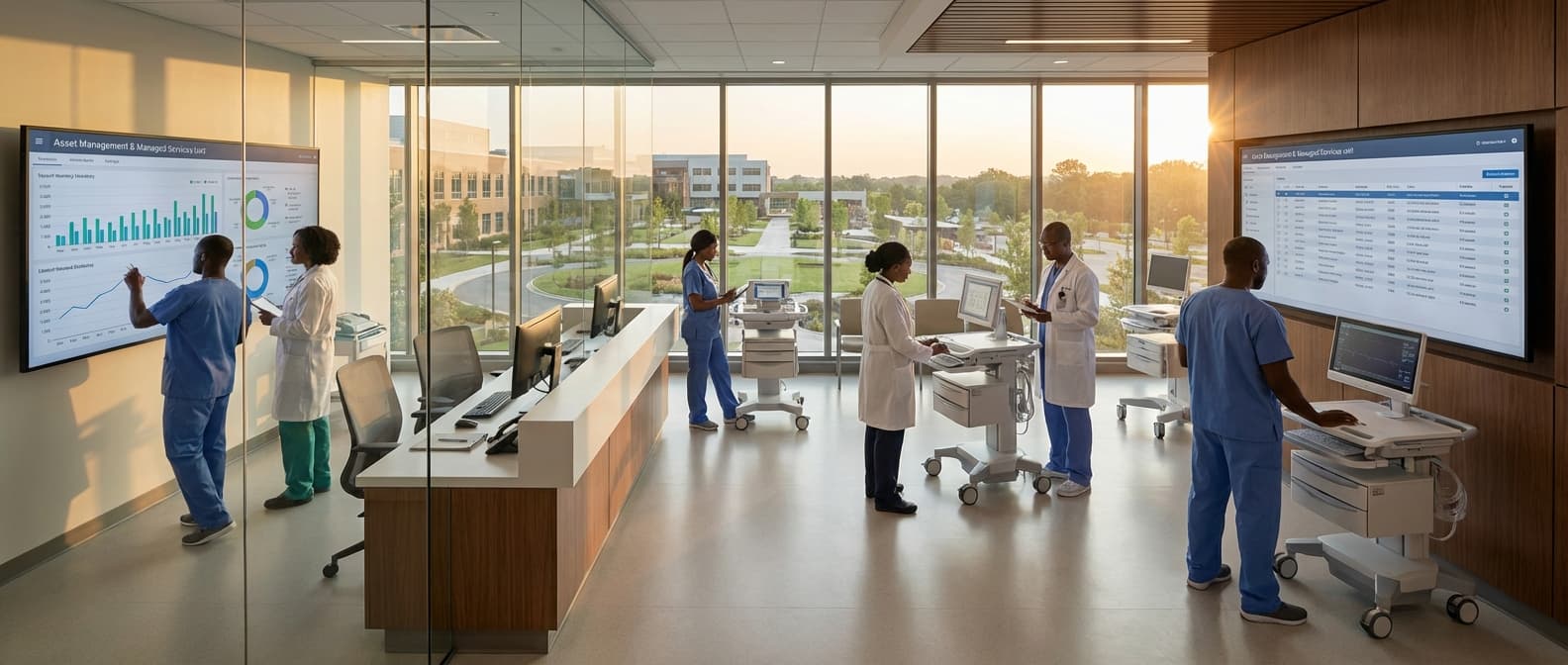
CMMS Setup & Configuration Service in Namibia
Engineering Excellence & Technical Support
CMMS Setup & Configuration Service High-standard technical execution following OEM protocols and local regulatory frameworks.
Tailored CMMS Implementation
We meticulously configure your CMMS to align with Namibia's unique industrial landscape, optimizing asset management, preventive maintenance schedules, and inventory control for maximum operational efficiency and regulatory compliance across sectors like mining, agriculture, and tourism.
Data Migration & Integration Expertise
Leveraging our deep understanding of Namibian data standards and IT infrastructure, we ensure seamless migration of your existing asset data and integrate your new CMMS with essential business systems, providing a unified platform for informed decision-making.
On-Site Training & Localized Support
Our certified technicians provide comprehensive, on-site training in Namibia, empowering your team with the skills to effectively utilize your CMMS. We offer ongoing, localized support, ensuring prompt resolution of issues and continuous system optimization.
What Is Cmms Setup & Configuration Service In Namibia?
CMMS Setup & Configuration Service in Namibia refers to the specialized professional services undertaken to deploy, customize, and optimize a Computerized Maintenance Management System (CMMS) for organizations operating within Namibia. This service ensures that the CMMS is tailored to the unique operational requirements, regulatory environment, and specific assets managed by Namibian businesses. The core objective is to transform raw operational data into actionable maintenance intelligence, thereby enhancing asset reliability, reducing downtime, controlling maintenance costs, and ensuring compliance with local standards.
| Who Needs CMMS Setup & Configuration Service? | Typical Use Cases | ||||||
|---|---|---|---|---|---|---|---|
| Industries with significant physical assets: Mining, Energy (Oil & Gas, Power Generation), Manufacturing, Agriculture, Transportation (Logistics, Fleet Management), Water & Wastewater Treatment, Construction, Healthcare (Facility Management). | Establishing a new maintenance program: For organizations that are formalizing their maintenance operations for the first time. | Upgrading or replacing legacy systems: Migrating from manual paper-based systems, spreadsheets, or outdated CMMS software. | Organizations experiencing growth or increased operational complexity: When existing maintenance processes become inefficient or unmanageable. | Businesses seeking to improve operational efficiency and reduce costs: Targeting reductions in unplanned downtime, spare parts inventory, and labor costs. | Companies aiming to enhance asset reliability and lifespan: Through effective preventative and predictive maintenance strategies. | Entities requiring robust reporting and compliance: To meet regulatory requirements and internal performance benchmarks. | Organizations operating in remote or challenging environments: Where centralized asset management and efficient maintenance planning are critical. |
| Mining Sector: Managing and scheduling maintenance for heavy machinery (excavators, haul trucks), processing plants, and underground infrastructure to maximize operational uptime in resource extraction. | Energy Sector (e.g., Petroleum Exploration/Production): Configuring maintenance strategies for offshore platforms, refineries, and onshore facilities, including managing specialized equipment and ensuring compliance with stringent safety regulations. | Manufacturing Plants: Optimizing production line uptime by scheduling preventative maintenance for machinery, managing spare parts for critical components, and tracking equipment performance. | Agricultural Enterprises: Implementing maintenance schedules for irrigation systems, tractors, harvesters, and processing equipment to ensure optimal crop yields and operational efficiency. | Logistics and Transportation Companies: Managing fleets of vehicles (trucks, buses), including scheduling routine maintenance, tracking repairs, managing fuel consumption, and ensuring roadworthiness. | Water and Wastewater Treatment Facilities: Ensuring the continuous operation of pumps, filtration systems, and treatment plants through scheduled maintenance and rapid response to equipment failures. | Large-scale Construction Projects: Managing the maintenance of heavy construction equipment on-site, tracking usage, and scheduling repairs to avoid project delays. |
Key Components of CMMS Setup & Configuration Service:
- Needs Assessment and Requirements Gathering: Detailed analysis of the client's existing maintenance processes, asset inventory, departmental structures, and specific business objectives to identify critical functionalities and customization needs for the CMMS.
- System Installation and Deployment: Installation of the chosen CMMS software (on-premise or cloud-based) and initial configuration of core modules.
- Asset Register Development and Import: Creation, validation, and population of the asset hierarchy, including defining asset types, locations, criticality, manufacturers, models, and serial numbers. This often involves data migration from legacy systems or spreadsheets.
- Work Order Management Configuration: Setting up work order types, priorities, approval workflows, preventative maintenance schedules (time-based, usage-based), and standard task lists.
- Inventory and Spare Parts Management: Configuration of the spare parts inventory, including stock levels, reorder points, vendor details, and cost tracking to optimize parts availability and reduce holding costs.
- User Role and Permission Management: Defining user roles, assigning appropriate permissions and access levels to ensure data security and functional segregation.
- Reporting and Dashboard Customization: Development of custom reports and dashboards to provide key performance indicators (KPIs) relevant to the organization's maintenance operations (e.g., MTBF, MTTR, maintenance costs, PM compliance).
- Integration with Existing Systems: Where applicable, configuring integrations with other enterprise systems such as ERP (Enterprise Resource Planning), SCADA (Supervisory Control and Data Acquisition), or IoT platforms.
- User Training: Comprehensive training programs for administrators, maintenance planners, technicians, and end-users to ensure effective utilization of the CMMS.
- Go-Live Support and Post-Implementation Review: Providing on-site or remote support during the initial deployment phase and conducting reviews to identify areas for further optimization.
- Localization and Compliance: Adapting the CMMS to comply with specific Namibian industry regulations, safety standards, and environmental protocols.
Who Needs Cmms Setup & Configuration Service In Namibia?
In Namibia, businesses of all sizes that rely on physical assets and infrastructure for their operations can significantly benefit from professional CMMS (Computerized Maintenance Management System) setup and configuration services. This service ensures that a CMMS is not just installed, but tailored to the specific needs of an organization, maximizing its efficiency, reducing downtime, and optimizing maintenance budgets. The need for these services is particularly acute for organizations with complex machinery, extensive facilities, or a commitment to preventative and predictive maintenance strategies.
| Customer Type | Key Departments Benefiting | Specific Needs Addressed |
|---|---|---|
| Mining Operations | Maintenance Department, Production Department, Engineering, Health & Safety | Managing complex heavy machinery, scheduling preventative maintenance for critical equipment, tracking spare parts, ensuring safety compliance, optimizing operational uptime. |
| Manufacturing Plants | Production Management, Maintenance, Quality Control, Operations | Scheduling routine maintenance on production lines, managing work orders for repairs, tracking equipment performance, minimizing production stoppages, ensuring product quality through well-maintained machinery. |
| Agriculture & Agribusiness | Farm Management, Equipment Maintenance, Processing Plants, Logistics | Maintaining agricultural machinery (tractors, harvesters), scheduling maintenance for processing equipment, tracking fleet vehicles, optimizing crop yields through efficient equipment use. |
| Energy & Utilities (Power Generation, Water Treatment) | Plant Operations, Maintenance, Engineering, Compliance Officers | Managing critical infrastructure (turbines, pumps, pipelines), scheduling inspections, ensuring regulatory compliance, planning for predictive maintenance, managing assets across vast networks. |
| Hospitality & Tourism (Hotels, Resorts) | Facilities Management, Engineering, Housekeeping, Guest Services | Maintaining building systems (HVAC, plumbing, electrical), scheduling preventative maintenance for guest facilities, managing repair requests, ensuring guest comfort and safety. |
| Transportation & Logistics Companies | Fleet Management, Maintenance Workshops, Operations, Dispatch | Managing maintenance schedules for fleets (trucks, buses, specialized vehicles), tracking vehicle performance and fuel efficiency, managing repair costs, ensuring vehicle safety and compliance. |
| Government & Public Sector (Infrastructure Management, Municipalities) | Public Works, Facilities Management, Roads & Infrastructure, Waste Management | Maintaining public buildings, roads, bridges, water systems, and waste management equipment. Ensuring timely repairs and compliance with public service standards. |
| Commercial Real Estate & Property Management | Building Operations, Maintenance Teams, Property Managers, Tenant Relations | Managing maintenance for office buildings, retail spaces, and residential complexes. Handling tenant requests, scheduling routine checks, and ensuring building integrity. |
Target Customers and Departments in Namibia
- Industries with High Asset Dependency: Sectors where machinery and infrastructure are critical for production and service delivery.
- Organizations Seeking to Improve Operational Efficiency: Businesses aiming to streamline maintenance processes, reduce unplanned downtime, and enhance asset lifespan.
- Companies Facing Regulatory Compliance Challenges: Entities that need robust record-keeping and reporting capabilities for safety and environmental regulations.
- Businesses Looking to Optimize Maintenance Budgets: Organizations that want to move from reactive to proactive maintenance, leading to cost savings.
- Growth-Oriented Companies: Businesses expanding their operations and requiring scalable maintenance management solutions.
- Organizations with Decentralized or Remote Operations: Companies needing centralized control and visibility over maintenance activities across multiple sites.
Cmms Setup & Configuration Service Process In Namibia
This document outlines the standard workflow for our CMMS (Computerized Maintenance Management System) Setup & Configuration Service in Namibia, from the initial inquiry to the successful execution and handover. Our goal is to ensure a seamless and efficient implementation that meets your specific maintenance management needs.
| Phase | Stage | Activities | Key Deliverables/Outcomes | Timeline (Estimated) |
|---|---|---|---|---|
| 1: Inquiry & Initial Consultation | Initial Contact | Client expresses interest in CMMS Setup & Configuration. Preliminary discussion to understand basic needs and objectives. Provide overview of our services. | Understanding of client's interest. Initial data gathering. | 1-2 business days |
| Information Gathering | Request for information about the client's current maintenance processes, existing systems, asset inventory, team structure, and specific challenges. | Detailed understanding of client's operational context. | 2-3 business days | |
| 2: Needs Assessment & Solution Design | In-depth Needs Analysis | Conduct detailed workshops/interviews with key stakeholders to identify critical requirements, pain points, and desired outcomes for the CMMS. | Comprehensive requirements document, identification of key CMMS modules/features needed. | 3-5 business days |
| Solution Architecture | Design a tailored CMMS solution based on the identified needs. This includes selecting the appropriate CMMS software (if applicable), defining data structures, workflows, and reporting needs. | Proposed CMMS solution architecture and configuration plan. | 3-7 business days | |
| 3: Proposal & Agreement | Proposal Generation | Develop a detailed proposal outlining the scope of work, recommended CMMS solution, implementation plan, timeline, deliverables, pricing, and terms & conditions. | Formal proposal document. | 2-3 business days |
| Contract Negotiation & Signing | Review of the proposal with the client, addressing any queries, and finalizing the contract. Secure client's agreement to proceed. | Signed service agreement. | 1-2 business days | |
| 4: CMMS Implementation & Configuration | System Setup | Install and configure the chosen CMMS software (cloud-based or on-premise). Set up user accounts, roles, and permissions. | Configured CMMS environment. | Variable (depends on complexity) |
| Data Migration & Population | Migrate existing asset data, spare parts inventory, maintenance history (if available), and other relevant information into the new CMMS. Define and populate custom fields. | Populated CMMS with accurate client data. | Variable (depends on data volume & quality) | |
| Workflow Configuration | Configure maintenance workflows, including work order creation, approval processes, scheduling, preventive maintenance plans, and shutdown management. | Defined and functional maintenance workflows. | Variable (depends on complexity) | |
| Reporting & Dashboard Setup | Configure standard and custom reports and dashboards to provide insights into maintenance performance, KPIs, and asset health. | Tailored reports and dashboards for performance monitoring. | Variable (depends on reporting needs) | |
| 5: Training & User Acceptance Testing (UAT) | User Training | Provide comprehensive training to end-users (maintenance technicians, supervisors, managers) on how to effectively use the configured CMMS. | Trained and competent users. | 3-5 business days |
| User Acceptance Testing (UAT) | Client's designated team tests the CMMS to ensure it meets their requirements and functions as expected. Identify and resolve any issues or bugs. | Client validation of the CMMS functionality. List of UAT issues and resolutions. | 5-7 business days | |
| System Refinement | Address any feedback or issues identified during UAT. Make necessary adjustments to configurations or workflows. | Refined and approved CMMS configuration. | 2-3 business days | |
| 6: Go-Live & Post-Implementation Support | Go-Live Deployment | Officially launch the CMMS into production. Transition from the old system (if any) to the new CMMS. | Operational CMMS system. | 1 business day |
| Post-Implementation Support | Provide ongoing support to address any immediate issues, answer user questions, and ensure a smooth transition. This typically includes a defined period of dedicated support. | Smooth operationalization of the CMMS. Resolved initial post-go-live challenges. | 1-4 weeks (depending on agreement) | |
| Project Review & Handover | Conduct a post-implementation review to assess project success against initial objectives. Formally handover the configured CMMS and all relevant documentation. | Project closure report. Complete CMMS documentation. Final handover. | 1-2 business days |
CMMS Setup & Configuration Service Process Workflow
- Phase 1: Inquiry & Initial Consultation
- Phase 2: Needs Assessment & Solution Design
- Phase 3: Proposal & Agreement
- Phase 4: CMMS Implementation & Configuration
- Phase 5: Training & User Acceptance Testing (UAT)
- Phase 6: Go-Live & Post-Implementation Support
Cmms Setup & Configuration Service Cost In Namibia
Setting up and configuring a Computerized Maintenance Management System (CMMS) is a crucial step for any organization aiming to optimize its maintenance operations, reduce downtime, and extend asset lifespan. The cost of this service in Namibia can vary significantly based on several key factors. Understanding these elements will help businesses budget effectively and choose a service provider that aligns with their needs and financial capabilities. This discussion will delve into the primary pricing determinants and provide estimated cost ranges in Namibian Dollars (NAD).
| Service Component | Estimated Cost Range (NAD) | Notes |
|---|---|---|
| Basic CMMS Setup & Configuration (for Small Businesses) | NAD 15,000 - 40,000 | Includes standard configuration, user setup for a few users, basic asset data entry, and introductory training. |
| Mid-Range CMMS Setup & Configuration (for Medium Enterprises) | NAD 40,000 - 150,000 | Covers more extensive customization, integration with 1-2 other systems, data migration from spreadsheets, comprehensive training, and initial support. |
| Advanced CMMS Setup & Configuration (for Large Enterprises) | NAD 150,000 - 500,000+ | Involves complex customization, integration with multiple enterprise systems, large-scale data migration, advanced reporting setup, specialized training, and ongoing premium support. |
| Hourly Consulting/Customization | NAD 700 - 1,500 per hour | Applicable for ad-hoc support, specific customization tasks, or when a project scope is not clearly defined upfront. |
| Data Migration (per record/dataset) | NAD 5 - 30 per record/dataset | Varies based on data complexity, cleansing required, and the volume of records. |
| User Training (per session/group) | NAD 2,000 - 8,000 | Depends on the duration of the session, number of participants, and the complexity of the training material. |
Key Pricing Factors for CMMS Setup & Configuration Services in Namibia
- CMMS Software Complexity and Licensing: The type of CMMS chosen – whether a basic, off-the-shelf solution or a highly customizable enterprise-level system – directly impacts setup costs. Different software vendors also have varying licensing models (per user, per asset, subscription-based) which influence the overall investment.
- Scope of Customization and Integration: The extent to which the CMMS needs to be tailored to specific organizational workflows, asset types, and maintenance strategies is a major cost driver. Integrating the CMMS with existing systems (e.g., ERP, accounting software, IoT sensors) adds complexity and requires additional development and testing.
- Number of Users and Assets: The total number of users who will access the CMMS and the sheer volume of assets that need to be documented and managed within the system are direct determinants of cost. More users and assets generally translate to higher licensing fees and more extensive configuration effort.
- Data Migration Requirements: If an organization is migrating from a legacy system or manual records, the complexity and volume of data to be transferred significantly impact the cost. This can involve data cleansing, formatting, and validation processes.
- Training and Support Needs: The level of training required for end-users and administrators, as well as ongoing support services, will contribute to the overall cost. Comprehensive training packages and dedicated support often come at a premium.
- Provider's Expertise and Reputation: Established CMMS implementation partners with a proven track record and specialized expertise in the Namibian market may command higher fees due to their reliability and efficiency. Freelance consultants or smaller firms might offer more competitive pricing.
- Project Duration and Complexity: The estimated time required to complete the setup and configuration project, along with the inherent complexity of the implementation, will be factored into the provider's pricing. Larger, more intricate projects will naturally incur higher costs.
- On-site vs. Remote Implementation: While remote implementation can sometimes be more cost-effective, certain aspects of CMMS setup, like initial asset tagging or on-site user training, might necessitate on-site presence, leading to additional travel and accommodation expenses.
Affordable Cmms Setup & Configuration Service Options
Our affordable CMMS setup and configuration services are designed to help businesses of all sizes implement and optimize their Computerized Maintenance Management System without breaking the bank. We offer flexible solutions that cater to your specific needs and budget, ensuring you gain the full benefits of a robust maintenance management strategy. Our approach focuses on delivering value through bundled services and strategic cost-saving measures, making CMMS accessible and highly effective.
| Bundle Name | Target Audience | Key Features | Estimated Price Range (USD) | Potential Savings |
|---|---|---|---|---|
| Essential Start | Small Businesses, New CMMS Users | Basic setup, core modules, admin training, <50 assets | $1,500 - $3,000 | Avoids costly DIY mistakes, faster time to value |
| Growth Accelerator | Growing Businesses | Advanced modules, extended training, reporting, <200 assets | $3,500 - $7,000 | Optimized PM, better inventory control, improved reporting |
| Enterprise Optimization | Large Organizations, Complex Needs | Full setup, integrations, custom reports, extensive training, large data migration | $8,000+ | Streamlined operations, enhanced efficiency, reduced downtime, full system ROI |
| Module-Specific Focus | Specific Functional Needs | Configurable based on chosen modules (e.g., PM, Inventory) | Custom Quote | Cost-effective for targeted improvements |
Our Value Bundles & Cost-Saving Strategies
- {"items":["'Essential Start' Bundle: Ideal for small businesses or those new to CMMS. Includes basic setup, core module configuration (asset management, work orders), user training for administrators, and initial data import for up to 50 assets.","'Growth Accelerator' Bundle: Suited for growing businesses. Expands on the 'Essential Start' with advanced module configuration (preventive maintenance scheduling, spare parts inventory), extended user training, reporting setup, and data import for up to 200 assets.","'Enterprise Optimization' Bundle: For larger organizations or those with complex maintenance needs. Includes full system setup and configuration, integration with existing systems (ERP, SCADA), custom reporting dashboards, advanced module implementation (calibration, safety), comprehensive administrator and end-user training, and large-scale data migration.","'Module-Specific Focus' Bundles: Targeted solutions for businesses that only need to implement or optimize specific CMMS functionalities, such as solely focusing on preventive maintenance scheduling or spare parts inventory management."],"title":"Value Bundles"}
- {"items":["Phased Implementation: Break down the CMMS rollout into manageable phases, allowing you to budget effectively and see ROI incrementally.","Leveraging Existing Data: We'll work with you to maximize the use of your current maintenance data, reducing the time and cost associated with manual data entry.","Train-the-Trainer Programs: Empower your internal team to become CMMS champions, reducing reliance on external support for day-to-day operations and ongoing training.","Remote Support & Configuration: Minimize on-site visit costs by utilizing remote access tools for efficient setup, configuration, and troubleshooting.","Standardized Templates & Workflows: Implement pre-built templates and workflows to accelerate setup and ensure best practices from the outset.","Scalable Service Packages: Choose the level of service that fits your current needs and budget, with options to scale up as your CMMS usage grows.","Focus on Core Functionality First: Prioritize the essential modules that will deliver the quickest and most significant ROI before investing in advanced features."],"title":"Cost-Saving Strategies"}
Verified Providers In Namibia
When seeking healthcare in Namibia, it's crucial to ensure you are engaging with verified and credentialed providers. Franance Health stands out as a premier organization, meticulously vetting its network of healthcare professionals to guarantee the highest standards of care and expertise. Their rigorous credentialing process ensures that every provider associated with Franance Health possesses the necessary qualifications, licenses, and a proven track record of ethical practice. This commitment to verification offers patients peace of mind, knowing they are receiving treatment from qualified and trustworthy individuals. Franance Health's dedication to excellence makes them the best choice for accessible, reliable, and high-quality healthcare services across Namibia.
| Credentialing Aspect | Franance Health's Standard | Benefit to Patients |
|---|---|---|
| Licensure Verification | Mandatory and ongoing | Ensures legal practice authorization. |
| Educational Qualifications | Thorough review of degrees and certifications | Confirms foundational medical knowledge. |
| Professional Experience | Verified through references and practice history | Assesses practical skills and patient outcomes. |
| Ethical Conduct | Background checks and adherence to codes of conduct | Promotes patient safety and trust. |
| Continuing Professional Development | Requirement for ongoing learning | Guarantees providers stay updated with medical advancements. |
Why Franance Health is the Best Choice:
- Rigorous vetting of all healthcare professionals.
- Ensures providers possess necessary qualifications and licenses.
- Guarantees a proven track record of ethical practice.
- Offers peace of mind to patients.
- Provides accessible, reliable, and high-quality healthcare.
- Dedicated to upholding the highest standards of care.
Scope Of Work For Cmms Setup & Configuration Service
This Scope of Work (SOW) outlines the services to be provided for the setup and configuration of a Computerized Maintenance Management System (CMMS). The objective is to implement a robust and efficient CMMS solution tailored to the specific operational needs of the client. This SOW details the technical deliverables, standard specifications, and key activities involved in achieving a successful CMMS deployment.
| Technical Deliverable | Description | Standard Specifications / Key Features |
|---|---|---|
| CMMS System Architecture Design Document | A comprehensive document detailing the proposed CMMS architecture, including hardware, software, network, and security considerations. | Scalability for future growth, integration capabilities, security protocols (e.g., role-based access control, data encryption), high availability, and disaster recovery strategy. |
| Installed & Configured CMMS Software | The core CMMS application installed and configured according to the agreed-upon requirements. | Modules enabled: Asset Management, Work Order Management, Preventive Maintenance, Inventory Management, Purchasing, Reporting & Analytics. User roles and permissions defined. System branding applied. |
| Master Data Templates (Assets, PMs, Parts) | Standardized templates for importing critical master data into the CMMS. | Templates for Assets (hierarchy, location, manufacturer, model, serial number), Preventive Maintenance (tasks, schedules, labor hours, parts), and Inventory (part number, description, unit of measure, cost). |
| Migrated Master Data | Successfully imported and validated client-specific master data into the CMMS. | Accuracy and completeness of all imported data verified. Data cleansing and de-duplication performed where necessary. |
| Configured Workflows & Business Processes | Automated workflows and business processes within the CMMS, reflecting client operations. | Work order routing and approval chains, PM scheduling rules, inventory reorder points, requisition and approval processes. |
| Customized Reports & Dashboards | Tailored reports and dashboards to provide actionable insights into maintenance operations. | Key Performance Indicators (KPIs) defined and measured (e.g., Mean Time Between Failures (MTBF), Mean Time To Repair (MTTR), PM compliance, inventory turnover). Standard reports and ad-hoc reporting capabilities. |
| User Training Materials | Comprehensive documentation and training resources for end-users and administrators. | User manuals, administrator guides, quick reference guides, video tutorials. Role-specific training modules. |
| System Test Cases & Results | Documented test cases covering all critical functionalities and their corresponding execution results. | User Acceptance Testing (UAT) scenarios aligned with business requirements. Defect tracking and resolution logs. |
| Go-Live Readiness Assessment Report | A report summarizing the readiness of the system and organization for full operational deployment. | Confirmation of successful testing, user training completion, data migration validation, and support plan. |
| Post-Implementation Support Plan | A defined plan for ongoing support and maintenance of the CMMS. | Service Level Agreements (SLAs) for issue resolution, bug fixes, and system updates. Contact information for support resources. |
Key Project Phases
- Phase 1: Planning & Requirements Gathering
- Phase 2: System Setup & Installation
- Phase 3: Data Migration & Configuration
- Phase 4: User Training & Documentation
- Phase 5: System Testing & Validation
- Phase 6: Go-Live & Post-Implementation Support
Service Level Agreement For Cmms Setup & Configuration Service
This Service Level Agreement (SLA) outlines the performance expectations and guarantees for the Computerized Maintenance Management System (CMMS) Setup & Configuration Service. It defines the response times for support requests and the uptime guarantees for the CMMS platform post-configuration.
| Service Level | Response Time (Business Hours) | Target Resolution Time (Business Hours) | Uptime Guarantee |
|---|---|---|---|
| Critical Issue (System Down, Major Functionality Impaired) | 1 Hour | 4 Business Hours | 99.9% (Monthly) |
| High Priority Issue (Significant Feature Malfunction) | 2 Business Hours | 8 Business Hours | 99.5% (Monthly) |
| Medium Priority Issue (Minor Feature Malfunction, Performance Degradation) | 4 Business Hours | 2 Business Days | 99.0% (Monthly) |
| Low Priority Issue (General Inquiry, Feature Request, Minor Bug) | 8 Business Hours | 5 Business Days | 99.0% (Monthly) |
Key Service Metrics
- Response Time: The maximum time allowed for the service provider to acknowledge and begin working on a reported issue.
- Resolution Time (Target): The targeted time for resolving issues, acknowledging that complex issues may require longer.
- Uptime Guarantee: The percentage of time the CMMS platform is expected to be operational and accessible.
Frequently Asked Questions

Ready when you are
Let's scope your CMMS Setup & Configuration Service in Namibia project in Namibia.

Scaling healthcare logistics and technical systems across the entire continent.