
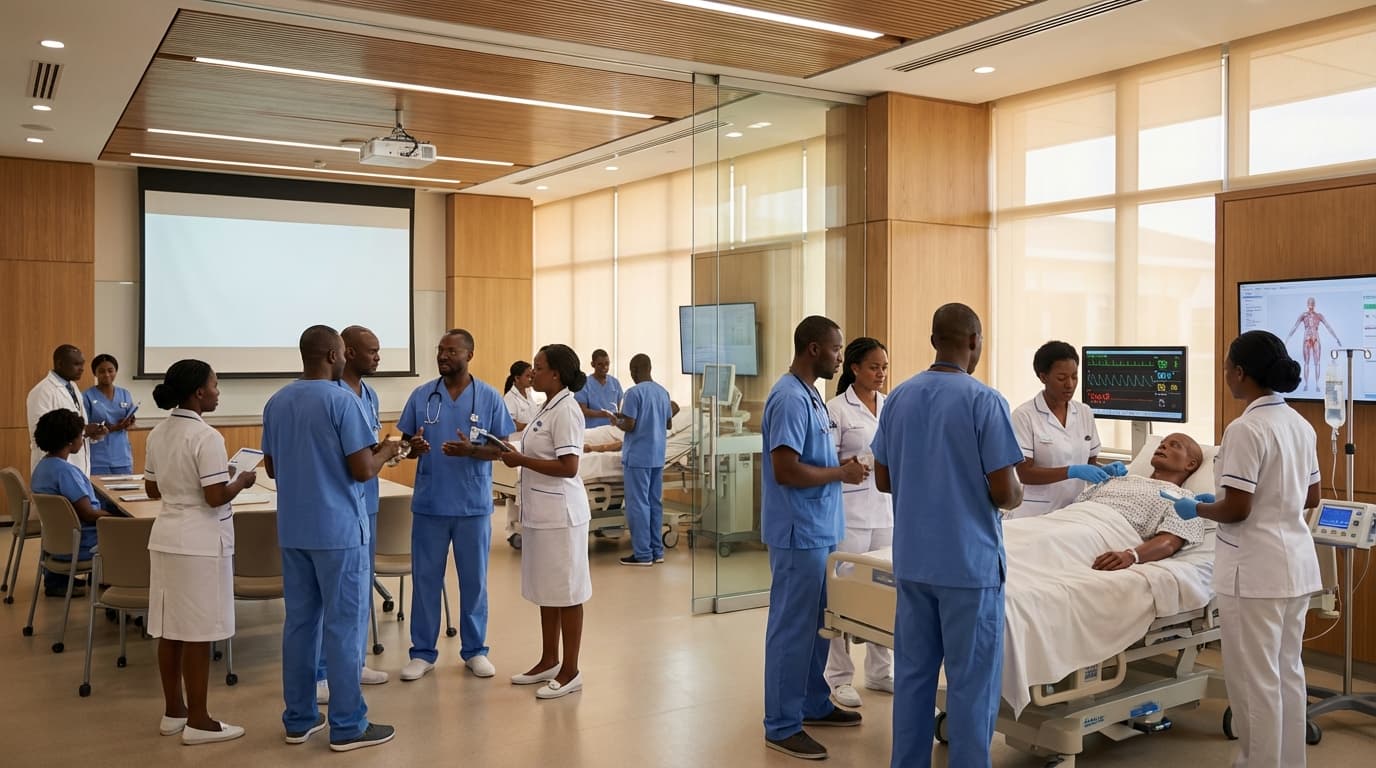
Equipment Training & Education in Mozambique
Engineering Excellence & Technical Support
Comprehensive equipment training and certification programs High-standard technical execution following OEM protocols and local regulatory frameworks.
Mobile Training Units for Remote Access
Leveraging adaptable, fully-equipped mobile training units to reach and instruct on specialized equipment in geographically dispersed areas across Mozambique, ensuring no community is left behind.
Augmented Reality (AR) Skill Simulation
Implementing cutting-edge AR platforms to provide immersive, hands-on training for complex equipment operation and maintenance, minimizing real-world risks and maximizing learner comprehension.
Localized E-Learning & Certification Portal
Developing a robust, multilingual e-learning platform offering on-demand training modules, interactive assessments, and verifiable certifications, tailored to the specific equipment and industry needs of Mozambique.
What Is Equipment Training & Education In Mozambique?
Equipment Training & Education in Mozambique refers to the formalized instruction and practical application of knowledge required for the safe, efficient, and effective operation, maintenance, and troubleshooting of various types of machinery, tools, and systems. This service is critical for enhancing workforce proficiency, ensuring operational continuity, and mitigating risks associated with equipment utilization across diverse sectors within the Mozambican economy. The curriculum is typically tailored to specific equipment models, industry standards, and regulatory requirements prevalent in Mozambique. The objective is to impart theoretical understanding coupled with hands-on experience, enabling personnel to perform their duties with competence and to a high standard.
| Who Needs Equipment Training & Education? | Typical Use Cases | |||||||||
|---|---|---|---|---|---|---|---|---|---|---|
| Operators: Individuals responsible for the day-to-day functioning and control of machinery (e.g., heavy machinery operators, laboratory technicians, industrial plant operators). | Mining Sector: Training on excavators, haul trucks, drills, crushers, and processing plant equipment. Compliance with mining safety regulations is paramount. | Construction Industry: Instruction on cranes, bulldozers, excavators, concrete mixers, scaffolding, and power tools. Focus on site safety and efficient project execution. | Agriculture: Training on tractors, harvesters, irrigation systems, and processing machinery. Enhancing productivity and sustainability in food production. | Energy Sector (Oil & Gas, Power Generation): Specialized training on drilling equipment, turbines, generators, control systems, and safety protocols for hazardous environments. | Manufacturing and Industrial Plants: Operation and maintenance of assembly lines, CNC machines, robotic arms, packaging equipment, and quality control instruments. | Healthcare Facilities: Education on medical imaging equipment (X-ray, MRI), laboratory analyzers, surgical instruments, and sterilization equipment. Adherence to medical device regulations. | Logistics and Transportation: Training on forklifts, reach trucks, automated warehousing systems, and material handling equipment for efficient supply chain management. | Maintenance Technicians and Engineers: In-depth training on diagnostic tools, repair procedures, and preventive maintenance strategies for a wide range of equipment. | Supervisors and Management: Understanding operational capabilities, safety implications, and the importance of effective training for workforce management and compliance. | Government and Public Works: Training on infrastructure maintenance equipment, emergency response vehicles, and public utility machinery. |
Key Components of Equipment Training & Education:
- Theoretical Instruction: Covers principles of operation, technical specifications, safety protocols, regulatory compliance, and best practices.
- Practical Demonstration and Hands-on Application: Involves supervised operation, simulation, and real-world usage of the equipment.
- Maintenance Procedures: Training on routine inspections, preventive maintenance, minor repairs, and identification of potential faults.
- Troubleshooting and Diagnostics: Equipping personnel with the skills to identify, analyze, and resolve equipment malfunctions.
- Safety and Risk Management: Emphasis on hazard identification, personal protective equipment (PPE) usage, emergency procedures, and accident prevention.
- Documentation and Record-Keeping: Training on logbooks, maintenance records, and operational reports.
- Refresher and Advanced Courses: Periodic retraining to update skills, introduce new technologies, or address evolving operational needs.
Who Needs Equipment Training & Education In Mozambique?
In Mozambique, comprehensive equipment training and education are vital for a diverse range of individuals and organizations to ensure operational efficiency, safety, and the successful deployment of various technologies. This training is not a niche requirement but a fundamental need across multiple sectors of the economy.
| Customer Sector | Key Departments/Roles | Types of Equipment Requiring Training | Importance of Training |
|---|---|---|---|
| Agriculture | Farm Managers, Operators | Tractors, Harvesters, Irrigation Systems, Drones | Increased yield, efficiency, reduced waste, safety |
| Mining | Operators, Mechanics, Safety Officers | Excavators, Drills, Loaders, Haul Trucks, Safety Gear | Operational efficiency, accident prevention, environmental compliance |
| Construction | Supervisors, Crane Operators, Skilled Labor | Cranes, Excavators, Mixers, Power Tools, Scaffolding | Project timelines, structural integrity, worker safety |
| Healthcare | Technicians, Engineers, Medical Staff | MRI, X-Ray, Lab Analyzers, Ventilators, Surgical Tools | Accurate diagnostics, effective treatment, patient safety |
| Manufacturing | Machine Operators, Maintenance Staff | Assembly Lines, Packaging Machines, Forklifts | Product quality, production output, equipment longevity |
| Energy | Plant Operators, Technicians | Generators, Transformers, Solar Panels, Wind Turbines | Reliable power supply, system stability, safety |
Target Customers and Departments for Equipment Training & Education in Mozambique
- {"customer":"Agricultural Sector Workers","departments":["Farm Managers","Tractor Operators","Harvester Technicians","Irrigation System Specialists","Agricultural Extension Officers"],"description":"Training on tractors, harvesters, irrigation pumps, drone operation for crop monitoring, and other agricultural machinery."}
- {"customer":"Mining and Extractive Industries Personnel","departments":["Mine Operators","Heavy Equipment Mechanics","Geologists (operating specialized equipment)","Safety Officers","Drilling Technicians"],"description":"Focus on heavy-duty machinery like excavators, bulldozers, drills, loaders, and specialized geological survey equipment, with a strong emphasis on safety protocols."}
- {"customer":"Construction and Infrastructure Development Teams","departments":["Construction Site Supervisors","Crane Operators","Skilled Laborers (e.g., cement mixers, welders)","Equipment Maintenance Staff","Project Managers"],"description":"Training on cranes, excavators, concrete mixers, scaffolding, power tools, and safety equipment used in building and infrastructure projects."}
- {"customer":"Healthcare Professionals and Technicians","departments":["Radiology Technologists","Laboratory Technicians","Surgical Staff","Biomedical Engineers","Ward Managers"],"description":"Education on operating advanced medical equipment such as MRI scanners, X-ray machines, laboratory analyzers, ventilators, and surgical instruments."}
- {"customer":"Manufacturing and Industrial Plant Operators","departments":["Machine Operators","Production Line Supervisors","Quality Control Technicians","Maintenance Engineers","Logistics and Warehouse Staff"],"description":"Training on assembly lines, specialized manufacturing machinery, packaging equipment, forklifts, and material handling systems."}
- {"customer":"Information and Communication Technology (ICT) Specialists","departments":["Network Engineers","IT Support Technicians","Data Center Operators","Telecommunications Technicians","Software Developers (working with specific hardware)"],"description":"Focus on server hardware, network infrastructure devices, communication equipment, and specialized software-hardware integration."}
- {"customer":"Energy Sector Technicians","departments":["Power Plant Operators","Renewable Energy Technicians (solar, wind)","Oil and Gas Field Workers","Electrical Engineers","Maintenance Crews"],"description":"Training on power generation equipment, electrical distribution systems, oil and gas extraction machinery, and renewable energy installations."}
- {"customer":"Logistics and Transportation Personnel","departments":["Warehouse Managers","Forklift Operators","Truck Drivers","Port Operations Staff","Customs Officers (operating scanning equipment)"],"description":"Education on forklifts, cranes, shipping containers, GPS tracking systems, and specialized cargo handling equipment."}
- {"customer":"Government and Public Service Agencies","departments":["Emergency Services (firefighters, paramedics)","Public Works Departments","Environmental Agencies","Security Forces","Administrative Staff (operating office equipment)"],"description":"Training on a wide array of equipment, from emergency response gear and specialized vehicles to laboratory instruments and basic office technology."}
- {"customer":"Educational and Vocational Training Institutions","departments":["Instructors and Teachers","Technical College Staff","University Researchers","Curriculum Developers"],"description":"Trainers and educators need to be proficient in the equipment they teach, ensuring up-to-date knowledge and practical skills are imparted to students."}
Equipment Training & Education Process In Mozambique
The Equipment Training & Education Process in Mozambique outlines the systematic approach from an initial inquiry to the successful execution and completion of training programs. This process ensures that individuals and organizations in Mozambique receive the necessary knowledge and skills to operate and maintain various types of equipment safely and efficiently. The workflow is designed to be adaptable to different equipment types, organizational needs, and regulatory requirements within the Mozambican context.
| Stage | Description | Key Activities | Deliverables | Responsible Parties | Considerations (Mozambique) |
|---|---|---|---|---|---|
| Inquiry & Needs Assessment | Initial contact from a client (individual or organization) seeking training for specific equipment. This stage involves understanding their current skill levels, desired learning outcomes, and operational context. | Client inquiry (phone, email, website), initial consultation, identification of equipment, target audience, and specific training needs. | Needs assessment report, preliminary understanding of scope. | Client, Training Provider. | Language proficiency (Portuguese, local dialects), understanding of local industry practices and safety standards. |
| Proposal Development & Quotation | Based on the needs assessment, the training provider develops a detailed proposal outlining the training program, objectives, duration, methodology, and associated costs. | Developing training modules, defining learning objectives, costing (instructor fees, materials, travel), preparing a formal proposal and quotation. | Training proposal, detailed quotation, training schedule outline. | Training Provider. | Cost-effectiveness, awareness of government incentives or funding opportunities for skills development. |
| Contract Negotiation & Agreement | Review and discussion of the proposal and quotation by the client. Negotiation of terms, conditions, and payment schedules, leading to a formal contract. | Proposal review, negotiation of pricing, scope, timelines, and terms; signing of the training agreement or contract. | Signed training contract/agreement, payment terms. | Client, Training Provider. | Clarity on contractual obligations, dispute resolution mechanisms, adherence to Mozambican contract law. |
| Curriculum Design & Customization | Developing or adapting training materials to meet the specific equipment, client requirements, and learning objectives identified. This ensures relevance and effectiveness. | Developing/modifying training manuals, presentations, practical exercises, assessment tools. Incorporating local case studies and examples. | Customized training curriculum, participant manuals, instructor guides, assessment questionnaires. | Training Provider (Curriculum Developers, Subject Matter Experts). | Alignment with national vocational training standards (e.g., INEFOP), use of visual aids relevant to the Mozambican environment. |
| Logistics & Scheduling | Planning and coordinating all logistical aspects of the training, including venue, equipment availability, travel, accommodation, and materials distribution. | Booking training venues, arranging for necessary equipment (actual or simulated), scheduling dates and times, coordinating participant travel and accommodation. | Confirmed training schedule, logistical arrangements (venue, transport, accommodation), prepared training materials. | Training Provider (Logistics Coordinator), Client (participant coordination). | Accessibility of training locations (road conditions, infrastructure), availability of local accommodation and transport services, potential for mobile/on-site training. |
| Trainer Allocation & Preparation | Selecting qualified and experienced trainers who are proficient in the equipment and possess strong instructional skills. They are briefed on the specific training program and client context. | Identifying and assigning suitable trainers, conducting pre-training briefings, ensuring trainers are familiar with the curriculum and client needs. | Assigned and briefed trainers. | Training Provider (Training Manager). | Availability of local trainers with relevant expertise and language skills, ensuring trainers are aware of cultural sensitivities. |
| Training Delivery & Execution | The actual delivery of the training program to participants. This involves a mix of theoretical instruction, practical demonstrations, hands-on exercises, and group discussions. | Conducting classroom sessions, practical demonstrations, supervised hands-on practice, Q&A sessions, and interactive exercises. | Trained participants, completed training sessions. | Trainer, Participants. | Ensuring a safe training environment, encouraging active participation, adapting pace and content based on participant feedback. |
| Assessment & Evaluation | Assessing participant learning and the effectiveness of the training program. This can include written tests, practical assessments, and feedback surveys. | Administering knowledge tests, practical skill assessments, collecting participant feedback, evaluating trainer performance. | Assessment results, participant feedback forms, evaluation reports. | Trainer, Training Provider. | Fair and objective assessment methods, collecting feedback on the relevance and impact of the training for local job markets. |
| Certification & Reporting | Issuing certificates of completion or competency to participants who successfully meet the training objectives. Providing a comprehensive report to the client. | Awarding certificates, preparing final training reports including attendance, assessment results, and recommendations. | Certificates of completion/competency, final training report. | Training Provider. | Recognition of certifications by relevant Mozambican authorities or industry bodies, ensuring reports are clear and actionable. |
| Post-Training Support & Follow-up | Providing ongoing support to participants and the client after the training. This may include answering questions, offering refresher courses, or addressing emerging issues. | Providing technical support, answering queries, offering refresher training, collecting feedback on long-term impact. | Resolved participant queries, potentially refresher training sessions, ongoing relationship with the client. | Training Provider, Client. | Establishing channels for ongoing communication, understanding long-term equipment maintenance needs within the local context. |
Key Stages in the Equipment Training & Education Process
- Inquiry & Needs Assessment
- Proposal Development & Quotation
- Contract Negotiation & Agreement
- Curriculum Design & Customization
- Logistics & Scheduling
- Trainer Allocation & Preparation
- Training Delivery & Execution
- Assessment & Evaluation
- Certification & Reporting
- Post-Training Support & Follow-up
Equipment Training & Education Cost In Mozambique
The cost of equipment training and education in Mozambique is influenced by a variety of factors, leading to a diverse range of pricing. These factors include the type and complexity of the equipment being trained on, the duration and depth of the training program, the qualifications and experience of the trainers, the location of the training (e.g., training center, on-site at the client's premises), the inclusion of certification, and the specific training provider. Generally, more specialized or technical equipment training will command higher prices. The currency of transaction is typically the Mozambican Metical (MZN).
| Training Category | Typical Duration | Estimated Price Range (MZN) | Notes |
|---|---|---|---|
| Basic Equipment Operation (e.g., general office equipment, simple tools) | 1-2 Days | 2,000 - 8,000 | Covers fundamental functions and safety. |
| Intermediate Equipment Operation (e.g., construction machinery, basic agricultural equipment) | 3-5 Days | 7,000 - 25,000 | Includes operation, basic maintenance, and troubleshooting. |
| Advanced/Specialized Equipment Training (e.g., industrial machinery, medical equipment, IT infrastructure) | 5-10+ Days | 20,000 - 100,000+ | Often involves in-depth technical knowledge, complex diagnostics, and may lead to certification. |
| Certification Courses (specific to equipment type, e.g., forklift operator) | Varies (often 1-3 Days) | 5,000 - 20,000 | Includes assessment and issuance of a recognized certificate. |
| On-site Training (per day, group) | Per Day | 5,000 - 20,000+ | Cost is in addition to course content, covers trainer's time and travel. |
| Customized Training Programs | Negotiable | Variable | Tailored to specific organizational needs and equipment. |
Key Pricing Factors for Equipment Training & Education in Mozambique
- Type and Complexity of Equipment
- Duration and Depth of Training
- Trainer Qualifications and Experience
- Training Location (On-site vs. Off-site)
- Certification Inclusion
- Training Provider Reputation and Resources
- Customization of Training Program
- Number of Participants (Group Discounts)
Affordable Equipment Training & Education Options
Acquiring the necessary skills to operate and maintain equipment is crucial for individuals and businesses. Fortunately, a range of affordable equipment training and education options are available, offering excellent value and cost-saving potential. Understanding how to leverage these options can significantly reduce the financial burden associated with professional development and skill acquisition.
| Strategy | Description | Potential Cost Savings |
|---|---|---|
| Value Bundles | Combining multiple courses or services at a reduced price. | 10-30% or more compared to individual purchases. |
| Online & Blended Learning | Leveraging digital platforms for theoretical learning and in-person for practical application. | Lower tuition fees, reduced travel and accommodation costs. |
| Apprenticeships & Internships | On-the-job training with integrated educational components. | Often employer-funded, reduced or no tuition fees, earning while learning. |
| Government & Non-Profit Programs | Subsidized or fully funded training opportunities. | Significant reduction or elimination of training costs. |
| Group Discounts | Enrolling multiple individuals from the same organization. | 5-20% discount per participant, depending on group size. |
| Early Bird Registration | Registering for courses well in advance of the start date. | 5-15% discount on tuition fees. |
Value Bundles and Cost-Saving Strategies for Equipment Training & Education
- Value Bundles: Many training providers offer bundled packages that combine multiple courses or services at a discounted price compared to purchasing them individually. These can include foundational courses alongside specialized modules, or training with accompanying practical assessments and certifications.
- Online & Blended Learning: Online courses often come with lower overheads for providers, translating into more affordable tuition. Blended learning, which combines online theory with in-person practical sessions, offers a flexible and cost-effective approach.
- Apprenticeships & Internships: These structured programs provide on-the-job training and often include educational components. While requiring a time commitment, they are a highly cost-effective way to gain practical skills and industry experience, sometimes with the employer covering training costs.
- Government & Non-Profit Programs: Look for government-funded initiatives, grants, and programs offered by non-profit organizations. These are often designed to upskill the workforce and can significantly subsidize or even cover the full cost of training.
- Manufacturer-Specific Training: While sometimes perceived as expensive, manufacturer training can be essential for specialized equipment. Negotiating bundled training with equipment purchases or seeking group discounts can mitigate costs.
- Certification & Skill-Based Training: Focusing on specific certifications or skill-based courses that are in high demand can provide a more targeted and cost-effective approach than broader, more expensive programs.
- Group Discounts & Corporate Packages: Businesses can often secure significant discounts by enrolling multiple employees in the same training program. Negotiating custom corporate training packages can also lead to cost savings.
- Pre-Owned Equipment & Simulation Training: For hands-on practice, consider training on well-maintained pre-owned equipment where feasible. Furthermore, high-fidelity simulation training can offer realistic practice scenarios without the wear and tear on actual machinery, reducing associated costs.
- Early Bird & Seasonal Promotions: Many training institutions offer discounts for early registration or during specific promotional periods. Staying informed about these can lead to substantial savings.
- Free Resources & Webinars: While not a substitute for formal training, many organizations offer free introductory webinars, online resources, and informational content that can supplement learning and provide valuable insights before committing to paid courses.
Verified Providers In Mozambique
In Mozambique's evolving healthcare landscape, identifying reliable and trustworthy providers is paramount for individuals and organizations seeking quality medical services. Franance Health has emerged as a leading entity, distinguished by its rigorous credentialing process and unwavering commitment to excellence. This document outlines the key aspects of Franance Health's verification and accreditation, highlighting why they represent the best choice for healthcare needs in Mozambique.
| Provider Type | Verification Criteria | Benefits of Choosing Franance Health Verified Providers |
|---|---|---|
| Doctors and Specialists | Verified medical licenses, board certifications, clean professional history, ongoing professional development. | Access to highly qualified and experienced medical professionals, assurance of up-to-date medical knowledge and skills. |
| Hospitals and Clinics | Accreditation status, adherence to safety protocols, quality of facilities, patient-to-staff ratios, emergency preparedness. | Safe and well-equipped healthcare environments, consistent delivery of high-quality patient care, reduced risk of medical errors. |
| Laboratories and Diagnostic Centers | Accreditation by relevant bodies, accuracy and reliability of tests, proper equipment maintenance, qualified technicians. | Precise and dependable diagnostic results, enabling accurate treatment plans and faster recovery. |
| Pharmacies | Valid operating licenses, adherence to dispensing regulations, proper drug storage and handling, qualified pharmacists. | Access to authentic and safe medications, professional advice on drug usage and interactions. |
Franance Health Credentialing: A Mark of Excellence
- Comprehensive Background Checks: Franance Health conducts thorough background investigations on all affiliated healthcare professionals and institutions, ensuring a clean record and adherence to ethical standards.
- Licensing and Certification Verification: We meticulously verify the authenticity and current status of all medical licenses and professional certifications, ensuring providers meet national and international standards.
- Educational and Experiential Validation: Franance Health confirms the educational qualifications and relevant clinical experience of all practitioners, ensuring they possess the necessary expertise.
- Quality of Care Audits: Regular audits of facilities and practice protocols are conducted to assess the quality of patient care, safety measures, and adherence to best medical practices.
- Patient Feedback and Satisfaction Monitoring: We actively collect and analyze patient feedback to ensure high levels of satisfaction and to identify areas for continuous improvement.
- Adherence to Ethical Guidelines: Franance Health mandates strict adherence to a comprehensive code of ethics, covering patient rights, confidentiality, and professional conduct.
- Partnerships with Reputable Institutions: Collaboration with recognized hospitals, clinics, and specialized medical centers underscores the network's commitment to quality and accessibility.
Scope Of Work For Equipment Training & Education
This Scope of Work (SOW) outlines the requirements for providing comprehensive training and educational services for the specified equipment. The objective is to ensure that designated personnel possess the necessary knowledge and practical skills to operate, maintain, and troubleshoot the equipment effectively and safely, adhering to all relevant technical specifications and operational standards.
| Technical Deliverable | Description | Standard Specification / Compliance |
|---|---|---|
| Training Manuals (Digital/Print) | Comprehensive documentation covering all aspects of equipment operation, maintenance, and troubleshooting, including diagrams, schematics, and step-by-step procedures. | Must adhere to [Specific Standard, e.g., ISO 9001, industry best practices] for technical documentation. Content must be aligned with equipment manufacturer's specifications and relevant safety regulations (e.g., OSHA, CE). |
| Hands-on Training Sessions | Practical, instructor-led sessions utilizing actual equipment or high-fidelity simulators. Focus on skill development through guided exercises and real-world scenarios. | Session duration and attendee-to-instructor ratio to be defined based on complexity. Practical exercises must cover all critical operational and maintenance tasks outlined in the training modules. |
| Competency Assessment Reports | Formal evaluation of trainee understanding and skill proficiency through written tests, practical assessments, and observation. Includes feedback and recommendations. | Assessment criteria to be clearly defined and agreed upon prior to training. Reports to document individual competency levels against defined learning objectives. |
| Troubleshooting Guide (Quick Reference) | A concise, easily accessible guide for common operational issues, including diagnostic steps and recommended solutions. | Must align with manufacturer's recommended troubleshooting procedures and safety guidelines. Format to be user-friendly for on-the-job reference. |
| Certification of Completion | Official documentation provided to trainees who successfully complete the training program and pass all assessments. | Certificates to include trainee name, training date, equipment covered, and issuing authority. |
| Post-Training Support (Optional) | Availability of subject matter experts for remote or on-site technical assistance following the initial training period. | Response times and scope of support to be clearly defined in a separate agreement or service level. |
Key Training Modules & Objectives
- Equipment Overview and Safety Procedures
- Basic Operation and Configuration
- Advanced Features and Functionality
- Routine Maintenance and Troubleshooting
- Calibration and Performance Verification
- Spare Parts Management and Identification
- Troubleshooting Common Issues
- Emergency Procedures and Shutdown Protocols
Service Level Agreement For Equipment Training & Education
This Service Level Agreement (SLA) outlines the commitment of [Your Company Name/Training Provider] (hereinafter referred to as "Provider") to its client, [Client Company Name] (hereinafter referred to as "Client"), regarding the provision of Equipment Training & Education. This SLA specifically addresses response times for support requests and uptime guarantees for delivered training services.
| Service Component | Response Time Target | Definition of Response | Uptime Guarantee | Definition of Uptime |
|---|---|---|---|---|
| Technical Support (Training Platform/Access) | Within 4 Business Hours | Acknowledgement of client's issue and initiation of troubleshooting. | 99.5% | Percentage of scheduled training session time that is accessible and functional. For scheduled live sessions, this refers to the trainer's ability to connect and deliver the session as planned. |
| Inquiry Regarding Training Content/Curriculum | Within 1 Business Day | Acknowledgement of client's inquiry and assignment to a subject matter expert. | N/A | N/A |
| Rescheduling of Scheduled Training (Client Request) | Within 2 Business Days | Confirmation of request and proposed alternative dates/times. | N/A | N/A |
| Rescheduling of Scheduled Training (Provider Initiated) | As soon as practically possible | Notification to the client with explanation and proposed alternative dates/times. | N/A | N/A |
| Access to Self-Paced Online Modules | Immediate (upon enrollment/payment) | Confirmation of access and ability to log in to the learning platform. | 99.8% | Percentage of time the online learning platform is available for client access and module completion. |
Scope of Service
- Provision of training materials and resources for specified equipment.
- Delivery of instructor-led training sessions (on-site or remote).
- Provision of online learning modules or self-paced courses.
- Technical support related to training platforms and course access.
- Updates and revisions to training content as agreed upon.
Frequently Asked Questions

Ready when you are
Let's scope your Equipment Training & Education in Mozambique project in Mozambique.

Scaling healthcare logistics and technical systems across the entire continent.