
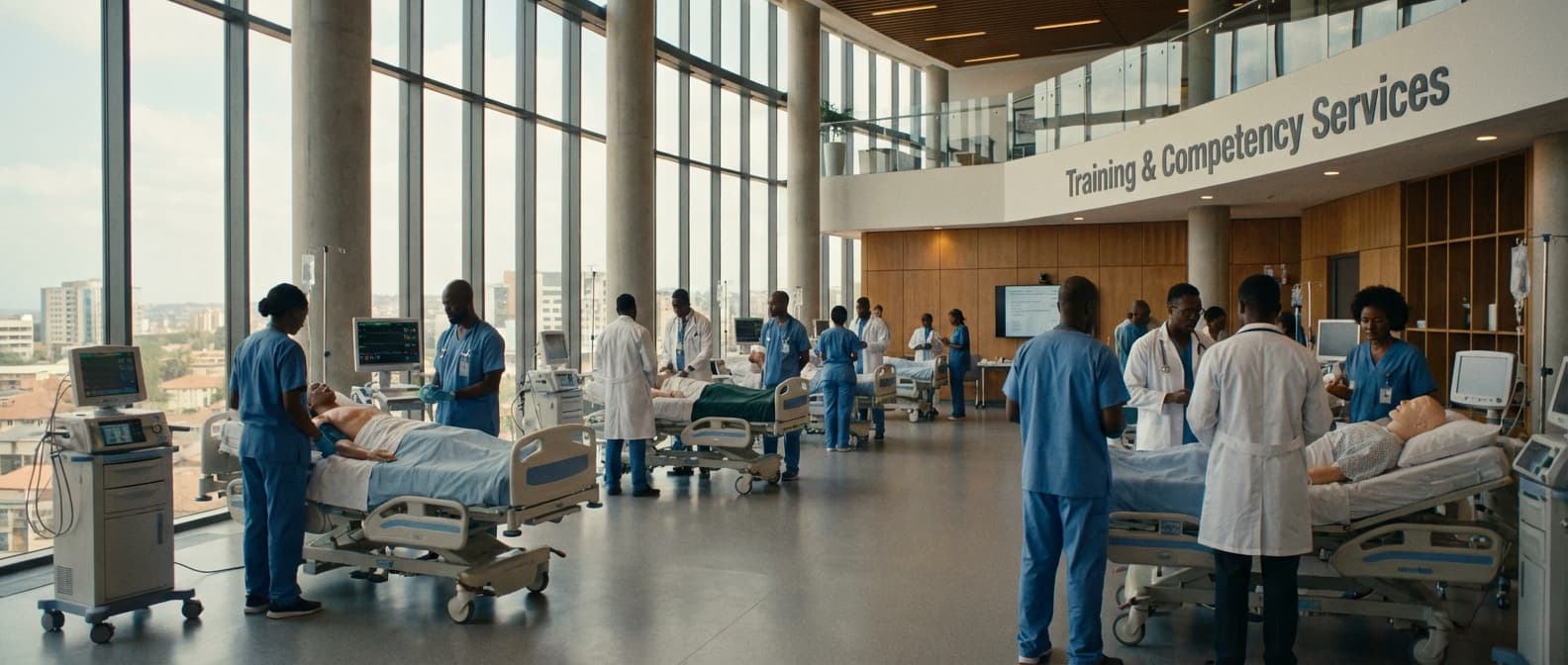
Ventilator User Training Service (Nurses) in Mozambique
Engineering Excellence & Technical Support
Ventilator User Training Service (Nurses) High-standard technical execution following OEM protocols and local regulatory frameworks.
Ventilator Mastery: Core Operations
Gain proficiency in essential ventilator functions, including setting initial parameters, understanding ventilation modes (e.g., Volume Control, Pressure Control), and recognizing key waveforms for effective patient support.
Patient Assessment & Monitoring Integration
Learn to integrate ventilator data with direct patient assessment. Understand how to interpret vital signs, oxygen saturation, and blood gas results in the context of ventilator settings to optimize patient care and detect early signs of distress.
Troubleshooting & Alarms Management
Develop critical skills in identifying and responding to common ventilator alarms. This module covers troubleshooting common issues, understanding alarm causes, and implementing timely interventions to ensure patient safety and ventilation continuity.
What Is Ventilator User Training Service (Nurses) In Mozambique?
Ventilator User Training Service (Nurses) in Mozambique is a specialized educational program designed to equip registered nurses with the essential knowledge and practical skills required for the safe and effective operation of mechanical ventilators within the Mozambican healthcare context. This service addresses the critical need for skilled personnel to manage patients requiring ventilatory support, thereby improving patient outcomes and reducing morbidity and mortality associated with respiratory failure. The training is tailored to the specific types of ventilators commonly available and utilized in Mozambican hospitals, considering the prevailing clinical conditions and resource limitations.
| Who Needs This Service? | Typical Use Cases | ||
|---|---|---|---|
| Registered Nurses: Particularly those working in critical care units (ICUs), emergency departments, operating rooms, and post-anesthesia care units (PACUs) who are expected to manage patients requiring mechanical ventilation. | Management of Acute Respiratory Failure: Patients with conditions such as severe pneumonia, Acute Respiratory Distress Syndrome (ARDS), sepsis-induced respiratory compromise, exacerbations of Chronic Obstructive Pulmonary Disease (COPD), and asthma. | ||
| Nurses in District Hospitals or Referral Centers: Where ventilators are available but specialized critical care nursing staff may be limited. | Post-Surgical Patients: Individuals requiring ventilatory support due to anesthetic effects, prolonged surgery, or underlying respiratory conditions. | Trauma Patients: Management of chest trauma, head injuries with compromised respiratory drive, or multi-organ failure. | Neurological Conditions: Patients with neuromuscular diseases or central nervous system depression affecting respiratory function (e.g., Guillain-Barré syndrome, myasthenia gravis crisis, drug overdose). |
| Nurses involved in patient transport: Requiring knowledge of ventilator operation during inter-facility transfers. | Patients undergoing medical procedures: Requiring sedation or anesthesia that depresses spontaneous respiration. |
Key Components of Ventilator User Training Service (Nurses):
- Theoretical Foundation: Comprehensive modules covering respiratory physiology, pathophysiology of respiratory failure, indications for mechanical ventilation, types of ventilators, ventilator modes (e.g., volume-controlled, pressure-controlled, assist-control, SIMV, CPAP), ventilator graphics interpretation, and weaning principles.
- Equipment Familiarization: Hands-on training with specific ventilator models used in Mozambican healthcare facilities, including setup, pre-use checks, alarm troubleshooting, and basic maintenance.
- Patient Management Protocols: Training on initiating and managing mechanical ventilation, setting initial ventilator parameters based on patient assessment and diagnosis, monitoring patient response, managing common complications (e.g., barotrauma, volutrauma, ventilator-associated pneumonia), and implementing evidence-based weaning strategies.
- Clinical Simulation: Practical exercises and scenarios using high-fidelity simulators or manikins to practice ventilator management in a controlled environment, simulating various clinical situations and emergencies.
- Infection Prevention and Control: Emphasis on protocols for preventing ventilator-associated pneumonia (VAP) and other healthcare-associated infections related to mechanical ventilation.
- Ethical and Legal Considerations: Discussion of ethical principles related to end-of-life care, informed consent for ventilation, and documentation requirements.
- Post-Training Support: Access to ongoing mentorship, refresher courses, and expert consultation to reinforce learning and address evolving clinical needs.
Who Needs Ventilator User Training Service (Nurses) In Mozambique?
This document outlines the essential need for ventilator user training services for nurses in Mozambique. Effective and safe operation of ventilators is critical for patient care, particularly in intensive care settings. Nurses are the frontline caregivers who administer and monitor this vital equipment. Therefore, comprehensive training is indispensable to ensure they possess the knowledge and skills to operate ventilators proficiently, respond to alarms, troubleshoot common issues, and optimize patient outcomes. This training program is designed to address the specific needs and challenges faced by healthcare professionals in Mozambique, contributing to improved respiratory care and patient survival rates.
| Target Customer Group | Department Focus | Rationale for Training Need | Potential Impact of Training |
|---|---|---|---|
| Registered Nurses (RNs) | ICU, HDU, ED, OR | Primary users and managers of ventilator therapy; responsible for patient assessment, ventilator settings, and response to critical events. | Improved patient safety, reduced mechanical ventilation-related complications, enhanced clinical decision-making, increased nurse confidence and competence. |
| Enrolled Nurses (ENs) | General Wards with Ventilator Support, ED | Assist in patient care, monitor basic ventilator parameters, and alert RNs or physicians to changes in patient status. | Safer basic monitoring of ventilated patients, timely escalation of concerns, support for RNs in patient management. |
| Specialty Nurses (Critical Care, Anesthesia) | ICU, OR, NICU, PICU | Require advanced knowledge of complex ventilator modes, patient-specific ventilation strategies, and management of critically ill patients. | Optimized ventilator settings for complex cases, effective management of weaning, reduction in ventilator-associated pneumonia (VAP) and other adverse events. |
| Nurses in Rural/Remote Areas | District Hospitals, Health Centers | May be the sole healthcare providers responsible for managing ventilated patients with limited direct specialist support. | Empowerment to provide essential respiratory support, improved access to critical care in underserved regions, reduced need for patient transfer. |
Target Customers and Departments for Ventilator User Training Service (Nurses) in Mozambique
- {"items":["Registered Nurses (RNs)","Enrolled Nurses (ENs)","Specialty Nurses (e.g., Critical Care Nurses, ICU Nurses, Anesthetic Nurses)"],"title":"Primary Target Customers"}
- {"items":["Intensive Care Units (ICUs)","High Dependency Units (HDUs)","Emergency Departments (EDs)","Operating Rooms (ORs)/Surgical Theatres","Neonatal Intensive Care Units (NICUs)","Pediatric Intensive Care Units (PICUs)","Respiratory Therapy Departments (if applicable)","General Wards with Ventilator Support Capability"],"title":"Key Departments Requiring Training"}
- {"items":["Public Hospitals (National, Provincial, District)","Private Hospitals and Clinics","Non-Governmental Organization (NGO) Healthcare Facilities","Referral Hospitals"],"title":"Types of Healthcare Facilities"}
Ventilator User Training Service (Nurses) Process In Mozambique
This document outlines the standard workflow for the Ventilator User Training Service provided to nurses in Mozambique. The process begins with an initial inquiry and proceeds through several stages, culminating in the successful execution of the training program.
| Stage | Activities | Responsible Party | Key Outputs/Deliverables | Timeline (Estimated) |
|---|---|---|---|---|
| Inquiry and Needs Assessment | Healthcare facility or regional health authority expresses interest in ventilator user training. Initial discussions to understand specific training needs (e.g., type of ventilators, number of nurses, existing knowledge gaps, desired outcomes). | Interested Party (e.g., Hospital Administrator, Head Nurse), Training Service Provider (TSP) | Needs assessment report, preliminary training scope definition. | 1-2 weeks |
| Proposal Development and Agreement | TSP develops a detailed training proposal including curriculum, methodology, duration, trainer profiles, required equipment, budget, and payment terms. Negotiation and finalization of the agreement/contract. | Training Service Provider (TSP), Interested Party | Formal training proposal, signed contract/agreement. | 2-3 weeks |
| Logistics and Planning | Coordination of training dates, venue booking, participant registration. Procurement or confirmation of availability of training ventilators and simulation equipment. Travel and accommodation arrangements for trainers and participants (if applicable). | Training Service Provider (TSP), Interested Party (e.g., HR, Logistics Department) | Confirmed training schedule, participant roster, logistical plan. | 2-4 weeks |
| Trainer Deployment | Selection and briefing of qualified trainers. Deployment of trainers to the training venue according to the agreed schedule. | Training Service Provider (TSP) | Deployed trainers on-site. | Concurrent with Logistics and Planning, leading up to training start. |
| Training Delivery | Conducting theoretical sessions, practical demonstrations, hands-on practice with ventilators, case studies, and assessment of learning. This includes didactic lectures, simulation exercises, and competency-based evaluations. | Trainer(s) | Trained nurses, completed training modules, initial competency assessments. | Varies (e.g., 3-5 days per training cohort) |
| Post-Training Support and Evaluation | Providing immediate post-training support (e.g., Q&A sessions, clarification of doubts). Collection of feedback from participants and trainers. Initial evaluation of training effectiveness. | Trainer(s), Training Service Provider (TSP) | Participant feedback forms, trainer feedback, preliminary evaluation report. | 1-2 weeks post-training |
| Reporting and Closure | Development of a comprehensive training report including attendance, assessment results, feedback summary, and recommendations. Final invoicing and project closure. | Training Service Provider (TSP) | Final training report, certificates of completion (if applicable), closed project file. | 1-2 weeks post-evaluation |
Workflow Stages
- Inquiry and Needs Assessment
- Proposal Development and Agreement
- Logistics and Planning
- Trainer Deployment
- Training Delivery
- Post-Training Support and Evaluation
- Reporting and Closure
Ventilator User Training Service (Nurses) Cost In Mozambique
Providing accurate and up-to-date cost information for specialized training services like Ventilator User Training for Nurses in Mozambique can be challenging due to several influencing factors. These costs are not fixed and can fluctuate based on the provider, the scope of training, and logistical considerations. However, we can discuss the key pricing factors and provide estimated ranges in the local currency, the Mozambican Metical (MZN).
| Training Scope/Intensity | Estimated Cost Range (MZN) |
|---|---|
| Basic/Introductory (1-2 Days): Covers fundamental operation, safety features, and basic patient setup for common ventilator models. | 15,000 - 30,000 MZN per participant |
| Standard (3-4 Days): Includes in-depth operation, ventilation modes, basic troubleshooting, and practical exercises on a few models. | 30,000 - 60,000 MZN per participant |
| Comprehensive (5+ Days): Covers advanced modes, complex troubleshooting, maintenance basics, scenario-based learning, and potentially a wider range of ventilator types. May include certification. | 60,000 - 120,000+ MZN per participant |
| On-site Training (Group Rate - Variable): Costs are often negotiated based on the number of participants, duration, and specific requirements. Could range from a per-day fee for the trainer to a total package price. | Negotiable, but can range from 100,000 MZN to 500,000+ MZN for a group of 10-20 nurses for a 3-day course. |
Key Pricing Factors for Ventilator User Training in Mozambique:
- Provider Type: Training can be offered by various entities, including hospital departments, dedicated training institutions, medical equipment suppliers, or non-governmental organizations (NGOs). Each will have a different cost structure.
- Training Duration and Depth: The number of days or hours dedicated to the training, the complexity of the ventilators covered, and the level of detail (e.g., basic operation vs. advanced troubleshooting) will significantly impact the cost.
- Curriculum Content: The inclusion of theoretical lectures, practical hands-on sessions, case studies, and simulations will influence the overall price.
- Trainer Qualifications and Experience: Highly experienced and certified trainers, especially those with international exposure or specialized skills, may command higher fees.
- Location of Training: Whether the training is conducted at the client's facility, at the provider's premises, or at a neutral venue can affect costs due to travel, accommodation, and venue rental expenses.
- Number of Participants: Group discounts are common. Training for a larger cohort might have a lower per-person cost than individual training.
- Equipment and Materials: The cost of using actual ventilators for hands-on practice, providing training manuals, and any other learning resources will be factored in.
- Certification: If a formal certificate of completion or competency is provided, this might add to the overall cost.
- Customization: Tailoring the training program to specific institutional needs or types of ventilators used by a particular hospital will likely incur additional development costs.
- Language: While Portuguese is the official language, if training needs to be conducted in English or local dialects, it might affect trainer availability and cost.
- Administrative Overhead: The provider's operational costs, including marketing, administration, and support staff, are generally included in the service fee.
Affordable Ventilator User Training Service (Nurses) Options
Providing comprehensive and affordable ventilator user training for nurses is crucial for patient safety and efficient healthcare delivery. This document outlines various options, emphasizing value bundles and cost-saving strategies to make this essential training accessible.
| Training Model | Description | Value Proposition | Cost-Saving Strategies |
|---|---|---|---|
| On-Demand Online Modules | Self-paced, interactive e-learning courses covering all theoretical aspects of ventilator use. Includes video demonstrations and quizzes. | High flexibility, accessible anytime, anywhere. Scalable for large numbers of nurses. Reduces travel and instructor costs. | Bulk licensing discounts for institutions. Subscription models for continuous access. Reduced need for physical classroom space and instructor fees. |
| Blended Learning (Online + Simulation Lab) | Combines online theoretical modules with hands-on practice in a simulated environment using manikins and actual or simulated ventilators. | Balances theoretical knowledge with practical application. Provides a safe environment for skill development. Addresses hands-on competency requirements. | Shared simulation lab resources across multiple departments or institutions. Train-the-trainer programs for internal staff to lead simulations. Optimized scheduling to maximize lab utilization. |
| Train-the-Trainer Program | Empowers experienced nurses within an institution to deliver ongoing ventilator training to their peers, fostering internal expertise. | Creates sustainable internal training capacity. Reduces reliance on external trainers. Tailored to specific institutional equipment and protocols. | Leverages existing clinical expertise. Reduces ongoing external training expenses. Can be integrated into professional development pathways, offering career advancement opportunities. |
| Regional Workshops (Group Training) | Scheduled in-person workshops held at a central location, allowing multiple facilities to send their nurses for concentrated training. | Facilitates networking and peer learning. Cost-effective when multiple institutions participate. Comprehensive and instructor-led. | Group discounts for multiple attendees from the same institution. Shared venue and instructor costs across participating organizations. Negotiated rates with training providers for bulk commitments. |
| Customized Institutional Training | Training tailored to the specific ventilator models used by a healthcare facility, incorporating their unique protocols and workflows. | Highly relevant and practical for immediate application. Addresses specific institutional needs and challenges. Ensures consistency in practice. | Focus on essential skills to avoid over-training. Leverage existing institutional resources for training space. Integrate with existing onboarding or professional development programs. |
Key Components of Ventilator User Training for Nurses
- Fundamentals of mechanical ventilation (modes, parameters, troubleshooting)
- Patient assessment and monitoring during ventilation
- Ventilator set-up and circuit management
- Alarms and their interpretation
- Weaning and extubation principles
- Infection control related to mechanical ventilation
- Emergency procedures and escalation protocols
- Hands-on practice with various ventilator models
Verified Providers In Mozambique
When seeking healthcare services in Mozambique, particularly those involving specialized financial or health-related support, identifying verified providers is paramount. Franance Health stands out as a leading organization, meticulously vetting and credentialing its network of providers. This rigorous process ensures that all Franance Health certified professionals adhere to the highest standards of quality, ethics, and expertise. Their commitment to verification means patients can be confident they are receiving care from trusted and competent individuals. Choosing a Franance Health verified provider offers peace of mind, knowing you are in the hands of professionals dedicated to excellence and patient well-being. Their credentialing process not only validates technical skills but also assesses ethical conduct and adherence to regulatory frameworks within Mozambique's healthcare landscape.
| Credential Type | Verification Focus | Benefit to Patient |
|---|---|---|
| Franance Health Certification | Expertise in health service delivery and financial management within healthcare. | Assurance of competent and ethically sound healthcare provision. |
| Professional Licenses (e.g., Medical Council, Nursing Council) | Legal authorization to practice a specific health profession. | Confirmation of adherence to national licensing requirements. |
| Specialty Certifications | Advanced training and demonstrated proficiency in specific medical fields. | Access to highly specialized care for complex medical needs. |
| Background Checks | Review of professional history and criminal records. | Mitigation of risks associated with unqualified or untrustworthy practitioners. |
| Continuing Professional Development (CPD) Records | Evidence of ongoing learning and skill enhancement. | Assurance that providers are up-to-date with the latest medical advancements. |
Why Franance Health Credentials Represent the Best Choice:
- Unwavering commitment to quality and safety standards.
- Rigorous vetting process for all affiliated providers.
- Ensured ethical conduct and professional integrity.
- Validation of specialized expertise in healthcare and finance.
- Compliance with Mozambican healthcare regulations.
- Enhanced patient confidence and trust.
- Access to a network of top-tier healthcare professionals.
- Streamlined access to essential health and financial services.
Scope Of Work For Ventilator User Training Service (Nurses)
This Scope of Work (SOW) outlines the requirements for providing comprehensive ventilator user training services specifically tailored for nurses. The training aims to equip nurses with the necessary knowledge and practical skills to safely and effectively operate, monitor, and troubleshoot ventilators in various clinical settings. The training will cover theoretical concepts, hands-on practice, and scenario-based simulations.
| Technical Deliverable | Description | Standard Specification / Requirement |
|---|---|---|
| Training Curriculum | Detailed syllabus outlining all modules, learning objectives, and learning activities. | Must be comprehensive, evidence-based, and aligned with current clinical practice guidelines. Shall be reviewed and approved by the client. |
| Training Materials | Presentation slides, handouts, case studies, and reference materials. | High-quality, visually engaging, and easy-to-understand materials. Digital and/or printable formats as required. All materials must be reviewed and approved by the client. |
| Hands-on Practice Stations | Simulated or actual ventilators for practical skill development. | Minimum of 1:4 nurse-to-ventilator ratio per station. All ventilators must be in good working order and representative of the types used by the client. Dedicated space with adequate lighting and power supply. |
| Simulation Scenarios | Realistic patient scenarios requiring ventilator management and troubleshooting. | Scenarios must cover a range of clinical situations, including common emergencies. Facilitated debriefing sessions to reinforce learning. |
| Competency Assessment Tools | Methods to evaluate nurse competency in ventilator management. | Includes written pre/post-tests, practical skills checklists, and scenario-based evaluations. A passing score of X% (to be defined by the client) is required for successful completion. |
| Trainer Qualifications | Experienced and certified respiratory therapists or critical care nurses with extensive experience in ventilator management and adult education. | Trainers must possess relevant certifications (e.g., RRT, CCRN) and a proven track record of delivering effective training. CVs of proposed trainers to be submitted for approval. |
| Training Delivery | On-site training sessions at client facility or designated training center. | Training duration and schedule to be mutually agreed upon. Training sessions should be interactive and facilitate active participation. |
| Post-Training Support | Follow-up resources or consultation for nurses post-training. | Includes access to an online resource portal, Q&A sessions, or limited on-site support for a defined period (e.g., 30 days post-training). |
| Training Report | Summary report of training activities, attendance, and assessment results. | Report to be submitted within [X] business days of training completion. Includes aggregate competency assessment data and recommendations. |
Key Training Modules and Topics
- Introduction to Mechanical Ventilation: Principles, indications, and contraindications.
- Ventilator Components and Controls: Understanding different parts, settings, and alarms.
- Ventilator Modes: Comprehensive explanation and practical application of common modes (e.g., Volume Control, Pressure Control, SIMV, PSV).
- Patient-Ventilator Interaction: Recognizing and managing dyssynchrony, weaning readiness.
- Monitoring and Assessment: Interpreting ventilator waveforms, ABGs, and clinical signs.
- Troubleshooting and Alarm Management: Identifying common issues, troubleshooting strategies, and emergency procedures.
- Infection Control and Maintenance: Proper cleaning, disinfection, and circuit management.
- Special Populations: Ventilation considerations for pediatric, geriatric, and obese patients.
- Documentation and Reporting: Accurate recording of ventilator settings and patient responses.
Service Level Agreement For Ventilator User Training Service (Nurses)
This Service Level Agreement (SLA) outlines the response times and uptime guarantees for the Ventilator User Training Service specifically designed for nurses. This agreement is intended to ensure the reliable availability and efficient support of the training platform and its associated resources.
| Service Component | Response Time Target | Uptime Guarantee | Notes |
|---|---|---|---|
| Training Platform Availability (Core Functionality) | Within 1 hour for critical issues (e.g., login failures, inability to access modules). Within 4 business hours for non-critical issues (e.g., minor display errors). | 99.5% (excluding scheduled maintenance) | Scheduled maintenance will be communicated at least 48 hours in advance. |
| Technical Support (Assistance with Platform Issues) | Within 2 business hours for critical issues. Within 8 business hours for non-critical issues. | N/A (Support is provided during business hours) | Business hours are defined as Monday to Friday, 9:00 AM to 5:00 PM (Local Time). |
| Content Access and Loading | Training modules and resources should load within 10 seconds under normal network conditions. | N/A (Dependent on user's network and device) | This metric assumes adequate user bandwidth and compatible hardware. |
| Reporting and Analytics Access | Reports and analytics dashboards should be accessible and generate within 15 minutes. | N/A (Dependent on data processing and user's network) | Data generation times may vary based on the volume of training activity. |
Key Service Metrics
- Response Time: Refers to the time taken by the support team to acknowledge and begin addressing a reported issue.
- Resolution Time: Refers to the time taken to fully resolve a reported issue, bringing the service back to its operational state.
- Uptime Guarantee: Refers to the percentage of time the Ventilator User Training Service is available and accessible for use by nurses.
Frequently Asked Questions

Ready when you are
Let's scope your Ventilator User Training Service (Nurses) in Mozambique project in Mozambique.

Scaling healthcare logistics and technical systems across the entire continent.