
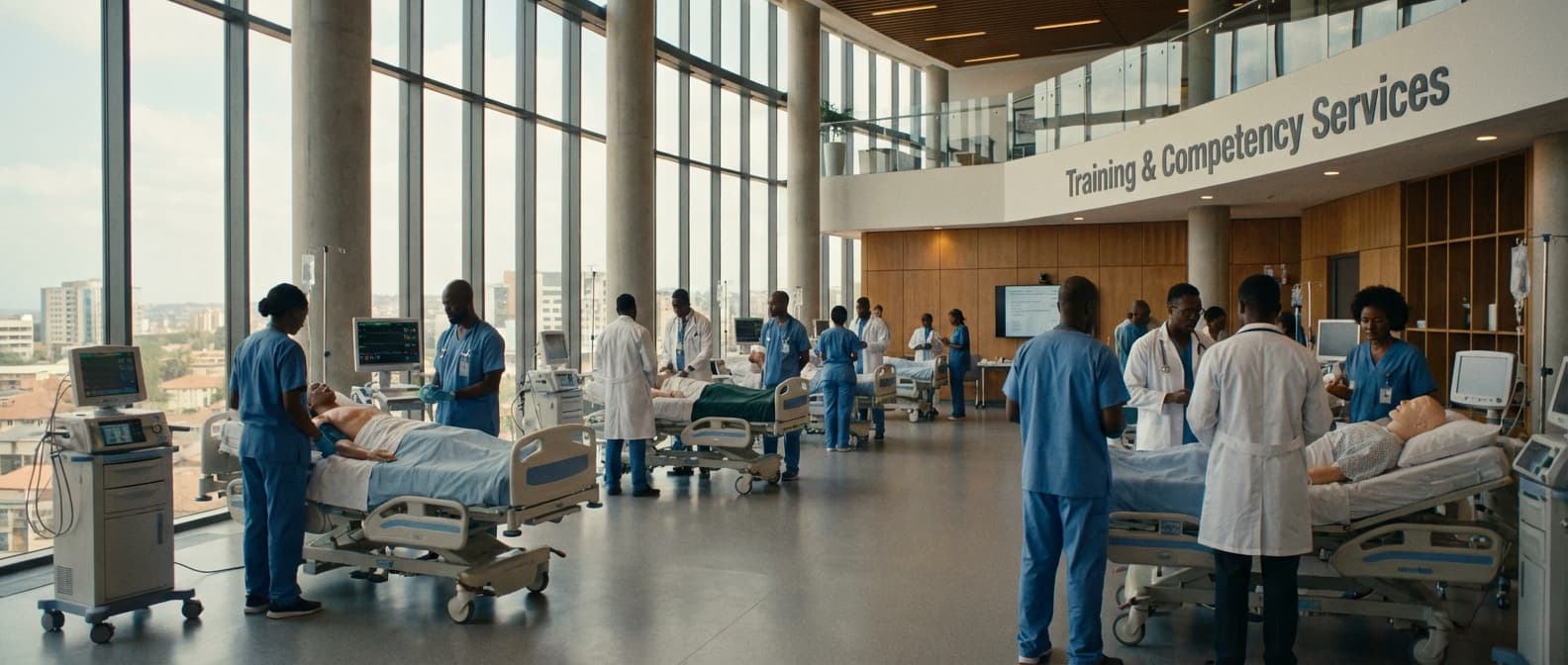
Ultrasound Application Training Service (Protocol-Based) in Mozambique
Engineering Excellence & Technical Support
Ultrasound Application Training Service (Protocol-Based) High-standard technical execution following OEM protocols and local regulatory frameworks.
Standardized Protocol Training
Empower healthcare professionals in Mozambique with our protocol-based ultrasound application training. We ensure consistent, high-quality image acquisition and interpretation, leading to improved diagnostic accuracy and patient care across diverse clinical settings.
Hands-On Skill Development
Our intensive training program focuses on practical, hands-on experience using real ultrasound equipment. Trainees master essential scanning techniques and protocol adherence, building confidence and competence for effective ultrasound utilization in Mozambique's unique healthcare landscape.
Regionally Adapted Curriculum
We deliver a curriculum tailored to the specific needs and prevalent conditions in Mozambique. Our protocol-based approach ensures trainees are proficient in the ultrasound applications most relevant to their local patient population, maximizing the impact of their skills.
What Is Ultrasound Application Training Service (Protocol-based) In Mozambique?
Ultrasound Application Training Service (Protocol-Based) in Mozambique refers to a structured and standardized approach to educating healthcare professionals in the proficient and accurate utilization of ultrasound equipment for specific diagnostic and interventional procedures. This service emphasizes adherence to established protocols, guidelines, and best practices, ensuring consistency, reproducibility, and diagnostic efficacy across various healthcare settings in Mozambique. The training focuses on integrating theoretical knowledge with practical, hands-on application, often utilizing simulation or direct patient supervised examination.
| Target Audience | Needs Addressed | Typical Use Cases |
|---|---|---|
| Radiologists | Advanced subspecialty training (e.g., obstetric, abdominal, musculoskeletal ultrasound); protocol optimization; quality assurance. | Routine diagnostic imaging, interventional ultrasound-guided procedures, specialized screening programs. |
| Obstetricians and Gynecologists | Antenatal screening protocols (e.g., dating scans, anomaly scans, growth monitoring); gynecological imaging interpretation. | Pregnancy monitoring, fetal well-being assessment, diagnosis of gynecological conditions. |
| General Practitioners and Primary Healthcare Providers | Point-of-care ultrasound (POCUS) for initial assessment; basic diagnostic imaging (e.g., abdominal, pelvic, basic cardiac). | Triage and initial assessment in resource-limited settings, identification of urgent conditions (e.g., free fluid, gross organ abnormalities). |
| Sonographers and Ultrasound Technicians | Core competency training in specific ultrasound modalities; adherence to established protocols; quality control. | Performing standardized diagnostic examinations under supervision or independently. |
| Emergency Medicine Physicians | Trauma ultrasound (e.g., FAST exam); bedside diagnostics for acute conditions (e.g., pulmonary embolism, deep vein thrombosis, cardiac tamponade). | Rapid assessment of trauma patients, diagnosis of life-threatening conditions in the emergency department. |
| Anesthesiologists | Regional anesthesia block guidance; procedural guidance for vascular access. | Optimizing pain management through ultrasound-guided nerve blocks; facilitating safe central venous catheterization. |
Key Components of Ultrasound Application Training Service (Protocol-Based)
- Protocol Development & Standardization: Establishing and disseminating evidence-based ultrasound imaging protocols for specific organ systems and clinical indications.
- Theoretical Instruction: Covering fundamental principles of ultrasound physics, image acquisition, artifact recognition, and safety considerations.
- Practical Skills Development: Hands-on training in probe manipulation, optimal image parameter selection, and standardized scanning techniques.
- Anatomical Correlation: Reinforcing understanding of anatomical structures and their sonographic appearance.
- Pathological Recognition: Training in identifying and characterizing common ultrasound pathologies.
- Case-Based Learning: Utilizing real-world patient scenarios and image interpretation exercises.
- Competency Assessment: Evaluating trainees' proficiency through objective structured clinical examinations (OSCEs) and practical assessments.
- Continuing Professional Development (CPD): Offering advanced modules and refresher courses to maintain and enhance skills.
Who Needs Ultrasound Application Training Service (Protocol-based) In Mozambique?
This document outlines the critical need for Ultrasound Application Training Service (Protocol-Based) in Mozambique. The service focuses on equipping healthcare professionals with standardized, protocol-driven ultrasound skills to improve diagnostic accuracy, patient care, and resource utilization across various medical specialties. The training is designed to address the specific challenges and opportunities within the Mozambican healthcare landscape.
| Customer Type | Specific Needs Addressed | Key Applications for Training | Departmental Focus |
|---|---|---|---|
| Public Healthcare Facilities | Improving diagnostic capabilities in resource-limited settings, standardization of care, staff capacity building, reducing referral burdens. | Point-of-care ultrasound (POCUS) for emergencies, basic obstetric scans, FAST scans, fluid assessment, rudimentary abdominal and musculoskeletal evaluations. | Emergency, OB/GYN, Internal Medicine, General Practice, Pediatrics. |
| Private Healthcare Providers | Enhancing service offerings, improving diagnostic accuracy for private patients, competitive advantage, specialized diagnostics. | Comprehensive abdominal, pelvic, thyroid, breast, musculoskeletal, vascular, and specialized obstetric/gynecological ultrasound. | Radiology, OB/GYN, Internal Medicine, Surgery. |
| NGOs in Healthcare | Delivering essential diagnostic services in underserved areas, training local healthcare workers, disease surveillance and management. | Maternal and child health focused scans (obstetrics, pediatric), emergency ultrasound for remote outreach programs, basic diagnostics for infectious diseases. | OB/GYN, Pediatrics, Emergency, Primary Healthcare. |
| Academic and Training Institutions | Integrating ultrasound into curricula, equipping future healthcare professionals with essential skills, research and development. | Foundational ultrasound principles, specific application modules for various medical specialties, advanced imaging techniques. | All clinical departments, Medical Imaging Technology programs, Nursing schools. |
| Radiology/Imaging Departments | Specialized training in advanced techniques, protocol adherence, quality assurance, interpretation of complex cases. | Advanced abdominal, vascular, musculoskeletal, interventional ultrasound, neurosonography, contrast-enhanced ultrasound. | Radiology/Imaging. |
| Emergency Departments/Trauma Units | Rapid bedside diagnostics for life-threatening conditions, POCUS for trauma, sepsis, cardiac assessment. | FAST, RUSH, cardiac, lung, abdominal, and vascular POCUS protocols. | Emergency Medicine. |
| OB/GYN Departments | Standardized prenatal screening, fetal anomaly detection, gynecological assessments, Doppler studies. | Routine obstetric scans, anomaly scans, gynecological pelvis ultrasound, transvaginal ultrasound, Doppler velocimetry. | Obstetrics and Gynecology. |
| Pediatric Departments | Pediatric-specific ultrasound applications, avoiding radiation exposure. | Pediatric abdominal, cranial, hip, and musculoskeletal ultrasound. | Pediatrics. |
| Internal Medicine/General Practice | Point-of-care diagnostics for common ailments, screening and follow-up of chronic conditions. | Abdominal, pelvic, thyroid, and basic cardiac assessments. | Internal Medicine, General Practice. |
| Surgical Departments | Pre-operative assessment, intra-operative guidance, post-operative monitoring. | Abdominal imaging, vascular access guidance, fluid assessment. | Surgery. |
| ICUs | Hemodynamic monitoring, fluid status assessment, guiding interventions. | Cardiac, lung, abdominal, and vascular ultrasound. | Intensive Care Units. |
| Anesthesiology Departments | Nerve blocks, vascular access, procedural guidance. | Regional anesthesia ultrasound, vascular access ultrasound. | Anesthesiology. |
Target Customers and Departments for Ultrasound Application Training Service (Protocol-Based) in Mozambique
- {"items":["Public Healthcare Facilities (Central Hospitals, Provincial Hospitals, District Hospitals, Health Centers)","Private Healthcare Providers (Clinics, Diagnostic Centers, Private Hospitals)","Non-Governmental Organizations (NGOs) involved in healthcare delivery","Academic and Training Institutions (Medical Schools, Nursing Schools, Radiology Technologist Programs)"],"title":"Primary Target Customers"}
- {"items":["Radiology/Imaging Departments","Emergency Departments/Trauma Units","Obstetrics and Gynecology (OB/GYN) Departments","Pediatric Departments","Internal Medicine/General Practice Departments","Surgical Departments (pre-operative assessment, post-operative monitoring)","Intensive Care Units (ICUs)","Anesthesiology Departments"],"title":"Key Departments Requiring Training"}
Ultrasound Application Training Service (Protocol-based) Process In Mozambique
This document outlines the workflow for Ultrasound Application Training Services (Protocol-Based) offered in Mozambique. The process is designed to be comprehensive, from the initial client inquiry to the successful execution of the training program.
| Phase | Key Activities | Responsible Party | Deliverables/Outcomes | Timeline (Typical) |
|---|---|---|---|---|
| Client contacts the training provider with a request for ultrasound application training. Initial discussion to understand specific needs (e.g., target audience, desired ultrasound applications, existing skill levels, preferred dates, location). | Client, Training Provider | Clear understanding of training requirements, target audience profile. | 1-3 Business Days |
| Training provider designs a customized training protocol based on needs assessment. Develops a detailed proposal including training modules, duration, objectives, methodology, required equipment/materials, trainer profiles, and a comprehensive quotation. | Training Provider | Detailed Training Proposal, Formal Quotation. | 3-5 Business Days |
| Client reviews the proposal and quotation. Discussion and negotiation of terms, conditions, payment schedules, and any specific client requirements. Finalization and signing of a formal training agreement. | Client, Training Provider | Signed Training Agreement, Agreed payment schedule. | 5-7 Business Days |
| Coordination of logistics (venue booking, travel, accommodation for trainers). Procurement or confirmation of necessary ultrasound equipment and training phantom models. Distribution of pre-training materials to participants (if applicable). Final confirmation of participant list and schedule with the client. | Training Provider, Client (for local support) | Confirmed logistics, Available equipment, Registered participants, Distributed pre-course materials. | 1-2 Weeks prior to training |
| On-site or remote delivery of the protocol-based ultrasound training. Includes theoretical sessions, practical demonstrations, hands-on scanning sessions with feedback, and case study discussions. Continuous assessment of participant progress throughout the training. | Training Provider (Lead Trainer, Support Staff) | Delivered training sessions, Participant engagement and practical skill development. | As per agreed duration (e.g., 1-5 Days) |
| Distribution of post-training evaluation forms to participants and the client. Compilation and analysis of feedback. Provision of a post-training report summarizing participant performance, feedback, and recommendations. Optional: Q&A session or remote support for initial post-training inquiries. | Training Provider | Completed Evaluation Forms, Post-Training Report, Feedback analysis. | 1-2 Weeks after training |
| Issuance of certificates of completion to participants who meet the training objectives and assessment criteria. Verification of attendance and performance. | Training Provider | Certificates of Completion for successful participants. | 1 Week after report finalization |
Ultrasound Application Training Service (Protocol-Based) Workflow in Mozambique
- Inquiry and Needs Assessment
- Proposal Development and Quotation
- Contract Negotiation and Agreement
- Pre-Training Preparations
- Training Execution
- Post-Training Follow-up and Evaluation
- Certification (if applicable)
Ultrasound Application Training Service (Protocol-based) Cost In Mozambique
This document outlines the cost considerations for Ultrasound Application Training Services (Protocol-Based) in Mozambique. The pricing is influenced by several factors, and while specific figures can vary significantly, we will explore the typical ranges and contributing elements in the local currency (Mozambican Metical - MZN).
| Training Service Description | Estimated Cost Range (MZN per participant/program) | Notes |
|---|---|---|
| Basic Ultrasound Application Training (e.g., General Abdominal/Obstetrics - 1-2 days, protocol-focused) | 15,000 - 30,000 MZN | Covers fundamental protocols, suitable for introductory learning. Cost per participant for group training. |
| Intermediate Ultrasound Application Training (e.g., Multiple Applications - 3-5 days, detailed protocols) | 30,000 - 60,000 MZN | Deeper dive into specific organ systems or specialties. Cost per participant for group training. |
| Advanced/Specialized Ultrasound Training (e.g., Advanced Echocardiography, Doppler Vascular - 5+ days, complex protocols) | 60,000 - 150,000+ MZN | Highly specialized, often requiring expert instructors. Cost per participant for group training or a fixed program fee for a small cohort. |
| On-site Training (Variable Duration and Scope) | Negotiable, often a lump sum for the program (e.g., 100,000 - 500,000+ MZN for a multi-day program for a group) | Includes instructor travel, accommodation, and daily fees. The larger the group and longer the duration, the higher the total cost. |
| Custom Protocol Development & Training | Negotiable, based on complexity and time investment | This would be an additional cost on top of standard training fees. |
Key Pricing Factors for Ultrasound Application Training (Protocol-Based) in Mozambique:
- Scope and Depth of Training: The number of ultrasound applications covered (e.g., obstetrics, gynecology, abdominal, cardiac, vascular, emergency) and the level of detail in the protocol-based training will directly impact the cost. More specialized or comprehensive programs are generally more expensive.
- Duration of the Training: Longer training sessions, whether spread over days, weeks, or months, will naturally incur higher costs due to instructor time, facility usage, and materials.
- Instructor Expertise and Experience: Highly qualified and experienced sonographers or radiologists with proven teaching capabilities and a deep understanding of specific protocols will command higher fees.
- Training Format (On-site vs. Remote/Hybrid): On-site training, requiring instructors to travel to the client's location (hospital, clinic), will include additional costs for travel, accommodation, and per diem. Remote or hybrid models might be more cost-effective but may have limitations in hands-on practice.
- Number of Participants: While a single participant might incur a higher per-person cost, training larger groups can sometimes lead to a reduced per-individual fee due to economies of scale for the provider.
- Training Materials and Resources: The provision of comprehensive training manuals, case studies, access to simulation software, or loaner equipment will influence the overall price.
- Accreditation and Certification: Training programs that lead to recognized certifications (e.g., from local medical associations or international bodies) may have higher costs due to the associated administrative and examination fees.
- Provider Reputation and Track Record: Established training institutions or individuals with a strong reputation for delivering high-quality and effective training may charge a premium.
- Location within Mozambique: While generally a national currency is used, logistical challenges and the cost of living in specific regions (e.g., Maputo vs. more remote provinces) can subtly influence the pricing.
- Customization of Protocols: If the training requires significant customization of existing protocols to fit specific institutional workflows or equipment, this can add to the development and delivery cost.
Affordable Ultrasound Application Training Service (Protocol-based) Options
Our Affordable Ultrasound Application Training Service offers protocol-based training designed to equip sonographers and medical professionals with essential skills in various ultrasound modalities. We understand the importance of cost-effectiveness in professional development, and our service is structured to provide high-value training without breaking the bank. We offer flexible options to cater to different learning needs and budgets, focusing on practical, protocol-driven learning that ensures competency and confidence in ultrasound examinations.
| Training Package | Includes | Standard Price (per participant) | Bundle Discount (5+ participants) | Potential Cost Savings |
|---|---|---|---|---|
| Basic Protocol Mastery | Core Ultrasound Principles, 1-2 application modules | $500 | 10% | Up to $50 per participant |
| Comprehensive Application Suite | Core Principles, 3-4 application modules, simulated case reviews | $800 | 15% | Up to $120 per participant |
| Advanced Specialization Track | Core Principles, 5+ application modules, live Q&A with expert, case study analysis | $1200 | 20% | Up to $240 per participant |
| On-Demand Online Module Pack | Access to all online modules for 6 months | $300 | N/A | N/A (already cost-effective) |
| Hybrid Learning Combination | 3 online modules + 1 in-person practical session | $700 | 10% | Up to $70 per participant |
Value Bundles & Cost-Saving Strategies
- Tiered Training Packages: We offer tiered packages that combine core modules with advanced or specialized applications. Higher tiers may include more hands-on practice time, personalized feedback, or access to premium learning resources, providing greater value for those seeking comprehensive skill development.
- Group Training Discounts: Significant cost savings are available for group registrations. The more participants from your institution, the lower the per-person cost becomes, making it an ideal solution for departmental training or residency programs.
- Online Learning Modules & Hybrid Options: Leverage our extensive library of online, self-paced modules for foundational knowledge. Combine these with in-person practical sessions for a cost-effective hybrid learning experience that maximizes efficiency and minimizes travel expenses.
- Early Bird & Off-Peak Registration: Book your training well in advance or consider training during less popular periods to take advantage of early bird discounts and off-peak pricing.
- Module-Based Pricing: Opt for individual modules that align precisely with your training needs. This allows you to avoid paying for content you don't require, ensuring a tailored and cost-efficient learning path.
- Resource Bundles: Combine your training with access to our digital resource library, including protocol templates, case studies, and reference guides, at a bundled discount. This provides ongoing learning support and enhances practical application of learned skills.
- Subscription Models: For organizations requiring continuous or recurring training, explore our subscription models that offer discounted rates for extended access to our training platform and resources.
Verified Providers In Mozambique
Finding reliable and trustworthy healthcare providers is paramount in Mozambique. This guide highlights verified providers and delves into the credentials of Franance Health, explaining why they stand out as an exceptional choice for your healthcare needs.
| Provider Name | Key Strengths | Why Choose Them | Franance Health Credentials & Advantages |
|---|---|---|---|
| Verified Providers (General) | Adherence to national health standards, licensed practitioners. | Offer a baseline level of trust and regulatory compliance. | |
| Franance Health | Highly qualified medical professionals (doctors, specialists, nurses), state-of-the-art facilities, comprehensive range of services, strong patient-centric approach, adherence to international best practices, robust quality assurance protocols. | Provides a superior healthcare experience through expertise, advanced technology, and a commitment to patient well-being. Their proactive approach to health and preventative care sets them apart. | Franance Health Credentials & Advantages:
|
Key Considerations When Choosing a Healthcare Provider in Mozambique:
- Accreditation and Licensing: Ensure the provider is officially recognized and licensed by Mozambican health authorities.
- Qualified Medical Professionals: Verify the qualifications, specializations, and experience of their doctors, nurses, and other staff.
- Reputation and Patient Feedback: Seek out reviews and testimonials from existing patients to gauge the quality of care and patient satisfaction.
- Range of Services: Confirm that the provider offers the specific medical services you require.
- Facility Standards: Assess the cleanliness, equipment, and overall infrastructure of the healthcare facility.
- Accessibility and Affordability: Consider the location, ease of access, and the clarity of their pricing and insurance policies.
Scope Of Work For Ultrasound Application Training Service (Protocol-based)
This Scope of Work (SOW) outlines the requirements for a comprehensive ultrasound application training service focused on protocol-based examinations. The service aims to equip sonographers with the knowledge and practical skills necessary to perform standardized, efficient, and diagnostically sound ultrasound examinations following established protocols. This SOW details the technical deliverables and standard specifications for the training program.
| Category | Deliverable / Specification | Description | Standard |
|---|---|---|---|
| Training Curriculum | Protocol-Based Curriculum Modules | Development of detailed training modules covering specific ultrasound applications (e.g., Abdomen, Pelvis, OB/GYN, Vascular, Small Parts, Cardiac). Each module will define the examination sequence, optimal transducer selection, machine parameter settings, image acquisition techniques, and essential measurements. | Modules will be aligned with current professional guidelines (e.g., AIUM, ASE, SRU, IAC) and tailored to the specific needs of the client. |
| Training Curriculum | Protocol Documentation | Provision of comprehensive written protocol documents for each training module. These documents will serve as reference guides and operational standards for the sonographers. | Protocols will be clear, concise, and include visual aids (diagrams, example images) where appropriate. |
| Training Delivery | Didactic Sessions | Interactive lectures and presentations covering theoretical aspects of ultrasound physics, anatomy, pathology, and the rationale behind specific protocol steps. | Sessions will be delivered by experienced, certified sonographers or sonologist instructors. Duration and format to be agreed upon. |
| Training Delivery | Hands-on Practical Sessions | Supervised practical training sessions utilizing phantoms, simulation equipment, and/or live patient scanning (as per ethical and logistical considerations) to practice protocol execution. | Each participant will have dedicated hands-on time with instructors providing real-time feedback and guidance. |
| Training Delivery | Case Study Reviews | Analysis of real-world ultrasound cases that exemplify protocol adherence and diagnostic challenges. This will include reviewing images and discussing findings in the context of established protocols. | Case studies will be diverse and representative of common pathologies. |
| Technical Deliverables | Image Acquisition Guide | A standardized guide detailing optimal transducer manipulation, probe positioning, and common artifacts to avoid during protocol-based scanning. | Focus on achieving diagnostic quality images consistently. |
| Technical Deliverables | Machine Parameter Recommendations | Recommended baseline machine settings (gain, depth, focus, time gain compensation, etc.) for each specific protocol, with guidance on adjustments based on patient body habitus and pathology. | Settings will be optimized for image clarity and diagnostic utility. |
| Technical Deliverables | Measurement and Annotation Guidelines | Clear instructions on how to perform all required measurements accurately and consistently, as well as guidelines for appropriate labeling and annotation of images. | Adherence to standardized measurement techniques and nomenclature. |
| Assessment & Evaluation | Competency Assessments | Evaluation of participants' theoretical knowledge and practical skills through quizzes, written exams, and practical scanning assessments. | Assessments will be designed to verify proficiency in protocol adherence and image acquisition. |
| Assessment & Evaluation | Performance Feedback Reports | Individualized feedback reports for each participant detailing their strengths, areas for improvement, and progress towards competency. | Reports will be constructive and actionable. |
| Assessment & Evaluation | Instructor-to-Participant Ratio | A defined ratio of instructors to participants to ensure adequate individual attention and supervision during practical sessions. | Ratio to be specified based on the complexity of the application and training modality (e.g., 1:4 for hands-on scanning). |
| Post-Training Support | Protocol Reference Materials | Digital or printed copies of all developed protocol documents for ongoing reference by the trained sonographers. | Accessible and easy-to-use format. |
| Post-Training Support | Follow-up Consultations (Optional) | Provision for limited follow-up consultations or Q&A sessions to address any emerging questions or challenges post-training. | Duration and scope to be mutually agreed upon. |
Training Objectives
- To provide a thorough understanding of standardized ultrasound imaging protocols for various anatomical regions and clinical indications.
- To develop proficiency in operating ultrasound equipment to acquire optimal image quality according to protocol specifications.
- To enhance diagnostic interpretation skills within the framework of defined protocols.
- To promote consistent and reproducible examination techniques across different sonographers and sites.
- To ensure compliance with relevant accreditation and quality assurance standards.
Service Level Agreement For Ultrasound Application Training Service (Protocol-based)
This Service Level Agreement (SLA) outlines the agreed-upon service levels for the Ultrasound Application Training Service (Protocol-Based). It defines the expected response times for support requests and the guaranteed uptime for the training platform.
| Service Component | Response Time Guarantee (Business Hours) | Uptime Guarantee |
|---|---|---|
| Technical Support (Critical Issue: Training Platform Unusable) | 1 hour | 99.5% Monthly Uptime |
| Technical Support (High Issue: Core Functionality Impaired) | 4 business hours | 99.5% Monthly Uptime |
| Technical Support (Medium Issue: Non-critical Functionality Issue) | 8 business hours | 99.5% Monthly Uptime |
| Technical Support (Low Issue: Question/Feature Request) | 24 business hours | 99.5% Monthly Uptime |
| Training Platform Availability | N/A | 99.9% Monthly Uptime |
Key Service Commitments
- This SLA applies to all registered users of the Ultrasound Application Training Service (Protocol-Based).
- Definitions of terms used within this SLA are provided in Appendix A.
- This SLA is effective from the date of agreement and remains valid for the duration of the service subscription.
Frequently Asked Questions

Ready when you are
Let's scope your Ultrasound Application Training Service (Protocol-Based) in Mozambique project in Mozambique.

Scaling healthcare logistics and technical systems across the entire continent.