
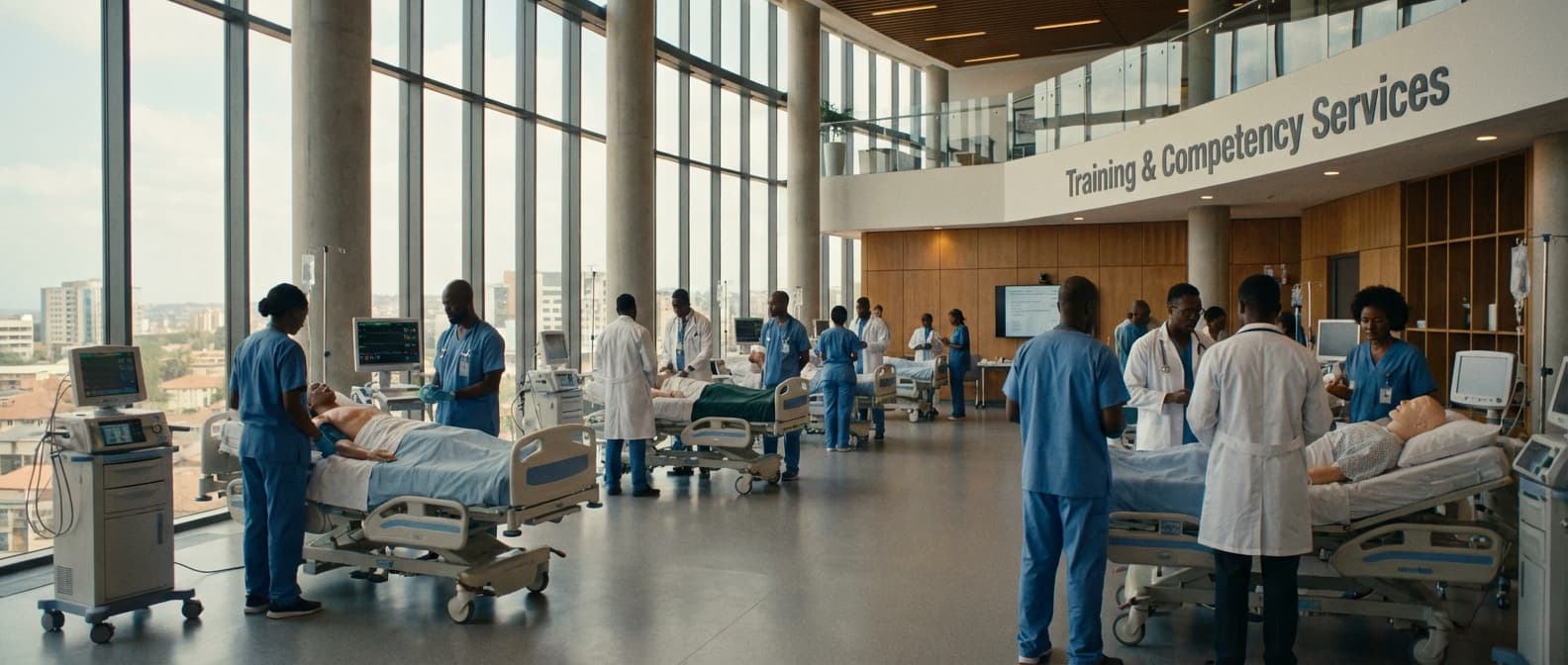
MRI Operator Training Service (Radiographers) in Mozambique
Engineering Excellence & Technical Support
MRI Operator Training Service (Radiographers) High-standard technical execution following OEM protocols and local regulatory frameworks.
Advanced Neuroimaging Protocols
Master state-of-the-art MRI sequences for detailed neurological assessments, including diffusion tensor imaging (DTI) and functional MRI (fMRI), crucial for diagnosing and monitoring complex brain conditions prevalent in Mozambique.
Pediatric MRI Safety & Techniques
Develop specialized skills in pediatric MRI, focusing on patient immobilization, sedation protocols, and acquisition techniques tailored to the unique anatomical and physiological needs of children in Mozambique's healthcare settings.
PACS & DICOM Integration Mastery
Gain expertise in Picture Archiving and Communication Systems (PACS) and DICOM standards, ensuring seamless data management, image sharing, and interoperability with existing hospital IT infrastructure across Mozambique.
What Is Mri Operator Training Service (Radiographers) In Mozambique?
MRI Operator Training Service (Radiographers) in Mozambique refers to specialized educational programs designed to equip radiographers with the necessary knowledge and practical skills to operate Magnetic Resonance Imaging (MRI) scanners safely and effectively. This service is crucial for developing a competent workforce capable of performing diagnostic MRI examinations within the Mozambican healthcare system. The training encompasses theoretical understanding of MRI physics, safety protocols, patient preparation, image acquisition techniques, contrast administration, and quality assurance, coupled with hands-on experience on actual MRI equipment.
| Requirement | Description | Impact |
|---|---|---|
| Who Needs It | Licensed radiographers, diagnostic imaging technologists, and healthcare professionals involved in MRI procedures in Mozambique. | Ensures a qualified workforce for safe and accurate MRI examinations, leading to improved diagnostic capabilities. |
| Typical Use Cases | Installation of new MRI facilities, upgrade of existing imaging departments, training of new personnel, and continuing professional development for existing operators. | Facilitates the expansion of MRI services, enhances diagnostic accuracy for various medical conditions (neurology, oncology, musculoskeletal), and supports specialized imaging applications. |
Key Components of MRI Operator Training Service:
- Theoretical Foundations: In-depth coverage of MRI principles, including signal generation, contrast mechanisms, pulse sequences, and artifact identification.
- Patient Care and Safety: Comprehensive training on patient screening for contraindications (e.g., metallic implants), management of claustrophobia, and adherence to MRI safety guidelines (e.g., SAR limits, magnetic field interactions).
- Equipment Operation: Practical instruction on the operation of specific MRI scanner models, including console navigation, parameter optimization, and protocol selection.
- Image Acquisition and Reconstruction: Mastery of various pulse sequences for different anatomical regions and pathological conditions, along with understanding image reconstruction processes.
- Contrast Agent Administration: Training on the indications, contraindications, administration protocols, and management of adverse reactions to MRI contrast agents.
- Quality Assurance and Control: Implementation of protocols to ensure optimal image quality, including regular equipment checks and troubleshooting.
- Cross-Sectional Anatomy and Pathology: Review of relevant anatomical structures and common pathologies to interpret imaging findings and guide acquisition strategies.
- Regulatory Compliance: Familiarization with national and international standards for MRI operation and radiation safety.
Who Needs Mri Operator Training Service (Radiographers) In Mozambique?
MRI Operator Training Services for Radiographers in Mozambique are crucial for enhancing diagnostic imaging capabilities, improving patient care, and ensuring the safe and efficient operation of MRI machines. As MRI technology becomes more prevalent and sophisticated, there is a growing demand for specialized training to equip radiographers with the necessary skills and knowledge. This service aims to bridge the gap in expertise, particularly in a developing healthcare landscape like Mozambique, where access to advanced medical technologies and the skilled personnel to operate them can be a challenge.
| Target Customer Type | Typical Departments Involved | Key Needs Addressed by Training |
|---|---|---|
| Public Hospitals | Radiology Department, Diagnostic Imaging Unit, Neurology, Orthopedics, Oncology | Basic and advanced MRI operation, patient safety protocols, image optimization, troubleshooting |
| Private Hospitals and Clinics | Radiology Department, Imaging Services, Neurology, Cardiology, Musculoskeletal Imaging | Advanced MRI sequences, specialized imaging protocols (e.g., cardiac MRI, neuroimaging), quality assurance, patient comfort and management |
| Tertiary and Referral Hospitals | Advanced Radiology, Neurosciences, Orthopedics, Oncology, Cardiology Departments | Complex MRI procedures, functional MRI (fMRI), diffusion tensor imaging (DTI), contrast administration, interventional MRI support |
| University Teaching Hospitals | Radiology Department, Medical Education Units, Research Departments | Pediatric MRI, advanced neurological imaging, musculoskeletal MRI, research-specific MRI techniques, training methodologies |
| Government Health Ministries/Agencies | Healthcare Planning, Human Resources for Health, Quality Assurance Units | Standardization of MRI services, competency assessment frameworks, training program development, capacity building |
| NGOs/International Aid Organizations | Program Management, Healthcare Delivery Teams | Skills development for local healthcare professionals, improving access to diagnostic imaging, sustainable healthcare solutions |
| Medical Imaging Centers | Radiology Department, Operations Management | Efficient MRI workflow, diverse scanning capabilities, patient throughput, business development through specialized services |
| Research Institutions | Research Laboratories, Imaging Core Facilities | Experimental MRI techniques, image analysis integration, protocol development for research studies, data acquisition rigor |
Target Customers and Departments for MRI Operator Training Service in Mozambique
- Public Hospitals: These are often the largest healthcare providers in the country, serving a broad segment of the population. Investing in MRI operator training for their radiographers can significantly expand diagnostic services to remote and underserved areas.
- Private Hospitals and Clinics: As the private healthcare sector grows, so does the investment in advanced imaging equipment. Training radiographers in these facilities ensures they can competently operate modern MRI scanners and offer competitive diagnostic services.
- Tertiary and Referral Hospitals: These facilities typically house more specialized equipment and handle complex cases. Training their radiographers is essential for advanced diagnostic procedures and research.
- University Teaching Hospitals: Training radiographers in these institutions not only improves their current skills but also prepares the next generation of imaging professionals, fostering a sustainable pool of expertise.
- Government Health Ministries and Agencies: These entities are responsible for national health policy and infrastructure. They may sponsor or mandate training programs to standardize MRI services across the country and ensure quality control.
- Non-Governmental Organizations (NGOs) and International Aid Organizations: Organizations involved in healthcare development and support in Mozambique might identify a need for MRI operator training as part of their initiatives to improve medical diagnostics and patient outcomes.
- Medical Imaging Centers: Standalone imaging centers that offer MRI services will require trained radiographers to operate their equipment and attract a steady stream of patients.
- Research Institutions: Facilities conducting medical research that involves MRI scans will need highly skilled operators to ensure data accuracy and integrity.
Mri Operator Training Service (Radiographers) Process In Mozambique
The MRI Operator Training Service for Radiographers in Mozambique outlines a comprehensive workflow designed to guide potential clients from initial inquiry to the successful execution of specialized training. This process emphasizes clear communication, needs assessment, customized program development, logistical coordination, and comprehensive delivery to ensure radiographers gain the necessary skills and knowledge for effective MRI operation.
| Stage | Key Activities | Responsible Parties | Deliverables/Outcomes |
|---|---|---|---|
| Prospective client (hospital, clinic, government health agency) expresses interest in MRI operator training. | Client, Training Provider | Initial understanding of client's training needs. |
| Detailed discussion to understand current radiographer skill levels, specific MRI equipment available, existing protocols, desired learning outcomes, and budget. | Training Provider (Subject Matter Experts), Client Representatives | Comprehensive report detailing training requirements, target audience profile, and specific learning objectives. |
| Based on the needs assessment, the training provider develops a tailored training proposal including curriculum outline, training methodology, duration, trainer profiles, and a detailed cost breakdown. | Training Provider | Formal training proposal and quotation submitted to the client. |
| Client reviews the proposal. Negotiation may occur. Upon agreement, a formal contract is signed outlining terms, scope of work, payment schedule, and responsibilities. | Client, Training Provider | Signed contract, confirming commitment to the training service. |
| The training provider finalizes the curriculum, adapting theoretical modules and practical exercises to the client's specific MRI equipment and clinical context. Scheduling of modules is done. | Training Provider (Curriculum Developers, Trainers) | Finalized training curriculum, training materials (presentations, handouts, case studies), and detailed training schedule. |
| Includes booking training venues (if off-site), arranging travel and accommodation for trainers (if necessary), ensuring availability of MRI scanners for practical sessions, and preparing any necessary equipment or consumables. | Training Provider, Client (for venue/equipment access) | All logistical aspects confirmed and in place for training commencement. |
| Execution of the training program, encompassing theoretical lectures, hands-on practical sessions on MRI scanners, case study discussions, and interactive learning. | Certified Trainers, Trainee Radiographers | Active participation and learning by radiographers during the training. |
| Assessment of radiographers' knowledge and practical skills through quizzes, written exams, and practical demonstrations. Feedback is also gathered from participants on the training program. | Trainers, Trainee Radiographers | Assessment results for each radiographer, feedback report on the training effectiveness. |
| Upon successful completion of assessments, certificates are issued. A post-training follow-up may be conducted to assess long-term impact and provide any necessary ongoing support or refresher courses. | Training Provider | Training certificates for successful candidates, post-training report, potential for ongoing support agreements. |
MRI Operator Training Service Workflow for Radiographers in Mozambique
- Inquiry & Initial Contact
- Needs Assessment & Consultation
- Proposal Development & Quotation
- Agreement & Contract Finalization
- Curriculum Customization & Planning
- Logistical Arrangements
- Training Delivery
- Assessment & Evaluation
- Certification & Follow-up
Mri Operator Training Service (Radiographers) Cost In Mozambique
Providing accurate cost estimates for MRI Operator Training (Radiographers) in Mozambique is challenging due to a lack of standardized pricing and a limited number of dedicated training providers. Costs are highly variable and depend on several key factors, including the duration and depth of the training, the qualifications and experience of the trainers, the location of the training (in-country versus international), the specific curriculum covered, and the inclusion of practical, hands-on experience with MRI equipment. Furthermore, the current economic climate and demand for such specialized training within Mozambique will also influence pricing. Training may be offered by hospitals with existing MRI facilities, specialized medical training centers, or international organizations, each with different cost structures.
| Training Type/Duration | Estimated Cost Range (MZN - Mozambican Metical) | Notes |
|---|---|---|
| Basic MRI Physics & Safety (e.g., 1-3 days) | 5,000 - 15,000 MZN | Primarily theoretical, introductory level. May be offered as part of broader radiology workshops. |
| Standard MRI Operator Training (e.g., 1-2 weeks) | 20,000 - 50,000 MZN | Covers fundamental principles, basic protocols, and some practical exposure. Likely in-country. |
| Advanced MRI Training/Specialization (e.g., 2-4 weeks or modular) | 60,000 - 150,000+ MZN | In-depth training on specific techniques, advanced protocols, image analysis. May include more extensive hands-on. Could involve international trainers or require travel. |
| Comprehensive International Training Programs | USD 2,000 - USD 10,000+ (converted to MZN) | Includes tuition, potentially accommodation and flights. Significant investment. |
Key Pricing Factors for MRI Operator Training (Radiographers) in Mozambique
- Training Duration and Intensity: Shorter, introductory courses will be significantly less expensive than comprehensive, multi-week programs that cover advanced techniques and troubleshooting.
- Trainer Qualifications and Experience: Highly experienced radiographers or MRI specialists with international credentials will command higher fees.
- Curriculum Scope: The breadth of topics covered (e.g., physics, safety, image acquisition, specific protocols for different body parts, post-processing) will impact the overall cost.
- Practical/Hands-on Component: Training that includes supervised practical sessions on actual MRI scanners will be more expensive than purely theoretical courses.
- Training Provider: Costs can vary widely between local institutions, international training companies, and hospital-based programs.
- Location of Training: In-country training will generally be more cost-effective than sending personnel abroad for training, considering travel, accommodation, and tuition fees.
- Accreditation and Certification: Training leading to recognized certifications may have higher costs associated with the accreditation process.
- Group Size and Customization: Larger groups might benefit from economies of scale, while highly customized training for specific needs may incur additional development costs.
Affordable Mri Operator Training Service (Radiographers) Options
This service offers comprehensive and affordable MRI operator training designed specifically for radiographers. We understand the financial and time constraints faced by healthcare facilities and individuals. Our program focuses on delivering high-quality education that equips radiographers with the necessary skills and knowledge to safely and effectively operate MRI scanners. We offer flexible learning pathways and cost-saving strategies to make advanced MRI training accessible.
| Training Package | Description | Value Bundles | Cost-Saving Strategies |
|---|---|---|---|
| Basic MRI Operator Certification | Fundamental principles of MRI, scanner operation, safety protocols, basic pulse sequences. | Includes: Online theory modules, simulated practice sessions, 1-week supervised on-site training. | Early bird registration discounts, group enrollment discounts (3+ participants). |
| Advanced MRI Techniques & Protocols | In-depth understanding of advanced sequences, contrast administration, specific anatomical protocols (neurology, musculoskeletal, abdominal). | Includes: Extended online modules, advanced simulation exercises, 2-week intensive on-site training with protocol development. | Bundle with Basic Certification for a discounted package price. Payment plans available. |
| Comprehensive MRI Specialist Program | Combines Basic and Advanced modules, plus specialized modules in areas like cardiac MRI, interventional MRI, or pediatric MRI. | Includes: All previous features plus dedicated mentorship, case study analysis, access to advanced imaging libraries. | Annual training contracts for facilities, referral bonuses for existing clients. |
| Customized On-Demand Training | Training tailored to specific facility needs, equipment, or emergent protocol requirements. | Includes: Needs assessment, custom curriculum development, flexible delivery methods. | Volume discounts based on the number of modules and participants. 'Train-the-Trainer' programs to build internal expertise. |
Key Features & Benefits
- Tailored curriculum for radiographers
- Experienced MRI professionals as instructors
- Hands-on practical training opportunities
- Flexible scheduling options (on-site, remote, hybrid)
- Certification upon successful completion
- Emphasis on patient safety and image quality
Verified Providers In Mozambique
Ensuring access to quality healthcare is paramount, and in Mozambique, identifying verified healthcare providers is crucial for informed decision-making. Franance Health stands out as a leading entity in this regard, not only for its rigorous credentialing process but also for the demonstrable benefits its verified providers offer to patients. This document outlines Franance Health's credentials and explains why their network represents the best choice for healthcare in Mozambique.
| Benefit for Patients | How Franance Health Delivers | Why This is the Best Choice |
|---|---|---|
| Peace of Mind | Franance Health's verified providers have undergone extensive scrutiny, guaranteeing their legitimacy and competence. | Eliminates the risk of seeking care from unqualified practitioners, ensuring safety and effectiveness. |
| Improved Health Outcomes | Access to highly skilled and experienced medical professionals leads to accurate diagnoses and effective treatment plans. | Maximizes the chances of successful recovery and better long-term health. |
| Enhanced Patient Experience | Verified providers are committed to patient-centered communication and compassionate care. | Fosters a supportive and trusting relationship between patient and doctor, leading to greater satisfaction and adherence to treatment. |
| Efficient Healthcare Navigation | Franance Health simplifies the process of finding the right specialist for specific conditions. | Saves time and reduces frustration by connecting patients directly with appropriate, qualified medical experts. |
| Accountability and Reliability | Franance Health maintains a high standard for its network, ensuring providers are held to professional ethical codes. | Provides a reliable source of healthcare services with recourse and support should any issues arise. |
Franance Health's Credentialing Process and Value Proposition
- {"title":"Rigorous Vetting and Verification","description":"Franance Health employs a multi-faceted approach to verify the qualifications, licenses, and professional standing of all healthcare providers within its network. This includes thorough background checks, verification of medical degrees and certifications, and assessment of professional experience."}
- {"title":"Commitment to Quality Standards","description":"The organization adheres to stringent quality assurance protocols, ensuring that all verified providers meet and exceed national and international standards of medical practice. This commitment translates to safer and more effective patient care."}
- {"title":"Focus on Patient-Centric Care","description":"Franance Health prioritizes the patient experience. Verified providers are assessed not only on their clinical expertise but also on their communication skills, empathy, and dedication to patient well-being."}
- {"title":"Building Trust and Transparency","description":"By providing a transparent and reliable platform for identifying qualified healthcare professionals, Franance Health fosters trust between patients and providers, reducing anxiety and empowering individuals to make confident healthcare choices."}
- {"title":"Access to Specialized Expertise","description":"The Franance Health network encompasses a wide range of medical specialties, ensuring that patients can find the most appropriate and qualified care for their specific health needs, from general practitioners to highly specialized surgeons."}
Scope Of Work For Mri Operator Training Service (Radiographers)
This Scope of Work (SOW) outlines the requirements for providing comprehensive MRI Operator Training Services specifically tailored for Radiographers. The objective is to equip radiographers with the necessary theoretical knowledge and practical skills to safely and effectively operate MRI scanners, ensuring high-quality diagnostic imaging and patient care. The training will cover fundamental MRI physics, advanced imaging techniques, patient safety protocols, quality assurance, and common artifact identification and troubleshooting.
| Deliverable | Description | Standard Specification / Requirement | Verification Method |
|---|---|---|---|
| Training Curriculum Development | Creation of a detailed, modular training curriculum covering all listed key modules. | Curriculum must be aligned with industry best practices (e.g., ARRT, RANZCR guidelines), be evidence-based, and include learning objectives, content outlines, and assessment strategies. Content must be updated to reflect current MRI technology and protocols. | Review and approval of the curriculum document by the client's subject matter expert. |
| Training Material Development | Production of comprehensive training materials for both theoretical and practical sessions. | Materials to include: presentations (slides), lecture notes, practical exercises, case studies, handouts, visual aids, and access to relevant online resources. Materials should be clear, concise, and easily understandable for radiographers. Digital and/or printed formats acceptable as per client agreement. | Review and approval of training materials by the client. |
| Theoretical Training Delivery | Conducting classroom-based or virtual lectures and discussions on MRI principles and applications. | Minimum of [Specify number] hours of theoretical instruction per module. Sessions to be interactive, encouraging questions and discussion. Instructor must possess recognized expertise in MRI. | Attendance records, participant feedback forms, and post-module quizzes. |
| Practical Training Delivery | Supervised hands-on training on an operational MRI scanner. | Minimum of [Specify number] hours of practical training per trainee. Training to cover patient positioning, protocol selection, scan acquisition, image quality assessment, and basic troubleshooting. Must be conducted in a safe and controlled environment. | Observation of trainee performance by the instructor, review of acquired images, practical skills assessment checklists. |
| Competency Assessment | Evaluation of trainee's understanding and practical skills. | Includes written examinations (multiple choice, short answer), practical examinations (demonstration of skills on the scanner), and case study analysis. Passing score to be defined (e.g., 80%). | Review of assessment results, pass/fail determination for each trainee. |
| Training Report | Comprehensive report detailing the training conducted. | Report to include: list of attendees, module completion status, assessment results, feedback summary, and recommendations for further development. Report to be submitted within [Specify timeframe] of training completion. | Client review and acceptance of the training report. |
| Certification | Issuance of certificates to trainees who successfully complete the training program. | Certificates to be personalized with trainee name, course title, date, and provider's credentials. Must clearly state the scope of the training (e.g., 'Certified MRI Operator for Radiographers'). | Verification of successful completion of all training and assessment requirements. |
Key Training Modules
- Introduction to MRI Principles and Physics
- MRI Pulse Sequences and Image Formation
- Contrast Agents in MRI
- Patient Preparation and Safety Protocols (including screening, contraindications, and emergency procedures)
- Advanced MRI Techniques (e.g., fMRI, Diffusion-weighted imaging, Spectroscopy)
- MRI Scanner Operation and System Controls
- Image Post-processing and Manipulation
- Quality Assurance and Quality Control in MRI
- Artifact Identification and Troubleshooting
- Ethical Considerations and Radiation Safety (if applicable to specific techniques or ancillary equipment)
Service Level Agreement For Mri Operator Training Service (Radiographers)
This Service Level Agreement (SLA) outlines the guaranteed response times and uptime for the MRI Operator Training Service provided to qualified Radiographers. This agreement ensures timely support and availability of the training platform and resources.
| Service Component | Response Time (Business Hours) | Uptime Guarantee | Notification for Scheduled Downtime |
|---|---|---|---|
| Technical Support (Platform Access & Functionality) | 2 Business Hours | 99.5% | Minimum 48 hours in advance |
| Content Access & Learning Module Availability | 4 Business Hours | 99.8% | Minimum 48 hours in advance |
| Assessment & Certification Portal | 3 Business Hours | 99.7% | Minimum 48 hours in advance |
| Instructor/Tutor Support (Query Resolution) | 1 Business Day | N/A (Asynchronous support) | N/A |
Service Level Objectives
- Response Time: Refers to the maximum time it takes for a support representative to acknowledge and begin addressing a reported issue.
- Uptime Guarantee: Refers to the percentage of time the MRI Operator Training Service platform and its core functionalities are available and operational for users.
- Scheduled Downtime: Planned maintenance periods that are communicated in advance and are excluded from uptime calculations.
- Unscheduled Downtime: Unexpected interruptions to service availability that are not part of scheduled maintenance.
Frequently Asked Questions

Ready when you are
Let's scope your MRI Operator Training Service (Radiographers) in Mozambique project in Mozambique.

Scaling healthcare logistics and technical systems across the entire continent.