
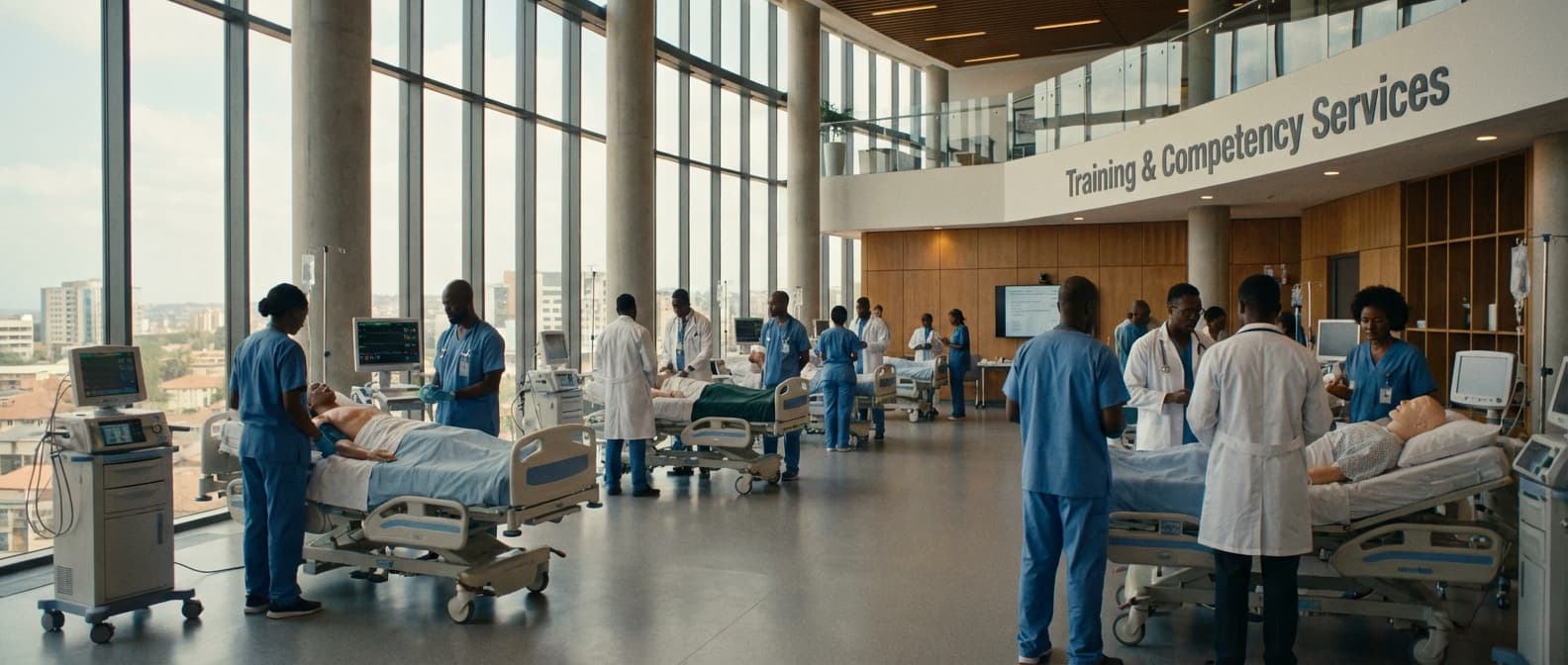
CT Operator Training Service (Radiographers) in Mozambique
Engineering Excellence & Technical Support
CT Operator Training Service (Radiographers) High-standard technical execution following OEM protocols and local regulatory frameworks.
Mastering Advanced CT Modalities
Gain hands-on expertise with state-of-the-art CT scanners and advanced imaging techniques, including multi-detector CT (MDCT) and dual-energy CT, enabling precise diagnostic capabilities for a wider range of pathologies.
Optimized Patient Positioning & Protocols
Learn industry-leading protocols for patient preparation, contrast administration, and radiation dose optimization, ensuring patient safety, comfort, and the acquisition of high-quality diagnostic images.
AI-Assisted Image Analysis & Workflow Efficiency
Explore the integration of Artificial Intelligence (AI) tools for enhanced image post-processing, artifact reduction, and streamlined diagnostic workflows, empowering radiographers to deliver faster and more accurate interpretations.
What Is Ct Operator Training Service (Radiographers) In Mozambique?
CT Operator Training Service (Radiographers) in Mozambique refers to specialized educational programs designed to equip radiographers and allied health professionals with the necessary theoretical knowledge and practical skills to safely and effectively operate Computed Tomography (CT) scanners. This service is crucial for ensuring high-quality diagnostic imaging services, patient safety, and adherence to international radiation protection standards within the Mozambican healthcare system.
| Who Needs CT Operator Training? | Typical Use Cases | ||||
|---|---|---|---|---|---|
| Radiographers: Certified radiographers seeking to specialize in CT imaging or enhance their existing CT skills. | Radiology Technologists: Professionals involved in diagnostic imaging who require proficiency in CT operation. | Medical Physicists: To understand the practical aspects of CT operation and assist in QA/QC. | Radiology Nurses: Particularly those involved in patient care and preparation for CT procedures. | Healthcare Facilities: Public and private hospitals, diagnostic imaging centers, and clinics acquiring or upgrading CT imaging capabilities. | Government Health Ministries/Agencies: For workforce development and ensuring standardized training across the nation. |
| Diagnostic Imaging: Acquiring cross-sectional images for a wide range of medical conditions, including trauma, neurological disorders, oncological staging, and cardiovascular diseases. | Interventional Procedures: Assisting in image-guided interventions such as biopsies, drainages, and ablations. | Emergency Medicine: Rapid assessment of acute conditions like stroke, hemorrhage, and bowel obstructions. | Surgical Planning: Providing detailed anatomical information for pre-operative assessment and surgical planning. | Research: Contributing to clinical research requiring high-resolution imaging data. |
Key Components of CT Operator Training Service:
- Theoretical Foundation: Comprehensive instruction on the principles of CT physics, image formation, scanner hardware, radiation biology, and dose optimization techniques.
- Image Acquisition Protocols: Training on selecting and implementing appropriate scanning protocols for various anatomical regions and clinical indications, including contrast administration guidelines.
- Patient Preparation and Management: Education on patient communication, positioning, contraindication assessment, and management of potential adverse reactions (e.g., contrast media reactions).
- Image Processing and Analysis: Skills in basic image manipulation, windowing, leveling, and generation of multi-planar reconstructions (MPR) and 3D visualizations.
- Quality Assurance and Control (QA/QC): Understanding and implementing regular QA/QC procedures to ensure optimal scanner performance and image quality.
- Radiation Safety and Protection: In-depth training on ALARA (As Low As Reasonably Achievable) principles, shielding, dose monitoring, and compliance with national radiation safety regulations.
- Troubleshooting and Maintenance: Basic understanding of common scanner artifacts, troubleshooting techniques, and reporting procedures for equipment malfunctions.
- Legal and Ethical Considerations: Awareness of patient consent, data privacy, and professional responsibilities in the context of CT imaging.
Who Needs Ct Operator Training Service (Radiographers) In Mozambique?
CT Operator Training Service (Radiographers) in Mozambique are crucial for advancing diagnostic imaging capabilities and ensuring patient safety across various healthcare settings. The demand for such specialized training stems from the increasing adoption of CT technology and the need for skilled professionals to operate these complex machines effectively and interpret the resulting images accurately. This training is vital for radiographers to stay abreast of the latest technological advancements, adhere to radiation safety protocols, and improve the diagnostic yield of CT scans. The service targets healthcare institutions that utilize or plan to utilize CT scanners, ranging from public hospitals to private diagnostic centers. The primary beneficiaries are the radiographers themselves, who gain essential skills and qualifications, and by extension, the patients who receive higher quality diagnostic imaging services.
| Customer Type | Primary Departments Involved | Key Needs Addressed by Training |
|---|---|---|
| Public Hospitals | Radiology Department, Diagnostic Imaging Unit | Upgrading skills of existing radiographers, training new staff on CT operation, ensuring consistent image quality and patient safety, compliance with national standards. |
| Private Hospitals | Radiology Department, Imaging Services | Maintaining high standards of care, adopting new CT technologies, improving patient throughput, competitive service offering, specialized training for advanced procedures. |
| Diagnostic Imaging Centers | Radiology Department, CT Scan Unit | Expertise in operating various CT models, optimizing scan protocols, radiation dose optimization, cross-training radiographers on multiple modalities, quality assurance. |
| Specialized Clinics (e.g., Oncology, Cardiology) | Radiology Department, Interventional Radiology | Training for specific CT applications (e.g., cardiac CT, CT angiography), understanding of disease-specific protocols, collaboration with referring specialists, advanced image interpretation. |
| Research Institutions | Research Imaging Unit, Radiology Department | Training for advanced research protocols, understanding of specialized CT imaging techniques for research, data acquisition and management for research studies. |
| Government Health Agencies | Human Resources for Health Department, Public Health Sector | Capacity building for the national healthcare workforce, ensuring equitable access to quality diagnostic imaging, developing training standards, supporting rural healthcare facilities with trained personnel. |
Target Customers for CT Operator Training Service (Radiographers) in Mozambique
- Public Hospitals
- Private Hospitals
- Diagnostic Imaging Centers
- Specialized Clinics (e.g., Oncology, Cardiology)
- Research Institutions with Imaging Facilities
- Government Health Agencies involved in capacity building
Ct Operator Training Service (Radiographers) Process In Mozambique
This document outlines the typical workflow for a CT Operator Training Service for Radiographers in Mozambique, from the initial inquiry to the successful execution of the training program. This process is designed to ensure clarity, efficiency, and satisfaction for all stakeholders involved.
| Stage | Key Activities | Responsible Parties | Expected Outcome |
|---|---|---|---|
| Inquiry & Needs Assessment | Client expresses interest, provider gathers details on requirements. | Client, Training Provider | Clear understanding of training needs and scope. |
| Proposal & Quotation | Provider creates and submits a detailed proposal and cost estimate. | Training Provider, Client | Client receives a comprehensive training plan and pricing. |
| Contract Negotiation & Agreement | Terms, conditions, and payment are finalized and formalized. | Client, Training Provider | Signed training contract. |
| Pre-Training Preparations | Logistics, materials, and venue confirmation. | Training Provider, Client | All arrangements in place for effective training delivery. |
| Training Delivery | Theoretical and practical training sessions conducted. | Training Provider (Trainers), Trainees | Radiographers gain knowledge and practical skills in CT operation. |
| Assessment & Evaluation | Trainees are tested, and feedback is collected. | Training Provider, Trainees, Client | Competency of trainees is verified; training effectiveness is measured. |
| Certification & Reporting | Certificates issued, and a final report submitted. | Training Provider, Client | Trainees receive formal recognition; client receives training summary. |
| Post-Training Support & Follow-up | Ongoing assistance and impact assessment. | Training Provider, Client | Sustained skill development and integration into practice. |
CT Operator Training Service Workflow (Radiographers) in Mozambique
- {"step":1,"title":"Inquiry & Needs Assessment","description":"Prospective clients (hospitals, clinics, government health bodies) inquire about CT operator training. The service provider gathers information on the client's specific needs, including the number of radiographers to be trained, their current skill level, existing CT equipment, desired training outcomes, and preferred training dates/locations."}
- {"step":2,"title":"Proposal & Quotation","description":"Based on the needs assessment, the service provider develops a detailed proposal outlining the training curriculum, methodology (theory, practical, simulation), duration, trainers' qualifications, proposed schedule, learning objectives, and a comprehensive quotation. This is submitted to the client for review."}
- {"step":3,"title":"Contract Negotiation & Agreement","description":"Upon acceptance of the proposal, negotiations commence regarding terms and conditions, payment schedules, and any specific contractual clauses. A formal training agreement is signed by both parties."}
- {"step":4,"title":"Pre-Training Preparations","description":"This phase involves logistical arrangements. The service provider confirms trainer availability, prepares training materials (manuals, presentations, case studies), and coordinates with the client for access to the CT scanner, simulation equipment (if applicable), and suitable training venues. Any necessary travel and accommodation for trainers are arranged."}
- {"step":5,"title":"Training Delivery","description":"The training program is executed according to the agreed-upon schedule. This typically includes: \n * Theoretical Sessions: Covering CT physics, image acquisition principles, patient positioning, safety protocols, and artifact management.\n * Practical Sessions: Hands-on training on the CT scanner, focusing on protocol selection, parameter optimization, and image reconstruction.\n * Simulation (if applicable): Using simulators for repetitive practice in a safe environment.\n * Case Study Reviews: Analyzing real-world patient scans to reinforce learning."}
- {"step":6,"title":"Assessment & Evaluation","description":"Trainee competence is assessed through a combination of theoretical exams, practical assessments (observed scanner operation, protocol execution), and potentially a final project or case presentation. The service provider also gathers feedback from trainees and the client on the training's effectiveness and delivery."}
- {"step":7,"title":"Certification & Reporting","description":"Upon successful completion of the training and assessments, radiographers receive certificates of completion. The service provider submits a comprehensive training report to the client, detailing attendance, assessment results, and any recommendations for further development."}
- {"step":8,"title":"Post-Training Support & Follow-up","description":"The service provider may offer limited post-training support, such as answering specific technical queries or providing access to online resources. A follow-up may be scheduled to assess the long-term impact of the training on clinical practice."}
Ct Operator Training Service (Radiographers) Cost In Mozambique
Providing accurate and up-to-date cost information for CT Operator Training (Radiographers) in Mozambique can be challenging due to the specialized nature of the service and potential variations in training providers, curriculum, and duration. However, we can discuss the key pricing factors that influence these costs and provide estimated ranges in the local currency, the Mozambican Metical (MZN).
Key Pricing Factors for CT Operator Training in Mozambique:
- Training Provider: Reputable institutions, established training centers, or specialized medical training companies will generally command higher fees due to their infrastructure, qualified instructors, and accreditation.
- Curriculum & Duration: The depth and breadth of the training program are significant cost drivers. A comprehensive course covering theoretical aspects, practical hands-on experience with CT scanners, image interpretation, patient safety, and quality assurance will be more expensive than a shorter, more focused workshop.
- Hands-on Practical Experience: Access to functional CT scanning equipment for practical training is crucial and often contributes to higher costs. This can involve training on simulators or actual patient scans under supervision.
- Instructor Qualifications & Experience: Highly experienced and certified radiographers or medical physicists as instructors will likely result in higher training fees.
- Location of Training: Training conducted in major cities like Maputo may have different cost structures compared to more remote locations due to overheads and accessibility.
- Accreditation & Certification: Training programs accredited by recognized professional bodies or leading to a formal certification will often be priced higher, reflecting the value of the credential.
- Included Materials & Resources: The cost of training manuals, access to online learning platforms, case studies, and assessment materials can influence the overall price.
- Group vs. Individual Training: Bulk bookings for multiple radiographers from a single institution might receive discounted rates compared to individual enrollment.
- Training Format: On-site training at a facility, off-site at a training center, or even remote/online components can affect the cost.
- Post-Training Support: Some providers may offer follow-up support, mentorship, or refresher courses, which can be factored into the pricing.
Estimated Cost Ranges in Mozambican Metical (MZN):
Given the variability of these factors, providing precise figures is difficult. However, based on general industry trends and assuming a standard comprehensive training program of several weeks to a few months, the estimated cost for CT Operator Training (Radiographers) in Mozambique could range from 150,000 MZN to 450,000 MZN per participant.
Important Note: This is a broad estimation. Specific quotes from training providers are essential for accurate budgeting. Factors like the specific type of CT scanner being trained on (e.g., standard multi-detector CT vs. specialized cardiac CT) can also influence pricing.
| Category | Estimated Cost Range (MZN) |
|---|---|
| Comprehensive CT Operator Training (per participant, estimated) | 150,000 - 450,000 MZN |
| Note: This is a broad estimate and actual costs can vary significantly based on specific program details and providers. |
Factors Influencing CT Operator Training Costs in Mozambique
- Training Provider Reputation and Infrastructure
- Depth and Duration of Curriculum
- Availability and Quality of Practical/Hands-on Sessions
- Instructor Expertise and Credentials
- Geographic Location of Training Delivery
- Accreditation Status and Certification Value
- Inclusion of Training Materials and Resources
- Group Discounts vs. Individual Enrollment
- Training Modality (On-site, Off-site, Online)
- Post-Training Support Services
Affordable Ct Operator Training Service (Radiographers) Options
Seeking affordable CT operator training for radiographers is a smart investment in your team's skills and the efficiency of your imaging department. This service focuses on providing comprehensive, cost-effective education that meets industry standards and enhances diagnostic capabilities. We understand that budget constraints are a significant factor, so we've developed flexible training options and cost-saving strategies to make high-quality CT operator training accessible.
| Cost-Saving Strategy | Description | Potential Benefits |
|---|---|---|
| Group Discounts: | Training multiple radiographers simultaneously often unlocks significant per-person discounts. The more participants, the higher the savings. | Reduced overall training expenditure, consistent skill development across the team. |
| Blended Learning Options: | Combining online, self-paced modules with shorter, in-person or virtual instructor-led sessions. This reduces travel and accommodation costs. | Flexibility for participants, lower logistical expenses, efficient use of instructor time. |
| On-Site Training: | Having certified trainers come to your facility. This eliminates travel costs for your staff and allows training to be tailored to your specific equipment and workflow. | Zero travel expenses for staff, practical application on familiar equipment, minimal disruption to patient schedules. |
| Customizable Curriculums: | Focusing training only on the modules and skills your team truly needs, avoiding redundant content and unnecessary costs. | Efficient use of training budget, targeted skill development, faster ROI. |
| Early Bird Registration: | Registering your team well in advance of scheduled training dates often comes with reduced pricing. | Lower upfront cost for training, guaranteed spots for your staff. |
| Partnerships & Long-Term Contracts: | Establishing ongoing training partnerships or longer-term contracts can result in preferential pricing and dedicated support. | Predictable training costs, ongoing access to expertise, tailored program development. |
Value Bundles for CT Operator Training
- Core CT Skills Bundle: This foundational package covers essential CT physics, patient positioning, image acquisition protocols, artifacts, and basic troubleshooting. Ideal for new CT technologists or those transitioning from other modalities.
- Advanced Protocol & Optimization Bundle: For experienced operators looking to refine their skills, this bundle delves into advanced imaging techniques, contrast administration optimization, dose reduction strategies, and specific protocol development for various anatomical regions.
- Comprehensive Certification Prep Bundle: Designed to prepare radiographers for CT certification exams (e.g., ARRT CT), this bundle includes simulated exams, targeted review sessions, and extensive practice questions alongside core and advanced training.
- Departmental Training Solution: A customizable bundle tailored to the specific needs of your imaging department. We can integrate your existing protocols, focus on particular scanner models, and provide on-site or blended learning options for maximum convenience and cost-effectiveness.
Verified Providers In Mozambique
Finding reliable and accredited healthcare providers is crucial for ensuring quality medical care. In Mozambique, Franance Health has established itself as a leading organization, recognized for its rigorous credentialing process and commitment to excellence. Their network comprises verified providers who meet the highest standards of professionalism, expertise, and ethical practice. This dedication to quality assurance makes Franance Health the best choice for individuals and organizations seeking trustworthy healthcare solutions.
| Provider Type | Franance Health Verification Benefits | Why It Matters to Patients |
|---|---|---|
| Doctors (Specialists & General Practitioners) | Verification of medical degrees, specializations, licenses, and board certifications. Background checks for malpractice history. | Ensures you are treated by a qualified and licensed medical professional with the appropriate expertise for your condition. |
| Hospitals & Clinics | Assessment of facility infrastructure, equipment, hygiene standards, and adherence to safety protocols. Verification of medical staff credentials. | Guarantees access to safe, well-equipped facilities with competent medical teams, leading to better treatment outcomes and reduced risks. |
| Laboratories & Diagnostic Centers | Validation of laboratory accreditations, quality control measures, and the qualifications of technicians and pathologists. Calibration of equipment. | Provides confidence in the accuracy and reliability of your diagnostic tests, which are fundamental for proper diagnosis and treatment planning. |
| Pharmacies | Verification of pharmacy licenses, proper storage of medications, and the qualifications of pharmacists. Assurance of authentic and safe pharmaceuticals. | Ensures you receive genuine medications dispensed by qualified professionals, safeguarding your health and preventing adverse reactions. |
Why Franance Health is the Best Choice for Verified Providers in Mozambique:
- Rigorous Vetting Process: Franance Health employs a comprehensive credentialing process that scrutinizes the qualifications, licenses, and experience of every healthcare provider.
- Commitment to Quality: They prioritize patient safety and positive health outcomes by partnering only with providers who demonstrate a consistent track record of high-quality care.
- Extensive Network: Franance Health boasts a diverse network of specialists and general practitioners across Mozambique, ensuring access to a wide range of medical services.
- Ethical Standards: All Franance Health providers adhere to strict ethical guidelines, promoting transparency, patient rights, and respectful medical practice.
- Continuous Monitoring: The organization engages in ongoing monitoring of its providers to ensure continued adherence to their standards and to address any emerging concerns.
Scope Of Work For Ct Operator Training Service (Radiographers)
This Scope of Work (SOW) outlines the requirements for providing comprehensive CT Operator Training Services specifically for radiographers. The objective is to equip radiographers with the advanced knowledge, practical skills, and theoretical understanding necessary to safely, efficiently, and effectively operate CT scanners, produce high-quality diagnostic images, and adhere to best practices in radiation safety and patient care. This training will cover fundamental principles of CT imaging, advanced scanning techniques, image processing and manipulation, quality assurance, and patient management specific to CT procedures.
| Category | Standard Specification / Requirement | Description | Verification Method |
|---|---|---|---|
| Training Curriculum | Comprehensive & Modular | Must cover CT physics, scanner operation, image acquisition protocols (routine and advanced), contrast administration, patient positioning, radiation safety (ALARA principles, dose reduction techniques), image processing, artifact identification and reduction, quality assurance procedures, and emergency protocols. Modules should be designed for progressive learning. | Review of submitted curriculum document against SOW requirements. |
| Training Materials | High-Quality & Accessible | Materials must be clear, concise, up-to-date, and presented in an easily understandable format (e.g., PowerPoint presentations, printable handouts, interactive case studies). Must be provided in digital format (PDF, PPTX) and potentially printed copies for hands-on sessions. | Review of sample training materials and confirmation of digital/print provision. |
| Practical Training | Hands-on & Supervised | A minimum number of supervised hours on actual CT scanners is required. Training should cover simulator-based training (if applicable) and real patient scanning under direct supervision. Trainees must demonstrate proficiency in all core operational tasks. | Review of training log, observation during practical sessions (if applicable), and assessment results. |
| Competency Assessment | Objective & Validated | Includes written examinations, practical skills assessments (simulated or observed), and case study analysis to evaluate the trainee's understanding and ability to apply learned concepts. Assessments should be aligned with industry standards. | Review of assessment tools, sample assessments, and aggregated competency results. |
| Radiation Safety Training | Mandatory & Certified | Specific focus on radiation physics, biological effects, dose optimization techniques (e.g., iterative reconstruction, tube current modulation), shielding, and regulatory compliance. Training should adhere to national and international radiation protection guidelines. | Review of radiation safety module content and assessment results. |
| Image Quality Assurance | Practical & Measurable | Training on performing routine QA checks, identifying image artifacts, and implementing corrective actions to ensure optimal image quality for diagnostic interpretation. This includes understanding image parameters and their impact. | Observation of QA procedures during practical sessions and review of associated documentation. |
| Trainer Qualifications | Experienced & Certified | Trainers must be certified radiographers or medical physicists with extensive experience in CT imaging and adult education. They should possess strong communication and teaching skills. | Review of trainer CVs, certifications, and references. |
| Reporting | Timely & Comprehensive | Regular progress reports during the training period and a final comprehensive report detailing training activities, participant performance, assessment outcomes, and recommendations for further development. | Review of submitted interim and final reports. |
| Certification | Formal & Verifiable | Upon successful completion of all training modules and assessments, participants must receive a formal Certificate of Completion. Certificates should be traceable and include key training details. | Review of sample certificate format and confirmation of issuance process. |
Technical Deliverables
- Detailed Training Curriculum Document
- Training Materials (Presentations, Handouts, Case Studies, Quizzes)
- Practical Training Sessions Schedule and Log
- Competency Assessment Tools and Results
- Post-Training Evaluation Reports
- Certification of Completion for Participants
- Final Training Summary Report
Service Level Agreement For Ct Operator Training Service (Radiographers)
This Service Level Agreement (SLA) outlines the performance standards for the CT Operator Training Service specifically for Radiographers. It details guaranteed response times for critical issues and defines uptime expectations for the training platform and associated resources.
| Service Component | Uptime Guarantee | Response Time (Critical Issue) | Response Time (Non-Critical Issue) |
|---|---|---|---|
| CT Operator Training Platform (Web Portal/LMS) | 99.5% Uptime (excluding scheduled maintenance) | 1 hour | 4 business hours |
| Access to Training Modules & Content | 99.5% Uptime (excluding scheduled maintenance) | 1 hour | 4 business hours |
| Technical Support (Email/Ticketing System) | N/A (Support is a service, not a system with uptime) | 30 minutes (acknowledgement) | 2 business hours (acknowledgement) |
| Access to Simulation Software (if applicable) | 99.0% Uptime (excluding scheduled maintenance) | 2 hours | 8 business hours |
Key Performance Indicators
- Response Time for Critical Issues: Ensuring prompt assistance when urgent problems arise.
- Uptime Guarantee: Maximizing the availability of the training platform and resources.
- Support Availability: Defining the hours during which support services are accessible.
Frequently Asked Questions

Ready when you are
Let's scope your CT Operator Training Service (Radiographers) in Mozambique project in Mozambique.

Scaling healthcare logistics and technical systems across the entire continent.