
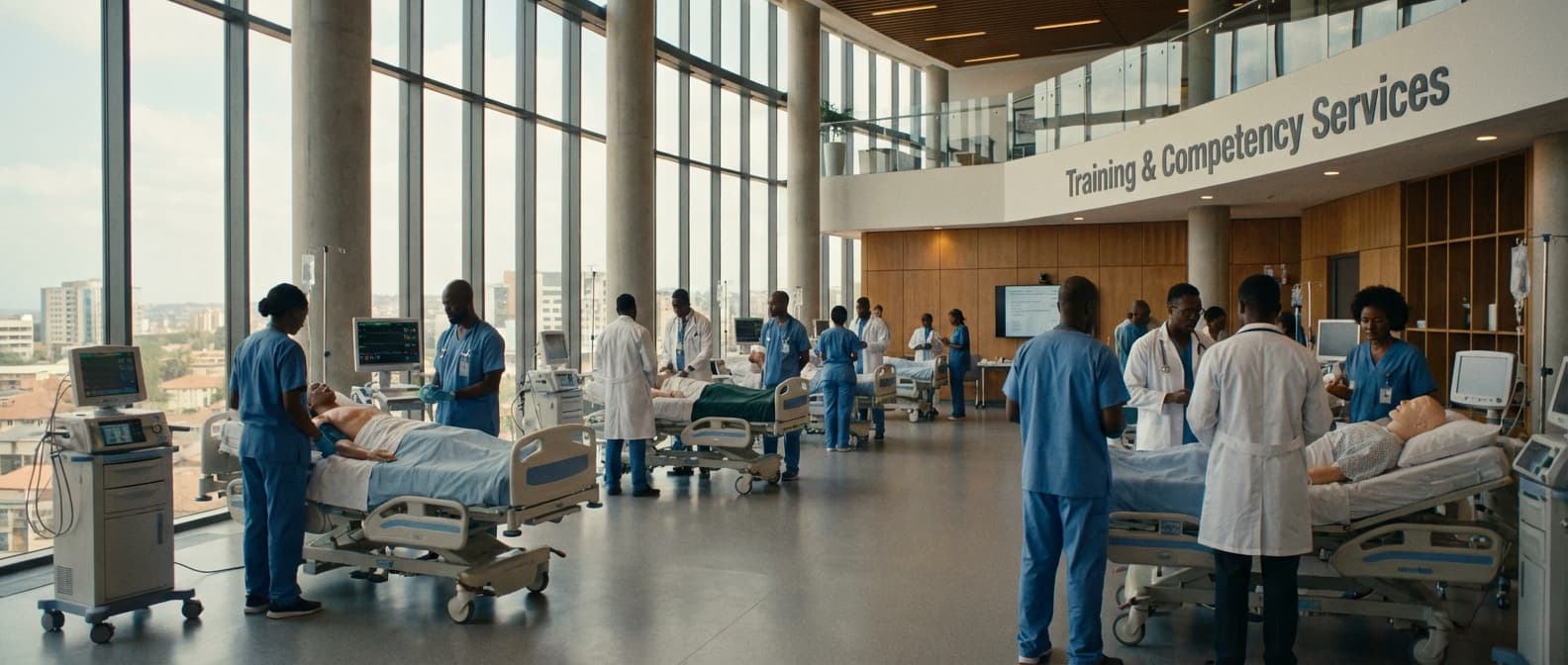
Biomedical Engineering First-Line Support Training Service in Mozambique
Engineering Excellence & Technical Support
Biomedical Engineering First-Line Support Training Service High-standard technical execution following OEM protocols and local regulatory frameworks.
Advanced Biomedical Equipment Calibration & Troubleshooting
Empower first-line support technicians with hands-on training in the precise calibration and rapid troubleshooting of critical biomedical equipment, ensuring optimal performance and patient safety in Mozambican healthcare facilities.
Localized Biomedical Infrastructure Management
Equip support teams with the skills to manage and maintain biomedical infrastructure tailored to the Mozambican context, focusing on sustainable solutions, resource optimization, and efficient problem resolution in diverse clinical settings.
Regulatory Compliance & Safety Protocols Training
Ensure adherence to national and international biomedical regulations and safety standards through comprehensive training on best practices for equipment installation, maintenance, and incident reporting, safeguarding both patients and healthcare professionals.
What Is Biomedical Engineering First-line Support Training Service In Mozambique?
Biomedical Engineering First-Line Support Training Service in Mozambique refers to the foundational technical education and skill development provided to individuals responsible for the initial troubleshooting, maintenance, and basic repair of biomedical equipment within healthcare facilities. This service is critical for ensuring the operational readiness and safety of medical devices, thereby supporting effective patient care delivery. The training emphasizes a systematic approach to problem identification, diagnosis, and resolution of common equipment malfunctions, adhering to manufacturer specifications and local regulatory standards. It equips personnel with the requisite knowledge to differentiate between simple user errors, minor technical issues, and complex faults requiring advanced engineering intervention. The objective is to empower on-site personnel to address a significant proportion of equipment downtime incidents without immediate reliance on external specialized technicians, thereby reducing response times and operational costs.
| Target Audience | Needs Addressed | Typical Use Cases | |
|---|---|---|---|
| Healthcare Facility Technicians/Engineers (Entry-Level) | Lack of standardized foundational knowledge in biomedical equipment operation and maintenance. | Performing routine preventive maintenance on patient monitors, infusion pumps, and basic laboratory equipment. Troubleshooting and resolving minor issues with diagnostic imaging peripherals (e.g., sensor replacement for ultrasound probes). Identifying and reporting complex equipment failures to higher-level support. | Addressing power supply issues with centrifuges. Recalibrating basic vital signs monitors. Replacing consumable parts on diagnostic equipment. |
| Hospital Biomedical Departments (Staff Expansion) | Need for an in-house capacity to manage routine maintenance and reduce reliance on external service providers. | Ensuring immediate availability of essential medical equipment for patient care. Minimizing equipment downtime during critical procedures. Cost-effective management of equipment lifecycle. | Responding to alarms and minor malfunctions in operating room equipment. Conducting electrical safety testing on newly acquired devices. Basic cleaning and disinfection of medical equipment as per guidelines. |
| Ministry of Health Personnel (Regional Level) | Ensuring a baseline of technical competency across public healthcare facilities to standardize equipment upkeep. | Facilitating the adoption and consistent maintenance of donated or procured medical equipment. Empowering local personnel to manage and report on equipment status effectively. | Overseeing the implementation of preventive maintenance schedules. Training local technicians in remote or underserved areas. Monitoring the condition of essential medical equipment in primary healthcare centers. |
| Manufacturers' Representatives (Local Agents) | Ensuring their local support staff possess fundamental biomedical engineering principles to complement specific product training. | Providing a more robust and responsive local technical support infrastructure. Improving the first-contact resolution rate for common equipment issues. | Conducting initial diagnostics before escalating to specialized field service engineers. Performing routine servicing of devices within warranty periods. Training end-users on basic operational troubleshooting. |
Key Components of Biomedical Engineering First-Line Support Training Service:
- Introduction to Biomedical Equipment: Overview of common medical devices, their principles of operation, and intended use.
- Basic Troubleshooting Methodologies: Logical steps for identifying the root cause of equipment malfunctions.
- Preventive Maintenance Procedures: Routine checks, cleaning, and calibration to ensure optimal performance and longevity.
- Safety Protocols: Understanding electrical, mechanical, and radiation safety associated with medical devices.
- User Manual Interpretation: Effective utilization of manufacturer documentation for troubleshooting and maintenance.
- Basic Repair Techniques: Hands-on training for common, field-replaceable component replacement.
- Documentation and Reporting: Proper recording of maintenance activities, faults, and repairs.
- Regulatory Compliance: Awareness of national and international standards applicable to biomedical equipment.
Who Needs Biomedical Engineering First-line Support Training Service In Mozambique?
Biomedical Engineering First-Line Support Training Service in Mozambique is crucial for ensuring the optimal performance, safety, and longevity of medical equipment across the nation's healthcare facilities. This training aims to equip local technicians with the fundamental skills required for basic troubleshooting, preventive maintenance, and the correct operation of a wide range of medical devices. By empowering in-country expertise, this service directly addresses the challenges of equipment downtime, reduces reliance on expensive external support, and ultimately improves patient care by minimizing disruptions to essential medical services.
| Customer Type | Specific Departments/Roles | |||||
|---|---|---|---|---|---|---|
| Public Healthcare Facilities (Hospitals, Health Centers, Clinics) | Biomedical Engineering Departments | Clinical Engineering Departments | Maintenance and Workshop Teams | Laboratory Technicians (for specific equipment operation) | Nursing Staff (for basic equipment handling and reporting issues) | IT Departments (for networked medical devices) |
| Private Healthcare Facilities (Hospitals, Clinics, Diagnostic Centers) | In-house Technical Support Teams | Facility Management Teams | Heads of Departments (responsible for equipment upkeep) | |||
| Non-Governmental Organizations (NGOs) with healthcare programs | Project Managers (overseeing health initiatives) | Field Technicians | Logistics and Operations Managers | |||
| Medical Equipment Suppliers and Distributors | Field Service Technicians (for initial onboarding and advanced training) | Technical Support Staff | Sales and Application Specialists (for understanding equipment functionality) |
Target Customers and Departments
- Public Healthcare Facilities
- Private Healthcare Facilities
- Non-Governmental Organizations (NGOs) with healthcare programs
- Medical Equipment Suppliers and Distributors
Biomedical Engineering First-line Support Training Service Process In Mozambique
This document outlines the workflow for the Biomedical Engineering First-Line Support Training Service Process in Mozambique, detailing the journey from an initial inquiry to the successful execution of training.
| Stage | Description | Key Activities | Responsible Parties | Deliverables |
|---|---|---|---|---|
| Inquiry and Needs Assessment | The initial point of contact where a healthcare facility or organization expresses interest in first-line biomedical engineering support training. This stage involves understanding their specific needs, existing infrastructure, and target audience. | Receive and acknowledge inquiry, conduct initial needs assessment (e.g., survey, discussion), identify training objectives and scope, determine facility type and equipment prevalence. | Client/Healthcare Facility, Training Provider (Service Company) | Initial inquiry log, Needs Assessment Report |
| Proposal Development and Submission | Based on the needs assessment, a comprehensive proposal is crafted, outlining the training program, methodology, duration, costs, and expected outcomes. The proposal is then submitted to the client for review. | Develop training curriculum, define training modules, determine duration and schedule, estimate costs, prepare detailed training proposal. | Training Provider (Service Company) | Detailed Training Proposal |
| Contract Negotiation and Agreement | This stage involves discussions around the proposal, including pricing, payment terms, timelines, and any specific contractual obligations. Upon agreement, a formal contract is signed. | Review proposal feedback, negotiate terms and conditions, finalize contract, secure signatures from both parties. | Client/Healthcare Facility, Training Provider (Service Company) | Signed Service Agreement/Contract |
| Training Planning and Customization | With the contract in place, detailed planning for the training execution commences. This may involve tailoring the curriculum to specific equipment or local contexts. | Finalize training schedule, confirm participant list, customize training materials (if needed), appoint trainers, confirm learning objectives. | Training Provider (Service Company), Client/Healthcare Facility (for confirmation) | Detailed Training Schedule, Customized Training Materials (if applicable) |
| Logistics and Resource Preparation | All logistical aspects are managed to ensure a smooth training delivery. This includes arranging for venues, equipment, materials, and trainer travel. | Book training venue, arrange for training equipment (e.g., simulators, tools), prepare training manuals and handouts, coordinate trainer travel and accommodation, inform participants of logistics. | Training Provider (Service Company) | Training Venue Confirmation, Prepared Training Materials, Logistics Plan |
| Training Delivery (On-site or Remote) | The core stage where the training is actively delivered to the participants. This can be conducted in person at the facility or remotely through virtual platforms. | Conduct theoretical sessions, provide practical demonstrations, facilitate hands-on exercises, answer participant questions, conduct assessments (quizzes, practical tests). | Training Provider (Trainers), Participants | Completed Training Sessions, Participant Assessment Scores |
| Post-Training Support and Evaluation | Following the training, the service provider offers ongoing support and gathers feedback to assess the effectiveness of the training and identify areas for improvement. | Provide follow-up Q&A sessions, offer remote support for initial application of learned skills, administer post-training evaluation forms, gather trainer feedback. | Training Provider (Service Company), Participants | Post-Training Support Records, Evaluation Forms Summary |
| Service Completion and Feedback | The formal closure of the training service. This involves presenting a completion certificate to participants and providing a final report to the client, summarizing the training outcomes and feedback. | Issue training certificates, submit final training report, request final client feedback, close out service agreement. | Training Provider (Service Company), Client/Healthcare Facility | Training Certificates, Final Training Report, Client Satisfaction Survey |
Workflow Stages
- Inquiry and Needs Assessment
- Proposal Development and Submission
- Contract Negotiation and Agreement
- Training Planning and Customization
- Logistics and Resource Preparation
- Training Delivery (On-site or Remote)
- Post-Training Support and Evaluation
- Service Completion and Feedback
Biomedical Engineering First-line Support Training Service Cost In Mozambique
Providing first-line support training for biomedical engineers in Mozambique involves several key cost drivers. These include the curriculum development and customization, the expertise of the trainers, the duration and intensity of the training program, the location and facilities used, the number of participants, and the provision of training materials. The exchange rate fluctuations and the overall economic stability in Mozambique also play a role in determining the final cost.
Training can be delivered in various formats: in-person workshops at a dedicated training center or at the client's facility, or increasingly, through online/blended learning approaches. Each format has its own cost implications related to travel, accommodation, venue rental, and technology infrastructure.
Pricing is typically quoted in local currency, the Mozambican Metical (MZN). The range for first-line biomedical engineering support training can vary significantly, but a general estimate for a comprehensive program for a small to medium-sized group (e.g., 5-15 participants) might fall between MZN 50,000 to MZN 250,000 or more, depending on the factors mentioned above. Specific quotes are essential for accurate budgeting.
| Training Component | Potential Cost Range (MZN) | Notes |
|---|---|---|
| Curriculum Development (Customized) | 10,000 - 40,000 | Highly dependent on complexity and specific needs. |
| Trainer Fees (Per day/program) | 5,000 - 20,000 | Varies based on trainer's qualifications and international vs. local expertise. |
| Venue Rental (Per day) | 1,000 - 5,000 | Depends on location, size, and amenities. |
| Training Materials (Per participant) | 500 - 2,500 | Includes manuals, handouts, software licenses. |
| Basic 3-Day Workshop (Group of 10) | 50,000 - 150,000 | Includes trainer, materials, basic venue. Excludes travel/accommodation. |
| Comprehensive/Specialized Training (Group of 10) | 150,000 - 250,000+ | Includes advanced topics, specialized equipment, potentially international trainers. |
Key Pricing Factors for Biomedical Engineering First-Line Support Training in Mozambique
- Curriculum Development and Customization
- Trainer Expertise and Experience
- Training Duration and Intensity
- Location and Facilities (On-site vs. Off-site)
- Number of Participants
- Training Materials and Resources
- Delivery Format (In-person, Online, Blended)
- Travel and Accommodation Costs (if applicable)
- Equipment and Technology Requirements
- Certification and Assessment Fees
- Language of Instruction
- Ongoing Support and Follow-up
Affordable Biomedical Engineering First-line Support Training Service Options
This document outlines affordable training service options for first-line biomedical engineering support, focusing on value bundles and cost-saving strategies. Effective first-line support is crucial for maintaining medical equipment uptime, ensuring patient safety, and optimizing resource utilization. Our training programs are designed to equip technicians with the essential skills and knowledge to handle common issues efficiently, thereby reducing reliance on more expensive, specialized support.
Value Bundles: We offer curated training packages that combine multiple essential modules at a discounted rate. These bundles are structured to provide comprehensive skill development in critical areas, offering significant savings compared to purchasing individual courses. The goal is to deliver a holistic training experience that maximizes technician proficiency and your return on investment.
Cost-Saving Strategies: Beyond value bundles, we implement several strategies to keep training costs low without compromising quality. These include leveraging digital learning platforms for scalability, offering flexible scheduling to minimize operational disruption, and providing train-the-trainer options for internal knowledge dissemination. Our focus is on providing practical, actionable training that empowers your team and leads to long-term cost reductions through improved first-time fix rates and reduced downtime.
| Value Bundle Name | Included Modules | Key Benefits | Estimated Cost Savings (vs. individual modules) |
|---|---|---|---|
| Core Biomedical Fundamentals Bundle | Introduction to Medical Device Technology, Basic Electrical Safety, Common Preventive Maintenance Procedures, Introduction to Diagnostic Tools | Establishes a strong foundational understanding for all new and junior technicians. | 15-20% |
| Clinical Equipment Troubleshooting Bundle | Ventilator Basics & Troubleshooting, Infusion Pump Operations & Common Faults, Patient Monitor Essentials, ECG Troubleshooting | Focuses on high-frequency clinical equipment, enabling quicker resolution of prevalent issues. | 20-25% |
| Advanced First-Line Support Bundle | Advanced Diagnostic Techniques, Introduction to Networking for Biomedical Devices, Basic Software Updates & Configuration, Documentation Best Practices | Empowers technicians to handle more complex issues and contribute to system-level problem-solving. | 25-30% |
| Comprehensive Biomedical Technician Program | All modules from Core Fundamentals, Clinical Troubleshooting, and Advanced First-Line Support bundles | A complete training solution for developing highly competent first-line support technicians. | 30-35% |
Key Benefits of Our Affordable Training Service
- Enhanced First-Time Fix Rates: Equips technicians to resolve more issues on the first attempt.
- Reduced Equipment Downtime: Minimizes patient care disruptions and lost revenue.
- Optimized Resource Allocation: Frees up specialized engineers for complex tasks.
- Improved Patient Safety: Ensures equipment is functioning correctly and safely.
- Cost-Effective Skill Development: Provides high-quality training at accessible price points.
- Scalable Training Solutions: Adaptable to the needs of small clinics to large hospital networks.
- Increased Technician Confidence and Morale: Empowers staff with the knowledge to succeed.
Verified Providers In Mozambique
In Mozambique's evolving healthcare landscape, identifying reliable and high-quality healthcare providers is paramount for individuals and organizations. Franance Health has emerged as a leading entity, distinguished by its rigorous credentialing processes and unwavering commitment to excellence. This document outlines why Franance Health's verified providers represent the most trustworthy and effective choice for healthcare services in Mozambique.
| Franance Health Credential | Description | Benefit to Patients |
|---|---|---|
| Comprehensive Background Checks | Thorough verification of medical licenses, educational qualifications, and professional history. | Ensures providers meet all legal and professional requirements, mitigating risks. |
| Peer Review and Performance Audits | Regular assessments of clinical practices, patient outcomes, and adherence to treatment protocols. | Guarantees high standards of care and identifies areas for improvement. |
| Specialty Certifications | Confirmation of specialized training and expertise in various medical fields. | Connects patients with appropriately skilled specialists for their specific needs. |
| Insurance and Malpractice Coverage Verification | Ensures providers possess adequate professional liability insurance. | Provides financial protection and recourse for patients in the unlikely event of adverse outcomes. |
| Facility and Equipment Standards | Assessment of healthcare facilities to ensure they meet safety, hygiene, and technological requirements. | Ensures a safe and effective care environment with modern medical equipment. |
| Patient Grievance and Resolution Process | Established mechanisms for patients to voice concerns and have them addressed effectively. | Promotes accountability and continuous service improvement. |
Key Indicators of Franance Health's Verified Provider Excellence
- Rigorous Licensing and Accreditation Verification
- Demonstrated Clinical Competence and Experience
- Adherence to Ethical Standards and Patient Confidentiality
- Commitment to Continuous Professional Development
- Positive Patient Feedback and Satisfaction Metrics
Scope Of Work For Biomedical Engineering First-line Support Training Service
This Scope of Work (SOW) outlines the requirements for a Biomedical Engineering First-Line Support Training Service. The objective is to equip technical personnel with the foundational knowledge and practical skills necessary to effectively perform first-line support for biomedical equipment. This includes basic troubleshooting, preventative maintenance checks, identifying critical issues, and escalating complex problems to appropriate specialists. The training will be delivered through a combination of theoretical instruction and hands-on practical sessions, adhering to industry best practices and safety standards.
| Technical Deliverable | Description | Standard Specification / Requirement | Format / Medium |
|---|---|---|---|
| Training Curriculum | Comprehensive syllabus covering all key training areas. | Must be modular, allowing for customization based on specific organizational needs. Include learning objectives, duration, and assessment methods for each module. | Digital document (PDF/Word) |
| Training Materials (Participant) | Handouts, presentations, and reference guides for trainees. | Clear, concise language. Visually appealing with diagrams and illustrations where appropriate. Content aligned with the curriculum. | Digital files (PDF/PPT) and printed copies |
| Training Materials (Instructor) | Instructor notes, lesson plans, and facilitator guides. | Detailed guidance for trainers, including key talking points, activity instructions, and potential Q&A. | Digital document (PDF/Word) |
| Practical Training Scenarios/Simulations | Hands-on exercises and simulated scenarios for troubleshooting and basic maintenance. | Realistic scenarios representing common issues encountered in a healthcare setting. Must include safe operating procedures. | In-person demonstrations, simulated equipment, or virtual simulation software |
| Assessment Tools | Quizzes, practical exams, and performance evaluations. | Measure trainee comprehension of theoretical concepts and proficiency in practical skills. Pass/fail criteria clearly defined. | Digital forms (online quizzes) and paper-based assessments |
| Training Completion Certificates | Formal documentation acknowledging successful completion of the training. | Includes trainee name, course title, dates of training, and issuing organization. Must be verifiable. | Printed certificates and/or digital badges |
| Post-Training Support Resources | Access to FAQs, troubleshooting guides, or a dedicated support channel for trainees. | Available for a defined period post-training to reinforce learning and assist with initial challenges. | Online portal, email support, or limited phone support |
| Trainer Qualifications | Certification and experience of the trainers. | Trainers must possess relevant biomedical engineering qualifications, certifications, and demonstrable experience in training delivery and first-line support. | Resumes and certifications of trainers |
Key Training Areas
- Introduction to Biomedical Equipment and Healthcare Environments
- Fundamentals of Biomedical Engineering Principles
- Common Biomedical Equipment Categories and their Functions (e.g., vital signs monitors, infusion pumps, ECG machines)
- Basic Electrical Safety Principles and Procedures
- Introduction to Preventative Maintenance (PM) and Calibration Concepts
- First-Line Troubleshooting Methodologies and Diagnostic Tools
- Safe Handling, Cleaning, and Sterilization of Biomedical Equipment
- Documentation and Reporting Procedures
- Understanding of Regulatory Requirements and Compliance (e.g., FDA, local regulations)
- Effective Communication and Interpersonal Skills for Technical Support
Service Level Agreement For Biomedical Engineering First-line Support Training Service
This Service Level Agreement (SLA) outlines the performance standards for the Biomedical Engineering First-Line Support Training Service. It defines the expected response times and uptime guarantees to ensure efficient and effective training delivery. This SLA applies to all users and administrators of the training platform and services provided by [Your Organization Name].
| Service Component | Uptime Guarantee | Response Time (Critical Issue) | Response Time (Non-Critical Issue) |
|---|---|---|---|
| Training Platform Availability (Web Portal, Learning Management System) | 99.5% Monthly Uptime | N/A (Platform availability is continuous) | N/A (Platform availability is continuous) |
| Technical Support (Login issues, access problems, platform errors) | N/A (Resolved through response times) | Within 4 business hours | Within 8 business hours |
| Content Accessibility (Ensuring training modules load and function correctly) | N/A (Resolved through response times) | Within 4 business hours | Within 8 business hours |
| Instructor/Facilitator Availability (Scheduled live sessions) | 100% (for scheduled sessions) | 15 minutes prior to scheduled session | N/A (Scheduled sessions are fixed) |
Key Service Commitments
- The training platform will be available 24/7, 365 days a year.
- Response times for critical issues will be addressed within defined timeframes.
- Escalation procedures are in place for unresolved issues.
- Regular maintenance and updates will be communicated in advance.
Frequently Asked Questions

Ready when you are
Let's scope your Biomedical Engineering First-Line Support Training Service in Mozambique project in Mozambique.

Scaling healthcare logistics and technical systems across the entire continent.