
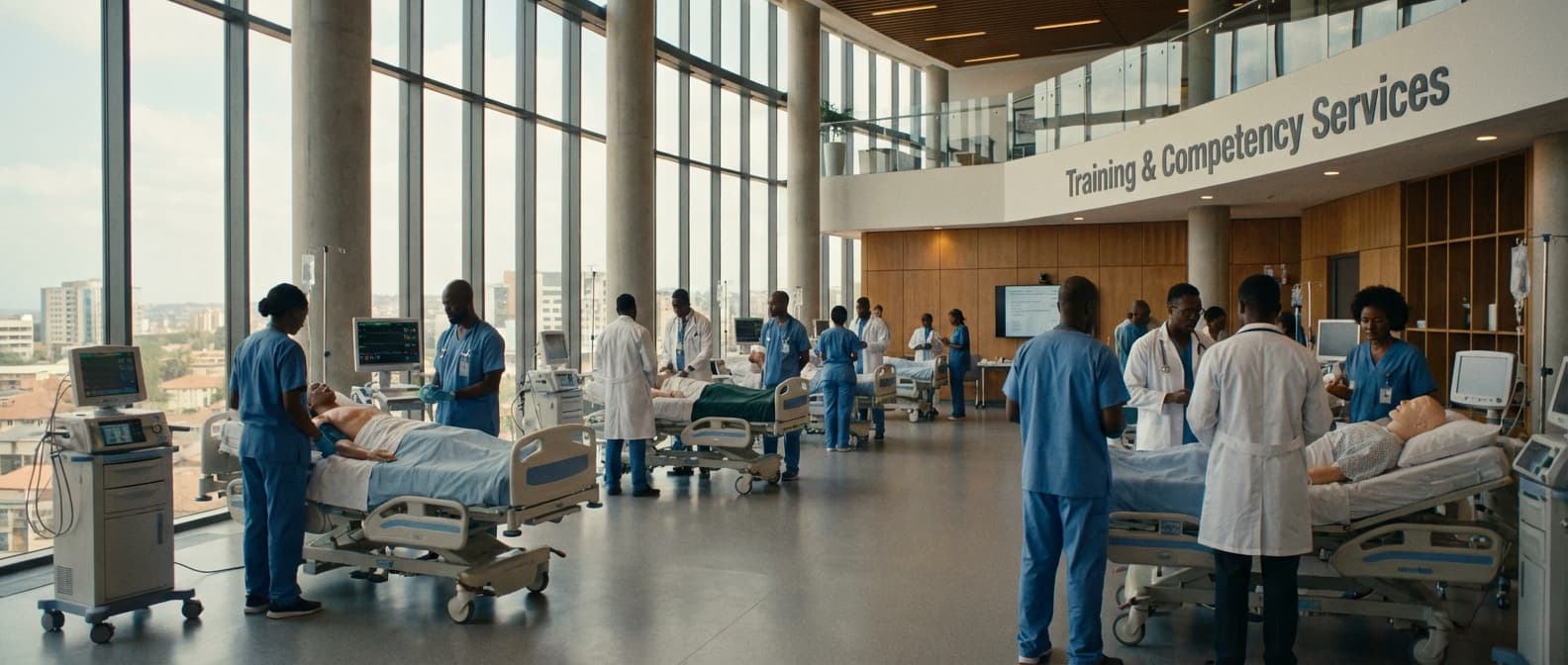
Anesthesia Workstation User Training Service in Mozambique
Engineering Excellence & Technical Support
Anesthesia Workstation User Training Service High-standard technical execution following OEM protocols and local regulatory frameworks.
Precision Airway Management
Master advanced techniques for secure and efficient airway management on the Anesthesia Workstation. Our training covers intubation methods, supraglottic airway placement, and troubleshooting common challenges to ensure patient safety and optimal ventilation.
Ventilator Mode Proficiency
Gain expertise in navigating and utilizing the Anesthesia Workstation's diverse ventilator modes. Learn to select the most appropriate mode (e.g., Volume Control, Pressure Control, SIMV) based on patient physiology and clinical scenario, and optimize settings for effective gas exchange and lung protection.
Automated Drug Delivery & Integration
Understand the Anesthesia Workstation's integrated drug delivery systems. Our training focuses on precise administration of anesthetic agents, titrating doses based on real-time patient response and monitoring, and ensuring seamless integration with other workstation components for enhanced workflow and patient care.
What Is Anesthesia Workstation User Training Service In Mozambique?
Anesthesia Workstation User Training Service in Mozambique refers to a structured educational program designed to impart the necessary knowledge and practical skills for the safe and effective operation of anesthesia workstations. This service is critical for ensuring patient safety, optimizing clinical outcomes, and maximizing the lifespan and functionality of advanced medical equipment within the Mozambican healthcare system. The training focuses on understanding the principles of anesthesia delivery, the technical specifications of the specific workstation models, their integrated monitoring capabilities, and emergency procedures.
| Target Audience | Rationale for Training | Typical Use Cases/Environments |
|---|---|---|
| Anesthesiologists (both specialists and residents) | To ensure proficient and safe administration of anesthesia, adherence to best practices, and effective utilization of advanced technology. | Operating rooms in public and private hospitals, specialized surgical centers, intensive care units (ICUs) requiring advanced ventilatory support. |
| Certified Registered Nurse Anesthetists (CRNAs) or equivalent advanced practice nurses in anesthesia | To empower them with the skills to operate complex anesthesia delivery systems and contribute effectively to the anesthesia care team. | Similar to anesthesiologists, particularly in settings where CRNAs play a central role in anesthetic management. |
| Anesthesia Technicians and Biomedical Engineers | To equip them with the knowledge for routine setup, preventive maintenance, troubleshooting, and minor repairs, thus ensuring equipment availability and minimizing downtime. | Biomedical engineering departments, hospital equipment maintenance units, and within operating room teams responsible for equipment readiness. |
| Healthcare Facility Administrators and Procurement Officers | To understand the training requirements and costs associated with acquiring and implementing new anesthesia workstation technology, facilitating informed purchasing decisions. | Hospital administration, procurement departments, and for the planning of new surgical facilities or upgrades to existing ones. |
Key Components of Anesthesia Workstation User Training:
- Theoretical Foundations: Lectures covering the physiological principles of anesthesia, pharmacology, and anesthetic delivery systems.
- Equipment Familiarization: In-depth exploration of the hardware components, user interface, display menus, and ventilation modes of the specific anesthesia workstation.
- Operational Procedures: Step-by-step guidance on setup, pre-use checks, patient connection, anesthetic agent administration, and disconnection.
- Monitoring and Alarms: Training on utilizing integrated vital sign monitors (e.g., ECG, SpO2, NIBP, EtCO2), understanding alarm parameters, and responding to critical alerts.
- Ventilation Management: Detailed instruction on various mechanical ventilation modes (e.g., volume control, pressure control, pressure support), their applications, and parameter adjustments.
- Gas Handling and Safety: Protocols for handling anesthetic gases, scavenging waste gases, and ensuring compliance with safety regulations.
- Troubleshooting and Maintenance: Basic diagnostic procedures for identifying common equipment malfunctions and understanding routine maintenance schedules.
- Emergency Scenarios: Simulation-based training for managing critical events such as patient disconnection, equipment failure, and difficult airway management.
- Documentation and Record Keeping: Best practices for accurately documenting anesthesia care delivered via the workstation.
Who Needs Anesthesia Workstation User Training Service In Mozambique?
Anesthesia workstation user training services are crucial in Mozambique to ensure healthcare professionals can effectively and safely operate advanced medical equipment. This training bridges the gap between having sophisticated technology and maximizing its potential for patient care, especially in a context where access to specialized technical support and ongoing education might be limited.
| Department | Target Audience/Roles | Specific Training Needs |
|---|---|---|
| Anesthesiology Department | Anesthesiologists, Anesthesia Residents, Nurse Anesthetists | Operation of ventilators, vaporizers, gas delivery systems, patient monitoring integration, troubleshooting common errors, emergency procedures. |
| Operating Room (OR) Staff | Operating Room Nurses, Surgical Technicians | Familiarity with workstation setup, basic operational checks, patient monitoring, emergency shutdown procedures, and reporting issues. |
| Intensive Care Unit (ICU) | Intensivists, ICU Nurses | Ventilator management in critical care, advanced monitoring features, weaning protocols, and management of prolonged mechanical ventilation. |
| Biomedical Engineering Department | Biomedical Engineers, Medical Equipment Technicians | Advanced troubleshooting, maintenance protocols, calibration procedures, understanding of electrical and mechanical components, and integration with other OR equipment. |
| Training and Education Departments (within hospitals) | Clinical Educators, Simulation Lab Instructors | Developing and delivering in-house training programs, utilizing simulation for practice, and staying updated on new features and best practices. |
Target Customers and Departments for Anesthesia Workstation User Training in Mozambique:
- Hospitals: Public, private, and university teaching hospitals are primary targets.
- Clinics and Medical Centers: Larger specialized clinics and regional medical centers that offer surgical services.
- Government Health Ministries and Agencies: For national training initiatives and capacity building programs.
- Non-Governmental Organizations (NGOs): Organizations involved in healthcare delivery and medical aid in Mozambique.
Anesthesia Workstation User Training Service Process In Mozambique
This document outlines the Anesthesia Workstation User Training Service Process in Mozambique, detailing the workflow from initial inquiry to the successful execution of the training. The service aims to equip healthcare professionals with the necessary skills and knowledge to safely and effectively operate anesthesia workstations, thereby enhancing patient care and safety in Mozambican healthcare facilities.
| Stage | Key Activities | Responsible Party | Deliverables |
|---|---|---|---|
| Inquiry & Needs Assessment | Contact, understand requirements, gather facility info | Healthcare Facility & Training Provider | Needs assessment report, list of trainees, workstation models |
| Proposal & Quotation | Develop training plan, detail costs, submit proposal | Training Provider | Training proposal, detailed quotation |
| Contract & Agreement | Review, negotiate, and sign service contract | Healthcare Facility & Training Provider | Signed service agreement/contract |
| Pre-Training Preparation | Finalize curriculum, schedule logistics, prepare venue/equipment | Training Provider & Healthcare Facility | Training materials, confirmed logistics, prepared venue/equipment |
| Training Execution | Deliver lectures, demonstrations, hands-on practice, simulations, assessments | Training Provider | Trained personnel, practical skills demonstrated |
| Post-Training Activities | Evaluate training, issue certificates, provide support, process payment | Training Provider & Healthcare Facility | Training report, certificates of completion, follow-up plan, finalized payment |
Anesthesia Workstation User Training Service Process - Mozambique
- 1. Inquiry & Needs Assessment:
- Healthcare facility or individual contacts the training provider (e.g., equipment supplier, specialized training institute) with a request for anesthesia workstation user training.
- Initial discussion to understand the facility's specific needs, including:
- Number of trainees.- Specific anesthesia workstation models in use or planned for acquisition.- Current skill level of the personnel.- Desired training outcomes and objectives.- Preferred training dates and duration.- Location of training (on-site at the facility or at a designated training center).- Gathering information about the facility's infrastructure (e.g., availability of functional workstations for hands-on practice, power supply).
- 2. Proposal & Quotation:
- Based on the needs assessment, the training provider develops a detailed proposal.
- The proposal includes:
- Training curriculum outline and learning objectives.- Training methodology (lectures, demonstrations, hands-on practice, case studies, simulations).- Trainer qualifications and experience.- Proposed training schedule and duration.- Required resources and materials.- Cost breakdown (trainer fees, materials, travel, accommodation, venue if applicable).- Terms and conditions.- Quotation is submitted to the requesting facility for review and approval.
- 3. Contract & Agreement:
- Upon acceptance of the proposal and quotation, a formal contract or service agreement is signed.
- The agreement clearly defines:
- Scope of services.- Payment terms and schedule.- Responsibilities of both parties.- Confidentiality clauses.- Cancellation and refund policies.- Liability and insurance details.- 4. Pre-Training Preparation:
- Training Provider:
- Finalize training curriculum and materials (presentations, manuals, handouts, assessments).- Confirm trainer availability and logistical arrangements (travel, accommodation).- Ensure all necessary equipment and demonstration units are prepared.- Coordinate with the facility regarding the training venue, access to workstations, and power supply.- Healthcare Facility:
- Identify and confirm the list of trainees.- Ensure trainees are released from their duties to attend the training.- Prepare the training venue, ensuring adequate space, seating, and audio-visual capabilities.- Ensure functional anesthesia workstations are available for hands-on practice, as agreed upon.- Communicate training schedule and expectations to trainees.- 5. Training Execution:
- Welcome & Introduction:
- Introduction of trainers and trainees.- Overview of the training objectives, agenda, and expected outcomes.- Setting training expectations and ground rules.- Theoretical Sessions:
- Lectures covering the principles of anesthesia delivery, workstation components, safety features, and common operational procedures.- Discussion of relevant guidelines and protocols (e.g., WHO, national standards).- Review of user manuals and technical specifications.- Demonstrations:
- Live demonstrations of workstation setup, calibration, patient connection, and routine checks.- Demonstration of various ventilation modes, gas delivery, and monitoring functions.- Showcasing of emergency procedures and troubleshooting techniques.- Hands-on Practice:
- Trainees actively engage with the anesthesia workstations under trainer supervision.- Practice of all demonstrated procedures in a safe, simulated environment.- Opportunity for trainees to ask questions and receive immediate feedback.- Case Studies & Simulations:
- Application of learned skills to realistic patient scenarios.- Practice in managing different patient types and anesthetic challenges.- Emphasis on critical thinking and decision-making.- Assessment & Feedback:
- Knowledge and skill assessments (e.g., written tests, practical evaluations).- Ongoing formative feedback provided by trainers.- Opportunity for trainees to provide feedback on the training delivery.- 6. Post-Training Activities:
- Evaluation & Reporting:
- Training provider compiles training evaluation reports, including attendance records, assessment results, and feedback summary.- A certificate of completion is issued to trainees who successfully meet the required standards.- Follow-up Support:
- Offer of post-training support (e.g., Q&A sessions, access to online resources, refresher courses).- Identification of any areas requiring further attention or specialized training.- Potential for ongoing technical support and maintenance services.- Payment & Closure:
- Final payment processing as per the service agreement.- Formal closure of the training service engagement.- Archiving of training records.
Anesthesia Workstation User Training Service Cost In Mozambique
Providing anesthesia workstation user training services in Mozambique is crucial for ensuring patient safety and efficient operation of this complex medical equipment. The cost of such training is influenced by a variety of factors, leading to a range of pricing in the local currency, Metical (MZN).
| Training Scope | Estimated Price Range (MZN) | Notes |
|---|---|---|
| Basic User Training (1-2 days, 1 workstation model) | 25,000 - 50,000 MZN | Covers fundamental operations, safety features, and basic maintenance. |
| Standard User Training (2-3 days, 1-2 workstation models) | 45,000 - 80,000 MZN | Includes more in-depth understanding of modes, troubleshooting, and alarm management. |
| Advanced/Specialized Training (3-5 days, multiple models, complex features) | 70,000 - 150,000+ MZN | Addresses advanced modes, integration with other devices, complex case scenarios, and specific manufacturer protocols. May include train-the-trainer components. |
| On-site Training (per day, excluding trainer fees) | 5,000 - 15,000 MZN | Covers logistics, venue if not at client site, and local support. This is in addition to trainer fees. |
| Remote/Online Training (per participant) | 10,000 - 30,000 MZN | Suitable for theoretical modules or refreshers, depending on the platform and interactivity. May not be ideal for hands-on practice. |
Key Pricing Factors for Anesthesia Workstation User Training in Mozambique:
- Type and Complexity of the Workstation: More advanced anesthesia workstations with a wider array of features and functionalities will naturally require more in-depth and specialized training, thus increasing the cost. Basic models might have a shorter, less expensive training program.
- Duration and Intensity of Training: The total hours dedicated to training, including theoretical sessions, practical demonstrations, and hands-on practice, directly impact the price. Longer, more intensive programs will be more expensive.
- Trainer's Expertise and Qualifications: Highly experienced and certified trainers, especially those with international recognition or specialized knowledge of specific workstation brands, will command higher fees.
- Location of Training: Whether the training is conducted at the client's facility (hospital or clinic) in a major city like Maputo, or in more remote regions, will affect travel, accommodation, and logistical costs for the trainer, thereby influencing the overall price.
- Number of Participants: Training sessions are often priced on a per-participant basis or as a group rate. Larger groups might receive a slightly reduced per-person cost, but the total cost will increase.
- Customization of Training Content: If the training needs to be tailored to specific hospital protocols, patient populations, or unique equipment configurations, this bespoke development will add to the cost.
- Training Materials and Resources: The provision of comprehensive training manuals, simulation materials, and access to online resources can contribute to the overall service cost.
- Certification and Assessment: If the training includes formal certification or assessment processes, these elements will be factored into the pricing.
- Provider Reputation and Experience: Established training providers with a proven track record and positive testimonials may charge a premium for their services.
- Travel and Accommodation Costs: For trainers traveling from outside the immediate vicinity of the training site, expenses for flights, local transport, and accommodation will be added to the final quote.
- Ancillary Services: Some training packages might include post-training support, troubleshooting assistance, or refresher courses, which will influence the pricing.
Affordable Anesthesia Workstation User Training Service Options
Providing comprehensive user training for affordable anesthesia workstations is crucial for ensuring patient safety, maximizing equipment functionality, and minimizing operational downtime. This service focuses on equipping healthcare professionals with the knowledge and skills to operate these cost-effective anesthesia delivery systems efficiently and confidently. We understand that budget constraints are a significant factor for many healthcare facilities acquiring affordable workstations. Therefore, our training solutions are designed to be accessible, flexible, and offer clear value through thoughtfully crafted value bundles and strategic cost-saving measures.
| Value Bundle Name | Included Services | Target Audience | Key Benefits | Estimated Price Range |
|---|---|---|---|---|
| Essentials Bundle | Core operational training (basic & advanced), safety protocols, hands-on practice with standard scenarios. | New users, or those needing a refresher on core functions. | Ensures fundamental competency and safe operation. | $800 - $1,500 per session |
| Comprehensive Bundle | Includes Essentials Bundle plus in-depth troubleshooting, user-level maintenance, and a wider range of complex clinical scenarios. | Anesthesiologists, CRNAs, and anesthesia technicians requiring advanced proficiency. | Maximizes workstation utilization, reduces service calls, and enhances clinical preparedness. | $1,200 - $2,200 per session |
| Train-the-Trainer Bundle | In-depth training for designated staff to become internal trainers, including curriculum development guidance and advanced support. | Clinical educators or lead anesthesia personnel within a facility. | Enables cost-effective, ongoing training for a larger staff pool and standardization of practice. | $2,000 - $3,500 per session |
| On-Demand & Refresher Training | Short, focused sessions on specific features, new updates, or to reinforce previously learned skills. | All users requiring targeted learning or periodic updates. | Keeps skills current, addresses specific needs, and minimizes disruption. | Priced per module/hour, typically $100 - $300 per hour |
Key Components of Affordable Anesthesia Workstation User Training
- Basic Operation & Setup: Understanding the fundamental controls, patient connections, gas delivery, and ventilation modes.
- Advanced Features & Settings: Mastering more complex functionalities, alarm management, and performance adjustments.
- Maintenance & Troubleshooting: Basic user-level maintenance procedures and common problem-solving techniques.
- Safety Protocols & Best Practices: Emphasizing safe patient monitoring, emergency procedures, and adherence to clinical guidelines.
- Hands-on Practice: Simulated patient scenarios and practical application of learned skills.
Verified Providers In Mozambique
In Mozambique, ensuring access to quality healthcare is paramount. When seeking medical services, identifying Verified Providers is crucial for patient safety and positive health outcomes. Among these, Franance Health stands out as a beacon of excellence, consistently demonstrating a commitment to high standards, patient-centric care, and ethical practices. Their credentials not only signify adherence to regulatory requirements but also reflect a deep-seated dedication to the well-being of the communities they serve. Choosing Franance Health means entrusting your health to a provider that embodies trust, expertise, and a genuine passion for healthcare.
| Credential Type | Franance Health's Compliance/Recognition | Significance for Patients |
|---|---|---|
| Ministry of Health (MISAU) License | Fully licensed and compliant with all MISAU regulations. | Ensures adherence to national healthcare standards and legal requirements. |
| International Healthcare Accreditation (e.g., JCI - if applicable) | Pursuing or holding recognized international accreditation standards. | Demonstrates a commitment to global best practices in patient care and safety. |
| Professional Body Memberships (e.g., Medical Association of Mozambique) | All medical practitioners are registered and in good standing with relevant professional bodies. | Guarantees that doctors and nurses are qualified, ethical, and accountable. |
| Specialized Service Certifications | Certifications for specific departments or services (e.g., advanced imaging, critical care). | Confirms expertise and specialized capabilities in particular medical fields. |
| Quality Management Systems (e.g., ISO 9001 - if applicable) | Implementation of robust quality management systems. | Indicates a systematic approach to ensuring consistent quality and continuous improvement. |
Why Franance Health Represents the Best Choice:
- Rigorous Accreditation and Licensing: Franance Health undergoes stringent verification processes, ensuring compliance with all national and international healthcare regulations. This guarantees that their facilities, equipment, and medical professionals meet the highest standards.
- Highly Qualified and Experienced Medical Professionals: Their team comprises board-certified physicians, specialists, nurses, and allied health professionals with extensive experience and continuous professional development. They are dedicated to providing evidence-based and compassionate care.
- State-of-the-Art Facilities and Technology: Franance Health invests in modern medical technology and maintains well-equipped facilities, enabling accurate diagnosis and effective treatment across a wide range of medical needs.
- Commitment to Patient Safety and Quality Assurance: Patient safety is a top priority. Franance Health implements robust quality assurance protocols, infection control measures, and patient feedback mechanisms to continuously improve their services.
- Comprehensive Range of Services: From primary care to specialized treatments and emergency services, Franance Health offers a comprehensive spectrum of healthcare solutions, making them a one-stop destination for your medical needs.
- Ethical Practices and Patient Confidentiality: Upholding the highest ethical standards and ensuring strict patient confidentiality are core tenets of Franance Health's operational philosophy.
- Community Engagement and Accessibility: Franance Health is deeply integrated within the Mozambican community, striving to make quality healthcare accessible and responsive to local needs.
Scope Of Work For Anesthesia Workstation User Training Service
This Scope of Work (SOW) outlines the requirements for providing Anesthesia Workstation User Training Services. The objective is to equip healthcare professionals with the necessary knowledge and practical skills to safely and effectively operate a specific Anesthesia Workstation model. This SOW details the technical deliverables, standard specifications for the training, and expected outcomes.
| Specification Category | Description | Standard Specification |
|---|---|---|
| Target Audience | Healthcare professionals who will operate the Anesthesia Workstation, including anesthesiologists, nurse anesthetists, and anesthesia technicians. | Appropriate for varying levels of experience, from novice to advanced users. |
| Training Duration | The total time allocated for both theoretical and practical training sessions. | Minimum of [Specify Hours, e.g., 8-12] hours per training module, adaptable based on user experience and workstation complexity. |
| Training Methodology | The approach used to deliver the training content. | Blended learning approach: didactic presentations, interactive discussions, live demonstrations, and supervised hands-on practice. |
| Content Coverage | Key areas and functionalities of the Anesthesia Workstation to be covered. | System setup and initialization, ventilation modes, gas delivery and monitoring, drug delivery systems (if integrated), alarm management, patient data management, troubleshooting common issues, and emergency procedures. |
| Instructor Qualifications | The expertise and credentials required of the training instructors. | Certified instructors with extensive experience in anesthesia, clinical use of the specific Anesthesia Workstation model, and adult education principles. Vendor-certified trainers preferred. |
| Training Environment | The physical or virtual setting where the training will take place. | Well-lit, ventilated training room with appropriate seating, projection facilities, and access to the Anesthesia Workstation(s) or high-fidelity simulators. For virtual training, a stable online platform with screen sharing and interactive features. |
| Equipment Requirements | The type and number of Anesthesia Workstations or simulators needed for training. | Sufficient number of functional Anesthesia Workstations or simulators to ensure a low trainee-to-equipment ratio (e.g., 1:2 or 1:3) for effective hands-on practice. |
| Assessment and Evaluation | Methods used to evaluate trainee understanding and competency. | Pre- and post-training knowledge assessments (written/online), practical skills evaluation using standardized checklists, and participant feedback forms. |
| Language | The language in which the training will be conducted and materials provided. | English. Translation services for training materials may be required for specific regions (to be determined). |
| Customization | Flexibility to tailor the training content to specific institutional needs or workflows. | Ability to incorporate institution-specific protocols, common clinical scenarios, and workflow integration into the training curriculum. |
| Post-Training Support | Resources available to trainees after the formal training session. | Access to online resources, dedicated helpline or email support for a defined period (e.g., 30 days) post-training. |
Technical Deliverables
- Comprehensive training manuals (digital and/or hard copy) specific to the Anesthesia Workstation model.
- Hands-on training equipment (simulators or functional workstations) for practical exercises.
- Case studies and simulation scenarios relevant to clinical anesthesia practice.
- Competency assessment tools (e.g., checklists, quizzes, practical evaluations).
- Certificate of Completion for participants who successfully meet training objectives.
- Post-training support materials (e.g., quick reference guides, troubleshooting tips).
- Detailed training attendance and competency assessment reports.
Service Level Agreement For Anesthesia Workstation User Training Service
This Service Level Agreement (SLA) outlines the response times and uptime guarantees for the Anesthesia Workstation User Training Service provided by [Your Company Name] (hereinafter referred to as "Provider") to [Client Company Name] (hereinafter referred to as "Client"). This SLA is an integral part of the Master Service Agreement between the Provider and Client.
| Service Component | Response Time Guarantee (Business Hours) | Resolution Time Target (Business Hours) | Uptime Guarantee |
|---|---|---|---|
| Technical Support (Training Platform Access) | 1 Hour | 4 Business Hours | 99.5% platform availability during scheduled training hours |
| General Training Inquiry (Content Clarification) | 4 Business Hours | 8 Business Hours | N/A (Content-related inquiries do not have uptime guarantees) |
| Scheduled Virtual Instructor-Led Training (VILT) Session | 15 Minutes (Prior to session start) | N/A (Focus is on session commencement) | 99.9% availability of the VILT platform during scheduled session |
| On-demand Training Module Access | Immediate | N/A | 99.9% availability of the online training portal |
Scope of Service
- Provision of comprehensive training modules for the operation and maintenance of anesthesia workstations.
- Delivery of training via [Specify delivery methods, e.g., online modules, in-person sessions, virtual instructor-led training].
- On-demand access to training resources and documentation.
- Technical support for training platform access and usability issues.
Frequently Asked Questions

Ready when you are
Let's scope your Anesthesia Workstation User Training Service in Mozambique project in Mozambique.

Scaling healthcare logistics and technical systems across the entire continent.