
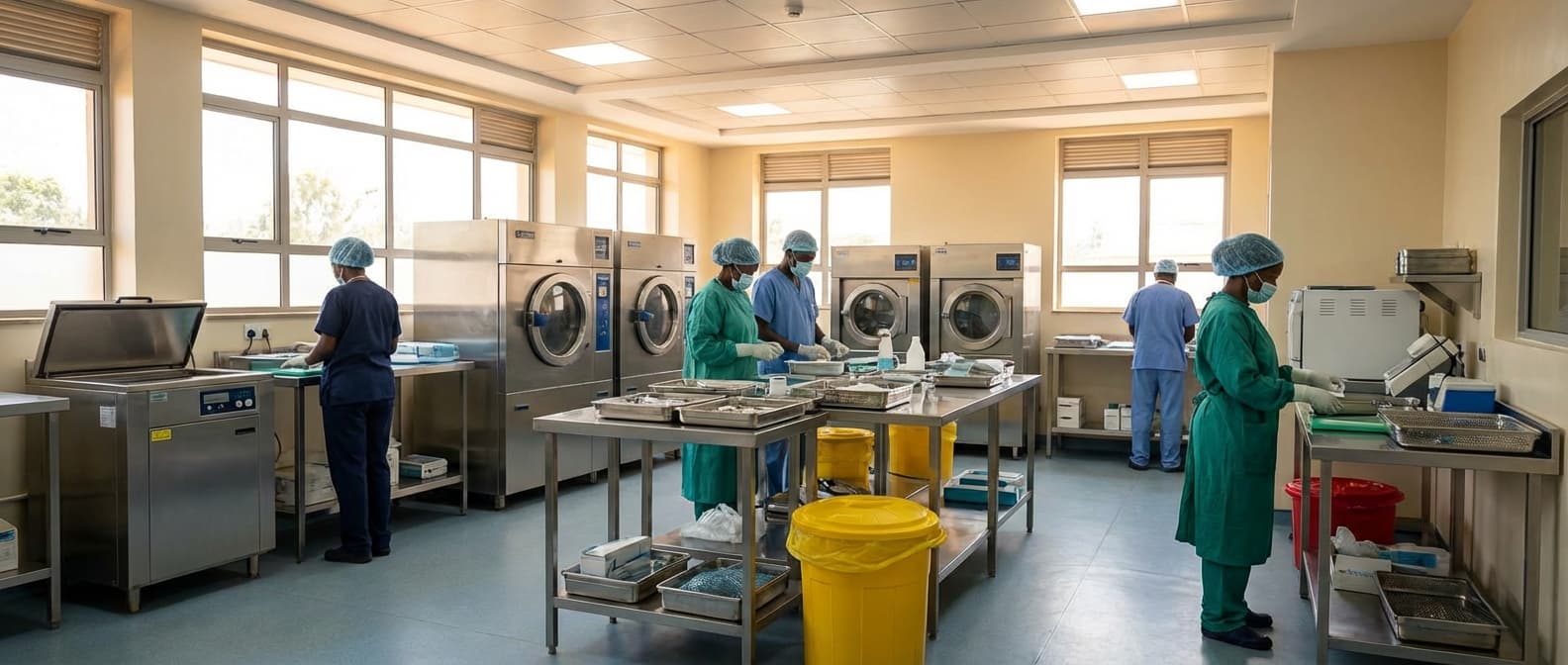
Infection-Control Readiness Support Service for Reusable Equipment in Mozambique
Engineering Excellence & Technical Support
Infection-Control Readiness Support Service for Reusable Equipment High-standard technical execution following OEM protocols and local regulatory frameworks.
Advanced Autoclave Performance Monitoring
Implementing real-time sensor networks and predictive analytics on all autoclave units to ensure optimal sterilization cycles, detect anomalies, and proactively schedule maintenance, drastically reducing the risk of reprocessing failures for critical reusable medical equipment.
Integrated RFID Tracking & Traceability
Deploying a robust RFID system for end-to-end tracking of all reusable equipment from point of use through decontamination, sterilization, packaging, and storage. This ensures complete audit trails, inventory accuracy, and rapid recall capabilities in case of contamination events.
Data-Driven Decontamination Efficacy Assessment
Leveraging AI-powered image analysis of high-resolution photos captured during decontamination processes, coupled with environmental sensor data, to objectively assess the thoroughness of cleaning and identify specific areas requiring improved protocols or staff training.
What Is Infection-control Readiness Support Service For Reusable Equipment In Mozambique?
Infection-Control Readiness Support Service for Reusable Equipment (ICRS-RE) in Mozambique refers to a specialized set of technical and logistical interventions designed to ensure that healthcare facilities can safely and effectively process, sterilize, and maintain reusable medical equipment, thereby preventing healthcare-associated infections (HAIs). This service is critical for maintaining patient safety and operational integrity within the Mozambican healthcare system, which often faces resource constraints and requires robust infection prevention and control (IPC) programs.
| Who Needs ICRS-RE? | Typical Use Cases | ||||||||
|---|---|---|---|---|---|---|---|---|---|
| All Healthcare Facilities Utilizing Reusable Medical Equipment: This includes hospitals (national, provincial, district), health centers, clinics, and specialized surgical units. | Surgical Centers: Ensuring surgical instruments are properly sterilized to prevent surgical site infections (SSIs) during elective and emergency procedures. | Maternity Wards: Sterilization of instruments and supplies used for deliveries, particularly for preventing vertical transmission of infections. | Dental Clinics: Reprocessing of dental instruments to prevent the transmission of oral pathogens. | Laboratories: Sterilization of glassware and equipment used for diagnostic testing to ensure accurate results and prevent specimen contamination. | Emergency Departments and Trauma Centers: Rapid and safe reprocessing of essential equipment for immediate patient care under high-demand conditions. | Facilities Experiencing Outbreaks of HAIs: To investigate and address the root causes of infections related to equipment reprocessing and implement corrective actions. | Newly Established or Upgraded Facilities: To ensure IPC readiness from the outset and establish best practices. | Facilities with Aging or Malfunctioning Sterilization Equipment: To ensure continued operational capacity and patient safety. | Facilities Undertaking IPC Program Enhancements: To receive expert guidance and support in strengthening their existing programs. |
Key Components of ICRS-RE
- Assessment and Gap Analysis: Comprehensive evaluation of existing IPC practices, infrastructure, equipment inventory, and staff training related to reusable medical devices. Identification of critical deficiencies and areas requiring immediate attention.
- Technical Guidance and Protocol Development: Establishment or refinement of standard operating procedures (SOPs) for cleaning, disinfection, sterilization (e.g., autoclaving, chemical sterilization), and safe storage of all types of reusable medical equipment. This includes adherence to international guidelines and national regulations.
- Equipment Maintenance and Repair: Provision of technical expertise for the maintenance, calibration, and repair of sterilization and disinfection equipment (e.g., autoclaves, washer-disinfectors, instrument washers). This ensures equipment is functioning optimally and meeting required standards.
- Supply Chain Management Support: Assistance in establishing and managing an effective supply chain for consumables required for reprocessing (e.g., detergents, disinfectants, sterilization wraps, indicators). This includes procurement, storage, and inventory control.
- Staff Training and Capacity Building: Development and delivery of targeted training programs for healthcare personnel involved in the reprocessing of reusable equipment. This covers theoretical knowledge and practical skills in IPC principles and equipment operation.
- Quality Assurance and Monitoring: Implementation of systems for ongoing monitoring and quality assurance of reprocessing processes. This includes routine testing of sterilization cycles, tracking of equipment maintenance logs, and performance audits.
- Infrastructure Improvement Recommendations: Guidance on necessary upgrades or modifications to reprocessing areas to ensure adequate ventilation, water supply, waste management, and workflow design that minimizes the risk of contamination and cross-infection.
Who Needs Infection-control Readiness Support Service For Reusable Equipment In Mozambique?
This service provides critical infection control readiness support for reusable medical equipment in Mozambique. Its primary goal is to ensure that healthcare facilities have the necessary infrastructure, trained personnel, and robust processes to safely clean, disinfect, and sterilize reusable medical devices, thereby preventing healthcare-associated infections (HAIs).
| Department/Unit | Key Areas of Need | Relevance of Service |
|---|---|---|
| Central Sterilization Supply Department (CSSD)/Sterilization Unit | Training on sterilization equipment operation, maintenance, validation of processes, inventory management of sterilization supplies, adherence to national and international guidelines, quality control. | Directly benefits from expertise in validating and optimizing sterilization processes for a wide range of reusable equipment. |
| Operating Theaters/Surgical Wards | Proper handling, cleaning, disinfection, and sterilization of surgical instruments and other reusable equipment used during procedures. Training on infection prevention protocols related to surgical site infections (SSIs). | Crucial for ensuring the safety of surgical patients by preventing contamination of instruments. |
| Maternity/Obstetrics Units | Safe reprocessing of reusable medical devices used in labor, delivery, and postpartum care (e.g., speculums, forceps, suction catheters). | Essential for preventing infections in mothers and newborns. |
| Emergency Departments | Rapid and effective cleaning, disinfection, and sterilization of reusable equipment used in acute care settings. Ensuring availability of sterile equipment under pressure. | Supports prompt patient care while maintaining infection control standards in a high-turnover environment. |
| Outpatient Departments/Clinics | Safe reprocessing of reusable diagnostic and minor surgical equipment (e.g., endoscopes, otoscopes, curettes). | Ensures safety for a large volume of patients receiving routine care. |
| Infection Prevention and Control (IPC) Committee/Team | Development and implementation of IPC policies and procedures related to reusable equipment. Auditing and surveillance of HAIs, staff training, and monitoring of compliance. | Provides strategic guidance and oversight, benefiting from expert support in strengthening their IPC programs for reusable equipment. |
| Biomedical Engineering Department | Maintenance and repair of sterilization and disinfection equipment. Ensuring equipment is functioning according to manufacturer specifications and national standards. | Collaborates to ensure equipment reliability and adherence to technical standards for safe reprocessing. |
| Pharmacy/Central Stores | Proper storage of sterile reusable equipment. Management of sterile supplies and consumables used in the reprocessing cycle. | Ensures that reprocessed equipment remains sterile until use. |
Target Customers and Departments
- Public Hospitals (Central, Provincial, District)
- Private Hospitals
- Non-Governmental Organization (NGO) Healthcare Facilities
- Maternal and Child Health Clinics
- Surgical Centers
- Dental Clinics
- Laboratories (requiring sterilization of reusable instruments)
Infection-control Readiness Support Service For Reusable Equipment Process In Mozambique
The Infection-Control Readiness Support Service for Reusable Equipment Process in Mozambique is designed to ensure that healthcare facilities have the necessary infrastructure, knowledge, and practices in place to safely reprocess reusable medical equipment. This service aims to reduce the risk of healthcare-associated infections (HAIs) stemming from inadequately sterilized or disinfected equipment. The workflow encompasses a comprehensive approach, from initial contact and assessment to implementation and ongoing support.
| Stage | Description | Key Activities | Deliverables | Responsible Parties |
|---|---|---|---|---|
| Inquiry and Initial Contact | Healthcare facilities or the Ministry of Health express interest in improving their reusable equipment reprocessing practices. | Submission of formal request/inquiry, initial clarification of service scope. | Confirmation of interest, preliminary understanding of facility needs. | Requesting Facility/Ministry of Health, Support Service Provider |
| Needs Assessment and Site Visit | A thorough evaluation of the current infection control practices related to reusable equipment at the facility level. | On-site assessment of current reprocessing areas, equipment inventory, staff knowledge, adherence to protocols, waste management. | Detailed assessment report, identification of strengths and weaknesses. | Support Service Provider, Facility Staff |
| Gap Analysis and Recommendation Development | Identifying discrepancies between current practices and established infection control standards, and proposing solutions. | Analyzing assessment findings against national/international guidelines, developing tailored recommendations for improvement. | Comprehensive gap analysis report, prioritized list of recommended interventions (e.g., training, equipment upgrades, protocol revisions). | Support Service Provider, Facility Management |
| Training and Capacity Building | Equipping healthcare workers with the necessary knowledge and skills to implement safe reprocessing procedures. | Developing and delivering training modules on sterilization, disinfection, cleaning, handling of hazardous materials, documentation, and infection prevention principles. | Trained staff, updated knowledge base, improved adherence to protocols. | Support Service Provider, Facility Staff (nurses, technicians, biomedical engineers) |
| Equipment and Infrastructure Support | Providing or facilitating access to appropriate equipment and ensuring suitable infrastructure for reprocessing. | Recommending and/or procuring necessary reprocessing equipment (e.g., autoclaves, sterilizers, cleaning agents), advising on facility modifications (e.g., ventilation, water supply). | Functional reprocessing equipment, improved infrastructure, availability of essential supplies. | Support Service Provider, Ministry of Health, Local Suppliers, Facility Management |
| Implementation and Monitoring | Putting the recommended changes into practice and continuously observing their effectiveness. | Assisting with the implementation of new protocols and equipment, establishing routine monitoring mechanisms, conducting internal audits. | Established safe reprocessing workflows, documented adherence to protocols, initial performance data. | Facility Staff, Support Service Provider |
| Ongoing Support and Quality Assurance | Providing continuous assistance and ensuring sustained adherence to infection control standards. | Regular follow-up visits, remote support, refresher training, quality control checks, data analysis for continuous improvement, troubleshooting. | Sustained low rates of HAIs related to reusable equipment, documented quality assurance processes, a culture of safety. | Support Service Provider, Facility Management, Ministry of Health |
Workflow Stages
- Inquiry and Initial Contact
- Needs Assessment and Site Visit
- Gap Analysis and Recommendation Development
- Training and Capacity Building
- Equipment and Infrastructure Support
- Implementation and Monitoring
- Ongoing Support and Quality Assurance
Infection-control Readiness Support Service For Reusable Equipment Cost In Mozambique
This document outlines the pricing factors and estimated cost ranges for an Infection-Control Readiness Support Service for Reusable Equipment in Mozambique. The service aims to ensure that healthcare facilities have the necessary infrastructure, training, consumables, and ongoing support to safely reprocess reusable medical equipment, thereby reducing the risk of healthcare-associated infections (HAIs). The costs are presented in local currency (Mozambican Metical - MZN) and reflect the unique challenges and opportunities within the Mozambican healthcare landscape. The pricing is influenced by several key factors, including the scale of the facility, the types and volume of reusable equipment, the desired level of service customization, and the geographic location within Mozambique.
| Service Component | Estimated Cost Range (MZN) | Notes |
|---|---|---|
| Initial Assessment and Planning | 150,000 - 750,000 | Covers site visits, needs assessment, infrastructure evaluation, and development of a tailored support plan. Varies with facility complexity. |
| Training and Capacity Building (per staff member) | 20,000 - 100,000 | Includes theoretical and practical training on sterilization, disinfection, and infection control protocols. Cost depends on training duration and trainer expertise. |
| Consumables and Reagents (monthly estimate per bed) | 5,000 - 25,000 | Reflects usage of detergents, disinfectants, sterilants, and testing supplies. Highly dependent on equipment type and volume. |
| Equipment Maintenance and Calibration (annual estimate) | 200,000 - 1,500,000 | Covers routine maintenance, calibration checks, and potential minor repairs for sterilization and disinfection equipment. Varies with the number and type of machines. |
| Technology Integration (e.g., tracking software - annual subscription) | 50,000 - 300,000 | Optional add-on for enhanced traceability and data management. Costs are for software licensing and support. |
| Ongoing Support and Consultation (monthly retainer) | 75,000 - 500,000 | Includes remote support, periodic site visits, quality audits, and expert advice. Scaled to the facility's needs and agreed SLA. |
| Infrastructure Upgrades/Modifications (one-time, variable) | 500,000 - 5,000,000+ | This is highly variable and depends on the extent of necessary upgrades to water, electricity, or ventilation systems. May involve capital investment by the facility. |
Key Pricing Factors
- Facility Size and Scope: The number of operating rooms, sterilization units, clinics, and the total bed capacity of the healthcare facility will directly impact the scope of the support required.
- Equipment Inventory and Volume: The quantity and variety of reusable medical devices (e.g., surgical instruments, endoscopes, syringes, nebulizers) that require reprocessing will determine the demand for consumables, training, and maintenance.
- Current Infrastructure Assessment: The existing state of sterilization and disinfection equipment, water supply, electricity reliability, and waste management systems will influence the need for upgrades or new installations.
- Training and Capacity Building: The level of training required for healthcare staff, including sterilization technicians, nurses, and infection control practitioners, will affect the cost of workshops, materials, and expert facilitators.
- Consumables and Reagents: The ongoing supply of detergents, disinfectants, sterilants (e.g., steam, chemical), packaging materials, and testing indicators is a significant recurring cost.
- Equipment Maintenance and Calibration: Regular servicing, calibration, and potential repair of sterilization and disinfection equipment are essential for ensuring efficacy and safety.
- Technology Integration: The inclusion of tracking systems, data management software, or advanced sterilization technologies will influence initial investment and ongoing subscription costs.
- Geographic Location: Accessibility and transportation costs to remote or underserved areas within Mozambique can add to the overall service price.
- Service Level Agreements (SLAs): The agreed-upon response times for technical support, availability of spare parts, and frequency of audits will define the premium for enhanced service levels.
- Project Duration and Phasing: The length of the support contract and whether it involves phased implementation or a one-time setup will impact total cost.
- Local Partnership and Sourcing: Utilizing local suppliers for consumables and services where feasible can influence pricing dynamics.
Affordable Infection-control Readiness Support Service For Reusable Equipment Options
Our Affordable Infection-Control Readiness Support Service for Reusable Equipment Options is designed to empower healthcare facilities with robust infection prevention and control (IPC) measures without breaking the bank. We understand the critical need for reliable sterilization and reprocessing of reusable medical devices, and the financial strain this can impose. This service offers flexible, cost-effective solutions to ensure your facility maintains the highest standards of patient safety and regulatory compliance. We achieve this through strategic value bundles and a suite of cost-saving strategies.
| Value Bundle Name | Key Services Included | Target Facility Type/Need | Estimated Cost Savings (vs. A La Carte) | Key Benefits |
|---|---|---|---|---|
| Basic Sterilization Assurance Bundle | Annual validation of sterilization equipment, staff competency assessments, routine equipment calibration checks, access to online IPC guidelines. | Small clinics, satellite offices, facilities with lower reprocessing volumes. | 10-15% | Ensures foundational compliance, reduces risk of reprocessing failures, proactive equipment maintenance. |
| Comprehensive Reprocessing Excellence Bundle | All services in Basic Bundle, plus: regular on-site process audits, detailed equipment maintenance plans, specialized training modules (e.g., complex instrument reprocessing), quarterly compliance reporting, prioritized technical support. | Hospitals, surgical centers, facilities with moderate to high reprocessing volumes and complex instrumentation. | 15-20% | Optimizes reprocessing efficiency, minimizes downtime, enhances staff expertise, demonstrates strong regulatory adherence. |
| High-Risk Equipment Management Bundle | All services in Comprehensive Bundle, plus: dedicated IPC specialist consultation, advanced equipment monitoring solutions, risk assessment for high-level disinfection (HLD) processes, custom training for specialized equipment. | Facilities with high-risk procedures (e.g., endoscopy, ophthalmology), facilities facing specific IPC challenges, those seeking advanced risk mitigation. | 20-25% | Proactive management of high-risk reprocessing, minimizes cross-contamination risks, tailored solutions for complex needs. |
| On-Demand Support & Training Pack | A block of consulting hours, pre-paid training sessions (virtual or on-site), access to a dedicated IPC portal with resources and FAQs. Billed based on usage with a discounted hourly rate. | Facilities needing flexible support, periodic training updates, or assistance with specific IPC queries. | Variable (up to 10% discount on hourly rates) | Cost-effective way to access expertise as needed, budget-friendly for ongoing learning. |
Understanding Value Bundles
- Definition: Value bundles are curated packages of our infection control support services, offering a more comprehensive and cost-effective solution than purchasing individual services. They are designed to address common needs and provide integrated benefits.
- Benefits: By bundling services, clients benefit from streamlined procurement, integrated expertise, and often a discounted rate compared to à la carte options. This fosters a holistic approach to IPC.
- Customization: While we offer pre-defined bundles, we also provide the flexibility to customize bundles based on your facility's specific equipment, volume, risk profile, and budget.
- Key Components: Common components within our bundles can include training, equipment maintenance, process validation, auditing, and access to our expert consultation.
Verified Providers In Mozambique
In Mozambique's evolving healthcare landscape, access to verified and trustworthy providers is paramount. Franance Health stands out as a leading organization committed to ensuring the highest standards of care. Their rigorous credentialing process and dedication to patient well-being make them the optimal choice for individuals and families seeking reliable medical services.
| Credentialing Aspect | Franance Health's Standard | Patient Benefit |
|---|---|---|
| Medical Licensing Verification | Thorough and up-to-date verification of all licenses with relevant authorities. | Ensures providers are legally qualified and authorized to practice medicine. |
| Educational and Professional Background Checks | Verification of degrees, certifications, and postgraduate training. | Confirms providers possess the foundational knowledge and specialized skills required. |
| Clinical Experience Assessment | Review of past practice, including areas of expertise and years of experience. | Helps identify providers with proven track records in specific medical fields. |
| Adherence to Ethical Standards | Background checks for disciplinary actions and adherence to professional codes of conduct. | Guarantees that providers operate with integrity and prioritize patient welfare. |
| Continuous Professional Development | Encourages and may require ongoing training and education for affiliated providers. | Ensures providers stay current with the latest medical advancements and best practices. |
Why Franance Health is the Best Choice:
- Uncompromising Credentialing: Franance Health employs a stringent vetting process for all affiliated healthcare professionals. This includes verifying medical licenses, educational backgrounds, professional experience, and adherence to ethical guidelines. This ensures that every provider has the necessary qualifications and expertise.
- Commitment to Quality: Beyond basic credentials, Franance Health prioritizes providers who demonstrate a consistent commitment to delivering high-quality patient care. This involves ongoing performance evaluations and feedback mechanisms.
- Patient-Centric Approach: Franance Health's network is built around a patient-centric philosophy. Providers are selected not only for their clinical skills but also for their ability to communicate effectively, empathize with patients, and involve them in their healthcare decisions.
- Comprehensive Network: Franance Health offers access to a diverse range of medical specialists and facilities across Mozambique, covering various healthcare needs from general practice to specialized treatments.
- Transparency and Trust: By providing verified credentials, Franance Health fosters transparency and builds trust with patients, empowering them to make informed choices about their healthcare providers.
Scope Of Work For Infection-control Readiness Support Service For Reusable Equipment
This Scope of Work (SOW) outlines the requirements for Infection-Control Readiness Support Services focused on reusable medical equipment. The service aims to ensure that healthcare facilities have robust processes and systems in place to effectively disinfect and sterilize reusable equipment, thereby minimizing the risk of healthcare-associated infections (HAIs). This SOW details the technical deliverables and standard specifications expected from the service provider.
| Deliverable | Description | Standard Specifications / Acceptance Criteria | Timeline |
|---|---|---|---|
| Assessment Report | A comprehensive review of existing policies, procedures, equipment, and staff competency related to reusable equipment infection control. | Includes stakeholder interviews, direct observation of processes, review of available documentation. Report should detail strengths, weaknesses, and areas for improvement. Must be delivered within 2 weeks of engagement start. | Week 1-2 |
| Gap Analysis Report | Identifies discrepancies between current practices and established best practices, regulatory requirements (e.g., CDC guidelines, AAMI standards), and manufacturer recommendations. | Clearly outlines identified gaps. Prioritizes gaps based on risk level. Quantifies impact of non-compliance where possible. Must align with findings in the Assessment Report. | Week 3 |
| Revised SOPs | Development or revision of detailed, step-by-step Standard Operating Procedures for the entire lifecycle of reusable equipment (cleaning, disinfection, sterilization, storage, transport, maintenance). | SOPs must be clear, concise, auditable, and tailored to specific equipment types. Must incorporate updated evidence-based practices and regulatory requirements. Approved by facility's Infection Prevention and Control committee. | Week 4-6 |
| Training Materials and Delivery Plan | Creation of training modules and a plan for educating relevant staff (e.g., CSSD technicians, nurses, sterile processing staff) on the revised SOPs and infection control principles. | Materials should be engaging and accessible, covering theory and practical application. Plan should detail training schedule, assessment methods, and competency validation. Delivery to be completed by end of Week 8. | Week 7-8 |
| Equipment Maintenance and Calibration Log Template | Development of a standardized template for tracking the maintenance and calibration of all sterilization and disinfection equipment. | Template must include fields for equipment ID, service date, service provider, calibration results, and next due date. Must be easily integrated into facility's existing documentation system. | Week 5 |
| Validation and Monitoring Plan | A plan outlining methods for validating and continuously monitoring the effectiveness of cleaning, disinfection, and sterilization processes. | Includes selection of appropriate monitoring methods (e.g., biological indicators, chemical indicators, process challenge devices). Specifies frequency and documentation requirements. To be approved by facility's IP committee. | Week 6 |
| Final Compliance and Readiness Report | A concluding report summarizing the project, detailing implemented changes, achieved compliance status, and providing recommendations for ongoing sustainability and continuous improvement. | Includes evidence of training completion, documentation of process validation, and a roadmap for future infection control initiatives. Confirms readiness for internal and external audits. | Week 9-10 |
Technical Deliverables
- Assessment Report of Current Reusable Equipment Infection Control Processes
- Gap Analysis Report
- Revised Standard Operating Procedures (SOPs) for Cleaning, Disinfection, and Sterilization
- Training Materials and Delivery Plan
- Equipment Maintenance and Calibration Log Template
- Validation and Monitoring Plan for Processes
- Final Compliance and Readiness Report
Service Level Agreement For Infection-control Readiness Support Service For Reusable Equipment
This Service Level Agreement (SLA) outlines the response times and uptime guarantees for the Infection-Control Readiness Support Service for Reusable Equipment. This service is designed to ensure timely and effective support for all processes related to the decontamination, inspection, and preparation of reusable medical equipment to maintain optimal infection control standards.
| Service Component | Response Time (Critical Incident) | Response Time (Non-Critical Incident) | Uptime Guarantee |
|---|---|---|---|
| Critical System Failures (e.g., autoclave failure, central sterile processing system outage) | 1 hour (for initial diagnosis and dispatch) | N/A | 99.5% (monthly average) |
| Urgent Equipment Malfunction (e.g., washer-disinfector error impacting workflow) | 2 hours (for initial diagnosis and dispatch) | 4 business hours (for initial diagnosis) | 98.0% (monthly average) |
| Preventative Maintenance and Software Updates | Scheduled by agreement with the client, with notification 7 days in advance. | N/A | N/A (Scheduled maintenance downtime is excluded from uptime calculations) |
| Knowledge Base and Training Material Access | Immediate access via online portal | Immediate access via online portal | 99.9% (portal availability) |
Service Scope
- 24/7 availability of technical support for critical system failures related to infection control processes.
- On-site or remote support for urgent equipment malfunction or process interruption.
- Regular preventative maintenance checks and updates for infection control equipment.
- Access to a knowledge base and training materials for staff on best practices for reusable equipment handling.
- Reporting on equipment uptime and incident resolution times.
Frequently Asked Questions

Ready when you are
Let's scope your Infection-Control Readiness Support Service for Reusable Equipment in Mozambique project in Mozambique.

Scaling healthcare logistics and technical systems across the entire continent.