
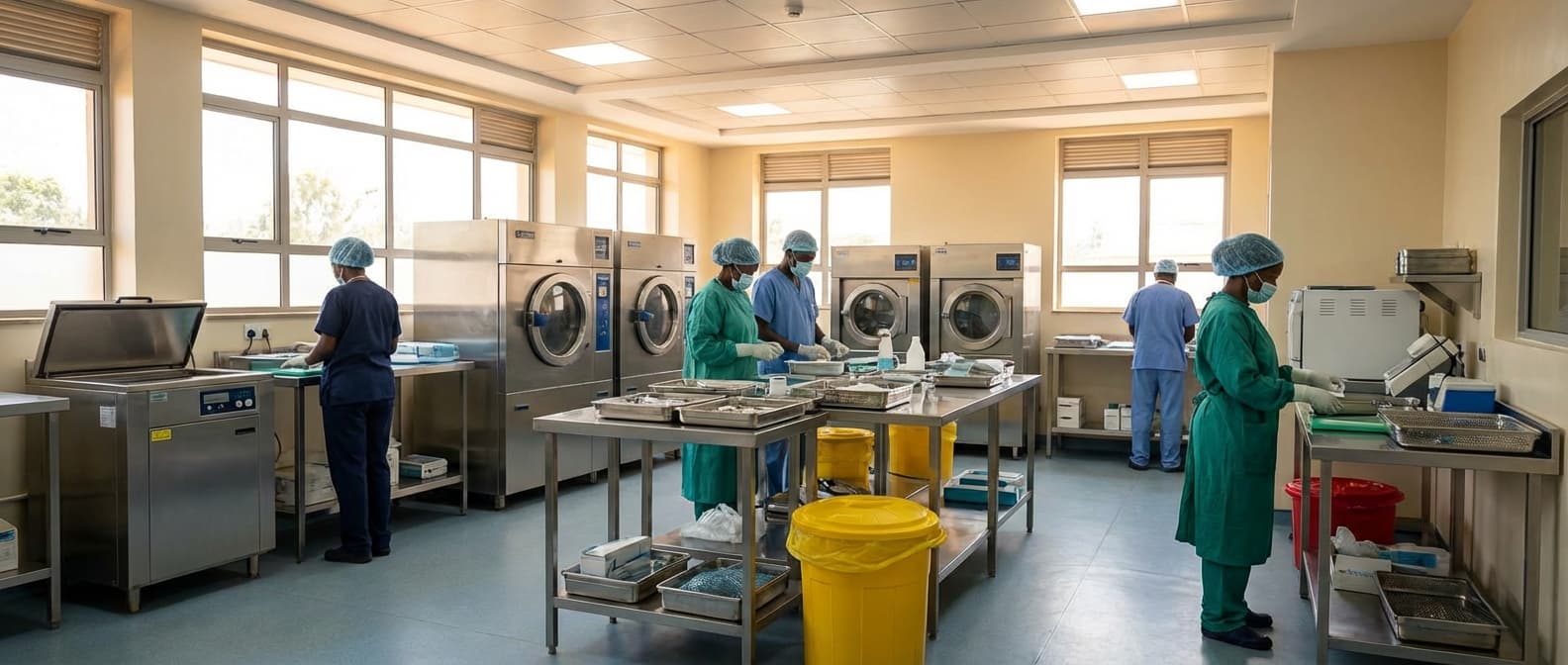
Endoscope Reprocessing Equipment Support Service in Mozambique
Engineering Excellence & Technical Support
Endoscope Reprocessing Equipment Support Service High-standard technical execution following OEM protocols and local regulatory frameworks.
Advanced Diagnostic Support for Peak Equipment Uptime
Our certified technicians in Mozambique provide proactive, on-site diagnostics for your endoscope reprocessing equipment. Utilizing specialized testing tools and deep system knowledge, we identify potential issues before they disrupt your workflow, ensuring maximum operational efficiency and patient safety.
Specialized Component Sourcing & Rapid Replacements
We maintain a robust inventory of genuine and high-quality replacement parts for all major endoscope reprocessing equipment brands. Leveraging our local presence in Mozambique, we guarantee swift procurement and installation, minimizing downtime and restoring your equipment to full functionality with minimal delay.
On-Demand Technical Training & Protocol Optimization
Empower your sterile processing team in Mozambique with our expert-led training sessions. We offer tailored programs on equipment operation, maintenance, and best practices for endoscope reprocessing, ensuring adherence to international standards and enhancing the longevity and performance of your critical assets.
What Is Endoscope Reprocessing Equipment Support Service In Mozambique?
Endoscope reprocessing equipment support service in Mozambique refers to the provision of technical assistance, maintenance, repair, and calibration for automated endoscope reprocessors (AERs) and associated equipment utilized in healthcare facilities. This service ensures the safe, effective, and compliant decontamination of flexible endoscopes, thereby mitigating the risk of healthcare-associated infections (HAAs). It encompasses a range of activities critical for maintaining the operational integrity and longevity of these specialized medical devices.
| Who Needs It? | Typical Use Cases | |||||
|---|---|---|---|---|---|---|
| Hospitals (Public and Private): Operating endoscopy suites and performing procedures requiring flexible endoscope use. | Maintaining the functionality of AERs in gastroenterology, pulmonology, urology, and surgery departments. | Ensuring compliance with infection control protocols for reusable medical devices. | Preventing equipment downtime that could disrupt diagnostic and therapeutic procedures. | Extending the lifespan of expensive endoscope reprocessing equipment. | Facilitating the efficient turnaround of endoscopes for scheduled patient appointments. | Meeting regulatory requirements for medical device maintenance and patient safety. |
| Specialized Clinics: Facilities offering outpatient endoscopy services. | Ensuring consistent and reliable reprocessing of endoscopes in a high-volume clinical setting. | Supporting the adoption of advanced reprocessing technologies. | Providing a framework for proactive equipment management to avoid unexpected service disruptions. | |||
| Government Health Agencies and Ministries of Health: Overseeing healthcare infrastructure and quality standards. | Establishing framework agreements for equipment support services to ensure quality of care across public health facilities. | Monitoring the operational status of critical medical equipment in national healthcare systems. | ||||
| Biomedical Engineering Departments/Technicians: Internal or external service providers responsible for medical equipment maintenance. | Developing and implementing comprehensive preventive maintenance schedules for AERs. | Responding to and resolving equipment malfunctions efficiently. | Conducting regular calibration and performance testing to validate disinfection efficacy. |
Key Components of Endoscope Reprocessing Equipment Support Service
- Preventive Maintenance (PM): Scheduled inspections, cleaning, lubrication, and functional checks of AERs to identify and address potential issues before they lead to system failures.
- Corrective Maintenance and Repair: Diagnostic services, component replacement, and troubleshooting for AERs experiencing malfunctions or operational defects.
- Calibration and Performance Verification: Ensuring that AERs meet manufacturer specifications and regulatory standards for disinfection parameters (e.g., temperature, cycle time, chemical concentration).
- Installation and Commissioning: Professional setup and initial testing of new AER units to guarantee proper integration into existing workflows.
- Technical Training and Education: Providing training to biomedical technicians and clinical staff on the correct operation, troubleshooting, and basic maintenance of AERs.
- Parts and Consumables Supply: Ensuring the availability of genuine spare parts and approved consumables (e.g., detergents, disinfectants) for AERs.
- Compliance and Documentation Support: Assisting facilities in adhering to national and international guidelines for endoscope reprocessing, including proper record-keeping and validation procedures.
- Emergency Support: Rapid response services for critical equipment failures to minimize downtime and maintain patient care continuity.
Who Needs Endoscope Reprocessing Equipment Support Service In Mozambique?
Effective and safe endoscope reprocessing is crucial for patient safety and infection control in healthcare facilities. In Mozambique, as in many developing nations, access to reliable and well-maintained endoscope reprocessing equipment can be a challenge. This necessitates specialized support services to ensure that this vital equipment functions optimally, thereby preventing the transmission of infections and maintaining high standards of medical care. Endoscope reprocessing equipment support services are essential for any facility that utilizes flexible endoscopes for diagnostic and therapeutic procedures.
| Customer Type | Key Departments / Units Involved | Specific Needs Addressed by Support Service |
|---|---|---|
| Public Hospitals | Gastroenterology, Pulmonology, Urology, Gynecology, Endoscopy Units, Central Sterilization Supply Department (CSSD) | Preventive maintenance, repair of automated reprocessors and washer-disinfectors, calibration, spare parts, staff training on operation and basic troubleshooting, validation of reprocessing cycles. |
| Private Hospitals | Gastroenterology, Pulmonology, Urology, Gynecology, Endoscopy Units, CSSD, Infection Control Department | Service contracts for scheduled maintenance, rapid repair services, access to latest technology updates and consumables, staff training on advanced reprocessing techniques, compliance with international standards. |
| Specialized Clinics (e.g., Gastroenterology Clinics) | Endoscopy Suite, CSSD (if applicable) | On-site technical support, timely repairs to minimize procedure downtime, replacement parts, maintenance contracts for specialized equipment. |
| Diagnostic Centers | Endoscopy Departments | Preventive maintenance programs, emergency repair services, performance testing and verification of reprocessing equipment. |
| Large Medical Practices | Endoscopy Units | Maintenance and repair services, ensuring continued operational efficiency, training on new equipment or protocols. |
| Government Health Ministries | Infection Prevention and Control Units, Procurement Departments, Training Institutes | Development of national standards for endoscope reprocessing, support for training programs, ensuring availability of spare parts and maintenance expertise in public facilities, technical consultation for equipment procurement. |
Target Customers and Departments Requiring Endoscope Reprocessing Equipment Support Service in Mozambique
- Hospitals (Public and Private)
- Specialized Clinics
- Diagnostic Centers
- Large Medical Practices
- Government Health Ministries (for public health initiatives and training)
Endoscope Reprocessing Equipment Support Service Process In Mozambique
This document outlines the Endoscope Reprocessing Equipment Support Service Process for clients in Mozambique, detailing the workflow from initial inquiry to the successful execution of support services. The process is designed to be efficient, transparent, and client-centric, ensuring minimal disruption to healthcare operations.
| Stage | Key Activities | Responsible Party | Output |
|---|---|---|---|
| Inquiry | Client submits request; initial information gathering. | Client, Support Team | Initial understanding of need |
| Logging & Triage | Service request creation; issue categorization & prioritization. | Support Team | Logged service ticket, priority level |
| Quotation & Approval | Cost estimation, proposal generation, client review & acceptance. | Support Team, Client | Approved quotation, Purchase Order (PO) |
| Scheduling & Allocation | Date/time confirmation, technician & resource assignment. | Support Team, Client | Confirmed service schedule, allocated resources |
| Travel & Intervention | Technician travel to Mozambique, on-site assessment. | Support Team (Technician) | Technician on-site |
| Service Execution | Repair, maintenance, testing, calibration. | Support Team (Technician) | Functional and tested equipment |
| Documentation & Handover | Service report generation, client sign-off, knowledge transfer. | Support Team (Technician), Client | Signed service report, handover confirmation |
| Invoicing & Payment | Invoice generation and submission, payment processing. | Finance Department, Client | Paid invoice |
| Follow-up & Feedback | Client satisfaction check, service process improvement. | Support Team | Client satisfaction confirmed, feedback logged |
Endoscope Reprocessing Equipment Support Service Workflow
- {"title":"1. Inquiry & Initial Assessment","description":"The process begins with the client in Mozambique submitting an inquiry regarding support for their endoscope reprocessing equipment. This can be through various channels like email, phone, or a dedicated online portal. The inquiry should include details about the equipment model, nature of the issue (e.g., breakdown, maintenance request, technical question), and the client's location and contact information. A preliminary assessment is conducted by the support team to understand the scope and urgency of the request."}
- {"title":"2. Service Request Logging & Triage","description":"Upon receiving the inquiry, a formal service request is logged in the support system. This request is then triaged by experienced technicians or support coordinators. Triage involves categorizing the issue (e.g., critical breakdown, scheduled maintenance, general inquiry), assessing the required expertise, and prioritizing the request based on predefined service level agreements (SLAs) and the impact on the client's operations."}
- {"title":"3. Quotation & Approval","description":"For non-contractual services or services requiring parts or specialized labor, a detailed quotation is prepared. This quotation outlines the scope of work, estimated costs (labor, parts, travel, etc.), and the expected timeline. The quotation is then sent to the client for review and approval. A formal purchase order (PO) or written confirmation of approval is required before proceeding."}
- {"title":"4. Scheduling & Resource Allocation","description":"Once the quotation is approved, the service request is scheduled. This involves coordinating with the client to find a suitable date and time that minimizes disruption to their workflow. The necessary resources, including qualified technicians, required tools, spare parts, and any specialized equipment, are allocated for the service visit."}
- {"title":"5. Travel & On-Site Intervention","description":"For on-site services, technicians will travel to the client's facility in Mozambique. Upon arrival, they will conduct a thorough on-site assessment and then proceed with the planned service intervention, whether it's repair, preventative maintenance, installation, or training. During the intervention, technicians will adhere to strict safety and hygiene protocols."}
- {"title":"6. Service Execution & Testing","description":"The actual support service is executed according to the approved plan. This includes diagnostics, repairs, part replacements, calibration, and functionality testing. Comprehensive testing is performed to ensure the equipment is operating optimally and meeting all performance specifications. Client representatives are often involved in the testing and validation phase."}
- {"title":"7. Documentation & Handover","description":"After successful execution and testing, detailed service documentation is created. This includes a service report documenting the work performed, parts used, findings, and any recommendations. The equipment is then formally handed over to the client. Any training or guidance for the client's staff on operation or basic maintenance may also be provided at this stage."}
- {"title":"8. Invoicing & Payment","description":"Following the completion of the service and handover, an invoice is generated based on the approved quotation and the actual services rendered. The invoice is sent to the client for processing. Payment is then expected according to the agreed-upon payment terms."}
- {"title":"9. Post-Service Follow-up & Feedback","description":"A post-service follow-up is conducted by the support team to ensure client satisfaction and to address any lingering questions or concerns. Feedback is actively solicited from the client to identify areas for improvement in the service process. This also provides an opportunity to confirm the ongoing performance of the equipment."}
Endoscope Reprocessing Equipment Support Service Cost In Mozambique
The cost of endoscope reprocessing equipment support services in Mozambique is influenced by a variety of factors, making it challenging to provide definitive price ranges without specific details of the equipment and service level required. However, understanding these influencing factors is crucial for budgeting and procurement. These services are essential for maintaining the functionality, safety, and longevity of reprocessing equipment, ensuring compliance with infection control standards. The pricing typically reflects a combination of direct and indirect costs associated with delivering these specialized technical services within the Mozambican context.
| Service Type | Estimated Price Range (MZN) | Notes |
|---|---|---|
| Annual Preventive Maintenance (PM) per Unit (Basic) | 25,000 - 75,000 | Covers routine checks, cleaning, lubrication, and minor adjustments. Excludes parts and major repairs. Can vary significantly by equipment type and provider. |
| Comprehensive Annual Service Contract (per Unit) | 75,000 - 250,000+ | Includes PM, priority response, some parts coverage, and potentially software updates. Higher end for complex, high-volume machines and premium SLAs. |
| On-Demand Repair Call-Out Fee (Labor) | 10,000 - 30,000 per visit | Covers technician's travel and initial diagnostic time. Parts and extensive labor are billed separately. |
| Hourly Labor Rate (Uncontracted) | 5,000 - 15,000 | For unplanned repairs or services outside of a contract. Highly dependent on technician's expertise and availability. |
| Replacement Parts | Variable (10,000 - 100,000+) | Extremely dependent on the specific part and equipment model. OEM parts are generally more expensive. |
| Full Refurbishment/Major Overhaul | 200,000 - 1,000,000+ | For older equipment requiring significant component replacement and recalibration. This is a substantial investment. |
Key Pricing Factors for Endoscope Reprocessing Equipment Support Service in Mozambique
- Type and Complexity of Equipment: Different endoscope reprocessing machines (e.g., automated reprocessors, ultrasonic cleaners, drying cabinets) have varying complexities. More sophisticated or high-volume equipment may incur higher service fees due to the specialized knowledge and parts required for maintenance and repair.
- Scope of Service Agreement: Support can range from basic preventive maintenance (PM) to comprehensive service contracts that include emergency repairs, parts replacement, software updates, and extended warranties. The more inclusive the service package, the higher the cost.
- Frequency of Service: Annual or semi-annual preventive maintenance visits are standard. However, if a service contract includes more frequent checks or on-demand emergency service, the overall cost will increase.
- Geographic Location within Mozambique: Travel and logistics costs for technicians can significantly impact pricing. Services provided in major cities like Maputo, Beira, or Nampula may be more affordable than those required in more remote or less accessible areas due to transportation, accommodation, and per diem expenses for technicians.
- Availability of Local Technicians and Parts: If specialized technicians or genuine replacement parts are not readily available locally, companies may need to import them, leading to higher costs. This includes customs duties, shipping, and potential delays.
- Brand and Manufacturer of Equipment: Support services from the original equipment manufacturer (OEM) are often more expensive than those offered by third-party service providers. However, OEMs typically offer guaranteed parts and manufacturer-trained technicians.
- Age and Condition of Equipment: Older or poorly maintained equipment may require more frequent and extensive repairs, leading to higher service costs over time.
- Service Level Agreements (SLAs): The response time for service calls, availability of parts, and guaranteed uptime are all factors that can be defined in an SLA. Higher SLAs (e.g., 24/7 support, guaranteed 4-hour response) will command premium pricing.
- Currency Exchange Rates: For imported equipment and parts, fluctuating Metical (MZN) exchange rates against major currencies like USD or EUR can influence the cost of services and parts.
- Training and Certification of Technicians: The level of training and certification of the service technicians plays a role. Highly skilled and certified technicians often charge higher rates.
- Consumables and Calibration: Some service contracts may include the cost of specific consumables used during maintenance or the calibration of equipment to ensure accuracy. These additions will affect the overall price.
Affordable Endoscope Reprocessing Equipment Support Service Options
Endoscope reprocessing is a critical, but often costly, part of healthcare. Ensuring the effectiveness and longevity of this equipment through reliable support services is paramount. This document outlines affordable endoscope reprocessing equipment support service options, focusing on value bundles and cost-saving strategies to help facilities optimize their budgets without compromising patient safety.
| Cost-Saving Strategies for Endoscope Reprocessing Equipment Support | Description | Impact on Cost/Value |
|---|---|---|
| Prioritize Preventive Maintenance: | Regularly scheduled inspections and servicing to identify and address minor issues before they become major, costly repairs. This includes cleaning, calibration, and functional testing. | Significantly reduces the likelihood of emergency repairs and associated downtime. Extends equipment lifespan, delaying costly replacements. |
| Negotiate Multi-Year Contracts: | Commit to a service agreement for several years. Service providers are often willing to offer better pricing for longer-term commitments. | Secures lower annual rates and protects against potential price increases over time. Provides long-term budget stability. |
| Leverage Remote Diagnostics: | Utilize support services that offer remote troubleshooting and diagnostics. This can often resolve minor issues without the need for an on-site visit. | Reduces or eliminates travel costs for technicians, leading to quicker resolutions for simpler problems. Minimizes the need for expensive on-site emergency calls. |
| Explore Tiered Support Levels: | Understand the different service tiers offered. Some may include more comprehensive coverage than others. Choose the tier that best matches your facility's needs and risk tolerance. | Avoid paying for services you don't require. Allows for customization to optimize both cost and coverage. |
| Inquire About Used or Refurbished Parts: | For out-of-warranty equipment or non-critical components, ask if the service provider offers certified refurbished parts as an alternative to new ones. | Can offer substantial savings on replacement parts compared to brand-new OEM components, without compromising reliability if properly certified. |
| Consolidate Service Providers: | If you use multiple vendors for different types of reprocessing equipment, explore if a single provider can offer support for a broader range, potentially leading to volume discounts. | Simplifies vendor management and can unlock better pricing through consolidated purchasing power. |
| Invest in Staff Training: | Properly trained staff can perform basic troubleshooting and routine maintenance, reducing the frequency of service calls for minor issues. | Reduces the need for external technician intervention for simple tasks. Empowers staff to manage equipment more effectively. |
| Benchmark Pricing: | Obtain quotes from multiple reputable service providers and compare them. Understand what is included in each quote. | Ensures you are getting competitive pricing and the best value for your investment. Highlights potential areas where costs might be inflated. |
Understanding Value Bundles in Endoscope Reprocessing Support
- Definition: Value bundles are pre-packaged service offerings that combine multiple essential support functions at a discounted rate compared to purchasing each service individually. They are designed to provide comprehensive coverage and predictable costs.
- Common Components: These bundles often include a combination of preventive maintenance, on-site repairs, remote diagnostics, software updates, technician training, and sometimes even parts replacement.
- Benefits:
- Predictable Budgeting: Fixed annual or multi-year costs make financial planning easier.
- Reduced Downtime: Proactive maintenance and quicker response times minimize equipment unavailability.
- Extended Equipment Lifespan: Regular, expert servicing helps prevent major failures and prolongs the operational life of your endoscopes and reprocessing machines.
- Improved Efficiency: Optimized equipment performance contributes to smoother workflows in sterile processing departments.
- Access to Expertise: Bundles often grant access to manufacturer-certified technicians and specialized knowledge.
- Potential for Discounted Parts: Some bundles include discounted or even included replacement parts.
Verified Providers In Mozambique
In Mozambique, ensuring access to quality healthcare hinges on identifying and trusting verified providers. Franance Health stands out as a leading entity, meticulously vetting and credentialing healthcare professionals and facilities. This rigorous process guarantees that their network comprises only the most competent, ethical, and well-equipped providers, offering patients peace of mind and superior medical outcomes. Choosing Franance Health means opting for a standard of care that prioritizes patient safety, expertise, and compassionate service.
| Aspect | Franance Health Advantage | Patient Benefit |
|---|---|---|
| Provider Selection | Strict credentialing and verification process. | Access to trustworthy and competent medical professionals. |
| Service Quality | Emphasis on high standards of medical care and patient outcomes. | Receiving effective and appropriate treatment. |
| Specialist Access | Extensive network of specialists across various fields. | Convenient access to specialized medical expertise when needed. |
| Trust and Reliability | Reputation for integrity and commitment to patient well-being. | Confidence in the healthcare services received. |
| Ethical Practice | Adherence to stringent ethical guidelines. | Ensured respectful and fair treatment throughout the healthcare journey. |
Why Franance Health Providers are the Best Choice:
- Rigorous Credentialing Process: Every provider undergoes a comprehensive vetting to ensure qualifications, experience, and adherence to ethical standards.
- Commitment to Quality: Franance Health partners with facilities and professionals dedicated to delivering high-quality, patient-centered care.
- Access to Expertise: Their network encompasses a wide range of medical specialties, ensuring access to the right expertise for diverse healthcare needs.
- Patient Safety Focus: Providers are selected based on their proven commitment to patient safety protocols and best practices.
- Enhanced Patient Experience: Beyond medical competence, Franance Health emphasizes providers who offer compassionate and respectful patient interactions.
Scope Of Work For Endoscope Reprocessing Equipment Support Service
This Scope of Work (SOW) outlines the requirements for Endoscope Reprocessing Equipment Support Services. This service is critical to ensuring the safe and effective reprocessing of flexible endoscopes, thereby preventing patient-to-patient transmission of infections. The scope includes preventative maintenance, corrective maintenance, calibration, validation support, and potentially equipment upgrades/replacements for various endoscope reprocessing equipment. The goal is to maintain equipment in optimal working condition, meeting all regulatory and manufacturer specifications.
| Category | Technical Deliverables | Standard Specifications & Requirements | Frequency/Timeline |
|---|---|---|---|
| Preventative Maintenance (PM) | Scheduled inspections, cleaning, lubrication, and replacement of wear parts. | Adherence to manufacturer's PM schedule. Use of approved parts and lubricants. Documentation of all PM activities. | As per manufacturer recommendations (e.g., quarterly, semi-annually, annually). |
| Corrective Maintenance (CM) | Diagnosis, repair, and replacement of faulty components. | Emergency response within [X] hours. Use of genuine or equivalent parts. Post-repair testing and validation. Detailed service reports including parts used and labor hours. | On-demand, with defined response times for critical equipment. |
| Calibration | Verification and adjustment of critical parameters (e.g., temperature, flow rates, cycle times). | Use of calibrated test equipment traceable to national standards. Calibration certificates provided for all adjustments. Parameters must meet manufacturer specifications and regulatory requirements. | As per manufacturer recommendations, regulatory requirements, or after significant repairs. |
| Validation Support | Assistance with Installation Qualification (IQ), Operational Qualification (OQ), and Performance Qualification (PQ). | Provision of documentation, test protocols, and execution support for validation activities. Equipment must meet all specified performance criteria during validation. | Upon installation of new equipment, after major repairs, or as required by regulatory changes. |
| Technical Support & Training | On-site and remote technical assistance. Training for facility staff on basic troubleshooting and operation. | Availability of qualified technicians. Training materials provided. Competency assessment of trained staff. | On-demand for troubleshooting. Scheduled for initial training and refresher courses. |
| Reporting & Documentation | Comprehensive service reports for all activities. Maintenance logs and equipment history. | Reports to include date, technician name, work performed, parts used, test results, and recommendations. All documentation to be kept for a minimum of [Y] years. | Following each service intervention and as per contractual agreement. |
| Parts Management | Provision of necessary spare parts for repairs and PM. | Availability of a comprehensive inventory of critical spare parts. Lead times for non-stock parts clearly communicated. | Ongoing, with defined inventory levels for critical components. |
| Equipment Specifics | Service to cover: Automated Endoscope Reprocessors (AERs), washer-disinfectors, leak testers, drying cabinets, etc. | Technicians must be certified or factory-trained on specific equipment models. Access to manufacturer's technical documentation. | Continuous coverage for all specified equipment. |
Key Objectives of Endoscope Reprocessing Equipment Support Service
- Ensure continuous operational readiness of all endoscope reprocessing equipment.
- Minimize equipment downtime through proactive maintenance and rapid response to breakdowns.
- Maintain compliance with all relevant regulatory standards (e.g., AAMI, FDA, local health authority guidelines).
- Validate equipment performance to ensure effective and safe reprocessing cycles.
- Provide technical expertise and training to facility staff on equipment operation and troubleshooting.
- Optimize equipment lifespan and performance through scheduled maintenance.
Service Level Agreement For Endoscope Reprocessing Equipment Support Service
This Service Level Agreement (SLA) outlines the support services, response times, and uptime guarantees for the Endoscope Reprocessing Equipment provided by [Your Company Name] to [Client Company Name]. This SLA aims to ensure the optimal performance and availability of the reprocessing equipment, thereby supporting efficient and safe patient care.
| Criticality Level | Description | First Response Time (within Service Hours) | Resolution Time Target (within Service Hours) |
|---|---|---|---|
| Critical (Level 1) | Complete system failure or malfunction that significantly impacts patient care and prevents reprocessing of any endoscopes. | 1 Business Hour | 4 Business Hours |
| High (Level 2) | Partial system malfunction that limits reprocessing capabilities or affects a specific function, potentially causing delays. | 2 Business Hours | 8 Business Hours |
| Medium (Level 3) | Minor functional issue or performance degradation that does not immediately impact patient care but requires attention. | 4 Business Hours | 2 Business Days |
| Low (Level 4) | Cosmetic issues, minor user interface problems, or requests for information/training not related to immediate operational failure. | 8 Business Hours | 3 Business Days |
Key Definitions
- Service Hours: Defined as [Start Time] to [End Time], [Days of the Week] (e.g., 08:00 AM to 6:00 PM, Monday to Friday, excluding public holidays).
- Downtime: Any period where the Endoscope Reprocessing Equipment is non-operational and unable to perform its primary function due to a hardware failure, software malfunction, or unavailability of critical consumables directly attributable to [Your Company Name]'s service or product.
- Support Request: A request for assistance submitted by [Client Company Name] to [Your Company Name] for troubleshooting, repair, or maintenance of the Endoscope Reprocessing Equipment.
- Criticality Level: A classification assigned to a Support Request based on its impact on patient care and operational workflow. (See Table 1 for details).
- First Response Time: The maximum time allowed for [Your Company Name] to acknowledge a Support Request and initiate diagnostic actions.
- Resolution Time: The maximum time allowed for [Your Company Name] to resolve a Support Request and restore the Endoscope Reprocessing Equipment to full operational status.
- Uptime Guarantee: The percentage of time the Endoscope Reprocessing Equipment is expected to be operational and available for use within a defined period.
Frequently Asked Questions

Ready when you are
Let's scope your Endoscope Reprocessing Equipment Support Service in Mozambique project in Mozambique.

Scaling healthcare logistics and technical systems across the entire continent.