
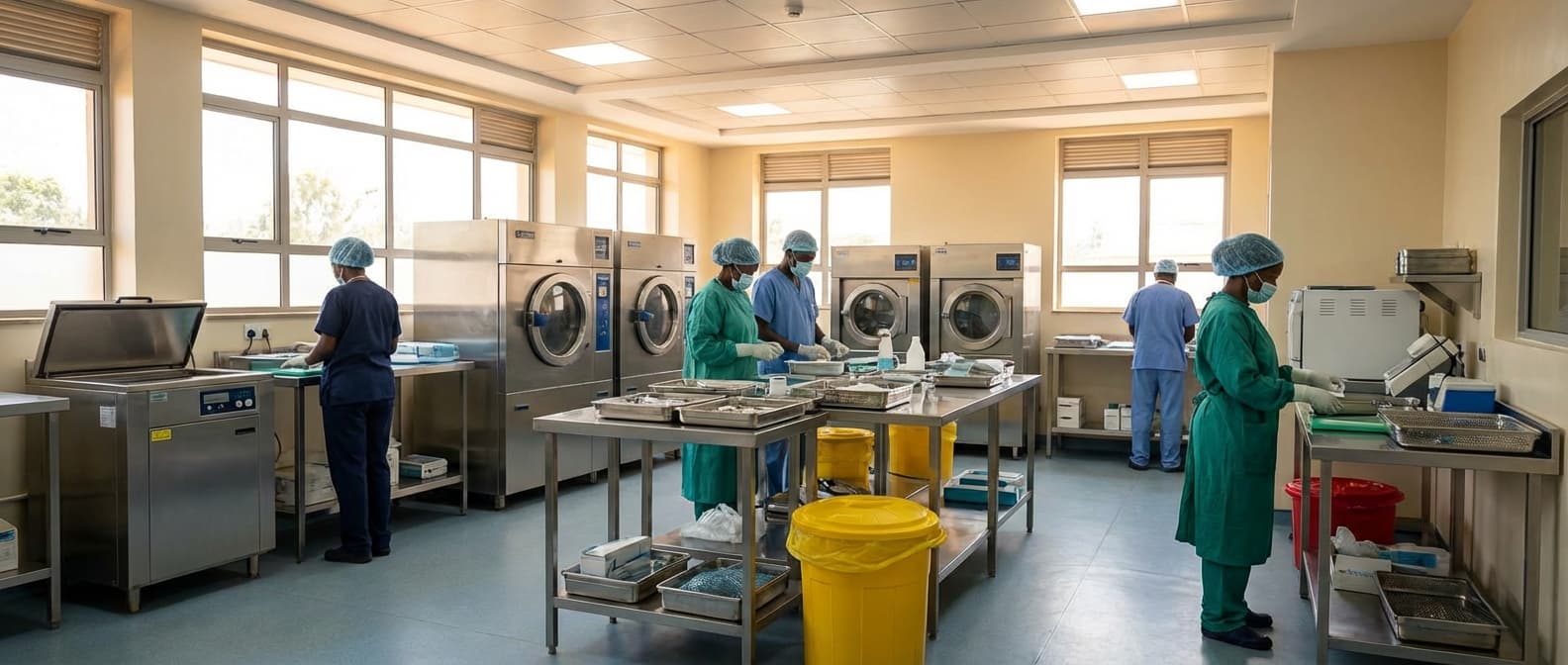
Autoclave Validation Support Service in Mozambique
Engineering Excellence & Technical Support
Autoclave Validation Support Service High-standard technical execution following OEM protocols and local regulatory frameworks.
Precision Performance Verification
Our Autoclave Validation Support Service employs state-of-the-art calibration equipment and adherence to international standards (e.g., ISO 17025) to ensure your autoclaves consistently achieve and maintain the precise temperature, pressure, and time parameters required for effective sterilization. This meticulous verification process guarantees the inactivation of all viable microorganisms, protecting patient safety and regulatory compliance.
End-to-End Regulatory Assurance
Navigating Mozambique's evolving healthcare regulations can be complex. We provide comprehensive validation support that aligns with all local Ministry of Health requirements and relevant international guidelines. Our service covers initial qualification (IQ/OQ/PQ), routine performance monitoring, and revalidation, offering you complete peace of mind and robust documentation for audits and inspections.
Optimized Sterilization Cycles & Uptime
Beyond simple pass/fail validation, our expert technicians analyze your autoclave's performance data to identify opportunities for cycle optimization. By ensuring your autoclaves operate at peak efficiency, we help reduce reprocessing times, minimize consumable usage, and maximize equipment uptime, contributing to smoother operational workflows and cost savings for your facility in Mozambique.
What Is Autoclave Validation Support Service In Mozambique?
Autoclave validation support services in Mozambique are specialized technical interventions designed to ensure that steam sterilization equipment (autoclaves) consistently and effectively eliminate viable microorganisms from medical devices, laboratory equipment, and other critical items. This process is fundamental to maintaining sterility assurance levels (SAL) and preventing healthcare-associated infections (HAIs) and contamination in research and manufacturing environments. The service involves a comprehensive suite of activities, including initial qualification (IQ/OQ/PQ), routine performance monitoring, and revalidation, conducted by qualified professionals using calibrated monitoring devices and validated methodologies.
| Entity/Sector | Need for Autoclave Validation | Typical Use Cases |
|---|---|---|
| Healthcare Facilities (Hospitals, Clinics, Dental Practices) | Mandatory for ensuring patient safety, preventing infection transmission, and meeting regulatory compliance (e.g., Ministry of Health guidelines). Essential for sterilizing surgical instruments, dental tools, dressings, and reusable medical devices. | Sterilization of surgical packs, biopsy forceps, endoscopes, intravenous fluid containers, dental handpieces, and diagnostic consumables. |
| Laboratories (Research, Diagnostic, Quality Control) | Critical for maintaining sterile environments, preventing cross-contamination, and ensuring the accuracy of experimental results. Required for sterilizing glassware, media, instruments, and waste. | Sterilization of culture media, petri dishes, pipettes, glassware, fermentation vessels, and laboratory waste in microbiology, molecular biology, and analytical chemistry labs. |
| Pharmaceutical and Biotechnology Manufacturers | Essential for product sterility and preventing contamination during manufacturing processes, especially for sterile products. Compliance with Good Manufacturing Practices (GMP) is paramount. | Sterilization of manufacturing equipment, filters, packaging materials, and sterile bulk products in parenteral drug manufacturing, biopharmaceutical production, and sterile fill-finish operations. |
| Veterinary Clinics and Animal Health Facilities | Similar to human healthcare, ensures the safety and efficacy of veterinary procedures and prevents the spread of zoonotic diseases. | Sterilization of surgical instruments, examination tools, and bedding materials. |
Key Components of Autoclave Validation Support Service:
- Installation Qualification (IQ): Verifies that the autoclave is installed according to manufacturer specifications and relevant regulatory standards, assessing physical and environmental conditions.
- Operational Qualification (OQ): Confirms that the autoclave operates within defined parameters across its intended operating range, including temperature, pressure, and cycle times.
- Performance Qualification (PQ): Demonstrates that the validated sterilization cycle consistently achieves the required SAL under normal operating conditions, using biological and chemical indicators.
- Routine Monitoring and Testing: Includes regular use of chemical indicators (e.g., Bowie-Dick tests, process challenge devices) and periodic biological indicator (BI) testing to verify cycle efficacy.
- Revalidation: Performed after significant repairs, modifications, relocation, or at predetermined intervals to ensure continued compliance and performance.
- Documentation and Reporting: Comprehensive generation of validation protocols, reports, and certificates, ensuring traceability and compliance with regulatory requirements.
- Troubleshooting and Consultation: Providing expert advice and support for any observed deviations or performance issues.
Who Needs Autoclave Validation Support Service In Mozambique?
Autoclave validation support services are crucial for ensuring the sterility and efficacy of autoclaves used in critical healthcare and laboratory settings across Mozambique. These services are essential for institutions that rely on steam sterilization for reprocessing medical devices, laboratory equipment, and other instruments to prevent the spread of infections and guarantee reliable experimental results. The need arises from regulatory compliance, quality assurance, and operational efficiency requirements. By validating autoclaves, organizations can confirm that their sterilization cycles consistently achieve the desired microbial inactivation, thereby safeguarding patient safety and the integrity of research.
| Customer Type | Key Departments Requiring Support | Primary Needs/Justification |
|---|---|---|
| Hospitals and Clinics | Central Sterile Supply Department (CSSD)/Sterilization Unit, Operating Theatres, Intensive Care Units (ICUs), Infection Control Department, Outpatient Departments (if using sterilizable instruments) | Ensuring patient safety through effective sterilization of surgical instruments, medical devices, and consumables; compliance with national and international healthcare standards; preventing hospital-acquired infections (HAIs). |
| Diagnostic Laboratories | Microbiology Department, Pathology Department, Molecular Biology Labs, Clinical Chemistry Labs | Sterilizing culture media preparation equipment, glassware, loops, and other laboratory consumables to prevent contamination and ensure accurate diagnostic results; meeting GLP (Good Laboratory Practice) requirements. |
| Research Institutions and Universities | Biotechnology Labs, Life Sciences Departments, Chemistry Departments, Medical Research Centers | Sterilizing laboratory glassware, instruments, and media for research experiments; ensuring reproducibility and validity of scientific findings; adhering to safety protocols. |
| Pharmaceutical and Biotechnology Companies | Quality Control (QC) Department, Manufacturing Support, Research and Development (R&D) Labs | Sterilizing equipment and materials used in drug production and testing; ensuring product sterility and safety; meeting stringent regulatory requirements (e.g., GMP - Good Manufacturing Practice). |
| Food and Beverage Manufacturing Plants | Quality Assurance (QA) Department, Production/Process Engineering | Sterilizing specific equipment or components to ensure product safety and shelf-life, particularly in high-risk product categories. |
| Veterinary Clinics and Animal Health Facilities | Surgical Department, Diagnostic Laboratories | Sterilizing surgical instruments and equipment for animal care; preventing disease transmission among animals and to humans (zoonotic diseases). |
| Dental Practices | Sterilization Area | Ensuring the sterility of dental instruments used on multiple patients; complying with dental health regulations and preventing cross-contamination. |
Target Customers and Departments Requiring Autoclave Validation Support in Mozambique
- Hospitals and Clinics (Public and Private)
- Diagnostic Laboratories
- Research Institutions and Universities
- Pharmaceutical and Biotechnology Companies
- Food and Beverage Manufacturing Plants (for sterilization of certain equipment)
- Veterinary Clinics and Animal Health Facilities
- Dental Practices
Autoclave Validation Support Service Process In Mozambique
This document outlines the Autoclave Validation Support Service Process implemented in Mozambique, detailing the workflow from initial client inquiry to the successful execution and closure of the service. The process is designed to ensure that autoclaves used for sterilization meet regulatory standards and are functioning effectively, thereby guaranteeing the safety of medical procedures and materials.
| Stage | Description | Key Activities | Deliverables/Outcomes | Responsible Parties |
|---|---|---|---|---|
| Client Inquiry and Needs Assessment | The initial contact from a client seeking autoclave validation services. | Receive inquiry, understand client's needs (autoclave type, frequency, specific concerns), discuss service scope and objectives. | Initial understanding of client requirements, preliminary service assessment. | Client, Service Provider Sales/Consultant |
| Proposal Generation and Agreement | Formalizing the service offering based on the needs assessment. | Develop a detailed proposal (scope, methodology, timeline, cost), present proposal to client, negotiate terms, secure formal agreement/contract. | Signed contract/agreement, agreed upon service plan. | Service Provider, Client |
| Scheduling and Pre-visit Preparations | Planning and logistics for the on-site validation. | Schedule validation dates, confirm client availability, gather necessary documentation (autoclave manuals, previous validation reports), prepare equipment and consumables, brief the validation team. | Confirmed schedule, prepared validation team and equipment. | Service Provider, Client |
| On-site Validation Execution | Performing the physical and operational checks of the autoclave. | Conduct initial checks (calibration, safety features), perform functional tests (temperature, pressure, time, steam penetration), run biological and chemical indicator tests as per standards (e.g., ISO 17665), collect all relevant data. | Raw validation data, completed test records, observations during testing. | Service Provider Validation Team |
| Data Analysis and Reporting | Interpreting the collected data and generating a comprehensive report. | Analyze all collected data against validation protocols and relevant standards, identify any deviations or non-compliance, generate a detailed validation report including findings, recommendations, and a certificate of validation. | Comprehensive Validation Report, Certificate of Validation. | Service Provider Validation Team/Technical Lead |
| Post-Validation Support and Remediation | Addressing any issues identified during the validation process. | Review report with the client, discuss findings and recommendations, provide guidance on corrective actions if required, offer re-validation services if necessary after remediation. | Client understanding of results, plan for corrective actions (if any). | Service Provider, Client |
| Service Closure and Record Keeping | Finalizing the service and ensuring proper documentation. | Obtain client sign-off, issue final invoice, archive all validation documentation and reports for future reference, confirm client satisfaction. | Closed service file, client satisfaction confirmation, archived records. | Service Provider, Client |
Autoclave Validation Support Service Process Workflow in Mozambique
- Client Inquiry and Needs Assessment
- Proposal Generation and Agreement
- Scheduling and Pre-visit Preparations
- On-site Validation Execution
- Data Analysis and Reporting
- Post-Validation Support and Remediation
- Service Closure and Record Keeping
Autoclave Validation Support Service Cost In Mozambique
Autoclave validation is a critical process to ensure that sterilization cycles are consistently effective, preventing the transmission of infections and meeting regulatory requirements. In Mozambique, the cost of autoclave validation support services can vary significantly based on several factors. These factors influence the overall price, making it important for healthcare facilities and laboratories to understand them to budget accurately. The support services typically involve a combination of on-site technical expertise, specialized equipment, and the generation of detailed validation reports.
Key pricing factors include:
- Type and Number of Autoclaves: Larger autoclaves or a greater number of units to be validated will naturally increase the cost due to more time and resources required for testing.
- Validation Protocol Complexity: The depth and scope of the validation (e.g., IQ, OQ, PQ – Installation Qualification, Operational Qualification, Performance Qualification) will affect the price. More comprehensive protocols demand more extensive testing and data analysis.
- Service Provider's Expertise and Reputation: Established and highly reputable service providers with specialized technicians and advanced validation equipment may command higher fees.
- Geographic Location within Mozambique: Travel and logistical costs for the service provider to reach the facility can influence pricing, especially for remote locations.
- Frequency of Validation: While initial validations are significant, routine re-validations might have a slightly different pricing structure.
- Additional Services: Any supplementary services requested, such as re-calibration, minor repairs, or training for in-house staff, will add to the overall cost.
- Urgency of Service: Expedited validation services, if available, typically incur a premium.
The pricing for autoclave validation support services in Mozambique is typically quoted in Mozambican Metical (MZN). While exact figures are subject to negotiation and specific service agreements, general price ranges can be estimated. These ranges are illustrative and can fluctuate based on the aforementioned factors.
| Service Component/Scope | Estimated Price Range (MZN) | Notes |
|---|---|---|
| Basic On-Site Validation (e.g., single autoclave, standard PQ) | 15,000 - 35,000 MZN | Includes basic testing, data logging, and a standard report. May be for smaller units or routine re-validations. |
| Comprehensive Validation (e.g., IQ, OQ, PQ for multiple autoclaves) | 40,000 - 90,000+ MZN | Covers a more in-depth protocol, potentially for new installations or a full suite of validation. Price scales with the number and complexity of units. |
| Specialized Validation (e.g., complex cycles, specific material testing) | 60,000 - 150,000+ MZN | Requires specialized equipment, advanced expertise, and potentially longer on-site presence. Custom pricing is common. |
| On-site Technical Support & Troubleshooting (per hour/day) | 2,500 - 6,000 MZN per hour | Excludes validation report. For immediate technical assistance or minor adjustments. |
| Travel & Logistics Surcharge (per trip) | 5,000 - 20,000+ MZN | Dependent on distance from major service hubs (e.g., Maputo, Beira) to the facility's location. |
| Report Generation & Documentation (standalone if not part of service) | Negotiable | Generally included in the overall validation package, but can be quoted separately for specific needs. |
Key Pricing Factors for Autoclave Validation Support Services in Mozambique
- Type and Number of Autoclaves
- Validation Protocol Complexity (IQ, OQ, PQ)
- Service Provider's Expertise and Reputation
- Geographic Location within Mozambique (Travel & Logistics)
- Frequency of Validation (Initial vs. Re-validation)
- Inclusion of Additional Services (Calibration, Repairs, Training)
- Service Urgency
Affordable Autoclave Validation Support Service Options
Ensuring the proper functioning of autoclaves through regular validation is crucial for maintaining sterility and compliance in various industries, including healthcare, pharmaceuticals, and laboratories. However, the cost of comprehensive validation services can be a significant concern for organizations with limited budgets. This document outlines affordable autoclave validation support service options, highlighting the value of bundled services and practical cost-saving strategies.
| Service Bundle Option | Description | Typical Cost Savings | Ideal For |
|---|---|---|---|
| Basic Validation Package | Includes essential IQ, OQ, and PQ protocols with standard reporting. Often covers a single autoclave or a small group. | 10-15% compared to individual service calls. | Small clinics, independent labs, or organizations with basic validation needs. |
| Comprehensive Validation Suite | Combines IQ, OQ, and PQ with extended documentation, re-validation scheduling, and basic troubleshooting support. | 15-20% compared to individual service calls. | Medium-sized facilities, those with multiple autoclaves, or those requiring more in-depth documentation. |
| Annual Support Contract | Includes scheduled re-validation (IQ/OQ/PQ) once or twice annually, priority service, and discounted rates on any emergency call-outs. May include remote support. | 20-25% compared to ad-hoc services, plus reduced downtime risk. | Organizations with stringent compliance requirements, critical sterilization needs, or a desire for proactive maintenance. |
| Multi-Site/Multi-Autoclave Discount | Volume-based pricing for organizations with multiple locations or a large number of autoclaves requiring validation. | Customizable, often starting at 25% and increasing with volume. | Large healthcare networks, contract manufacturing organizations, or research institutions with distributed facilities. |
Understanding Autoclave Validation
- Autoclave validation is a systematic process that confirms an autoclave consistently performs at the required level of sterilization.
- Key components include Installation Qualification (IQ), Operational Qualification (OQ), and Performance Qualification (PQ).
- Regular validation is essential for regulatory compliance (e.g., FDA, ISO) and patient/product safety.
- Consequences of non-validation can include product recalls, regulatory fines, and reputational damage.
Verified Providers In Mozambique
Navigating the healthcare landscape in Mozambique can be challenging, especially when seeking specialized medical services. Ensuring you are connected with "Verified Providers" is paramount for receiving safe, effective, and ethical care. Franance Health stands out as a premier platform dedicated to connecting individuals with such verified professionals. This document outlines the rigorous credentialing process employed by Franance Health and explains why choosing a provider through their platform offers unparalleled advantages and peace of mind.
| Benefit | Why it Matters for Patients in Mozambique | Franance Health's Advantage |
|---|---|---|
| Access to Qualified Professionals: | In regions with limited access to specialized medical care, distinguishing between qualified and unqualified practitioners is crucial for patient safety and treatment efficacy. | Franance Health eliminates the guesswork by pre-vetting all listed providers, ensuring you connect with legitimate and competent healthcare professionals. |
| Reduced Risk of Fraud and Misinformation: | The lack of a centralized, verified directory can expose patients to fraudulent practices or providers offering substandard care, leading to financial loss and health complications. | Our stringent verification process acts as a robust safeguard against such risks, protecting patients from unscrupulous actors. |
| Improved Treatment Outcomes: | Receiving care from a verified specialist with proven experience significantly increases the likelihood of accurate diagnosis and effective treatment, leading to better health outcomes. | By matching patients with validated experts in their required fields, Franance Health contributes directly to improved patient well-being and recovery. |
| Enhanced Patient Confidence and Trust: | Knowing that your healthcare provider has undergone a rigorous vetting process fosters a sense of security and trust, allowing you to focus on your recovery without undue worry. | The Franance Health seal of verification is a symbol of trust and reliability, empowering patients to make informed healthcare decisions with confidence. |
| Streamlined Healthcare Navigation: | Finding the right doctor or specialist can be a time-consuming and stressful ordeal, especially when dealing with complex medical needs. | Franance Health simplifies this process, providing a curated list of verified providers, saving you valuable time and reducing the anxiety associated with seeking care. |
Franance Health's Verification Process: A Commitment to Excellence
- Comprehensive Background Checks: Franance Health conducts thorough background checks on all prospective healthcare providers, including verification of their educational qualifications, professional licenses, and any disciplinary actions. This ensures a baseline of competence and ethical standing.
- Licensure and Certification Verification: We meticulously verify that all listed providers hold current and valid licenses and certifications from the relevant Mozambican medical boards and professional organizations. This guarantees they meet the minimum standards of practice.
- Experience and Specialization Validation: Franance Health confirms the practical experience and specialized training of each provider. This allows patients to confidently select professionals with the specific expertise needed for their medical conditions.
- Reputation and Peer Review: Where applicable, Franance Health considers the professional reputation of providers within their respective fields. This may involve gathering feedback from other healthcare professionals and, where appropriate, patient testimonials (handled with strict privacy protocols).
- Adherence to Ethical Standards: All verified providers on the Franance Health platform commit to upholding the highest ethical standards in patient care, including confidentiality, informed consent, and non-discrimination. This commitment is a cornerstone of our verification.
Scope Of Work For Autoclave Validation Support Service
This Scope of Work (SOW) outlines the services to be provided by [Service Provider Name] for Autoclave Validation Support to [Client Name]. The objective is to ensure that the client's autoclaves are performing according to predefined specifications and regulatory requirements through a comprehensive validation process. This includes Installation Qualification (IQ), Operational Qualification (OQ), and Performance Qualification (PQ).
| Phase | Objective | Key Activities | Standard Specifications/Acceptance Criteria (Examples) | Documentation |
|---|---|---|---|---|
| Installation Qualification (IQ) | To verify that the autoclave is installed correctly according to manufacturer's specifications and relevant standards. | Verification of equipment identity, serial numbers, components, utilities (power, water, steam), safety interlocks, and environmental conditions. Review of installation documentation. | Compliance with manufacturer's installation manual. All safety features functional. Utilities within specified ranges. Documented evidence of installation. | IQ Protocol, IQ Report, Equipment Manuals, Site Drawings |
| Operational Qualification (OQ) | To verify that the autoclave operates consistently and reliably within its specified operational range. | Testing of critical control parameters such as temperature, pressure, time, and sterilization cycles. Verification of alarm functions and error handling. Functional tests of all operational modes. | Temperature uniformity and accuracy within +/- [e.g., 1°C]. Pressure maintained within +/- [e.g., 0.1 bar]. Cycle times within specified limits. Alarms triggered at predefined setpoints. Successful execution of all operational modes. | OQ Protocol, OQ Report, Calibration Certificates, Alarm Logs |
| Performance Qualification (PQ) | To demonstrate that the autoclave consistently performs its intended function under typical operating conditions, using representative product or biological indicators. | Execution of multiple validation runs (typically 3-5) with representative loads under normal operating conditions. Monitoring of critical parameters throughout each run. Analysis of load penetration and lethality (e.g., F0 values). Use of biological indicators (BIs) or chemical indicators (CIs) to confirm sterilization efficacy. | Achieve defined lethality (e.g., F0 value of >= 121) for all cycles. Reduction of BIs by at least [e.g., 6 log]. Uniform distribution of sterilization conditions throughout the load. No evidence of product degradation or damage. Consistent results across all PQ runs. | PQ Protocol, PQ Report, Load Configurations, BI/CI Challenge Tests Results, Data Logs, Cycle Printouts |
Technical Deliverables
- Installation Qualification (IQ) Report: Documenting the successful installation of the autoclave, including verification of physical and electrical specifications, components, and safety features.
- Operational Qualification (OQ) Protocol: A detailed plan outlining the tests and procedures to verify that the autoclave operates within its specified parameters.
- Operational Qualification (OQ) Report: Documenting the results of the OQ tests, confirming that the autoclave functions as intended across its operational range.
- Performance Qualification (PQ) Protocol: A detailed plan outlining the tests and procedures to demonstrate consistent and reproducible performance of the autoclave under typical operating conditions, using representative loads.
- Performance Qualification (PQ) Report: Documenting the results of the PQ tests, including data analysis and conclusions on the autoclave's ability to meet performance requirements.
- Calibration Certificates: For all critical measurement devices used during the validation process (e.g., temperature probes, pressure gauges).
- Validation Summary Report: A comprehensive document summarizing all validation activities, findings, and conclusions for regulatory submission.
- Training Material: If applicable, documentation related to operator training on the validated autoclave.
- Deviation Reports: Documenting any deviations from the approved protocols and their impact assessment.
- Change Control Documentation: If any changes are made to the autoclave or validation plan during the process.
Service Level Agreement For Autoclave Validation Support Service
This Service Level Agreement (SLA) outlines the response times and uptime guarantees for the Autoclave Validation Support Service provided by [Your Company Name] to [Client Company Name]. This SLA is effective from [Start Date] and will remain in effect until [End Date].
| Service Component | Response Time Guarantee (Business Hours) | Uptime Guarantee (for remote support tools) |
|---|---|---|
| On-site Technical Support (Scheduled) | Within 48 business hours of confirmed appointment. | N/A |
| On-site Technical Support (Emergency) | Within 8 business hours of validated critical issue. | N/A |
| Remote Troubleshooting & Guidance | Within 2 business hours of ticket submission. | 99.5% |
| Data Analysis & Report Assistance | Within 24 business hours of complete data submission. | 99.5% |
| Emergency Support Hotline (Phone/Email) | Initial acknowledgment within 1 business hour. | N/A |
Scope of Service
- On-site technical support for autoclave validation procedures.
- Remote troubleshooting and guidance for validation software.
- Assistance with data analysis and report generation.
- Scheduled preventative maintenance checks (as per separate agreement).
- Emergency support for critical validation failures.
Frequently Asked Questions

Ready when you are
Let's scope your Autoclave Validation Support Service in Mozambique project in Mozambique.

Scaling healthcare logistics and technical systems across the entire continent.