
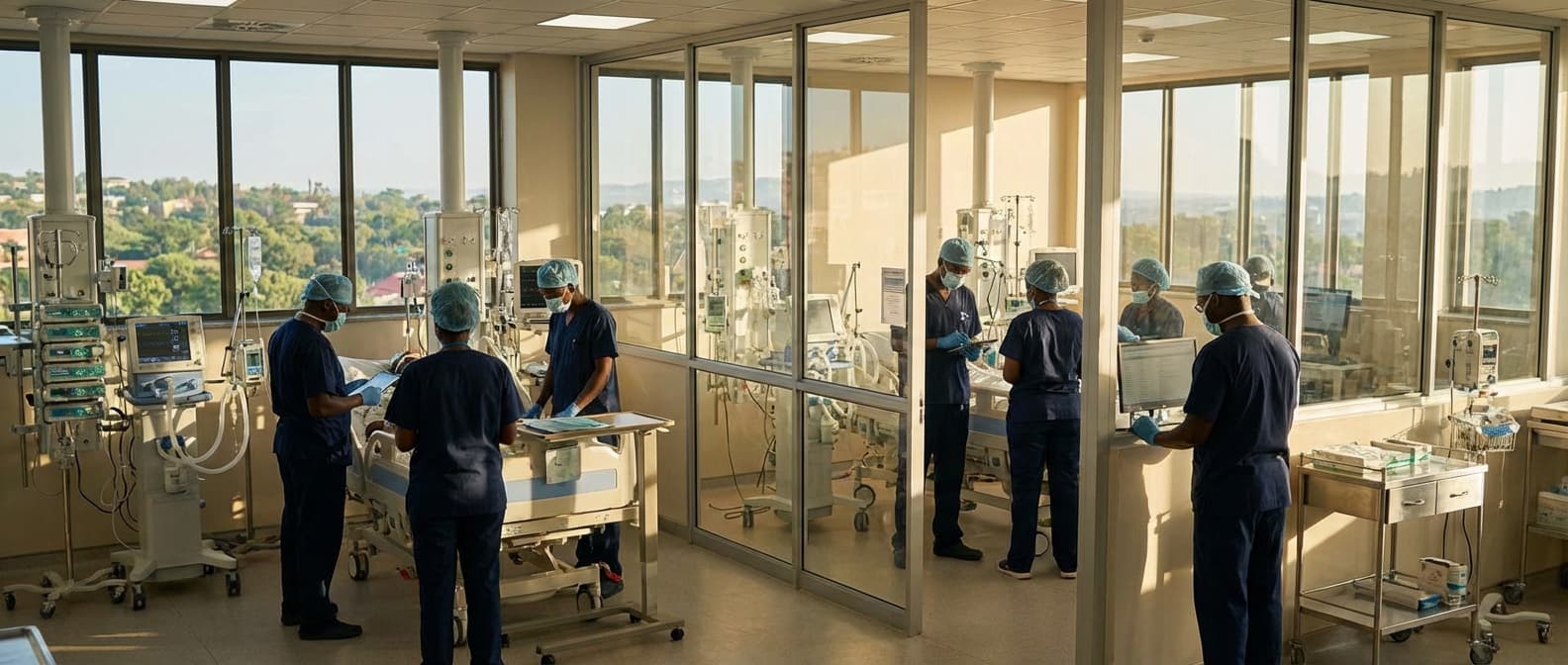
Ventilator Fleet Management & PM in Mozambique
Engineering Excellence & Technical Support
Preventive maintenance and fleet management for ICU ventilators High-standard technical execution following OEM protocols and local regulatory frameworks.
Real-time Ventilator Uptime Monitoring
Implement a real-time dashboard for remote monitoring of ventilator operational status across all healthcare facilities in Mozambique. This allows for immediate identification of equipment downtime, proactive maintenance scheduling, and optimized resource allocation, ensuring maximum availability for critical patient care.
Predictive Maintenance for Critical Equipment
Leverage historical data and AI algorithms to predict potential ventilator failures before they occur. This proactive approach shifts from reactive repairs to scheduled maintenance, minimizing unplanned downtime, extending equipment lifespan, and reducing the overall cost of ownership for the national ventilator fleet.
Geospatial Fleet Tracking & Optimized Logistics
Utilize GPS tracking and geospatial analytics to map the location of every ventilator in Mozambique. This enables efficient deployment, rapid response for maintenance and repairs in remote areas, and informed decision-making for fleet redistribution based on regional healthcare needs and demand patterns.
What Is Ventilator Fleet Management & Pm In Mozambique?
Ventilator Fleet Management & Preventative Maintenance (PM) in Mozambique refers to the comprehensive lifecycle management of mechanical ventilators within healthcare facilities. This service encompasses a suite of activities designed to ensure the optimal operational status, safety, and longevity of these critical medical devices. It involves not only routine maintenance and repair but also strategic planning for procurement, deployment, tracking, calibration, and eventual decommissioning of the ventilator fleet. The objective is to guarantee that ventilators are consistently available, properly functioning, and meeting clinical demands, particularly in resource-constrained environments where specialized technical expertise and spare parts may be limited. This is crucial for supporting patients requiring mechanical respiratory support, thereby improving patient outcomes and healthcare system resilience.
| Aspect | Description | Relevance in Mozambique |
|---|---|---|
| Definition | The systematic oversight and maintenance of a collection of mechanical ventilators throughout their operational lifespan. | Ensures critical respiratory support is consistently available, particularly vital in areas with intermittent power and limited access to specialized technicians. |
| Who Needs It | Healthcare facilities, including public hospitals, private clinics, intensive care units (ICUs), emergency departments, and potentially mobile medical units. | Essential for any facility where mechanical ventilation is a standard of care. Mozambique's healthcare infrastructure, with its varying levels of resources, necessitates robust management of such vital equipment. |
| Typical Use Cases |
|
|
Key Components of Ventilator Fleet Management & PM in Mozambique
- Inventory Management and Asset Tracking
- Preventative Maintenance Scheduling and Execution
- Corrective Maintenance and Repair
- Calibration and Performance Verification
- User Training and Competency Assessment
- Spare Parts Management and Logistics
- Regulatory Compliance and Documentation
- Decommissioning and Disposal Planning
- Data Analysis and Reporting for Performance Optimization
Who Needs Ventilator Fleet Management & Pm In Mozambique?
Ventilator fleet management and Preventive Maintenance (PM) are critical for ensuring the reliable operation of essential medical equipment in healthcare facilities. In Mozambique, a country with a growing healthcare sector and a commitment to improving patient care, these services are particularly vital. The need extends beyond just having ventilators; it's about ensuring they are always in optimal working condition, readily available, and cost-effectively maintained. This prevents critical equipment failures during patient care, reduces downtime, extends equipment lifespan, and ultimately contributes to better health outcomes for the Mozambican population. Effective fleet management also optimizes resource allocation, training, and inventory of spare parts, making it a strategic imperative for the nation's health infrastructure.
| Customer Type | Key Departments/Stakeholders Involved | Specific Needs/Benefits |
|---|---|---|
| Public Hospitals | Biomedical Engineering Department, Critical Care Units (ICU, NICU), Respiratory Therapy Departments, Procurement Department, Hospital Administration | Ensuring patient safety and continuity of care, reducing emergency repair costs, optimizing equipment utilization, compliance with maintenance standards, extending equipment lifespan, improved budget predictability. |
| Private Hospitals and Clinics | Biomedical Department (if present), Clinical Operations, Procurement, Finance Department | Maintaining reputation for quality care, competitive advantage through reliable equipment, efficient resource management, minimizing operational disruptions, return on investment on capital equipment. |
| NGOs with Healthcare Facilities | Program Managers, Clinical Leads, Logistics & Procurement, Maintenance Staff (if available) | Ensuring effective delivery of healthcare services in their project areas, maximizing impact of donated or purchased equipment, sustainable operation of facilities, capacity building for local staff. |
| Military and Police Healthcare Services | Medical Corps, Logistics Departments, Maintenance Units | Readiness of medical units for deployment and in-garrison care, specialized maintenance requirements, cost-effective management of a dedicated fleet, operational continuity. |
| Medical Equipment Suppliers & Distributors | Service & Maintenance Departments, Sales & Marketing, Technical Support | Offering comprehensive service packages to clients, generating recurring revenue, building customer loyalty, ensuring brand reputation for after-sales support, specialized technical expertise. |
| Ministry of Health (Central & Regional) | Department of Health Infrastructure, Planning & Human Resources, Procurement & Supplies, Public Health Programs | Developing national healthcare standards, ensuring equitable access to functioning medical equipment, overseeing public health infrastructure, informed decision-making for future investments, national emergency preparedness (e.g., pandemics). |
Target Customers and Departments in Mozambique for Ventilator Fleet Management & PM
- Public Hospitals (National, Provincial, and District)
- Private Hospitals and Clinics
- Non-Governmental Organizations (NGOs) operating healthcare facilities
- Military and Police Healthcare Services
- Medical Equipment Suppliers and Distributors (as service providers)
- Ministry of Health (central and regional levels)
Ventilator Fleet Management & Pm Process In Mozambique
This document outlines the workflow for ventilator fleet management and preventative maintenance (PM) processes in Mozambique, covering the journey from initial inquiry to the successful execution of services. The objective is to ensure the optimal functionality and longevity of the ventilator fleet, thereby supporting critical healthcare services. This process emphasizes clear communication, timely intervention, and meticulous record-keeping.
| Phase | Key Activities | Responsible Parties | Inputs | Outputs | Key Considerations |
|---|---|---|---|---|---|
| Receive inquiry regarding ventilator status, PM needs, or reported malfunctions. Conduct initial assessment of the reported issue or request. Gather information on ventilator model, location, and current operational status. | Healthcare Facility Staff, Ministry of Health Representative, Biomedical Engineering Department | Urgent communication (phone, email, official letter), facility reports, incident logs | Service request/ticket, preliminary assessment report, identified equipment details | Urgency of the request, potential impact on patient care, availability of existing data. |
| Categorize requests based on urgency (e.g., critical malfunction, scheduled PM, general inquiry). Develop a prioritized schedule for service delivery. Communicate schedule to relevant stakeholders. | Biomedical Engineering Department, Ministry of Health Representative | Service request/ticket, equipment criticality assessment, existing maintenance schedule | Prioritized work order, confirmed service schedule | Availability of technicians, geographical location of facilities, spare parts availability. |
| Identify and allocate necessary personnel (technicians, engineers). Procure required spare parts, consumables, and specialized tools. Arrange for transportation of personnel and equipment. | Biomedical Engineering Department, Procurement Department | Prioritized work order, list of required parts/tools, technician availability | Assigned technician(s), confirmed spare parts/tools, logistics plan | Budget constraints, lead times for parts, geographical accessibility. |
| Perform scheduled PM as per manufacturer's guidelines and established protocols. Clean, inspect, calibrate, and test all ventilator components. Replace worn-out parts and consumables during PM. | Biomedical Engineering Technicians/Engineers | Work order, PM checklist, manufacturer's service manual, testing equipment | Completed PM checklist, updated service log, functional ventilator | Adherence to safety protocols, quality of work, thoroughness of inspection. |
| Diagnose and troubleshoot reported malfunctions. Repair or replace faulty components. Perform necessary adjustments and calibrations. | Biomedical Engineering Technicians/Engineers | Work order, diagnostic tools, spare parts, service manual | Repaired ventilator, updated service log, functional ventilator | Root cause analysis, efficiency of repair, availability of specialized diagnostic tools. |
| Conduct comprehensive functional tests to ensure the ventilator meets all performance specifications. Validate proper operation under various simulated conditions. Obtain sign-off from facility representative. | Biomedical Engineering Technicians/Engineers, Healthcare Facility Representative | Functional ventilator, testing equipment, test protocols | Test reports, validated ventilator, signed-off work order | Accuracy of tests, reliability of results, confirmation of patient safety. |
| Record all maintenance activities (PM and CM) in the fleet management system. Generate detailed reports on completed services, encountered issues, and recommendations. Update inventory records for parts used. | Biomedical Engineering Department | Completed work orders, test reports, parts usage records | Updated service logs, maintenance reports, inventory adjustments | Completeness and accuracy of data, timely reporting, data security. |
| Monitor stock levels of critical spare parts and consumables. Initiate procurement requests for replenishment based on usage and projected needs. Maintain an organized inventory of spare parts. | Biomedical Engineering Department, Procurement Department | Inventory reports, usage data, procurement policies | Replenished stock, updated inventory records, procurement orders | Cost-effectiveness, supplier reliability, lead times for delivery. |
| Provide training to facility biomedical staff on basic troubleshooting, operation, and routine maintenance of ventilators. Conduct refresher courses and advanced training as needed. | Biomedical Engineering Department, External Trainers (if applicable) | Training curriculum, existing knowledge base, emerging technologies | Trained personnel, enhanced local capacity, improved first-line support | Relevance of training, effectiveness of delivery methods, ongoing skill development. |
| Analyze maintenance data, incident reports, and user feedback to identify trends and areas for improvement. Update PM protocols, procedures, and training materials. Implement lessons learned into future workflows. | Biomedical Engineering Department, Ministry of Health Representative | Performance data, feedback, audit findings | Revised protocols, improved efficiency, enhanced fleet reliability | Proactive approach, data-driven decision-making, adaptation to changing needs. |
Ventilator Fleet Management & PM Process Workflow
- Inquiry and Needs Assessment
- Prioritization and Scheduling
- Resource Allocation
- Preventative Maintenance (PM) Execution
- Corrective Maintenance (CM) Execution (if required)
- Testing and Validation
- Documentation and Reporting
- Inventory Management and Replenishment
- Training and Capacity Building
- Continuous Improvement
Ventilator Fleet Management & Pm Cost In Mozambique
Managing a ventilator fleet in Mozambique involves various cost factors that influence the overall pricing. These costs are dynamic and can be significantly impacted by local economic conditions, import duties, shipping, and the specific service provider's expertise. The primary goal of effective fleet management and preventative maintenance (PM) is to ensure optimal performance, extend equipment lifespan, and minimize downtime, all of which have direct financial implications.
Key Pricing Factors:
- Equipment Type & Age: Different ventilator models have varying PM requirements and associated costs. Older or more complex machines may require more specialized parts and labor, driving up expenses.
- Service Provider Expertise: Specialized biomedical engineering firms or manufacturers' authorized service centers typically command higher fees due to their certified technicians, genuine parts, and adherence to manufacturer protocols. Local general repair shops might offer lower prices but could compromise quality and warranty.
- Scope of Services: A comprehensive PM contract usually includes routine inspections, calibration, minor repairs, replacement of consumables (filters, batteries), and sometimes software updates. The extent of these services directly affects the price. Basic servicing will be cheaper than a full-service agreement.
- Frequency of PM: The recommended frequency of PM is dictated by the manufacturer and usage patterns. More frequent servicing naturally leads to higher annual costs.
- Availability of Spare Parts: The cost and availability of genuine spare parts in Mozambique are critical. If parts need to be imported, this adds significant lead time and expense due to customs duties, taxes, and international shipping.
- Geographic Location & Accessibility: The cost of sending technicians to remote or difficult-to-access healthcare facilities will be higher due to travel and accommodation expenses.
- Labor Costs: Local labor rates for trained biomedical technicians play a significant role in pricing. The availability of skilled personnel can also influence costs.
- Contractual Agreements: Long-term service contracts often offer better rates and predictable budgeting compared to ad-hoc service calls.
- Customs Duties and Taxes: For imported ventilators and spare parts, import duties, VAT, and other taxes levied by the Mozambican government directly impact the final cost.
- Currency Fluctuations: As with any imported goods or services, the Mozambican Metical (MZN) exchange rate against major currencies like the USD or EUR can significantly affect the cost of imported components and specialized services.
Pricing Ranges (Estimates in Mozambican Metical - MZN):
It's crucial to understand that these are estimated ranges and actual costs can vary significantly based on the factors listed above. It is highly recommended to obtain detailed quotes from multiple reputable service providers for accurate pricing.
| Service Type | Estimated Annual Cost (MZN) | Notes |
| :--------------------------- | :-------------------------- | :---------------------------------------------------------------------------------------------------------------------------------- |
| Basic PM Service (per unit) | 15,000 - 40,000 | Includes routine inspection, cleaning, calibration, and replacement of basic consumables for a standard adult ventilator. |
| Comprehensive PM (per unit) | 30,000 - 80,000 | Includes everything in basic PM plus more in-depth checks, battery replacement, and minor part replacements. |
| Extended Service Contract | 50,000 - 150,000+ | For high-end or specialized ventilators, or a service contract covering multiple PMs and minor repairs over a year. |
| Emergency Repair Call-out | 5,000 - 15,000 (per call) | Covers the technician's travel, diagnosis, and initial labor. Parts and major repairs are additional. |
| Critical Component Replacement | 10,000 - 100,000+ | Highly variable depending on the component (e.g., sensor, compressor, circuit board) and ventilator model. Cost of parts + labor. |
| Fleet Management Software | 10,000 - 50,000 (annual) | For larger fleets, specialized software for tracking PM schedules, service history, and inventory. Pricing can be subscription-based. |
Important Considerations:
- Negotiation: Don't hesitate to negotiate terms and pricing, especially for larger fleet contracts.
- Local vs. International Providers: While international providers may offer advanced expertise, local biomedical companies are often more cost-effective for routine maintenance and can provide faster response times for immediate issues.
- Training: Investing in in-house training for biomedical technicians can reduce reliance on external services for basic tasks, leading to long-term cost savings.
- Preventative vs. Reactive: Prioritizing preventative maintenance is significantly more cost-effective than dealing with unexpected breakdowns and emergency repairs.
| Service Type | Estimated Annual Cost (MZN) | Notes |
|---|---|---|
| Basic PM Service (per unit) | 15,000 - 40,000 | Includes routine inspection, cleaning, calibration, and replacement of basic consumables for a standard adult ventilator. |
| Comprehensive PM (per unit) | 30,000 - 80,000 | Includes everything in basic PM plus more in-depth checks, battery replacement, and minor part replacements. |
| Extended Service Contract | 50,000 - 150,000+ | For high-end or specialized ventilators, or a service contract covering multiple PMs and minor repairs over a year. |
| Emergency Repair Call-out | 5,000 - 15,000 (per call) | Covers the technician's travel, diagnosis, and initial labor. Parts and major repairs are additional. |
| Critical Component Replacement | 10,000 - 100,000+ | Highly variable depending on the component (e.g., sensor, compressor, circuit board) and ventilator model. Cost of parts + labor. |
| Fleet Management Software | 10,000 - 50,000 (annual) | For larger fleets, specialized software for tracking PM schedules, service history, and inventory. Pricing can be subscription-based. |
Key Factors Influencing Ventilator Fleet Management & PM Costs in Mozambique
- Equipment Type and Age
- Service Provider Expertise
- Scope of Services Offered
- Frequency of Preventative Maintenance
- Availability and Cost of Spare Parts
- Geographic Location and Accessibility
- Local Labor Costs
- Contractual Agreements
- Import Duties and Taxes
- Currency Exchange Rate Fluctuations
Affordable Ventilator Fleet Management & Pm Options
Maintaining a reliable and compliant ventilator fleet is crucial for patient care, but the costs associated with acquisition, maintenance, and eventual replacement can be substantial. Affordable ventilator fleet management and planned maintenance (PM) options are essential for healthcare facilities to optimize their resources. Value bundles and strategic cost-saving measures can significantly reduce the overall financial burden while ensuring equipment readiness and longevity. This document outlines key strategies and pricing models to achieve cost-effectiveness in ventilator fleet management.
| Value Bundle Type | Description | Potential Cost-Saving Strategies | Key Benefits |
|---|---|---|---|
| Comprehensive PM Package | Includes all scheduled preventive maintenance, calibrations, and basic performance verification for a set number of ventilators per year. | Negotiate multi-year contracts for price stability. Standardize PM procedures across ventilator models. Leverage in-house technicians for routine tasks where feasible. | Reduced risk of unexpected failures. Extended equipment lifespan. Predictable maintenance costs. Ensured regulatory compliance. |
| Full Service & Support Bundle | Combines comprehensive PM with guaranteed response times for corrective maintenance, including parts and labor. May also include loaner equipment. | Bulk purchasing of common replacement parts. Strategic repair locations to minimize travel time. Prioritized access to OEM-trained technicians. | Minimized downtime. Faster resolution of equipment issues. Reduced overall repair costs. Improved patient care continuity. |
| Lifecycle Management Solution | Encompasses acquisition consultation, PM, repairs, and end-of-life planning, often with financing or leasing options. | Lease vs. buy analysis to determine the most cost-effective acquisition method. Negotiate trade-in values for older equipment. Bundle purchase of new equipment with long-term service agreements. | Optimized capital expenditure. Access to the latest technology. Streamlined equipment replacement process. Reduced obsolescence risk. |
| Parts & Consumables Subscription | Guarantees availability and pricing for essential parts and consumables with a subscription model. | Bulk discounts on recurring orders. Just-in-time inventory management to reduce holding costs. Partnerships with multiple suppliers for competitive pricing. | Ensured availability of critical components. Price predictability for consumables. Reduced risk of stockouts. |
Key Components of Affordable Ventilator Fleet Management & PM Options
- Value Bundles: These are pre-packaged offerings that combine multiple services for a predictable cost, often at a discounted rate compared to purchasing services individually.
- Planned Maintenance (PM): Regular, scheduled inspections and servicing of ventilators to ensure optimal performance, identify potential issues early, and prevent costly breakdowns.
- Corrective Maintenance: Repairs undertaken when a ventilator malfunctions or requires fixing.
- Calibration & Performance Verification: Ensuring ventilators meet manufacturer specifications and regulatory requirements.
- Parts & Consumables Management: Strategic sourcing and inventory control of essential parts and disposable items.
- Equipment Lifecycle Management: Planning for acquisition, deployment, maintenance, and eventual disposal or replacement of ventilators.
- Remote Monitoring & Diagnostics: Leveraging technology to monitor ventilator status and identify potential issues proactively.
- Training & Competency: Ensuring clinical and biomedical staff are adequately trained to operate and maintain the equipment.
- Regulatory Compliance: Adhering to all relevant healthcare regulations and standards for medical equipment.
- Reporting & Analytics: Utilizing data to track performance, identify trends, and inform future fleet management decisions.
Verified Providers In Mozambique
In Mozambique's evolving healthcare landscape, the identification and trust in healthcare providers are paramount. 'Verified Providers' signifies a commitment to quality, ethical practice, and patient safety. Franance Health stands at the forefront of this movement, distinguishing itself through rigorous credentialing processes and an unwavering dedication to excellence. This commitment makes Franance Health the superior choice for individuals seeking reliable and high-quality medical services in Mozambique.
| Provider Qualification | Franance Health Verification Step | Significance for Patients |
|---|---|---|
| Medical License | Verification with Mozambican Ministry of Health/relevant regulatory bodies | Ensures provider is legally authorized to practice medicine. |
| Academic Degrees & Certifications | Cross-referencing with issuing institutions and official transcripts | Confirms the foundational knowledge and specialized training of the provider. |
| Professional Experience | Background checks and reference verification from previous employers/colleagues | Assesses practical application of skills and professional history. |
| Ethical Conduct & Disciplinary Record | Checks with professional boards and reputation inquiries | Guarantees a commitment to patient safety and ethical practice, free from malpractice concerns. |
| Specialized Training & Competencies | Review of certificates, workshops, and continuous professional development records | Ensures providers possess the specific skills needed for specialized treatments and procedures. |
Why Franance Health is the Premier Choice for Verified Providers in Mozambique:
- Rigorous Credentialing Process: Franance Health employs a multi-faceted approach to vetting its healthcare professionals. This includes verifying medical licenses, academic qualifications, professional experience, and checking for any disciplinary actions.
- Commitment to Ethical Standards: Beyond technical expertise, Franance Health prioritizes providers who adhere to the highest ethical principles, ensuring patient well-being and confidentiality are always paramount.
- Continuous Professional Development: We encourage and support our network of providers in ongoing learning and skill enhancement, ensuring they remain at the cutting edge of medical advancements.
- Patient-Centric Approach: Franance Health providers are selected for their dedication to compassionate and individualized patient care, fostering trust and a positive healthcare experience.
- Accessibility and Transparency: Our platform aims to make verified healthcare information readily accessible, empowering patients to make informed decisions about their health.
Scope Of Work For Ventilator Fleet Management & Pm
This Scope of Work (SOW) outlines the requirements for comprehensive ventilator fleet management and preventative maintenance (PM) services. The objective is to ensure optimal performance, safety, and compliance of all critical care ventilators within the healthcare facility. The services will encompass inventory management, calibration, scheduled PM, unscheduled repairs, and technical support, adhering to manufacturer specifications and regulatory standards.
| Deliverable | Description | Standard Specification/Requirement |
|---|---|---|
| Ventilator Inventory Database | A comprehensive, up-to-date database of all ventilators, including serial numbers, model numbers, location, purchase date, warranty status, and PM history. | Must be accessible to authorized personnel. Data to be updated within 2 business days of any change. |
| Scheduled Preventative Maintenance (PM) Plan | A detailed plan for PM based on manufacturer recommendations and current industry best practices. Includes cleaning, inspection, lubrication, functional testing, and part replacement. | PM frequency to align with manufacturer guidelines (e.g., annually or every 1000 operating hours). All PM checklists to be standardized and approved. |
| PM Completion Reports | Detailed reports for each completed PM service, documenting all procedures performed, parts replaced, test results, and any identified issues. | Reports to be submitted within 5 business days of PM completion. Include technician's signature and date. |
| Unscheduled Repair Service | Prompt response and repair for ventilator malfunctions or breakdowns. | Guaranteed response time (e.g., within 4 business hours for critical alerts, 8 business hours for non-critical issues). Use of OEM or equivalent parts only. |
| Repair Logs | Documentation of all unscheduled repairs, including date of incident, description of problem, troubleshooting steps, parts used, repair time, and technician's signature. | Logs to be maintained for the life of the equipment. Accessible for audit purposes. |
| Calibration Certificates | Certificates of calibration for all ventilators, confirming they meet manufacturer's performance specifications. | Calibration to be performed during PM or as needed. Certificates to include date of calibration, technician's name, and equipment ID. |
| Performance Verification Records | Records demonstrating that ventilators are functioning within acceptable performance parameters as per manufacturer specifications. | Verification to be performed during PM and after major repairs. Results to be logged and kept on file. |
| Technical Support Documentation | Access to technical support for troubleshooting, operational queries, and maintenance advice. | Support available during standard business hours (8 AM - 5 PM Local Time), with on-call support for emergencies. Response time for technical queries within 2 business hours. |
| Training Materials (if applicable) | Provision of training materials or sessions for facility biomedical staff on basic maintenance and troubleshooting. | Training to be delivered as per agreed schedule and scope. Materials to be comprehensive and easy to understand. |
| Compliance Reports | Reports demonstrating adherence to all relevant regulatory standards and accreditation requirements (e.g., TJC, FDA). | Reports to be generated quarterly or as required by regulatory bodies. Include summary of PM completion rates and compliance status. |
Key Services Included
- Ventilator Fleet Inventory and Asset Management
- Scheduled Preventative Maintenance (PM)
- Unscheduled Repairs and Troubleshooting
- Calibration and Performance Verification
- Documentation and Reporting
- Technical Support and Training
Service Level Agreement For Ventilator Fleet Management & Pm
This Service Level Agreement (SLA) outlines the terms and conditions for Ventilator Fleet Management and Preventative Maintenance (PM) services. It defines the expected response times for critical issues and establishes uptime guarantees to ensure the continuous availability of the ventilator fleet for patient care.
| Service Level | Description | Response Time Target | Uptime Guarantee |
|---|---|---|---|
| Critical Failure (Ventilator Unusable) | Ventilator failure that renders it unusable for patient care. Requires immediate attention. | 1 hour (from notification) | 98% Uptime (for any individual unit, averaged quarterly) |
| Major Malfunction (Performance Degradation) | Ventilator exhibits performance degradation impacting its intended function, but remains partially operational. | 4 hours (from notification) | 99% Uptime (for the fleet as a whole, averaged monthly) |
| Preventative Maintenance (Scheduled) | Routine scheduled maintenance as per manufacturer guidelines and established PM schedule. | As per agreed PM schedule (e.g., quarterly, annually) | N/A (Scheduled maintenance is planned downtime) |
| Routine Service Request (Non-Critical) | Requests for calibration, minor adjustments, or non-urgent repairs. | 8 business hours (from notification) | N/A |
Key Service Objectives
- Ensure the operational readiness of all ventilators within the fleet.
- Minimize equipment downtime through proactive maintenance and rapid response to failures.
- Maintain a high level of patient safety by adhering to strict performance standards.
- Provide transparent and timely reporting on fleet status and maintenance activities.
Frequently Asked Questions

Ready when you are
Let's scope your Ventilator Fleet Management & PM in Mozambique project in Mozambique.

Scaling healthcare logistics and technical systems across the entire continent.