
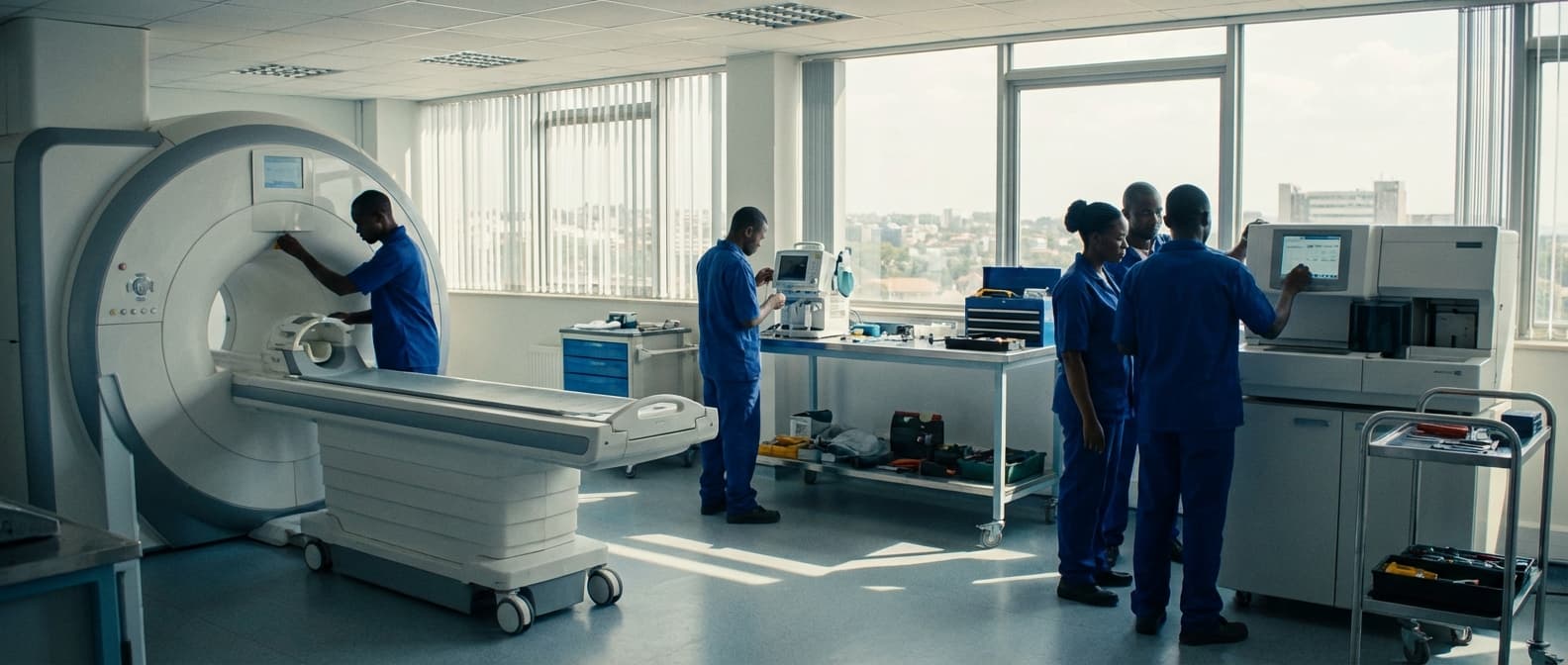
Uptime, Downtime & Root-Cause Analysis Reporting Service in Mozambique
Engineering Excellence & Technical Support
Uptime, Downtime & Root-Cause Analysis Reporting Service High-standard technical execution following OEM protocols and local regulatory frameworks.
Proactive Uptime Maximization
Leveraging advanced network monitoring and predictive analytics, our service in Mozambique ensures near-constant availability for your critical systems. We identify potential issues before they impact operations, guaranteeing maximum uptime and minimal disruption.
Rapid Downtime Resolution & Mitigation
In the event of an outage, our expert response team in Mozambique is equipped with real-time alerts and streamlined diagnostic tools. We prioritize swift identification and resolution, significantly reducing Mean Time To Recover (MTTR) and safeguarding your business continuity.
In-depth Root-Cause Analysis & Prevention
Beyond just fixing issues, our service provides comprehensive root-cause analysis (RCA) for all downtime incidents. We deliver detailed reports and actionable recommendations to prevent recurrence, enhancing the overall resilience and performance of your IT infrastructure in Mozambique.
What Is Uptime, Downtime & Root-cause Analysis Reporting Service In Mozambique?
In Mozambique, an Uptime, Downtime, and Root-Cause Analysis (RCA) Reporting Service is a critical offering designed to monitor, document, and systematically investigate the operational availability of IT infrastructure and business-critical systems. This service provides actionable insights to minimize service disruptions and enhance system resilience. Uptime refers to the period during which a system or service is operational and accessible to users. Downtime, conversely, represents any period where the system or service is unavailable or degraded, impacting business operations. RCA is the process of identifying the underlying cause of a recurring problem or an incident, aiming to prevent its recurrence. The reporting service encapsulates the collection, aggregation, and analysis of data related to these states, culminating in structured reports that detail incident frequency, duration, impact, and the root causes identified.
| Typical Use Cases | Description | Benefits Derived |
|---|---|---|
| Service Level Agreement (SLA) Compliance Monitoring | Tracking system uptime against contractual obligations, ensuring service providers meet agreed-upon availability metrics. | Avoidance of penalties, enhanced customer trust, and demonstrable performance. |
| Incident Management and Resolution | Documenting all incidents, their impact (e.g., financial loss, reputational damage), and the time taken for resolution. RCA identifies the fundamental reason for each incident. | Faster mean time to repair (MTTR), reduction in recurring incidents, and improved incident response procedures. |
| Performance Optimization and Capacity Planning | Analyzing trends in downtime and performance bottlenecks to inform infrastructure upgrades, resource allocation, and proactive maintenance. | Improved system efficiency, scalability, and preemptive avoidance of future performance issues. |
| Cost Reduction | Quantifying the financial impact of downtime to justify investments in infrastructure, redundancy, or preventative measures. | Informed budgetary decisions, optimized IT expenditure, and demonstrable ROI on infrastructure improvements. |
| Risk Management and Business Continuity | Identifying critical vulnerabilities and single points of failure through RCA to strengthen disaster recovery and business continuity plans. | Enhanced organizational resilience, reduced business interruption risk, and improved disaster preparedness. |
| Auditing and Compliance | Providing auditable records of system availability and incident management processes for regulatory or internal compliance requirements. | Demonstrated adherence to industry standards and regulatory mandates. |
Who Needs Uptime, Downtime & Root-Cause Analysis Reporting Service in Mozambique?
- Organizations in Mozambique heavily reliant on digital infrastructure, including but not limited to:
- Telecommunications Providers: For ensuring network availability and performance.
- Financial Institutions (Banks, Fintechs): Critical for transaction processing and customer service availability.
- Government Agencies: Essential for public service delivery and data integrity.
- E-commerce and Retail Businesses: To maintain online sales channels and customer access.
- Healthcare Providers: For patient record systems and operational continuity.
- Industrial and Manufacturing Companies: To monitor production lines and supply chain management systems.
- Cloud Service Providers and Data Centers: To guarantee service level agreements (SLAs) to their clients.
- Managed Service Providers (MSPs): To fulfill their contractual obligations to their clients.
- Any business experiencing regular or significant IT-related disruptions.
Who Needs Uptime, Downtime & Root-cause Analysis Reporting Service In Mozambique?
In Mozambique's developing economy, reliable infrastructure and operational efficiency are paramount for businesses to thrive and for essential services to reach citizens. Uptime, Downtime, and Root-Cause Analysis (RCA) reporting services are critical for identifying and rectifying issues that disrupt operations, lead to financial losses, and negatively impact customer satisfaction. These services are not a luxury but a necessity for organizations aiming for resilience, continuous improvement, and competitive advantage. Understanding the sources of disruption and implementing corrective actions ensures consistent service delivery and optimizes resource allocation. This is particularly vital in sectors that form the backbone of Mozambique's economy and public welfare.
| Sector | Key Systems Affected by Downtime | Impact of Downtime | RCA Focus Areas |
|---|---|---|---|
| Telecommunications | Cell towers, base stations, core network infrastructure, internet gateways | Service interruption, loss of revenue, customer churn, reputational damage | Network failures, equipment faults, power outages, configuration errors, human error |
| Financial Institutions | ATMs, online banking platforms, payment processing systems, core banking software | Transaction failures, inability to access funds, loss of customer trust, regulatory penalties | System crashes, network connectivity issues, security breaches, database failures, third-party service disruptions |
| Energy & Utilities | Power grids, water treatment plants, distribution networks | Blackouts, water shortages, economic disruption, public health crises | Equipment failure, grid overload, natural disasters, maintenance errors, cyber-attacks |
| Transportation & Logistics | Port operations, air traffic control, railway signaling, fleet management systems | Shipping delays, cargo spoilage, increased costs, supply chain disruptions | System outages, communication failures, infrastructure damage, weather events, human error |
| Government & Public Services | Citizen portals, e-government platforms, emergency communication systems | Inability to access services, administrative delays, compromised public safety | Server failures, software bugs, network issues, data corruption, security vulnerabilities |
| Mining & Extractive | Automated mining equipment, processing plants, communication systems | Production halts, safety hazards, significant financial losses | Mechanical failures, electrical faults, control system malfunctions, operational errors |
| Manufacturing | Production lines, robotic systems, SCADA systems, ERP systems | Production stoppages, product defects, missed deadlines, increased costs | Machine breakdowns, software glitches, power fluctuations, supply chain issues |
| Healthcare | Electronic Health Records (EHR), diagnostic imaging equipment, patient monitoring systems | Delayed diagnosis and treatment, compromised patient safety, data loss | System failures, network issues, equipment malfunctions, cybersecurity threats |
| Retail & E-commerce | Point-of-Sale (POS) systems, inventory management, e-commerce websites | Lost sales, inventory discrepancies, customer dissatisfaction | Server downtime, payment gateway failures, software bugs, internet connectivity issues |
Target Customers and Departments Requiring Uptime, Downtime & Root-Cause Analysis Reporting Service in Mozambique:
- {"title":"Telecommunications Companies","departments":["Network Operations Center (NOC)","Field Operations","Customer Support","IT Infrastructure"],"description":"Ensuring uninterrupted voice, data, and internet services. Downtime directly impacts revenue and customer loyalty. RCA helps pinpoint network failures, equipment malfunctions, or configuration errors."}
- {"title":"Financial Institutions (Banks, Microfinance)","departments":["IT Operations","Operations & Business Continuity","Risk Management","Branch Operations"],"description":"Critical for secure and continuous transaction processing, ATM availability, and online banking services. Downtime can lead to reputational damage and customer distrust."}
- {"title":"Energy and Utilities (Electricity, Water)","departments":["Operations & Maintenance","Grid Management","Customer Service","Asset Management"],"description":"Maintaining reliable supply is fundamental for economic activity and public health. RCA for power outages or water supply disruptions is vital for public safety and preventing widespread economic impact."}
- {"title":"Transportation and Logistics","departments":["Operations Management","Logistics Planning","IT Systems Management","Maintenance & Engineering"],"description":"Ensuring smooth operations of ports, airports, railways, and road freight. Delays due to system failures or infrastructure issues can cripple supply chains."}
- {"title":"Government and Public Services","departments":["IT Department","Service Delivery Units","Emergency Management Agencies","Administrative Offices"],"description":"Essential for maintaining citizen services, administrative processes, and emergency response systems. Downtime in these areas can have significant societal consequences."}
- {"title":"Mining and Extractive Industries","departments":["Operations","Maintenance & Reliability Engineering","Process Control","Safety & Health"],"description":"Reliable operation of heavy machinery, processing plants, and safety systems is crucial for productivity and worker safety. Unexpected downtime leads to significant production losses."}
- {"title":"Manufacturing and Industrial Companies","departments":["Production Management","Maintenance Department","Quality Control","Process Engineering"],"description":"Consistent production output depends on the uptime of machinery and automated systems. RCA helps identify and resolve bottlenecks and equipment failures."}
- {"title":"Healthcare Sector (Hospitals, Clinics)","departments":["IT Department","Biomedical Engineering","Clinical Operations","Administration"],"description":"Critical for patient care, diagnostic equipment, and electronic health records. Downtime can directly impact patient outcomes and life-saving procedures."}
- {"title":"Retail and E-commerce","departments":["IT Operations","Store Operations","E-commerce Management","Inventory Management"],"description":"Ensuring point-of-sale systems, inventory management, and online platforms are always available. Downtime leads to lost sales and customer frustration."}
Uptime, Downtime & Root-cause Analysis Reporting Service Process In Mozambique
This document outlines the standard workflow for the Uptime, Downtime & Root-Cause Analysis Reporting Service in Mozambique. This process is designed to provide a clear and efficient method for clients to request and receive comprehensive reports on their system's availability and the underlying causes of any disruptions.
| Stage | Description | Key Activities | Responsible Party | Deliverables | Timeline (Indicative) |
|---|---|---|---|---|---|
| The client initiates contact to understand or request the reporting service. | Client expresses interest, inquires about service scope, pricing, and terms. | Client | Initial inquiry, request for proposal (RFP) or service agreement. | 1-3 business days |
| Detailed understanding of the client's systems, assets, and reporting needs. | Discovery meetings, site visits (if applicable), identification of systems to monitor, definition of uptime/downtime metrics and reporting frequency. | Service Provider & Client | Signed Service Level Agreement (SLA), detailed scope of work, monitoring plan. | 3-7 business days |
| Actively collecting uptime and downtime data from defined systems. | Deployment of monitoring tools, configuration of alerts, continuous data streaming. | Service Provider | Raw monitoring data, historical performance logs. | Ongoing (post-setup) |
| Analyzing collected data to identify patterns, incidents, and their causes. | Reviewing monitoring logs, correlating events, interviewing relevant personnel, performing diagnostic tests, identifying contributing factors to downtime. | Service Provider | Identified incidents, preliminary root-cause hypotheses. | Per incident/reporting cycle (e.g., 2-5 business days) |
| Compiling findings into a comprehensive and accurate report. | Structuring the report with executive summary, detailed incident analysis, root-cause findings, impact assessment, and recommendations. Client review and validation of findings. | Service Provider & Client | Draft report, validated findings. | 3-5 business days |
| Formal delivery of the finalized report to the client. | Email delivery of the final report, scheduled presentation of findings to key stakeholders, Q&A session. | Service Provider | Finalized Uptime/Downtime & Root-Cause Analysis Report, presentation slides. | 1-2 business days |
| Assisting the client in understanding and acting upon the report's recommendations. | Answering post-report queries, providing further clarification, assisting in the development and implementation of remediation strategies (optional, depending on service agreement). | Service Provider & Client | Action plans, improved system stability (post-remediation). | As per client's needs |
Workflow Stages:
- Inquiry & Service Request
- Information Gathering & Scope Definition
- Data Collection & Monitoring
- Analysis & Root-Cause Identification
- Report Generation & Validation
- Report Delivery & Presentation
- Follow-up & Remediation Support
Uptime, Downtime & Root-cause Analysis Reporting Service Cost In Mozambique
This report outlines the typical cost factors and pricing ranges for Uptime, Downtime, and Root-Cause Analysis (RCA) reporting services in Mozambique. Accurate and timely reporting on system availability and the underlying causes of outages is crucial for businesses to maintain operational efficiency, customer satisfaction, and financial stability. The cost of these services can vary significantly based on several key factors.
Key Pricing Factors:
- Complexity of Infrastructure: The more intricate and diverse an organization's IT infrastructure (e.g., on-premises servers, cloud environments, hybrid setups, network devices, applications, databases), the more resources and expertise are required for comprehensive monitoring and analysis. This directly impacts reporting costs.
- Volume and Granularity of Data: The sheer amount of data generated by monitoring tools and the level of detail required in the reports (e.g., per-server uptime, application-specific performance metrics, granular transaction logs) will influence the processing and reporting effort, and thus the cost.
- Scope of Services: Whether the service includes just basic uptime/downtime reporting or extends to in-depth root-cause analysis, incident management integration, and proactive recommendations will affect pricing. RCA, in particular, demands specialized skills and tools.
- Frequency and Format of Reporting: The regularity of reports (daily, weekly, monthly) and the desired output format (dashboards, PDF documents, interactive web portals) will also play a role in the cost.
- Service Provider Expertise and Reputation: Highly experienced providers with proven track records in complex environments and a strong understanding of RCA methodologies typically command higher fees.
- Level of Automation vs. Manual Intervention: Services that rely heavily on automated reporting tools and analysis will generally be more cost-effective than those requiring significant manual intervention for data collection, correlation, and report generation.
- Service Level Agreements (SLAs): The stringency of the SLAs for reporting accuracy, timeliness, and responsiveness will impact the resources allocated by the provider and, consequently, the price.
- Customization Needs: Tailoring reports to specific business needs or integrating with existing internal systems can add to the overall cost.
- Geographic Location within Mozambique: While less of a primary driver than the technical factors, the operational costs of the service provider in specific regions of Mozambique might have a minor influence.
Pricing Ranges (in Mozambican Metical - MZN):
It's important to note that these are indicative ranges and actual quotes can vary widely. The market for specialized IT reporting and RCA services in Mozambique is still developing, and pricing can be influenced by local economic conditions and the availability of specialized skills.
For smaller businesses or simpler infrastructures, basic uptime/downtime reporting might be more accessible. For larger enterprises with complex systems and a need for detailed RCA, the investment will be considerably higher.
Note on Currency: All prices are quoted in Mozambican Metical (MZN).
| Service Level/Scope | Estimated Monthly Cost (MZN) | Description |
|---|---|---|
| Basic Uptime/Downtime Reporting (Small Business/Simple Infrastructure) | 2,000 - 8,000 MZN | Focuses on overall system availability, basic incident logging, and standard monthly reports. |
| Comprehensive Uptime/Downtime Reporting (Medium Business/Moderate Infrastructure) | 7,000 - 25,000 MZN | Includes detailed metrics per component, performance indicators, historical trend analysis, and weekly/monthly reports. May include initial incident investigation. |
| Basic Root-Cause Analysis (RCA) - Per Incident | 3,000 - 15,000 MZN (per incident) | Investigates a single incident to identify the direct cause. May be a fixed fee or hourly. |
| Integrated Uptime/Downtime with Proactive RCA (Large Business/Complex Infrastructure) | 20,000 - 80,000+ MZN | Continuous monitoring, advanced analytics, in-depth RCA for recurring issues, trend identification, recommendations for preventative measures, and real-time dashboards. Often includes dedicated support personnel. |
| Enterprise-Level RCA & Advanced Reporting | Negotiable (Potentially 100,000+ MZN) | Highly customized solutions for critical systems, deep forensic analysis, integration with ITIL processes, predictive analytics, and dedicated RCA teams. Pricing is highly dependent on the specific requirements and scope. |
Typical Pricing Factors for Uptime, Downtime & Root-Cause Analysis Reporting Services in Mozambique
- Complexity of IT Infrastructure
- Volume and Granularity of Data Collected
- Scope of Services (Basic Reporting vs. Advanced RCA)
- Frequency and Format of Reports
- Provider's Expertise and Reputation
- Degree of Automation in Reporting and Analysis
- Service Level Agreement (SLA) Requirements
- Customization and Integration Needs
- Provider's Operational Costs in Mozambique
Affordable Uptime, Downtime & Root-cause Analysis Reporting Service Options
Navigating the complexities of system uptime and downtime requires robust reporting and analysis. This service offers a range of solutions to help your organization proactively monitor performance, understand the root causes of outages, and optimize your IT infrastructure without breaking the bank. We provide flexible value bundles and cost-saving strategies to ensure you get the insights you need at a price that fits your budget.
| Value Bundle | Description | Key Features | Cost-Saving Strategies | Target Audience | Estimated Price Range (Monthly) |
|---|---|---|---|---|---|
| Essential Uptime Tracker | Basic monitoring and incident logging for small businesses or non-critical systems. | Uptime percentage reporting, incident timestamping, basic alert notifications. | Limited scope reduces feature overhead. Self-service portal for basic report generation. | Startups, small teams, internal tools. | $29 - $79 |
| Pro RCA Reporter | Includes advanced uptime monitoring and detailed root-cause analysis for critical applications. | Real-time uptime, detailed downtime reports, automated RCA investigation, historical trend analysis. | Bundled services offer a discount over individual feature subscriptions. Tiered support reduces direct intervention costs. | Growing businesses, mid-sized companies with critical applications. | $99 - $249 |
| Enterprise Performance Suite | Comprehensive monitoring, advanced RCA, predictive analytics, and dedicated support for large-scale, mission-critical infrastructures. | All features of Pro RCA Reporter plus predictive failure analysis, custom RCA workflows, dedicated account manager, SLA reporting. | Volume-based discounts. Proactive maintenance suggestions to minimize costly reactive fixes. Optimized resource allocation based on usage patterns. | Large enterprises, complex IT environments, organizations with high uptime requirements. | $399 - $999+ |
| Custom Solutions | Tailored packages designed to meet unique organizational needs and budgets. | Flexible selection of features based on specific requirements. | Pay only for what you need. Integration with existing tools to avoid redundant spending. Negotiated long-term contracts. | Organizations with unique challenges or specific budget constraints. | Varies based on customization |
Key Features & Benefits
- Comprehensive Uptime Monitoring: Real-time tracking of your critical systems and applications.
- Detailed Downtime Reports: Pinpointing the duration, impact, and affected services during outages.
- Root-Cause Analysis (RCA): In-depth investigation to identify the underlying triggers of incidents.
- Actionable Insights & Recommendations: Clear guidance on preventing future occurrences.
- Customizable Dashboards & Alerts: Tailored views and notifications to suit your specific needs.
- Scalable Solutions: Options for businesses of all sizes, from startups to enterprises.
- Cost-Effective Service Models: Transparent pricing with options to optimize your investment.
Verified Providers In Mozambique
In Mozambique's evolving healthcare landscape, identifying reliable and accredited health providers is paramount for ensuring quality care and patient safety. Franance Health stands out as a leading network of verified healthcare professionals and facilities. This document outlines their credentials and explains why they represent the best choice for your healthcare needs in Mozambique.
| Why Franance Health is the Best Choice | Key Benefits |
|---|---|
| Uncompromised Quality of Care: Franance Health's stringent verification processes guarantee that you will receive care from highly qualified and ethically sound medical professionals and well-equipped facilities. | Access to top-tier medical expertise, modern diagnostic capabilities, and effective treatment plans. |
| Peace of Mind and Trust: Knowing that your healthcare providers have been thoroughly vetted by a reputable organization like Franance Health provides invaluable peace of mind. | Reduced risk of encountering substandard care or unqualified practitioners. |
| Comprehensive Network: Whether you need a general practitioner, a specialist, or a fully equipped hospital, Franance Health offers a broad network to meet diverse healthcare needs. | Convenient access to a wide range of medical services under one trusted umbrella. |
| Patient-Centric Approach: The emphasis on patient feedback and continuous improvement ensures that Franance Health is dedicated to delivering a positive and effective patient experience. | A healthcare network that prioritizes your well-being and satisfaction. |
| Reliable Information: Franance Health provides a trustworthy source of information about healthcare providers, empowering you to make informed decisions. | Empowered decision-making based on verified credentials and transparent information. |
Franance Health Credentials and Verification Process
- Rigorous Accreditation Standards: Franance Health partners exclusively with healthcare institutions and individual practitioners who meet and exceed established national and international accreditation benchmarks. This includes adherence to clinical best practices, patient safety protocols, and ethical conduct.
- Licensing and Certification Verification: All medical professionals within the Franance Health network undergo thorough verification of their medical licenses, certifications, and ongoing professional development requirements mandated by Mozambican regulatory bodies.
- Facility Audits and Inspections: Partner facilities, including hospitals, clinics, and laboratories, are regularly audited to ensure compliance with hygiene standards, equipment maintenance, and the availability of essential medical supplies and technologies.
- Specialist Network: Franance Health maintains a comprehensive network of specialists across various medical disciplines, ensuring access to expert care for a wide range of health conditions.
- Patient Feedback Mechanisms: A robust system for collecting and analyzing patient feedback is in place. This allows Franance Health to continuously monitor service quality and address any areas for improvement.
- Commitment to Transparency: Franance Health is dedicated to providing patients with clear and accessible information about their providers, including qualifications, specializations, and facility accreditations.
Scope Of Work For Uptime, Downtime & Root-cause Analysis Reporting Service
This Scope of Work (SOW) outlines the services to be provided for Uptime, Downtime, and Root-Cause Analysis (RCA) Reporting. The objective is to deliver comprehensive and actionable insights into system availability, identify the causes of outages, and propose corrective actions to prevent recurrence.
| Technical Deliverable | Standard Specifications | Description | Frequency / Trigger |
|---|---|---|---|
| Uptime Report | 99.9% (or agreed SLA) | Details on system availability over a defined period, including service level agreement (SLA) adherence. Data presented by application, server, or service. | Monthly (or agreed cadence) |
| Downtime Incident Log | Timestamped entries with clear event details | Record of all identified downtime events, including start time, end time, duration, affected systems, and initial impact assessment. | Real-time (for active incidents), Post-incident summary |
| Downtime Summary Report | Categorized by cause and impact | Aggregated view of downtime events within a reporting period, highlighting trends, major incidents, and their business impact. | Monthly (or agreed cadence) |
| Root-Cause Analysis (RCA) Report | Standardized RCA template (e.g., 5 Whys, Fishbone Diagram) | Detailed investigation into the underlying cause of significant downtime incidents. Includes timeline of events, contributing factors, and identified vulnerabilities. | For critical incidents (e.g., > X minutes duration, or agreed severity level), within Y business days of incident resolution |
| Corrective Action Plan (CAP) | SMART (Specific, Measurable, Achievable, Relevant, Time-bound) actions | Proposed steps to address the root causes identified in the RCA, including assigned owners and target completion dates. Focus on preventing future occurrences. | Included within RCA Report |
| Action Item Tracking Report | Status updates (Open, In Progress, Completed, Deferred) | Progress report on the implementation of corrective actions from CAPs. Highlights any blockers or delays. | Bi-weekly or Monthly |
| Availability Dashboard | Real-time and historical data visualization | Interactive dashboard providing a visual overview of system uptime, recent downtime incidents, and key performance indicators (KPIs) related to availability. | Real-time (updated continuously), Historical views |
| Incident Trend Analysis Report | Statistical analysis and graphical representation | Analysis of recurring downtime incidents, identifying patterns, common causes, and areas requiring proactive attention. | Quarterly (or agreed cadence) |
Key Service Components
- Uptime Monitoring and Reporting
- Downtime Incident Management and Reporting
- Root-Cause Analysis (RCA) and Reporting
- Data Visualization and Dashboards
- Recommendations and Action Plans
Service Level Agreement For Uptime, Downtime & Root-cause Analysis Reporting Service
This Service Level Agreement (SLA) outlines the guaranteed uptime, acceptable downtime, and reporting procedures for the Root-Cause Analysis (RCA) Reporting Service provided by [Your Company Name] (hereinafter referred to as "Provider") to [Client Company Name] (hereinafter referred to as "Client"). This SLA aims to ensure the reliable availability and transparent communication regarding any service disruptions.
| Service Component | Uptime Guarantee (Monthly) | Maximum Permitted Downtime (Monthly) | Response Time (for Incidents) | RCA Report Delivery Time (after Incident Resolution) |
|---|---|---|---|---|
| RCA Reporting Service Availability | 99.9% | 43.8 minutes | 15 minutes (acknowledgment) | 24 business hours |
| RCA Report Accessibility (via client portal/email) | 99.9% | 43.8 minutes | N/A (reporting is a deliverable) | N/A (reporting is a deliverable) |
| Underlying infrastructure supporting RCA reporting | 99.9% | 43.8 minutes | 15 minutes (acknowledgment) | 24 business hours |
Key Definitions
- Service: The Root-Cause Analysis (RCA) Reporting Service, which includes the generation, delivery, and accessibility of RCA reports for identified incidents.
- Uptime: The percentage of time the RCA Reporting Service is operational and accessible to the Client.
- Downtime: The period during which the RCA Reporting Service is unavailable or significantly degraded, preventing the Client from accessing or utilizing its core functionalities.
- Scheduled Downtime: Planned downtime for maintenance, upgrades, or system enhancements, communicated in advance to the Client.
- Unscheduled Downtime: Unplanned downtime caused by unexpected technical issues, hardware failures, or external factors.
- Incident: Any event that causes a degradation or interruption of the RCA Reporting Service.
- Root-Cause Analysis (RCA): A systematic process for identifying the fundamental causes of an incident.
- RCA Report: A document detailing the incident, its impact, the identified root cause(s), and recommended corrective and preventative actions.
- Downtime Commitment (Uptime Guarantee): The minimum percentage of Uptime guaranteed by the Provider.
- Response Time: The maximum time allowed for the Provider to acknowledge and begin addressing a reported Incident.
- Resolution Time: The maximum time allowed for the Provider to resolve an Incident and restore full service functionality.
Frequently Asked Questions

Ready when you are
Let's scope your Uptime, Downtime & Root-Cause Analysis Reporting Service in Mozambique project in Mozambique.

Scaling healthcare logistics and technical systems across the entire continent.