
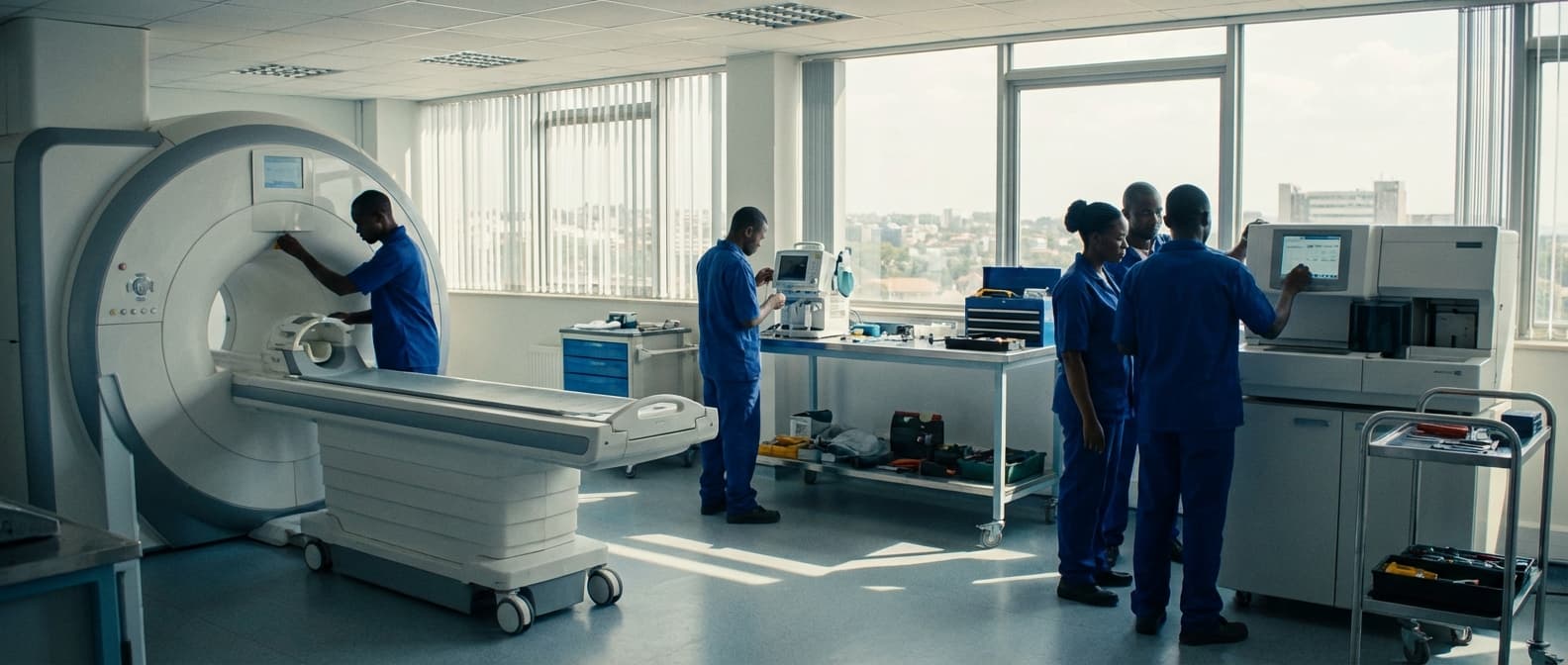
Comprehensive Maintenance Contract (CMC) Management Service (Parts & Labor) in Mozambique
Engineering Excellence & Technical Support
Comprehensive Maintenance Contract (CMC) Management Service (Parts & Labor) High-standard technical execution following OEM protocols and local regulatory frameworks.
Proactive Asset Preservation
Our CMC guarantees scheduled preventive maintenance for your critical assets, minimizing unexpected downtime and costly emergency repairs. We adhere to manufacturer-recommended schedules and utilize advanced diagnostic tools to identify potential issues before they escalate, ensuring optimal performance and extended equipment lifespan.
24/7 Emergency Support & Swift Resolution
In Mozambique's dynamic operational environment, rapid response is crucial. Our CMC includes 24/7 emergency support, ensuring our certified technicians are dispatched promptly to address any unforeseen breakdowns. We maintain a comprehensive inventory of critical spare parts locally, significantly reducing lead times and minimizing your operational disruption.
Predictable Budgeting & Cost Optimization
Move beyond unpredictable repair expenses. Our Comprehensive Maintenance Contract provides a fixed, predictable cost for both parts and labor, allowing for accurate financial planning and budget control. We leverage our extensive network and bulk purchasing power for parts, ensuring competitive pricing and maximizing your return on investment.
What Is Comprehensive Maintenance Contract (Cmc) Management Service (Parts & Labor) In Mozambique?
Comprehensive Maintenance Contract (CMC) Management Service (Parts & Labor) in Mozambique refers to a specialized service that oversees and administers full-scope maintenance agreements for assets, encompassing both the supply of necessary spare parts and the provision of skilled labor for repairs and preventive servicing. This service acts as a third-party intermediary or direct provider, ensuring that the terms and conditions of a CMC are met by all parties involved, thereby optimizing asset lifecycle management, minimizing downtime, and controlling operational costs. The service typically involves planning, scheduling, execution, quality assurance, and financial oversight of all maintenance activities covered under the contract. It aims to ensure that equipment functions at optimal performance levels throughout its operational lifespan, adhering to manufacturer specifications and industry best practices, while mitigating risks associated with unforeseen equipment failures and escalating repair expenditures.
| Who Needs CMC Management Service (Parts & Labor)? | Typical Use Cases | ||||||||
|---|---|---|---|---|---|---|---|---|---|
| Businesses with Critical Assets: Organizations in sectors like energy, mining, manufacturing, telecommunications, healthcare, and transportation that rely heavily on specialized machinery, IT infrastructure, or complex operational systems where downtime is costly. | Industrial Manufacturing Plants: Managing maintenance for production lines, CNC machines, heavy equipment, and automation systems to ensure continuous output and product quality. | Mining Operations: Overseeing the maintenance of excavators, haul trucks, processing equipment, and power generation systems in remote and demanding environments. | Energy Sector: Maintaining turbines, generators, transformers, substations, and renewable energy infrastructure (solar panels, wind turbines). | Telecommunication Providers: Managing the upkeep of base stations, data centers, network equipment, and fiber optic infrastructure. | Large-Scale Commercial Real Estate/Facilities Management: Maintaining HVAC systems, elevators, electrical infrastructure, and security systems in office buildings, shopping malls, and hotels. | Healthcare Institutions: Ensuring the operational readiness and compliance of medical equipment such as MRI scanners, X-ray machines, surgical instruments, and laboratory equipment. | Government and Public Infrastructure: Managing maintenance for public transportation fleets (buses, trains), water treatment plants, and municipal service vehicles. | Companies Operating in Remote or Challenging Environments: Where access to specialized parts and skilled labor is limited, requiring a robust and well-managed maintenance strategy. | Organizations Seeking to Outsource Maintenance Functions: To focus on core business operations and leverage external expertise for specialized maintenance needs. |
Key Components of CMC Management Service (Parts & Labor)
- Contractual Scrutiny and Negotiation: In-depth analysis and negotiation of CMC terms, including scope of work, response times, parts availability, labor rates, warranty clauses, and performance metrics.
- Asset Inventory and Classification: Development and maintenance of a comprehensive inventory of all assets covered under the CMC, categorizing them by type, criticality, age, and maintenance requirements.
- Preventive Maintenance Planning and Scheduling: Proactive scheduling and execution of routine inspections, servicing, lubrication, calibration, and minor repairs to prevent failures.
- Corrective Maintenance Management: Prompt response to equipment failures, including diagnosis, part sourcing, labor dispatch, and repair execution.
- Spare Parts Procurement and Inventory Management: Strategic sourcing of genuine and compatible spare parts, managing inventory levels to ensure availability while minimizing holding costs.
- Skilled Labor Deployment and Supervision: Engaging and managing qualified technicians and engineers, ensuring they possess the necessary expertise and certifications for specific asset types.
- Performance Monitoring and Reporting: Continuous tracking of asset performance, maintenance history, downtime, and costs, with regular reporting to stakeholders.
- Quality Assurance and Compliance: Ensuring all maintenance activities adhere to safety standards, regulatory requirements, and manufacturer recommendations.
- Risk Management and Mitigation: Identifying potential failure points, implementing proactive measures, and managing warranty claims and disputes.
- Budgeting and Cost Control: Developing maintenance budgets, tracking expenditures against allocated funds, and identifying opportunities for cost optimization.
- Technology Integration: Utilizing Computerized Maintenance Management Systems (CMMS) or similar platforms for efficient tracking, scheduling, and reporting.
Who Needs Comprehensive Maintenance Contract (Cmc) Management Service (Parts & Labor) In Mozambique?
In Mozambique, comprehensive Maintenance Contract Management (CMC) services, covering both parts and labor, are crucial for organizations that rely heavily on specialized equipment, machinery, and technology for their operations. These services ensure optimal performance, minimize downtime, and extend the lifespan of valuable assets, ultimately contributing to operational efficiency and profitability. Understanding who needs these services and which departments are most involved is key for providers and clients alike.
| Target Customer Segment | Specific Examples in Mozambique | Key Departments Involved |
|---|---|---|
Target Customers for CMC Management Service (Parts & Labor) in Mozambique
- {"title":"Major Industries","description":"Sectors with extensive and critical equipment requiring continuous operational readiness."}
- {"title":"Government & Public Sector Entities","description":"Organizations managing public infrastructure, essential services, and large-scale projects."}
- {"title":"Large Enterprises & Conglomerates","description":"Companies with diverse operations and significant capital investments in machinery and technology."}
- {"title":"International Organizations & NGOs","description":"Entities operating in Mozambique with a need for reliable and well-maintained operational assets."}
- {"title":"Service Providers with Critical Infrastructure","description":"Businesses whose core service delivery depends on the functionality of specialized equipment."}
Comprehensive Maintenance Contract (Cmc) Management Service (Parts & Labor) Process In Mozambique
This document outlines the Comprehensive Maintenance Contract (CMC) Management Service (Parts & Labor) process for clients in Mozambique. It details the workflow from the initial inquiry stage through to the successful execution of maintenance services, ensuring transparency, efficiency, and client satisfaction.
| Stage | Description | Key Activities | Responsible Parties | Output/Deliverable |
|---|---|---|---|---|
| Inquiry & Needs Assessment | Client expresses interest and requirements are understood. | Initial contact, site visit (if necessary), requirement gathering. | Client, Service Provider Sales/Technical Team | Understanding of client's needs, preliminary scope definition. |
| Proposal Generation & Negotiation | A tailored maintenance plan and pricing are presented. | Costing, scope definition, proposal drafting, client discussions. | Service Provider Technical & Commercial Teams, Client | Formal service proposal, negotiated terms. |
| Contract Finalization & Signing | Legal agreement for CMC services is established. | Contract drafting, legal review, signature. | Client Legal/Procurement, Service Provider Legal/Management | Signed Comprehensive Maintenance Contract (CMC). |
| Asset Registration & Baseline Assessment | All covered equipment is documented and its initial state recorded. | Equipment inventory, serial number tracking, condition check. | Service Provider Technical Team | Equipment asset register, baseline condition report (optional). |
| Preventive Maintenance | Proactive maintenance to prevent failures. | Scheduled inspections, servicing, lubrication, minor part replacements. | Service Provider Technical Team | Completed preventive maintenance reports, service logs. |
| Corrective Maintenance | Reactive response to equipment issues. | Service request initiation, fault diagnosis, repair, part replacement. | Client, Service Provider Technical Team | Repaired equipment, detailed service/repair reports. |
| Spare Parts Management | Ensuring availability of necessary components. | Inventory management, procurement, stocking, logistics. | Service Provider Logistics & Technical Teams | Timely availability of spare parts. |
| Labor Management | Deployment of skilled personnel. | Technician scheduling, dispatch, task management, safety compliance. | Service Provider Technical Management | Qualified technicians performing services. |
| Service Reporting & Documentation | Record keeping and client communication. | Logging all activities, generating monthly/quarterly reports. | Service Provider Technical & Administrative Teams | Comprehensive service reports, maintenance history. |
| Performance Review & Contract Renewal | Evaluation of service delivery and future planning. | Data analysis, client feedback sessions, renewal discussions. | Service Provider Management, Client Management | Service performance evaluation, contract renewal/amendment. |
| Invoicing & Payment | Financial transaction for services rendered. | Invoice generation, submission, payment processing. | Service Provider Finance Team, Client Finance Team | Cleared invoices, payment reconciliation. |
| Continuous Improvement | Ongoing enhancement of the CMC process. | Process analysis, feedback incorporation, training. | Service Provider Management & Operations Teams | Optimized CMC management process. |
Key Stages of CMC Management Service
- 1. Inquiry & Needs Assessment: The process begins with a client expressing interest in CMC services. This involves understanding their specific equipment, operational environment, and desired maintenance coverage.
- 2. Proposal Generation & Negotiation: Based on the needs assessment, a detailed proposal is created, outlining the scope of services (preventive, corrective, emergency), included parts, labor coverage, response times, pricing, and contract duration. Negotiations may occur at this stage to finalize terms.
- 3. Contract Finalization & Signing: Once terms are agreed upon, a formal CMC agreement is drafted, clearly defining responsibilities, service level agreements (SLAs), payment schedules, and any exclusions. This document is then signed by both parties.
- 4. Asset Registration & Baseline Assessment: All equipment covered under the CMC is registered in the service management system. A baseline assessment of the equipment's current condition may be conducted to establish a starting point for maintenance.
- 5. Preventive Maintenance Scheduling & Execution: Regular, scheduled maintenance activities are planned and executed to prevent breakdowns. This includes inspections, lubrication, calibration, and replacement of wear-and-tear parts as per manufacturer recommendations.
- 6. Corrective Maintenance & Troubleshooting: In the event of equipment failure or malfunction, the client initiates a service request. The service provider dispatches qualified technicians to diagnose and repair the issue, utilizing spare parts as needed.
- 7. Spare Parts Management: A robust system for managing spare parts is crucial. This includes inventory management, procurement, stocking of common parts, and efficient logistics for obtaining specialized or out-of-stock items.
- 8. Labor Management: Skilled and certified technicians are assigned to perform maintenance and repair tasks. This involves scheduling, task allocation, performance monitoring, and ensuring adherence to safety protocols.
- 9. Service Reporting & Documentation: Detailed records are maintained for all maintenance activities, including date, time, technician, work performed, parts used, and resolution. Regular reports are provided to the client.
- 10. Performance Review & Contract Renewal: Periodic reviews of service performance are conducted, often aligned with contract milestones. This allows for feedback, identification of areas for improvement, and discussions regarding contract renewal or amendments.
- 11. Invoicing & Payment: Services rendered are invoiced according to the agreed-upon terms in the CMC. Prompt payment by the client is expected to ensure continuity of service.
- 12. Continuous Improvement: Feedback from clients and analysis of service data are used to continuously refine the CMC management process, enhancing efficiency and client satisfaction.
Comprehensive Maintenance Contract (Cmc) Management Service (Parts & Labor) Cost In Mozambique
Managing Comprehensive Maintenance Contracts (CMCs) for parts and labor in Mozambique involves a range of costs influenced by several key factors. These contracts are crucial for ensuring the operational longevity and reliability of various equipment, from industrial machinery and vehicles to IT infrastructure and medical devices. The pricing structure is not standardized and depends heavily on the specific type of equipment, its age and condition, the service provider's expertise and reputation, the geographical location within Mozambique, and the agreed-upon service levels.
| Equipment Category | Typical Annual CMC Cost Range (MZN) | Notes |
|---|---|---|
| Small Office Equipment (Printers, Copiers) | 15,000 - 40,000 | Primarily labor and common consumables; part replacement might be separate or limited. |
| Standard Vehicles (Light Commercial) | 30,000 - 90,000 | Includes scheduled maintenance, some part replacements (filters, brake pads), and labor. Major component failures usually extra. |
| Medium-Duty Industrial Machinery (e.g., small generators, pumps) | 50,000 - 250,000 | Covers routine servicing, scheduled part replacements, and labor. Might have limits on higher-value parts. |
| Heavy Industrial Machinery (e.g., large generators, construction equipment) | 150,000 - 750,000+ | Can be significantly higher for complex, high-value equipment. Often tailored contracts with extensive part coverage and rapid response SLAs. |
| IT Infrastructure (Servers, Networking Equipment) | 40,000 - 300,000+ | Varies based on criticality, number of units, and response time. Often bundled with software support. |
| Medical Equipment (Diagnostic tools, basic laboratory equipment) | 60,000 - 350,000+ | High precision and regulatory compliance add to costs. Specialized parts can be expensive. |
| Fleet Management (Multiple vehicles, e.g., logistics company) | Variable (per vehicle basis) | Negotiated based on volume, vehicle type, mileage, and service intensity. Can be highly cost-effective. |
Key Pricing Factors for CMC Management Services in Mozambique:
- {"title":"Type and Complexity of Equipment","description":"More complex machinery with specialized parts and intricate systems (e.g., large-scale industrial generators, advanced medical imaging equipment) will inherently command higher CMC costs than simpler equipment (e.g., office printers, standard vehicles). The availability and cost of specific replacement parts are significant drivers. For example, importing specialized parts for mining or energy sector equipment will add to the overall expense."}
- {"title":"Age and Condition of Equipment","description":"Older equipment, or equipment in poor condition, typically requires more frequent maintenance, a higher likelihood of unexpected repairs, and the potential need for more extensive part replacements. This increases the risk for the service provider and, consequently, the CMC price. Proactive maintenance on well-maintained equipment can be more cost-effective in the long run."}
- {"title":"Scope of Services (Parts & Labor)","description":"The comprehensiveness of the contract is a major determinant. A contract covering 100% of parts (both planned and unplanned replacements) and labor (including routine checks, emergency call-outs, and on-site diagnostics) will be priced higher than one with limitations on part coverage or response times. Service Level Agreements (SLAs) detailing guaranteed response times, uptime percentages, and preventive maintenance schedules also influence cost."}
- {"title":"Geographical Location and Accessibility","description":"Mozambique's vastness and varying infrastructure levels mean that remote locations or areas with poor transportation networks will incur higher logistical costs for service technicians and parts delivery. This will be reflected in the CMC pricing. Urban centers like Maputo, Matola, and Beira might have slightly lower costs due to better accessibility and a larger pool of service providers."}
- {"title":"Service Provider's Reputation and Expertise","description":"Established service providers with a proven track record, certified technicians, and access to genuine or high-quality spare parts can command higher prices. Their expertise in specific equipment types and their ability to offer value-added services (like training or technical advice) can justify a premium."}
- {"title":"Frequency and Type of Maintenance","description":"Contracts emphasizing regular preventive maintenance are often more cost-effective than those focused solely on reactive repairs. The frequency of planned maintenance visits (e.g., monthly, quarterly, annually) and the specific tasks involved will impact the labor component of the cost."}
- {"title":"Contract Duration","description":"Longer-term CMC contracts may offer slight discounts compared to shorter ones, as they provide the service provider with predictable revenue and allow for better resource planning. Conversely, very short-term or ad-hoc maintenance agreements will typically be more expensive on a per-service basis."}
- {"title":"Importation and Taxation","description":"The cost of imported spare parts, coupled with import duties, taxes, and currency exchange rates (Metical - MZN), significantly impacts the overall CMC price. Fluctuations in these can introduce variability."}
Affordable Comprehensive Maintenance Contract (Cmc) Management Service (Parts & Labor) Options
Our Affordable Comprehensive Maintenance Contract (CMC) Management Service provides robust solutions for ensuring your equipment operates at peak performance without breaking the bank. We offer flexible value bundles and implement strategic cost-saving measures to deliver maximum value. This service covers both parts and labor, ensuring a hassle-free and predictable maintenance experience.
| Value Bundle Tier | Key Inclusions | Ideal For | Estimated Price Range (Illustrative) |
|---|---|---|---|
| Bronze Basic | Annual preventative maintenance, priority on-site response, labor coverage for standard repairs. | Businesses with standard operational needs and predictable equipment usage. | $X - $Y per unit/year |
| Silver Standard | Includes Bronze features, plus coverage for select wear-and-tear parts, expedited parts ordering. | Growing businesses requiring more comprehensive protection and reduced risk of minor part failures. | $Y - $Z per unit/year |
| Gold Premium | Includes Silver features, plus full parts and labor coverage (including major component failures), remote diagnostics, dedicated account manager. | High-demand operations, critical equipment, and businesses prioritizing maximum uptime and minimal risk. | $Z - $A per unit/year |
Key Features and Benefits
- All-Inclusive Coverage: Our CMC encompasses all necessary parts and skilled labor for routine maintenance, repairs, and emergency interventions.
- Proactive Maintenance Scheduling: We proactively schedule maintenance to prevent unexpected breakdowns and costly emergency repairs.
- 24/7/365 Support: Access to our expert technicians and support team is available around the clock, minimizing downtime.
- Extended Equipment Lifespan: Regular and proper maintenance significantly prolongs the operational life of your assets.
- Predictable Budgeting: Fixed contract costs eliminate unexpected expenditures, allowing for accurate financial planning.
- Reduced Downtime: Efficient troubleshooting and prompt repairs minimize operational disruptions.
- Access to Genuine Parts: We utilize high-quality, genuine replacement parts to ensure optimal performance and longevity.
- Skilled & Certified Technicians: Our team comprises experienced and certified professionals with expertise across various equipment types.
Verified Providers In Mozambique
Finding trustworthy healthcare providers is paramount for both residents and visitors in Mozambique. Franance Health has established itself as a leading entity in verifying and credentialing healthcare professionals and facilities across the nation. Their rigorous vetting process ensures that individuals seeking medical attention can do so with confidence, knowing they are engaging with qualified and ethical practitioners. This dedication to quality and transparency makes Franance Health credentials a hallmark of excellence in the Mozambican healthcare landscape.
| Credential Type | Verification Standard | Patient Benefit |
|---|---|---|
| Certified Medical Doctor | Verified medical license, extensive clinical experience, positive peer reviews | Access to accurate diagnosis and effective treatment from a qualified professional. |
| Accredited Healthcare Facility | Adherence to national and international healthcare standards, proper equipment, qualified staff | Receiving care in a safe, well-equipped, and professionally managed environment. |
| Specialized Practitioner Certification | Demonstrated expertise and advanced training in a specific medical field | Receiving specialized care from a highly skilled expert for complex medical needs. |
Why Franance Health Credentials Represent the Best Choice:
- Rigorous Verification Process: Franance Health employs a comprehensive evaluation of medical licenses, educational qualifications, professional experience, and ethical standing of healthcare providers.
- Commitment to Patient Safety: Their certification directly contributes to enhanced patient safety by identifying providers who meet the highest standards of care and practice.
- Enhanced Trust and Transparency: Franance Health credentials provide a clear and reliable indicator of a provider's legitimacy, fostering greater trust between patients and healthcare professionals.
- Access to Quality Healthcare: By associating with Franance Health, patients can be assured of accessing a network of competent and reliable medical services.
- Continuous Monitoring and Re-evaluation: The verification process isn't a one-time event; Franance Health often includes mechanisms for ongoing monitoring to ensure continued adherence to their standards.
Scope Of Work For Comprehensive Maintenance Contract (Cmc) Management Service (Parts & Labor)
This Scope of Work (SOW) outlines the requirements for a Comprehensive Maintenance Contract (CMC) Management Service, encompassing both parts and labor. The service aims to ensure the optimal functioning, reliability, and longevity of all specified equipment through proactive and reactive maintenance activities. This SOW details the technical deliverables and standard specifications expected from the service provider.
| Section | Description | Technical Deliverables | Standard Specifications |
|---|---|---|---|
| Scheduled inspections, preventive maintenance tasks, lubrication, calibration, and cleaning to avert failures. |
|
|
| Prompt response to equipment failures, troubleshooting, diagnosis, and repair to restore functionality. |
|
|
| Procurement, stocking, inventory management, and utilization of spare parts for both proactive and reactive maintenance. |
|
|
| Providing expert advice, troubleshooting assistance, and recommendations for equipment upgrades and modifications. |
|
|
| Regular reporting on maintenance activities, equipment status, costs, and performance metrics. |
|
|
| Ensuring that all maintenance personnel are adequately trained, certified, and adhere to safety protocols. |
|
|
| Defining measurable performance standards for all aspects of the CMC management service. |
|
|
Key Objectives of CMC Management Service
- Minimize equipment downtime and associated production losses.
- Ensure compliance with all relevant safety and regulatory standards.
- Optimize equipment performance and efficiency.
- Control maintenance costs through effective planning and execution.
- Extend the operational lifespan of equipment.
- Provide timely and efficient resolution of all maintenance issues.
Service Level Agreement For Comprehensive Maintenance Contract (Cmc) Management Service (Parts & Labor)
This Service Level Agreement (SLA) outlines the response times and uptime guarantees for the Comprehensive Maintenance Contract (CMC) Management Service, which includes both parts and labor for the covered equipment. The objective of this SLA is to ensure minimal downtime and efficient resolution of maintenance issues, thereby maximizing the operational availability of the client's assets.
| Service Type | Priority Level | Response Time (Business Hours) | Uptime Guarantee (Annual) |
|---|---|---|---|
| Proactive Maintenance | Scheduled | N/A (scheduled in advance) | N/A (contributes to overall uptime) |
| Reactive Maintenance (Non-Emergency) | Standard | Within 4 Business Hours | 98.0% |
| Reactive Maintenance (Emergency) | Critical | Within 2 Business Hours | 99.5% |
| Parts Replacement (Standard) | Standard | Within 24 Business Hours (for diagnosis & order initiation) | N/A (contributes to overall uptime) |
| Parts Replacement (Expedited) | Critical | Within 8 Business Hours (for diagnosis & order initiation) | N/A (contributes to overall uptime) |
Scope of Services
- Proactive maintenance scheduling and execution.
- Reactive maintenance and repair services (including emergency calls).
- Procurement and replacement of necessary spare parts.
- On-site technical support and labor.
- Regular performance monitoring and reporting.
- Management of third-party maintenance providers (if applicable).
Frequently Asked Questions

Ready when you are
Let's scope your Comprehensive Maintenance Contract (CMC) Management Service (Parts & Labor) in Mozambique project in Mozambique.

Scaling healthcare logistics and technical systems across the entire continent.