
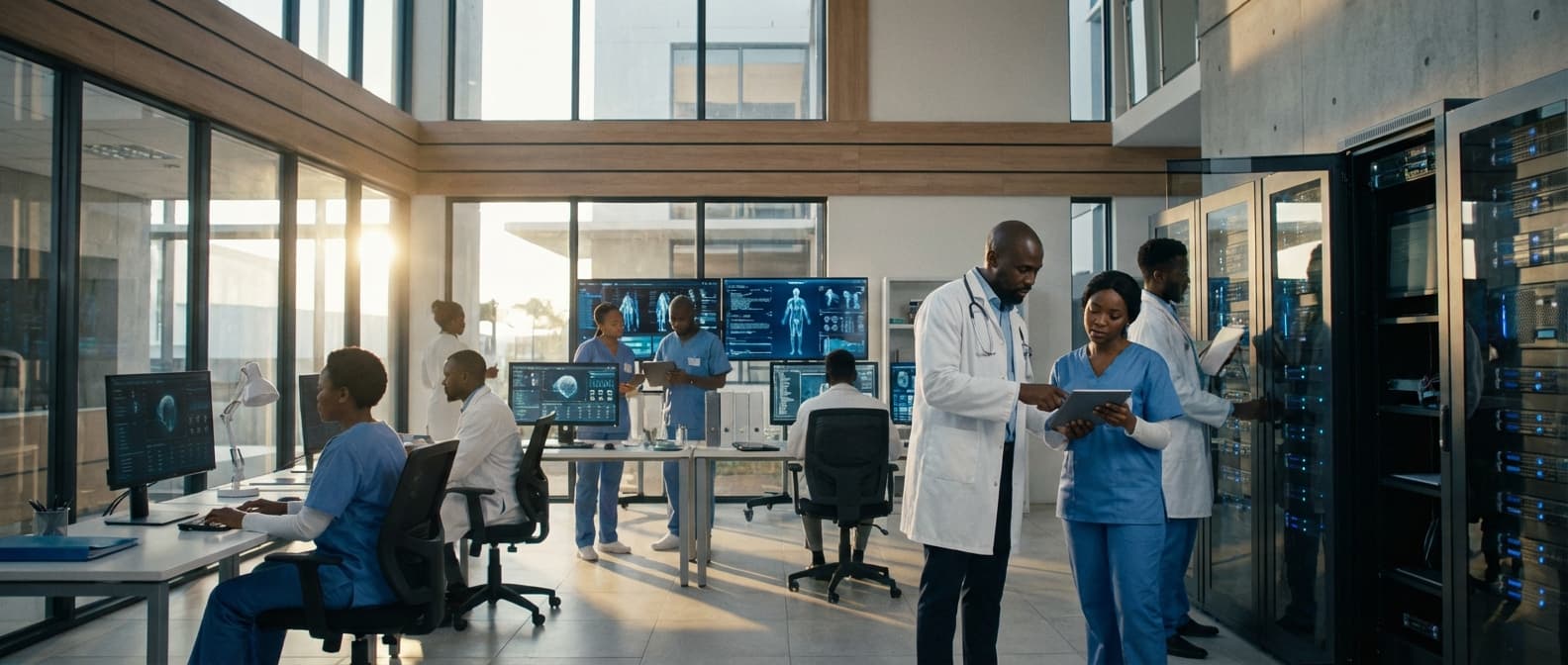
Tele-Radiology in Mozambique
Engineering Excellence & Technical Support
24/7 access to certified radiologists providing rapid, accurate remote interpretation of diagnostic imaging studies. High-standard technical execution following OEM protocols and local regulatory frameworks.
Remote Diagnostics Hub
Established a centralized tele-radiology hub powered by secure satellite and fiber optic networks, enabling seamless and rapid transmission of medical images from remote clinics to expert radiologists across Mozambique. This initiative significantly reduces turnaround times for diagnoses, even in underserved areas.
AI-Powered Triage & Analysis
Integrated advanced AI algorithms for preliminary image analysis and anomaly detection, assisting radiologists in prioritizing urgent cases and enhancing diagnostic accuracy. This AI augmentation specifically targets common pathologies prevalent in Mozambique, improving early detection and treatment initiation.
Virtual Training & Mentorship Platform
Developed a robust virtual platform for continuous professional development and mentorship of local radiology technicians and junior radiologists. This platform facilitates remote training sessions, case reviews, and collaborative learning, building essential local expertise and ensuring sustainable high-quality radiological services.
What Is Tele-radiology In Mozambique?
Tele-radiology in Mozambique refers to the remote interpretation of medical imaging studies (such as X-rays, CT scans, and MRIs) by qualified radiologists. This service leverages telecommunications technology to transmit radiological images and associated patient data from a healthcare facility in Mozambique to a radiologist located elsewhere, who then provides a diagnostic report. The primary objective is to overcome geographical barriers and shortages of specialized medical personnel, thereby improving access to timely and accurate radiological diagnoses for the Mozambican population.
| Target Population/Need | Typical Use Cases |
|---|---|
| Remote and underserved communities lacking on-site radiology expertise. | Primary screening of chest X-rays for tuberculosis (TB) diagnosis in remote clinics. |
| District hospitals with limited access to specialist radiologists. | Interpretation of trauma imaging (e.g., CT head scans) in emergency departments when a radiologist is unavailable. |
| Healthcare facilities in urban areas facing radiologist shortages or high caseloads. | Second opinions on complex imaging studies (e.g., advanced oncology imaging, neurological scans). |
| Patients requiring specialized radiological subspecialties not available locally. | Timely interpretation of mammograms for breast cancer screening. |
| Emergency medical services for rapid diagnostic assessment. | Stroke imaging interpretation for time-sensitive interventions. |
Key Components of Tele-radiology in Mozambique:
- Image Acquisition: Digital imaging modalities (DR, CT, MRI, Ultrasound) at local healthcare facilities.
- Image Transmission: Secure and reliable digital transmission of DICOM (Digital Imaging and Communications in Medicine) images and patient metadata over the internet or dedicated networks.
- Image Interpretation: A licensed radiologist, often located outside the originating facility or even outside the country, reviews the images using specialized PACS (Picture Archiving and Communication System) and teleradiology workstations.
- Reporting: The radiologist generates a diagnostic report, which is then securely transmitted back to the referring physician at the local facility.
- Communication: Mechanisms for communication between the referring clinician and the remote radiologist for clarification or further consultation.
Who Needs Tele-radiology In Mozambique?
Tele-radiology offers a critical solution to address the significant radiologist shortage and limited access to advanced imaging services in Mozambique. This technology enables remote interpretation of medical images by qualified radiologists, significantly improving diagnostic capabilities, especially in underserved areas. By connecting healthcare facilities to a network of expert radiologists, tele-radiology can bridge geographical barriers and enhance the quality and speed of patient care.
| Department/Specialty | Key Needs Addressed by Tele-Radiology | Examples of Image Interpretation |
|---|---|---|
| Radiology Departments | Overcoming radiologist scarcity, providing subspecialty expertise, reducing workload, improving turnaround times, enabling continuous service. | X-rays, CT scans, MRI scans, ultrasounds. |
| Emergency Departments | Rapid diagnosis of acute conditions (trauma, stroke, appendicitis), enabling timely treatment decisions, especially at night or on weekends. | Head CT for stroke/trauma, chest X-ray for pneumonia/pneumothorax, abdominal CT for appendicitis/bowel obstruction. |
| Surgical Departments | Pre-operative planning, post-operative assessment, diagnosis of surgical complications. | Post-operative CT scans to rule out complications, pre-operative MRI for complex orthopedic cases. |
| Internal Medicine/General Practice | Accurate diagnosis of a wide range of conditions, enabling evidence-based management, supporting referral decisions. | Chest X-rays for respiratory infections, abdominal ultrasounds for hepatobiliary or renal issues, plain films for musculoskeletal complaints. |
| Pediatric Departments | Diagnosis of congenital anomalies, childhood infections, and trauma in children, requiring specialized pediatric radiology interpretation. | Pediatric X-rays for fractures or respiratory issues, neonatal cranial ultrasounds, pediatric abdominal CT for masses. |
| Oncology Departments | Staging and monitoring of cancer, assessment of treatment response, identification of metastases. | CT and MRI for tumor staging and follow-up, PET-CT for treatment response evaluation. |
| Maternal and Child Health | Prenatal imaging, diagnosis of gynecological conditions, assessment of fetal well-being. | Obstetric ultrasounds for dating and anomaly scans, pelvic ultrasounds for gynecological pathology. |
Target Customers and Departments for Tele-Radiology in Mozambique
- Public Hospitals (Central, Provincial, and District Level)
- Private Hospitals and Clinics
- Missionary Hospitals and Health Centers
- Non-Governmental Organization (NGO) Healthcare Facilities
- Mobile Clinics and Outreach Programs
Tele-radiology Process In Mozambique
Tele-radiology in Mozambique bridges the gap between remote healthcare facilities lacking radiology expertise and centralized radiology centers capable of providing expert interpretations. The process involves a seamless workflow designed to ensure timely and accurate diagnostic imaging. This workflow typically begins with a clinician at a peripheral health center recognizing the need for a radiological examination. Following an initial assessment and prescription of the imaging modality (e.g., X-ray, CT scan), the patient undergoes the imaging procedure locally. The acquired images are then digitally transmitted to a designated tele-radiology hub, where a radiologist reviews and interprets the images, generating a diagnostic report. This report is subsequently sent back to the referring clinician for patient management. The entire process emphasizes efficient data transfer, secure storage, and clear communication channels.
| Stage | Description | Key Participants | Technology/Tools | Challenges/Considerations |
|---|---|---|---|---|
| Patient Referral and Image Acquisition | A clinician at a local health facility determines the need for a radiological exam, prescribes the imaging, and the patient undergoes the procedure. | Referring Clinician, Radiographer/Technician, Patient | X-ray machine, CT scanner, PACS (Picture Archiving and Communication System) for local storage | Availability of imaging equipment, trained technicians, power supply, local image quality. |
| Digital Image Transmission | The acquired digital images are securely transferred from the local facility to the tele-radiology hub. | Radiographer/Technician, IT personnel | Internet connection, VPN (Virtual Private Network), secure file transfer protocols (e.g., DICOM over secure channels), cloud storage or dedicated servers | Internet connectivity reliability and speed, data security and privacy, bandwidth limitations. |
| Radiology Hub Reception and Triage | Incoming image studies are received, logged, and prioritized based on urgency by a team at the hub. | Triage Nurse/Administrator, IT Support | Tele-radiology platform, PACS server, HL7 (Health Level Seven) interface for integration with HIS (Hospital Information System) | Efficient queue management, ensuring no studies are missed, staff availability. |
| Radiologist Interpretation and Report Generation | A qualified radiologist reviews the images, provides a diagnostic interpretation, and generates a detailed report. | Radiologist | Workstation with high-resolution monitors, tele-radiology software with diagnostic tools, dictation software | Radiologist workload, availability of specialists, diagnostic accuracy, turnaround time. |
| Report Transmission and Clinical Integration | The finalized report is transmitted back to the referring clinician and integrated into the patient's electronic health record. | Radiologist, Referring Clinician, IT personnel | Tele-radiology platform, secure email or HIS integration, EMR (Electronic Medical Record) system | Seamless integration with existing EMR, clarity of reports, timely delivery. |
| Patient Management and Follow-up | The referring clinician uses the report to guide further patient management, treatment, or referral. | Referring Clinician, Patient | Clinical judgment, access to EMR | Clinician's understanding of tele-radiology reports, patient adherence to treatment plans. |
Key Stages of Tele-Radiology Workflow in Mozambique
- Patient Referral and Image Acquisition
- Digital Image Transmission
- Radiology Hub Reception and Triage
- Radiologist Interpretation and Report Generation
- Report Transmission and Clinical Integration
- Patient Management and Follow-up
Tele-radiology Cost In Mozambique
Tele-radiology, the practice of interpreting medical images remotely, is an emerging field in Mozambique. While specific, publicly available pricing data for tele-radiology services is scarce due to the nascent nature of the market and the proprietary nature of service provider pricing, we can infer likely cost factors and potential ranges based on the local economic context and general tele-radiology pricing models. The adoption of tele-radiology in Mozambique is driven by a need to bridge the gap in specialist radiologists, particularly in remote or underserved areas, and to improve access to diagnostic imaging services. The cost of these services will be influenced by a complex interplay of factors, both inherent to the service itself and specific to the Mozambican context.
| Service Component (Estimated) | Potential Price Range (MZN per study) | Notes |
|---|---|---|
| Routine X-ray Interpretation | 500 - 1,500 | Basic chest X-rays, skeletal surveys. Lower end for high volume, higher end for less common X-rays. |
| Routine CT Scan Interpretation (e.g., abdomen, chest) | 1,500 - 4,000 | Includes standard protocols. Complex reconstructions or specific protocols may increase cost. |
| Routine MRI Scan Interpretation (e.g., brain, knee) | 2,500 - 6,000 | Standard sequences. Advanced sequences or specialized protocols will be more expensive. |
| Ultrasound Interpretation (e.g., abdominal, obstetric) | 1,000 - 2,500 | Can vary based on complexity and whether Doppler is included. |
| STAT/Urgent Interpretation Surcharge | 20% - 50% additional fee | Applied on top of the base interpretation fee for expedited service. |
| Sub-specialty Interpretation (e.g., Neuro, Cardiac) | 3,000 - 8,000+ | Requires highly specialized radiologists, significantly higher for complex cases or specific advanced imaging. |
| PACS/RIS Integration Fee (One-time or annual) | Varies significantly | Could be a one-time setup fee or an ongoing subscription. Likely to be a significant upfront cost for smaller facilities. |
| Monthly Subscription/Platform Access Fee | 2,000 - 10,000+ | May be applicable for accessing the tele-radiology platform, especially if not directly tied to per-study billing. |
Key Pricing Factors for Tele-Radiology in Mozambique
- Volume of Cases: The number of imaging studies requiring interpretation directly impacts the overall cost for a healthcare provider. Higher volumes often lead to per-case discounts.
- Complexity of Cases: Specialized or complex cases (e.g., advanced neuroimaging, orthopedic trauma) typically command higher fees due to the expertise and time required for accurate interpretation.
- Turnaround Time (TAT) Requirements: Urgent or STAT interpretations, which require immediate attention, will invariably be more expensive than routine interpretations with longer TATs.
- Modality and Study Type: The type of imaging modality (X-ray, CT, MRI, Ultrasound) and the specific body part or anatomical region being examined will influence pricing. More sophisticated imaging like CT and MRI generally costs more to interpret than basic X-rays.
- Radiologist Expertise and Specialization: The qualifications and sub-specializations of the remote radiologists performing the interpretations will affect the cost. Highly specialized radiologists may charge a premium.
- Technology and Infrastructure Costs: The tele-radiology provider's investment in secure PACS (Picture Archiving and Communication System), RIS (Radiology Information System), high-speed internet, and secure data transmission infrastructure will be factored into their pricing.
- Service Level Agreements (SLAs): The agreed-upon quality metrics, TAT guarantees, and reporting standards within an SLA will influence the cost. More stringent SLAs often come with higher prices.
- Provider Business Model: Whether the provider is a local Mozambican entity, an international company with a local presence, or a remote international service will impact their overheads and pricing strategies.
- Currency Fluctuations: Given Mozambique's economic environment, fluctuations in the Metical (MZN) against major international currencies could indirectly affect the cost, especially for services procured from international providers or those with imported technology.
- Negotiation and Contractual Agreements: For larger healthcare institutions or government health initiatives, pricing is often subject to negotiation and long-term contractual agreements, allowing for potential volume discounts and customized service packages.
- Regulatory and Compliance Costs: Adhering to local healthcare regulations and data privacy laws in Mozambique will also add to operational costs for tele-radiology providers.
Affordable Tele-radiology Options
Tele-radiology offers a cost-effective solution for healthcare providers by connecting them with remote radiologists for image interpretation. This service significantly reduces overhead costs associated with in-house radiology departments, such as building space, equipment maintenance, and full-time staffing. Affordable tele-radiology is achieved through several strategies, including optimized workflow, flexible staffing models, and the use of value bundles. Value bundles are pre-defined service packages that offer a comprehensive suite of tele-radiology services at a fixed price, simplifying budgeting and ensuring predictable costs for specific needs. These bundles can cover various services like routine X-ray reads, specialized CT/MRI interpretations, or even overnight emergency coverage. By leveraging technology and efficient operational models, tele-radiology providers can deliver high-quality diagnostic services at a fraction of the traditional cost.
| Value Bundle Type | Included Services | Potential Cost Savings | Ideal For |
|---|---|---|---|
| Routine Imaging Bundle | X-ray, basic CT/MRI interpretations (non-emergent) | 15-30% lower than in-house for high volume | Primary care clinics, outpatient centers with consistent imaging needs |
| Specialty Imaging Bundle | Advanced MRI, CT angiography, nuclear medicine interpretations | 20-40% reduction by avoiding subspecialist recruitment | Hospitals with diverse imaging modalities, centers of excellence |
| 24/7 Emergency Bundle | On-demand interpretation of critical findings (stroke, trauma, etc.) | Significant cost reduction compared to maintaining 24/7 in-house staff | Emergency departments, trauma centers, smaller hospitals lacking overnight coverage |
| Daytime Workflow Optimization Bundle | Streamlined reporting and communication for daytime studies | Improved efficiency, reduced report turnaround time | Busy imaging centers looking to enhance productivity |
| Customizable Volume-Based Bundle | Tailored to specific imaging volume and modality mix | Negotiated rates based on commitment, predictable budgeting | Any practice seeking personalized and cost-effective solutions |
Key Cost-Saving Strategies in Affordable Tele-Radiology
- Reduced Overhead: Eliminates the need for extensive physical infrastructure and full-time on-site radiologist salaries.
- Flexible Staffing: Access to radiologists as needed, avoiding costs associated with underutilized staff.
- Optimized Workflow: Technology-driven processes improve turnaround times and efficiency.
- Scalability: Easily adjust services based on demand without significant capital investment.
- Improved Patient Access: Extends diagnostic capabilities to underserved areas, potentially reducing patient travel costs.
- Focus on Core Competencies: Allows healthcare facilities to concentrate on patient care and treatment rather than radiology management.
Verified Providers In Mozambique
Navigating the healthcare landscape in Mozambique requires a commitment to quality and reliability. When seeking medical services, partnering with verified providers is paramount. Franance Health stands out as a leading force in this domain, offering a comprehensive network of accredited healthcare professionals and facilities. Their rigorous credentialing process ensures that all affiliated providers meet the highest standards of expertise, ethics, and patient care. This dedication to quality assurance makes Franance Health an indispensable resource for individuals and organizations alike, providing peace of mind and access to exceptional healthcare solutions in Mozambique.
| Provider Type | Franance Health Verification Standard | Key Benefits for Patients |
|---|---|---|
| Hospitals | Accreditation by internationally recognized bodies (e.g., JCI, ISO) and internal Franance Health audits. | State-of-the-art facilities, advanced medical technology, adherence to strict patient safety protocols, comprehensive range of specialized services. |
| Clinics | Certification of compliance with Ministry of Health regulations and Franance Health quality assessment. | Accessible primary and secondary care, qualified general practitioners and specialists, efficient patient management systems. |
| Specialist Doctors | Verification of medical licenses, specialist qualifications, and peer reviews through Franance Health's network. | Expertise in specific medical fields, up-to-date knowledge of treatments and procedures, personalized patient care plans. |
| Diagnostic Laboratories | Accreditation from national and international laboratory standards bodies and Franance Health operational review. | Accurate and reliable diagnostic testing, advanced laboratory equipment, timely reporting of results. |
Why Franance Health Credentials Matter
- Rigorous vetting process for all healthcare providers.
- Ensures adherence to international quality and safety standards.
- Access to a network of highly qualified and experienced medical professionals.
- Provides transparency and trust in healthcare choices.
- Facilitates seamless access to specialized medical services.
Scope Of Work For Tele-radiology
This Scope of Work (SOW) outlines the requirements for a Tele-Radiology service, focusing on technical deliverables and standard specifications. The objective is to establish a secure, efficient, and reliable tele-radiology system for the remote interpretation of medical imaging studies.
| Category | Deliverable/Specification | Description | Standard/Requirement |
|---|---|---|---|
| Image Acquisition & Transmission | DICOM Compliance | All transmitted images must adhere to DICOM standards for interoperability. | DICOM 3.0 standard |
| Image Acquisition & Transmission | Secure Transmission Protocol | Data must be encrypted during transmission to protect patient privacy. | TLS 1.2 or higher, VPN (Virtual Private Network) |
| Image Acquisition & Transmission | Image Quality Standards | Images must be of diagnostic quality, suitable for interpretation. | Adherence to ACR (American College of Radiology) guidelines for image quality. |
| Image Acquisition & Transmission | Transmission Bandwidth | Sufficient bandwidth to ensure rapid and reliable transfer of large imaging files. | Minimum of 10 Mbps upload/download per site, scalable based on volume. |
| Image Interpretation & Reporting | Radiologist Qualifications | Interpreting radiologists must be board-certified and licensed. | ABR (American Board of Radiology) or equivalent certification, valid state licenses. |
| Image Interpretation & Reporting | Turnaround Time (TAT) | Timely interpretation of studies based on clinical urgency. | Routine: 24-48 hours; STAT: 30-60 minutes; Critical: 15-30 minutes. |
| Image Interpretation & Reporting | Reporting Format | Standardized reporting format for clarity and consistency. | Structured reports with clear findings, impressions, and recommendations. |
| Image Interpretation & Reporting | Reporting System | Secure, web-based platform for report creation, review, and distribution. | HL7 compliance for report integration with EHR. |
| System Integration | PACS Integration | Seamless integration with existing hospital PACS for image retrieval and study routing. | DICOM (Send/Receive) for PACS integration, HL7 for ADT (Admit, Discharge, Transfer) messages. |
| System Integration | EHR Integration | Integration with EHR for patient demographics, order entry, and report delivery. | HL7 v2.x or FHIR (Fast Healthcare Interoperability Resources) for EHR integration. |
| System Integration | Worklist Management | Real-time worklist management to prioritize and track studies. | HL7 Orders/Results messages, custom API if required. |
| System Security & Compliance | HIPAA Compliance | All systems and processes must comply with HIPAA regulations. | Business Associate Agreement (BAA) required, regular security audits. |
| System Security & Compliance | Data Encryption | Encryption of data at rest and in transit. | AES-256 for data at rest, TLS 1.2+ for data in transit. |
| System Security & Compliance | Access Controls | Role-based access control to ensure authorized access to patient data. | Multi-factor authentication (MFA), granular user permissions. |
| System Security & Compliance | Audit Trails | Comprehensive audit logs for all system access and data modifications. | Immutable logs, accessible for review. |
| System Availability & Support | Uptime Guarantee | High availability of the tele-radiology platform. | 99.9% uptime SLA (Service Level Agreement). |
| System Availability & Support | Technical Support | 24/7 technical support for system issues and user inquiries. | Multiple support channels (phone, email, ticketing system). |
| System Availability & Support | Disaster Recovery & Business Continuity | Robust disaster recovery and business continuity plan. | Regular testing of DR/BCP, defined RTO (Recovery Time Objective) and RPO (Recovery Point Objective). |
| Reporting & Analytics | Performance Metrics | Regular reports on TAT, radiologist productivity, and quality metrics. | Monthly performance reports, customizable dashboards. |
| Reporting & Analytics | Quality Assurance (QA) Program | A structured QA program for ongoing review of interpretations. | Peer review process, regular QA meetings. |
Key Objectives
- Provide high-quality, timely, and accurate radiological interpretations.
- Ensure secure and compliant transmission and storage of medical imaging data.
- Integrate seamlessly with existing hospital Picture Archiving and Communication Systems (PACS) and Electronic Health Records (EHR).
- Offer scalable solutions to accommodate growing imaging volumes.
- Maintain high availability and minimize downtime.
- Provide comprehensive reporting and analytics.
Service Level Agreement For Tele-radiology
This Service Level Agreement (SLA) outlines the performance expectations and guarantees for the Tele-Radiology services provided by [Your Company Name] (hereinafter referred to as 'Provider') to [Client Name] (hereinafter referred to as 'Client'). This SLA is an integral part of the Master Service Agreement (MSA) between the parties.
| Service Component | Service Level Objective (SLO) | Measurement Metric | Reporting Frequency | Remedy/Credit |
|---|---|---|---|---|
| Routine Studies (e.g., X-rays, Ultrasounds) | Reported within 24 hours of receipt | Average TAT for routine studies | Monthly | 10% credit on monthly service fees for each instance of failure to meet SLO |
| STAT Studies (e.g., CTs, MRIs, Emergency X-rays) | Reported within 1 hour of receipt | Average TAT for STAT studies | Monthly | 20% credit on monthly service fees for each instance of failure to meet SLO |
| Critical Findings Notification | Verbal notification within 15 minutes of identification of critical findings | Timeliness of critical findings notification | Per instance (logged) | Formal review and corrective action plan; 5% credit on monthly service fees for persistent issues |
| Platform Availability (Uptime) | 99.9% uptime per month | Percentage of time the Tele-Radiology platform is operational and accessible | Monthly | 1% credit on monthly service fees for every 0.1% drop in uptime below 99.9% |
| Data Transmission Success Rate | 99.5% successful image transmission | Percentage of successfully transmitted imaging studies | Monthly | 5% credit on monthly service fees for each instance of failure to meet SLO |
Key Performance Indicators (KPIs)
- Turnaround Time (TAT): The time elapsed from the successful submission of a radiology study to the Client until the report is made available to the Client.
- Uptime Guarantee: The percentage of time the Tele-Radiology platform and associated services are available and accessible to the Client.
- Report Accuracy: The degree to which the interpretations and findings in the radiology reports accurately reflect the medical imaging data.
- Security and Data Integrity: Measures and guarantees to protect patient data and ensure its integrity throughout the service lifecycle.
Frequently Asked Questions

Ready when you are
Let's scope your Tele-Radiology in Mozambique project in Mozambique.

Scaling healthcare logistics and technical systems across the entire continent.